Becky Cooper's breathtaking book collates personal maps of Manhattan
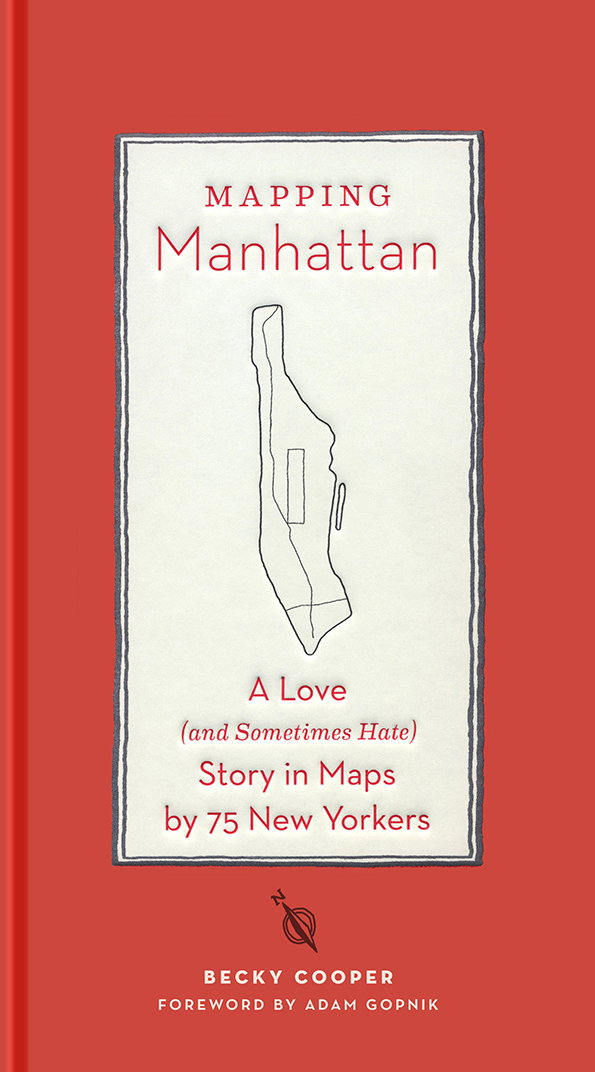
“All maps tell stories. Stories of their mapmakers. Stories about the circumstances of their creation. Stories about their intended use. They’re all biased in some way.” So writes Becky Cooper in the introduction to her tremendous book Mapping Manhattan in which the “accidental cartographer” collates the memories of New Yorkers through the way they see their city.
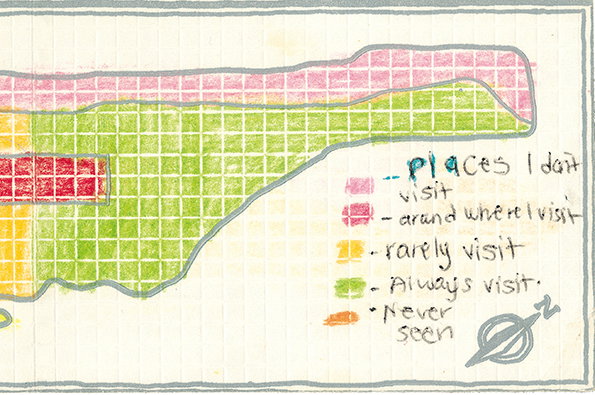
Becky handprinted a simple map of Manhattan and then walked the city distributing them to people she met along the way. She asked them to map the city in any way they wanted and post the maps back to her.
“The maps were like passports into strangers’ worlds…Sometimes I chose a person because her heels were awesome. Or because he was carrying a plastic tube and I hoped he was an architect. But most of the time I just chose people who looked open to the world – without headphones, curious.
“These are their maps. Their ghosts. Their past loves..These are their accidental autobiographies; when people don’t realise they’re revealing themselves, they’re apt to lay themselves much more bare.”
Becky Cooper: Mapping Manhattan
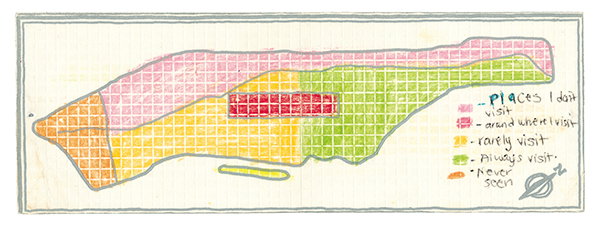
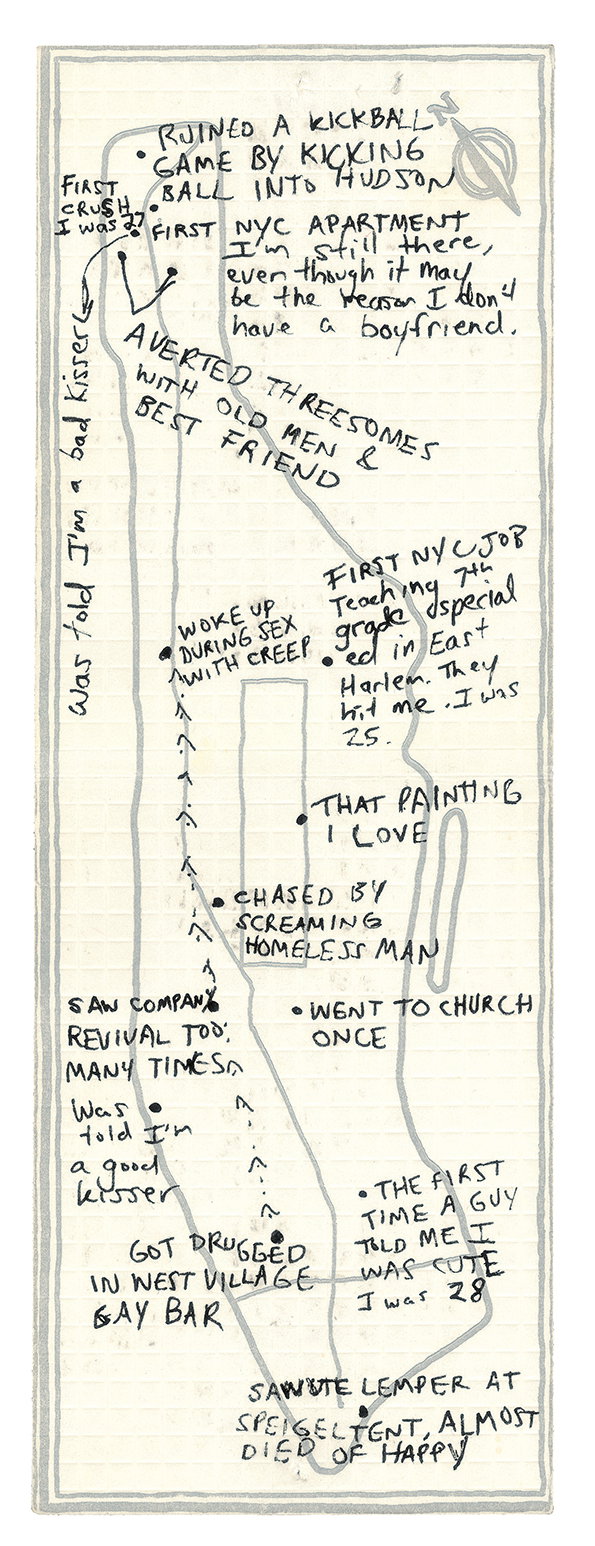
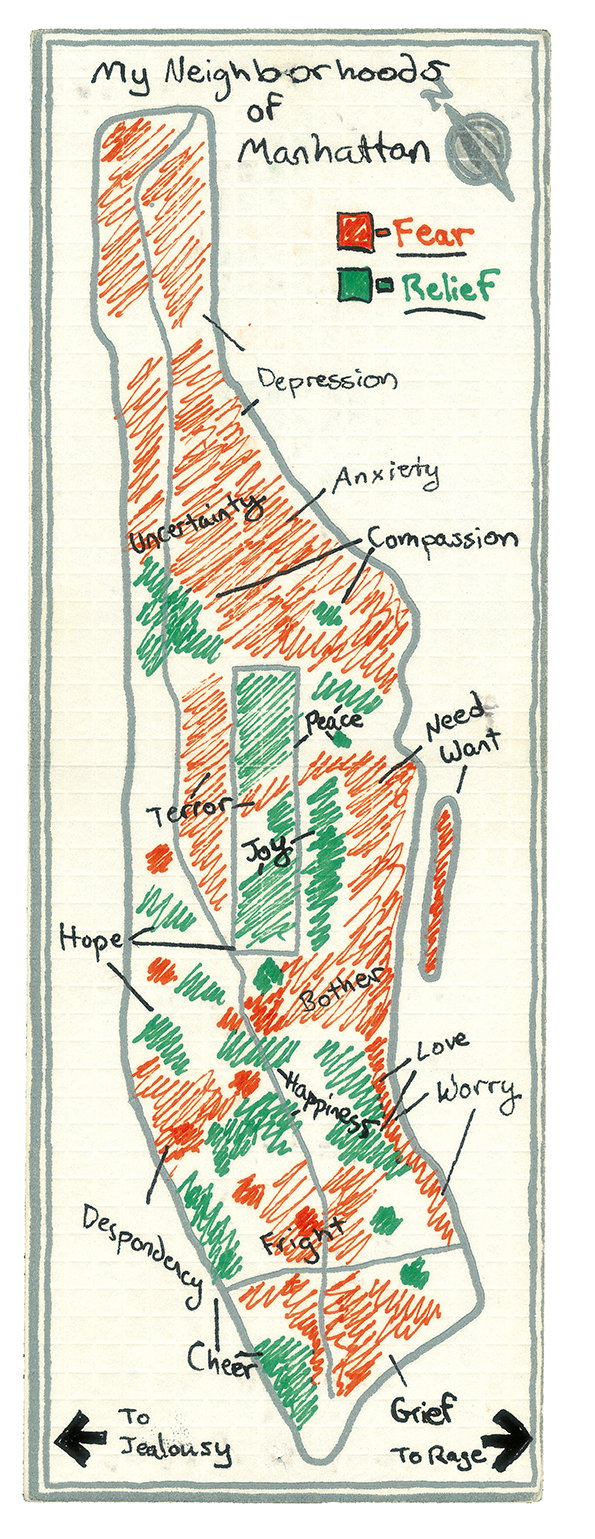
Too right. People have approached the task in so many different ways. For some it’s tackled almost as a school assignment, laboriously documenting in tiny handwriting different sections of the city and the map-maker’s relationship to them. For others it’s built around something seemingly prosaic – lost gloves or bad kisses – which still manage to reveal a great deal. Some maps have been turned into artworks, painted or covered in collage, others carry almost nothing. One of my favourites is a map that carries a single cross at the southern tip of Central Park and the line “Met my wife.” For this person this whole frantic, teeming city can be reduced merely to this.
Mapping Manhattan published by Abrams Chronicle is available now.
Becky Cooper: Mapping Manhattan
Becky Cooper: Mapping Manhattan
Becky Cooper: Mapping Manhattan
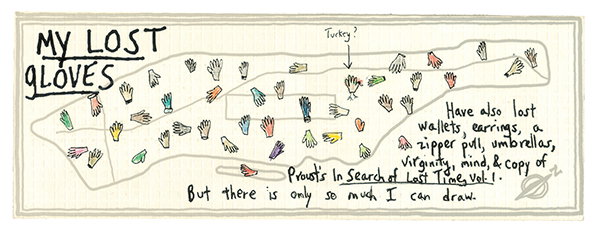
Becky Cooper: Mapping Manhattan
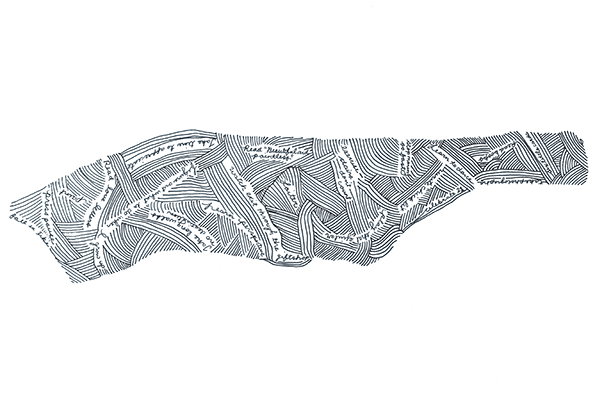
Becky Cooper: Mapping Manhattan
Share Article
Further Info
About the Author
—
Rob Alderson is a freelance writer, editor and strategist. He was previously editor-in-chief of It’s Nice That and WePresent, and editor of Design Week. He publishes the newsletter Undo, which tries to make sense of how AI is changing design work, the design process and the design industry.