



Launch Recite Me assistive technology
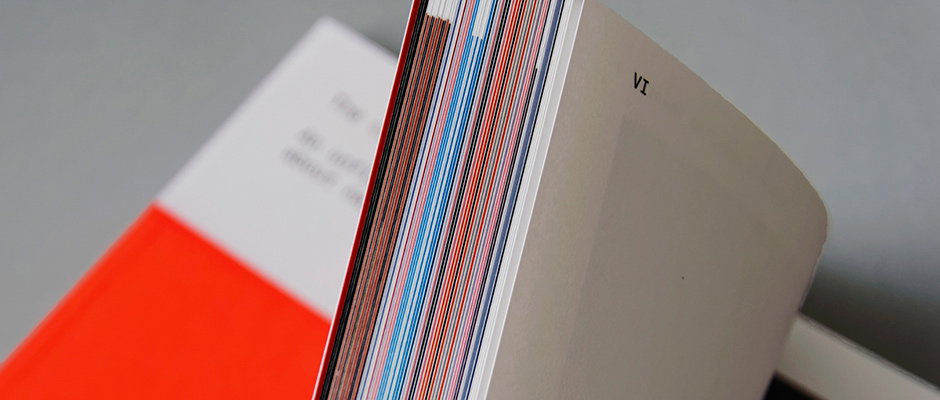
A close-up of two books. One is open, showing a thick stack of pages with colourful edges and the Roman numeral “VI” printed on a white page.

Stephanie Passul applies narrative structures to graphic design

—
Date
20 July 2015

Clear, cohesive, commercial graphic design is all well and good, but every now and then it’s nice to give your brain a stretch, and Stephanie Passul’s MA project, entitled The City in Six Pieces, provides the perfect apparatus for a mental workout. The project, which was developed as the final product of Stephanie’s MA at Dusseldorf’s University of Applied Sciences, explores narrative structures which have been developed as a result of the changing ways we consume information.

“The catalogue shows six visual experiments, transforming narrative structures from literature, theatre and film into editorial design,” she explains. “Every chapter visualises the story The City by Hermann Hesse, using abstract photography, and each chapter is based on another narrative structure, like the classical drama, the epic theatre or the Möbius strip.

“These structures were reduced to their formal distinctions, like units of meaning (act, scene, sequence etc.) and order (linear, non-linear). These kinds of data were used to structure the story and build the base for the design of the chapter.”

Got that? It’s a bit conceptual, but Stephanie’s neat collision of dramaturgy and graphic design manifests itself stylishly in the abstract images, while the consistency of her colour scheme pulls the publication together.
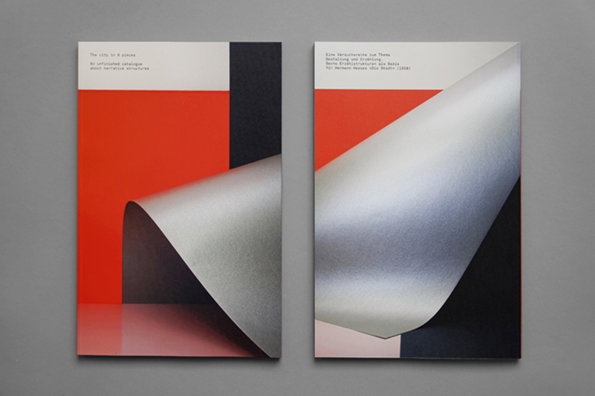
Two booklets featuring abstract imagery of a curved, metallic silver surface against red and black backgrounds. The left cover includes the text “The city is 8 places” and “An unfolded catalogue about narrative architecture”.
Above

Stephanie Passul: The City in Six Pieces
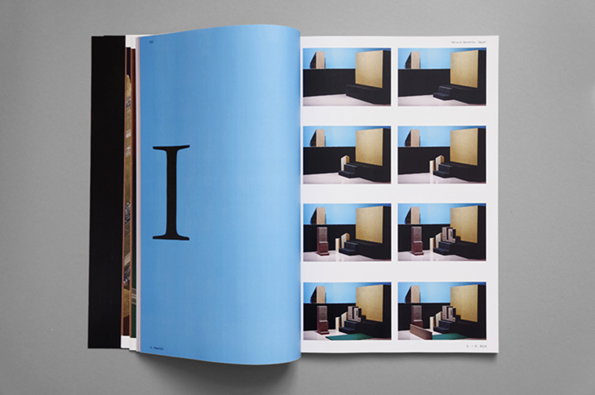
An open book shows a light blue page featuring a large, black serif letter “I”. The opposite page contains a grid of eight photographs showing a sequence of furniture being arranged in a minimalist room.
Above

Stephanie Passul: The City in Six Pieces
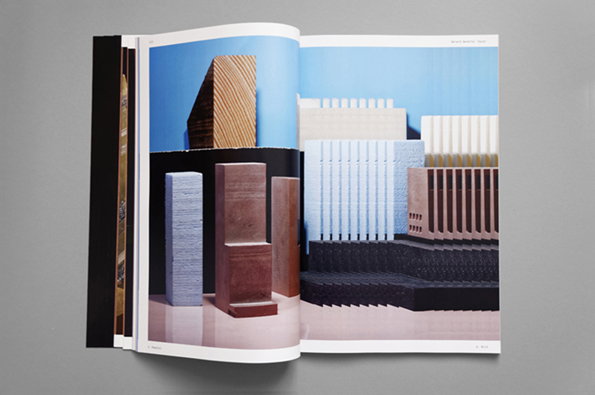
An open book displays a photograph of various textured architectural blocks in blue, brown and white. The geometric forms are arranged like a miniature city against a bright blue background.
Above

Stephanie Passul: The City in Six Pieces
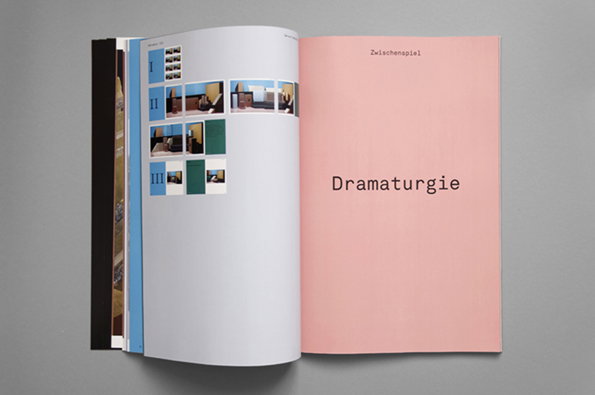
An open book shows a layout of small photographs and blue labels on the left page. The right page is a solid pale pink with the words “Zwischenspiel” and “Dramaturgie”.
Above

Stephanie Passul: The City in Six Pieces
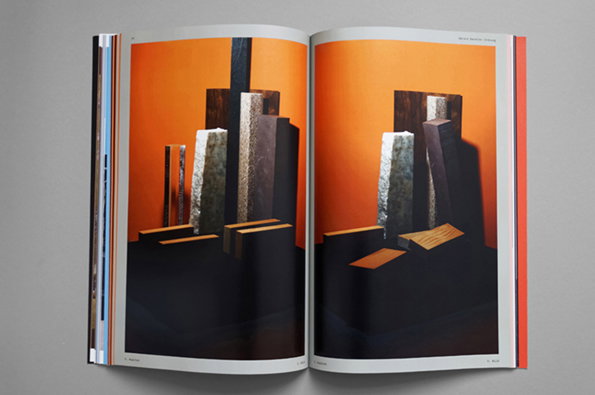
An open book displays a photograph of several vertical stone and wooden blocks of varying heights. The sculptures are arranged on a dark plinth against a vibrant orange background.
Above

Stephanie Passul: The City in Six Pieces
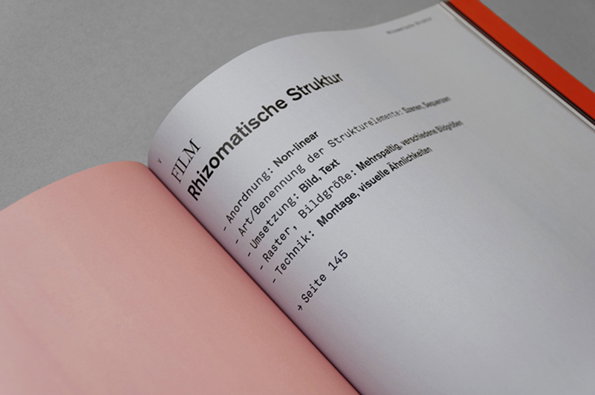
An open book shows a page of German text with the heading “FILM” and “Rhizomatische Struktur”. A bulleted list follows, with a reference at the bottom to “Seite 145”.
Above

Stephanie Passul: The City in Six Pieces
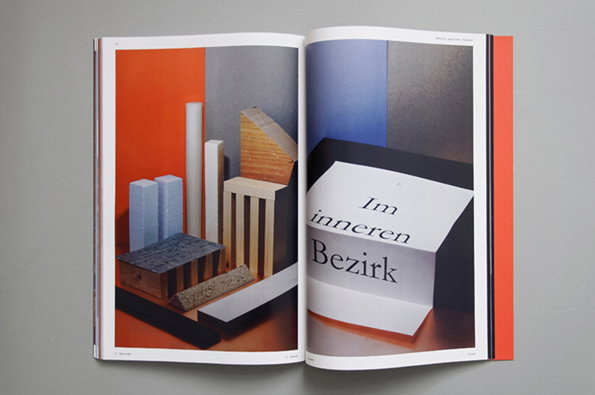
An open book shows two pages of a design project. The left page features a collection of geometric architectural models in various textures and colours against a red and grey background. The right page shows a white card leaning against a dark block, with the text “Im inneren Bezirk”.
Above

Stephanie Passul: The City in Six Pieces
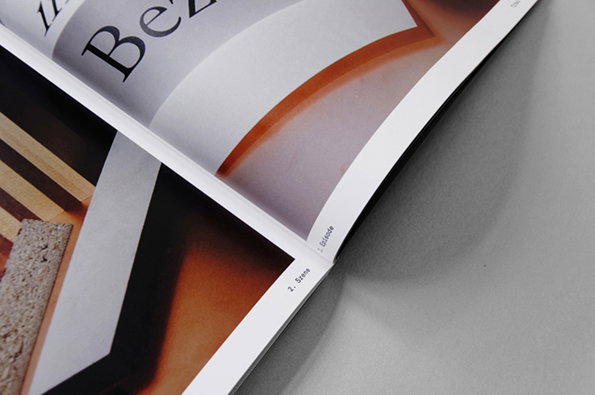
A close-up of an open book showing a spread of photographs and typography. The page on the right features a large, serif word starting with “Bez”.
Above

Stephanie Passul: The City in Six Pieces
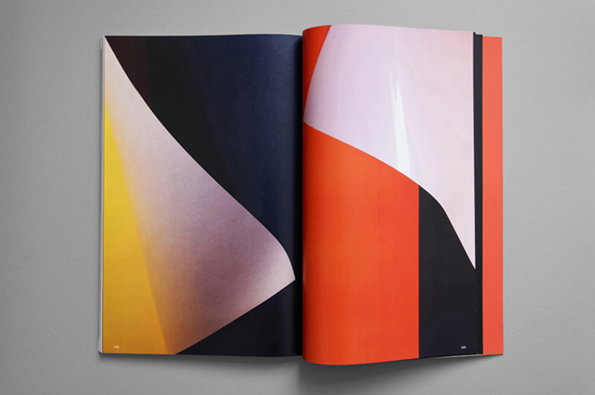
An open book displays a bold, abstract spread of curved shapes and gradients. The left page features deep navy, yellow and soft purple tones, while the right page is dominated by vibrant orange and white.
Above

Stephanie Passul: The City in Six Pieces
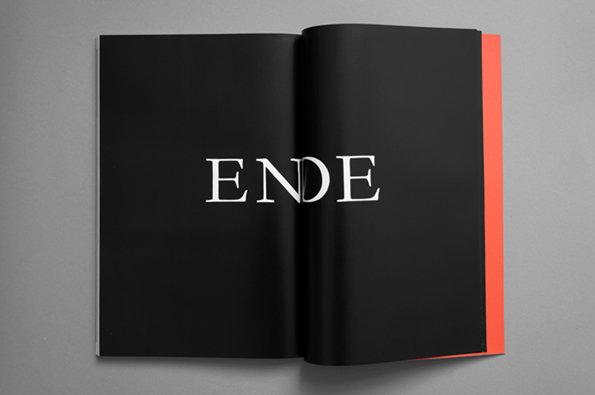
An open book with black pages and a bright orange cover. The word “ENDE” is printed in white serif type across the centre fold.
Above

Stephanie Passul: The City in Six Pieces

Share Article

About the Author

Maisie Skidmore

—

Maisie joined It’s Nice That fresh out of university in the summer of 2013 as an intern before joining full time as an Assistant Editor. Maisie left It’s Nice That in July 2015.
It's Nice That Newsletters

Fancy a bit of It's Nice That in your inbox? Sign up to our newsletters and we'll keep you in the loop with everything good going on in the creative world.