Launch Recite Me assistive technology
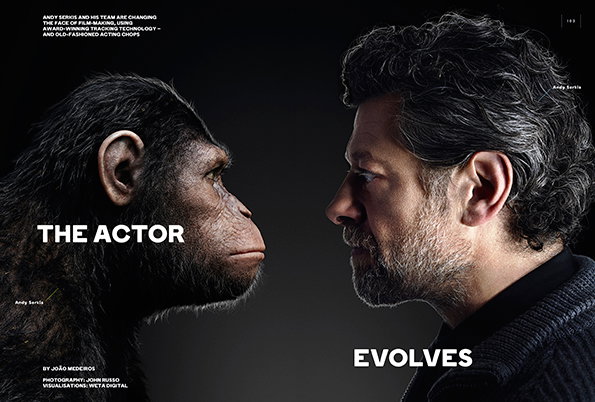
A side-by-side profile comparison of a chimpanzee and Andy Serkis, facing each other against a dark background. Bold white text across the image reads “THE ACTOR EVOLVES”.

Creative director Andrew Diprose talks about the WIRED redesign

—
Date
1 July 2014

Whenever we sit down and discuss magazines that we admire here in the studio, WIRED is a title that comes up again and again; revered and respected for its content, its design, its agenda-setting and its remarkable consistency. But change is in the air and the August issue which hits newsstands this week sees a major redesign led by WIRED UK creative director Andrew Diprose. We caught up with him to chat through some of the changes…

Why was it time to redesign the magazine?

WIRED has been published in the UK for a little over five years, and although we’ve been evolving the design (and section by section it’s been reworked) it was time to get down to the grid and template for a redesign over the whole title, on all platforms. There were aspects of the layout that needed work and only taking things back to basics would really work.
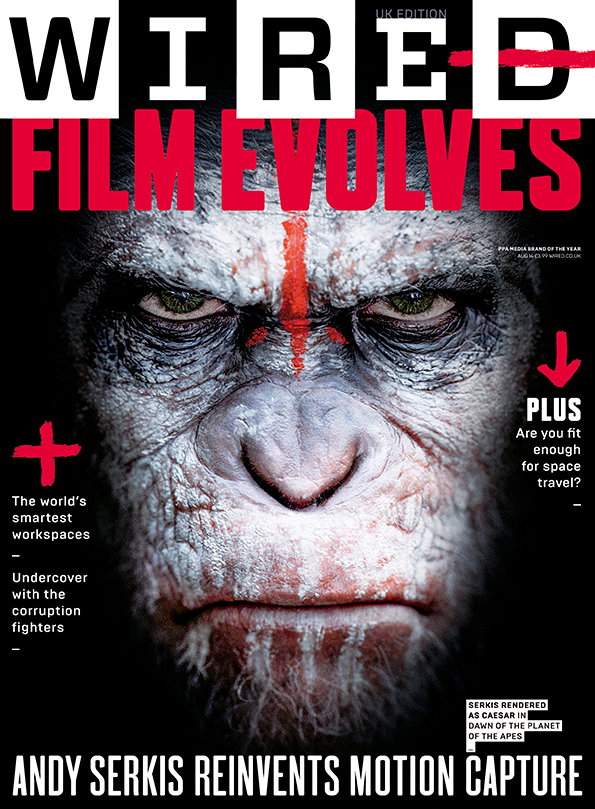
A Wired magazine cover featuring a close-up of Caesar from Dawn of the Planet of the Apes. A red cross is painted over the character’s forehead and nose. The main headline reads “FILM EVOLVES” in bold red letters. At the bottom, a caption reads “ANDY SERKIS REINVENTS MOTION CAPTURE”.
Above

WIRED UK: August 2014 (Cover)

What are the key features of the new look and feel?

Our template and grid has changed, really the bones of the look. The grid runs bigger on the page, with more columns allowing for floating columns. The word count is pretty much as before, but we hope to run our images bigger; the look is a little cleaner and just slightly more mature.

It was of upmost importance to have a look that ran over all platforms – I think our iPad edition for August is up there with my favourite of all our previous editions. The way we’ve approached space on the tablet edition is one of the most important aspects of this redesign.

What were the biggest challenges you faced?

Time. Doesn’t everyone working in publishing imagine disappearing for a month or so, into some kind of zen-like room to fixate on small detailing? I was keen that although we were still working on the July editions, as soon as we had something we were happy with, we’d get it out there. There are aspects we’d still like to finesse of course, but getting past the time constraints were key.

What part if any did reader feedback play in the redesign?

We are privileged in that we have a clever and design-conscious audience. Innovating with the look of WIRED is important; when the magazine is so full of new ideas, disruption and clever thinking, it’s our DNA and it’s important to me that the design mirrors the content. I was keen that regular readers are treated to something we consider fresh and modern.
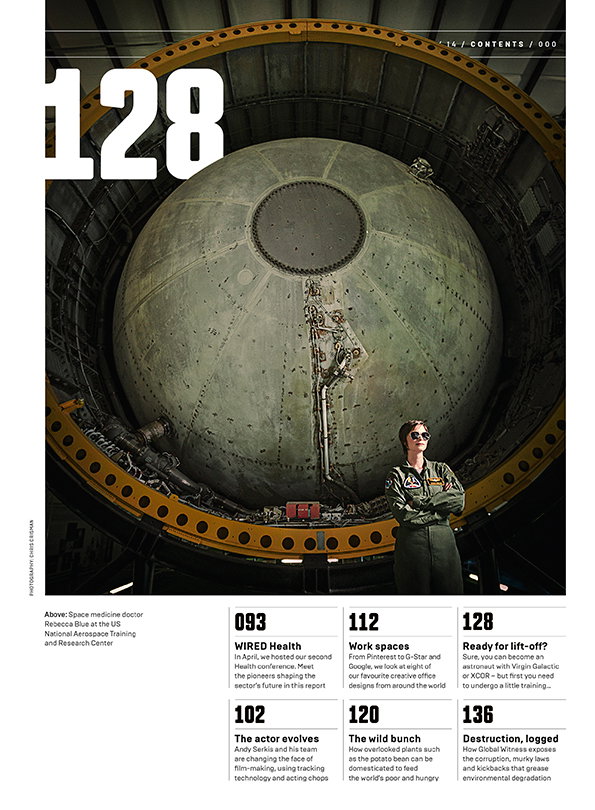
A person in a green flight suit stands beside a massive, spherical metallic spacecraft module. The module is housed within a large, circular industrial bay. Below the image, a contents page lists articles with headlines including “Wired Health”, “Work-spaces”, and “Ready for lift-off?”. The number “128” is printed in large white type over the top left of the scene.
Above

WIRED UK: August 2014 (spread)

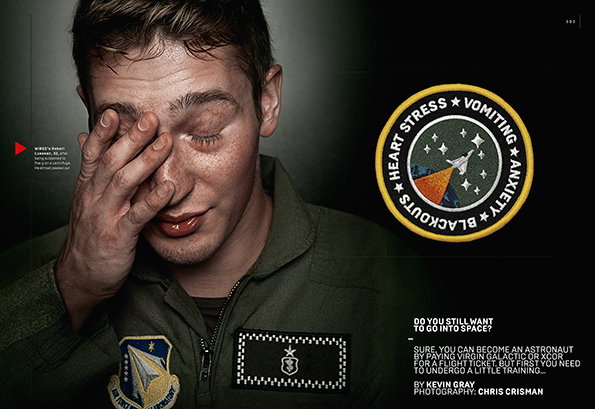
A person in a green flight suit rubs their eyes with a tired expression. To the right, a circular patch reads “Heart Stress Vomiting Anxiety Blackouts”.
Above

WIRED UK: August 2014 (spread)

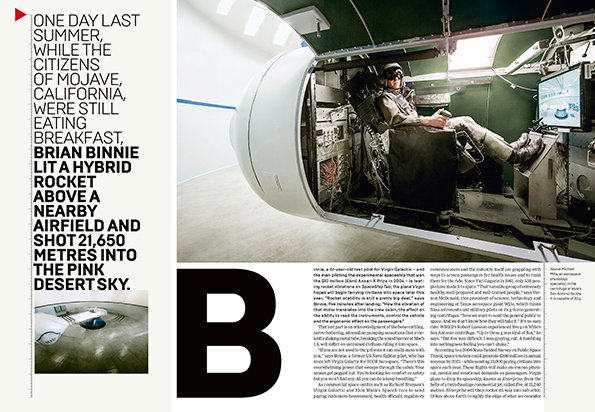
A person in a flight suit and helmet sits in the cockpit of a spacecraft, looking towards the camera. To the left, a large block of text reads “One day last summer, while the citizens of Mojave, California, were still eating breakfast, Brian Binnie lit a hybrid rocket above a nearby airfield and shot 21,650 metres into the pink desert sky.”
Above

WIRED UK: August 2014 (spread)

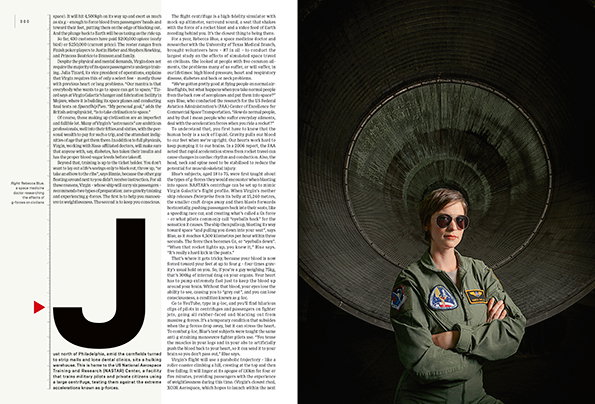
A person wearing a green flight suit and dark sunglasses stands with arms folded. They are positioned against a dark background, beside a page of text featuring a large, bold capital “J”.
Above

WIRED UK: August 2014 (spread)

Tell us about the new typefaces; what was the thinking/process behind them?

We worked with Henrik Kubel at A2Type on a display typeface and Jonathan and Rob at Sawdust for the custom type for the section openers.

It was really time to freshen up the display type, to give new identities to the sections and to redefine the section openers too. I also wanted a display typeface that could run big in three weights and importantly widths; something that can run on a cover or as a small header in a section and something very versatile.

We worked with Matt Willey as a consultant in the early stages of the redesign and he introduced us to Henrik at A2. We wanted to take their already brilliant Beckett and soften it slightly. 

I’d worked with the guys at Sawdust on custom type before and they’re always a pleasure to work with. I’m over the moon with the results on the section headers. We were keen to come up with something that was a lot more photographic, a lot more textured and illustrative than the bold vector typography elsewhere.

How will you monitor/measure the success of the redesign?

It’s tough to quantify really. I guess with copy sales, subscriptions and brand loyalty. Commercially I hope I’ve also created a good environment, and a feel that embodies WIRED as a brand. Personally I hope the regular reader will find it exciting, surprising, easy to navigate, a straightforward reading experience and the perfect platform for our photography and illustration.  
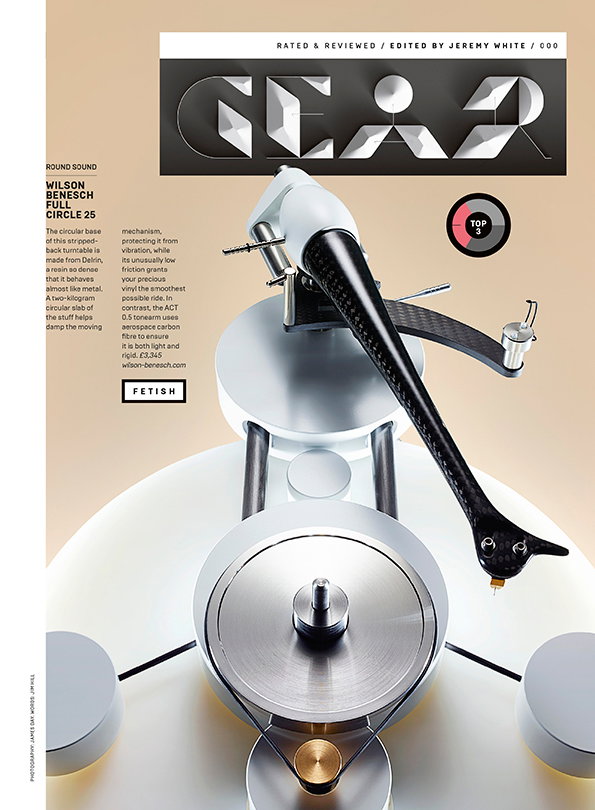
A high-tech turntable with a white base and a black carbon fibre tonearm. The image is a magazine page with a bold header that reads “GEAR” and a section titled “FETISH”.
Above

WIRED UK: August 2014 (spread)

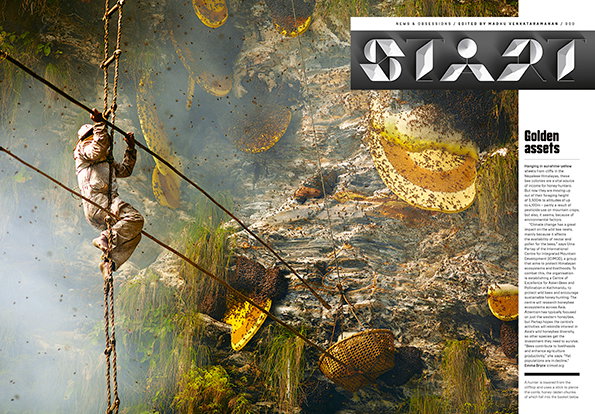
A person in a protective white suit climbs a rope ladder up a steep, rocky cliff. They are surrounded by several large, golden honeycombs clinging to the rock face. To the right, a magazine layout features the title “START” and an article titled “Golden assets”. The text discusses honey hunting and biodiversity in Asia.
Above

WIRED UK: August 2014 (spread)

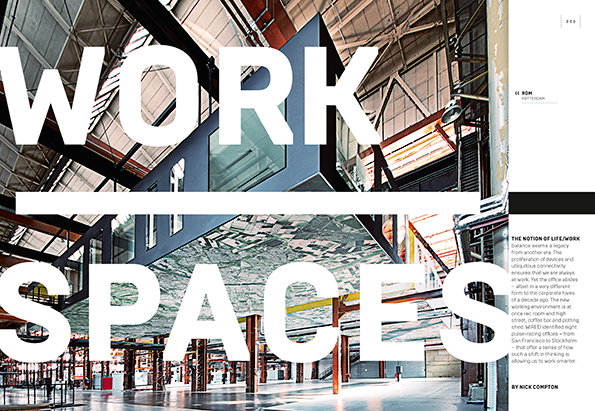
A wide shot of a high-ceilinged industrial building converted into a modern office. Large white text laid over the image reads “WORK SPACES”.
Above

WIRED UK: August 2014 (spread)

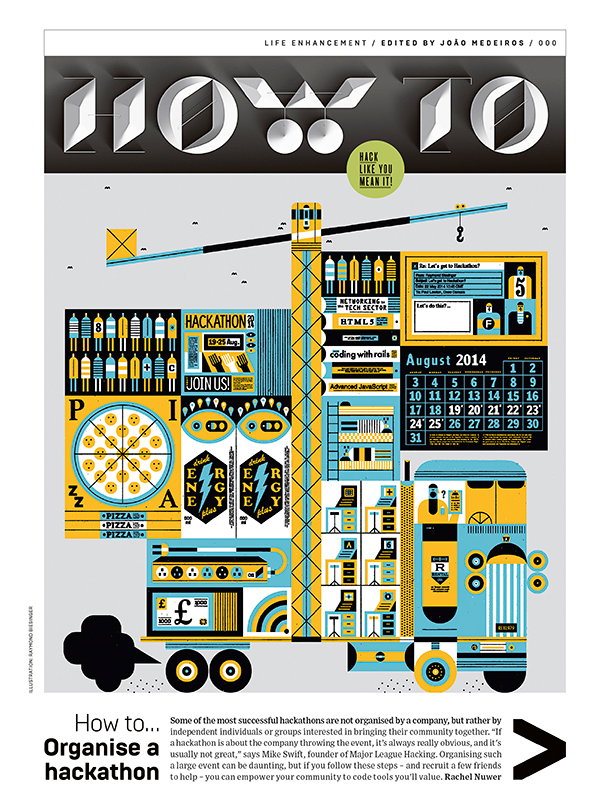
An illustration of a complex, high-tech machine built from a mix of digital interfaces and everyday objects. The machine incorporates a calendar for “August 2014”, a pizza, and screens displaying code and the word “HACKATHON”. At the top, a bold header reads “HOW TO”. Below the illustration, a headline reads “How to... Organise a hackathon”, followed by a short introductory paragraph.
Above

WIRED UK: August 2014 (spread)

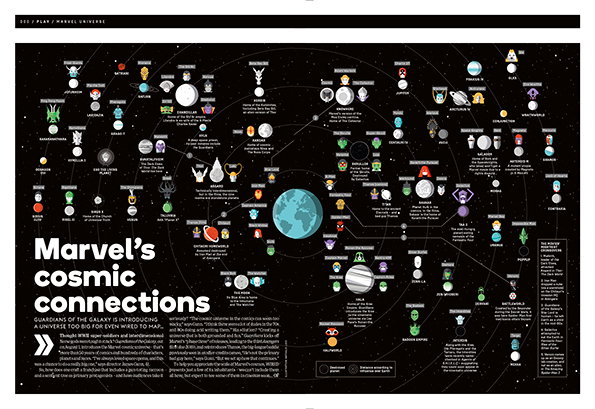
An infographic titled “Marvel’s cosmic connections” maps the Marvel universe across a black starfield. A central blue planet is surrounded by concentric orbital lines connecting various characters, planets and locations.
Above

WIRED UK: August 2014 (spread)

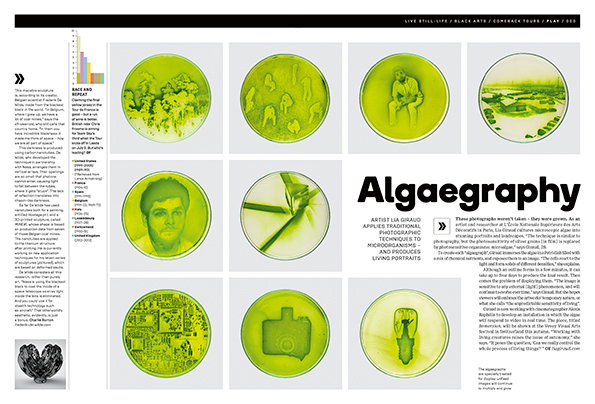
A double-page magazine spread titled “Algaeagraphy”. The layout features a grid of circular, green-tinted images of people and landscapes created using microorganisms.
Above

WIRED UK: August 2014 (spread)

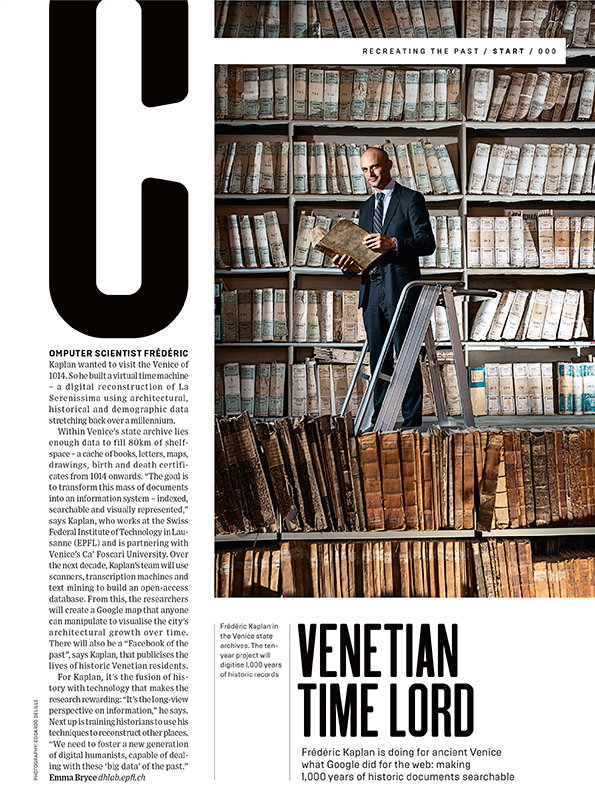
A person in a dark suit stands on a ladder in a library, holding an open antique book. They are surrounded by floor-to-ceiling shelves packed with old, leather-bound volumes. The image is a magazine spread with a large black letter “C” and a headline that reads “Venetian Time Lord”. Smaller text explains that Frédéric Kaplan is digitising 1,000 years of historic records.
Above

WIRED UK: August 2014 (spread)

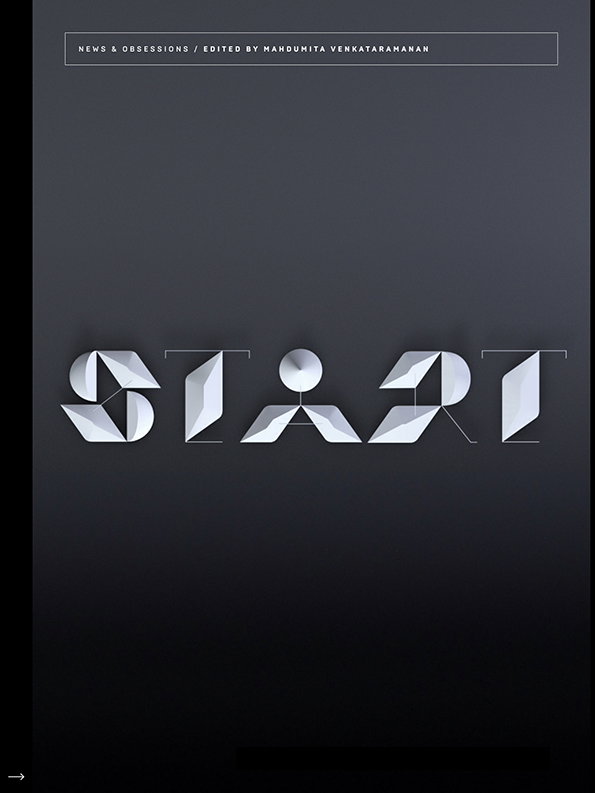
A 3D render of the word “START” in bold, white, architectural lettering against a dark grey background. The letters are composed of folded, geometric planes that create sharp shadows and depth. Small text at the top reads “NEWS & OBSESSIONS / EDITED BY MANDUMITA VENKATARAMANAN”.
Above

WIRED UK: August 2014 (iPad Edition)

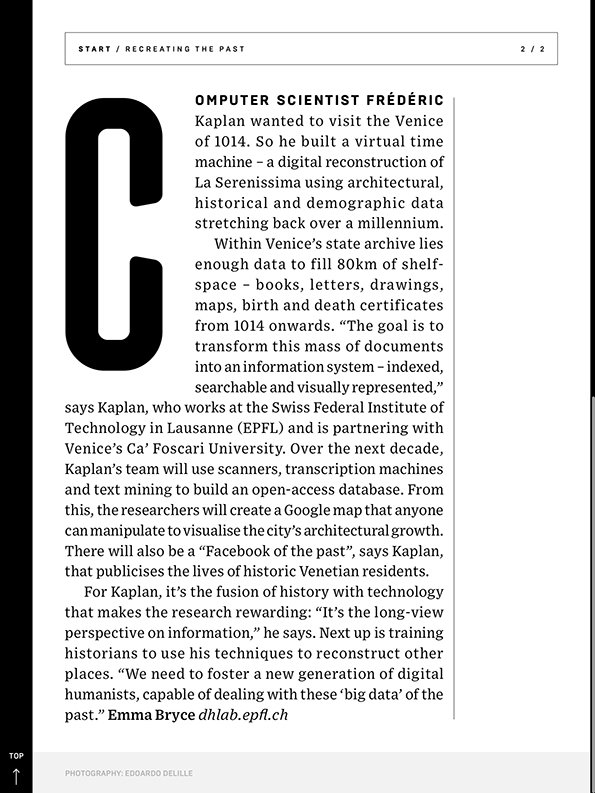
A page of text titled “Start / Recreating the Past”. The layout features a large, bold capital “C” as a drop cap, introducing a story about computer scientist Frédéric Kaplan and his digital reconstruction of Venice.
Above

WIRED UK: August 2014 (iPad Edition)

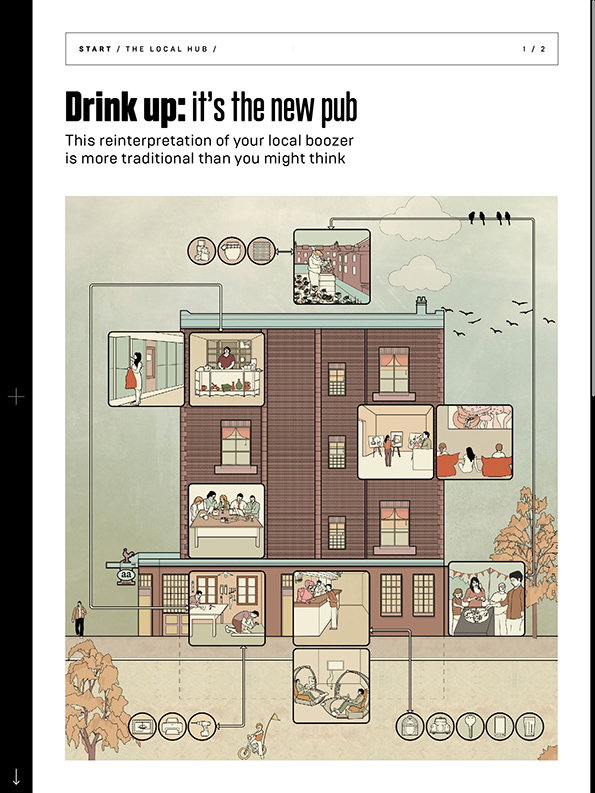
An illustration of a cross-section of a brick building, showing various people in different rooms. A headline reads “Drink up: it’s the new pub”, with a sub-headline describing a “reinterpretation of your local boozer”.
Above

WIRED UK: August 2014 (iPad Edition)

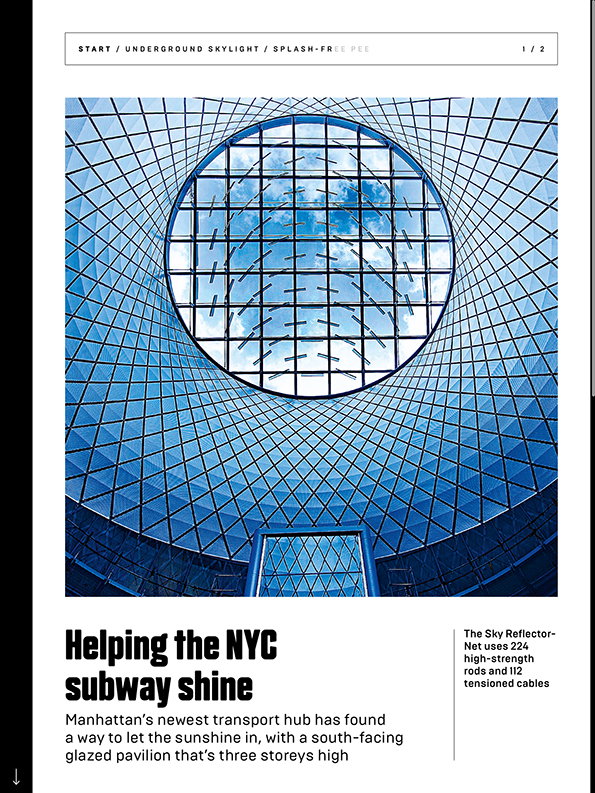
A layout featuring a photograph of a circular glass skylight looking up at a blue sky. Below the image, a bold headline reads “Helping the NYC subway shine”. Smaller text describes a south-facing glazed pavilion in a Manhattan transport hub.
Above

WIRED UK: August 2014 (iPad Edition)

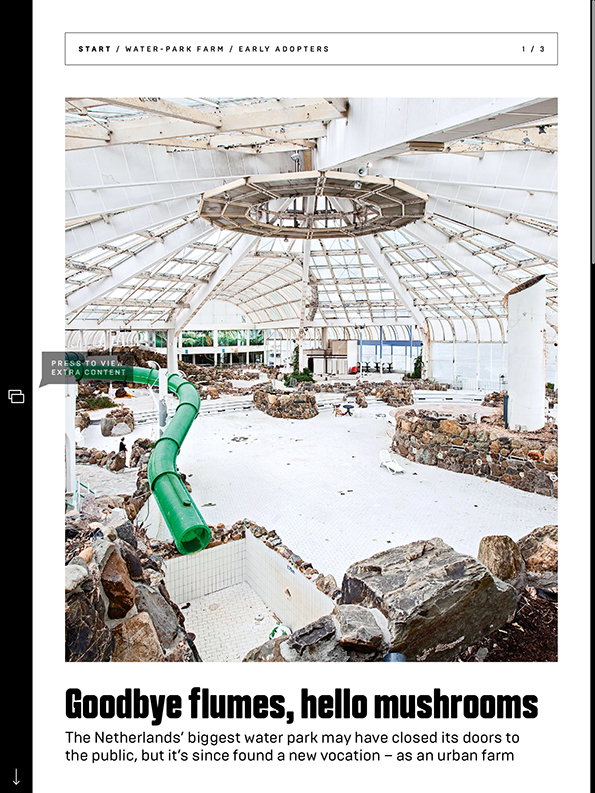
An abandoned indoor water park with a glass roof and a green flume slide. The space is now being used as an urban farm, with the text “Goodbye flumes, hello mushrooms” below.
Above

WIRED UK: August 2014 (iPad Edition)

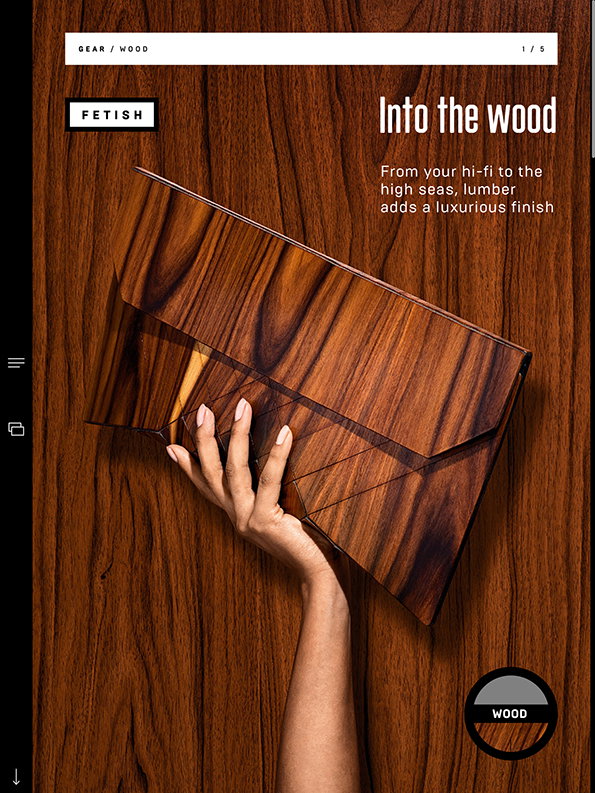
A person’s hand holds a geometric, polished wood object against a matching wood-grain background. Text on the page reads “Into the wood” and “From your hi-fi to the high seas, lumber adds a luxurious finish”.
Above

WIRED UK: August 2014 (iPad Edition)

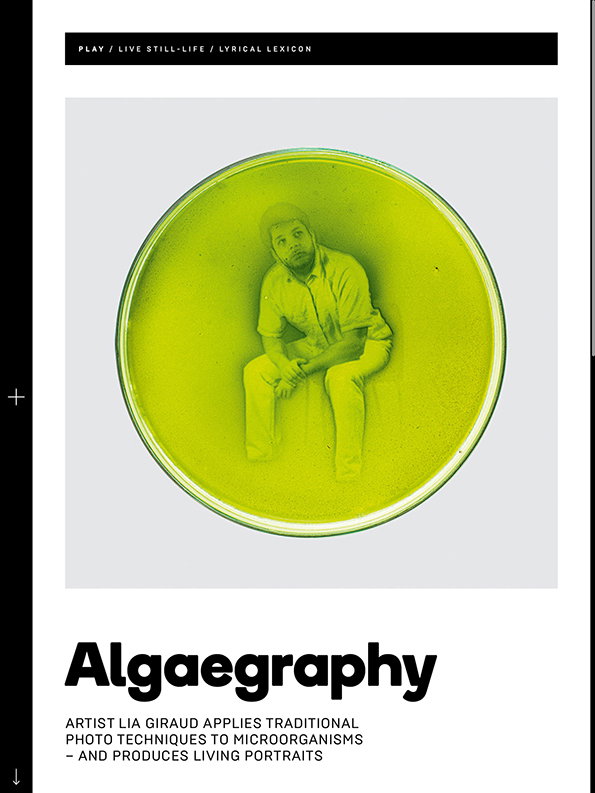
A circular, lime-green portrait of a person sitting and looking at the camera. Below the image, bold text reads “Algaegraphy”, followed by a description of artist Lia Giraud’s work with microorganisms.
Above

WIRED UK: August 2014 (iPad Edition)

Share Article

Further Info

About the Author

Rob Alderson

—

Rob Alderson is a freelance writer, editor and strategist. He was previously editor-in-chief of It’s Nice That and WePresent, and editor of Design Week. He publishes the newsletter Undo, which tries to make sense of how AI is changing design work, the design process and the design industry.

It's Nice That Newsletters

Fancy a bit of It's Nice That in your inbox? Sign up to our newsletters and we'll keep you in the loop with everything good going on in the creative world.