Launch Recite Me assistive technology
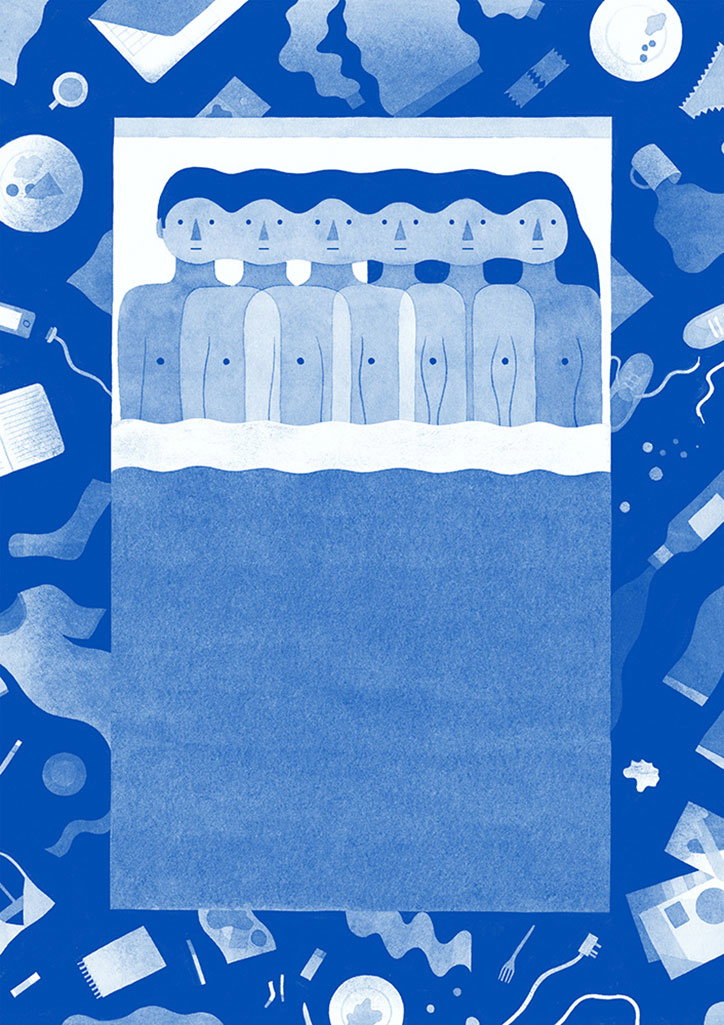
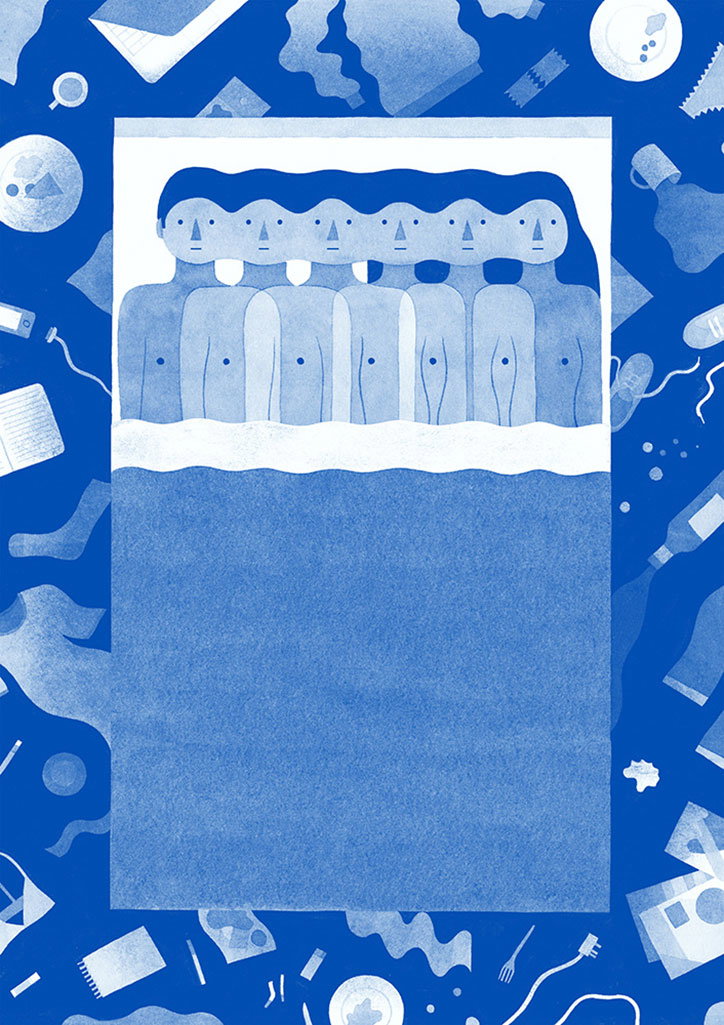
An illustration of six identical figures standing side by side in blue water. They are surrounded by a border of floating plastic waste and debris against a deep blue background.

London-based illustrator Eleni Kalorkoti paints understated charm with ink and watercolour

—
Date
9 November 2016

Eleni Kalorkoti has been quietly building a sterling portfolio of illustrations over the past few years, her subtle aesthetics and charming characters proving a perfect match for editorials in the New York Times, Pitchfork and The Guardian. Painted mostly in watercolour and ink, often using pencil drawings and collage, her work is understated in muted, gradated colours and soft forms.

“I like quite graphic forms but I’m also always trying to make my pictures have more nuance and variety,” says Eleni. “My work has evolved a lot in the past couple of years I think, it’s only really in that time that I’ve settled into using ink and watercolour as my main tools and that’s made a huge difference to the feel of my illustrations.”

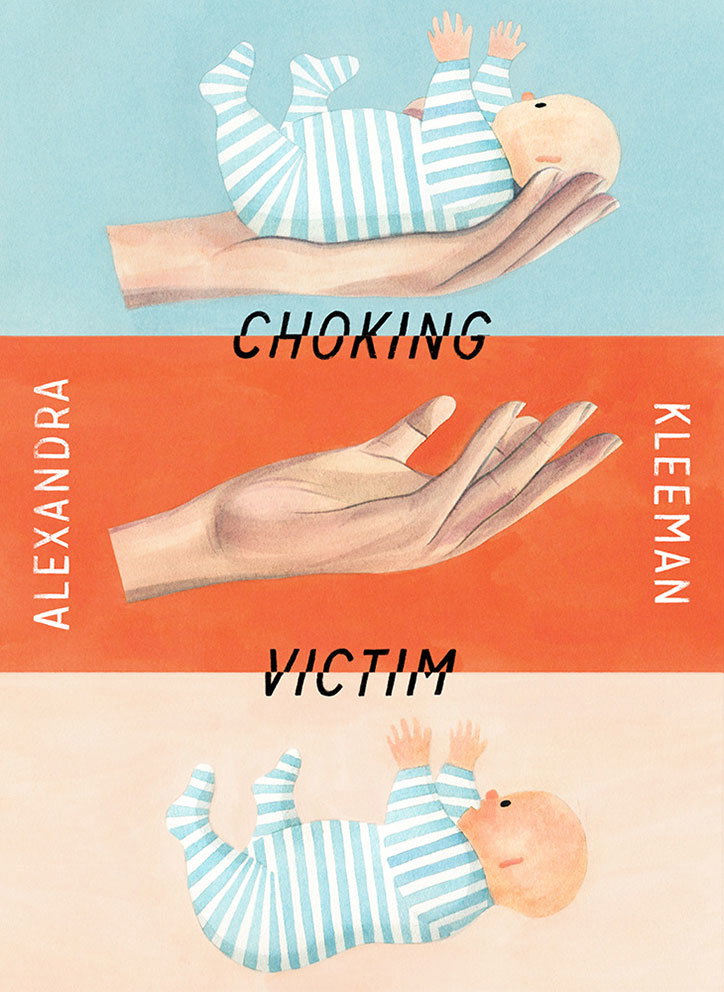
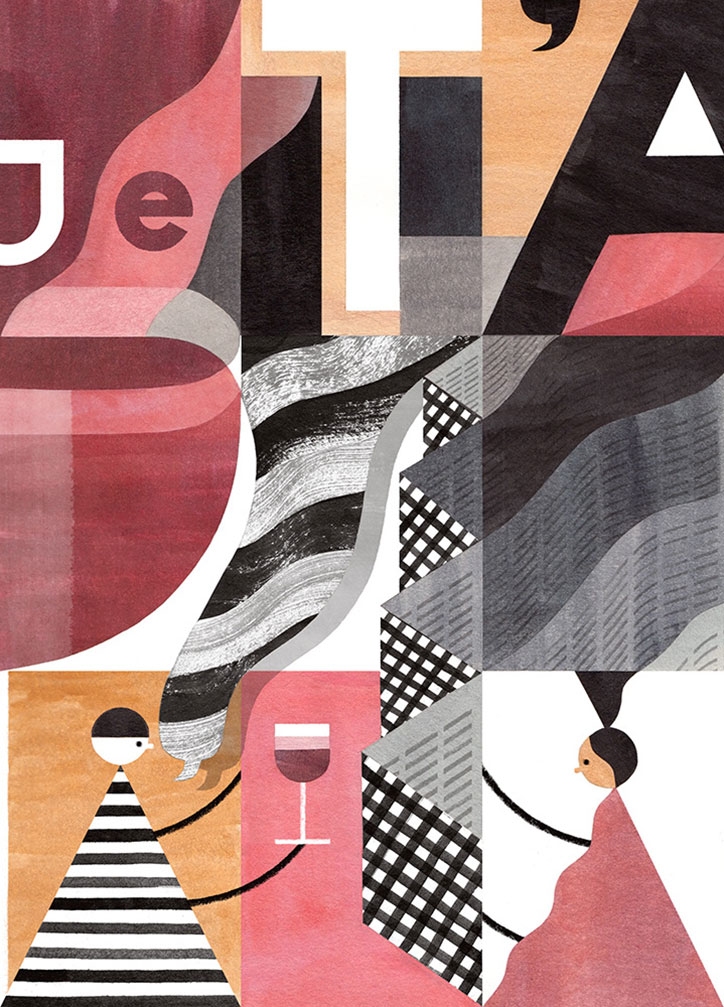
Earlier this year Eleni received her first commission from The New Yorker (below) to accompany a short story by Alexandra Kleeman, realising a personal career goal in elegant style. A second soon followed: a more visually dynamic artwork for a Lauren Collins’ essay, demonstrating the illustrator’s adaptable work. A third for the magazine is in the pipeline.

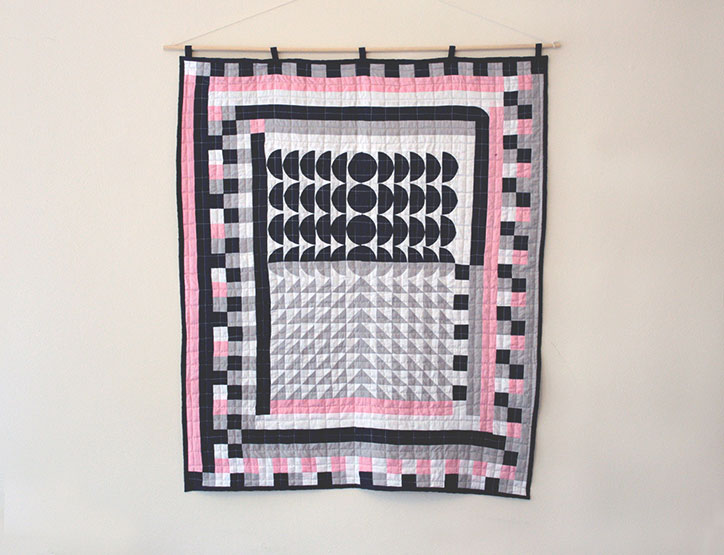
Meanwhile she’s been evolving her personal work. In 2015 she was awarded the Alfred Teddy Smith and Zsuzsi Roboz Art Scholarship by Morley College, London, and spent a year exploring her practice, developing her illustrations for textile design, collage and even quilts, which feature highly geometric patterns and bold repeats.

Eleni has also been exploring different subject matter and approaches through zines and self-initiated illustrations, something she believes is vital. “It’s made a big difference in how I tackle commissioned work,” she explains, “as I always feel too limited in how I think about illustration, so I’m always trying to push things further in an attempt to get better at my job!”
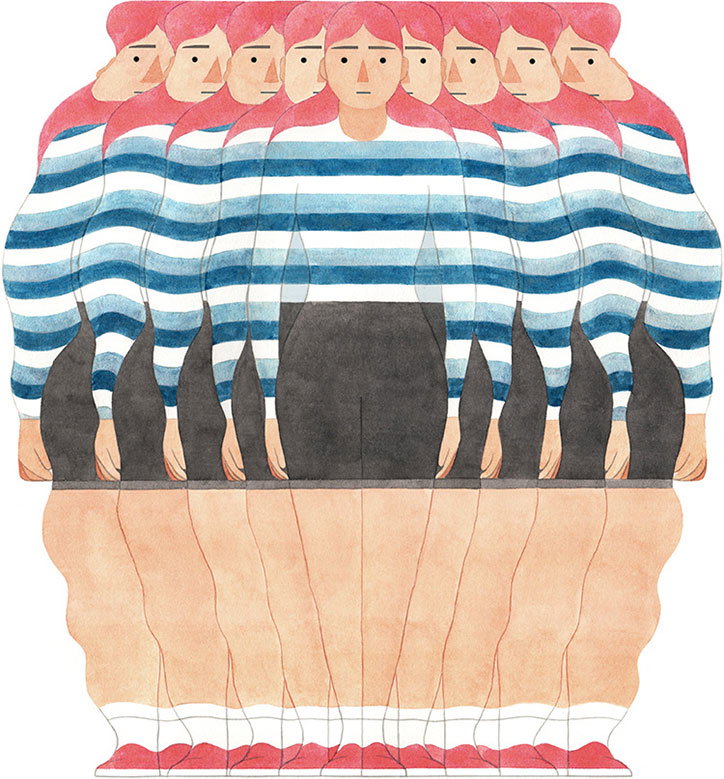
An illustration of a person with pink hair wearing a blue and white striped top and black trousers. The figure is repeated in a mirrored, kaleidoscopic pattern that radiates from the centre.
Above

Eleni Kalorkoti: New York Times

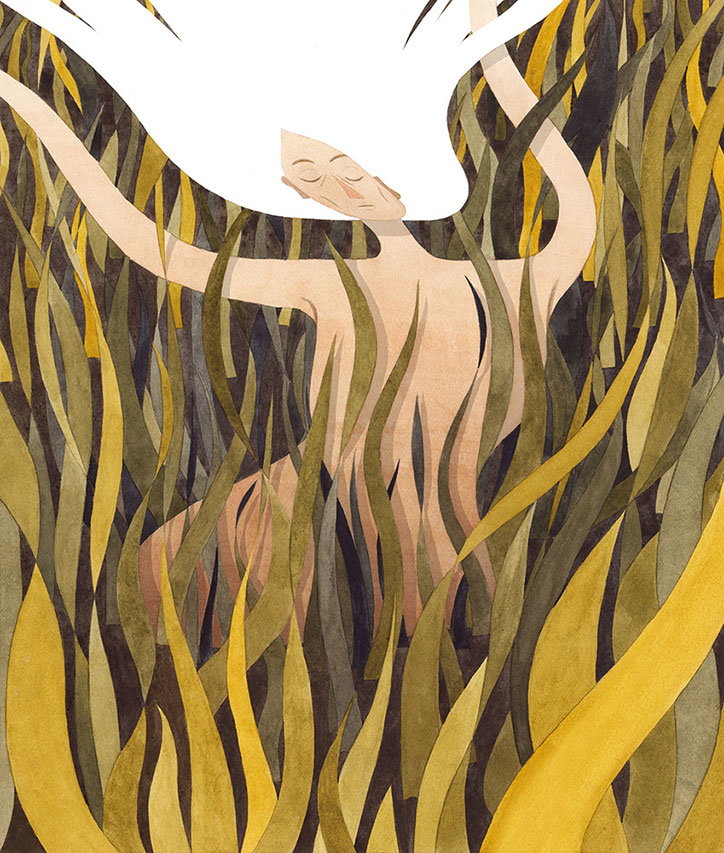
An illustration of a figure with closed eyes and white hair, partially submerged in tall, golden-green grass. Their arms are raised, blending into the surrounding blades of grass.
Above

Eleni Kalorkoti: The Guardian

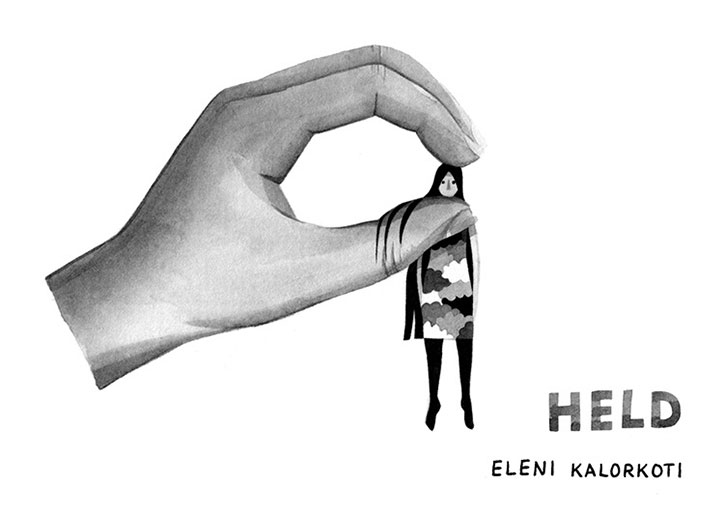
An illustration of a giant hand gently pinching a tiny person between its thumb and forefinger. The person wears a patterned dress and looks up at the hand. To the right, text reads “HELD” and “ELENI KALORKOTI”.
Above

Eleni Kalorkoti: Held

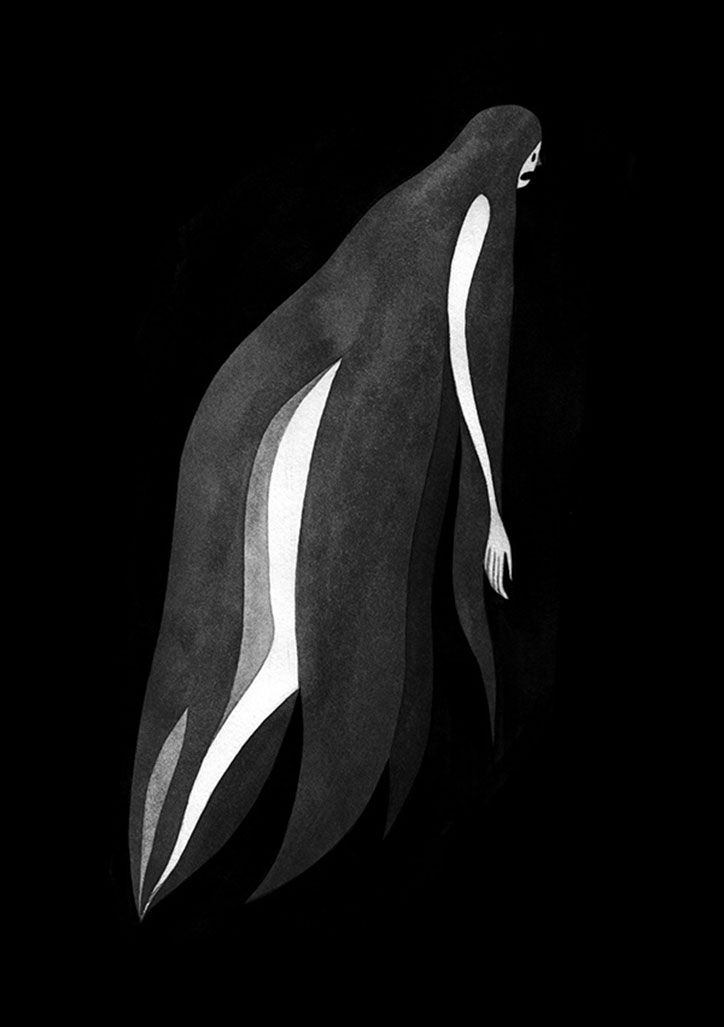
An illustration of a hooded figure draped in a long, flowing black cloak against a black background. White, curved shapes emerge from the fabric, suggesting the form of a limb or a ghostly presence.
Above
Left

Eleni Kalorkoti: Ghost

Right

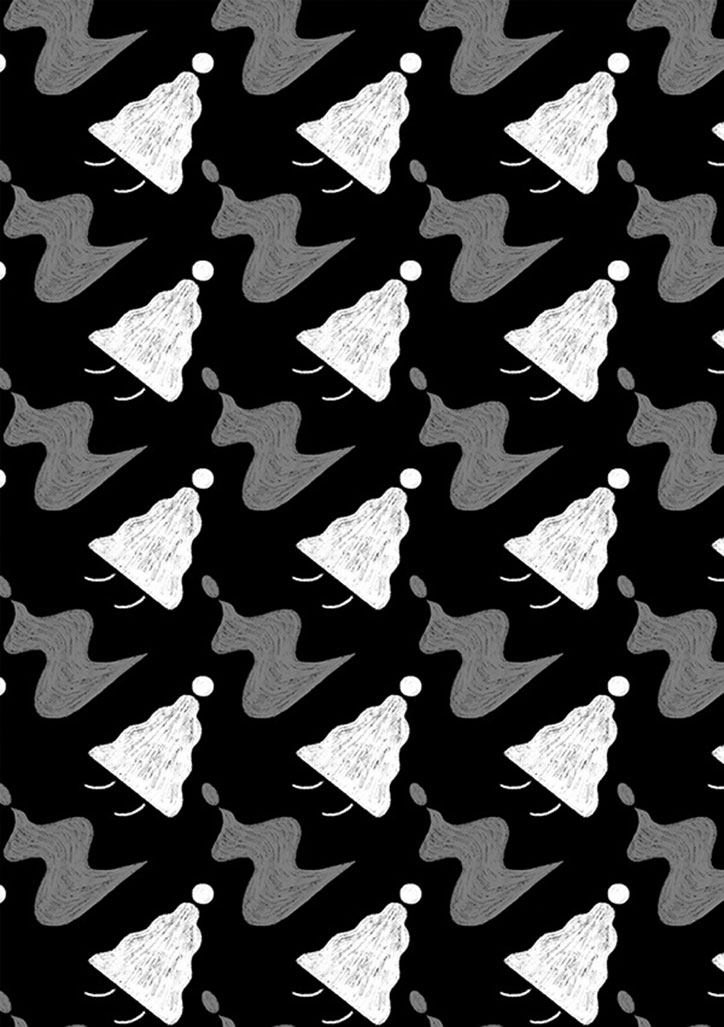
Eleni Kalorkoti: Ghost endpaper

A black and white pattern featuring repeating, hand-drawn figures. The figures appear as simplified, bell-shaped forms with small circles for heads and sketchy lines for feet.
Above

Eleni Kalorkoti: Ghost endpaper

An illustration divided into three horizontal bands of blue, orange and cream. A hand holds a baby in blue and white stripes at the top, followed by an empty hand in the middle and the baby alone at the bottom. The text reads “CHOKING” and “VICTIM”, with the name “ALEXANDRA KLEEMAN” written vertically.
Above

Eleni Kalorkoti: The New Yorker

An abstract collage featuring geometric shapes, textured patterns and fragments of text in red, grey and cream. Two stylised figures appear at the bottom, one wearing a striped outfit and the other holding a glass of red wine.
Above

Eleni Kalorkoti: The New Yorker

An illustration of a person with multiple arms, balancing work and childcare. One hand types on a keyboard and another points at a screen, while two other arms cradle a baby.
Above

Eleni Kalorkoti: New York Times

A textile wall hanging featuring a geometric quilt design in black, white, grey and pink. The central panel is split between a grid of black and white semi-circles and a grey triangular pattern.
Above

Eleni Kalorkoti: quilt

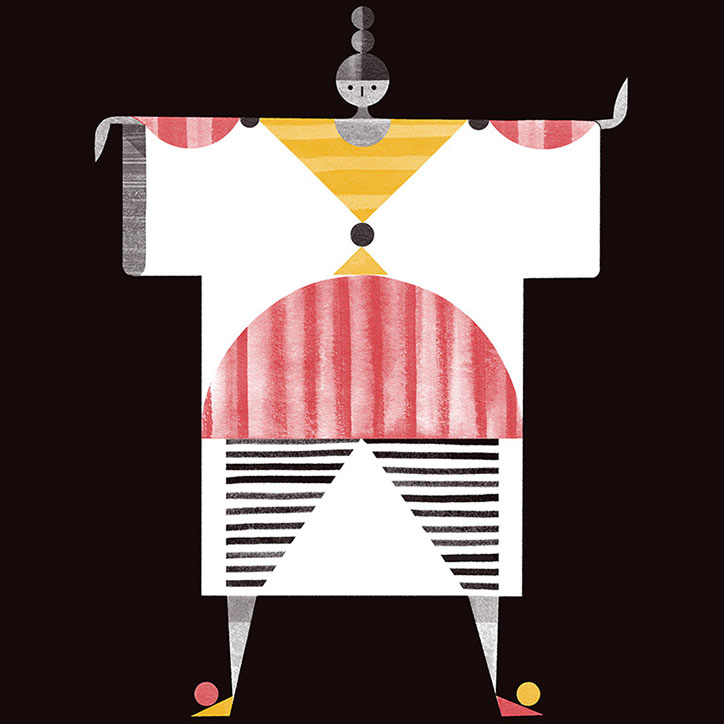
An illustration of a stylised figure composed of geometric shapes against a black background. The figure wears a white tunic with a yellow triangle at the chest and a red semi-circle across the middle.
Above

Eleni Kalorkoti: Bauhaus t-shirt

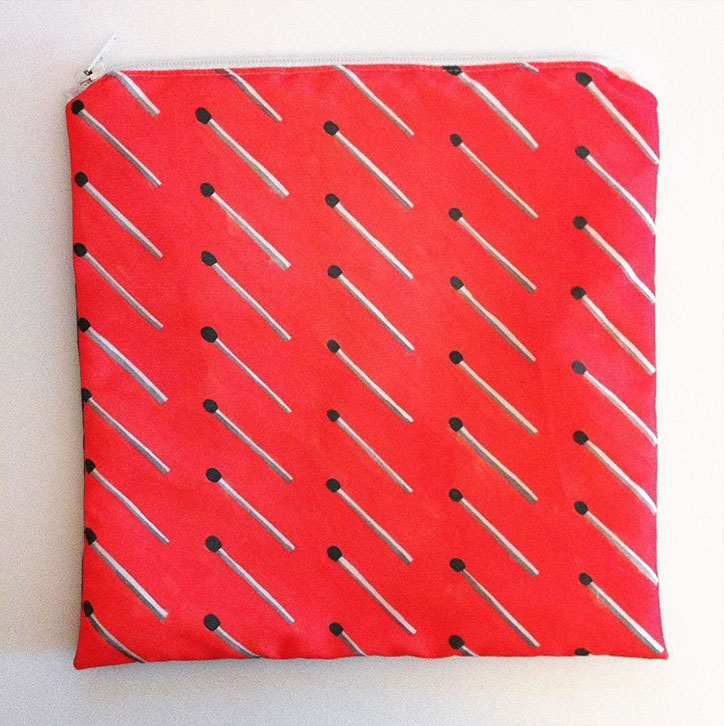
A red fabric zip pouch featuring a repeating pattern of diagonal matches. The matches have white sticks and black heads.
Above
Left

Eleni Kalorkoti: Matches textile

Right

Eleni Kalorkoti: Matches textile

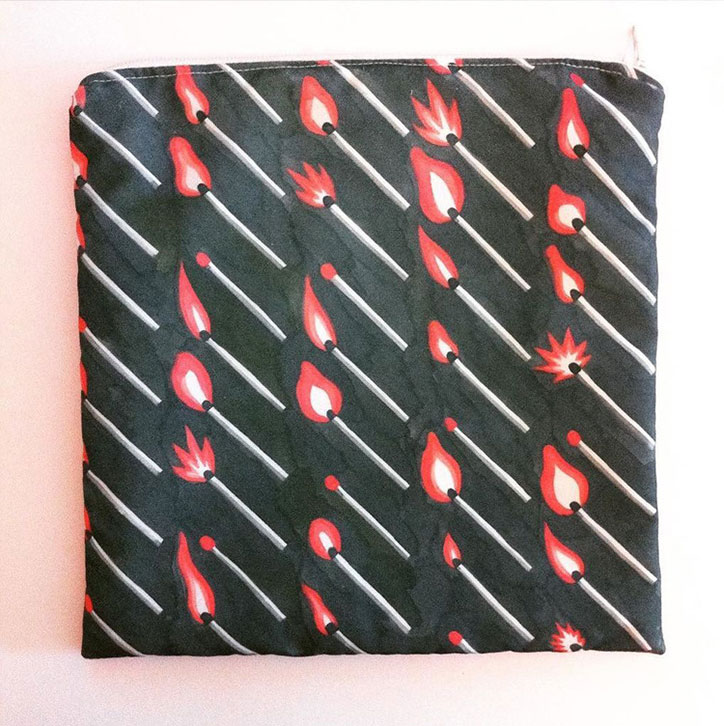
A square fabric pouch featuring a repeating pattern of lit matches on a dark grey background. The matches are angled diagonally, with bright red and orange flames.
Above

Eleni Kalorkoti: Matches textile

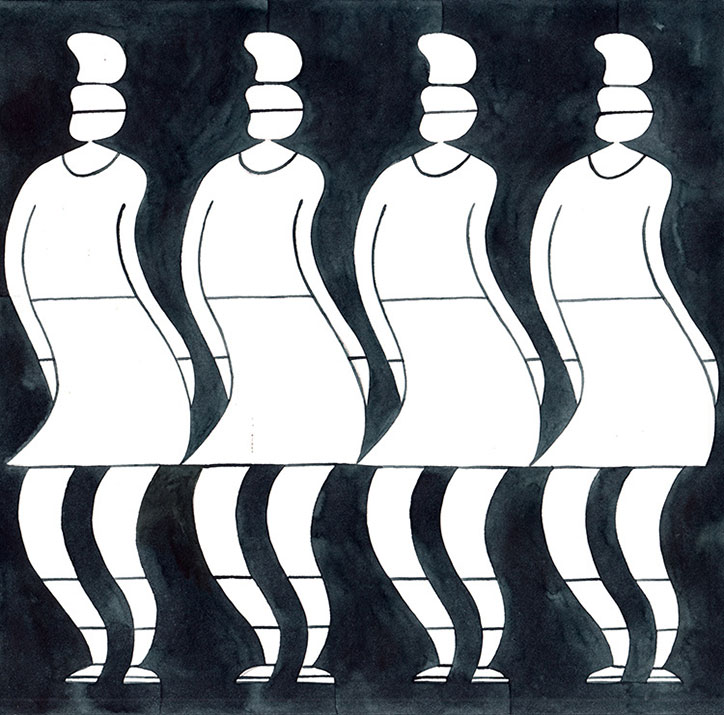
A black and white illustration of four identical, stylised figures standing in a row. Each figure wears a tall hat and a long tunic, with their bodies curved in a rhythmic, repeating pattern.
Above

Eleni Kalorkoti: Wiggle textile

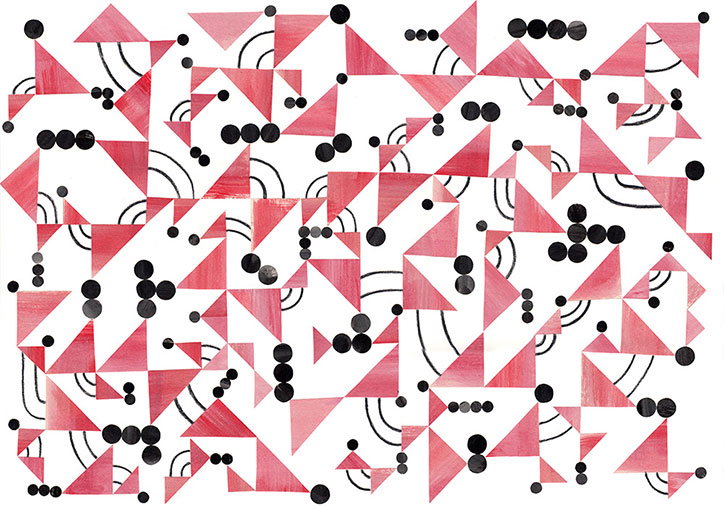
An abstract composition of red triangles and black circles on a white background. Thin black curved lines arc across the page, connecting the geometric shapes.
Above

Eleni Kalorkoti: collage

Share Article

About the Author

Jenny Brewer

—

Jenny oversees editorial output across It’s Nice That. Get in touch with writing pitches for features or opinion pieces, big creative story tips, or questions about all things editorial. [email protected]

To submit your work to be featured on the site, please see our Submissions Guide.
It's Nice That Newsletters

Fancy a bit of It's Nice That in your inbox? Sign up to our newsletters and we'll keep you in the loop with everything good going on in the creative world.