Graphilately is the Instagram account making stamp collecting cool
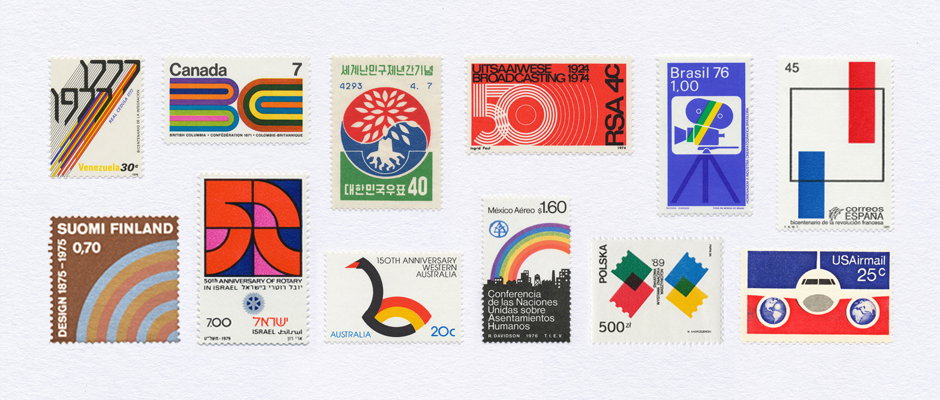
For some years now stamp collecting has been relegated from the status of a widespread and admirable pastime to a somewhat nerdy pursuit, and this is a perception that Blair Thomson, creative director of design studio Believe In, is keen to shake off. Having had a passion for stamps instilled in him at a young age, Blair is the designer behind Graphilately, an Instagram account dedicated to his own beautifully curated, and very well photographed collection, which celebrates stamps as a form of graphic art in their own right.
We caught up with Blair to talk about his first brush with Helvetica, the timeless draw of collecting stamps in a digital age and his favourite ever design.
Hello Blair! What made you decide to start the Graphilately Instagram?
Over the years I’ve posted images of the things I collect and cherish (posters, books, old cars and stamps amongst many things) on my personal Instagram @BlairThomson. The stamps are something I’ve collected on/off since childhood so it was a nice surprise when a mutual appreciation from my followers emerged. Further on, in a desire to simplify the content into a singularly themed curation, I decided the stamps really deserved their own dedicated space with higher production values and supporting information. Stamp collecting is traditionally seen as old fashioned and quite nerdy. My mission is to change that perception. Graphilately emerged.
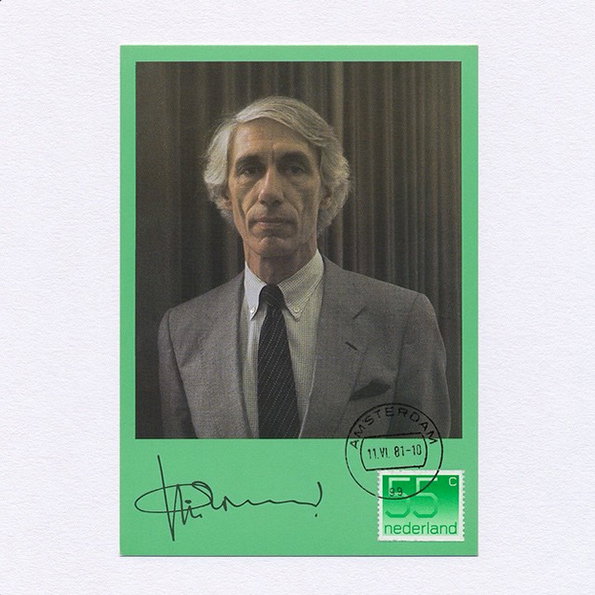
Graphilately: Numbers (55) Wim Crouwel Signed Postcard (55c) I also have the yellow 60c one. The Netherlands, 1981. Design: Wim Crouwel
Is it your own personal collection, or one found through other people?
All the stamps are my own. My primary collection are all MNH (Mint Never Hinged) and like new. My father introduced me to stamps as a child in Canada in the mid-70s. He put together my own album from a lot of his spares and to this day there are stamps in that book (which I still own) which remain a strong emotional pull for me. It was always the more graphic, and what I would later discover, “modernist” stamps which excited me. Strong geometry, strong colour, simple, beautiful composition and typography.
"My stamps ... are not always about the best printing technology and finish, or how photo-real the image can be reproduced – they’re about simple, graphic ideas conveyed through a highly visible, yet tiny medium."
Blair Thomson
How does this found work relate (if it does) to your own design work?
The stamps are an extension to my own influences as a designer. My stamps, you will notice, are not always about the best printing technology and finish or how photo-real the image can be reproduced – they’re about simple, graphic ideas conveyed through a highly visible, yet tiny medium. They’re about ideas and differentiation. The simple, more creative executions, I feel, are always far more effective, memorable and impactful than anything which is heavy on detail. They feel timeless and the same can be said to my own philosophy to design and design for brands in the real world.
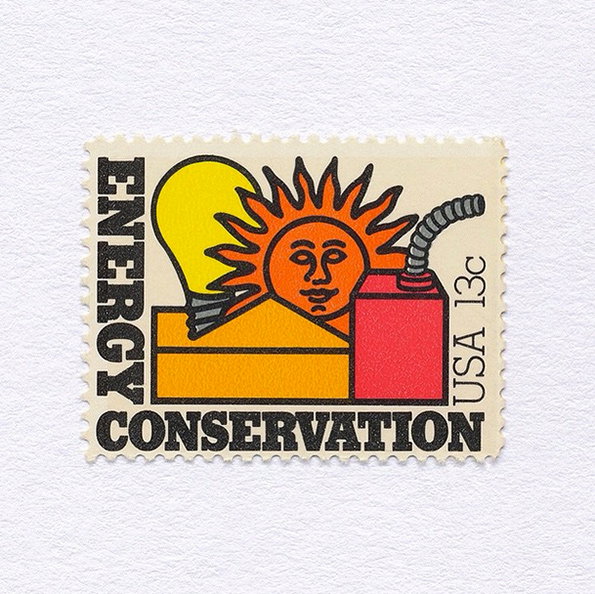
Graphilately: Energy Conservation (13c). USA, 1977. Design: Terrance McCaffrey
Which is your favourite, and why?
Like a parent, I love all of my children – but if I had to choose, I’d say that my all-time favourite (since childhood) would be the Canadian, Montreal 1976 Olympics set. The metallic inks, the Helvetica, the purity of execution – without a shadow of a doubt I have always loved these. They are as much a representation of my heritage as they are of my modernist values. In recent years I have discovered many other gems, but currently I am in awe of many Venezuelan specimens from the late 1970s. Uncovering designers like Gerd Leufert, Nedo Mion Ferrario, Alvaro Sotillo and Santiago Pol (Venezuela’s stamp designers for that era) was a revelation and opened up a whole new world of beautiful works in not only stamps, but many other graphic forms.
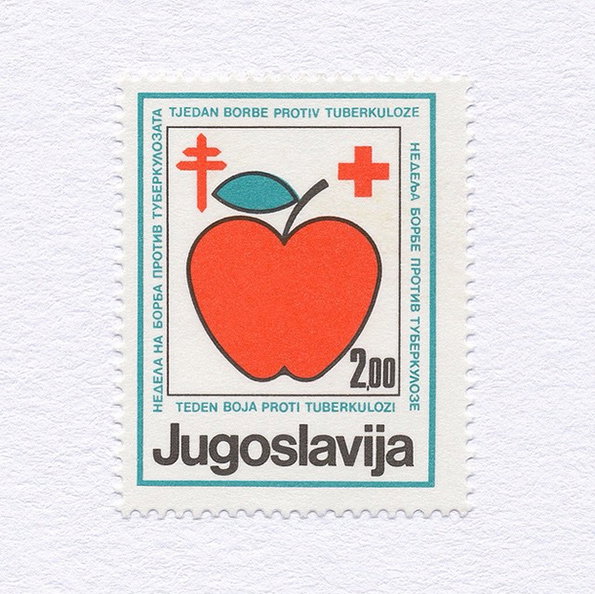
Graphilately: Red Cross Anti Tuberculosis (2,00 ). Yugoslavia, 1983. Design: Unknown
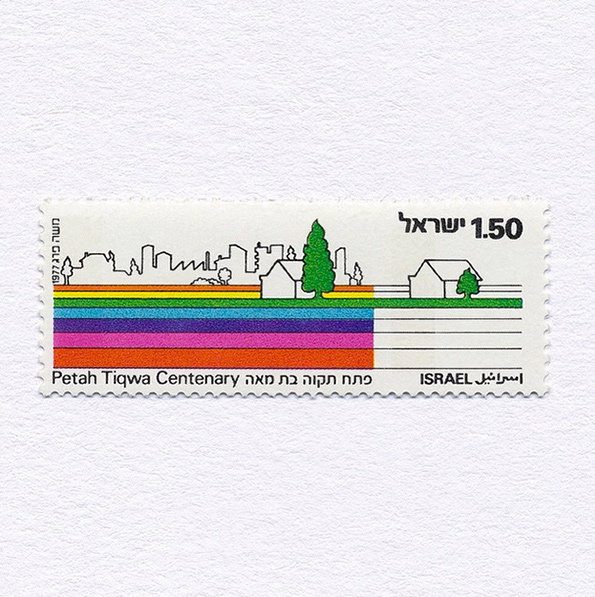
Graphilately: Petah Tiqwa Centenary (1.50). Israel, 1977. Design: Moshe Pereg
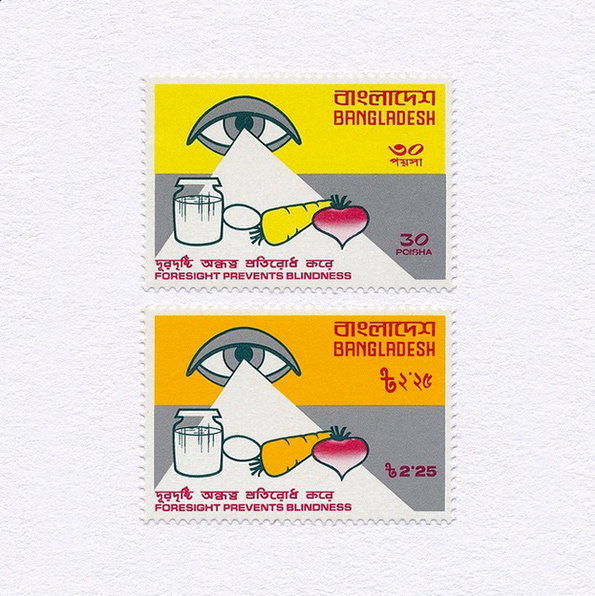
Graphilately: Foresight Prevents Blindness (30/2.25). Bangladesh, 1976. Design: Ahmed F. Karim
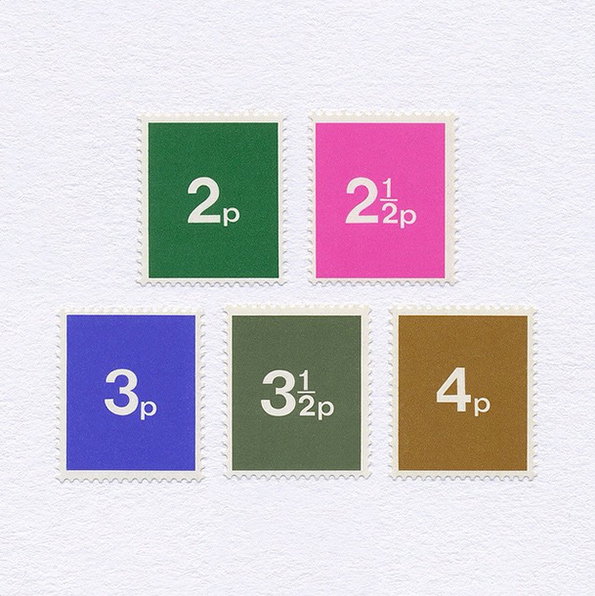
Graphilately: Decimalisation Training Stamps (2p/2½p/3p/3½p/4p). Great Britain, 1971. Design: Unknown (assume in-house at Royal Mail)
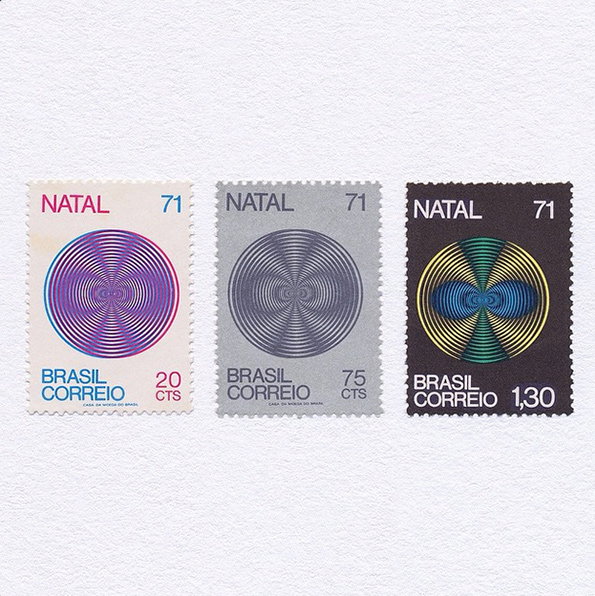
Graphilately: Natal 71 (0.20/0.75/1.30). Brazil, 1971. Design: Aloísio Magalhães
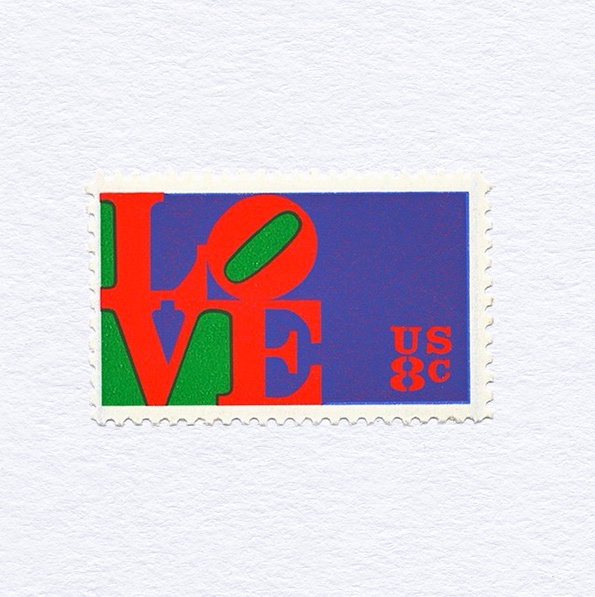
Graphilately: Love (8¢). USA, 1973. Design: Robert Indiana
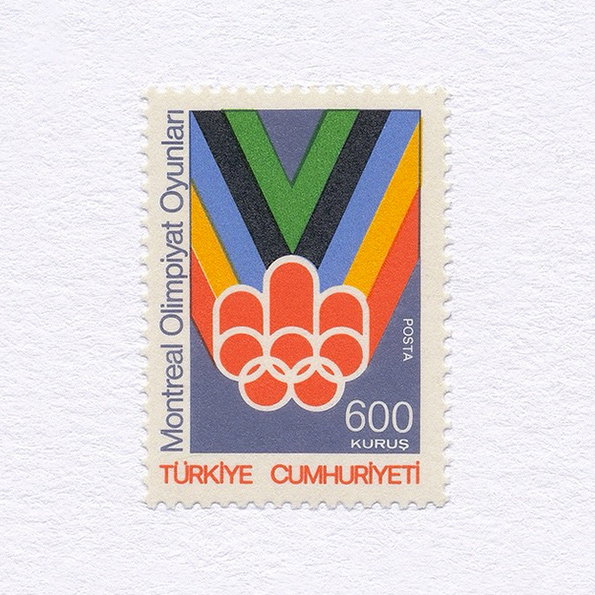
Graphilately: Montreal Olympic Games (600k) Part of a series of 3. Turkey, 1976. Design: Unknown
Share Article
Further Info
About the Author
—
Maisie joined It’s Nice That fresh out of university in the summer of 2013 as an intern before joining full time as an Assistant Editor. Maisie left It’s Nice That in July 2015.