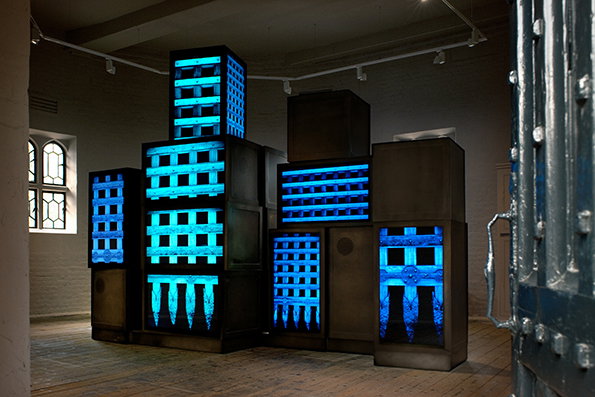
LucienneRoberts+ and Real Studios' Tower of London "time machine"
There are several cool job titles found in British history and Constable of the Tower of London is right up there. The Duke of Wellington took the office on route to becoming Prime Minister and made several major innovations including draining the moat, closing the Royal Menagerie and shutting down the taverns within its walls. All of which makes him sound like a prize spoilsport, but in fact after his tenure the Tower was both better-equipped for its military purposes and drawing more visitors than ever.
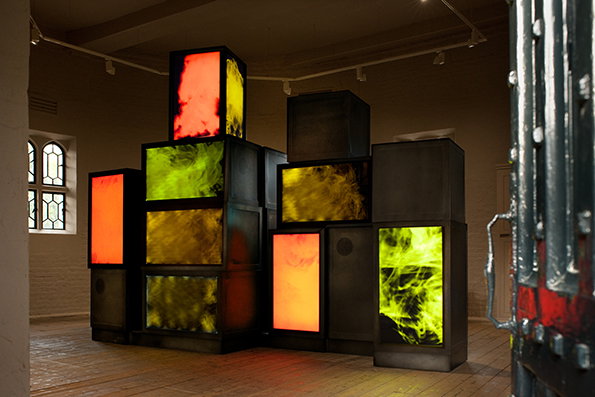
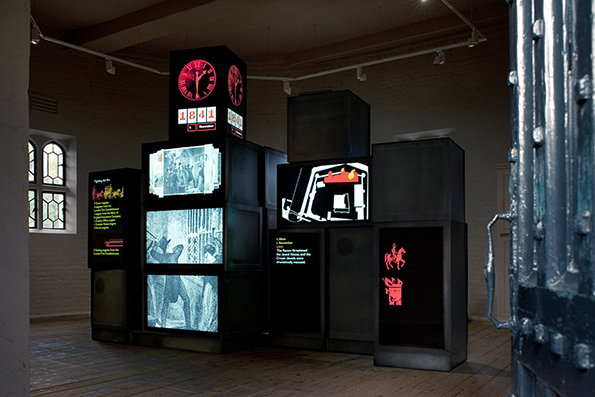
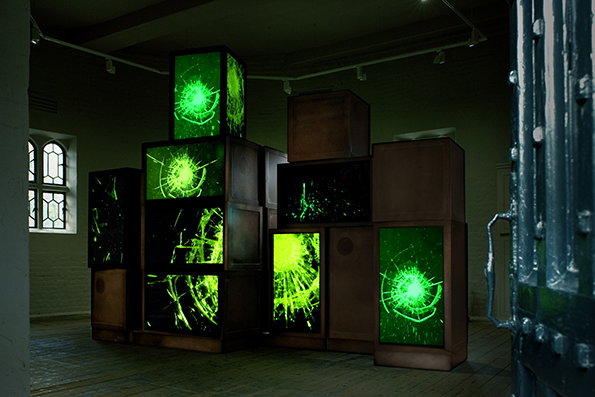
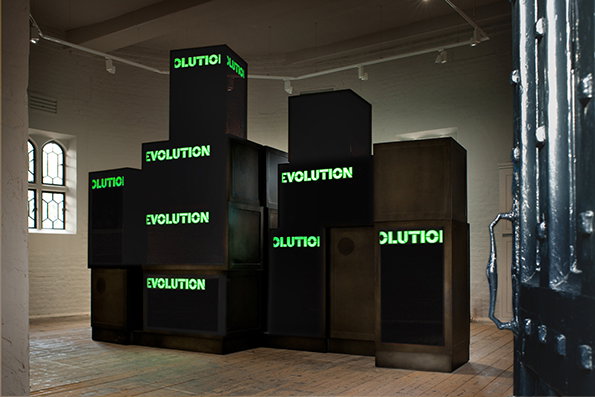
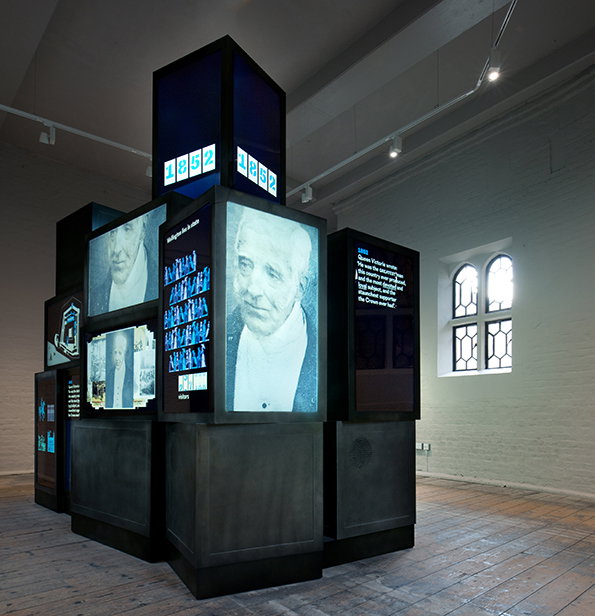
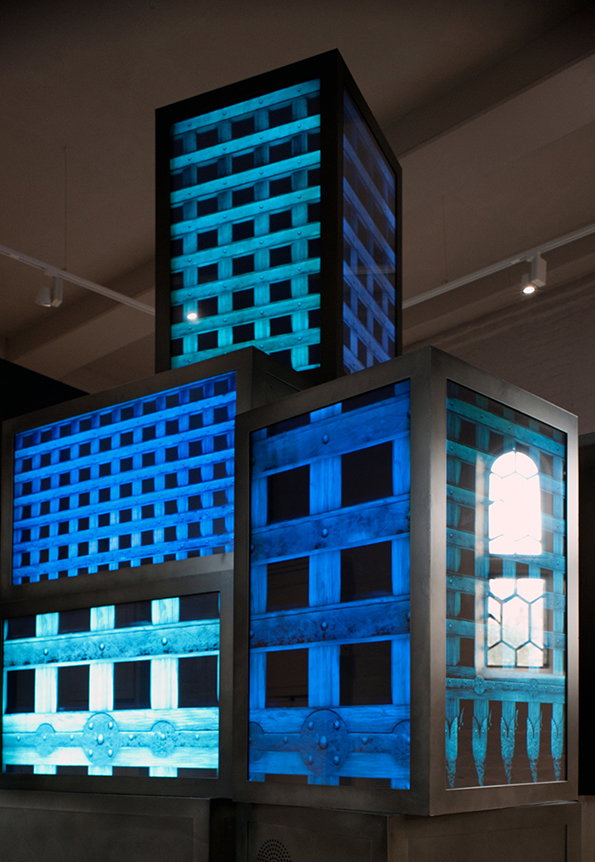
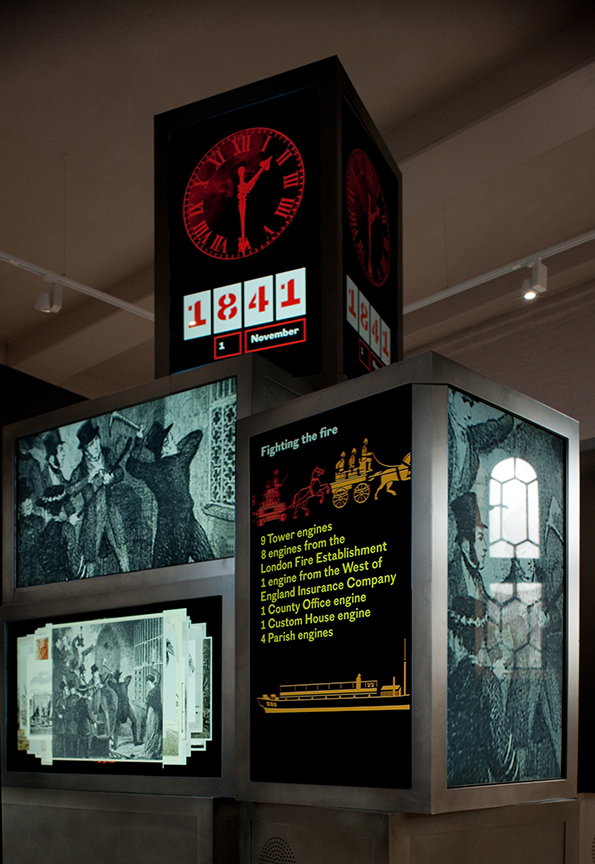
When Historic Royal Palaces – the body that looks after the Tower – wanted to tell the story of his time in charge, they turned to Real Studios and LucienneRoberts+ who commissioned animator Paul Plowman and sound designer Dominic Robson to work with them creating an audio visual installation. Inspired by the space’s previous use as a munitions store, the team designed a piece that resembles a stack of crates with 18 synchronised screens creating an immersive visitor experience.
LucienneRoberts+ and Real Studios: Tower of London Wellington installation
LucienneRoberts+ and Real Studios: Tower of London Wellington installation
Lucienne told us: “It’s conceived to feel like a mechanical time machine, counters fast forward and whizz back, clock hands rotate at speed, images jerkily appear and disappear and infographics animate to tell different aspects of each story. Short captions on one monitor are supported by a colourful plan and set of icons on others. Each story begins with an image wipe and accompanying sound – orange, red and yellow flames crackle and dart around the boxes, fluorescent green panes of glass shatter and fall, an electric blue portcullis clanks as it descends.”
“Bearing in mind the huge visitor numbers (just short of three million last year) alongside their mix in ages, nationalities and expectant levels of engagement, we placed a great deal of emphasis on developing a layered narrative, rich with multiple meanings that can be understood by English-speaking and non-English speaking audiences alike. Our objective was to create interpretation that is engaging, accessible, informative and entertaining for visitors who want to learn and linger alongside those who simply want to take in a few relevant facts.”
LucienneRoberts+ and Real Studios: Tower of London Wellington installation
LucienneRoberts+ and Real Studios: Tower of London Wellington installation
LucienneRoberts+ and Real Studios: Tower of London Wellington installation
LucienneRoberts+ and Real Studios: Tower of London Wellington installation
LucienneRoberts+ and Real Studios: Tower of London Wellington installation
Share Article
Further Info
About the Author
—
Rob Alderson is a freelance writer, editor and strategist. He was previously editor-in-chief of It’s Nice That and WePresent, and editor of Design Week. He publishes the newsletter Undo, which tries to make sense of how AI is changing design work, the design process and the design industry.