Launch Recite Me assistive technology
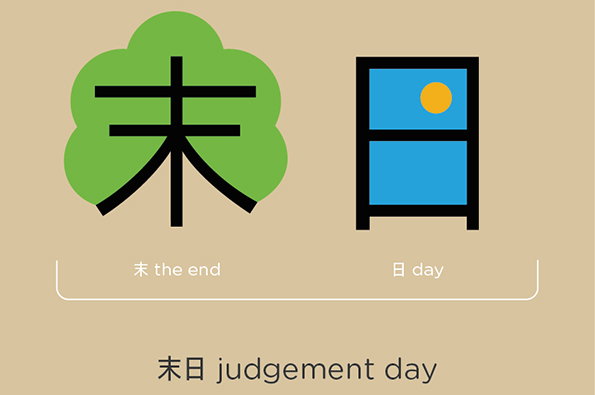
An illustration explaining the Japanese kanji for “judgement day”. The first character is styled as a green tree and labelled “the end”, while the second is a blue window with a yellow sun labelled “day”. Together, they form the phrase “judgement day”.

Illustration: Noma Bar's designs for innovative language guide Chineasy

—
Date
24 July 2013

With the socio-cultural rise of China and India over recent years, we are constantly being told that sooner our later the gap between east and west will need to be bridged. A new project by entrepreneur ShaoLan Hsueh and illustrator Noma Bar is setting out to do just that by helping non-Mandarin speakers pick up some of the language’s basic building blocks. ShaoLan and Noma developed a set of easily recognisable illustrated symbols which both individually and in conjunction with each other help learners create a set of words and phrases.

This week sees the launch of an ambitious one-month Kickstarter campaign to raise £75,000 for a Chineasy book, which it is hoped will open up this innovative approach to language-learning to a much wider audience. Whether they make it or not (and we sincerely hope they do) it’s great to see illustration harnessed for such potentially significant ends.
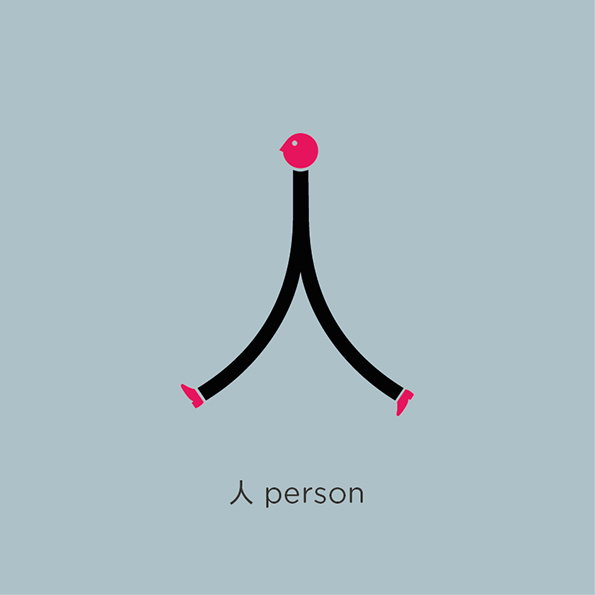
An illustration of a black kanji character for “person” reimagined as a figure. A pink circle forms the head and two pink shapes form the feet. Below the figure, the character is repeated next to the word “person”.
Above

Noma Bar and ShaoLan Hsueh: Chineasy

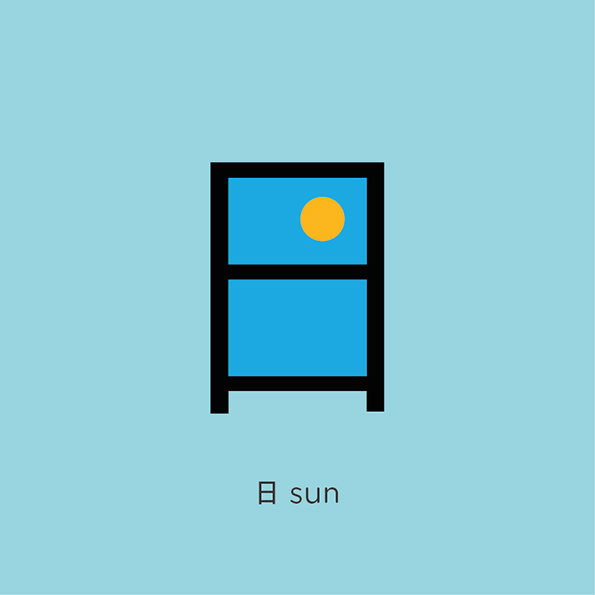
An illustration of a blue rectangle divided by a horizontal line, with a yellow circle in the top half. Below the graphic, a Japanese character is followed by the word “sun”.
Above

Noma Bar and ShaoLan Hsueh: Chineasy

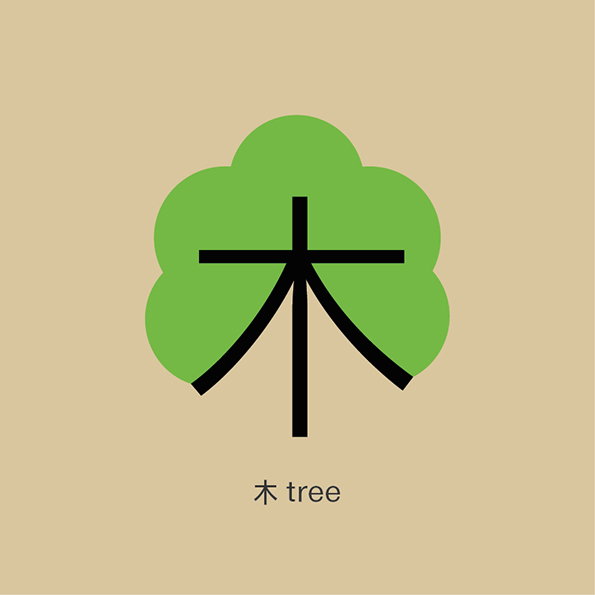
An illustration of a black kanji character for tree set against a bright green, cloud-like shape. Below the graphic, the character is repeated alongside the word “tree”.
Above

Noma Bar and ShaoLan Hsueh: Chineasy

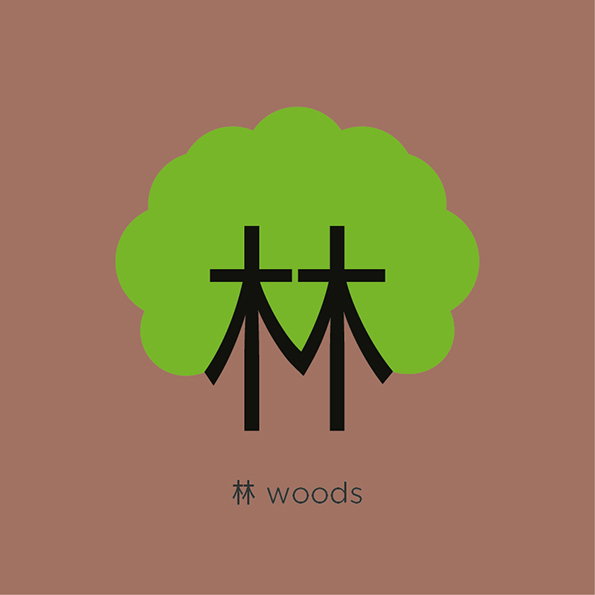
An illustration of a green, cloud-shaped tree canopy with a black Japanese kanji character for “woods” acting as the trunks. Below the image, the character is repeated alongside the word “woods”.
Above

Noma Bar and ShaoLan Hsueh: Chineasy

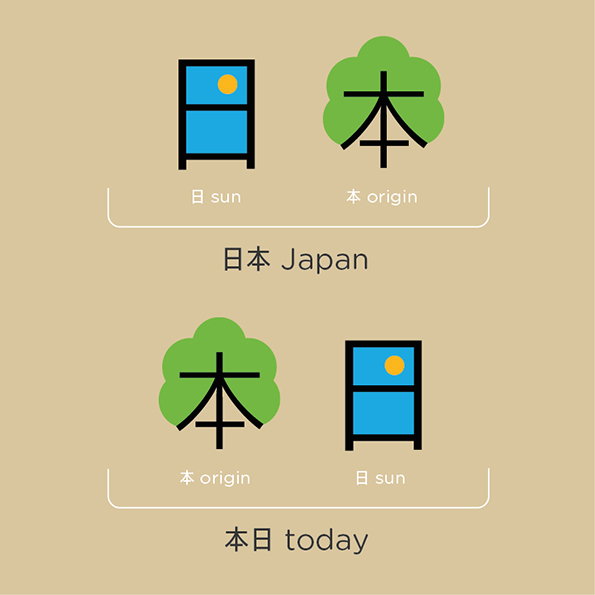
An educational graphic explaining Japanese kanji. The top section shows the characters for “Japan”, pairing a blue and yellow sun icon with a green tree icon. The bottom section reverses the order to show the characters for “today”.
Above

Noma Bar and ShaoLan Hsueh: Chineasy

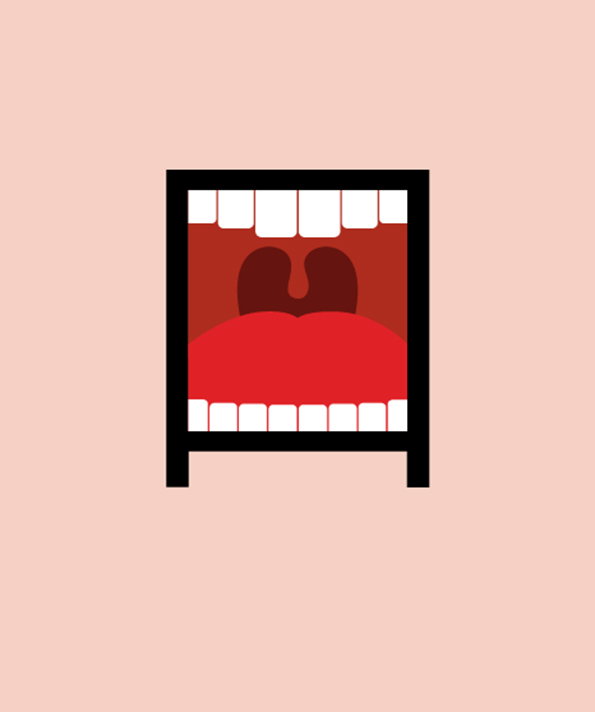
An illustration of a wide-open mouth with white teeth and a red tongue. The mouth is framed by a thick black border, resembling a screen or a window, against a pale pink background.
Above

Noma Bar and ShaoLan Hsueh: Chineasy (Mouth)
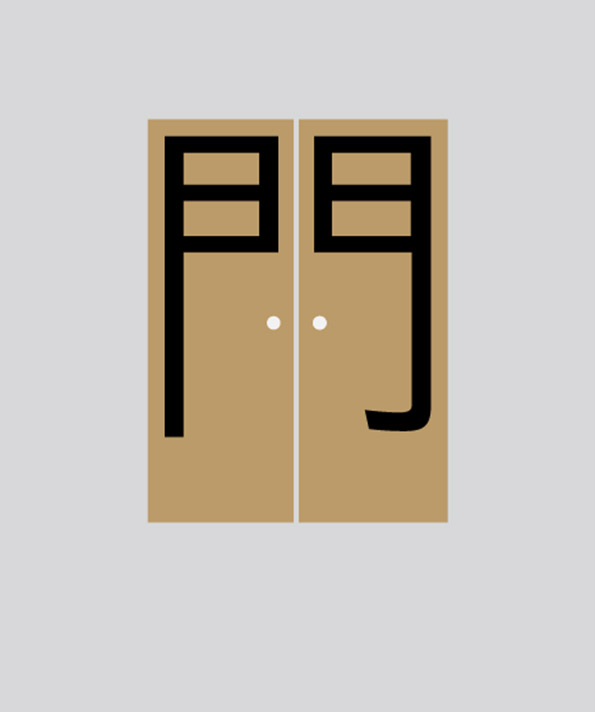
An illustration of a pair of tan double doors against a grey background. The black lines of the door frames form the Japanese kanji character for “gate”.
Above

Noma Bar and ShaoLan Hsueh: Chineasy (Door)

An illustration of a simple red building with four white windows. A black chimney on the roof releases a plume of white smoke against a grey background.
Above

Noma Bar and ShaoLan Hsueh: Chineasy (Roof)

Share Article

Further Info

About the Author

Rob Alderson

—

Rob Alderson is a freelance writer, editor and strategist. He was previously editor-in-chief of It’s Nice That and WePresent, and editor of Design Week. He publishes the newsletter Undo, which tries to make sense of how AI is changing design work, the design process and the design industry.

It's Nice That Newsletters

Fancy a bit of It's Nice That in your inbox? Sign up to our newsletters and we'll keep you in the loop with everything good going on in the creative world.