John O'Reilly

  • Varoom-16-cover2
    • Image 1 of 10
  • Varoom-16-cover
    • Image 2 of 10
  • Varoom1
    • Image 3 of 10
  • Varoom2
    • Image 4 of 10
  • Varoom3
    • Image 5 of 10
  • Varoom4
    • Image 6 of 10
  • Varoom5
    • Image 7 of 10
  • Varoom6
    • Image 8 of 10
  • School-mag
    • Image 9 of 10
  • Adam-buxton
    • Image 10 of 10

John O’Reilly

Guest Posting 17 – 21 October 2011

Varoom! is an illustration specific magazine – the latest issue of which boasts a cover by the inimitable George Hardie as well as contributions from the likes of Marian Bantjes and Mimi Leung – with questions posed and answered about the importance of illustration by experts, practitioners and critics. It’s editor and former music journalist, John O’Reilly is guest posting this week as issue #16 is launched…

How do you explain what you do to your parents?

“Mum and Dad, I’ve something to tell you. I’m editor of Varoom illustration magazine. It’s from the wrong side of the tracks – animation, illustration for smartphone apps, children’s books. Dammit, the new issue has a 1,500 word feature on speech bubbles! I know you imagined me with a glossy uptown art mag, but Ma I love her! Varoom is smart, bright, good-looking, and at £5, is a really cheap date.”

Who do you look like?

At Bug, the music promo night a few years ago, I met the host Adam Buxton outside having a drink. My kids and I loved his XFM show, so I asked him for an autograph. Instead of an autograph, he spent 10 minutes chatting and drawing this sketch of how he imagined my son, with a really funny note. Hero. Adam’s version of my son bears an uncanny resemblance to myself.

Did your education count?

Yes, philosophy is the degree that keeps on giving. I did a doctorate, lectured, then got involved in magazines. I got to learn journalism and visual thinking on the page, as an editor and copywriter, working with some great designers, creative directors, photographers and illustrators – people who think in pictures. My brief time at Colors which gave me the taste for working with designers using images, began a new education.

What’s the best mistake you have ever made?

Being an art critic, despite zero experience. In the 1990s I wrote a column – Art for Bart’s Sake – for The Modern Review, and started writing for the broadsheets. In the YBA decade, I could write under the radar about the likes of Martin Creed, Jeremy Deller, and got to play in a band at events with Creed’s Owada, Matthew Collings’ Interspecies Lovechild and Patrick Brill’s Ken Ardley Playboys. So instead, I became a music critic.

When did you realise that this is what you were good at?

I was 16 and we did a magazine in our school in Dublin. And we got into trouble for it. I met up with the co-editor last year, an old friend, and he brought along a copy of the magazine. We saw ourselves as an Irish version of Woodward and Bernstein – Jedward and Bernstein? It’s from 1980 and it’s a little bit political. Some of it still stands up, one particular guy, was a word-playing Joycean genius. If James Joyce did gags. The back page is in the slideshow above.

What rules do you live by?

1. When working on a team, keep a lid on your inner asshole.
2. Better to feel like an idiot than never try things out. Paul Davis, who does a regular column for Varoom is a model of someone who every time he puts pen to paper puts himself out there. His creativity is fearless.

What makes your day?

As an editor it’s when a writer nails it, like the 3,000 word feature in Varoom 14 by William John Hewitt around The Pogues. Now lecturing at Manchester Metropolitan, John toured with The Pogues in the 80s doing reportage drawing, with photographer Steve Pyke, and journalist Sean O’Hagan from The Face. John’s exploration of the band’s relationship to photography and drawing has the narrative, ideas and analysis that you’d expect see in The New Yorker.

What did you want to be when you were growing up?

Dublin was a grey place in the late 70s and early 80s, I wanted to escape into my imagination, be a visitor to more exotic places, something futuristic, someone from the future, a non-specific desire to be ‘creative’, to be out of time like Thomas Newton in The Man Who Fell To Earth or Phil Okey on Travelogue. So, like every Dubliner before and since, I became a philosopher…

What one thing would you like to be remembered by/for?

Commissioning a 21st Century Zodiac in Varoom 13. Paul Morley wrote it, and 12 great illustrators visualised. We thought the old one needed upgrading. At this moment I am under The Sign of Andy Warhol’s 15 Minutes.

What’s your favourite combination?

Image-makers that like to play with the rules, with your expectations – Saul Steinberg, John Stezaker, Shaun Tan, any artist with an ‘s’ in their name.

What’s the funniest thing you have EVER seen?

Martin Creed’s Work No. 850 where a person runs through the gallery every 30 seconds. Funny, absurd, beautiful. Beckett + Usain Bolt. You had to be there, though this video of it is pretty funny.

www.varoomlab.com

Guest Posted Articles

  1. Ramellzee

    Guest posted by John O'Reilly,

    I’ve always loved ideas and images with jet-packs, futurists like JG Ballard and Paul Morley, architects like Archigram and collagists like Paolozzi who plug you into new ways of seeing things. In Varoom issue ten, we ran a piece by the late Ramellzee, “Gothic Futurist”/street artist/ rapper/performance artist who came out of 1970s New York subway graffiti. His work was about the power of visuals/symbols/lettering to re-wire thinking. When people saw him walking down the street, asking "Who the hell are you?” he said: “I’m just an average Joe, but Ramm: ell: zee is an equation, it’s not a name… I’m one of the few people to have an equation.”

  2. Oliviero Toscani

    Guest posted by John O'Reilly,

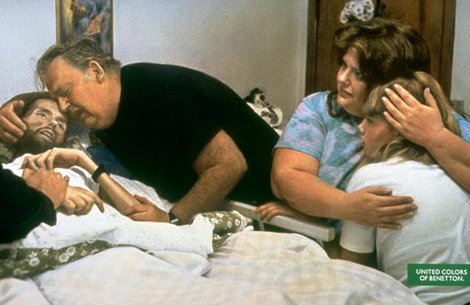
    The first time I interviewed Oliviero Toscani, he had just shot a campaign for Benetton featuring children with Down’s syndrome. The creative insight Toscani and Tibor Kalman brought to their Bennetton and Colors work, was an understanding of how to use the aesthetic assumptions we bring to images. It’s there in the wordless issue of Colors, the race issue, Toscani’s use of editorial imagery in advertising: the Pieta/Peter Kirby aids image (pictured); the clothes of the dead Bosnian soldier; a bloody, newborn baby.

  3. Flann O'Brien

    Guest posted by John O'Reilly,

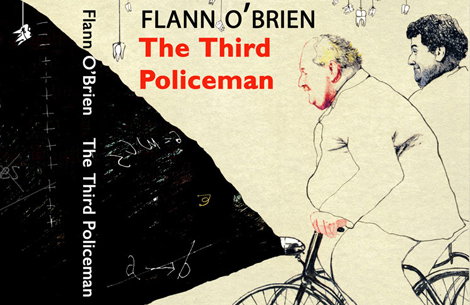
    A couple of weeks ago, fans of twisted comic absurdity celebrated the 100th anniversary of the birth of Brian O’Nolan, better known as Flann O’Brien. His great work The Third Policeman, written in 1929 but published over 30 years later (after his death), is a great example of Irish postmodernism. In Ireland, post-modernity came before modernity. In fact modernity never arrived, and due to a bureaucratic oversight no one thought to cancel it, so there are literary critics at bus stops all over Ireland still waiting. This cover is by Fatime Szaszi, a Falmouth student at the time, and perfectly expresses the reverse logic of O’Brien’s world.

  4. The New Yorker

    Guest posted by John O'Reilly,

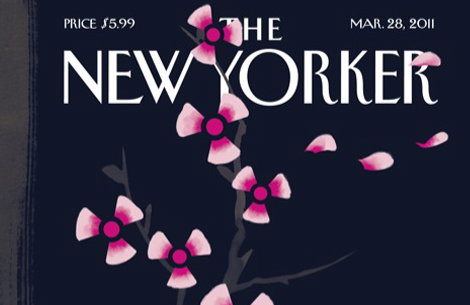
    When The New Yorker drops through the letterbox, it’s like Santa on Christmas Day. Long-form, idea-based journalism that flatters the reader, with features and ideas by the likes of Malcolm Gladwell that eventually appear in the mainstream conversation. Each issue is framed up by an illustration on the cover – because it’s looser than conventional covers, more open, the illustration enables a wide variety of content. Christoph Niemann’s nuclear flowers cover about the Japanese Tsunami, playing with familiar iconography, is desperately poignant.

  5. Earl Brutus

    Guest posted by John O'Reilly,

    Earl Brutus were the other side of 1990s Britpop – uncool Britannia, chaotic pub-glam rock. I saw them play on a small boat in Chelsea Harbour, they let off fireworks on stage. Scott King did the sleeve art for Tonight You Are The Special One, and King’s graphics from this promo were inspired by his and Matt Worley’s Crash! project. The first time I visited Michael Place (from BUILD,) this song was playing in the background. There’s a secret sect of graphic designers devoted to Earl Brutus.