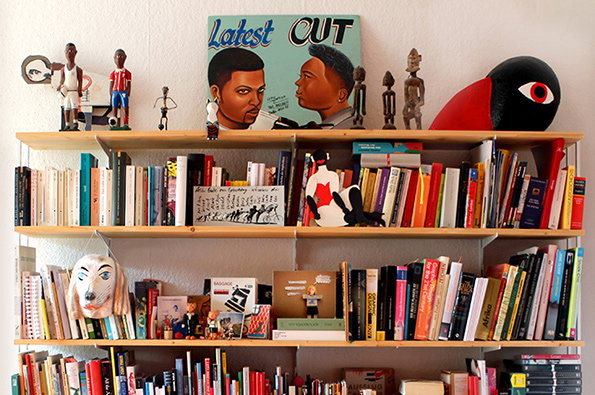
When you ask a couple of creatives who work in a former kindergarten in east Berlin (as we learned in an interview many moons ago) to show you their book collection, you hope to see some pretty cool and quirky publications. Doris and Daniel of Golden Cosmos have not let us down.
Reading about their favourite books is an education in itself; a tour around European publishing, politics and playschool past and present. There’s plenty of illustration inspiration on these shelves – from Saul Steinberg’s minimalist sketches to Volker Pfüller’s witty drawings – and joyful stories aplenty. I wish I’d had the escapades of beer-drinking pooch Maxihund Fips read to me as a wee nipper!
Armin Abmeier: Die Tollen Hefte
Armin Abmeier: Die Tollen Hefte
Armin Abmeier: Die Tollen Hefte
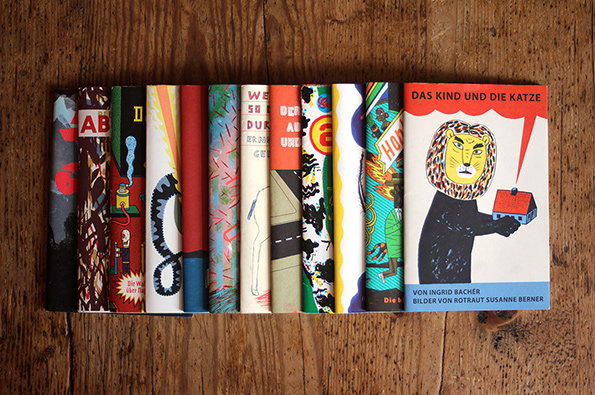
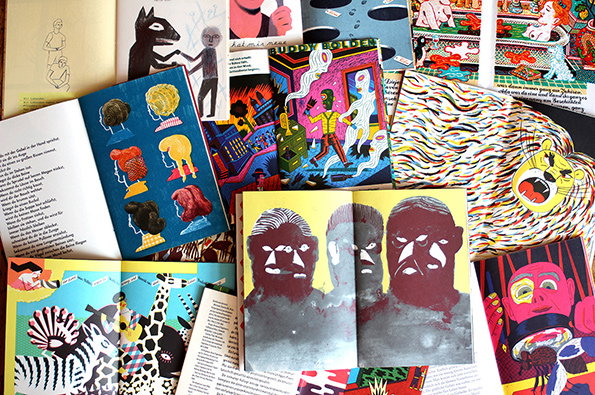
Die Tollen Hefte (“far-out booklets”) is a series of illustrated booklets founded by Armin Abmeier. After more than 25 years and over 40 issues Die Tollen Hefte have become true collector’s items, with some editions already sold out. Every booklet has 32 pages and is printed with spot colours, thread-sewn and designed lavishly and lovingly with attention to each and every detail – the book jackets are even illustrated on the insides. All booklets include an additional poster or original print and are printed in a limited edition.
Most booklets illustrate literature, for example by T.C. Boyle, Gertrude Stein, Charles Bukowski, Ovid or Julio Cortázar but also include stories written by the illustrators themselves. Artists like Blexbolex, Henning Wagenbreth, ATAK or Sophie Dutertre have contributed their work, just to name a few.
T.C. Boyle: Der Polarforscher
T.C. Boyle: Der Polarforscher
T.C. Boyle: Der Polarforscher
T.C. Boyle: Der Polarforscher
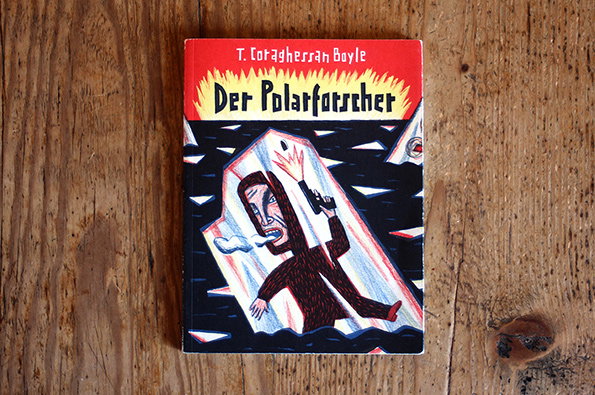
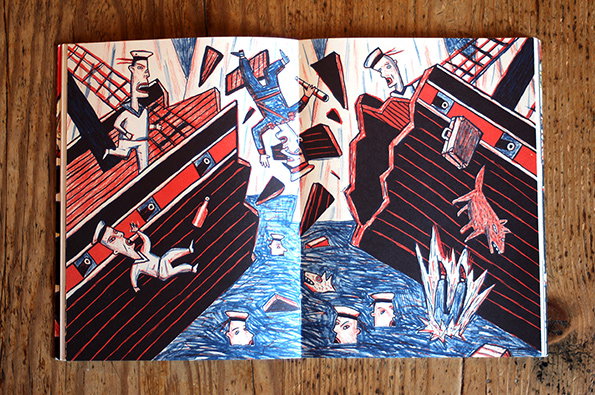
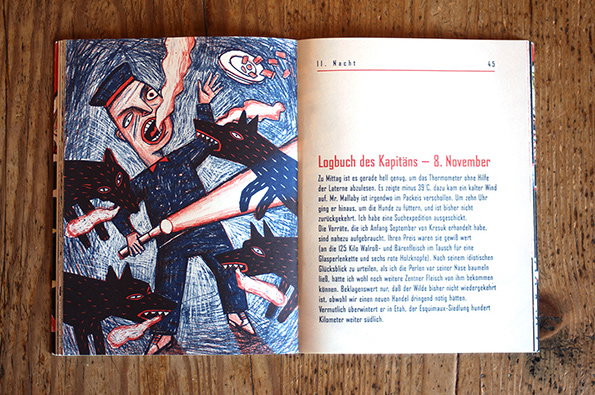
Before Die Tollen Hefte came to life, there was a series called Die Tollen Bücher which was published by a little editing house called Maro Verlag. One book from the series is T.C. Boyle’s The Arctic Explorer and we really love Henning Wagenbreth’s illustrations for it! Apart from the great design of the book (typography created by Wagenbreth specifically for the book, nice pattern on the inside of the cover) the powerful illustrations printed with only red and blue really add a lot to the gruesome story. A sailing vessel with arctic explorers on board is on its way from Brooklyn to the North Pole for an expedition only to meet a tragic ending…
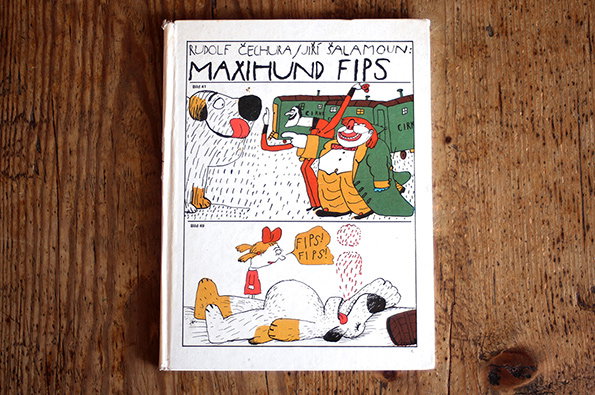
Jiří Šalamoun / Rudolf Čechura: Maxihund Fips
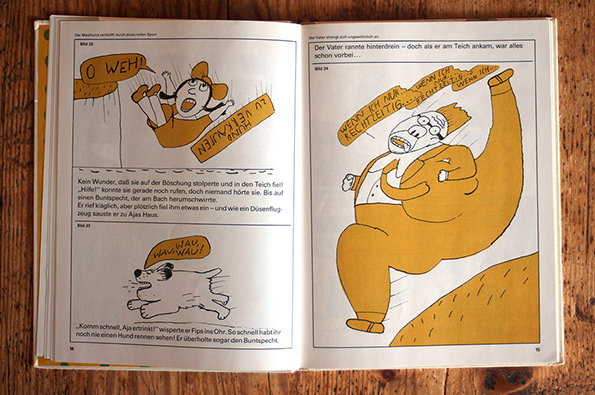
Jiří Šalamoun / Rudolf Čechura: Maxihund Fips
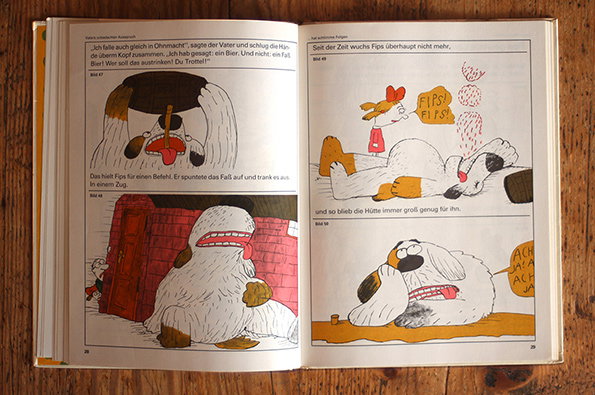
Jiří Šalamoun / Rudolf Čechura: Maxihund Fips
Jiří Šalamoun/Rudolf Čechura: Maxihund Fips
Maxihund Fips (Czech Maxipes Fík) was originally a popular animated Czech TV series for children, first shot in 1975. The author and screenwriter was Rudolf Čechura and the animator was the fabulous drawer Jiří Šalamoun. Der Kinderbuchverlag Berlin published the exceptional illustrations as a book in 1987.
You’ll just love this rowdy dog who drinks beer, wins horse races and drives cars, only causing chaos on the roads. And Jiří Šalamoun’s vivid drawings make you feel like this dog will jump right out of the book and into your arms.
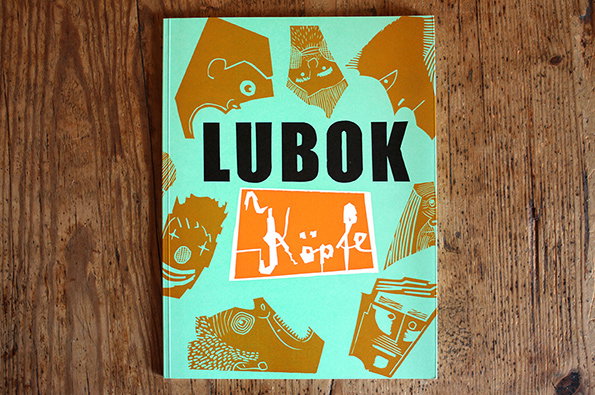
LUBOK: Köpfe: Volker Pfüller
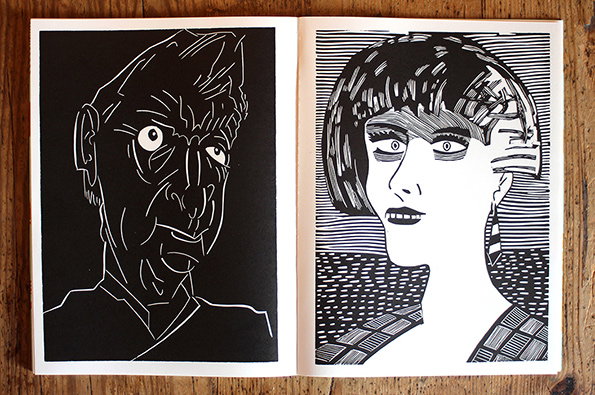
LUBOK: Köpfe: Volker Pfüller
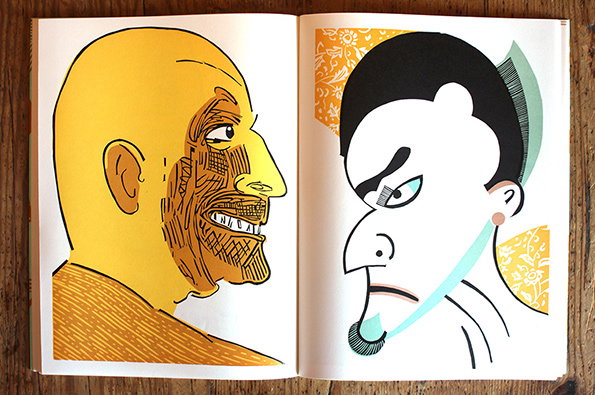
LUBOK: Köpfe: Volker Pfüller
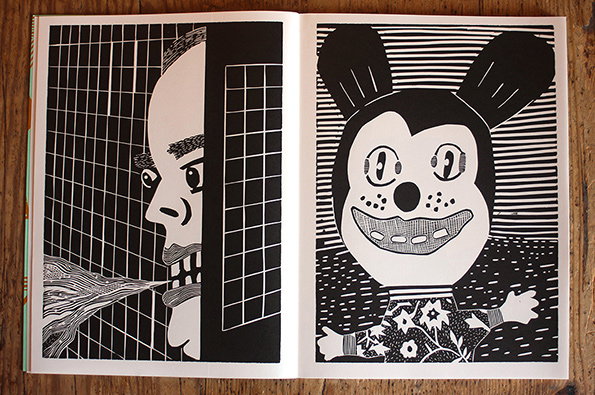
LUBOK: Köpfe: Volker Pfüller
LUBOK: Köpfe: Volker Pfüller
A “lubok” is a Russian popular print with informal, satirical or political content which was common from the middle of the 17th Century till the beginning of the 20th Century. The LUBOK press from Leipzig has published a series of original linocut printed books since 2007. For every issue around ten artists (well-known and newcomers) are asked to make a series of linocuts which are printed in black and white or colour.
Köpfe is a collection of 32 black and white and eight multicoloured linocuts by Volker Pfüller. The portraits show famous people and strangers. Volker Pfüller is a German graphic artist who is famous for his theatre posters, set designs and book illustrations. We are big fans of his bold and vibrant style and witty humour. In the book he brings to life 40 individual personalities and it’s amazing how he plays with shapes, lines and structures to generate such a diverse range of feelings and moods.
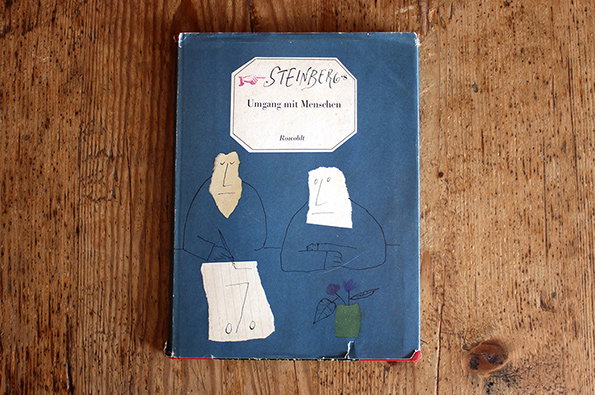
Umgang mit Menschen: Saul Steinberg
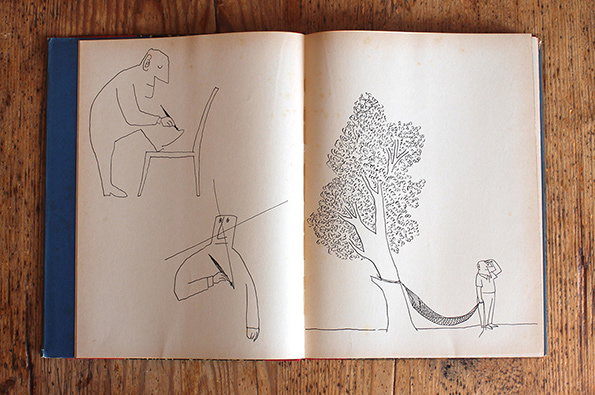
Umgang mit Menschen: Saul Steinberg
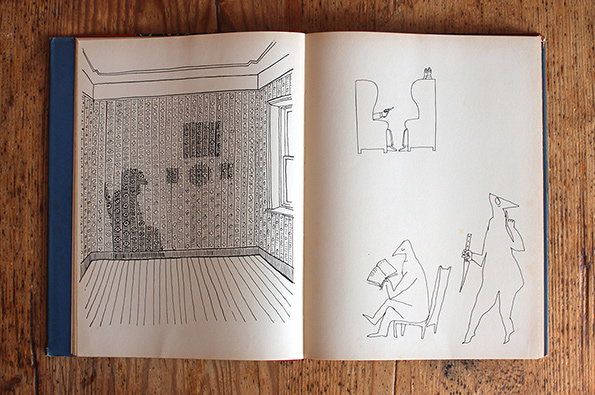
Umgang mit Menschen: Saul Steinberg
Umgang mit Menschen: Saul Steinberg
In 1954 the German Rowohlt Verlag published a collection of Saul Steinberg’s illustrations which he originally made for The New Yorker (for the most part.) Browsing through the book will inevitably make you smile.
Steinberg is a master of the line which indicates and emphasises. It’s just awesome how he can express so much with just a few strokes. Saul Steinberg’s work always is a great source of inspiration for us.