Launch Recite Me assistive technology
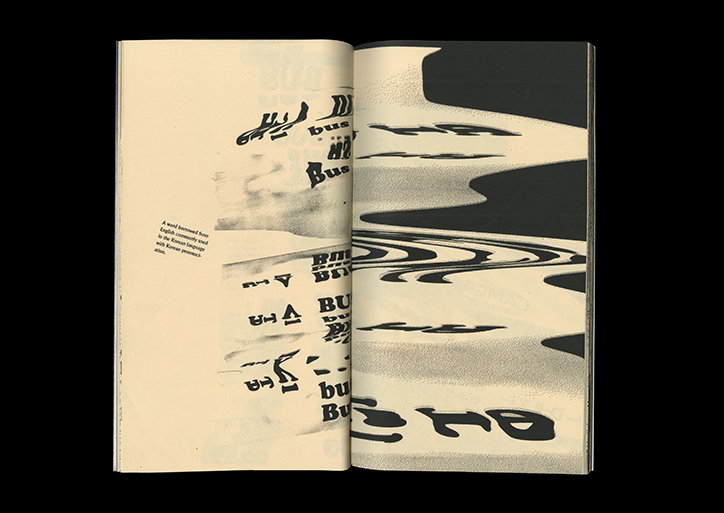
An open book shows a black and white spread of distorted, fluid typography. A small block of text on the left explains a word borrowed from English used in the Korean language.

Ran Park explores the chaos of "Konglish" in a new zine

—
Date
20 September 2016

Konglish is the use of English words, or words derived from English words, in a Korean context. This simple premise was the concept behind Berlin-based designer Ran Park’s zine, Lost In Konglish. “The inspiration is a little bit whimsical,” explains the designer. “One day, I heard a gentleman explaining to a foreign tourist what a ‘banana’ was called in Korean. Phonetically it was the same, which made me think of the subtle alterations in the Korean language over the past decades.”

The publication shows the words that are phonetically pronounced the same alongside the Korean and English letterforms. The layouts are chaotic, the words smeared across the pages. “I decided to make my own 21st century version of a ‘Konglish’ script book that conveys this delicate phenomenon. You get to see both written forms of Korean and English words within the book and the mixed forms of them which depict the changes,” explains Ran. “This publication is mainly aimed at foreign people as it is written in English, so now I am planning to create something for both Koreans and non-native Koreans.”
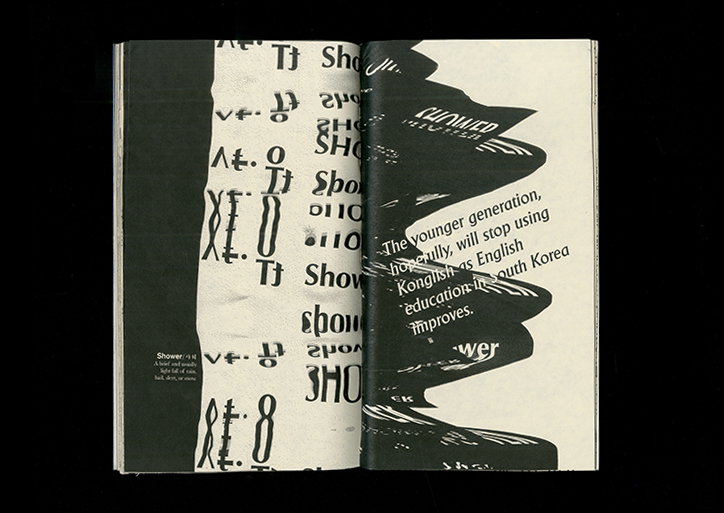
An open book with black and white pages. The right page features a dark, jagged silhouette containing the text “The younger generation, hopefully, will stop using Konglish as English education in South Korea improves.”
Above

Ran Park: Lost In Konglish

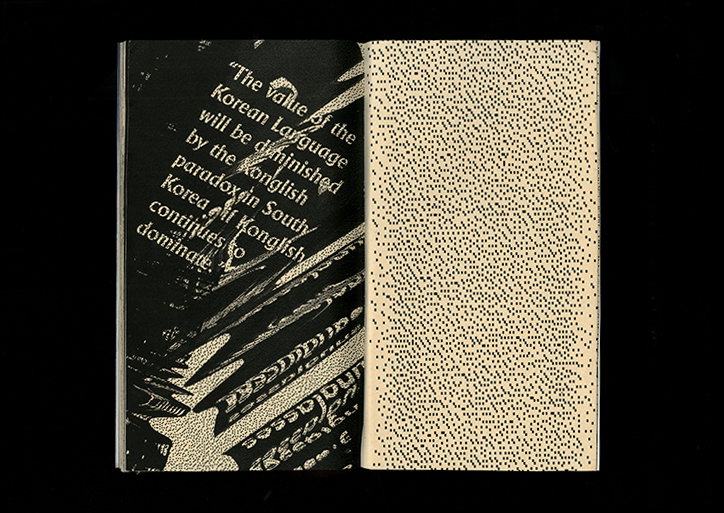
An open book with a black left page and a cream right page. The left page features a quote in white text that reads “The value of the Korean Language will be diminished by the Konglish paradox in South Korea as Konglish continues to dominate.”
Above

Ran Park: Lost In Konglish

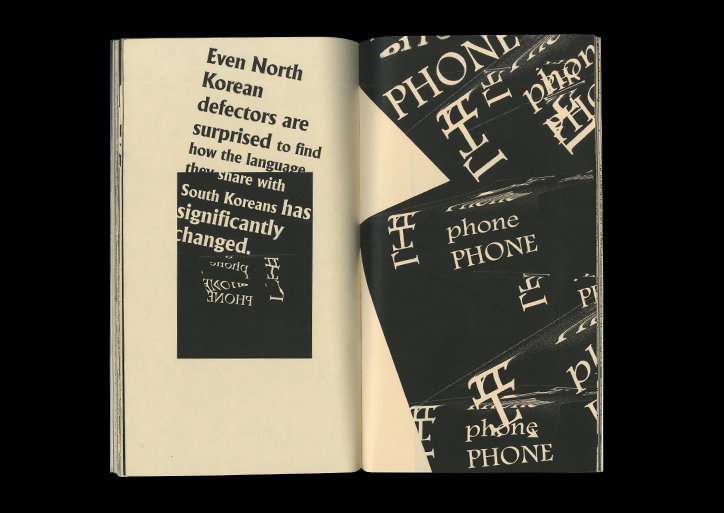
An open book shows a page of text alongside a black and white collage. The text reads, “Even North Korean defectors are surprised to find how the language they share with South Koreans has significantly changed.”
Above

Ran Park: Lost In Konglish

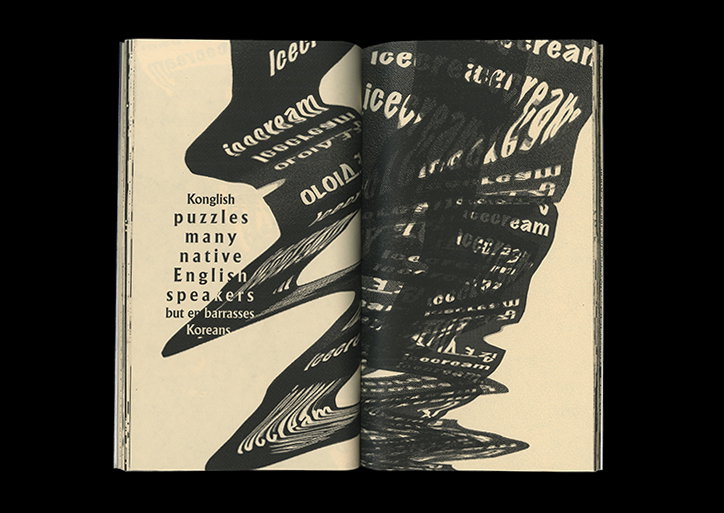
An open book shows a black and white graphic of distorted, swirling text. On the left page, a block of text reads “Konglish puzzles many native English speakers but embarrasses Koreans”.
Above

Ran Park: Lost In Konglish

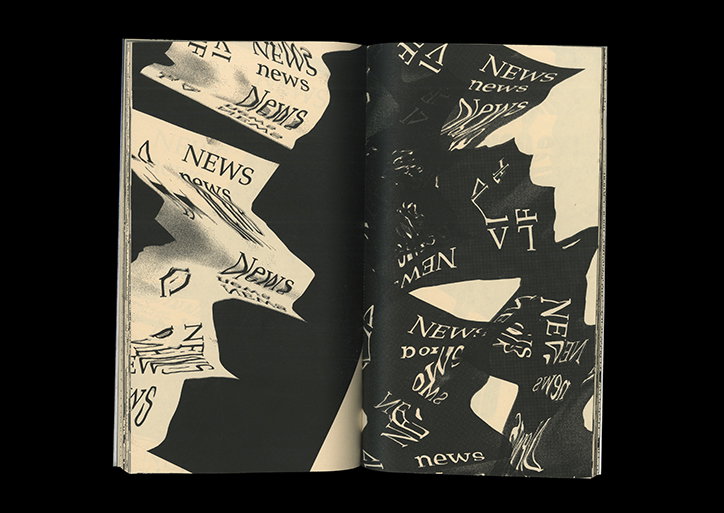
An open book shows a black and white collage of fragmented newspaper clippings. The word “news” appears repeatedly in various fonts and orientations across both pages.
Above

Ran Park: Lost In Konglish

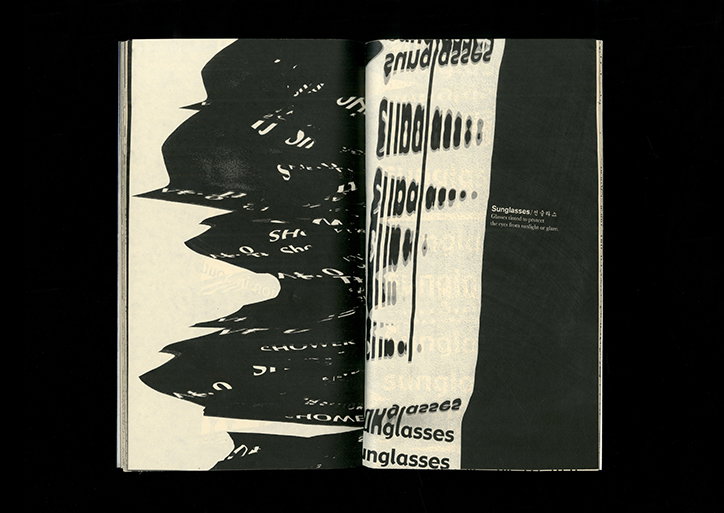
An open book featuring a high-contrast black and white layout. The left page shows a distorted, fragmented image of text, while the right page contains the word “Sunglasses” and a short definition.
Above

Ran Park: Lost In Konglish

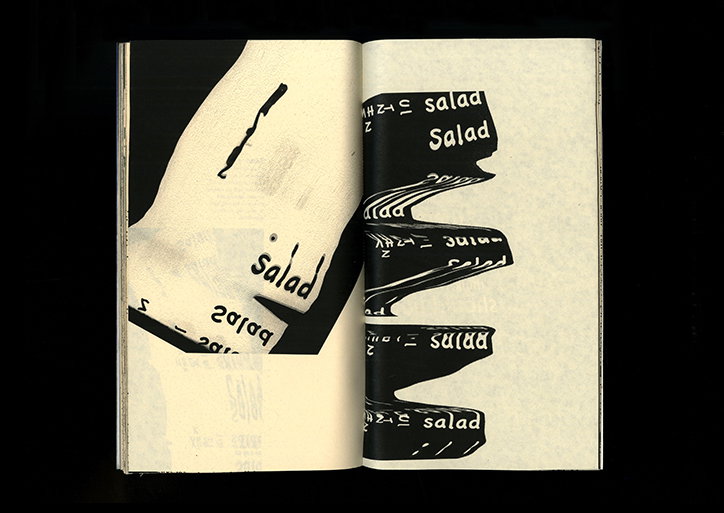
An open book shows a black and white experimental layout. Distorted, mirrored and overlapping repetitions of the word “Salad” are scattered across both pages.
Above

Ran Park: Lost In Konglish

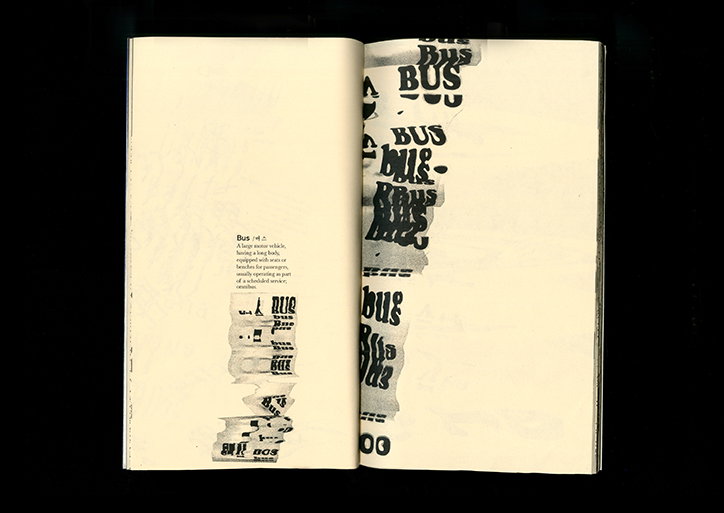
An open book shows a layout featuring the word “BUS” repeated in various bold, black typefaces. On the left page, a small block of text provides a dictionary definition of a bus.
Above

Ran Park: Lost In Konglish

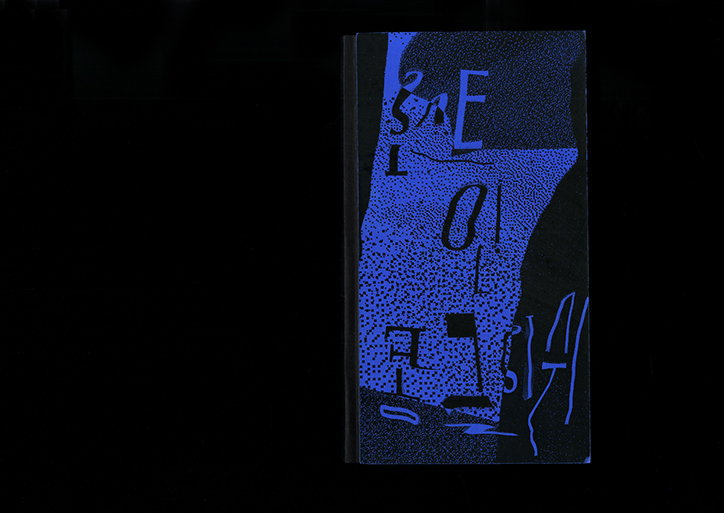
A book cover featuring a deep blue and black abstract design. Stylised, fragmented letters and shapes are scattered across the surface in a grainy, textured print.
Above

Ran Park: Lost In Konglish

Share Article

Further Info

About the Author

Owen Pritchard

—

Owen joined It’s Nice That as Editor in November of 2015 leading and overseeing all editorial content across online, print and the events programme, before leaving in early 2018.

It's Nice That Newsletters

Fancy a bit of It's Nice That in your inbox? Sign up to our newsletters and we'll keep you in the loop with everything good going on in the creative world.