


Hyejin Song’s sushi utensils book archives the tools behind Tokyo’s most famous kitchen
An intimate view of craft and culinary culture, this film-to-book translation of David Gelb’s Jiro Dreams of Sushi takes a closer look at what’s on the world sushi masters work bench.
What stood out about Jiro Dreams of Sushi (the 2011 documentary on 85-year-old sushi master Jiro Ono), to graphic designer Hyejin Song, was the repetitive nature of one of Japan’s most acclaimed kitchen’s daily routines. “Each person carries out the same task everyday,” the designer says, “not as repetition for its own sake, but as a way of continuously refining their craft.” As Hyejin watched the film on numerous occasions, she began to notice how each chef’s role was tied to a specific set of tools. Neatly arranged on their respective workbenches, “these tools quietly reflected each person’s responsibility within the process,” she says.
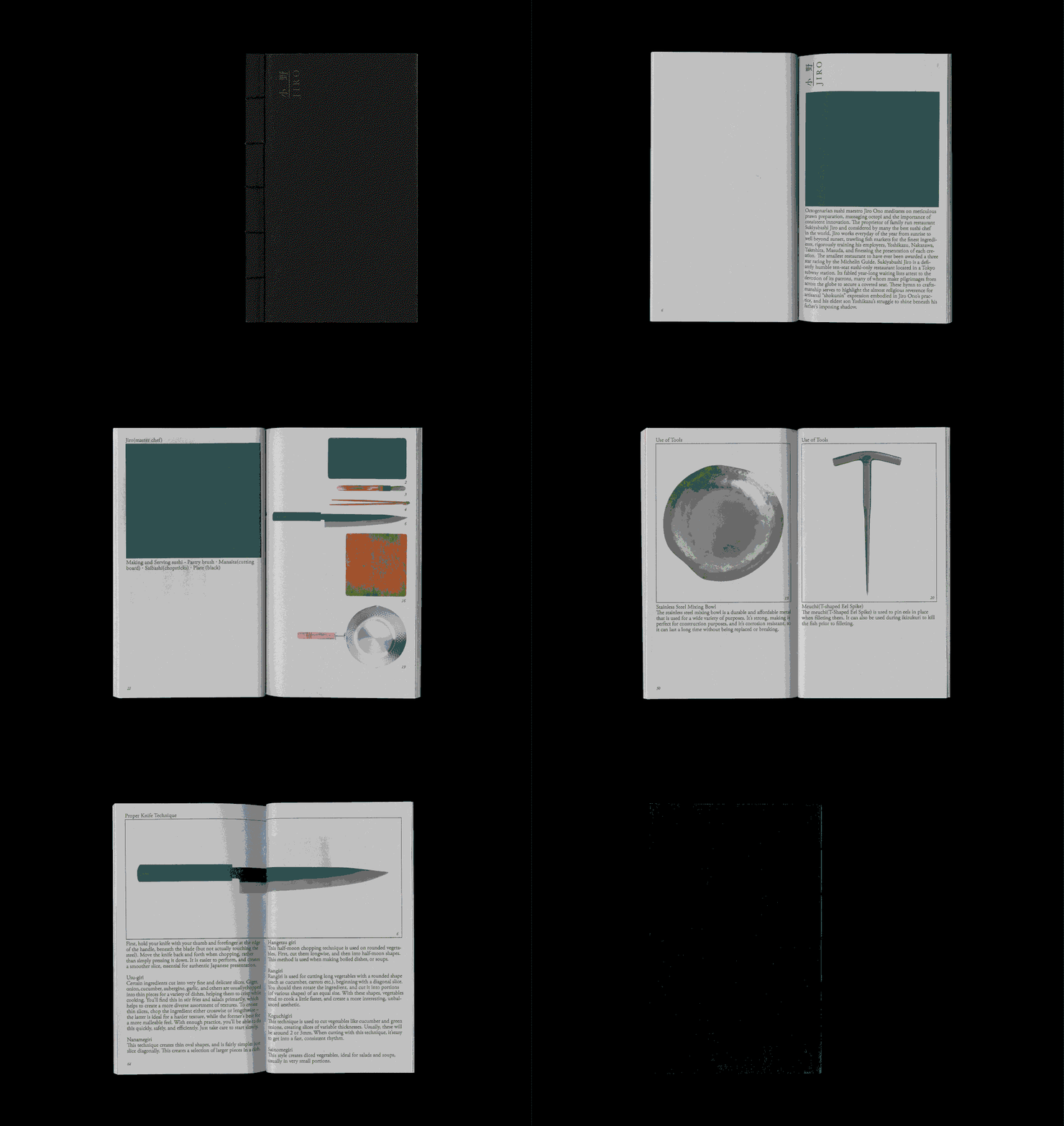
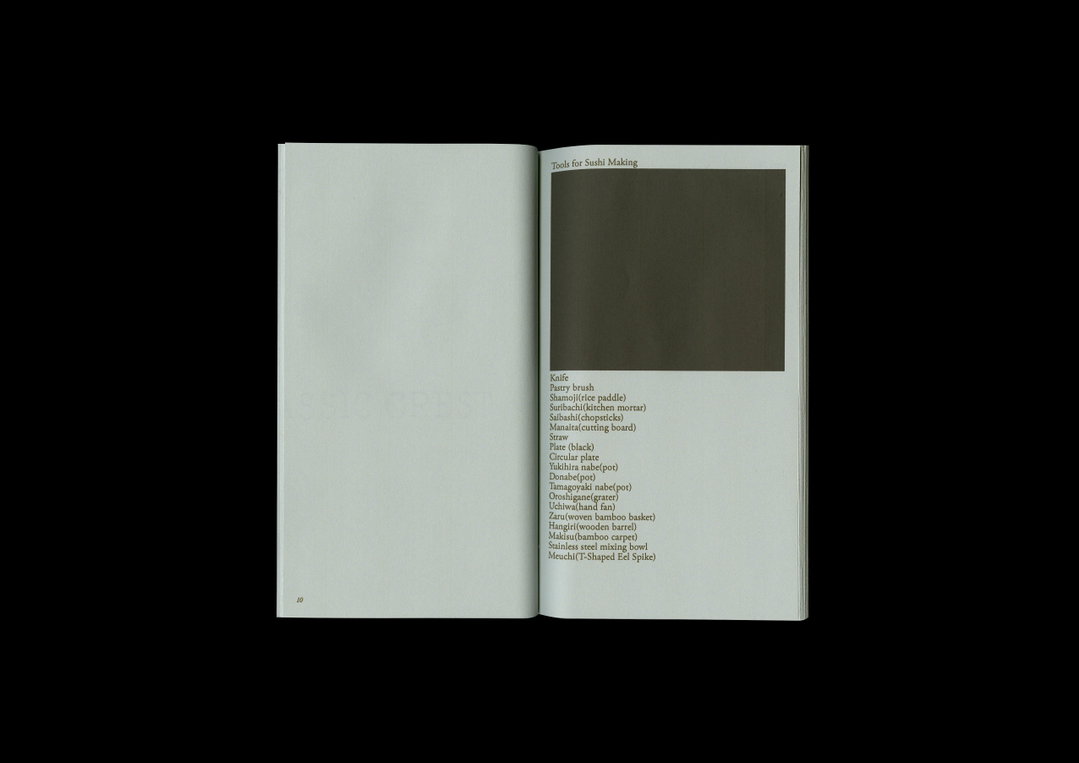
A branding designer by day, specialising in identity systems and art direction, this filmic interest led Hyejin to create a personal project that reimagined the rhythm and repetition of the chefs culinary routines in the format of a book, titled Jiro. Designed in a way that almost feels like you’re stepping into a cooking class, the publication takes the format of what Hyejin calls a “sushi utensils book” and seeks to archive the objects that brought precision to Jiro’s sushi making process. The project was a challenge to “translate the film’s sense of discipline and repetition into print”, the designer says.
Hyejin Song: Jiro (Copyright © Hyejin Song, 2025)
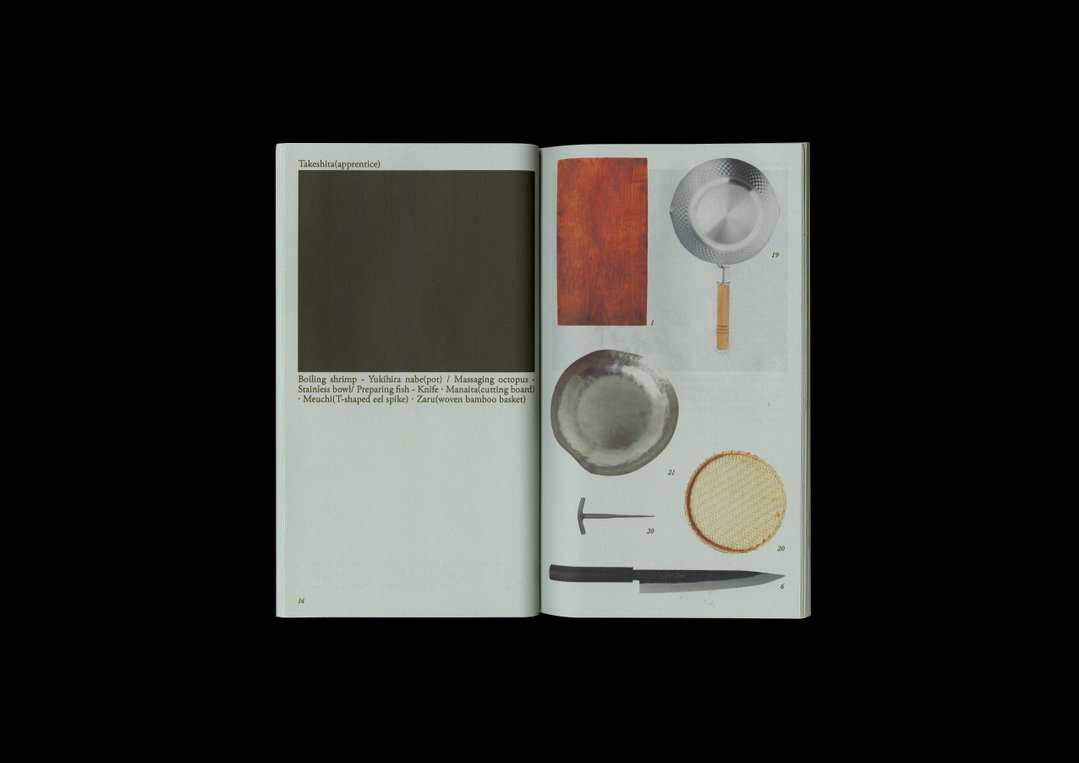
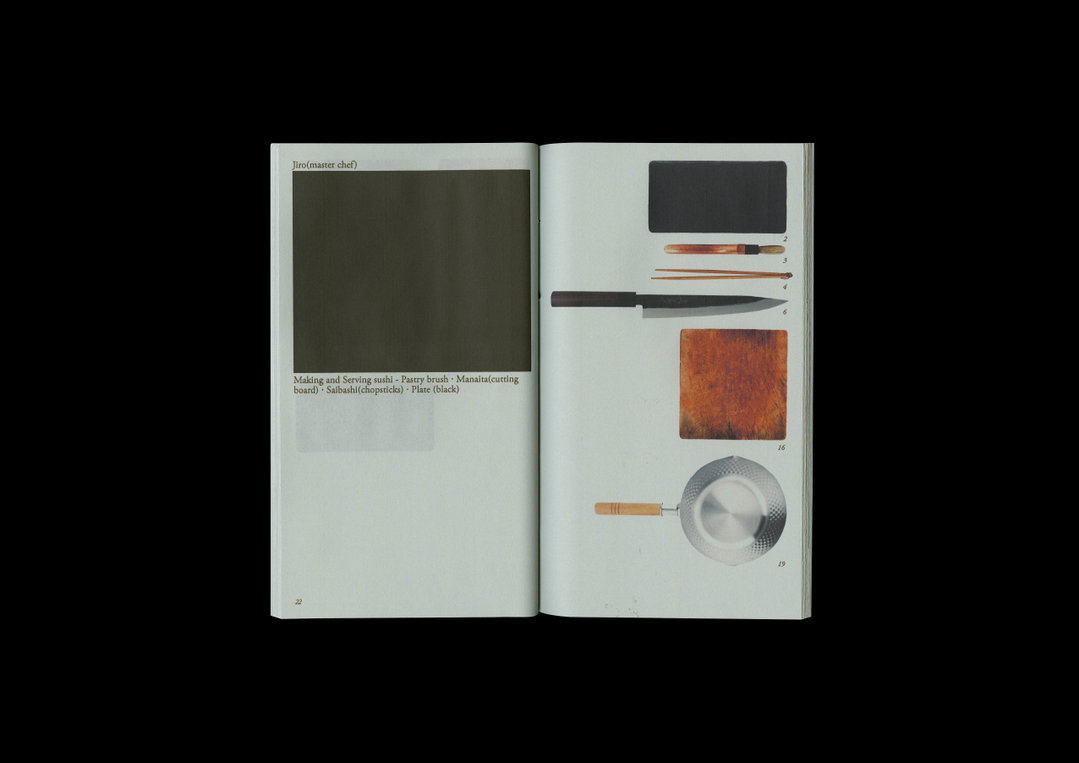
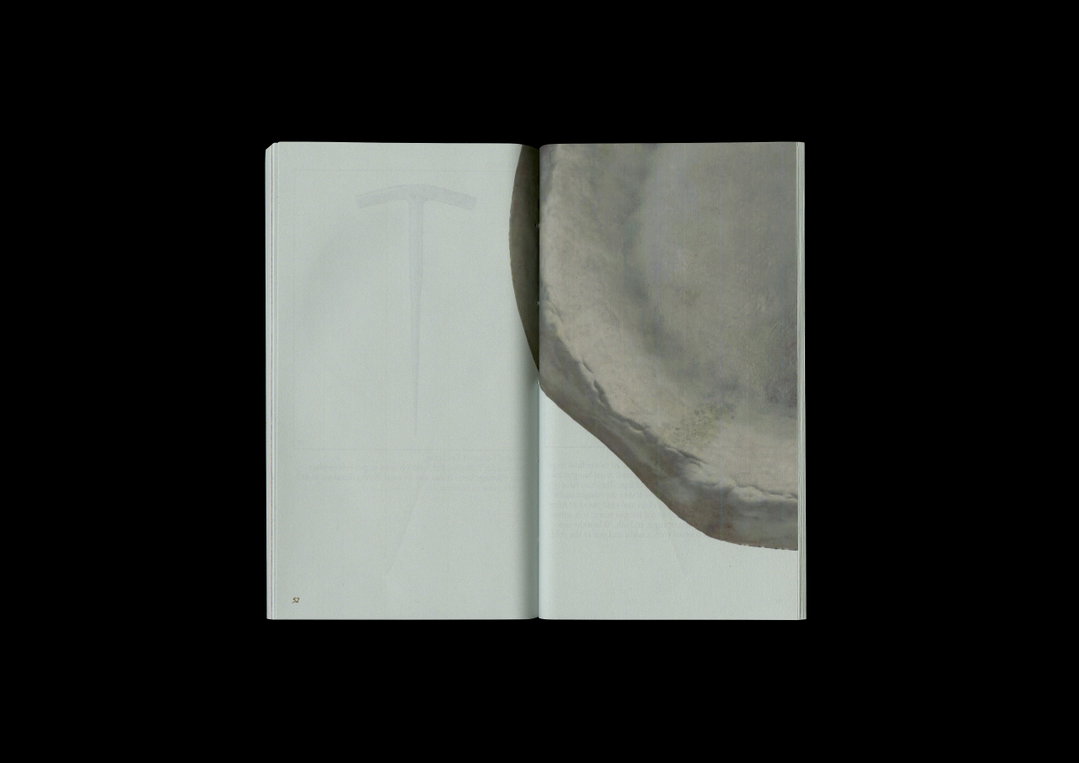
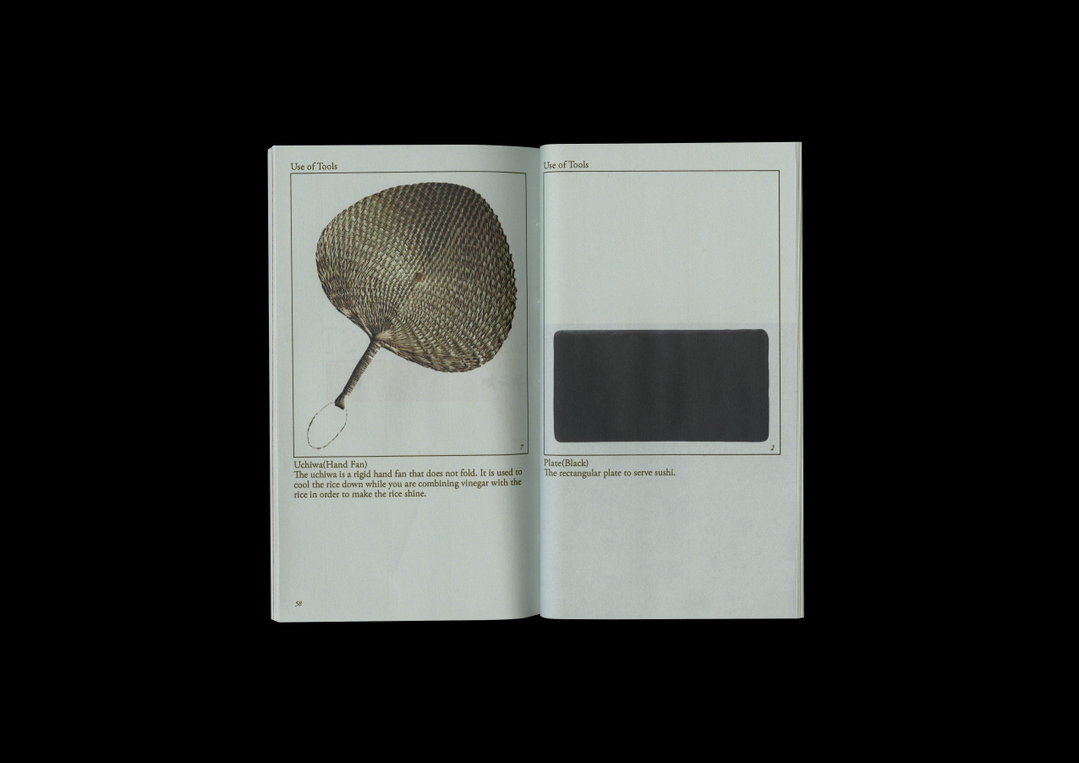
Like a film, a physical book carries an innate sense of rhythm and deliberately paces our viewing, withholding what’s to come at the turn of the page. It too unfolds a moving timeline and “builds its narrative through sequence,” says Hyejin. This parallel alone, however, isn’t always enough to “make the passage of time fully visible”, that we feel when we watch a film, the designer tells us. There needs to be a set of nifty visual cues that come into play in a publication – a design structure that can make our progression through a story feel more visceral. For Hyejin this came in the form of a two part structure for the book’s chapters: Staff Member and Use of Tools. “In the first chapter Staff Member, each staff member is introduced with a large black form on the left page, suggesting a state before the tools are put into use,” says the designer. “In the following chapter, this is removed, and the tools are revealed, marking the shift into active work.”
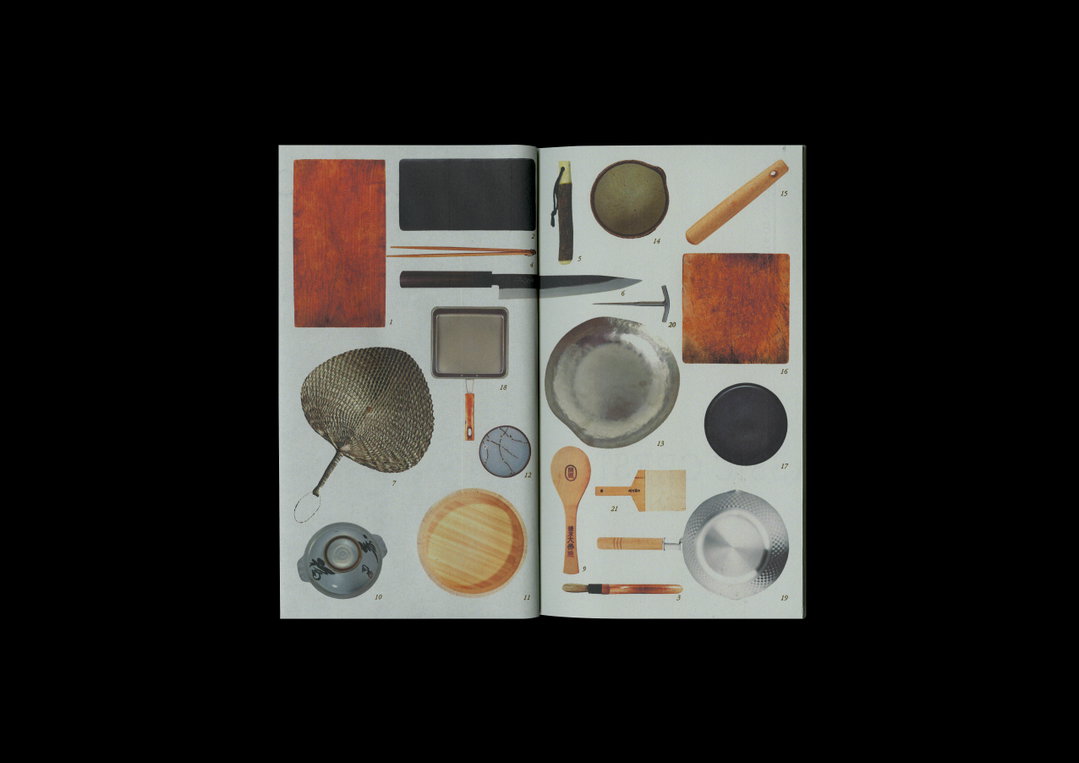
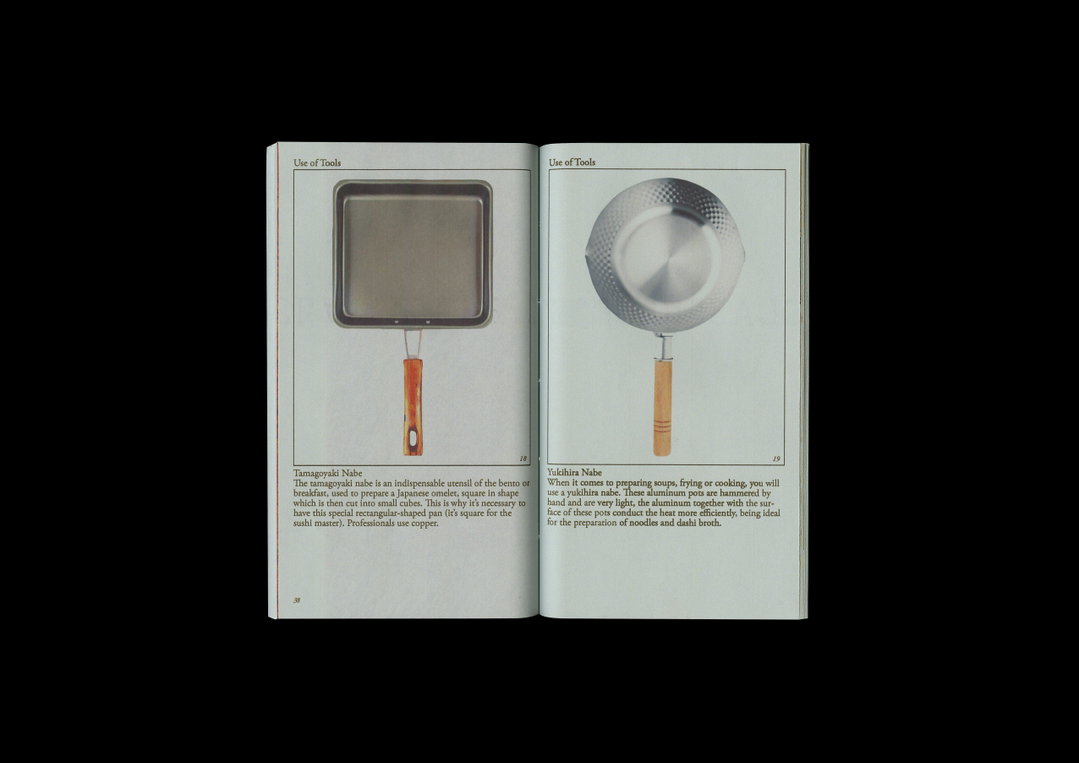
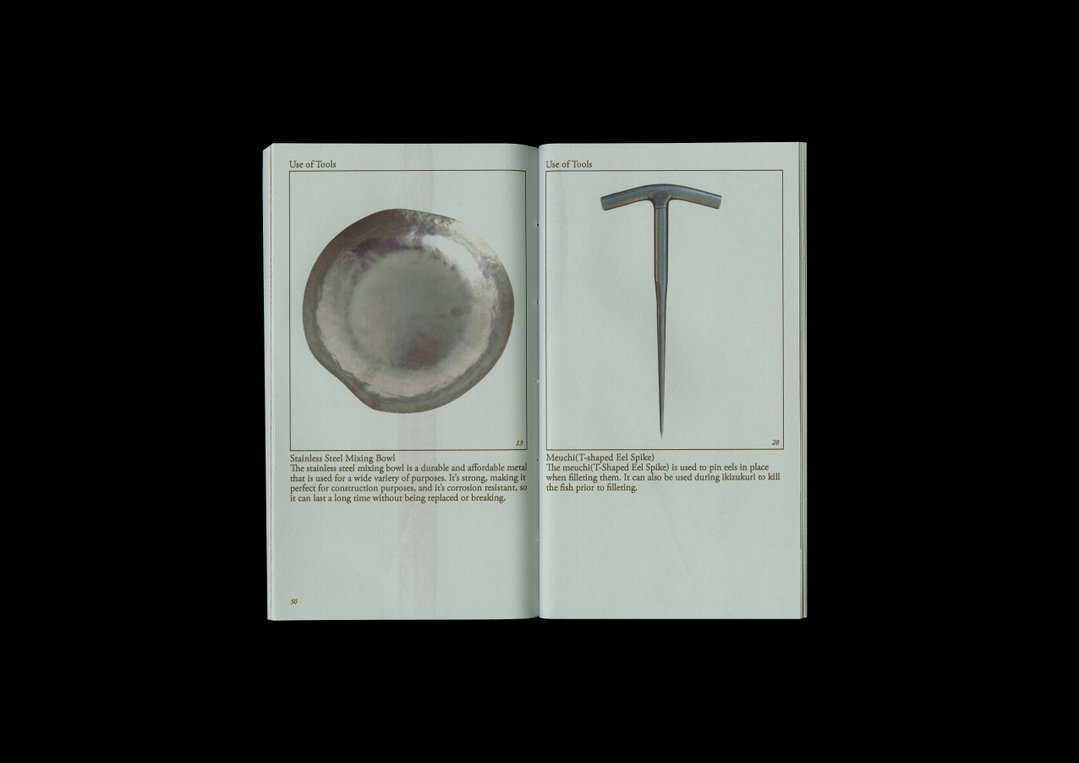
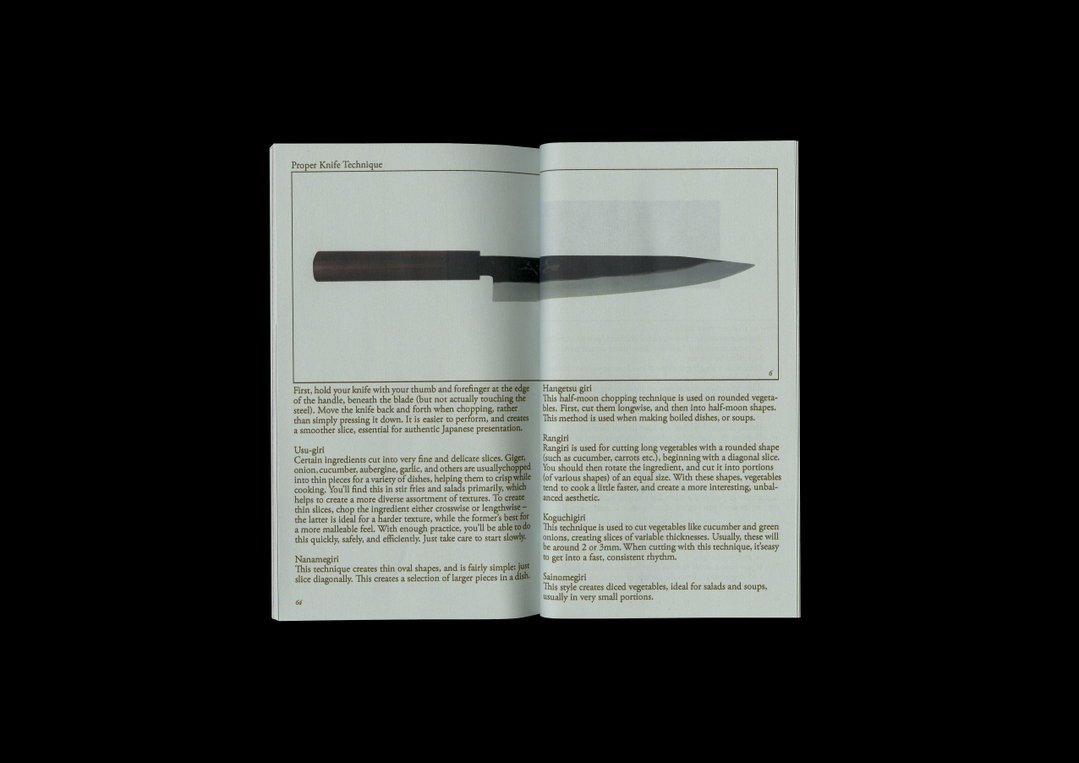
When pages start to turn at a faster pace in Use of Tools, one of Hyejin’s key considerations was expressing a sense of repetition without relying on any written components as an explanation for the kitchen’s cyclical routines. “I approached this by adopting a collection format,” she says, “where the tools appear as they would in daily use. By presenting them in a consistent and unremarkable way, repetition is understood as part of an ongoing routine, allowing the sense of refinement to be felt through persistence rather than change.”
Hyejin’s cut-and-paste collection of these culinary tools make for a beautiful set of spreads that reframe the humble and utilitarian objects into scientific specimens that look like they are in entomology display cases; pinned-down, numbered and worthy of careful study. Their meticulous placement on each page makes for an archive that doesn’t just translate the documentary‘s narrative but embodies the attention to detail behind it. The designer purposely allows the same utensils to crop up again and again in different configurations and scales, approaching the same sentiment throughout in different formats. The reader is immersed in the small gestures that built Tokyo’s most famous kitchen. “The film emphasises this repetition, not as an end in itself, but as a way of gradually refining a craft,” Hyejin ends.
GalleryHyejin Song: Jiro (Copyright © Hyejin Song, 2025)
Hero Header
Hyejin Song: Jiro (Copyright © Hyejin Song, 2025)
Share Article
Further Info
About the Author
—
Ellis Tree (she/her) is a staff writer at It’s Nice That. She joined as a junior writer in April 2024 after graduating from Kingston School of Art with a degree in Graphic Design. Across her research, writing and visual work she has a particular interest in printmaking, self-publishing and expanded approaches to photography. ert@itsnicethat.com
To submit your work to be featured on the site, see our Submissions Guide.