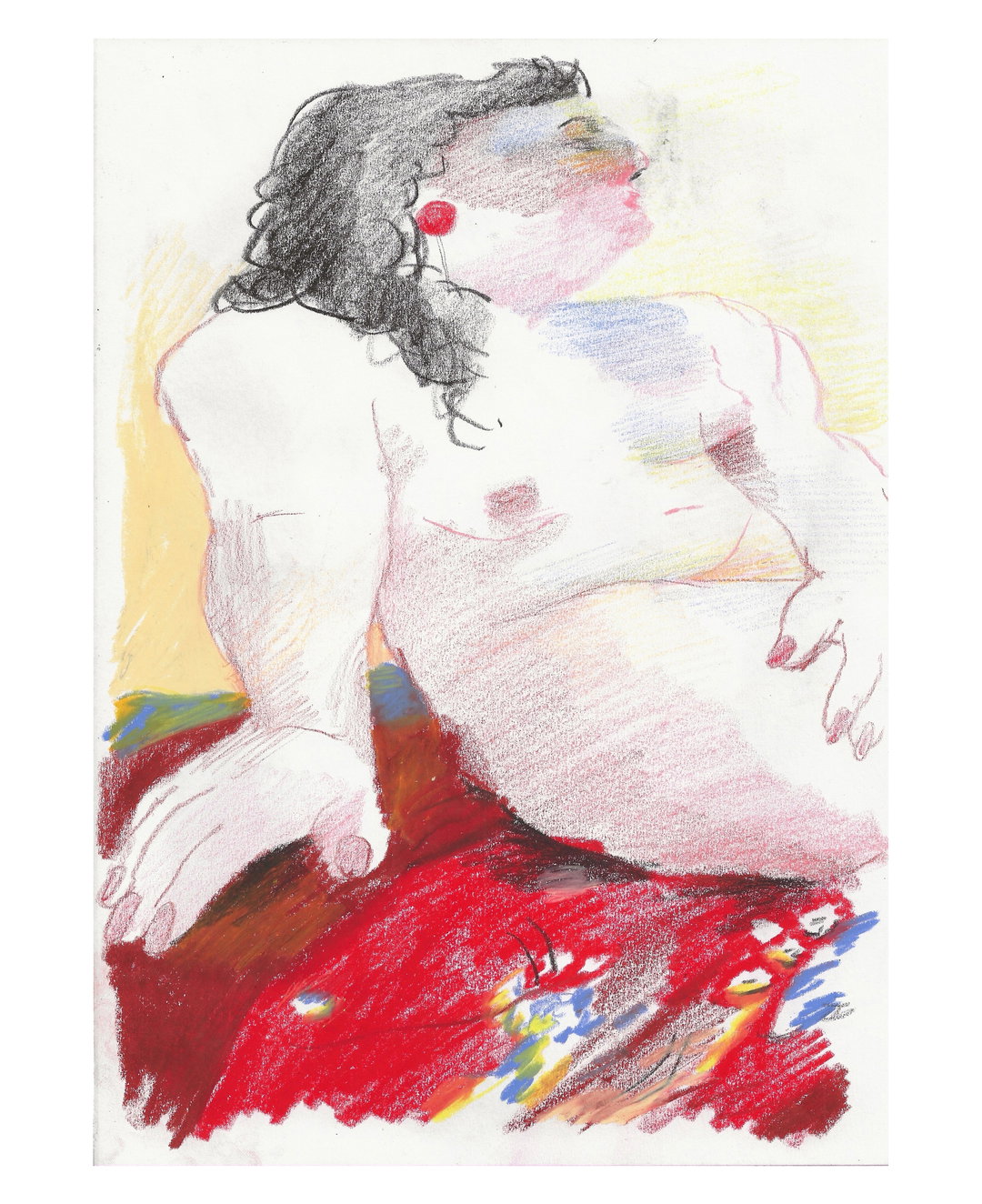
Joana Avillez’s visual essays use drawing "to say what writing cannot"
Born and bred New Yorker Joana Avillez combines her drawing and writing practice to express herself seamlessly through visual essays. “I started drawing because of my father,” Joana tells It’s Nice That. “We drew constantly together… It was how we communicated and laughed and saw the world.” Joana’s father had a successful career as an editorial illustrator for the likes of Harper’s and The New York Times. Whilst he was away traveling he would send home “long, scroll-like faxes” that were essentially illustrated letters, a hint to the illustrator’s work that effortlessly communicates through intertwined language and images. Joana further explains that “for my dad drawing was a spark that came out of nowhere, for me it bloomed because of him.”
Joana’s visual essays are vivid and transportive despite being simple, black line drawings. She captures the minute details of her surroundings by drawing from life, or at least the memory of it. The illustrator puts her observant nature down to her favourite hobby people watching, and walking being her main mode of transportation. “I am always looking and observing; everything I have ever seen feels stored within myself” Joana explains.
The need to document things seems naturally intuitive in Joana’s work. This is reflected in the immediacy of the simple, black pen lines. Joana expands on this materials choice explaining how “it somehow feels like the actual strand of a working thought set in paper," she says. "I idolize a drawing done on a napkin during dinner probably more so than something very planned and built up.” This immediate energy is clearly visible in Joana’s work. The drawings feel alive and the hand-rendered writing is personable and humorous.
Throughout her visual essays there is a strong sense of self warmly delivered by Joana’s hand. The illustrator’s passion for expressing herself is seen through her referring to her work as “a print-out of my brain”. Furthermore, the complementary relationship between text and image strengthens the rich communication as Joana likes “to use drawing to say what writing cannot, and vice versa… Sometimes it’s more useful to draw a facial expression than it would be to describe it — potentially flatten it — with words, like what happens when you explain a joke. I actually love both modes equally, and of course, most of all when they are together. You do in fact read both.”
It is of no surprise that Joana’s favourite illustrators are multidisciplinary practitioners like herself. Citing illustrators such as Beatrix Potter, William Steig, Maira Kalman and Leanne Shapton, Joana’s favourite illustrators also combine their drawing practice with other forms of communication, embodying a highly personal and engaging creative practice.

Joana Avillez: New York Magazine

Joana Avillez: How to spot an artist at an art fair

Joana Avillez: The New Yorker

Joana Avillez: Apartamento

Joana Avillez: Apartamento

Joana Avillez: Vanity Fair

Joana Avillez: Vanity Fair

Joana Avillez: NY Mag

Joana Avillez: The Skirt Chronicles
Share Article
Further Info
About the Author
—
Jynann joined It’s Nice That as an editorial assistant in August 2018 after graduating from The Glasgow School of Art’s Communication Design degree. In March 2019 she became a staff writer and in June 2021, she was made associate editor. She went freelance in 2022.