


- Words
- Paul Moore
- —
- Date
- 11 December 2025
- Tags
Claire Marie Healy on the significance of music videos and the emotional potential of advertisements
Brevity is the soul of wit in Mack’s new publication Short Form: 40 Years of Music Videos, Ads, and the Art of Moving Images, which pulls the curtain back on some of the most memorable flickers on our television screens.
Share
Share
Nearly everyone can recall an advertisement or music video that has touched them, or, at the very least, has stuck in their minds even decades later. My uncles will tell me about the famous music videos of the 80s whilst my grandparents will fondly remember certain advertisements with their jingles, needle drops and famous slogans. Younger generations have essentially been raised by short form media, from seven second Vines to two minute video essays on TikTok. Many films we know and love: Eternal Sunshine of the Spotless Mind, Sexy Beast, Being John Malkovich and Fight Club (to name a few) were directed by creatives well versed in the art of short form storytelling.
Claire Marie Healy’s newest book is Short Form: 40 Years of Music Videos, Ads, and the Art of Moving Images, which focuses on some of the most memorable short-form works across music videos and advertising from one of the UK’s most prolific and influential production companies: Academy Films. The book itself is a goldmine of behind-the-scenes images, storyboards, stills, script notes of films such as Radiohead’s Karma Police, FKA Twigs’ M3LL155X and televised commercials for the likes of Guinness, Channel 4 and Levi’s. The book even features a foreword from Jonathan Glazer, as well essays by key voices in wider screen culture, digging into the heritage of these projects and significance in our contemporary moment of online short films.
A writer, editor, and publishing and creative consultant based in London, Healy used to edit Dazed & Confused and has since edited books about film like 2022’s On The Dance Floor: Spinning Out On Screen for A24. You might also know her from her ongoing Girlhood Studies project, which has lately involved a film curation at the MoMu in Antwerp. We spoke about why brevity is the soul of wit, the obstacles and restraints that come with working inside the industry and why short form filmmaking is so important – not just culturally and artistically, but also for opening up the breadth of opportunities for young emerging creatives to experiment and flourish.
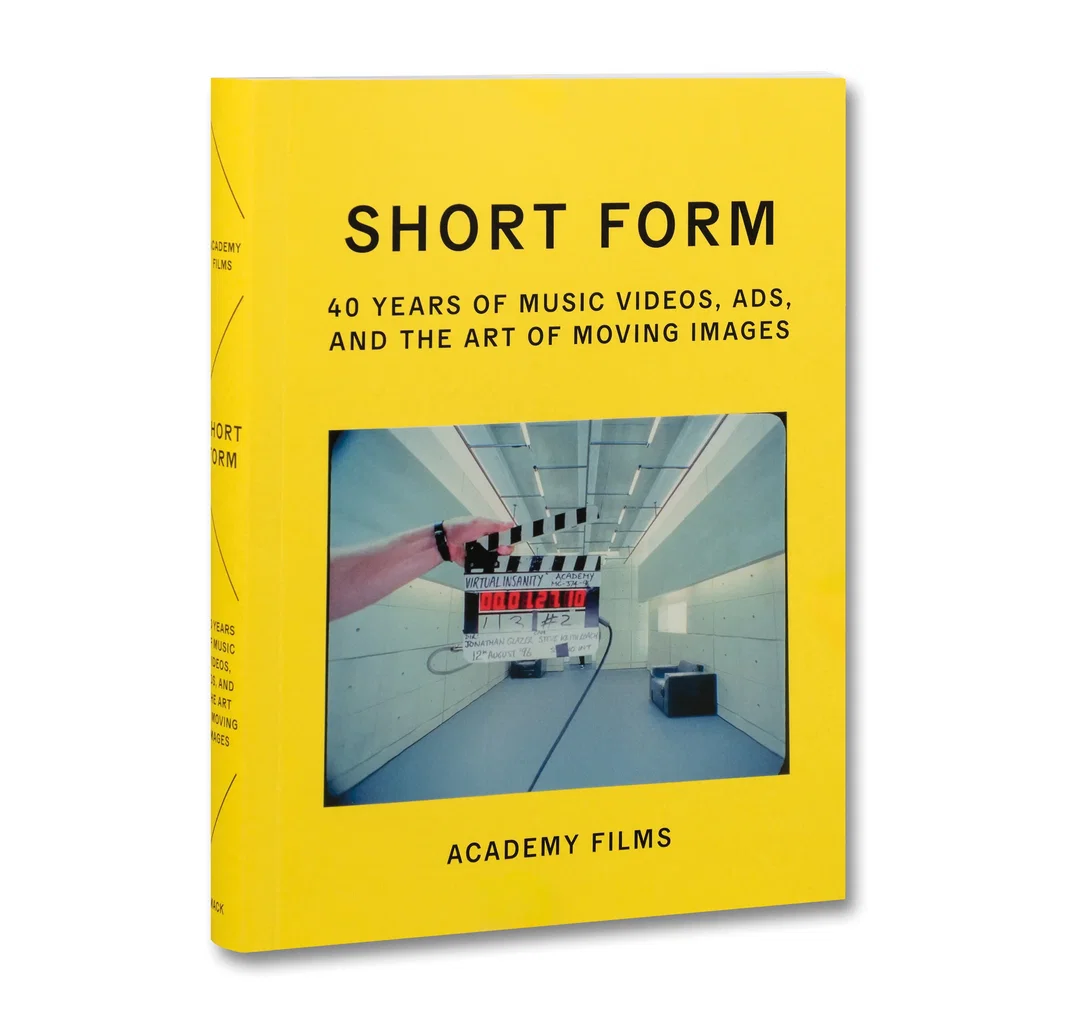
Academy Films: Short Form: 40 Years of Music Videos, Ads, and the Art of Moving Images (Copyright © Mack, Academy Films, 2025)
It's Nice That (INT):
In this book, the art of high concept music videos and advertisements are celebrated side by side – do you think there’s much difference between the two forms?
Claire Marie Healy (CMH):
I’m not an expert or a practitioner in this field – of music videos or advertising, but I am interested in filmmaking. So if we look at these forms in terms of filmmaking as the book tries to do, by looking at the process and limitations of how short films come to life, then you start to see these forms as part of the wider apparatus of filmmaking. So my answer to that would be they’re not so different, because they are often not so different from the miracle of trying to make a feature film happen.
In each case, a director and their team are always operating within some constraints. The best work, in any form, even beyond strictly filmmaking, happens when you’re pushing through and making something within those constraints. One thing that makes looking at a particular period of music videos and advertising so exciting is that – let’s say in the kind of golden era of the 90s into the 2000s – it’s not just the visions of these directors, like a Jonathan Glazer or a Walter Stern, it’s also a commissioner on the other side of things who is taking creative risks.
In that era, treatments would be a couple of pages long (that’s when you’re pitching out as a director with your production company). Nowadays, the process is much the same, in terms of getting that work made, but the treatment is 80 pages long. There’s so many more people that are required to see it.
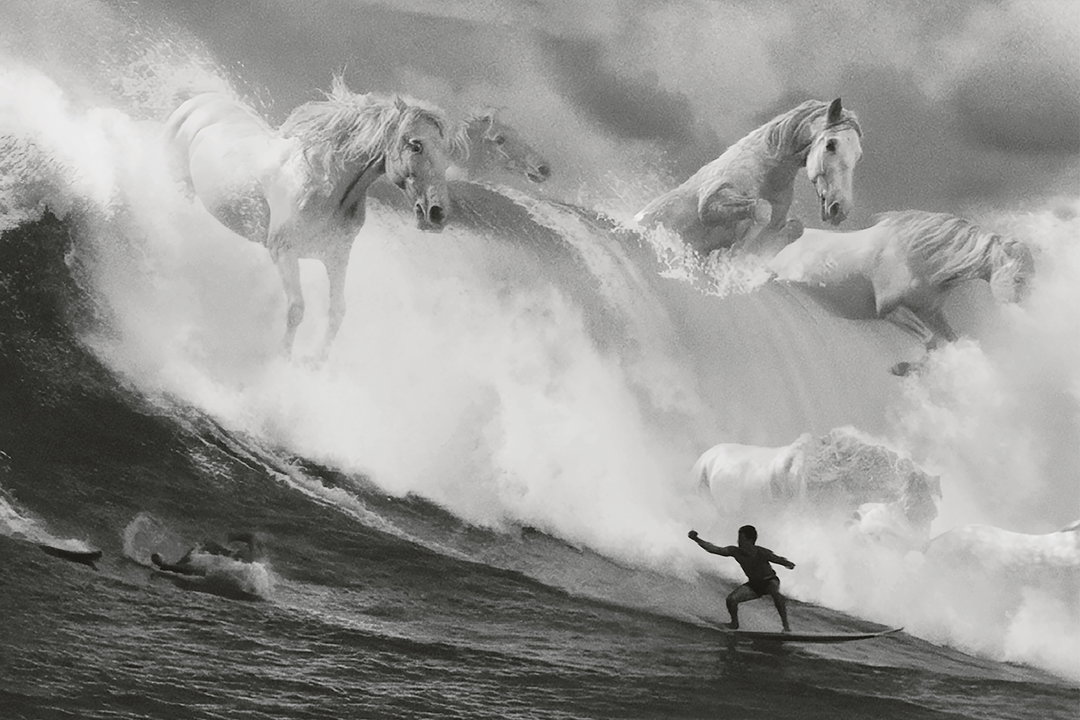
Paddy Eason: Guinness, Surfer (1999) from Short Form: 40 Years of Music Videos, Ads, and the Art of Moving Images. Courtesy of Guinness (Diageo), Academy Films and Mack.
INT:
With the popularity of YouTube videos, TikToks and Reels, brevity is basically king – do you think this is a good time for the book to come out when there’s never been more short form media?
CMH:
Yeah, I definitely do. And I think that was something that I really loved examining, revisiting or discovering for the first time with many of these music videos and ads.
And of course, how do you see them? You see them on YouTube, often a fan of an artist has uploaded that so that other people can see it. It does relate to our current moment of online short film. I think it also offers a kind of an under discussed heritage to it, which I found really fascinating.
INT:
It’s kind of a reclamation of a visual culture that has suffered a bit of a degraded reputation.
CMH:
It’s an incredible skill to move the viewer in three minutes. It’s a really incredible skill to move the viewer in 30 seconds. Which is why one of the best parts in this book is the storyboards – looking at every single beat. For instance, in [Jonathan Glazer’s Stella Artois ad] Ice Skating Priests, not only is the storyboard beautiful, but you can see every single moment that a priest’s head turns or one priest looks at another. In a very short amount of time, you tell this entire story. It’s such a good lesson for filmmaking.
“It’s an incredible skill to move the viewer in three minutes. It’s a really incredible skill to move the viewer in 30 seconds.”
Claire Marie Healy
INT:
What’s the first music video that made a real impression on you? I remember as a kid buying all of the Gorillaz music videos on the TV with my grandmother’s bank card…
CMH:
Okay, I have a couple that made an impression, but they may be a bit embarrassing... We had terrestrial television for a long time, so we didn’t really have access to the music video channels. But Pop World would play music videos, with Miquita Oliver and Simon Amstell. There was a video for Razorlight’s Golden Touch, which wasn’t even especially good. But I remember it had illustrated elements, it’s a bit like one we have in the book: She Is The New Thing by The Horrors, which Corin Hardy directed. He later went on to direct horror films. In the video, there’s this kind of monstrous girl that kills and eats the band. And that was partly because, Corin told me, they were so moody on the day, he ended up hating them. This 2000s era is cool, with the lower budgets, like Kim Gehrig’s Wiley video with the foxes, which is also iconic in its own right and is in the book.
Obviously, there are some which are so iconic that even if they’re not necessarily from your own era, you still know them so well. Like Virtual Insanity, Bittersweet Symphony or Doo Wop (That Thing) – they’re like a cultural shorthand for something at this point.
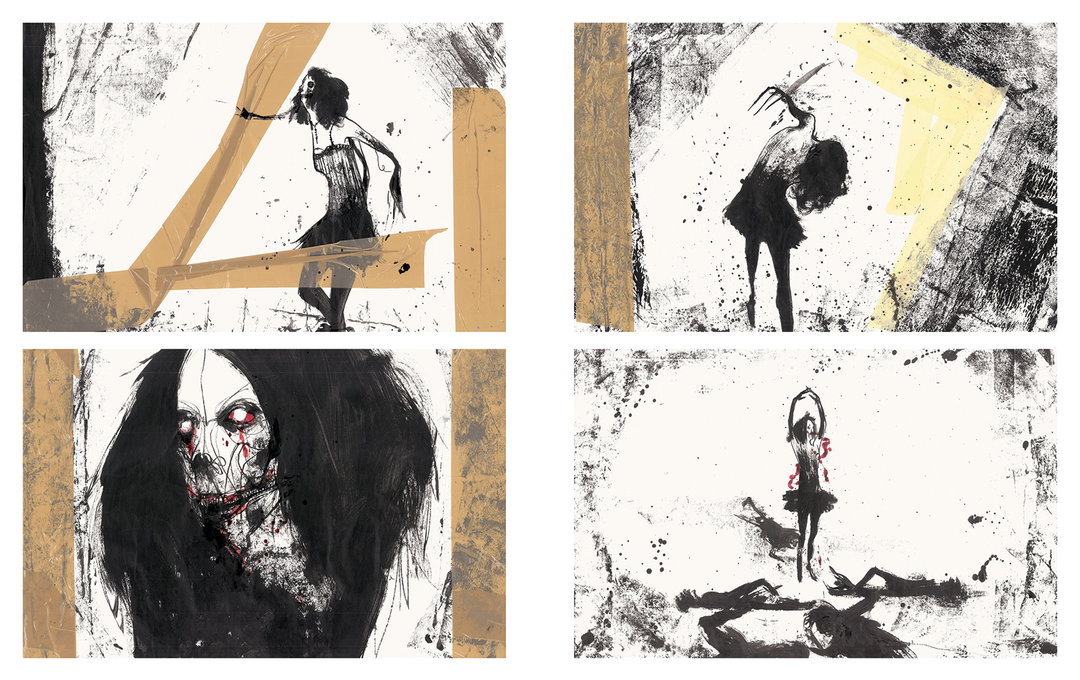
Corin Hardy: The Horrors, She Is the New Thing (2007) from Short Form: 40 Years of Music Videos, Ads, and the Art of Moving Images. Courtesy of Corin Hardy, Academy Films, and Mack.
INT:
Are there music videos that, if your scope was larger, you would have put in the book?
CMH:
Well, I think what’s really good about the book and also good about how Academy Films approached it – it would be false to pretend that a certain history of music video only happened through this one production company. But in our essays and our interviews, not only do directors talk about other directors and other work that inspired them, but also other production companies that were active at this time – so it brings everyone into a wider view. Michel Gondry and Spike Jonze come up in this book because they’re influential and important, too.
INT:
Influence isn’t copyrighted!
CMH:
Yeah, you have to take a wider view. Why did a budding creative in the mid 2000s want to become a filmmaker? Often it’s because they were really obsessed with short form media creators and Directors Label DVDs that would collect their short form works.
INT:
Those DVDs were uni accommodation classics after a boozy night out.
CMH:
Yeah! Martin de Thurah talks in the book about how Chris Cunningham’s work with Björk changed everything for him. If you were making work in the 2000s, that was your influence. More than British feature filmmaking, sometimes.
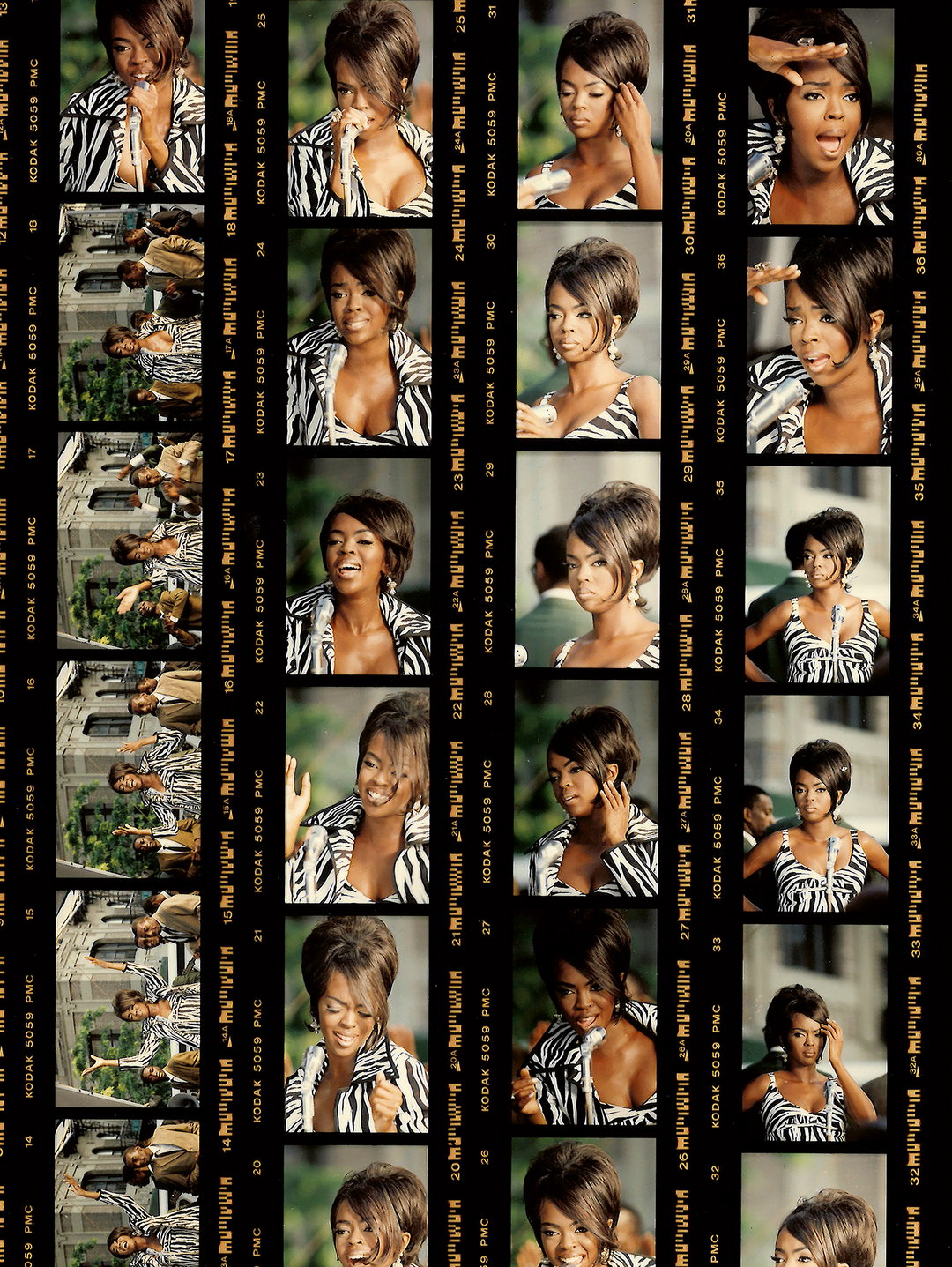
Unknown Source: Lauryn Hill, Doo Wop (That Thing) (1998), from Short Form: 40 Years of Music Videos, Ads,and the Art of Moving Images. Courtesy of Sony Music Entertainment Ltd., Academy Films, and Mack.
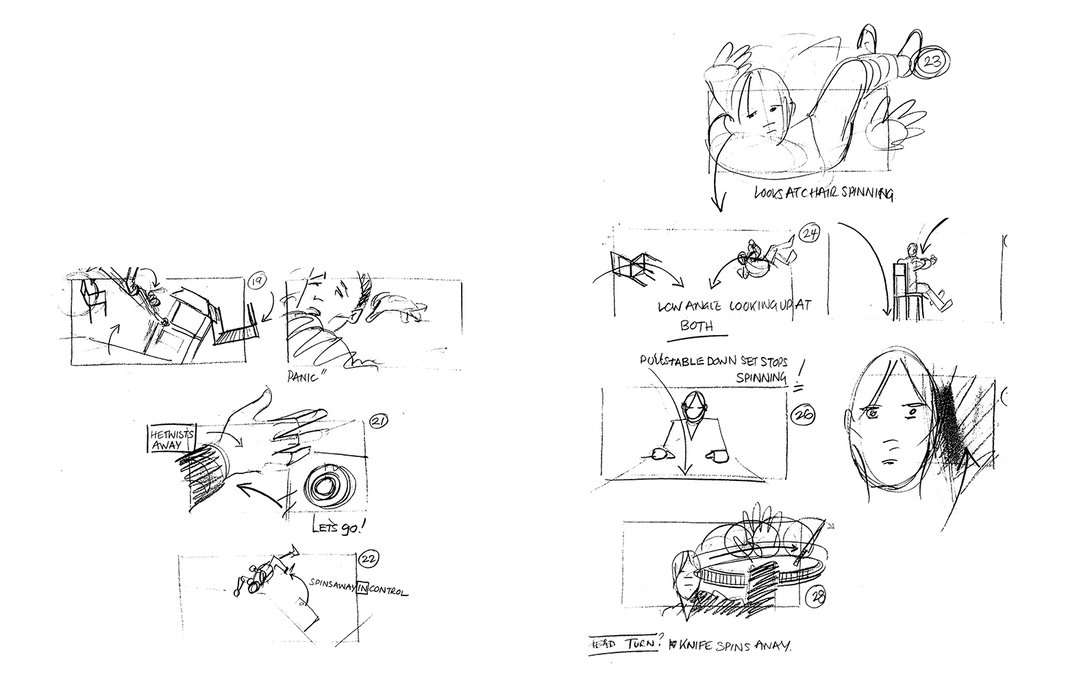
Walter Stern: David Bowie, Survive (1999) from Short Form: 40 Years of Music Videos, Ads, and the Art of Moving Images. Courtesy of Walter Stern, Academy Films, and Mack.
INT:
There’s a lot of scans of original storyboards in this book, ranging from doodles to fleshed out illustrations. Can you share a little about shining a spotlight on those creatives behind the videos?
CMH:
There’s a storyboard artist called Adrian Marler who worked with a lot of the Academy directors, so he brought in all his beautiful storyboards for us. I love the idea of extracting from the materials of filmmaking and examining and handling them with greater reverence in the form of a book. What I love about film, whether it’s a feature film or short form works, is that the storyboard artistry, the production design, the costume design, the scripts can all really teach you something.
Adrian didn’t consider himself very good at drawing people or their expressions. Actually, he’s an incredible artist and the storyboards are beautiful but the tricky part is, if a storyboard artist give the faces in the storyboard more expression and more identity then the client or the commissioner might [in casting] say “hey, it doesn’t look like the person in in the storyboard.”
INT:
So the vaguer those story boards are, the more space for artistic liberty?
CMH:
You have to keep it vague because you’re in service of the director, in service of the film. And those close relationships between the director and the storyboard artist are so wonderful.

Jonathan Glazer: Jamiroquai, Virtual Insanity (1996) from Short Form: 40 Years of Music Videos, Ads, and the Art of Moving Images, Courtesy of Academy Films and MACK
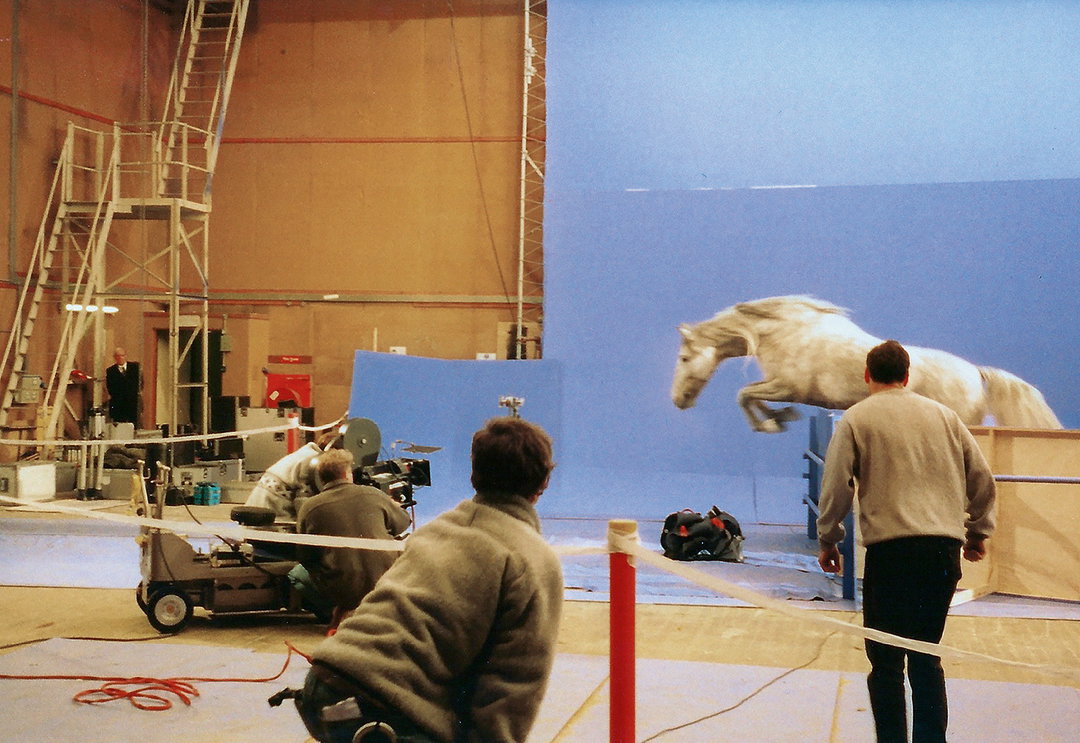
Paddy Eason: Guinness, Surfer (1999) from Short Form: 40 Years of Music Videos, Ads, and the Art of Moving Images. Courtesy of Guinness (Diageo), Academy Films and Mack.
INT:
The book really makes a point of making visual references to how many people are involved in the process, as opposed to this idea that everything comes from a single auteur.
CMH:
I think it’s important. I feel strongly about what books about cinema can do and why they should exist. You have sort of academic publishing of film essays, but they’re not very visual and yet these are books about the visual.
But the reason I think it’s kind of an untapped field is because the licensing is hard. These are not easy books to make. This was one of the most challenging projects I’ve ever done. I’m proud of it for that reason. The fact is that directors don’t own their work in the same way that a photographer or an artist does, for instance. I have to shout out Agnes [Perotto-Wills], who was our licensing assistant for some of the music videos in this book because it is a real skill trying to license images from these corporations, but you get there in the end, it just takes time.
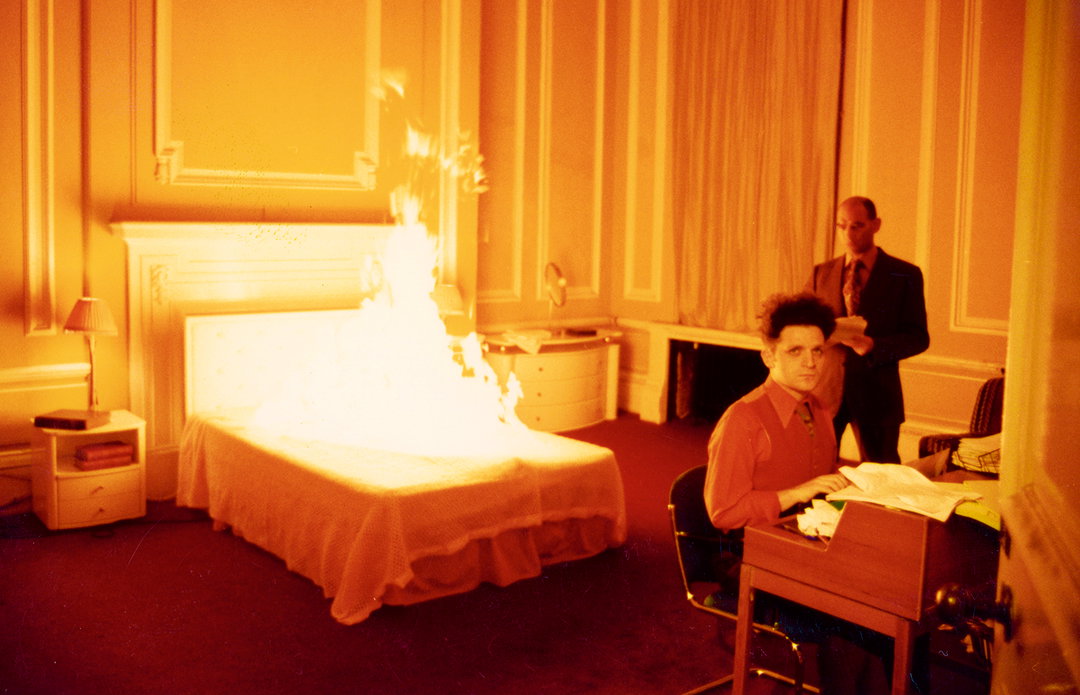
Daniel Tasker & Jonathan Glazer: Massive Attack, Karmacoma (1994) from Short Form: 40 Years of MusicVideos, Ads, and the Art of Moving Images. Courtesy of Universal Music Operations Ltd., Academy Films and Mack
“If I’m a teenager and I’m seeing stills of Godard movies online then that point of connection is completely valid.”
Claire Marie Healy
INT:
Something that really fascinates me is when an advertisement sells a product, it works, but when a film has product placement, it’s almost offensive. How do advertisements make it work?
CMH:
I think it speaks to the fact that people have this idea, ‘the cinephile’s idea’, that the feature film is ‘purer’. But when we’re seeing something that is an ad, (because we’ve been advertised to for a very long time, as a society) if it’s doing what it says on the tin, you’re not offended by it because if you’re watching TV: you’re in the ad break, you haven’t been duped.
Guinness is an interesting one. Because Guinness has a lot of advertising history that is artistically and visually quite iconic and it’s lots to do with national and cultural memory of leisure time. And it’s shaped an idea of Irishness that is – and I say this is an Irish person – sellable. We also have our chapter about the Cadbury’s advert Mum’s Birthday, which is beautiful, by Frédéric Planchon. One of my favourite writers, Durga Chew-Bose, writes beautifully on it, but she’s not really writing about the Cadbury’s advert, she’s writing about chocolate bars, childhood and motherhood. That ad is sentimental and you begin thinking about when you went to the corner shop when you were a kid and your parents took you there. Durga’s piece about the ad honestly made me cry. It’s really wonderful. I’m so happy that the writers came to the topic from their own points of view.
INT:
How does this book challenge the preconceptions of short form media and perhaps the relationships we share with this type of media?
CMH:
I think the lessons of filmmaking really apply to so many other creative pursuits. So I think it’s nice to kind of break open the idea that you have to be like a very strict ‘film geek’ who only likes films and isn’t interested in fashion, photography or music or wider culture. It’s not very true to how we interact with these works. I think how people in my generation have certainly connected to cinema has so much to do with the internet and the way in which we’ve been interacting with images online from a young age. Moving images and stills. Screen-cap culture on Tumblr. GIFs and looping images. So I do think that old fashioned cinephile culture bears little relation to how we’ve actually been engaging with films.
This is all about how we learn, how we discover. If I’m a teenager and I’m seeing online stills of Godard movies then that point of connection is completely valid.
Hero Header
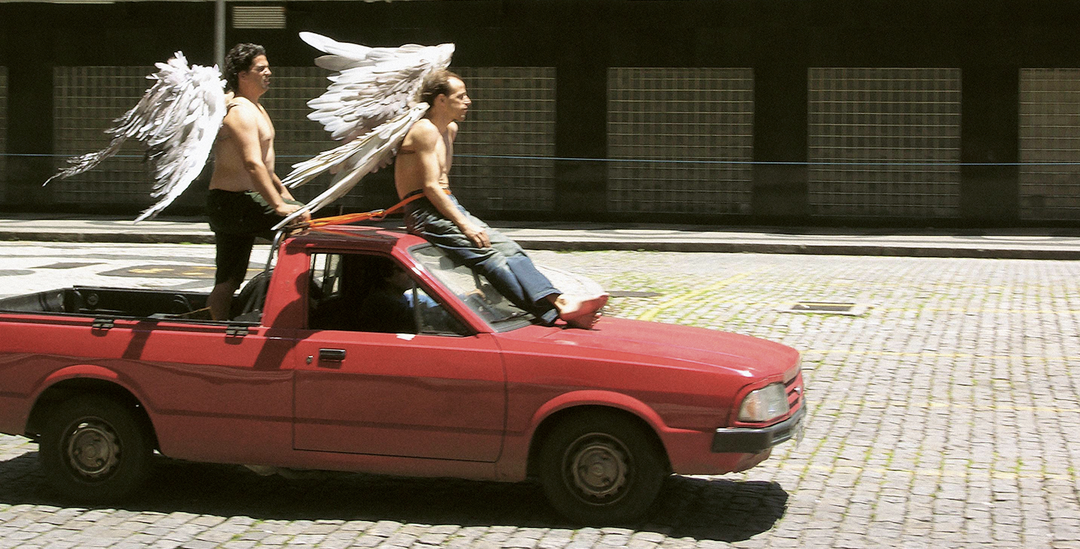
Simon Cooper: Volkswagen, Angel’s Day Off (2006), from Short Form: 40 Years of Music Videos, Ads, and the Art of Moving Images. Courtesy of Academy Films and Mack.
Share Article
About the Author
—
Paul M (He/Him) is a Junior Writer at It’s Nice That since May 2025. He has a strong interest in graphic design, digital kitsch, multimedia painting, collage, nostalgia, analogue technology and all matters of strange stuff. pcm@itsnicethat.com
To submit your work to be featured on the site, see our Submissions Guide.