




The New York Times Magazine devotes an entire issue to a scary and superbly designed look at climate change
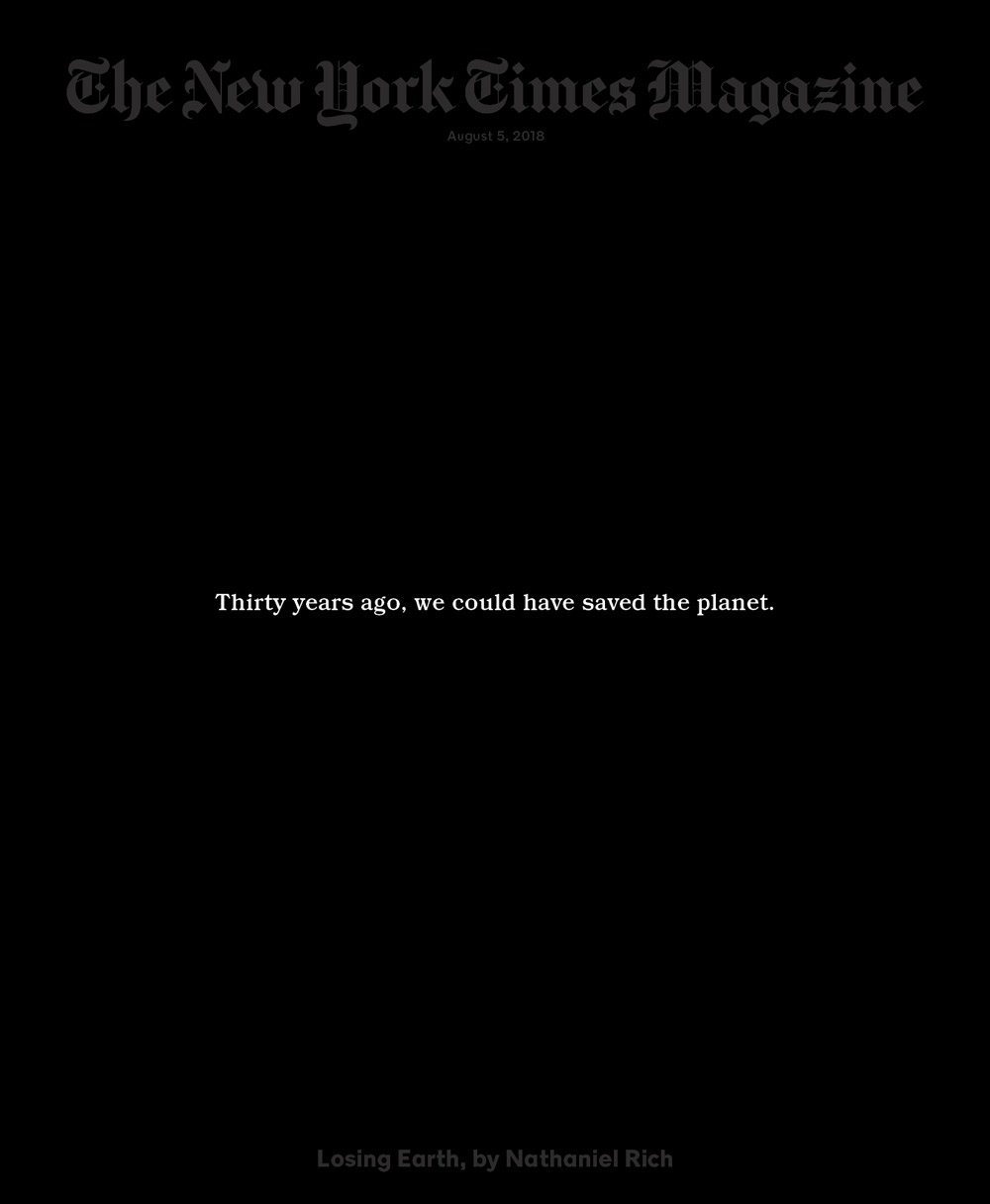
New York Times Magazine Cover
This week’s (August 5) edition of The New York Times Magazine is slightly terrifying. Novelist and NYT writer at large Nathaniel Rich spent 18 months researching the ten year period — between 1979 and 1989 — when humankind first came to a broad understanding of the causes and dangers of climate change. And then decided to do pretty much nothing about it.
It comes wrapped in a suitably stark cover; imageless, jet black, shot through a single line of white text that solemnly says, “Thirty years ago, we could have saved the planet.”
“From the outset, we knew that a stripped-down approach to the design was needed to package the serious content of the issue,” the magazine’s deputy art editor Ben Grandgenett says on how the NYT team went about approaching a visual accompaniment to an important, hard-hitting and necessary story. “Oftentimes, the impulse as a designer can be to try to make something more designed rather than less. Our goal was to get the design out of the way and let the content be the focus.”
Nathaniel’s absorbing — and sobering — story, Losing Earth, is accompanied by photographs by World Press Photo award winner George Steinmetz. Ranging from images of melting ice sheets in Greenland to the aftermath of Californian wildfires, they capture a broad range of the contemporary effects of climate change through epic aerial photographs.
Ben believes that nothing compares to print when it comes to telling the stories that need to be told, noting that “it often feels intimate to the reader in ways that other mediums do not,” because it allows for what he describes as “a particular opportunity to utilise pacing and create moments of drama through design and through the turn of a page.”
Still, if you haven’t managed to get your hands on a physical copy, Losing Earth is available to read online in full.
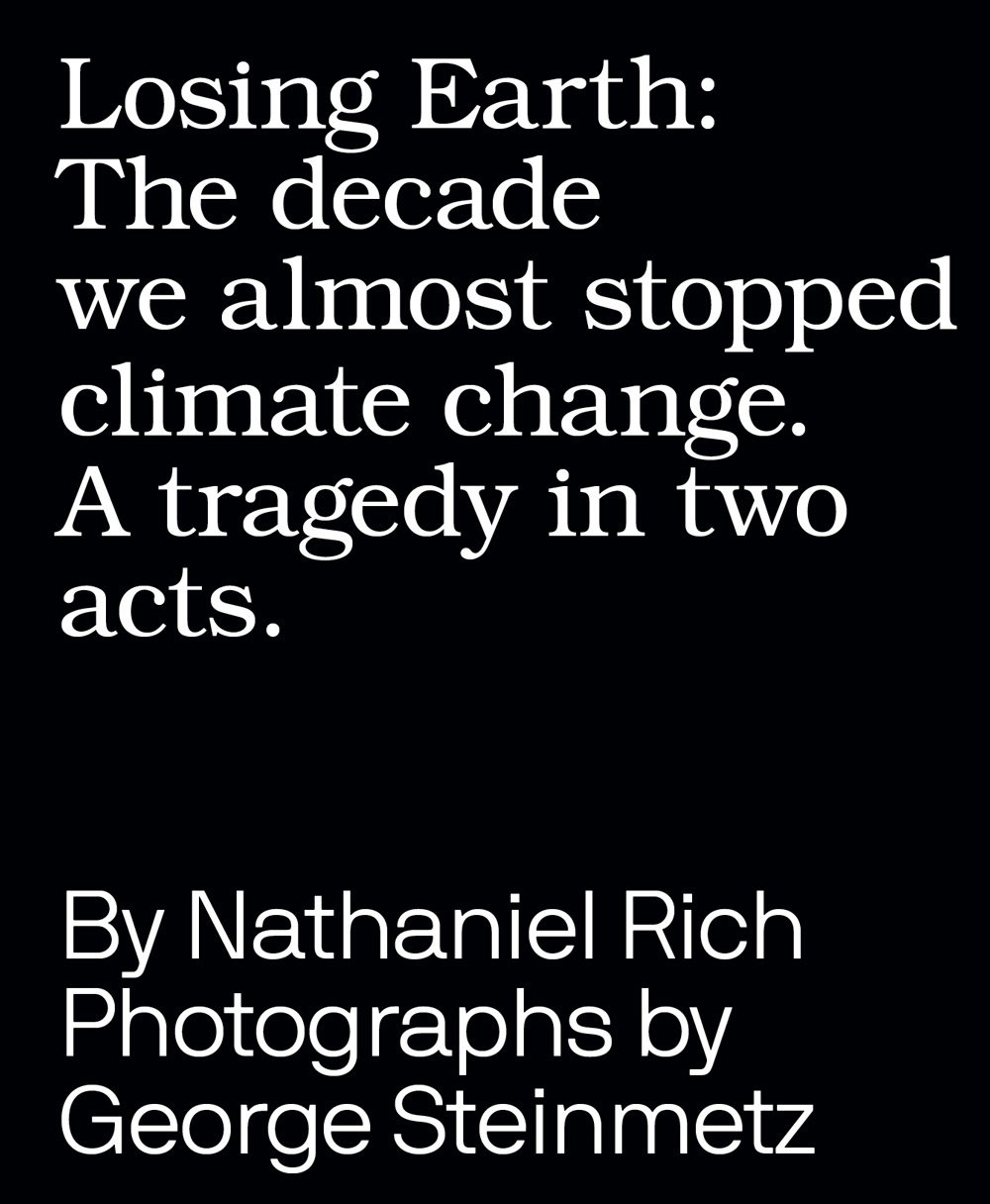
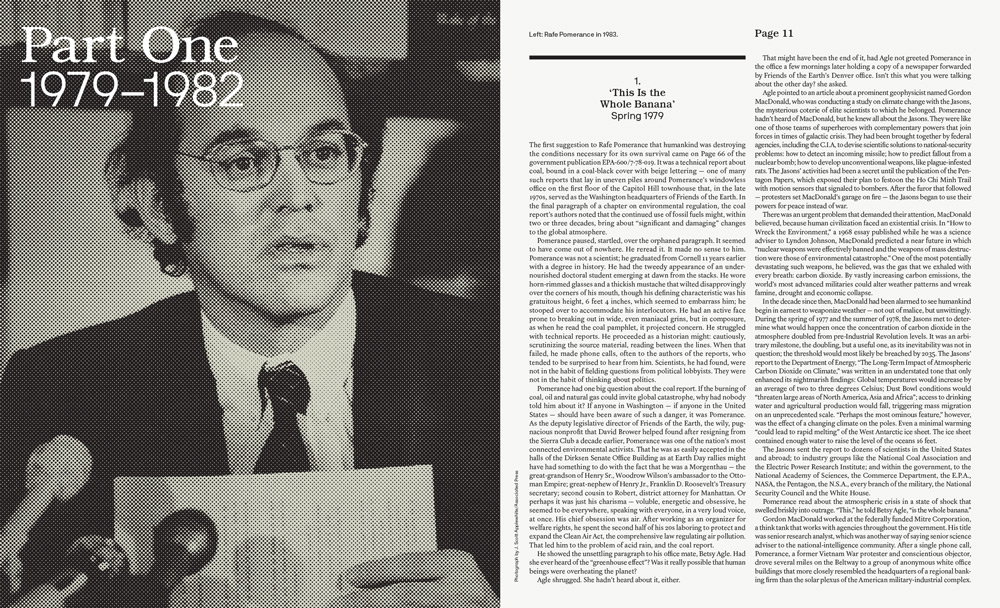
New York Times Magazine selected spreads
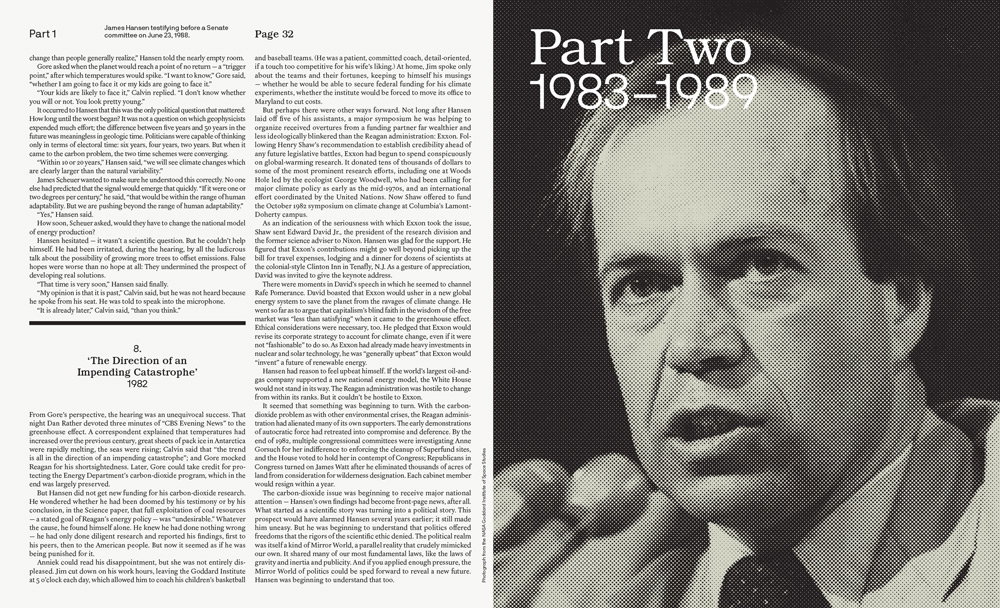
New York Times Magazine selected spreads
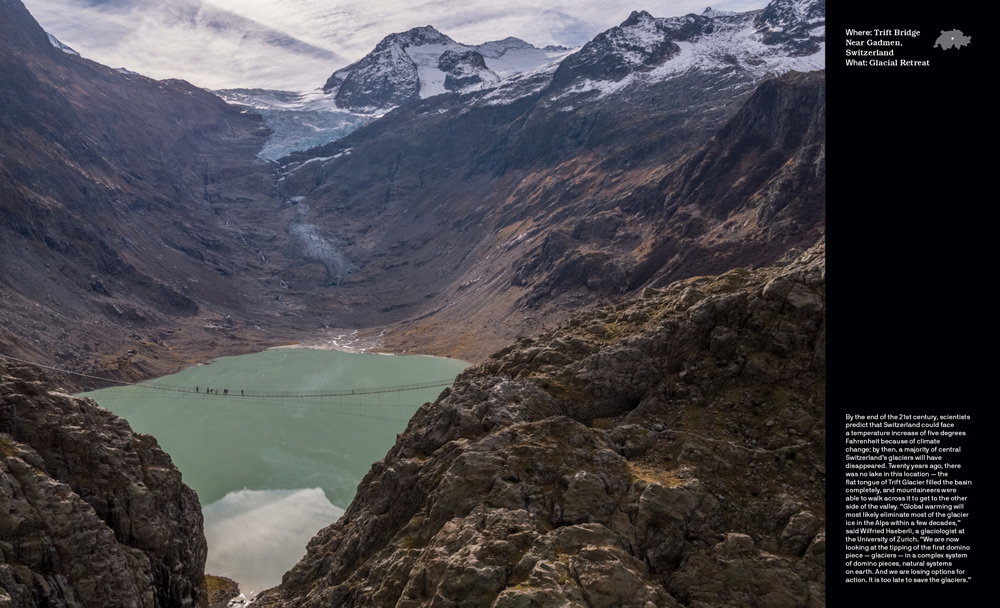
New York Times Magazine selected spreads

New York Times Magazine selected spreads

New York Times Magazine selected spreads

New York Times Magazine selected spreads
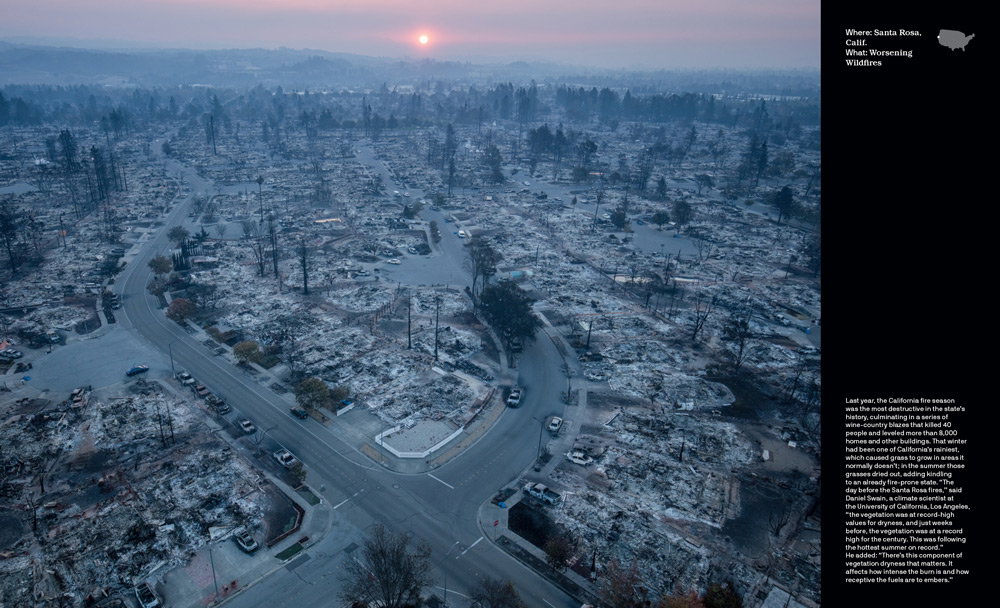
New York Times Magazine selected spreads
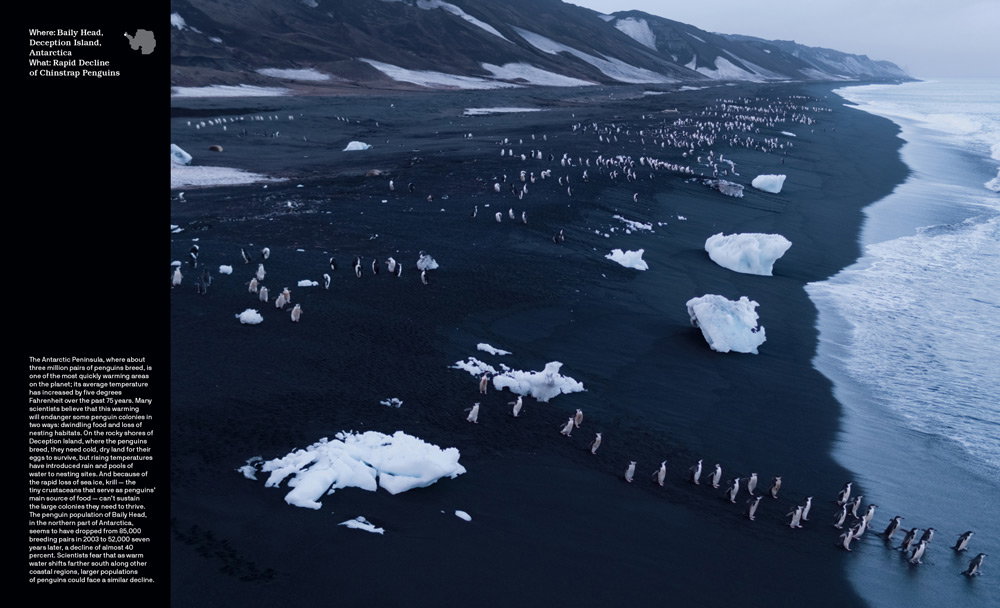
New York Times Magazine selected spreads
Share Article
Further Info
About the Author
—
Josh Baines joined It's Nice That from July 2018 to July 2019 as News Editor, covering new high-profile projects, awards announcements, and everything else in between.