Cbabi Bayoc on going from a caricaturist to painting Prince’s The Rainbow Children album cover
The artist’s work spans charismatic portraits depicting Black fatherhood, and Cubist-inspired energetic scenes capturing the atmosphere of live music.
Cbabi Bayoc changed his name from Clifford Miskell when he was at college in 1997, and wanted to shed his slave name. “I was Black and rebellious,” he tells It’s Nice That. “I wanted a name that felt free and defined my identity and my mission in life.” Cbabi, therefore, stands for Creative Black Artist Battling Ignorance, and Bayoc for Blessed African Youth of Creativity. And his work is suitably expressive, full of personality and energy, from his portrait series depicting Black fatherhood to his more recently abstract work. “I feel like I’m part of a tribe of artists who paint passionately. We share from our hearts how every day looks, honestly; painting what we always feel.” He summarises his work as being “about the beauty of humanity and people, and our connection to one another.”
Cbabi studied at Louisiana and started out his career as a caricature artist at the theme park, Six Flags. “That opened my eyes to a different way that people saw others,” he remembers. “Doing that job changed the way I look at art.” This led him to study the work of German artist Sebastian Krüger, famous for his hyperreal caricatures of celebrities such as Jack Nicholson and The Rolling Stones, as well as Kadir Nelson, Diego Rivera and Ernie Barnes, whose work he spotted in the TV show Good Times. “I think that’s how a lot of young artists first saw a Black artist, or even art with Black subjects,” Cbabi comments. He also later drew influence from children’s book illustration and graffiti art. “I’m kind of a combination of all that now.”
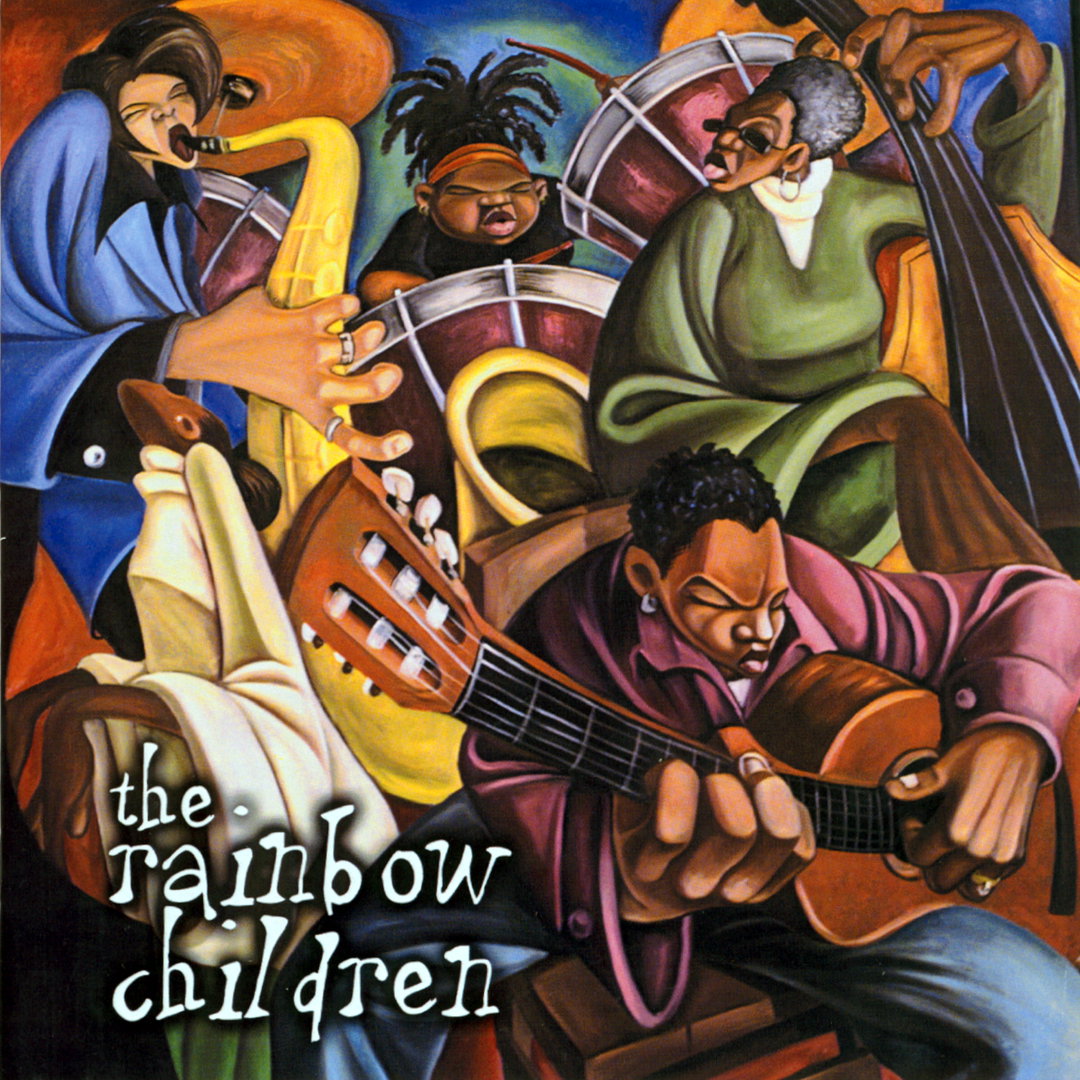
Next followed a four-year stint as an editorial illustrator, mostly doing portraits of musicians and artists in rap, hip-hop and R&B for magazines, while his personal work also turned to focus on music. That’s around the time he painted an artwork that would later become the cover to Prince’s album The Rainbow Children. Like much of his work during that period, the painting didn’t depict anyone in particular, but was inspired by photo references and his own experiences at concerts and gigs, capturing their atmosphere in his energetic works. “I love live music, the way musicians interact with one another, and the passion and graft it takes to get to perform on stage,” Cbabi says, comparing that dedication with the trajectory of becoming a visual artist.
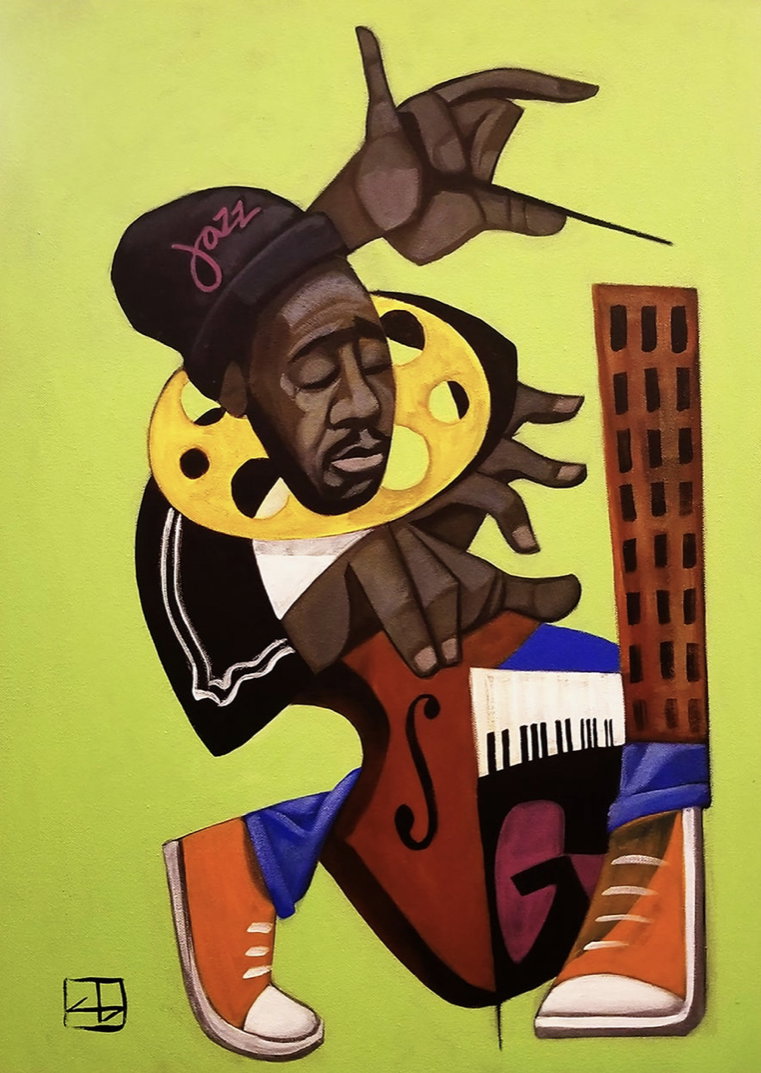
Cbabi Bayoc: Robert Glasper
The painting for The Rainbow Children was actually a response to his wife commenting that he didn’t paint enough women, and so this piece showed a whole band of women – something that resonated with Prince when he saw the work, as the artist had an all-female band at the time. “It had nothing to do with Prince at all,” the artist laughs.
The story goes that Prince was visiting St Louis (where Cbabi is based) for the Love 4 One Another tour, and the organisers asked a number of local artists, including Cbabi, to loan artworks to display at an event. As a result, Prince bought three of Cbabi’s paintings (he later bought a further two, including a portrait of himself) and bought the rights to one, to use as the cover of his next studio album, The Rainbow Children. Still today, Cbabi gets messages from people all over the world, admiring the work and wanting to buy prints, but for the latter, Cbabi can’t help. “He bought all the rights and the posters. There’s some out there but they go for a lot of money, I don’t even have a copy. I have the album but it’s mint, I’ve never played it.”
Cbabi’s work also hangs at Paisley Park, which the artist has visited numerous times, and he’s since developed a new appreciation for “how much [Prince] sacrificed,” says the artist. “I have a deeper appreciation for what it took to become such an icon, and at what cost. You know, it’s not all glamorous and rosy all the time. But that’s part of the story. You can’t separate the two.”
Since that fateful sale to Prince, Cbabi has carved a successful career as an artist, whose work has evolved to gradually become more Cubist and abstract. “I don’t think I’m as Cubist as I probably will become,” he says. “A lot of my previous work has relied on image resources, but I’m trying to paint more from my mind, more emotion, colour and form. The more I paint out of my head, the more abstract and Cubistic I go.” His process sees him use house paint, acrylics and spray paint, working in large-scale formats on canvas or site-specific murals.
One of his best-known series is 365 Days with Dad, a project that saw him paint a positive image of Black fatherhood every day for a year. And to mark the upcoming tenth anniversary of that series (the focus of his Ted talk) Cbabi hopes to develop a new series, with today’s Black Lives Matter movement in mind. He also recently had an exhibition of abstract works examining hands and fingers as a subject matter, and hopes to develop more work focused on the Great Migration. Meanwhile, in his studio – “my happy place” – are several canvases being worked on in fits and bursts at any one time. “I have a lot of ideas that come to me hidden in layers of another painting, so I spot them as I work and I instantly need to sketch or paint them out, right then and there,” he says – describing a process that sounds akin to the jazz music principles which made such an early impact on his practice.
Prince's The Rainbow Children has recently been reissued, listen here.
GalleryCbabi Bayoc
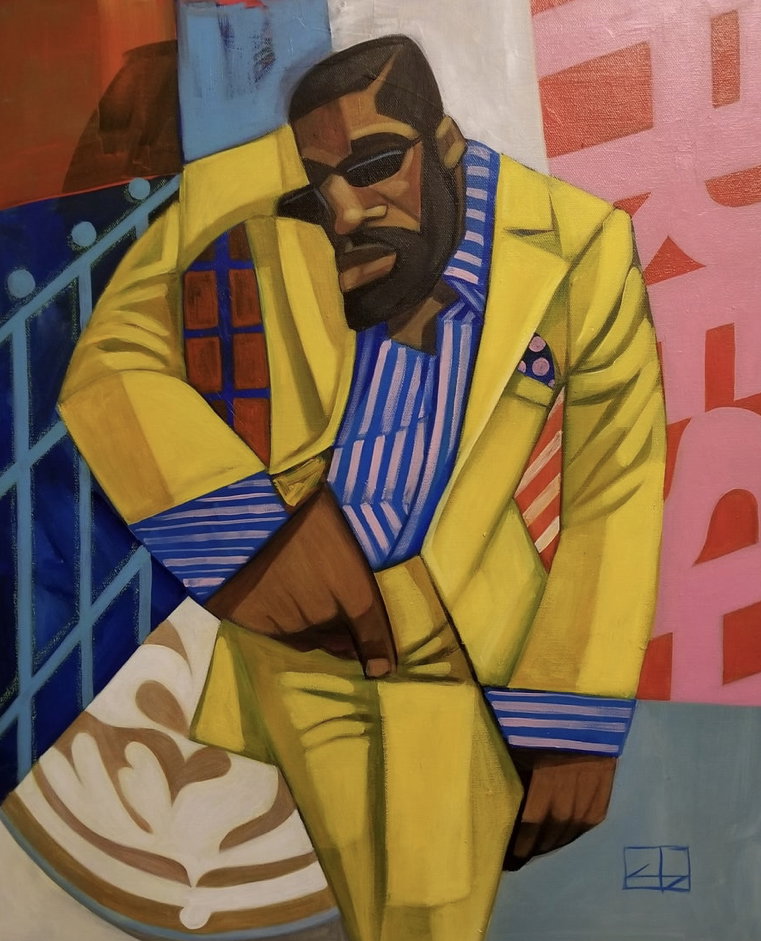
So Fresh So Clean
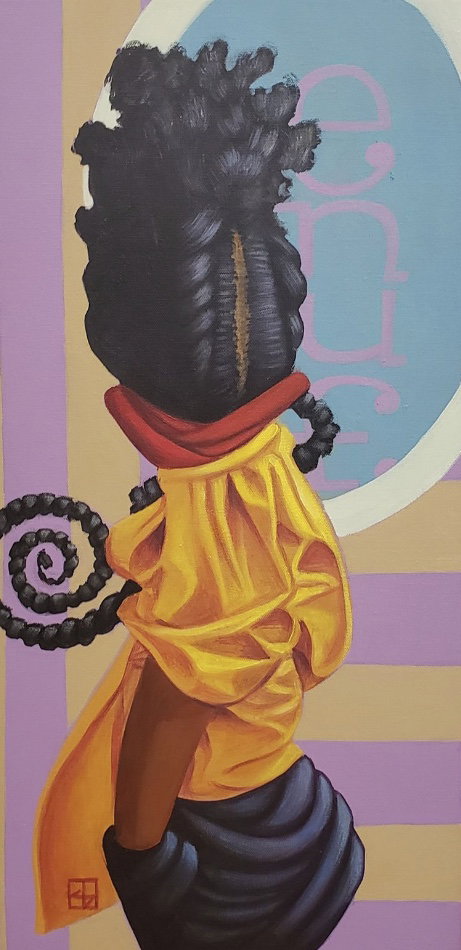
Enuf
XOXO
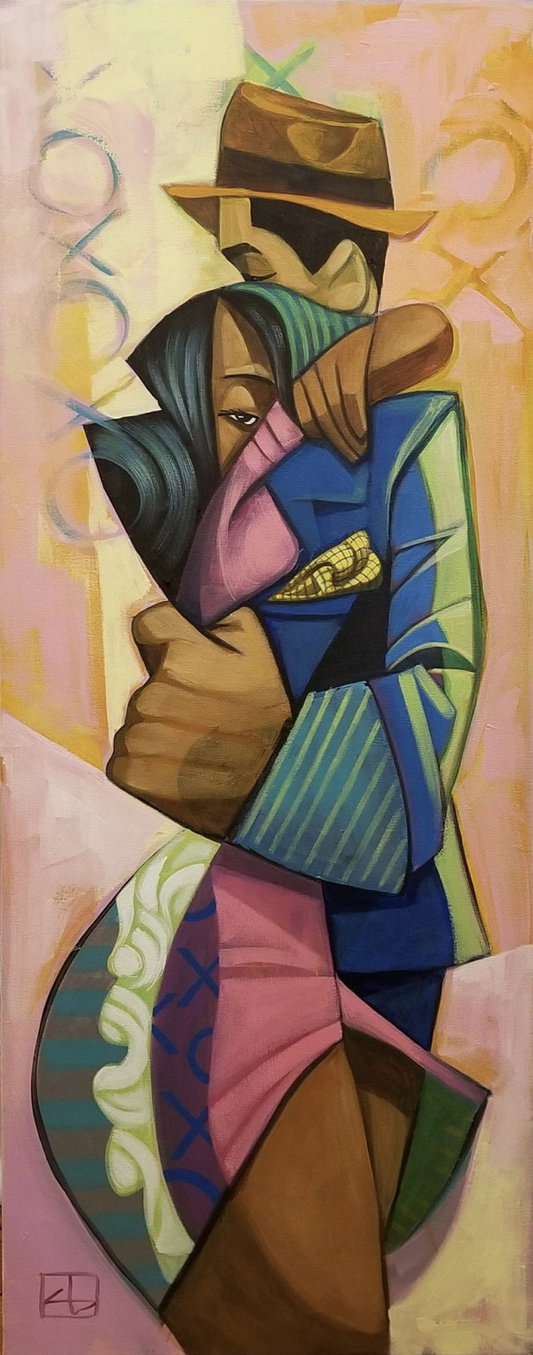
XOXO
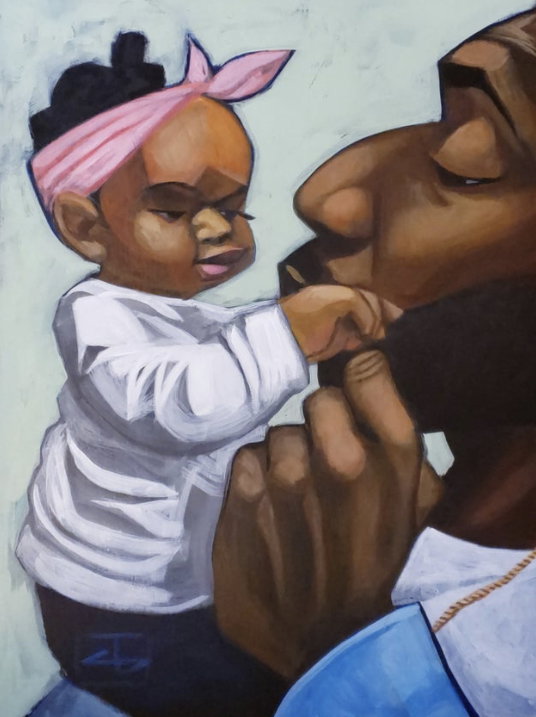
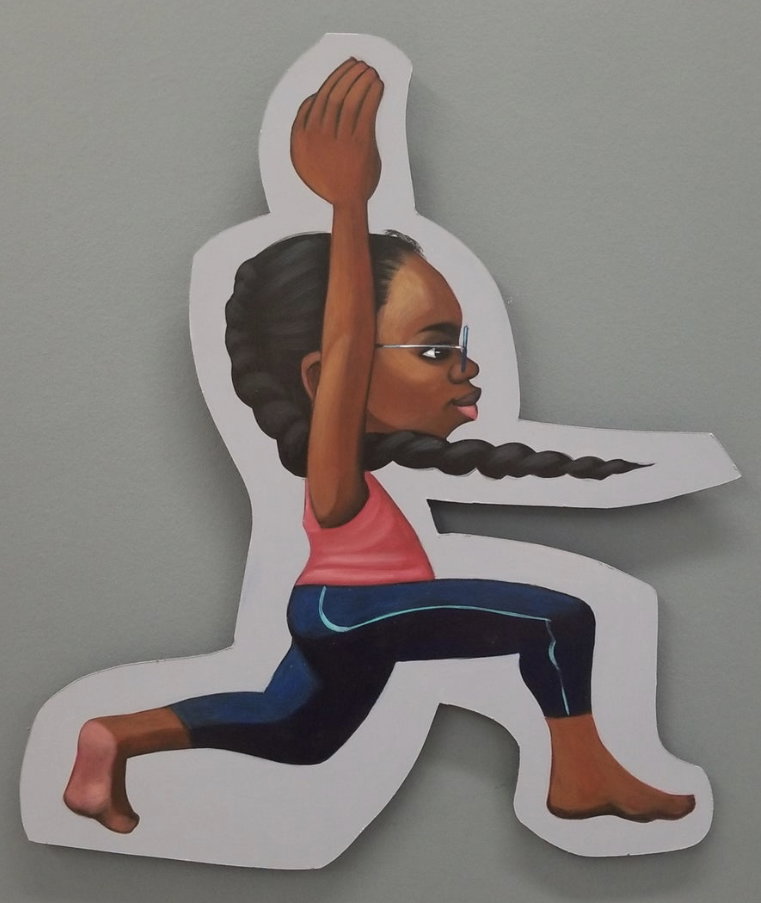
Yoga Kids Glasses
Yoga Kids Green Glow
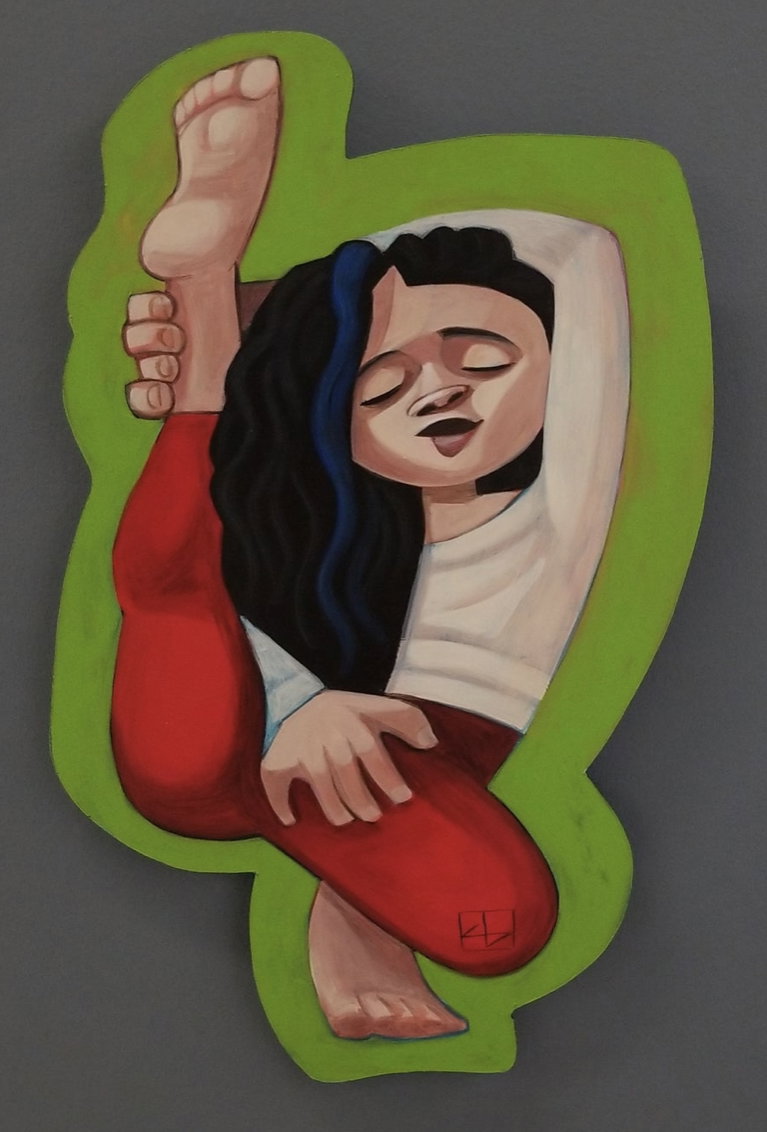
Yoga Kids Green Glow
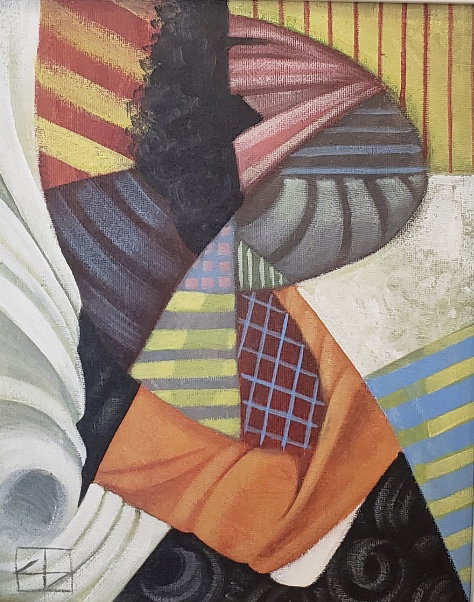
With Grace
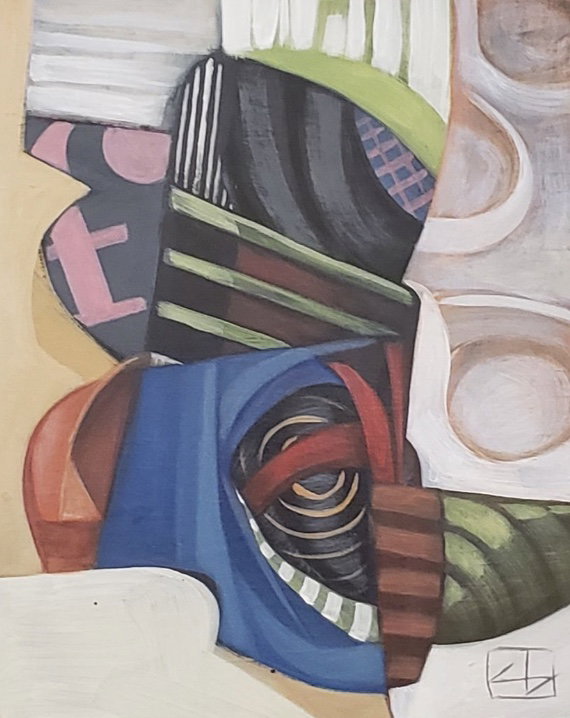
What the F
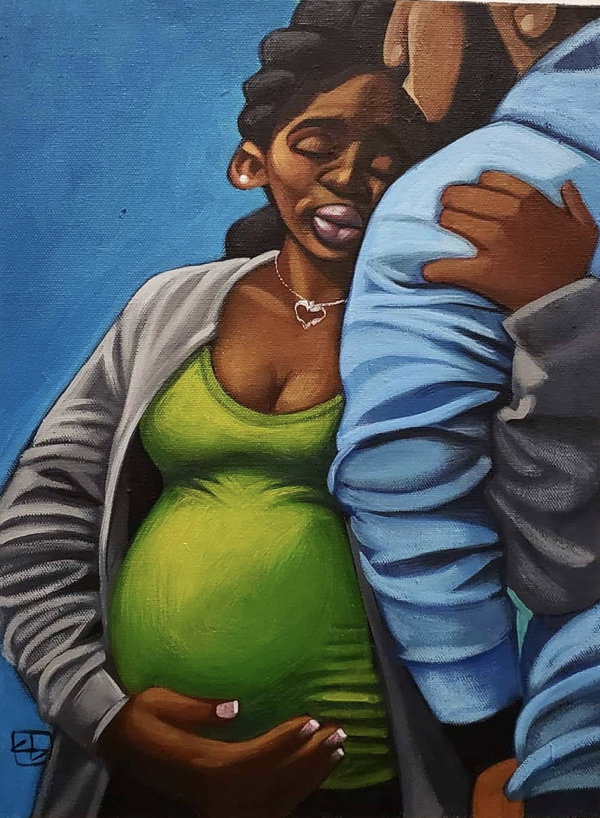
So Ready to Meet You
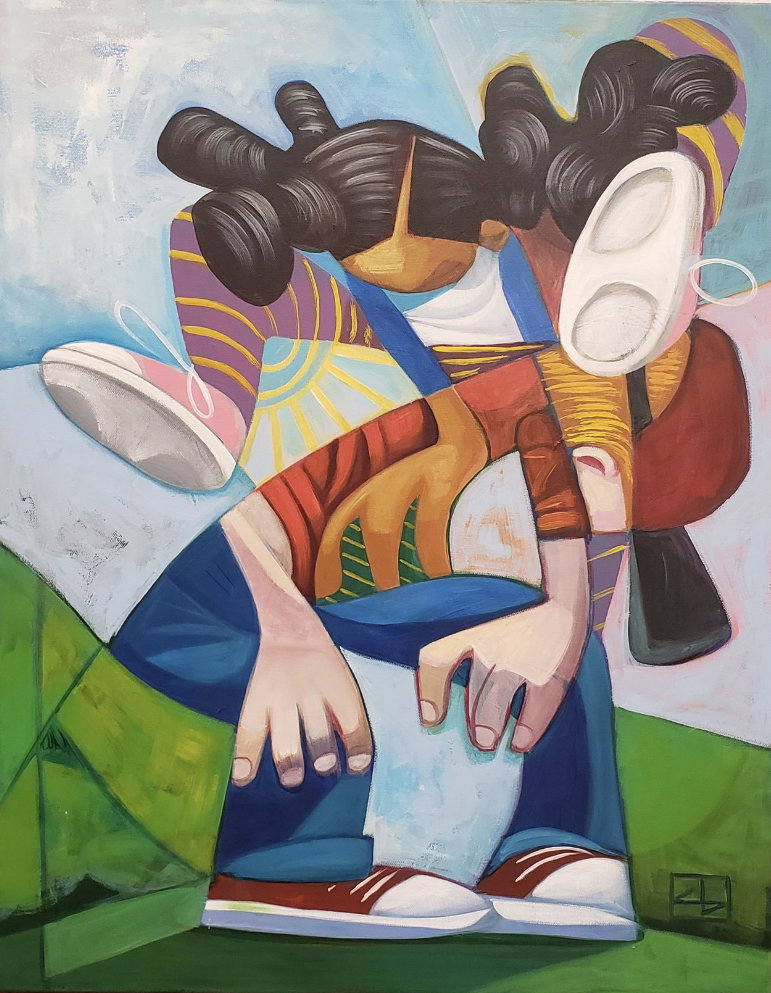
Leap Frog
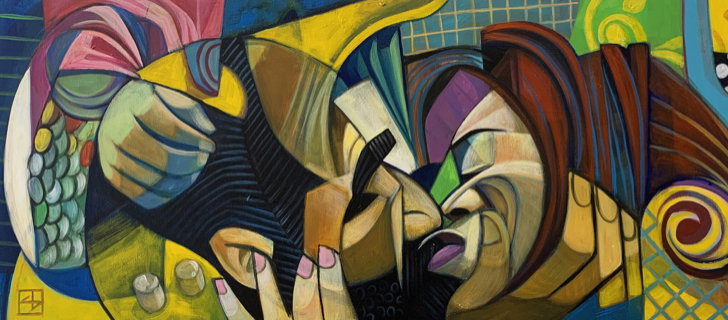
Kissing to a Prince Riff
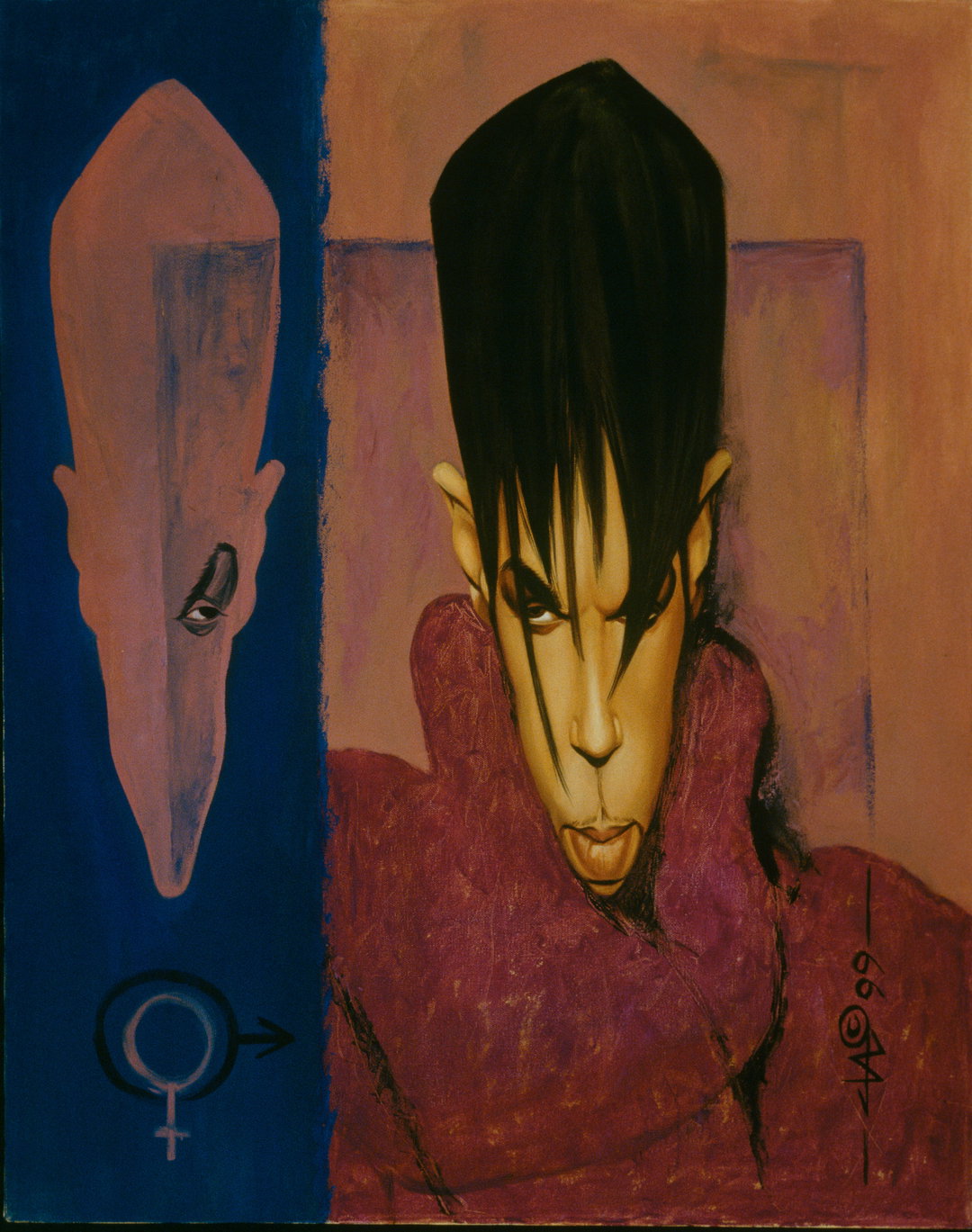
Portrait of Prince
Share Article
Further Info
About the Author
—
Jenny oversees editorial output across It’s Nice That. Get in touch with writing pitches for features or opinion pieces, big creative story tips, or questions about all things editorial. [email protected]
To submit your work to be featured on the site, please see our Submissions Guide.