

- Words
- Meg Farmer
- All images copyright
- Corita Art Center
- —
- Date
- 3 February 2026
- Tags
Where have all the flowers gone? The new dawn of Corita Kent
Long before punk, protest zines, or postmodern type, Corita Kent was breaking graphic language open and asking designers to give a damn.
Share
Share
In 1955, Pete Seeger scotch‑taped a song to a microphone and sang it at Oberlin College. The tune was spare, almost plainspoken, but its question cut deep: Where have all the flowers gone? A lyric about war’s recursive toll, about memory slipping through generations. When will they ever learn?
That same year, the acquittal of two white men for the lynching of 14‑year‑old Emmett Till sent a shockwave through the country. Images of Till’s mutilated body circulated widely by Jet magazine, igniting a civil rights movement that was already gathering force. America was learning, slowly and violently, how images could bear witness, provoke outrage, and demand moral reckoning.
Meanwhile, in Los Angeles, a Catholic nun, art educator, and social justice activist was quietly collecting the visual language of everyday life. With a 35mm camera, Sister Corita Kent photographed traffic cones and billboards, classroom projects and supermarket signage, cookies and puppets, used‑car lots and sunflowers, Mary’s Day celebrations and city streets. She photographed her students, her friends Charles and Ray Eames, and the dense, contradictory life of Los Angeles itself. Ordinary things. Charged things. Language in the wild.
Of her photography practice, Kent wrote, “I think that I am always collecting in a way – walking down a street with my eyes open, looking through a magazine, viewing a movie, visiting a museum or grocery store.”
Between 1955-1968, while teaching lettering, layout, image‑finding, and visual structure in the art department at Immaculate Heart College, Kent amassed more than 15,000 35mm slides. This archive, recently distilled into the exhibition Corita Kent: The Sorcery of Images at the Marciano Art Foundation, reveals the engine of her practice: looking as devotion, collecting as discipline.
Edited and composed by Michelle Silva, the exhibition presented roughly 1,100 slides across three monumental screens. Visitors sunk into bean bags as images appeared in triads, advancing at one‑minute intervals. The pacing was deliberate, almost liturgical. Three images would arrive, pause, and hold – long enough to invite comparison, resonance, contradiction.
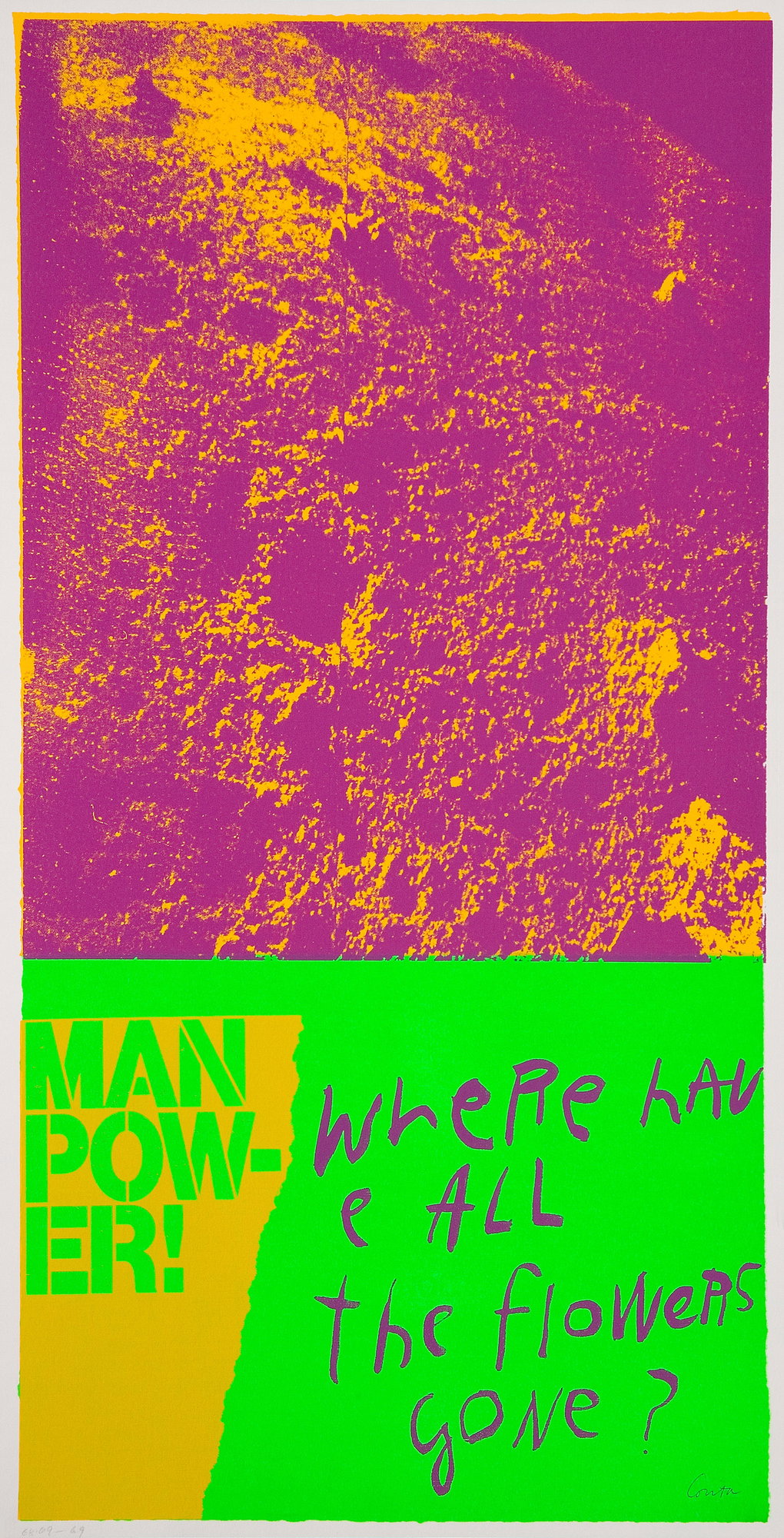
Corita Kent: moonflowers (1969)
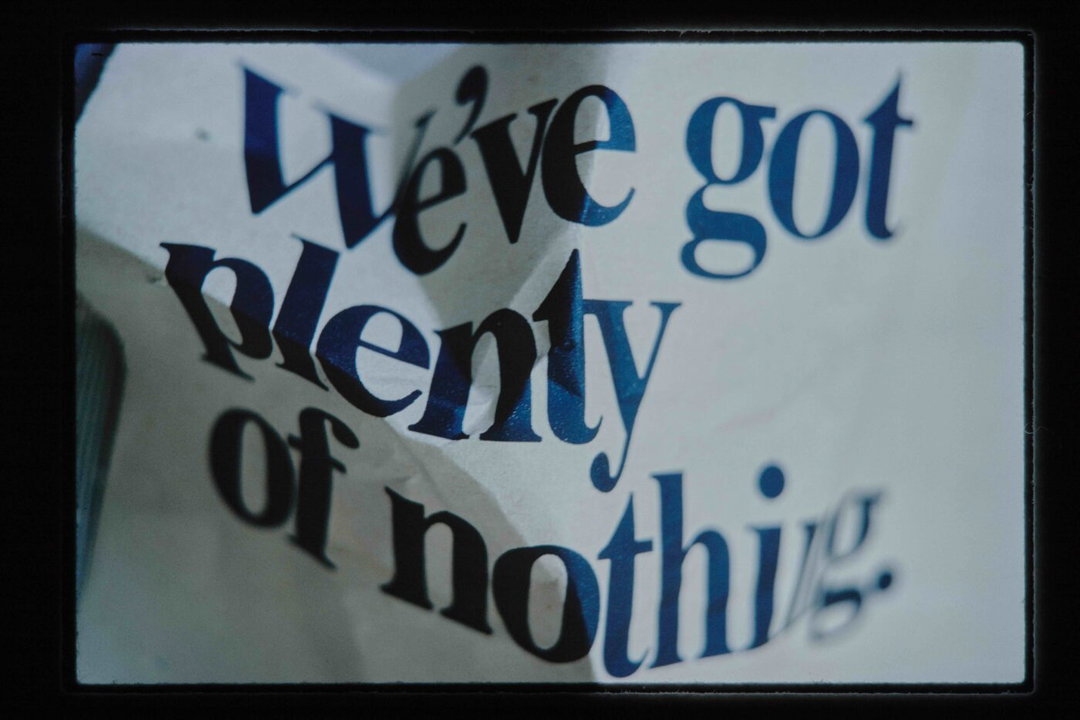
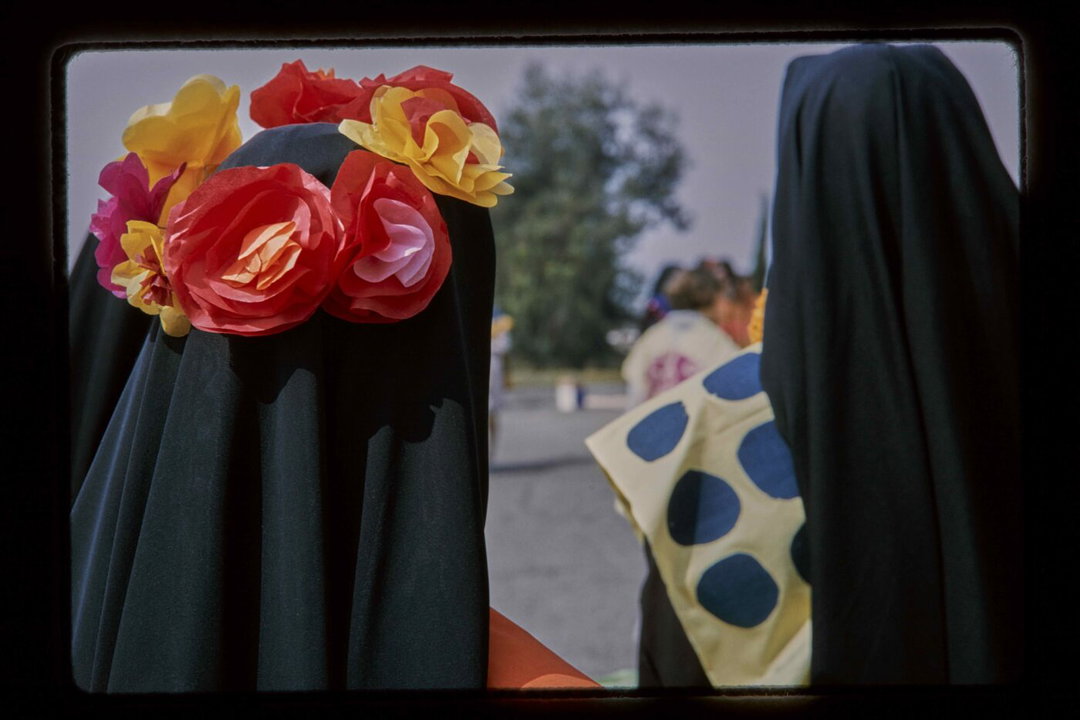
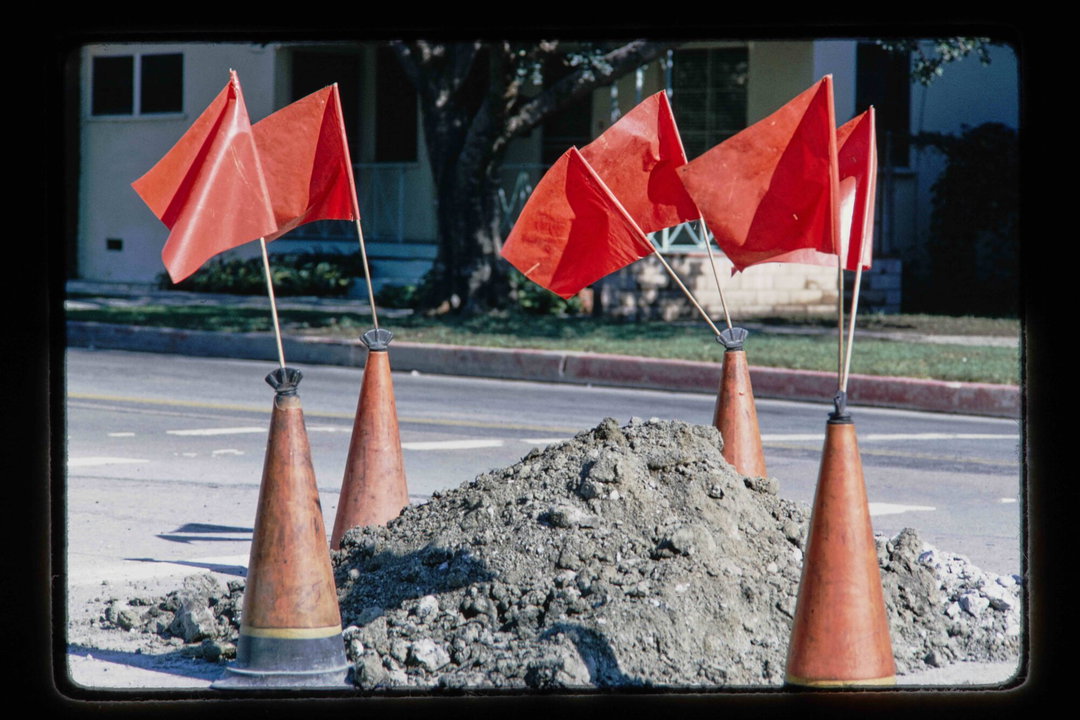
1 of 3
Corita Kent: Distorted ad, source material, 35 mm slide (1967)
1 of 3
Corita Kent: Distorted ad, source material, 35 mm slide (1967)
“Her work doesn’t ask us to admire from a distance. It asks us to notice.”
Meg Farmer
The effect is not unlike the visual logic of Murray Moss’s Tertium Quid, in which paired press photographs generate a third, emergent story through juxtaposition. Here, however, scale matters. The oversized projections and cavernous room reduce the viewer to a speck, reversing the contemporary posture of hunching over handheld screens and doom‑scrolling through fragments. Kent’s images ask for time and examination. They reward attention with delight.
These photographs are not merely documentary. They are the conceptual scaffolding of Kent’s graphic work – raw material she would later mine, splice, and transform. “Some of the things I collect are tangible and mount into piles and many layers,” she once wrote. “When the time comes to use saved images, I dig like an archaeologist.” What emerges from that excavation is a visual grammar: arrows, daisies, bread packaging, headlines, numbers, hands, faces. Fragments of American life rearranged into belief.
You see this grammar crystallise in works like mary does laugh and that they may have life (both 1964). Kent pulls bold lettering from commercial logos and pairs it with sacred and secular texts, turning graphic composition into meditation. In that they may have life, Wonder Bread packaging sits alongside the testimony of a Kentucky miner’s wife and the words of Gandhi. Through graphic editing – scale shifts, colour saturation, typographic collision – the everyday becomes prayer. This is Kent’s sorcery: design as moral offering.
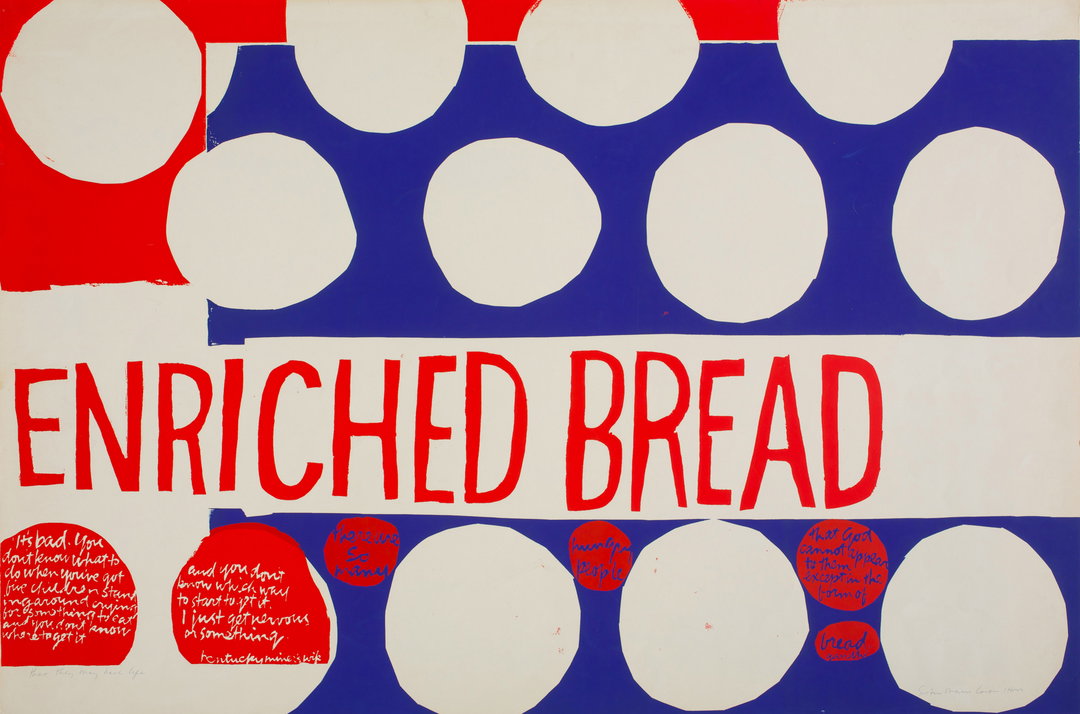
Corita Kent: that they may have life (1964)
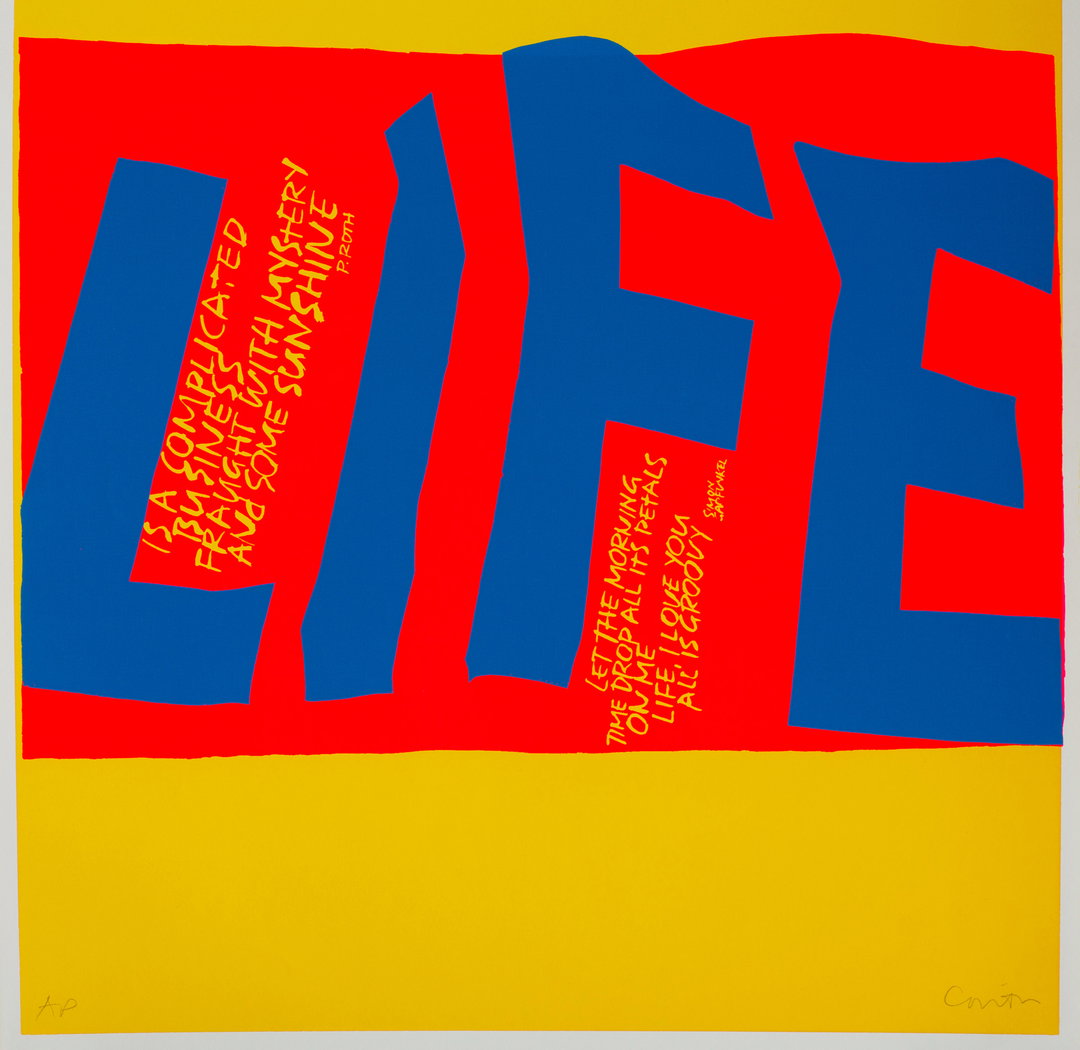
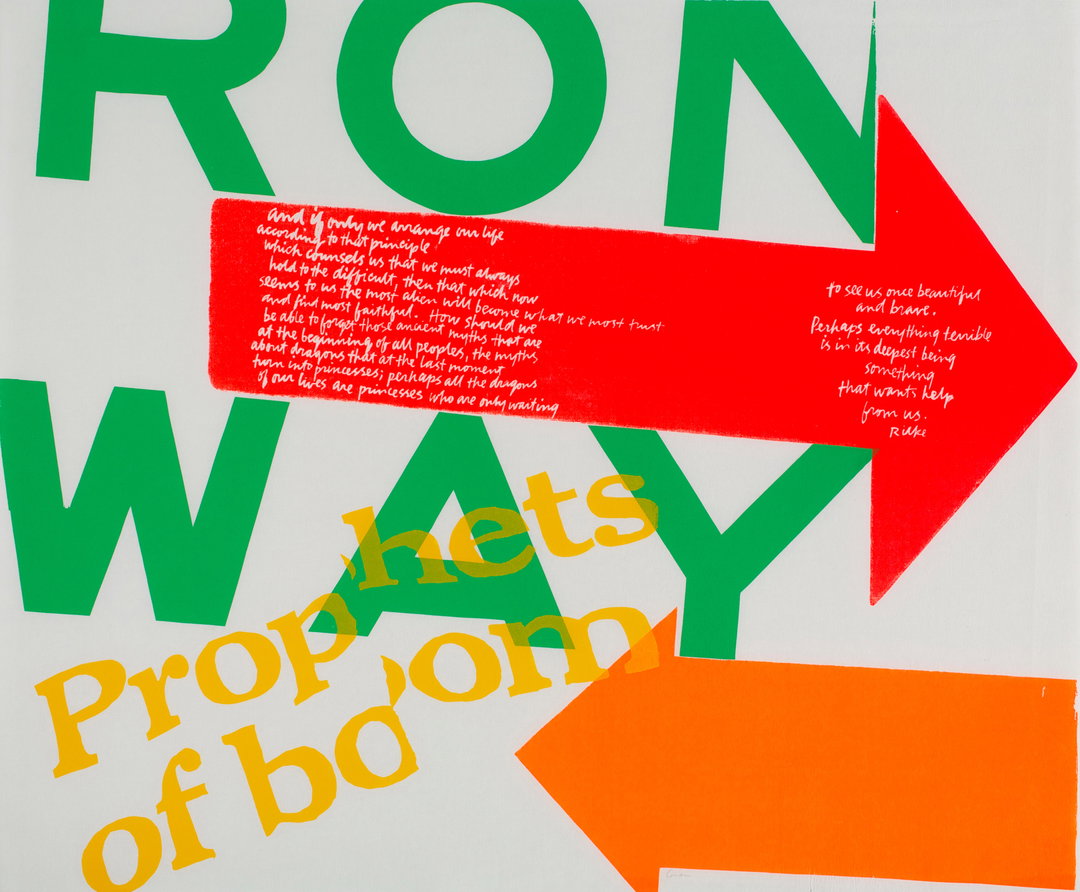
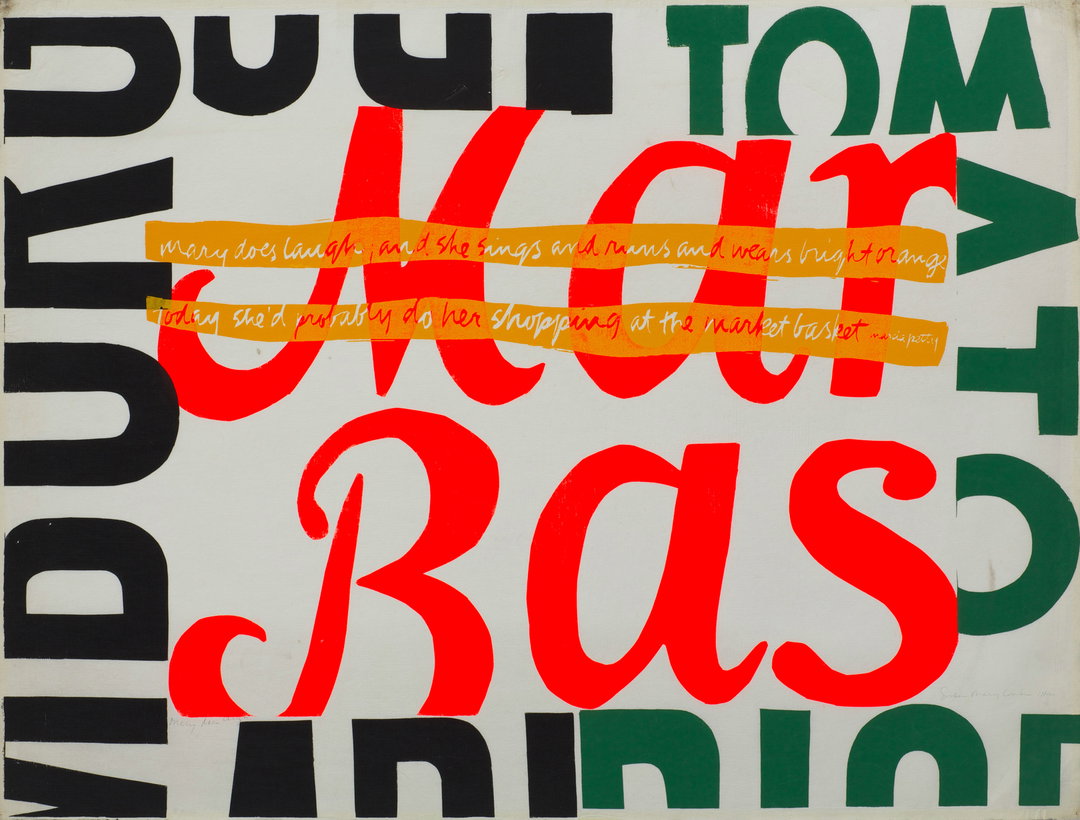
1 of 3
Corita Kent: life is a complicated business (1967)
1 of 3
Corita Kent: life is a complicated business (1967)
“Kent’s Los Angeles was devotional and absurd, tender and brutal – everything sharing the same frame.”
Meg Farmer
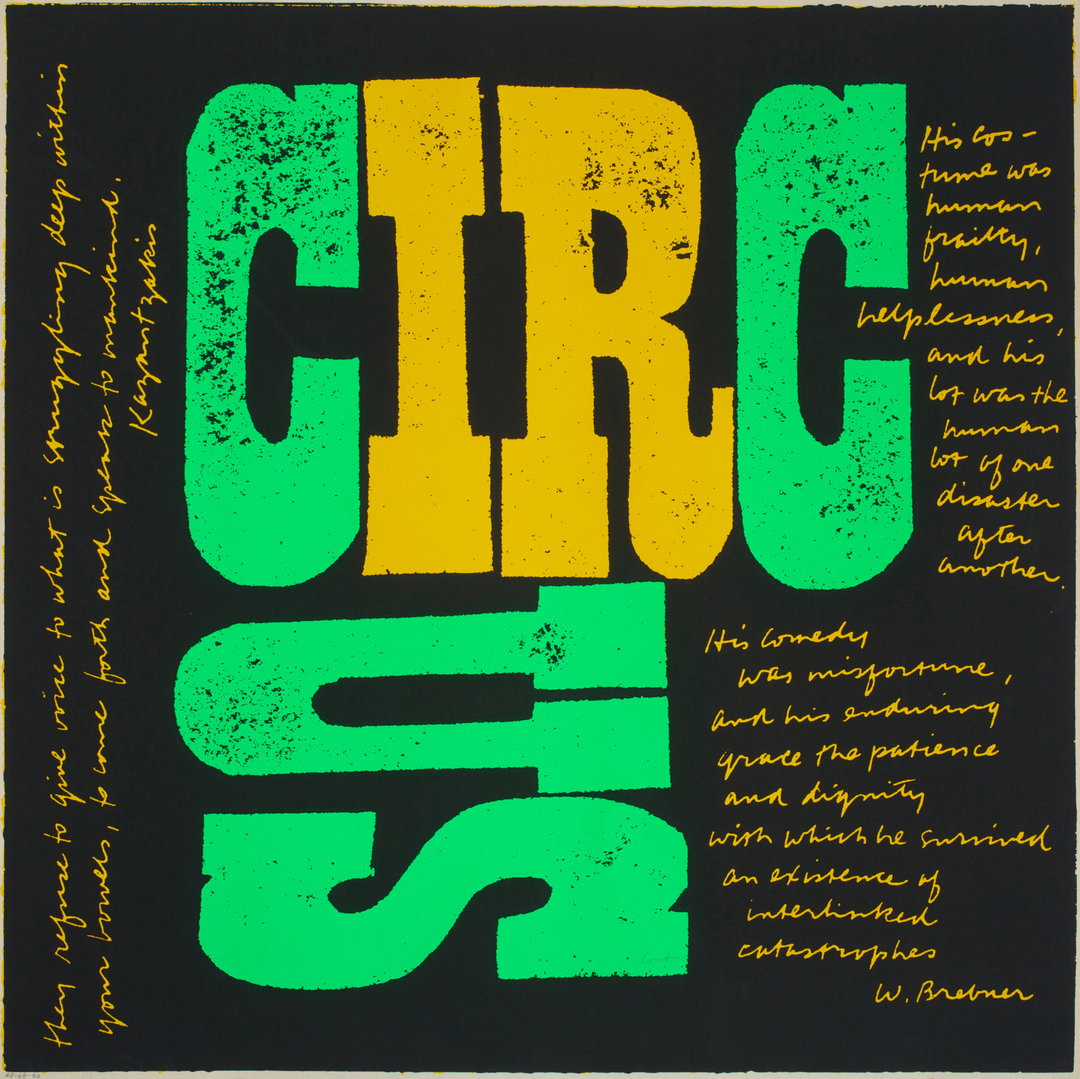
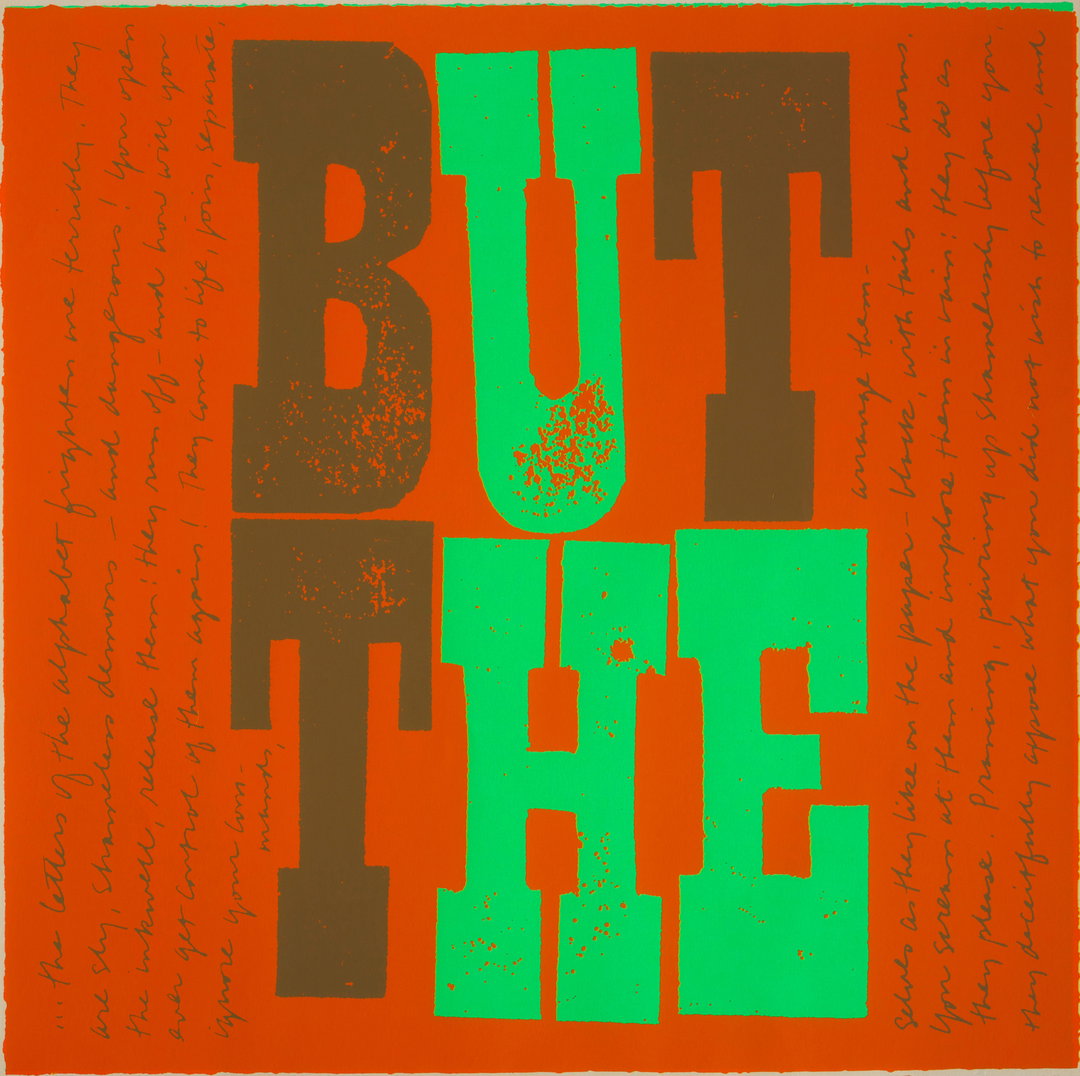
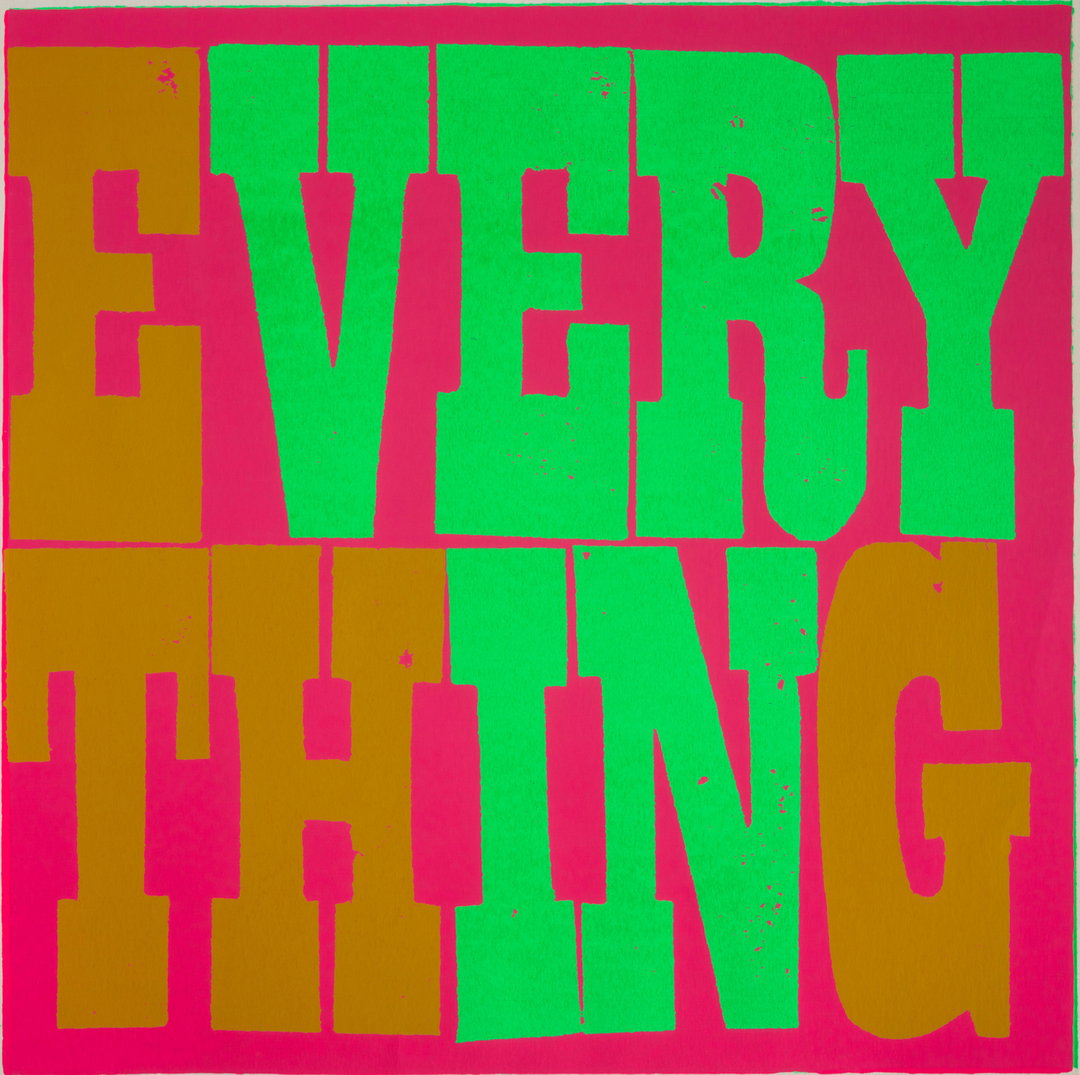
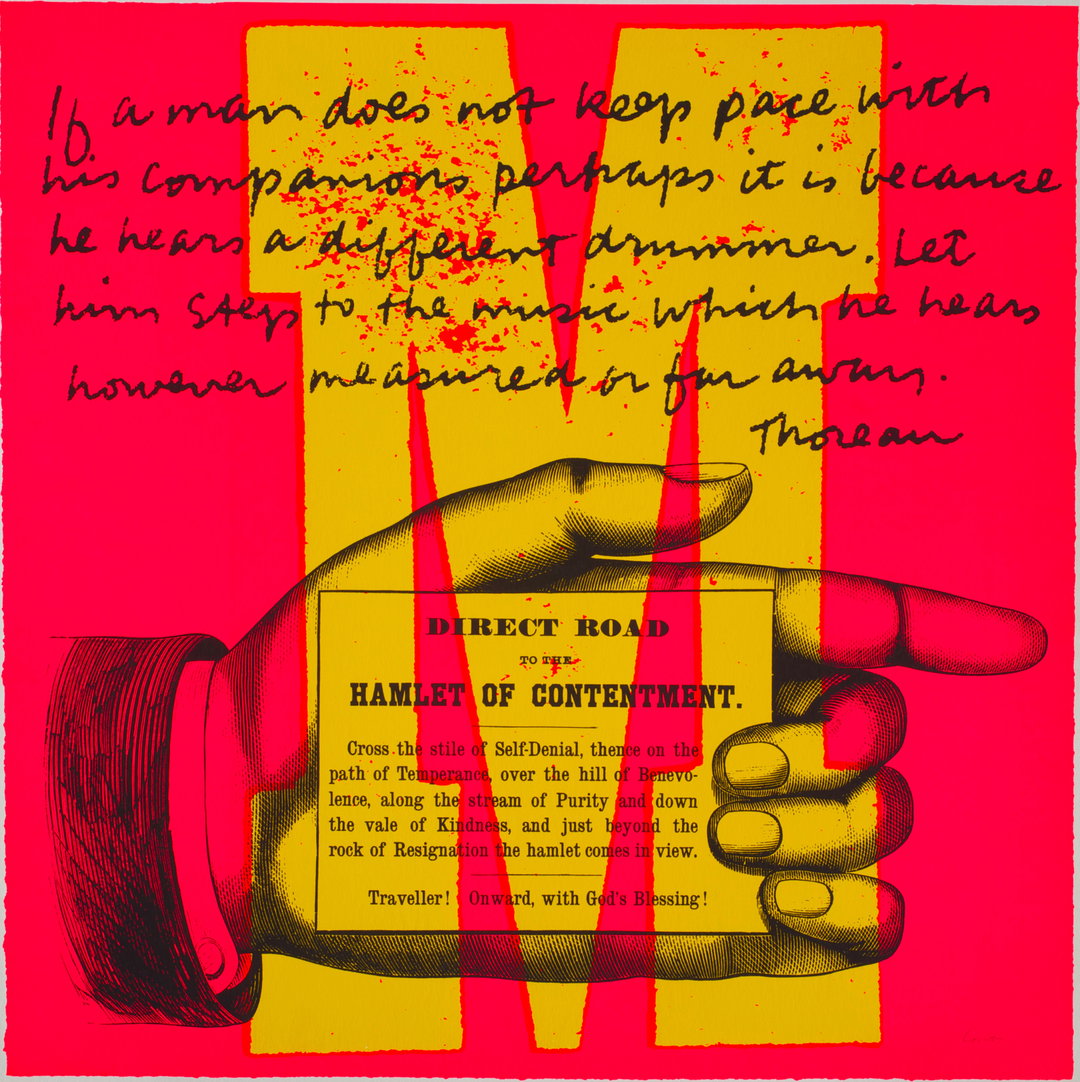
That alchemy extends to Kent’s deep love of language itself. The exhibition underscored this through an installation of Circus Alphabet (1968), a suite of 30 serigraphs inspired by a poem by E.E. Cummings, whose experimental approach to syntax and typography profoundly shaped her thinking. In homage, Kent titled her works in lowercase, embracing humility and play in equal measure. “I really love the look of letters,” she once remarked. “The letters themselves become a kind of subject matter – even apart from their meaning – like apples or oranges are for artists.”
Circus Alphabet is exuberant and exacting at once. Electrified colour fields, clashing typefaces, and dynamic compositions carry a chorus of voices: Cummings, Thoreau, Rilke, Dostoevsky, Joan Baez, Albert Camus, John Dewey, Adlai Stevenson, and Sister Helen Kelley (president of Immaculate Heart College). Kent orchestrates these voices with a designer’s ear, tuning them toward meditations on love, freedom, and responsibility. The circus is not chaos – it is choreography.
This is where Kent’s Los Angeles comes fully into focus. A city that is devotional and absurd, tender and brutal, ecstatic and exhausted. When Lou Reed sang, “But remember that the city is a funny place, something like a circus or a sewer,” he could have been describing Kent’s visual world: pop signage and political grief, consumer abundance and spiritual hunger sharing the same frame.
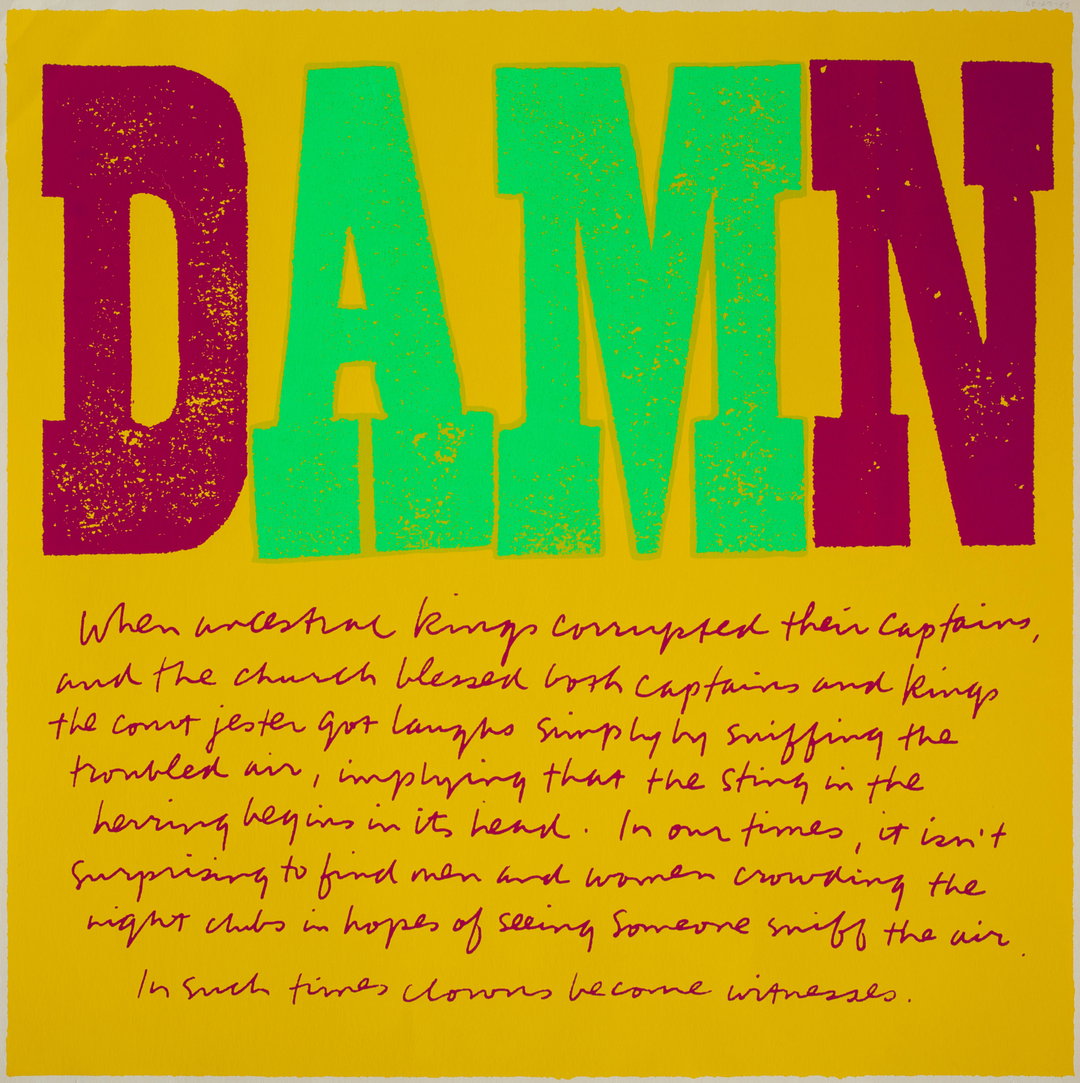
Corita Kent: damn (1968)
1 of 4
Corita Kent: circus (1968)
1 of 4
Corita Kent: circus (1968)
Though The Sorcery of Images has sunset, Kent’s full slide archive – and a rich collection of ephemera, publications, and prints – lives at the Corita Art Center in Los Angeles. The Center continues to make this material accessible to researchers and the public alike, including through current exhibitions like Heroes and Sheroes, which foreground a pivotal moment in Kent’s practice.
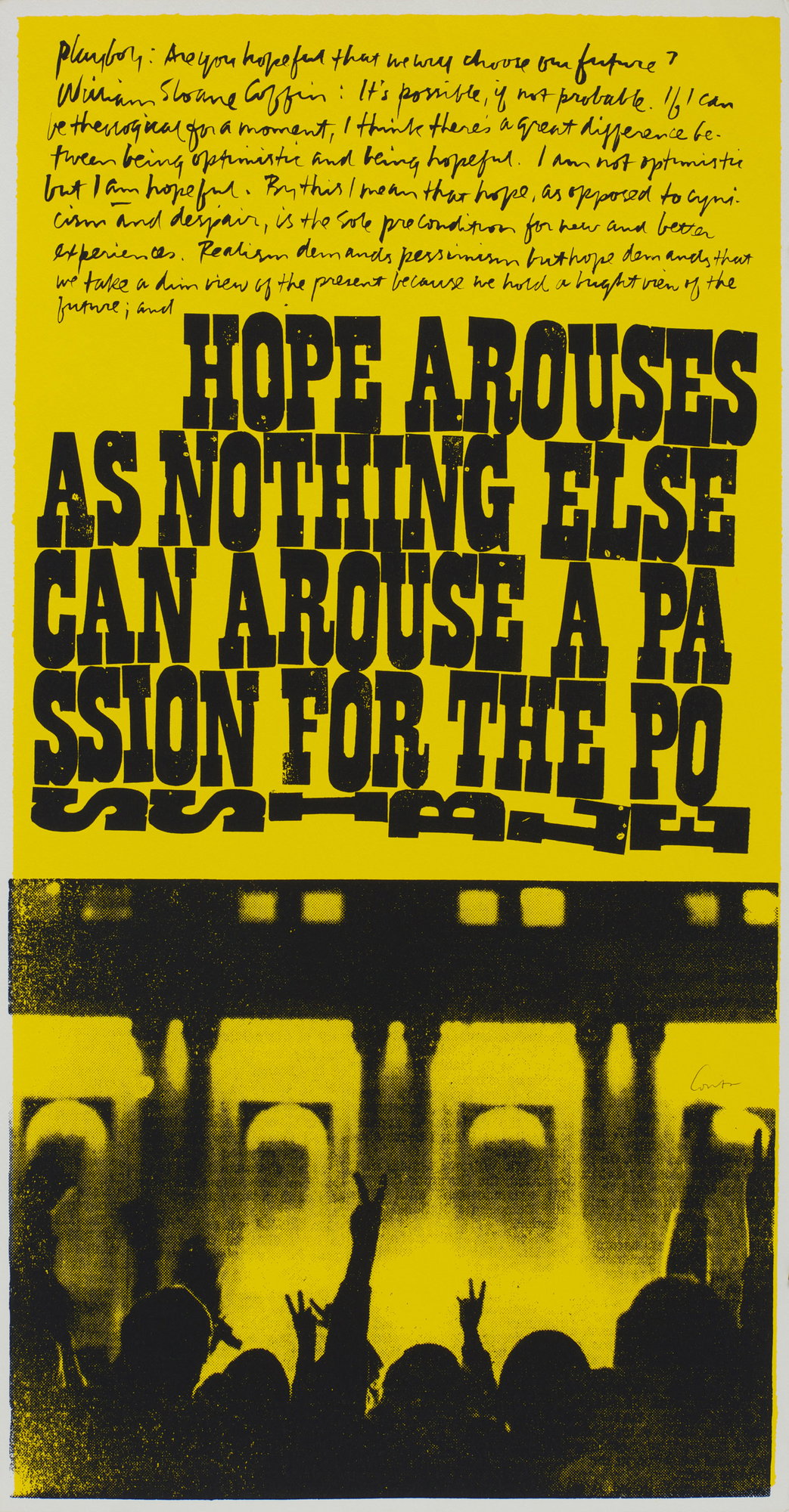
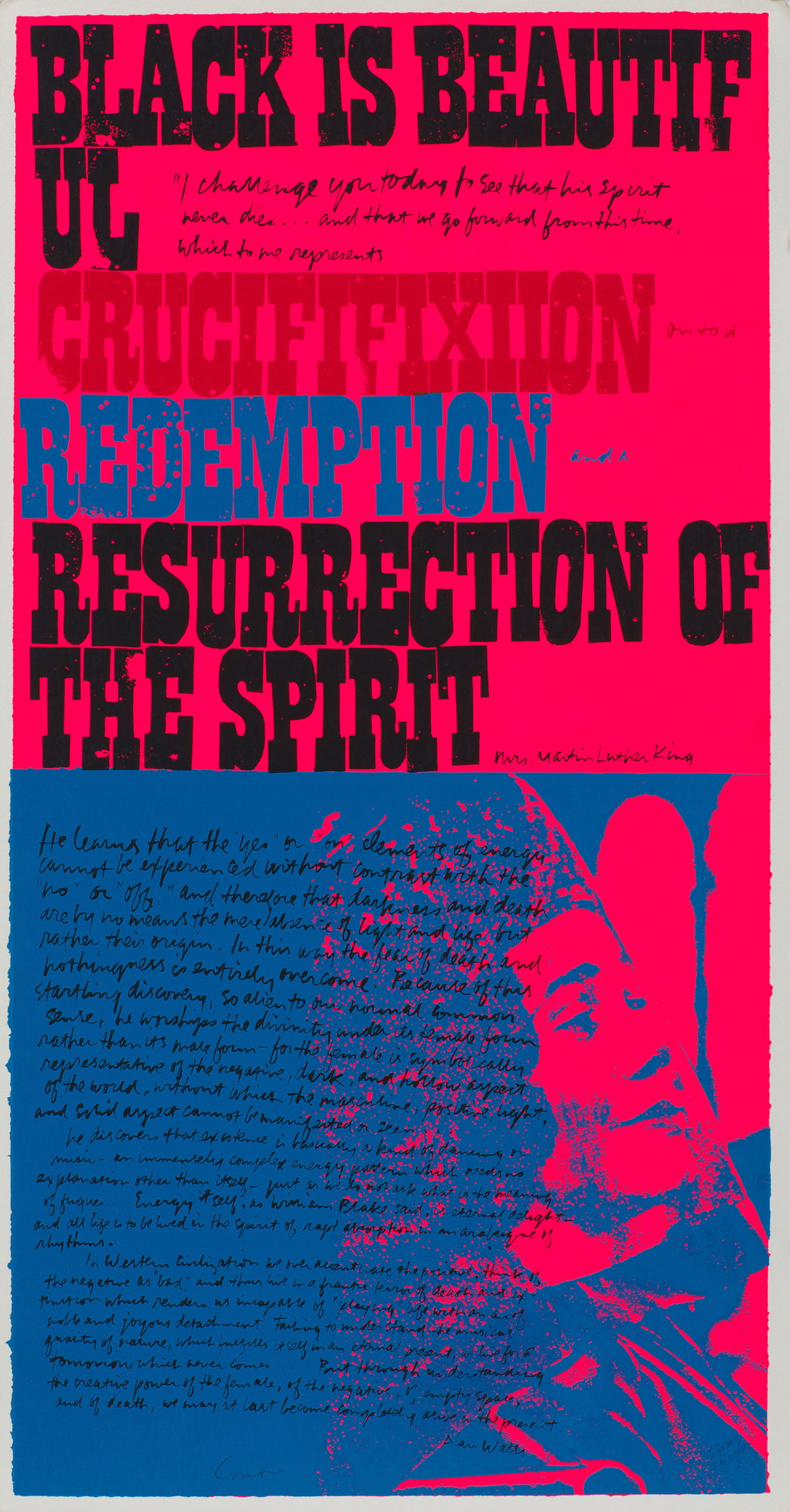
Created between 1968-1969, the heroes and sheroes series marks a turning point. Produced after Kent took a sabbatical from Immaculate Heart College and ultimately left the order of the Immaculate Heart of Mary, these 29 prints engage directly with the political realities of the era: labour and civil rights, the war in Vietnam, disarming nuclear weapons, and political assassination. Kent was not a street radical, though her work is unmistakably aligned.
In the cry that will be heard, Kent lifts imagery from a Life magazine cover and pairs it with lyrics from the protest song Give a Damn by Spanky & Gang. The issue, featuring photo‑essays by Gordon Parks, Gerald Moore, and Jack Newfield, exposed cycles of poverty and racial injustice in Harlem, Chicago’s West Side, and Bedford‑Stuyvesant. Kent’s intervention is graphic, not illustrative. Through scale, contrast, and typographic emphasis, she amplifies the moral urgency already embedded in the image.
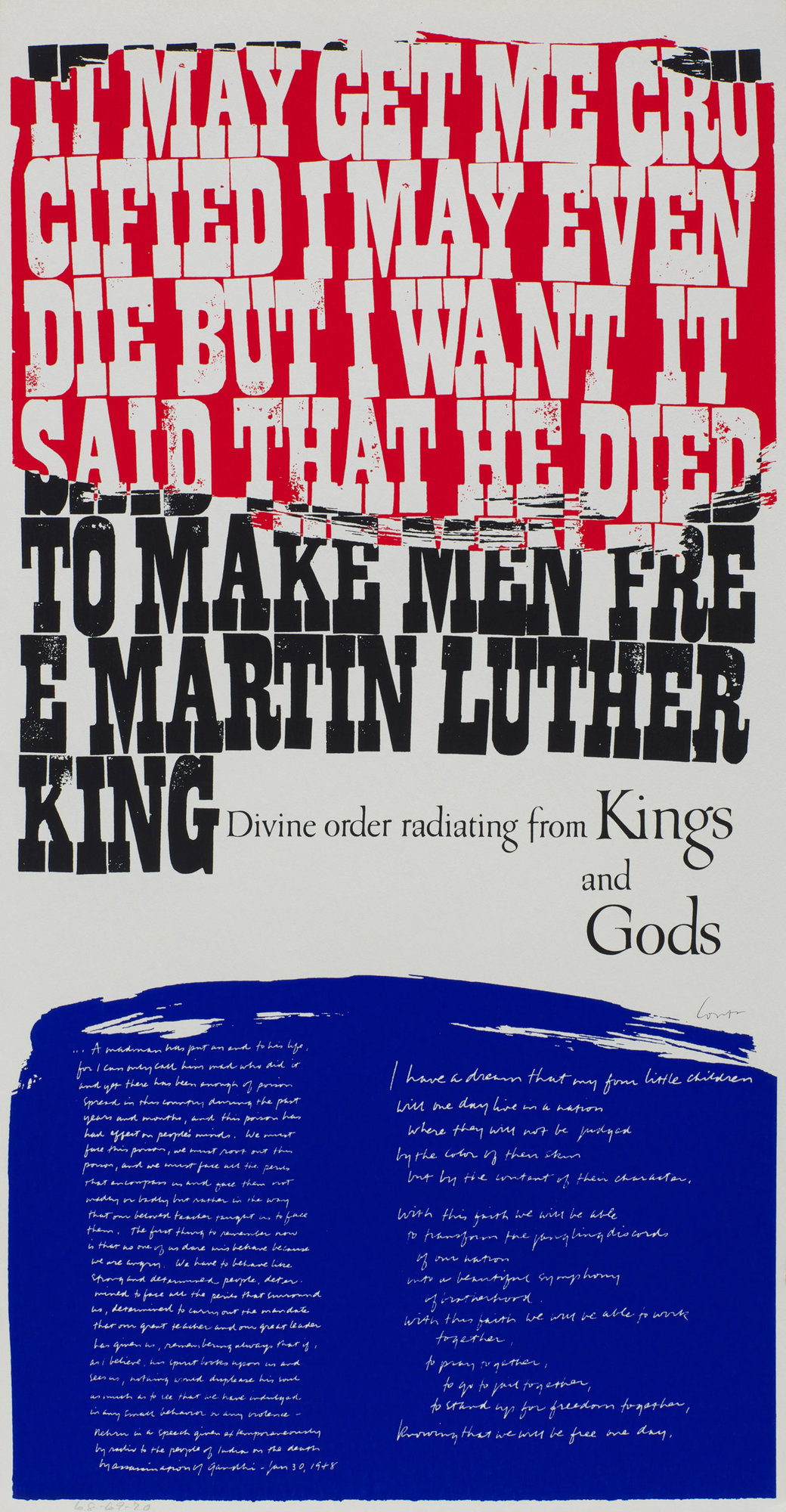
A similar strategy unfolds in king’s dream. Here, Kent juxtaposes a bold serif with a softer companion and layers handwritten text beneath. The excerpts come from two speeches delivered on the same day – 30 January, 1948. A sermon by Martin Luther King Jr. and Jawaharlal Nehru’s radio address to the people of India following Gandhi’s assassination. Red, white, and blue saturate the composition. She is speaking to America and the world at large. The design does not resolve the tension it presents. Instead, it hands the question back to the viewer: When will they ever learn?
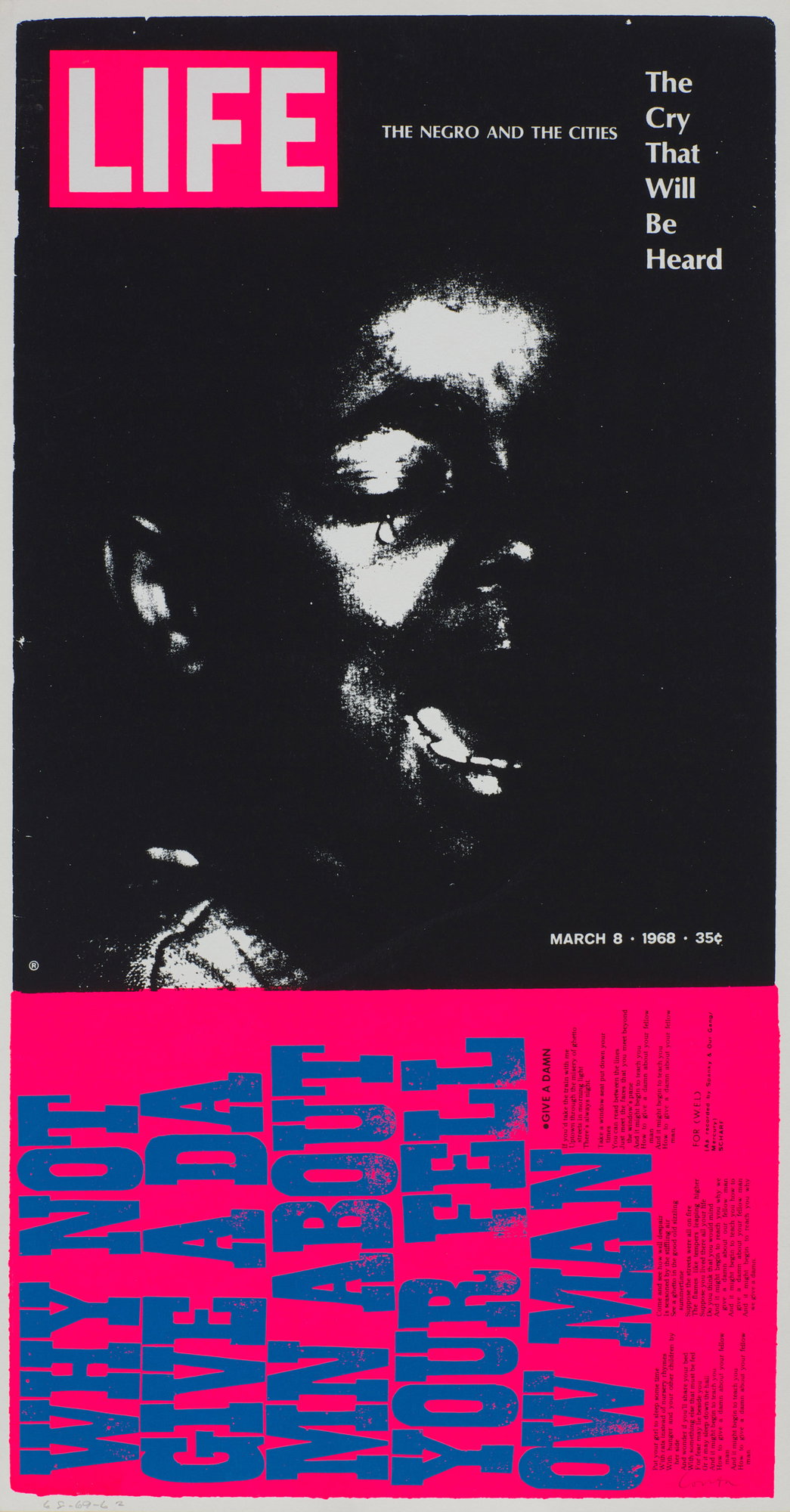
Corita Kent: the cry that will be heard (1969)
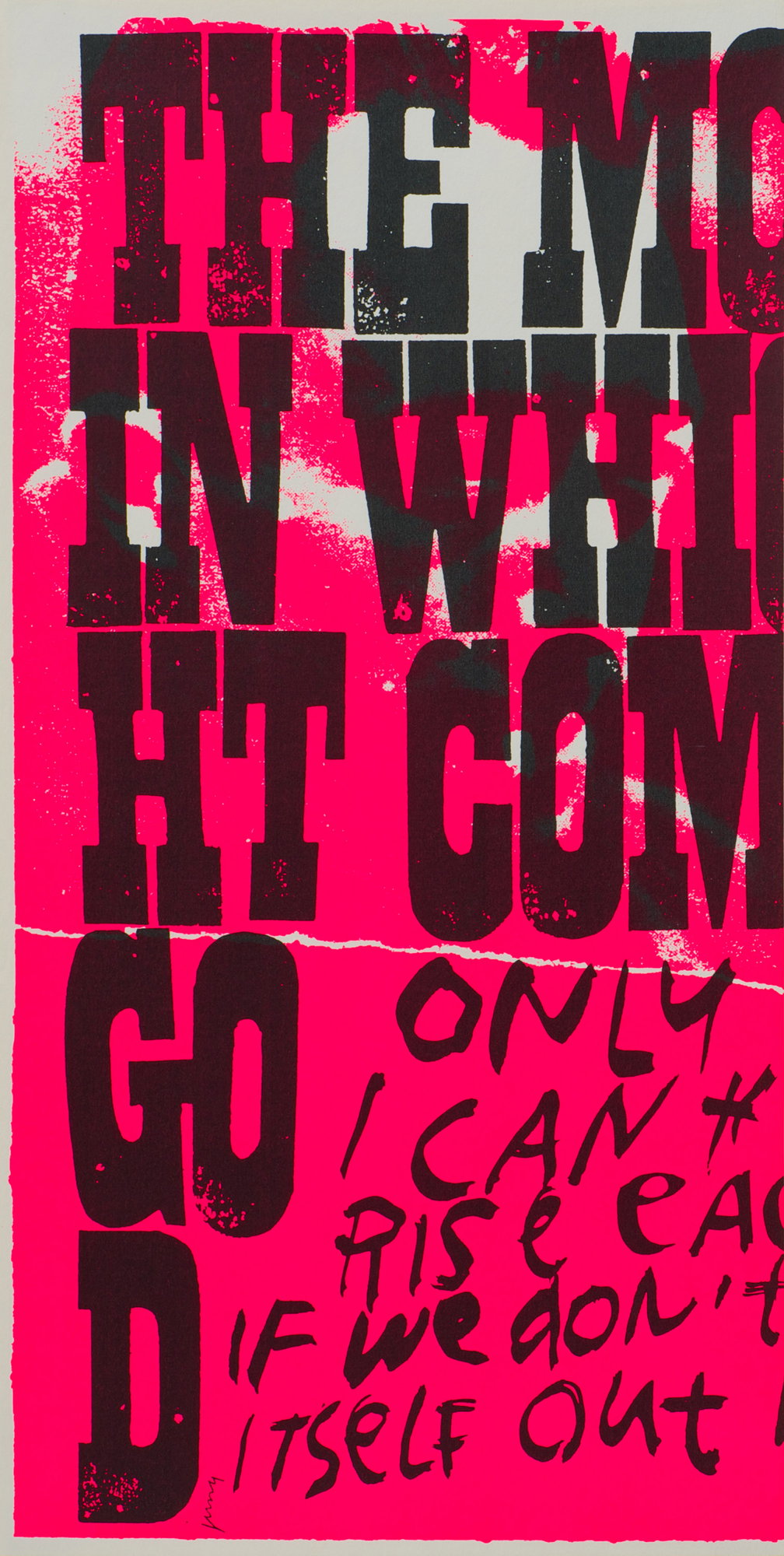
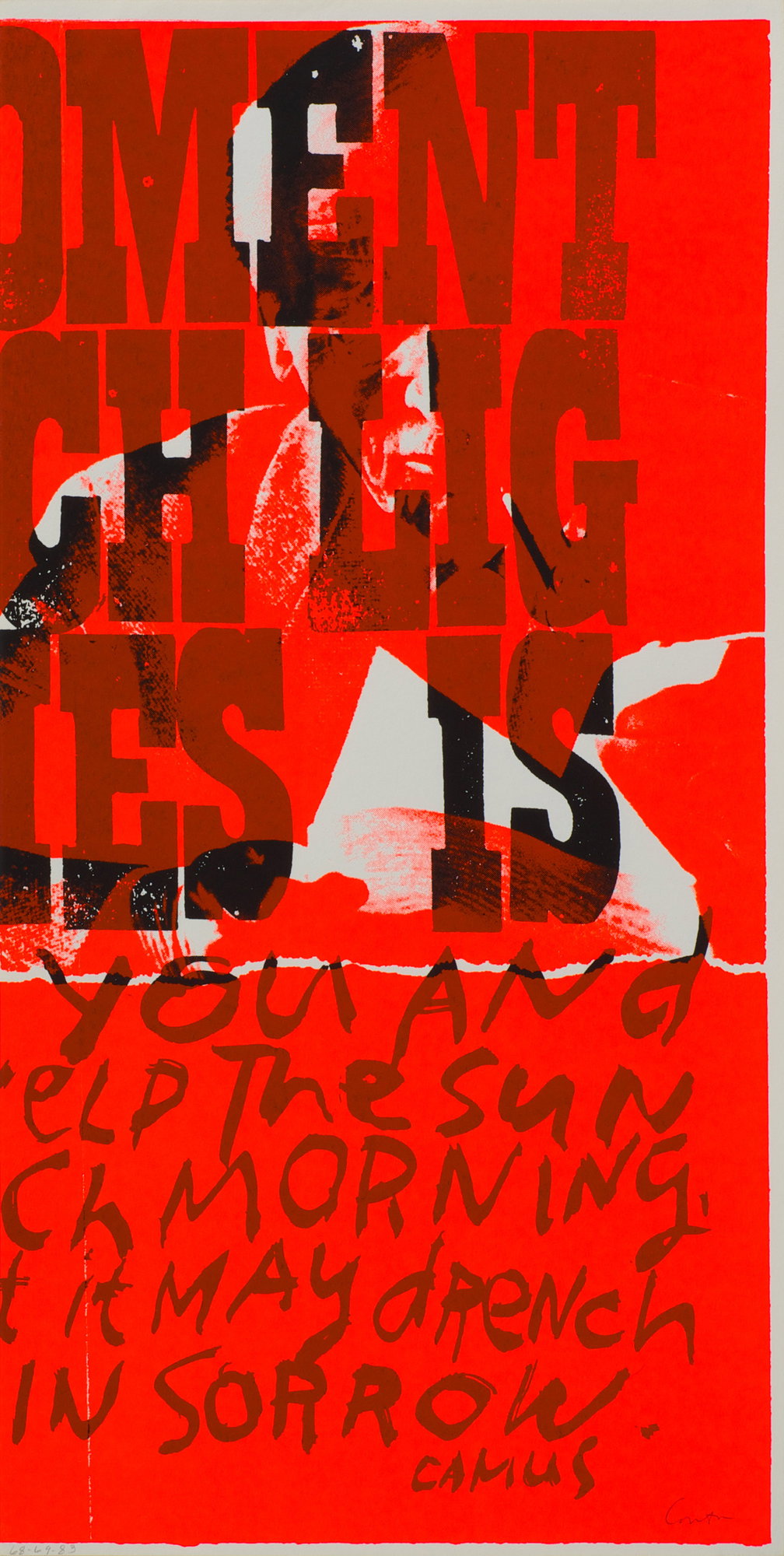
1 of 5
Corita Kent: king’s dream (1969)
1 of 5
Corita Kent: king’s dream (1969)
“Corita Kent did not make gentle art for comfortable people. It’s hard-hitting art, for hard-hit people.”
Meg Farmer
We continue to ask this because the conditions persist. Race and poverty remain structurally entwined. State‑sanctioned violence reappears under new names, new uniforms. The cosmic clock set in motion in the mid‑20th century is still turning.
Kent’s contributions are often situated alongside pop art (no doubt influential as she was known to visit Warhol exhibitions), but her graphic intelligence runs deeper – and earlier. Long before punk flyers, underground zines, or postmodern typographic rebellion entered the canon, Kent was breaking type apart: flipping it, obscuring it, warping it to the edge of legibility. Browse The Irregular Bulletin, the publication she spearheaded at Immaculate Heart, and you’ll find layouts that feel startlingly contemporary, but created with analogue tools like a camera and Xerox machine. These visual strategies, forged under conditions of social strain and political violence, became part of our shared graphic inheritance.
Look at Nirvana’s Nevermind. That submerged word is not just watery typography. It’s a generation holding its breath beneath familiar pressures. Kent understood this long before grunge made it visible. Her work insists that design is not decoration. It is a tool for seeing, for staying engaged.
Corita Kent did not make gentle art for comfortable people. It’s hard-hitting art, for hard-hit people.
She made graphic language under pressure for people living inside systems that bruise, erase, and exhaust. Her work doesn’t ask us to admire from a distance. It asks us to notice. To collect. To refuse neutrality.
Where have all the flowers gone? They’re still here – but only if we’re willing to look. And then, like Kent, get with the action and give a damn.
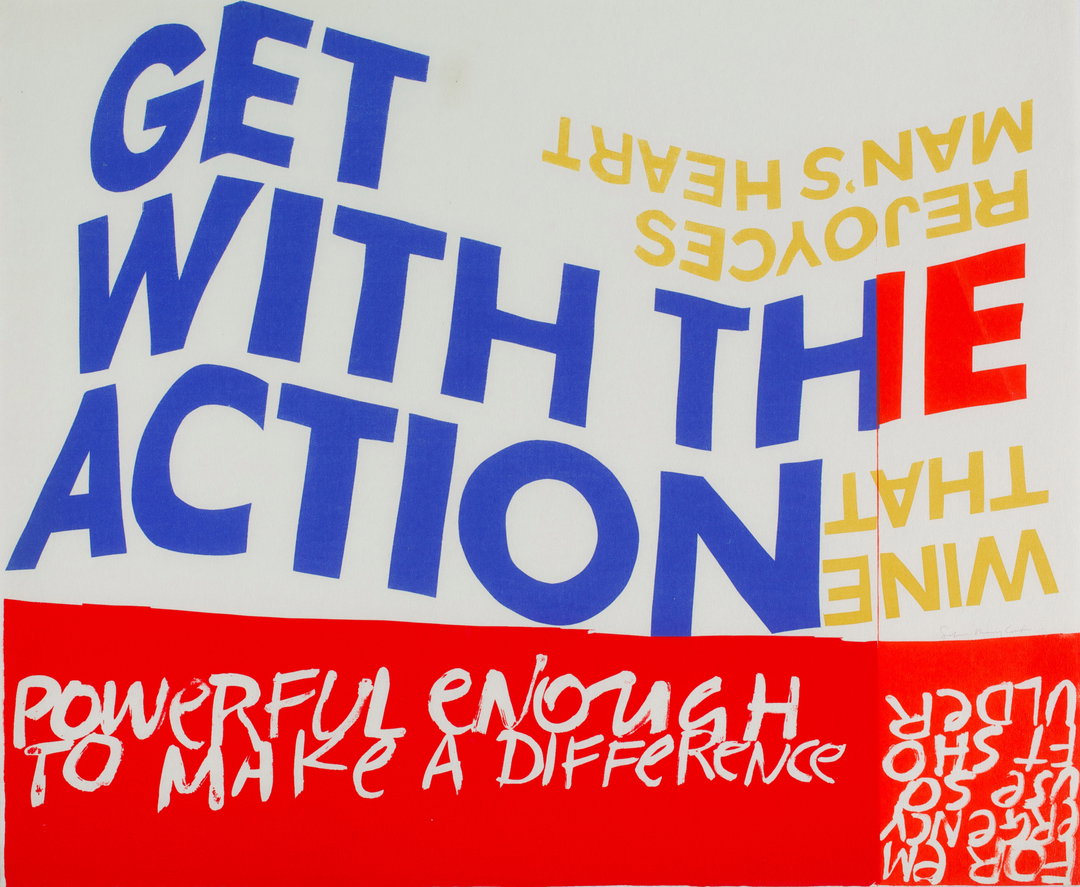
Corita Kent: for emergency use soft shoulder (1966)
Closer Look
- Visit: Corita Art Center
- Follow: Marciano Art Foundation, Corita Art Center
- Watch: A Choice of Weapons: Inspired by Gordon Parks is a 2021 HBO documentary directed by John Maggio.
- Listen: Pete Seeger, With Voices Together We Sing, 1956. Recorded live at the Museum of Modern Art in New York for an audience of 500 college students. Coney Island, Baby, Lou Reed, 1976.
- Read: Ordinary Things Will Be Signs for Us: Photographs by Corita Kent, The Rebel by Albert Camus, 1951. The Barn by Wright Thompson, 2024.
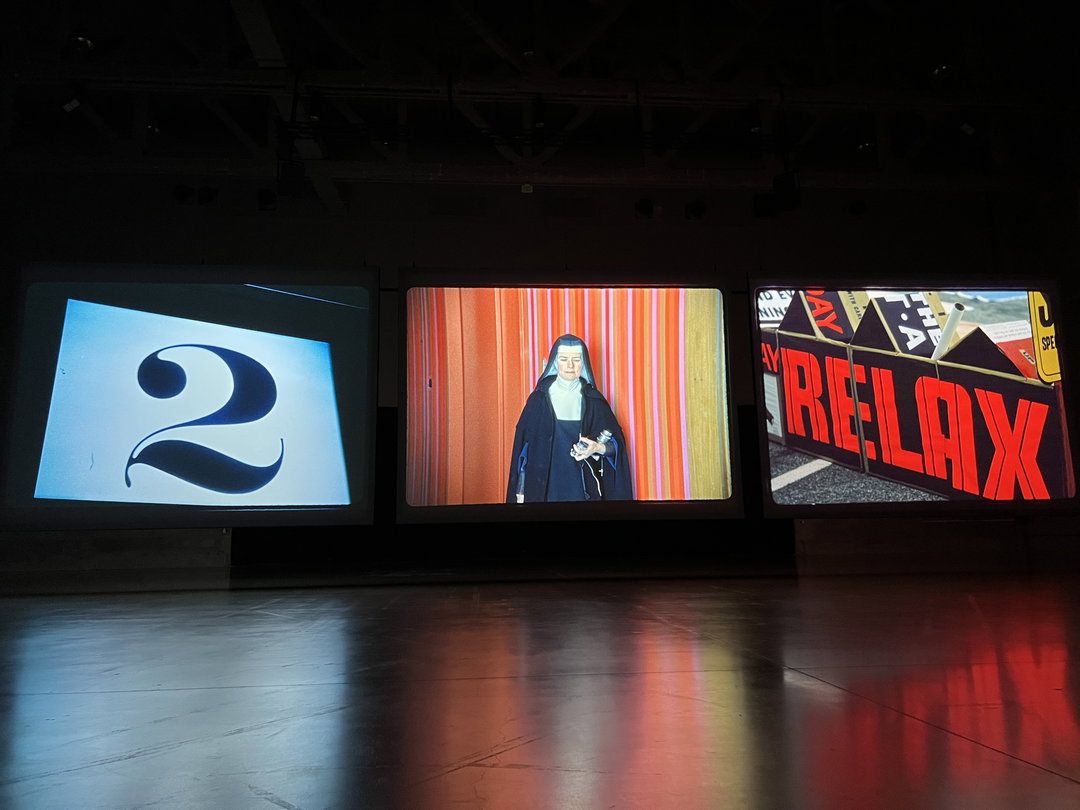
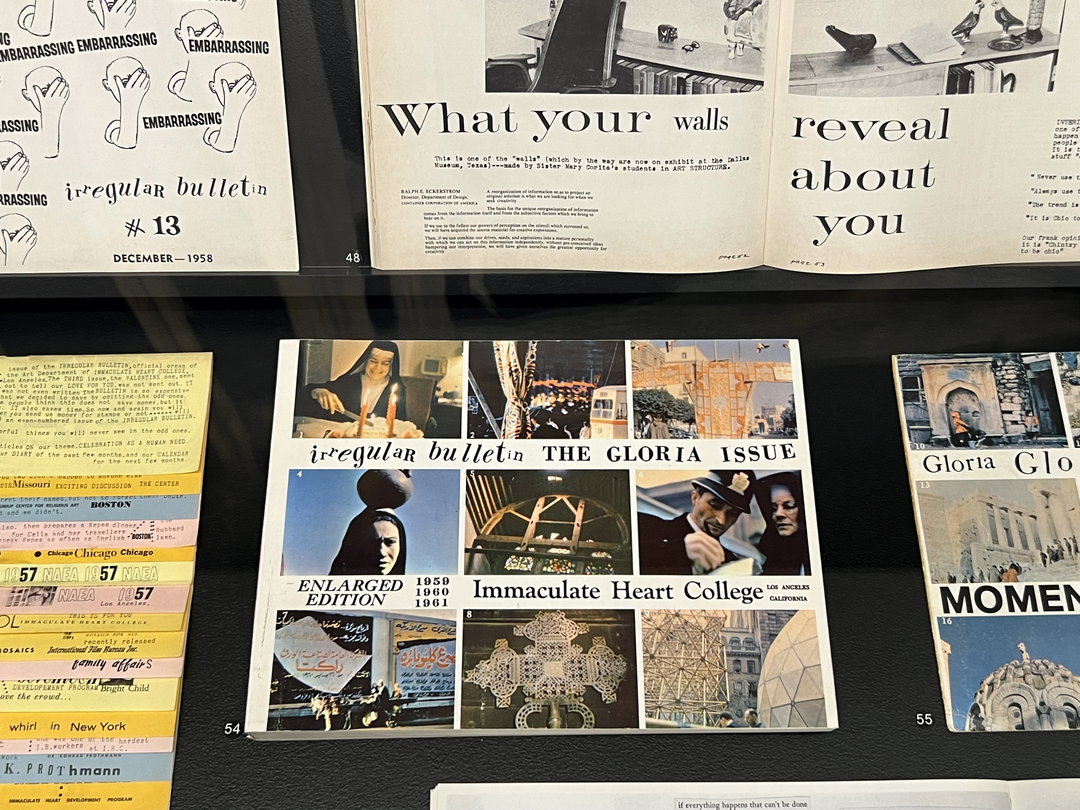
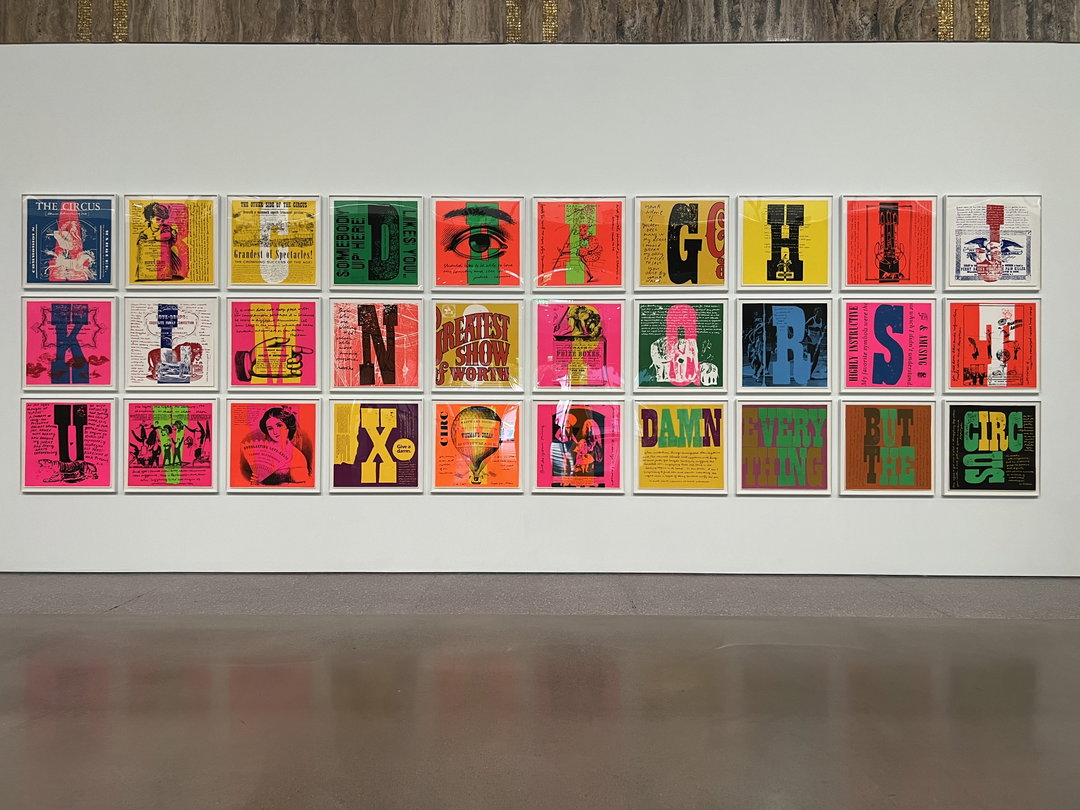
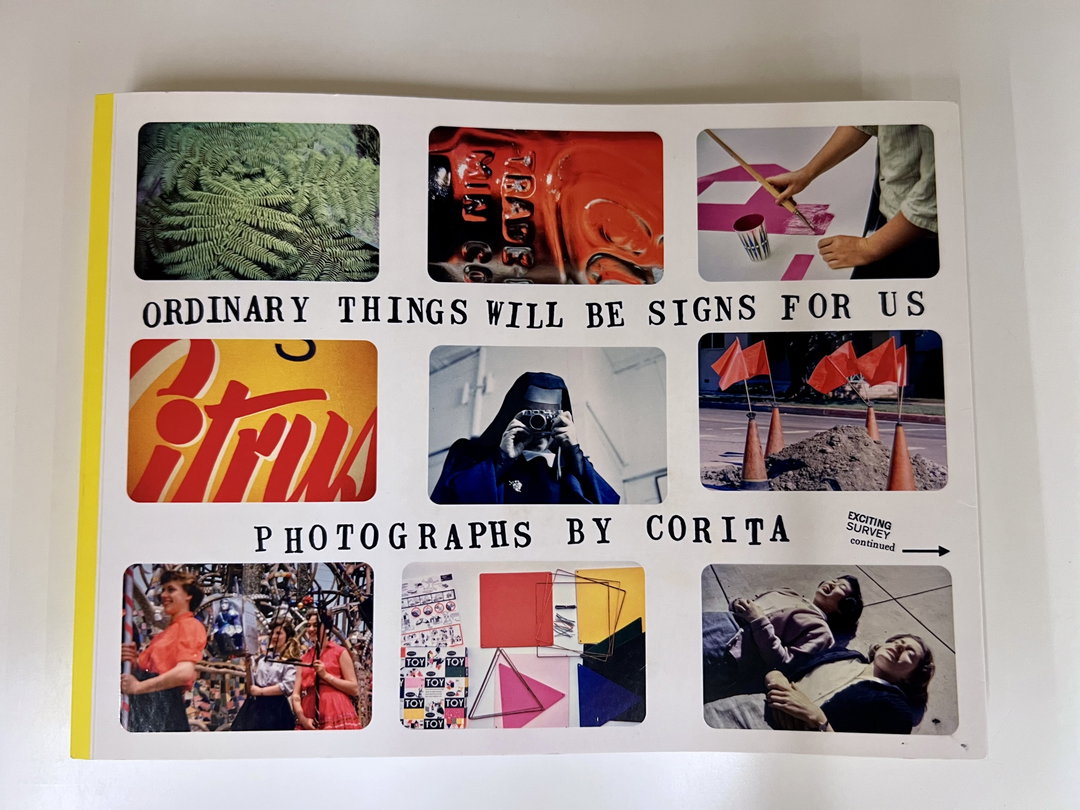
1 of 4
Meg Farmer: Installation views, The Sorcery of Images, Marciano Art Foundation, 2026
1 of 4
Meg Farmer: Installation views, The Sorcery of Images, Marciano Art Foundation, 2026
Share Article
Further Info
About the Author
—
Meg Farmer is a culture vulture who writes honest criticism framed by the pulse of the day, thorough research and design history. Based in Los Angeles, she is a graduate of the Design Criticism MFA program at the School of Visual Arts, where she received the first Steven Heller Design Research Award for her investigation into the universal symbol for poison and how it once failed. Her fervour for design and the way everyday people use it inspires her to bring design literacy to all. She is It’s Nice That’s LA correspondent.