

Inside Zum Festival: the finest photobooks from Brazil’s indie publishing hub
Our São Paulo correspondent explores the highlights of this year’s Zum Festival, offering her picks from the photobook fair and shedding light on Brazil’s dynamic and ever-evolving independent publishing scene.
Share
In the first days of November, the Zum Festival took place – an annual event dedicated to contemporary photography that features talks, workshops, exhibitions, and a photobook fair at the Moreira Salles Institute. The festival is organised by Zum, the institute’s outstanding semi-annual photography magazine coordinated by Thyago Nogueira, which has become my compass for what is most interesting and innovative in contemporary visual culture in Brazil and beyond.
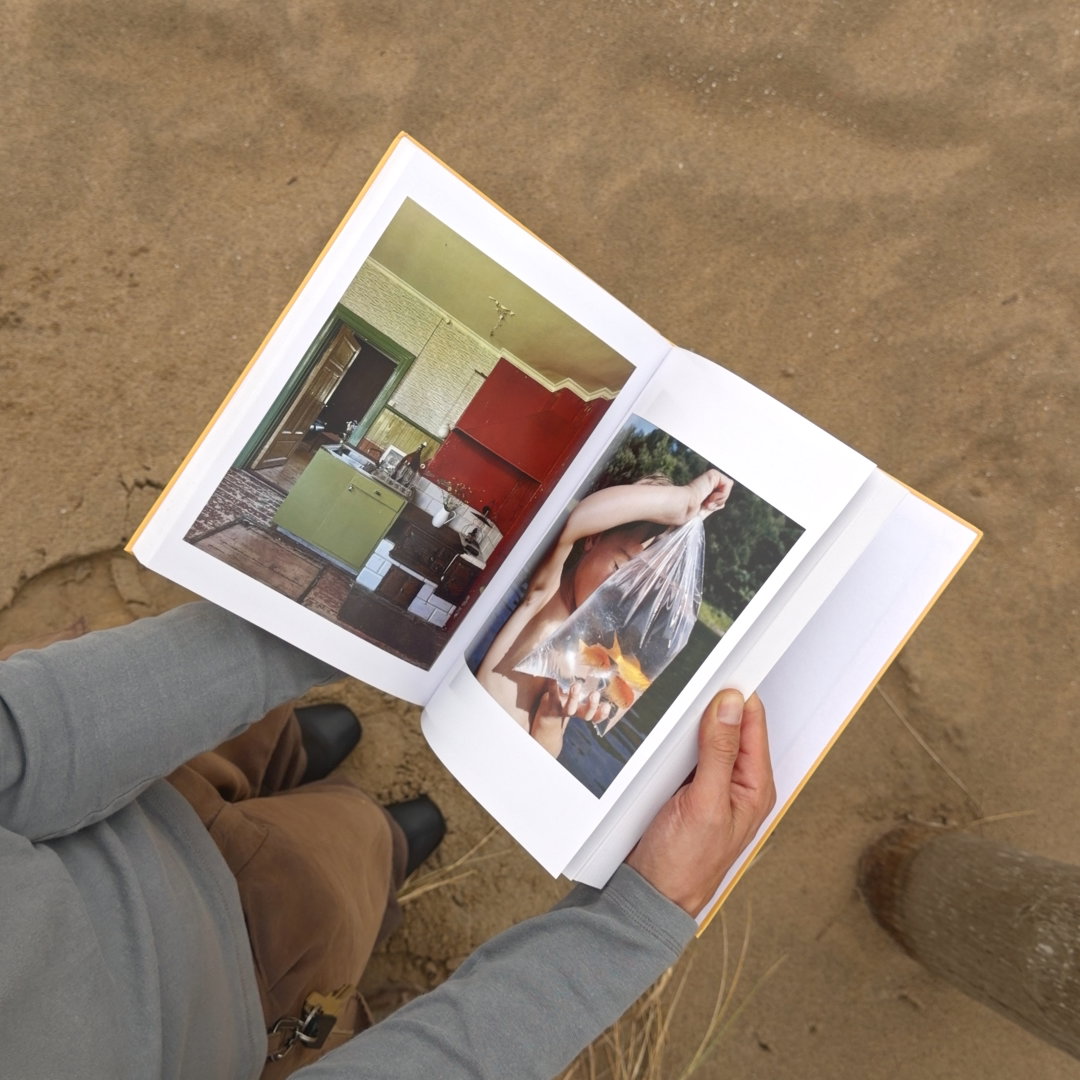
GalleryCovers from the Festival’s selected photobooks
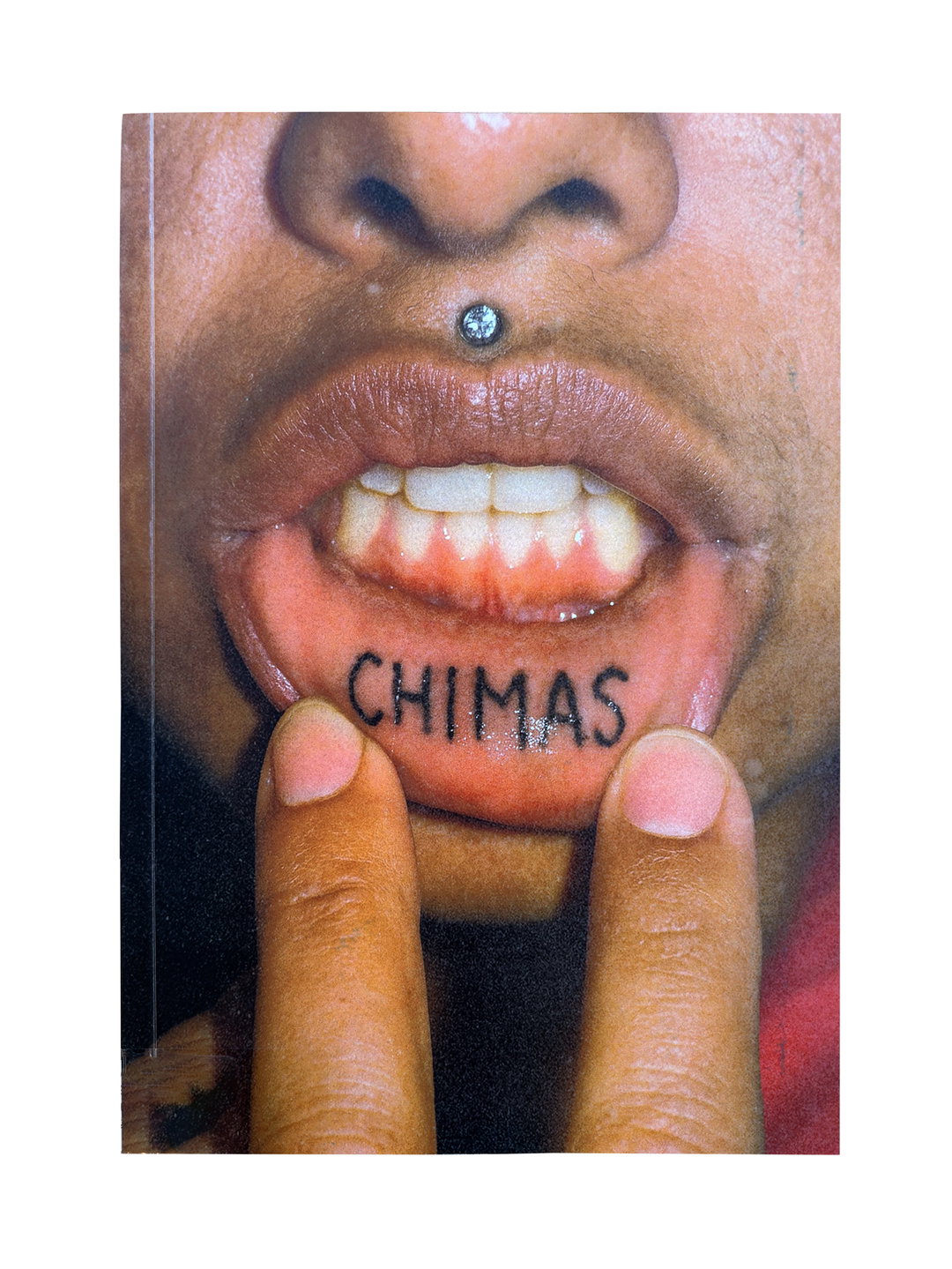
Fábio Dossa Spolti: Livro dos gauchos imaginários
Beco – Design: André Stefanini / Selo Vertigem
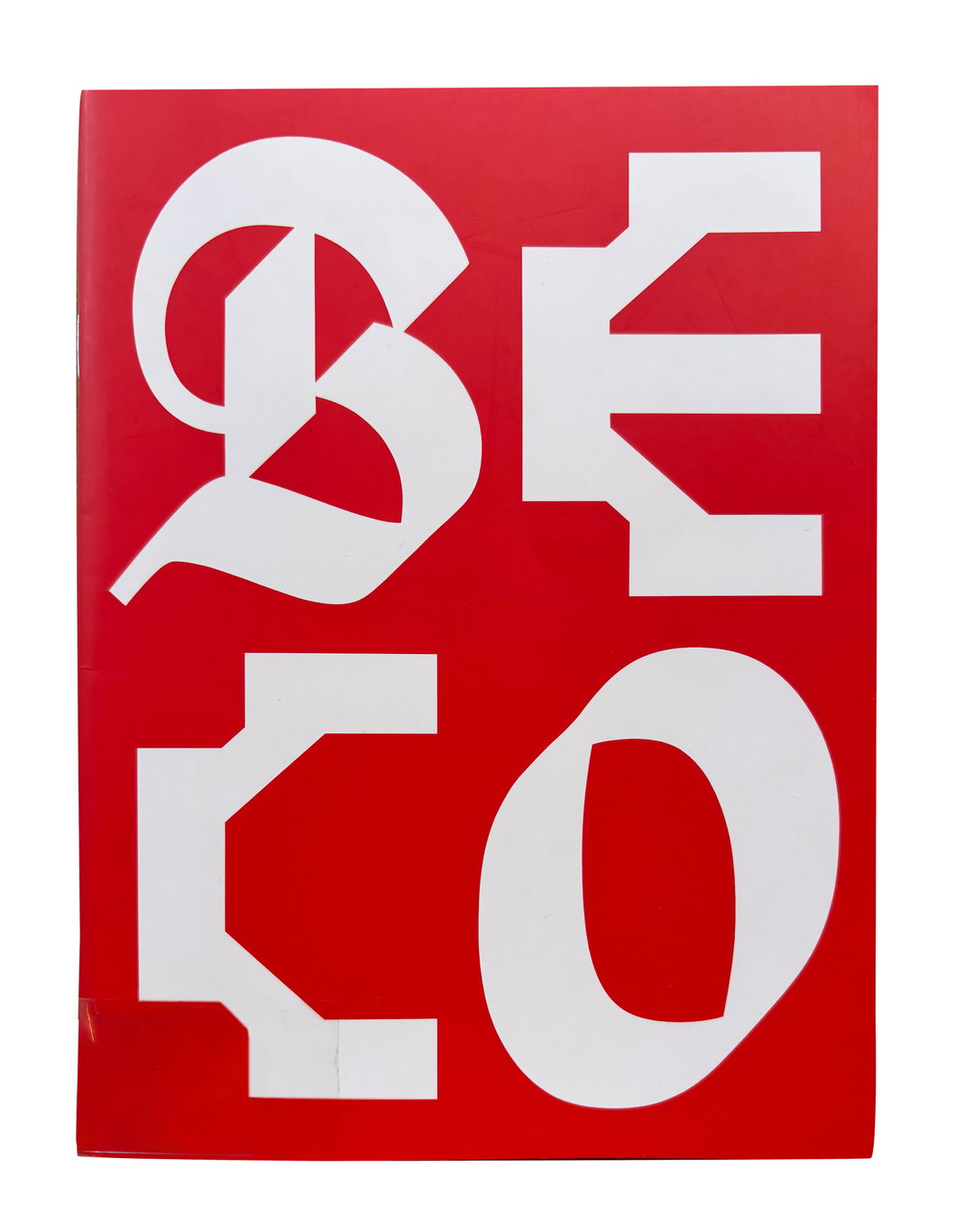
Beco – Design: André Stefanini / Selo Vertigem
The festival is accompanied by a photobook open call: the institution received 182 projects, selected 45, and awarded three of them. The appreciation of the selected books, combined with a visit to the photobook fair, offers a clear overview of a body of work that has, for years, developed into a fertile and diverse ecosystem in Brazil. Today it includes several independent publishers such as Lovely House, Piscina Pública, Fotô, Gris, Livraria Madalena, Selo Turvo, and LP Press, along with a wealth of self-published books. The festival provides an opportunity to grasp the scope of a niche production that, with few exceptions, rarely reaches commercial bookstores.
This year’s selection continues the by-now familiar trend of projects that dive into family archives in an effort to reconstruct personal histories – works that at times result in somewhat hermetic books. Yet it’s impossible not to be impressed by the mastery of narrative construction, graphic design, and printing quality in many of them, revealing how much this niche has refined itself over the years.
On the other hand, as a result of the institute’s ongoing effort to open itself to productions that are usually marginalised or rendered invisible, this year’s selection features a vibrant group of publications portraying multiple social contexts and realities. Among them are bold fanzines depicting scenes of explicit violence in the peripheries (Tarja preta e efeito colateral by Alan Lima, Mataram um boe na rua de cima by Everson dos Santos de Andrade); a project documenting the daily lives of app-based delivery workers (01 por todo$ e todo$ por 01 by Ck Martinelli & Luiz 83); and a record of a community being displaced from downtown São Paulo by local authorities (Olhares que Falam by Rodrigo Koraicho and students from CCA São Domingos Sávio).
Among so many proposals, four projects caught my attention – a small sampling of the vast variety of graphic languages on display, some selected by the festival and others fished from the photobook fair.
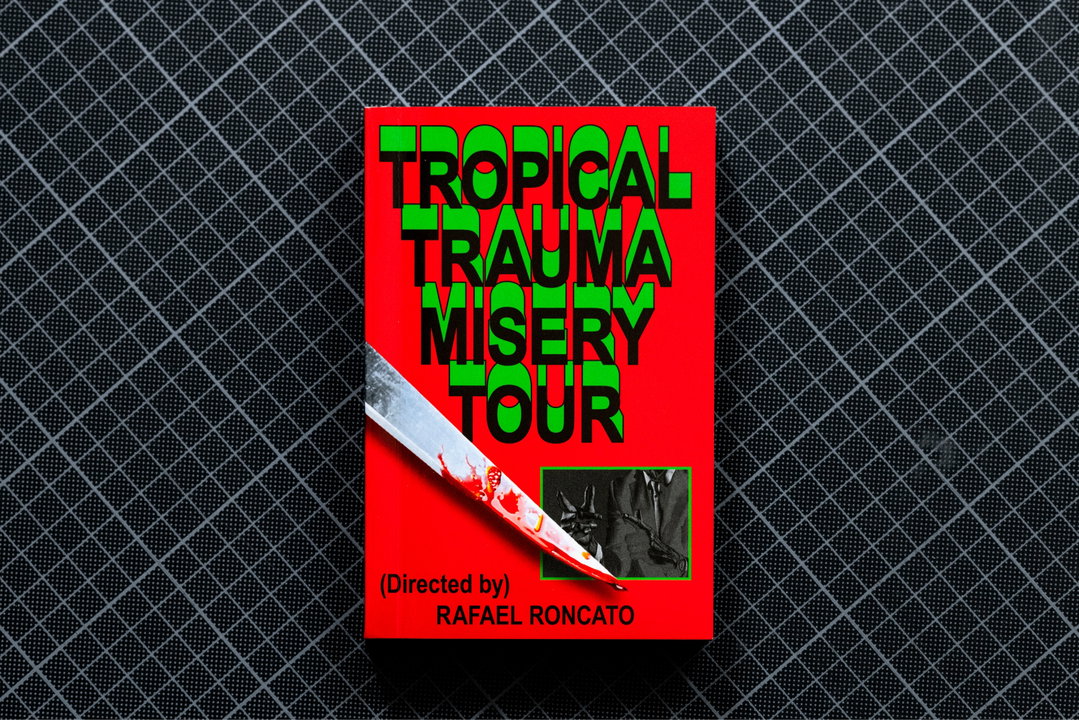
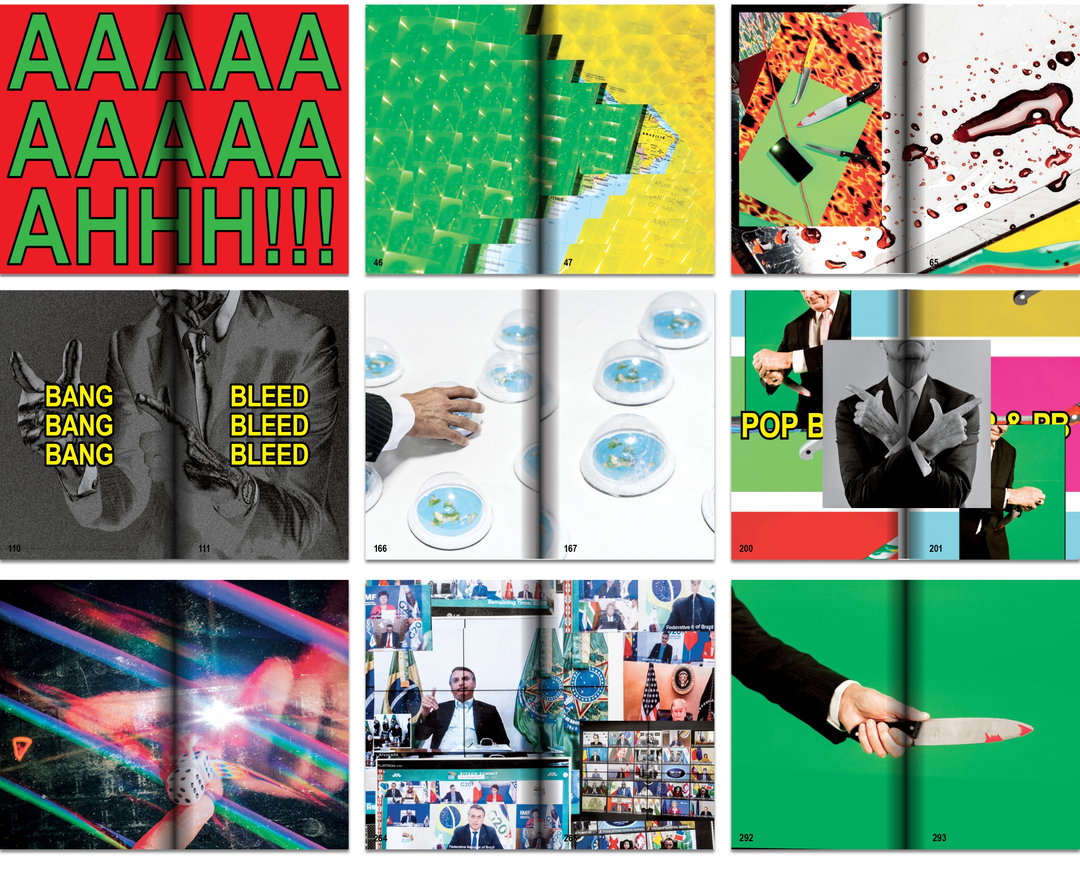
Rafael Roncato: Tropical Trauma Misery Tour. Book design: Mateus Acioli
Rafael Roncato: Tropical Trauma Misery Tour. Book design: Mateus Acioli
(Proofreader: Thiago Panini; Printer and binder: Mas Matbaa, Istanbul. Publisher: The PhotoBookMuseum / MASA / Lovely House / Alter Edições)
Tropical Trauma Misery Tour
In 2018, during his presidential campaign, Jair Bolsonaro survived a knife attack – an episode that rapidly mutated from aggression into spectacle. What began as a moment of chaos became a carefully mediated performance, a media event that decisively shaped the election and fed the myth of a populist saviour wounded in battle.
Published in 2024, Tropical Trauma Misery Tour – by Brazilian-born artist and editor Rafael Roncato, with design by Mateus Acioli – turns this moment of collective delirium into a dissection of fanaticism and manipulation. Through a freely experimental approach, he comments on the machinery of digital populism, where the boundary between truth and fabrication dissolves into pixels and calculated staging.
Early in the book, the reader is met with a warning: “Strobe lighting effects. Sudden loud noises. Theatrical fog and haze. Scenes of violence. Adult language. Mediated situations. Adult humour and content.”
To emulate the effect of strobe lighting, Rafael alternates real images of the episode with sterile studio compositions: sanitised objects, plastic textures, and bright colours that recall the aesthetics of the Italian magazine Toiletpaper. Lenticular backgrounds fracture the surface of the image, while the tactile texture of pixelated collages and the grainy, solarised portraits of a Bolsonaro lookalike blur the line between artifice and reality. Typographic spreads in vivid tones set the pace of a publication that reads as both a seductive and grotesque parody.
Romeu Silveira: The Iconomist (Publisher: Zero Editions)
Romeu Silveira: The Iconomist (Publisher: Zero Editions)
Romeu Silveira: The Iconomist (Publisher: Zero Editions)
Romeu Silveira: The Iconomist (Publisher: Zero Editions)
The Iconomist
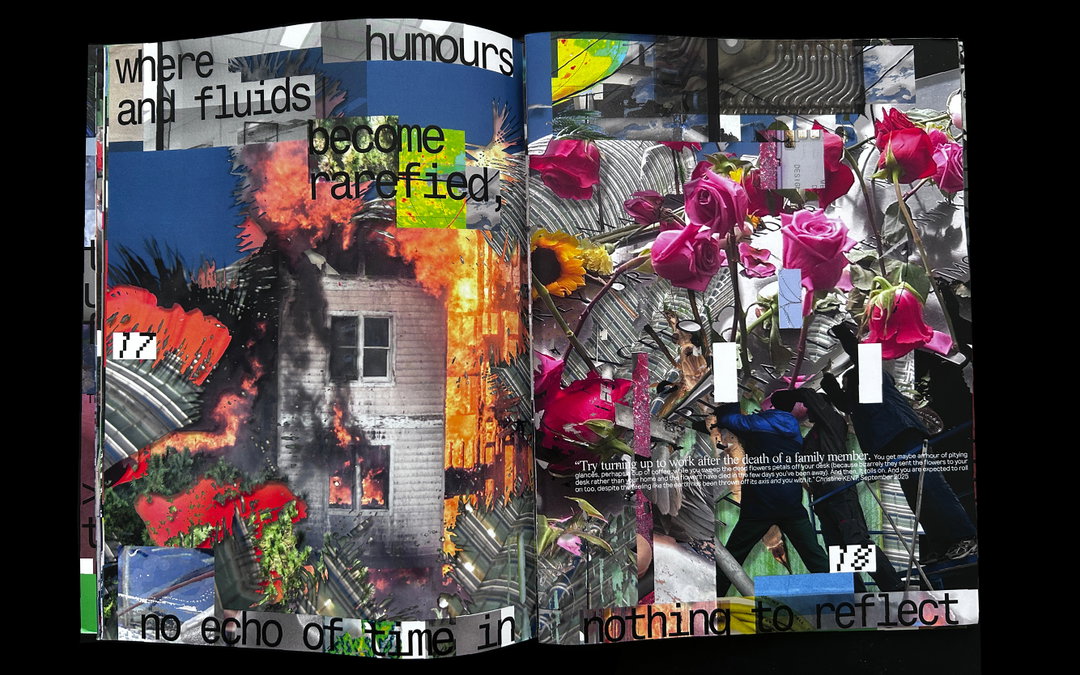
The Iconomist defines itself as “a third-generation research project and artist’s magazine” and is now in its eighth issue. The design is by From Brazil With Love Studio, and it is published by Zero Edition – both run by the artist himself.
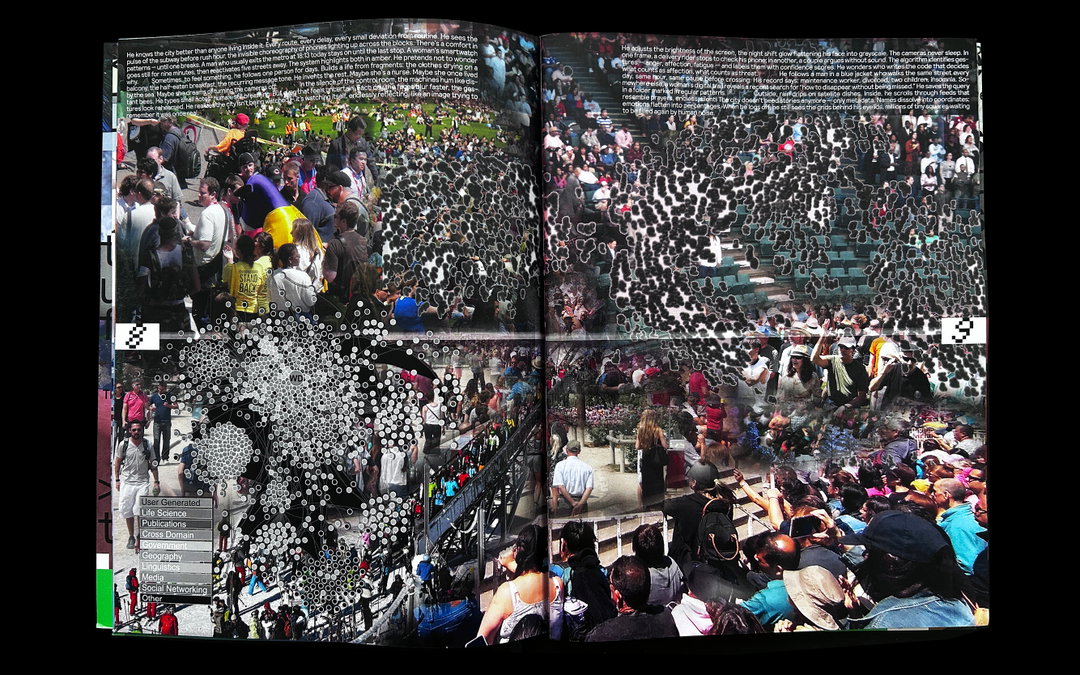
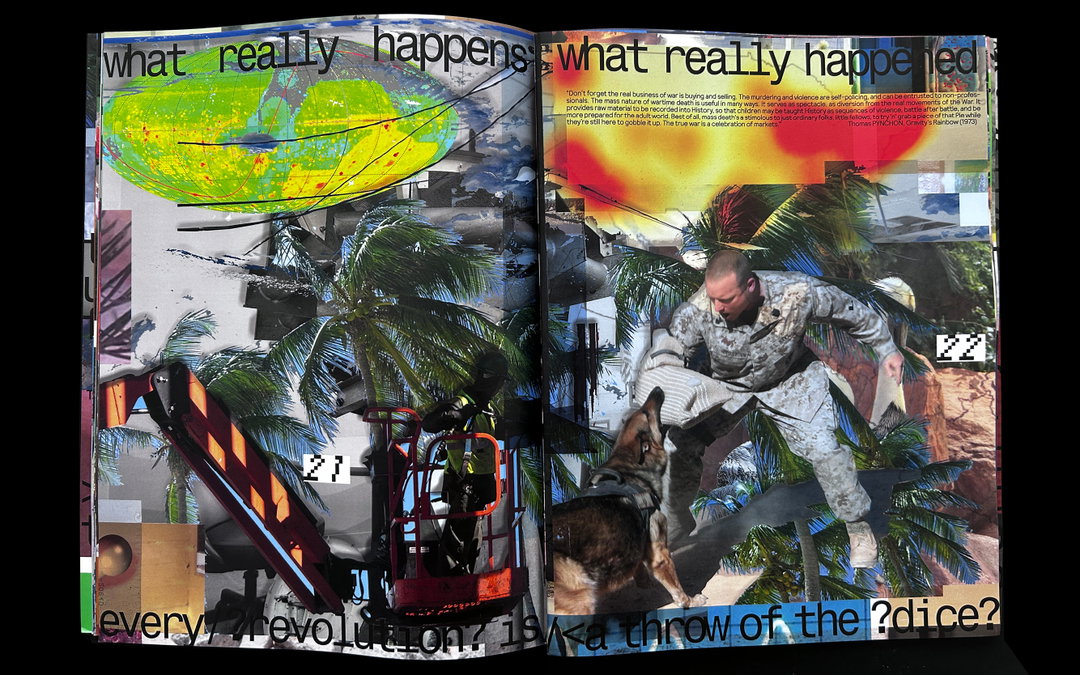
Fascinated – and perhaps a little dazzled – by the dizzying universe of images circulating online, Romeu Silveira has developed a continuous and consistent visual research practice around this field, using the book as his main platform. Over the past five years, he has produced an impressive flow of publications – books, zines, and magazines – filled with graphic experiments that construct narratives from images generally appropriated from social networks.
One example is Passers-by (2025), composed entirely of images of pedestrians captured from Google Street View in São Paulo. He had already explored this platform in an earlier project, Unportraits (2021), built solely from the blurred details of people who accidentally appear on Google Street View. In Stories/To Store (2023), the artist weaves a narrative combining appropriated Instagram stories and literary quotations. The zine Menoryscape (2025) originates from a damaged hard drive that produced beautifully corrupted images.
With these publications, Romeu has built an entire universe of his own around the experimentation with digital images. Leafing through The Iconomist issue eight feels like plunging into a sea of images from the most varied origins and natures – images that have been manipulated, distorted, corrupted, cropped, filtered, and amalgamated into a surface that is utterly vertiginous and delirious.
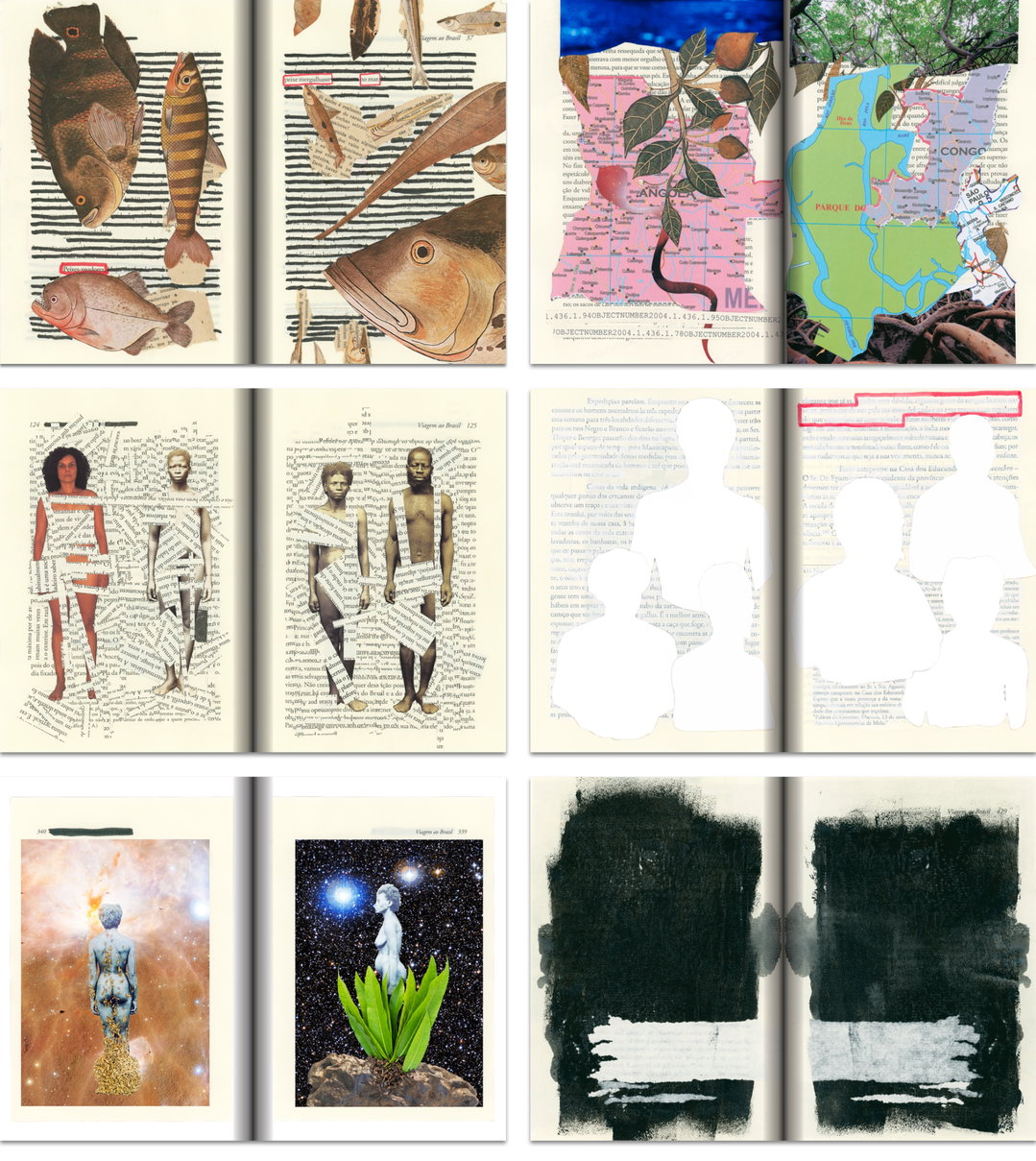
Marina Feldhues: Viagem ao Brasil (1865–1866): a desordem da carne (self published)
Viagem ao Brasil (1865–1866): a desordem da carne
Marina Feldhues’ book is a rewriting of the travel diary of Louis Agassiz and Elizabeth Cary Agassiz, produced during the Thayer Scientific Expedition – carried out in Brazil between 1865 and 1866 – a mission shaped by the racial theories of the 19th century. The expedition employed photography as a pseudo-scientific tool to document the bodies of Black, mixed-race, and Indigenous people, seeking to demonstrate racial differences and reinforce a hierarchical evolutionary perspective. Despite this violently racialised framework — which helped forge a Eurocentric vision of Brazil as beautiful and exotic, yet infantile, backward, and “in need of civilization” — the book was republished in 2000 by the Brazilian Federal Senate. It is the indignation surrounding this gesture that propel Marina’s project.
Working in a manner that stands in stark contrast to the more digital projects discussed above, Marina turns to analogue processes and to the physicality of paper. She intervenes directly in the original book, experimenting with a repertoire of procedures that at times summon depth, magic, or fantasy, and at others press the images flat against the page — continually testing modes of erasure and deconstruction. In the artist’s words, the work seeks “disordering its writing in order to reaffirm our plural, infinite existence within the very pages in which we were once inscribed as socially dead”.
Marina erases portions of the text, sometimes in black and sometimes in white, concealing most of it while leaving only selected words visible – words that reframe and resignify the original content. At other moments, she cuts apart and completely reconstructs the page. In addition, the artist recreates the portraits, inserting new images, images of her own body, documents, cut-outs of drawings of Brazilian fauna and flora, and maps. From a graphic standpoint, the book is a compendium of analogue collage strategies, a process that unfolds as if searching for possible escape routes.
The book becomes a symbolic rewriting of a painful history — namely the enslavement of African and Indigenous peoples — an open wound that continues to shape the entire structure of Brazilian society to this day. It brings us into the present by evoking a history of resistance and struggle, revealing three generations of the artist’s family. Its final image shows the hands and arms of two generations intertwined in a quiet gesture of continuity and resilience.
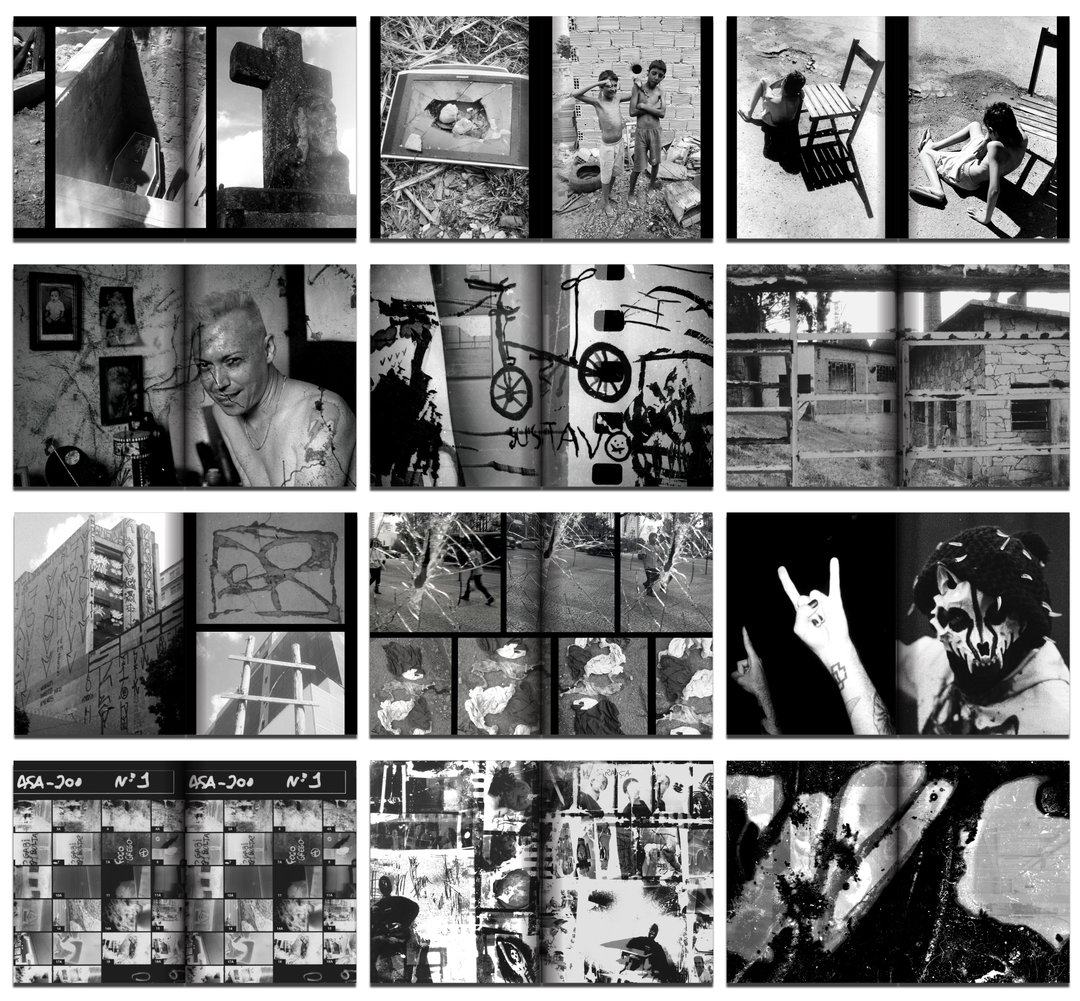
Desali: Doce Sonâmbulo [Sweet Sleepwalker]. Edition and design: Lucas Kröeff.
(Assistance: Marilia Luiza lima. Published by Quadradocirculo.)
Doce Sonâmbulo
In the opening pages of Doce Sonâmbulo [Sweet Sleepwalker], against a black background, the only textual information in the book provides the reader with some context:
“I grew up in Bairro Nacional, on the suburbs of Contagem, Minas Gerais. I’m the son of a white father (whom I never met) and a Black mother who worked as a housekeeper. A migrant from poverty, my mother left the countryside towards the long-dreamed job at Belo Horizonte. Maid and a single mother, she ended up with another white man and settled in a dense forest area that would later become Bairro Nacional. Being from the suburbs has deeply shaped my life and my artistic practice. Moving between photography, video, performance, and painting, my work is a bridge to the world of the excluded — the world that has surrounded me since birth.”
The book has more than 400 black-and-white pages, printed with a Xerox-like quality, and was entirely built from the artist’s analogue photographic archive — the result of a long process of organising and digitising, followed by an editing phase coordinated by Lucas Kröeff. The whole ensemble reads like pure cinema, structured in three parts:
The first takes place in Bairro Nacional. It opens with the cemetery of this peripheral neighbourhood, composed largely of popular self-built houses, typical of the expansion of Belo Horizonte’s urban peripheries. From the cemetery we move into other precarious landscapes marked by violence and religiosity — spaces that seem abandoned at first, until people gradually enter the frame. Little by little, we notice the photographer’s intimacy with them: in the natural ease of their poses, in the smiles, in the humour. The spreads may contain a single image or may be subdivided into sequential photo-collages, revealing the texture and borders of the negative, “errors” from the development process, and hand-drawn interventions.
The second part unfolds in downtown Belo Horizonte, where the sun almost disappears and the book dives into the nightlife of motels, karaoke bars, dive joints, and their characters.
In the third part, experimentation with negatives and chemicals inside the photo studio — where he worked and experimented during off-hours — takes centre stage. Direct drawing on the film also becomes a protagonist, leading the image toward its complete physical disintegration.
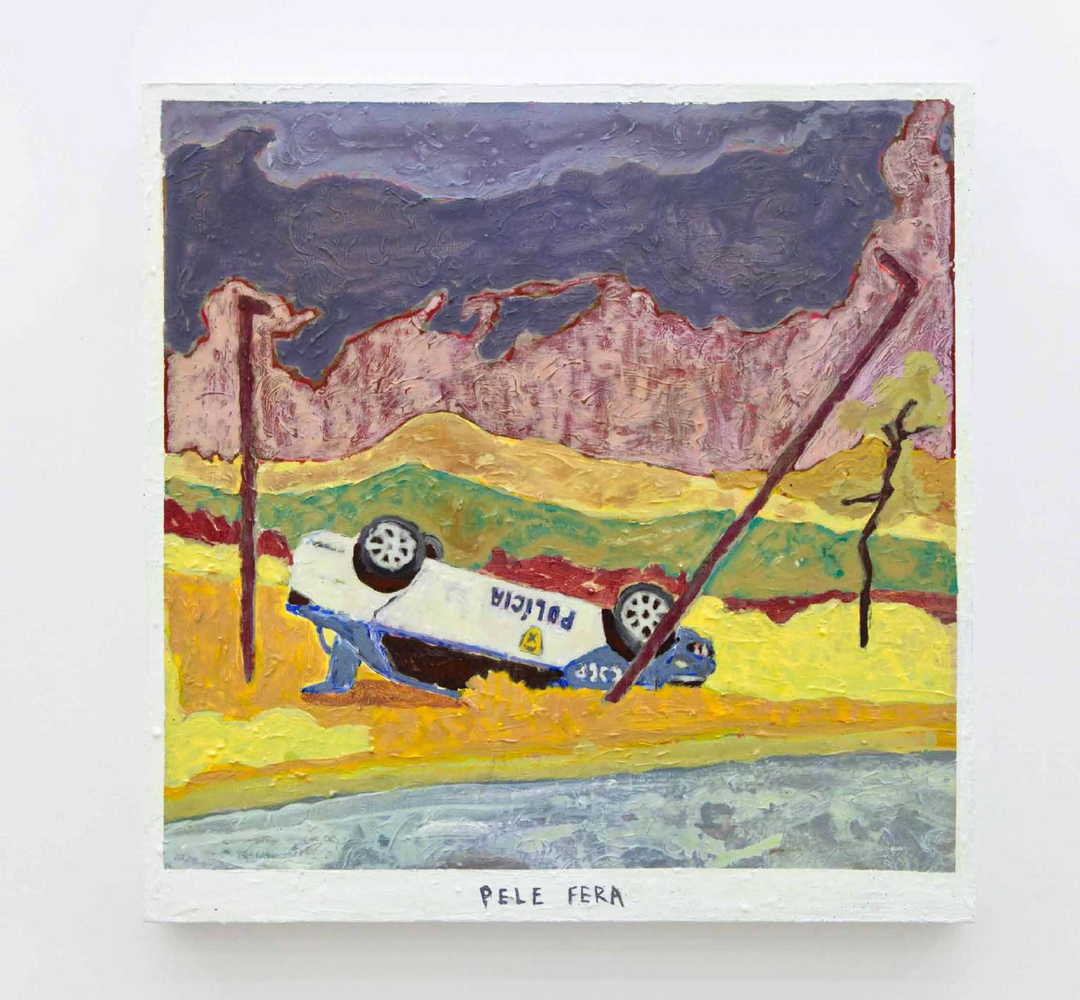
Desali: Pele fera, 2020
Desali: Rua dos Serviço, Casa 8, Maré, 2020
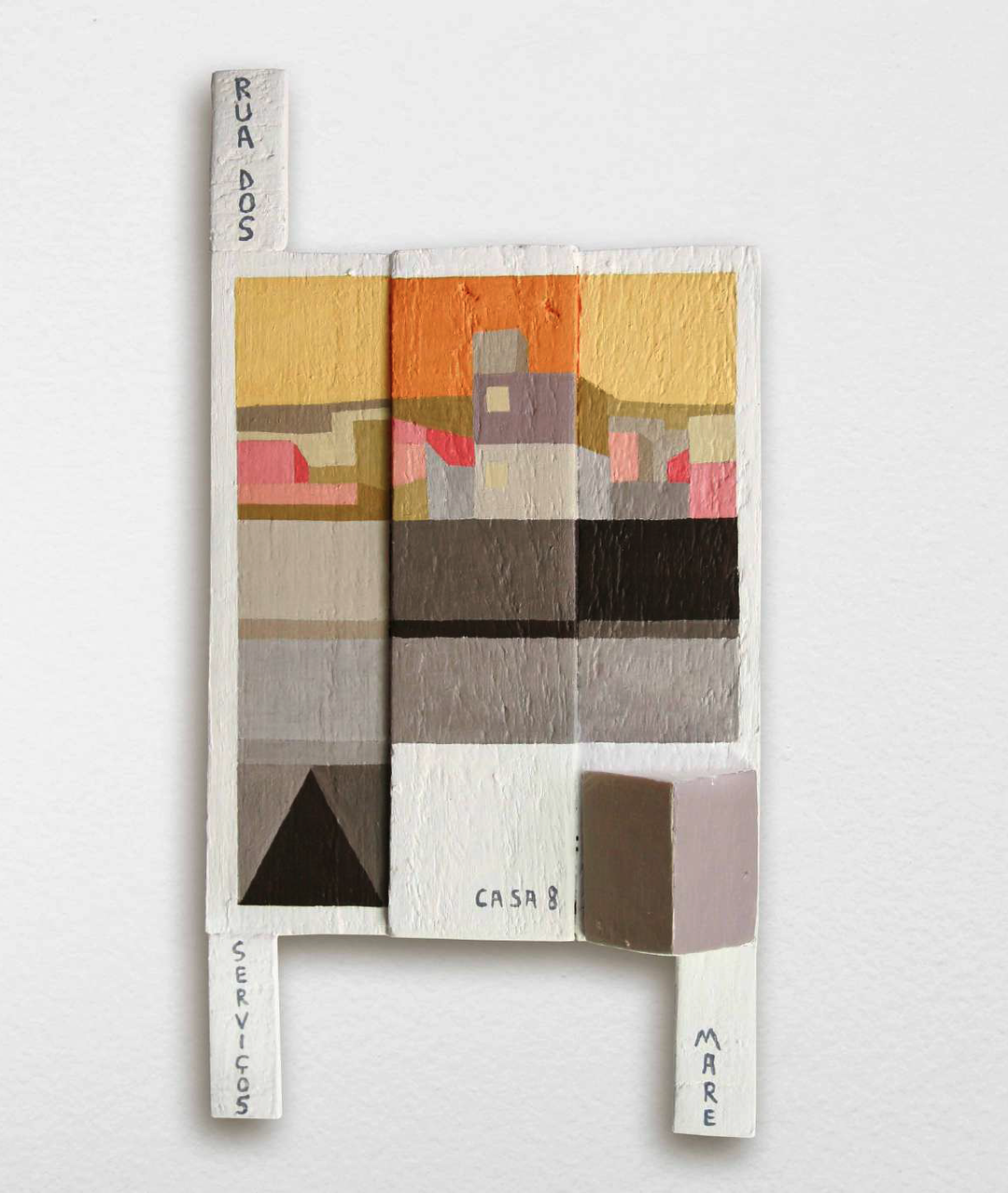
Desali: Rua dos Serviço, Casa 8, Maré, 2020
If Tropical Trauma Misery Tour and The Iconomist demonstrate a command of design tools and reach a level of graphic sophistication, both remain confined to the surface of the image, which they take as their central motif. In The Disorder of the Flesh, by contrast, Marina Feldhues feels her way through technique, yet the work’s mobilising force touches us precisely because it is at once deeply intimate and boldly political.
Finally, Doce Sonâmbulo rejects artifice and sets aside the self-referential character of design in a straightforward approach. By revealing — with remarkable narrative acuity — a deeply personal universe, shaped by someone made of that very matter, the work carries us, body and soul, to the very source of its poetics.
Closer Look
Elaine highlights a library, book shop and exhibition to visit in São Paulo to continue fuelling your photobook fervour.
- The Instituto Moreira Salles Library, located at its Avenida Paulista headquarters, is open to the public, free of charge, and holds an extensive and invaluable collection of publications around photography.
- Lovely House, a photography publisher, runs a book store in the Galeria Metrópole where it sells its own titles as well as publications from other small presses and independent authors. It is an excellent place to find volumes from the contemporary Brazilian photobook scene.
- There is currently a solo exhibition of Marcelo Cipis at Gomide&Co Gallery. The artist, who also works as a book illustrator, has a highly graphic, synthetic, and clever visual language. Staying true to his ironic and pop style, the exhibition has been conceived as a large-scale Black Friday clearance sale. The show will be on view until 22 January.
Share Article
Further Info
About the Author
—
Elaine Ramos is a graphic designer based in São Paulo, Brazil. She runs a design studio primarily focused on the cultural market and is a founding partner of Ubu, a publishing house created in 2016. She is It’s Nice That’s São Paulo correspondent.