

Why are so many of Berlin’s community initiatives run by designers – and what’s the point?
After the corporate bubble burst, many of Berlin’s creative people began using their powers for good.
Share
When I packed up my life to relocate from London to Berlin eight years ago, it felt like I was leaving community behind. Togetherness and strategic unification underpinned everything I did back then, from my dancefloor-centric social life to my work as a publicist-turned-journalist, and I couldn’t see how my new life as a nun (aka not partying every weekend) was going to translate into something connected. I knew I was going to be alone in Berlin. I welcomed it. Assuming a bout of inter-personal abstinence would grant me permission to grow up and sober up without the fear of missing out. It wasn’t that I didn’t think there was community to be found in the German capital, rather that I thought I was aging out of it. Instead, my frontal lobe developed, and I realised that there is kinship to be found beyond the queue for the bar.
Exactly a decade ago I was a 25-year-old editorial assistant at It’s Nice That (lore-drop) and I have worked in the creative industry ever since. One of the most interesting things about transitioning from someone in their mid-20s to someone in their mid-30s has been observing what my peers have done with the years between. Thanks to my work, I’ve had a front row seat to watch their practices and perspectives evolve beyond their nine-to-fives, witnessing how a new age of community has been born of their changing ambitions.
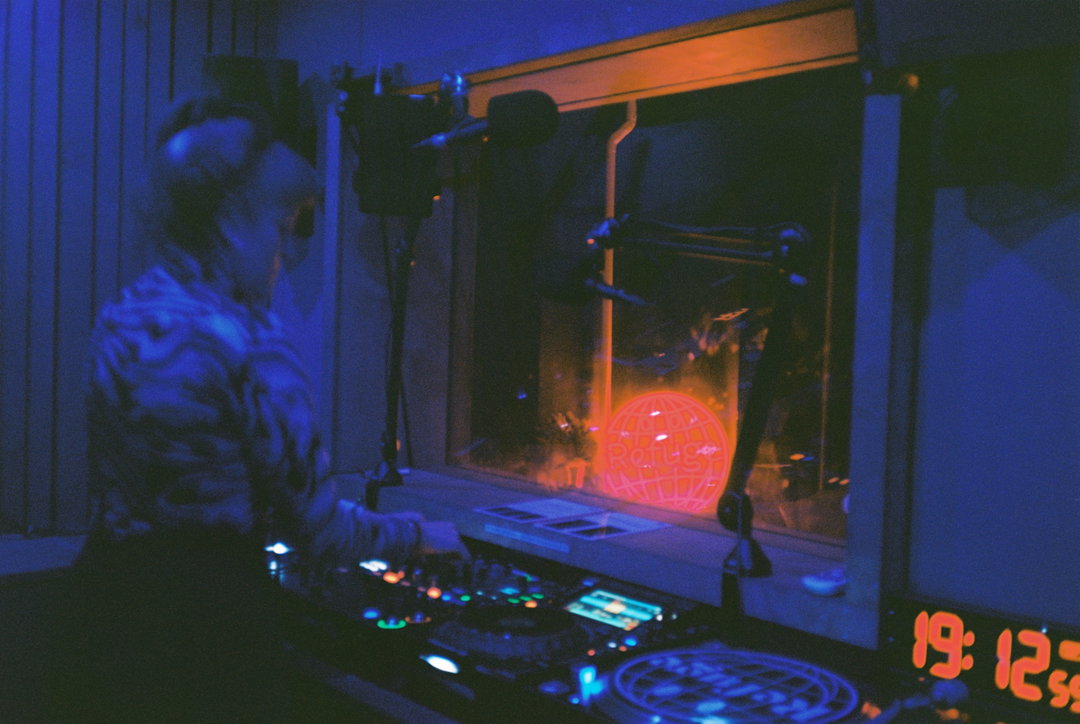
Refuge Worldwide (Photo copyright © Lena Brecht)
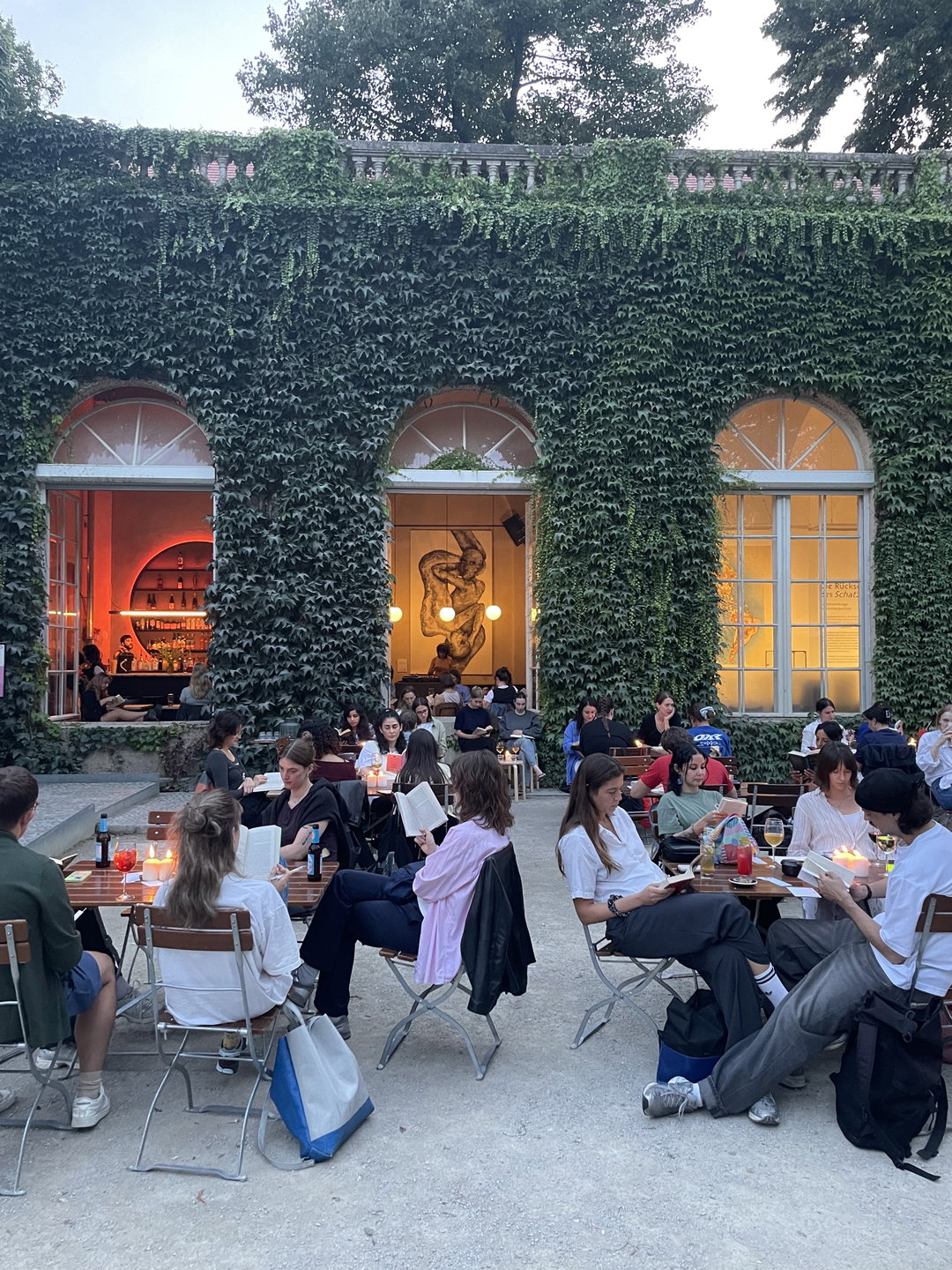
Reading Room (Photo copyright © Shirley Heim)
Reading Room (Photo copyright © Shirley Heim)
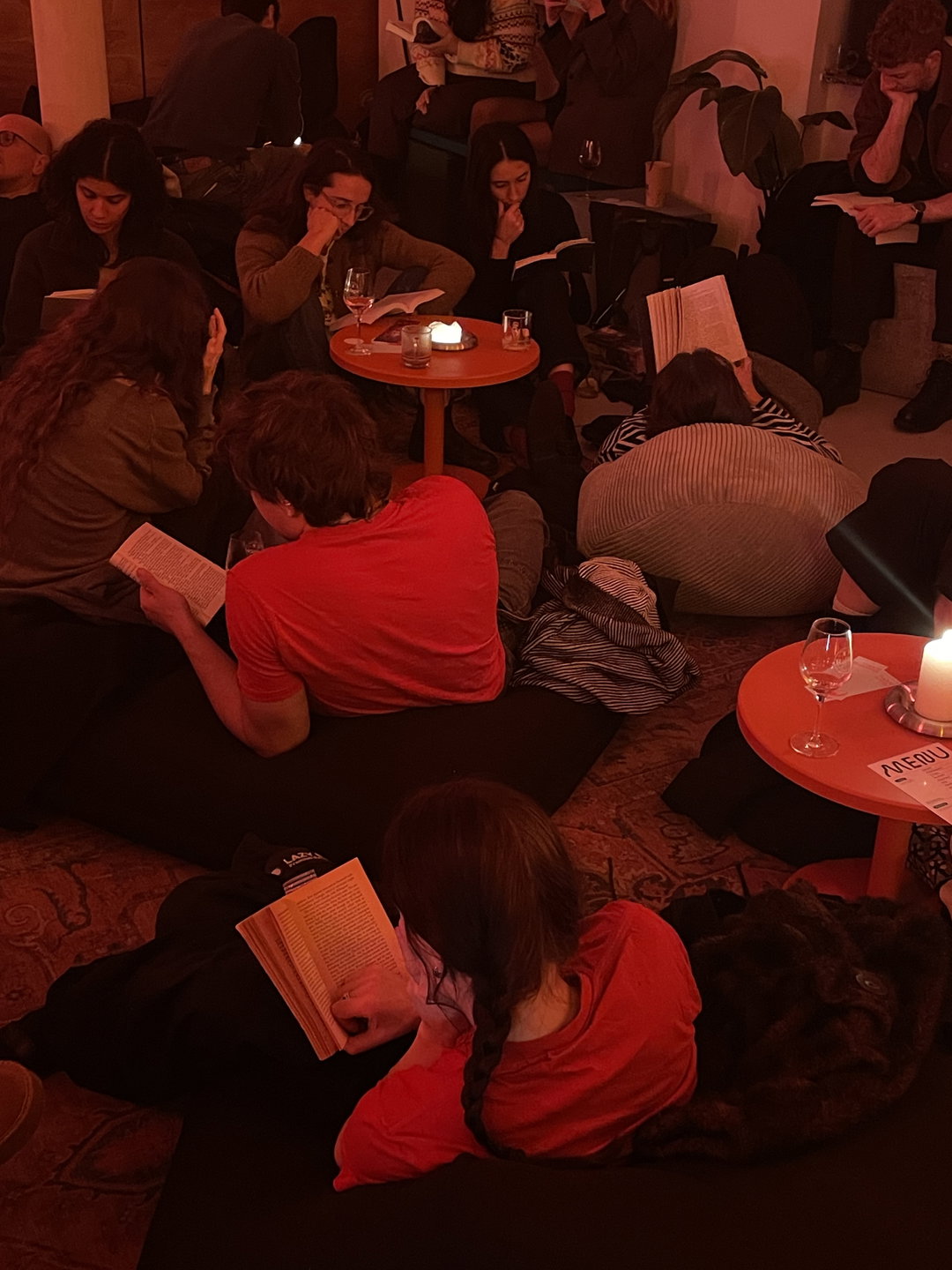
Reading Room (Photo copyright © Shirley Heim)
Berlin has been a home for artists and musicians for more than a century, but thanks to the tech and start-up boom of the last 15 years it has also become a hub for graphic designers, art directors and creative leaders. With a new and ambitious business landscape came new and ambitious budgets, and the well-resourced creative departments, generous paychecks, built-in-hedonism and relatively low rents of Berlin’s early start-up scene proved irresistible to creatives from around the world. I suspect most people knew the bubble would burst eventually, but when everything is going well, who wants to think that far ahead? A perfect storm of Brexit, Trump and Covid-19 has accelerated the inevitable unpeeling of what has been a very visible band-aid on Berlin’s unsustainable economy. Over the last five years, jobs have been lost, we have witnessed a horrifying rise in support for the far-right and political censorship has been enforced by slashing Berlin’s culture funding.
As a result, creatives have become disillusioned with their corporate careers en-masse, with many chewed up and spat out by self-serving HR structures. The Berlin design community that once willingly clambered into bed with capitalism now finds itself uncomfortably at odds with the idealistic principles that its members were taught during their education. Maturing out of ignorance and naivety, many have sought out new ways to flex the creative skills they were once inspired – rather than required – to cultivate. As a result, community initiatives have experienced something of a renaissance in the city, paying sometimes-clumsy homage to its radical late-20th century history while embedding a fresh sense of reform in the current cultural landscape.
“Those with the means and motivation to do so are setting out to attempt to make good on the promises of design education.”
Alex Bernatzky
A disproportionate number of these initiatives – which include community radio platforms like Refuge Worldwide and Cashmere Radio, non-profit events spaces and collectives such as Backhaus Projects and 90mil, inclusive sports clubs like Chicane Bike Club, independent record labels like !K7 Records and even reading groups such as Reading Room – are led by those with professional creative experience. Design researcher Alex Bernatzky feels that “those with the means and motivation to do so are setting out to attempt to make good on the promises of design education”. Adding, “At university you are sold this idea of all the ways that design can change the world; that we can have real impact. I think it is natural to turn to a community level as a starting point.”
That’s the why, but what about the how? At one point or another, most of us will have fantasised about creating the change we want to see in the world, but how many of us actually believe we can animate the vision to do so? What is it about art and creative directors that empowers them to build the momentum needed to recruit community members and sustain comradery?
World-building – a capitalist bastardisation of the fundamentals of community-building – is a foundational element of brand management that most designers will likely have been made responsible for at some point in their careers. Surely it makes sense that those who have been taught to use these skills for evil (corporate gain) might more clearly see how they can be used to facilitate and maintain something more nourishing to society? Designer, DJ and record label founder Graeme Bateman confirms my suspicions with insights gleaned from his own experiences. He states: “I think that people who work in visuals and design know how to create and distribute information effectively, how to appeal to an audience and how to distill an idea. They know how to organise information, people and concepts. Visual design is essentially about speaking to people and meeting them where they are, which sounds like community to me.”
“Visual design is essentially about speaking to people and meeting them where they are, which sounds like community to me.”
Graeme Bateman
The other argument is that it’s possible that there are not more community initiatives started by designers, but that those are the ones that become most visible. Design is a tool for amplification, and with such intense visual overstimulation in our physical and digital worlds, perhaps only those with design intuition are able to cut through the noise? Reading Room co-founder Shirley Heim says, “I’m the only creative in the founding group. Interestingly, I was only brought into the project once it moved towards the actual founding phase, when questions around visual identity and how the project shows up in the world became relevant.”
Berlin-based Backhaus Projects co-founder Amaan Hassen echoes Shirley’s sentiment, explaining, “You have to be pretty consistent and clear with what it is you do and how you show up, because otherwise you can be missed. I think that’s one of the things that led me to community work. You’re learning from the devil, the advertising world and the commercial world of design, and you want to do something altruistic with that.”
Eight years since leaving London, I do not find myself yearning for the networks of after-dark acquaintances I once considered my community. We, as a generation, are adapting and reacting to the requirements of our political and economic climate. Many of the creative personalities I met in my early Berlin years are less focused on climbing the career ladder while living for the weekend, but are increasingly invested in activism and social accountability. Priorities have shifted as freedom feels challenged in new ways. Yet, ambition remains, finding new forms. Reflecting on these ever-changing seasons, Amaan concludes, “The dream is over. But not really.”
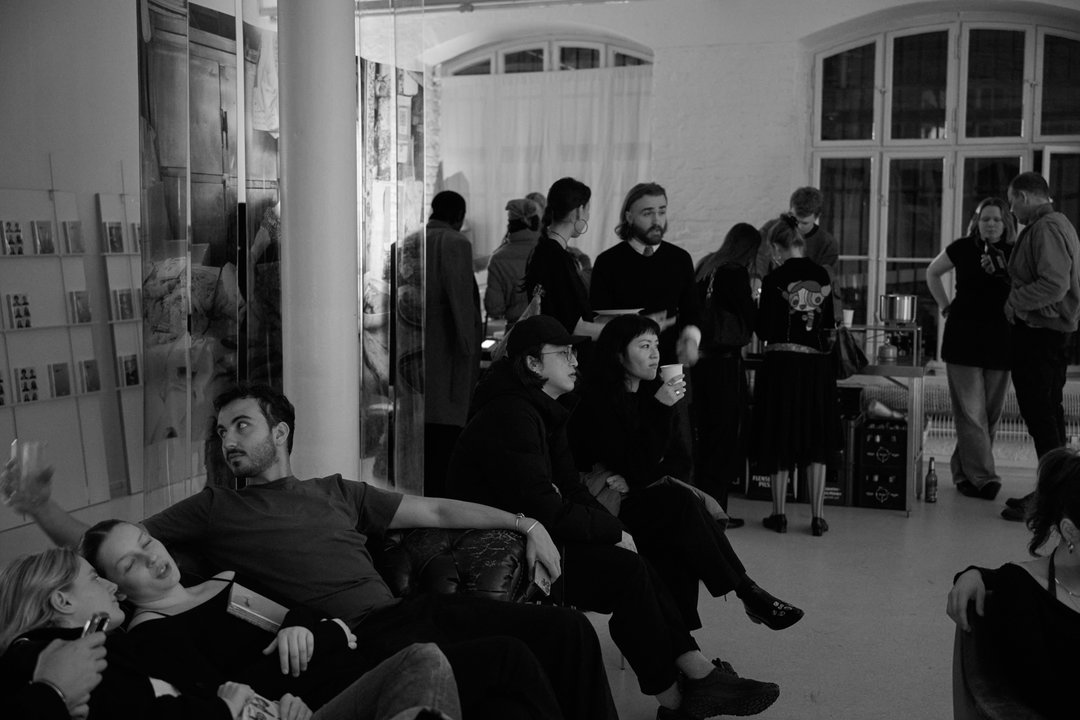
Grau Magazine (Photo copyright © Lina Mei Ling Sammarro)
Closer Look
Milly highlights some community projects and spaces to seek out in Berlin.
- Grau Magazine is an independent publication founded in 2023 by Berlin-based designers Leif Arne Asmus and Julius Sebastian Führ. In their own words, “Direct engagement with people is key to fostering a genuine exchange of knowledge, stories, and experiences. The magazine explores our attempt to navigate the inner and outer complexities of our world.”
- Since launching in late-2024, Reading Room has grown into a thriving community of readers focused on coming together in the joy of reading. In the words of its founders Teresa, Shirley and Deniz, “The idea for Reading Room was born when Deniz and Teresa independently shared the same article about reading parties in the US. That post sparked a conversation, and not long after, the decision to bring something similar to Berlin.”
- Nestled in the heart of Neukölln, Tennis Bar is an inclusive, welcoming neighbourhood bar and events space with unbreakable community spirit. There’s pretty much always something going on and someone interesting to talk to.
- Community radio and educational platform Refuge Worldwide celebrates its fifth birthday this month, having recently moved its instantly recognisable radio booth into a new and much larger space on Niemetzstraße in Neukölln. The new space will allow the team to host more events and bring more people together.
Share Article
Further Info
About the Author
—
Milly Burroughs (@millyburroughs2.0) is a Berlin-based writer and editor specialising in art, design and architecture. Her work can be read in magazines such as AnOther, Dazed, TON, Lux, Elephant, Hypebeast and many more, as well as contributing to books on architecture and design from publishers Gestalten and DK. She is It’s Nice That’s Berlin correspondent.