

Elizabeth Goodspeed on how many designers it takes to make a studio
The question of what counts as a “studio” – and what you call one – reveals the industry’s ongoing tension around identity, ambition and scale.
Share
Despite the American obsession with individual grit – dropouts in Bay Area garages, star spangled bootstraps, etc. – the United States is a lot more generous to corporations than it is to people. For independent designers, that means it’s often cheaper and safer to operate as a business, even though they’re working alone. My own design practice is set up as an S-Corp, which, according to my bookkeeper, “avoids the double taxation drawback of regular corporations by allowing profits to be passed through directly to owners’ personal income". Cool. What that means in practical terms is that I pay myself a salary to work for my own company while also taking a draw from business income as a shareholder. I am, both essentially and legally, my own employee, boss, and investor (you can think of this as the “Marc by Marc Jacobs” approach to business infrastructure.)
It’s not just the IRS that prefers companies to people. In most of the creative world, having your own studio is still considered the ideal endpoint of a designer’s life cycle. But much like ghost kitchens and drop-shipping have scrambled our sense of what counts as a “real” restaurant or business, it’s no longer obvious what it actually means to “have your own studio” anymore. The term once suggested an office, a diverse full-time staff, and a clear internal hierarchy. Now, many studios have none of the above; no IRL space, and no stable of designers waiting in the wings. Remote work has made the model porous. A studio might be a solo designer, or a loose constellation of collaborators spread across time zones. Whether you call yourself a studio or a person aren’t structural descriptors as much as they are a signal; shorthand for how a practice wants to be read. But when “studio” no longer guarantees size, permanence, or authority, the mythology around growth starts to fall apart with it.
“A studio name that isn’t self-titled is like a childhood coat bought one size too big – you grow into it.”
Elizabeth Goodspeed
Designer Meredith Hattam worked for Condé Nast and The New Yorker from 2017–2023 before moving to Berlin for a full-time role that didn’t pan out. A year later, she decided to make another change, this time, to start her own practice. She knew she wanted it to be a “real studio”, but that left the harder question: what to call it. Years of in-house work meant her name carried word-of-mouth credibility, but little public recognition – so “Hattam Studio” didn’t offer much built-in equity. And even if it did, she wasn’t sure she wanted to hitch her work to her name anyways. Her boyfriend, who distributes cheese and wine, also pointed out that his business isn’t called “Alessandro sells cheese”. “So why should my studio name be “Meredith does Design?” she says. “If any of my work became known, I’d rather it be known under a name I thought hard about and that meant something.”
Eventually, Meredith settled on one: A Present Force. It’s a nod to the (perhaps misleading) statistic that women make up less than 40% of design leadership despite comprising 70% of design students. Most of Meredith’s collaborators are women, making the name her subtle provocation about the power of female designers. Calling it A Present Force instead of The Design of Meredith Hattam also gave room for her to grow beyond herself. “I would love to hire junior talent someday, but I need to get to a point where they’ll be safe, happy, and well paid here.” In the meantime, a studio name that isn’t self-titled is like a childhood coat bought one size too big – you grow into it. The name pre-supposes that the practice will likely grow into something larger than one person, and something that more closely resembles what we think of as a capital-S studio: an office with a mantle full of awards, a project manager or two, an intern organising the HDMI cables. Characterising it as “starting a studio” upfront is simply a way of clearing the weeds away before you start the hard work of planting and harvesting. It doesn’t guarantee scale, but it makes space for it.
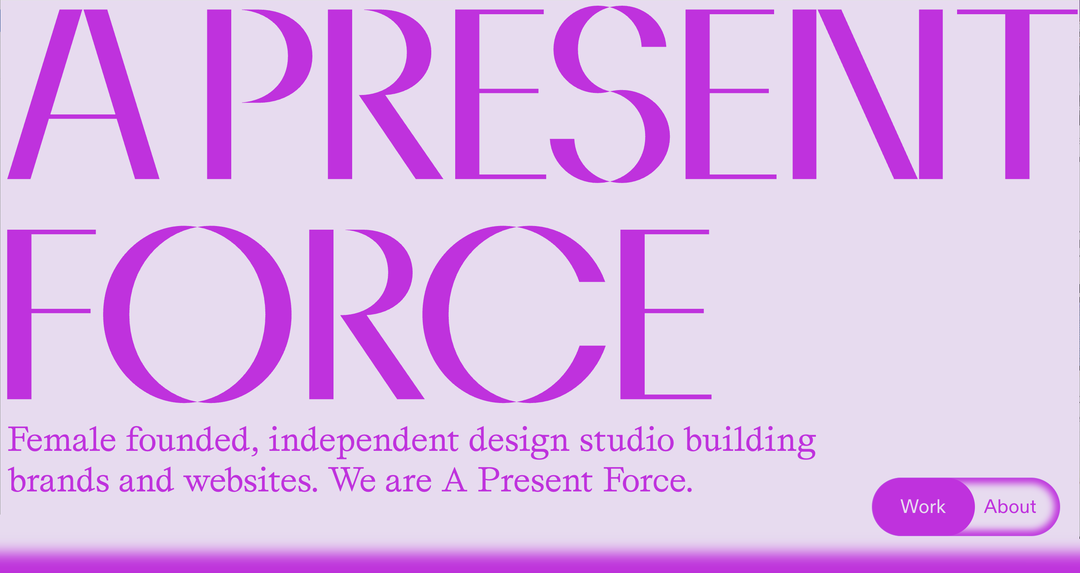
A Present Force, 2025
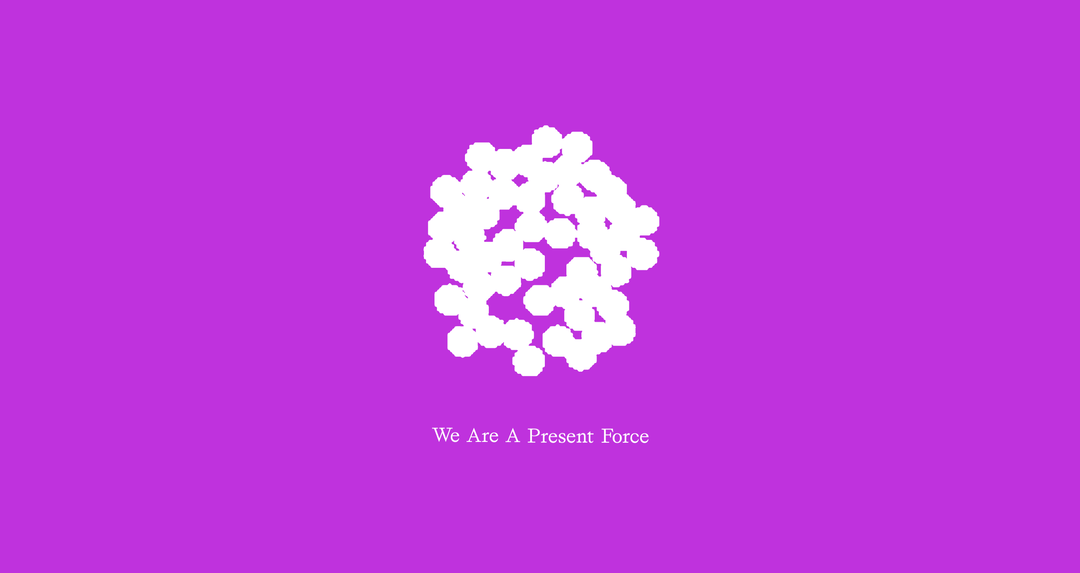
A Present Force, 2025
For others, starting a studio is more about catching up with an existing reality. Before she was (Studio) Lotta Nieminen, Finnish designer Lotta Nieminen had built nearly a decade of experience designing for agencies and brands and illustrating for children’s books and clients like Bvlgari, Marimekko, Liberty, and Herman Miller. From 2012-2021, she operated as Lotta Nieminen, human being, balancing design and illustration under a name that carried weight across disciplines. By 2021, the work had shifted. Lotta was focused solely on design, and taking on larger, more complex projects. “Even though it was still just me, I was booked out months ahead and taking on larger clients,” she says. The optics hadn’t caught up. “Before I added ‘studio’, I got a lot more inquiries for in-house gigs – which wasn’t something I was looking for, or even able to do, since I was running my own practice full-time,” she says. “I realised I kept having to explain to people: I’m not a freelancer, I’m a studio.” Adding “Studio” made her circumstances legible.
By definition and title, A Present Force and (Studio) Lotta Nieminen are studios. But both Meredith and Lotta are adamant that clients understand what they’re actually getting when they hire them, which is, most of the time: Meredith and Lotta. To wit: even on Linkedin, Meredith describes her role at A Present Force (0-1 employees) as “Independent Design Lead at A Present Force,” not “Studio Founder”. On Meredith’s About page and in introductory calls, she’s slightly more precise, describing the studio as a “collective model” run by one creative director. In practice, this means she works directly and independently with clients, as well with a network of collaborators as needed. Basically, if she can’t make it with her own two hands, she’ll find someone who can, and hire them for you. Lotta is similarly clear about her micro-size, preferring to never use the all-powerful “we” to avoid artificially inflating herself. This kind of transparency is the opposite of the hustle-bro model you see on Linkedin and X where designers brag about a studio headcount that doesn’t exist – the studio as “fake it ’til you make it”. Neither Lotta or Meredith are interested in pretending to be any larger than they are. Still, misunderstandings happen. One recent client of Meredith’s assumed she had a full team of developers on standby from their first intro call, and expected an instant buildout. “I had to cut them off and say, no, no, no – I just started doing this. If we need a developer, I’ll find one. But I need time to price it, resource it… There’s no one on staff waiting in the wings.”
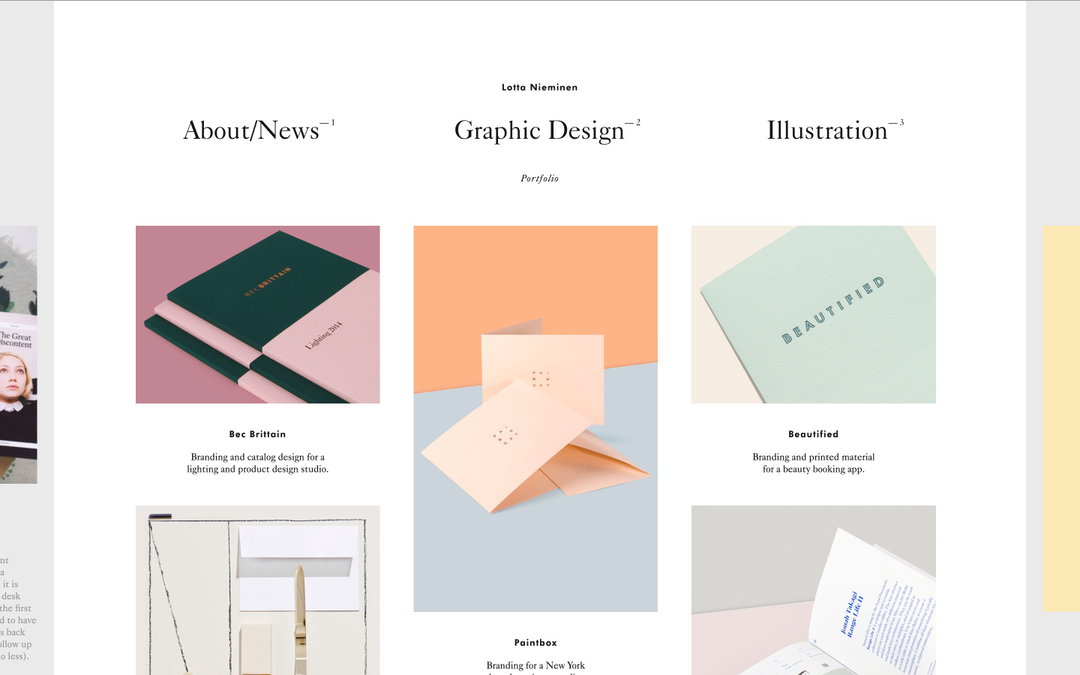
(Studio) Lotta Nieminen, 2020
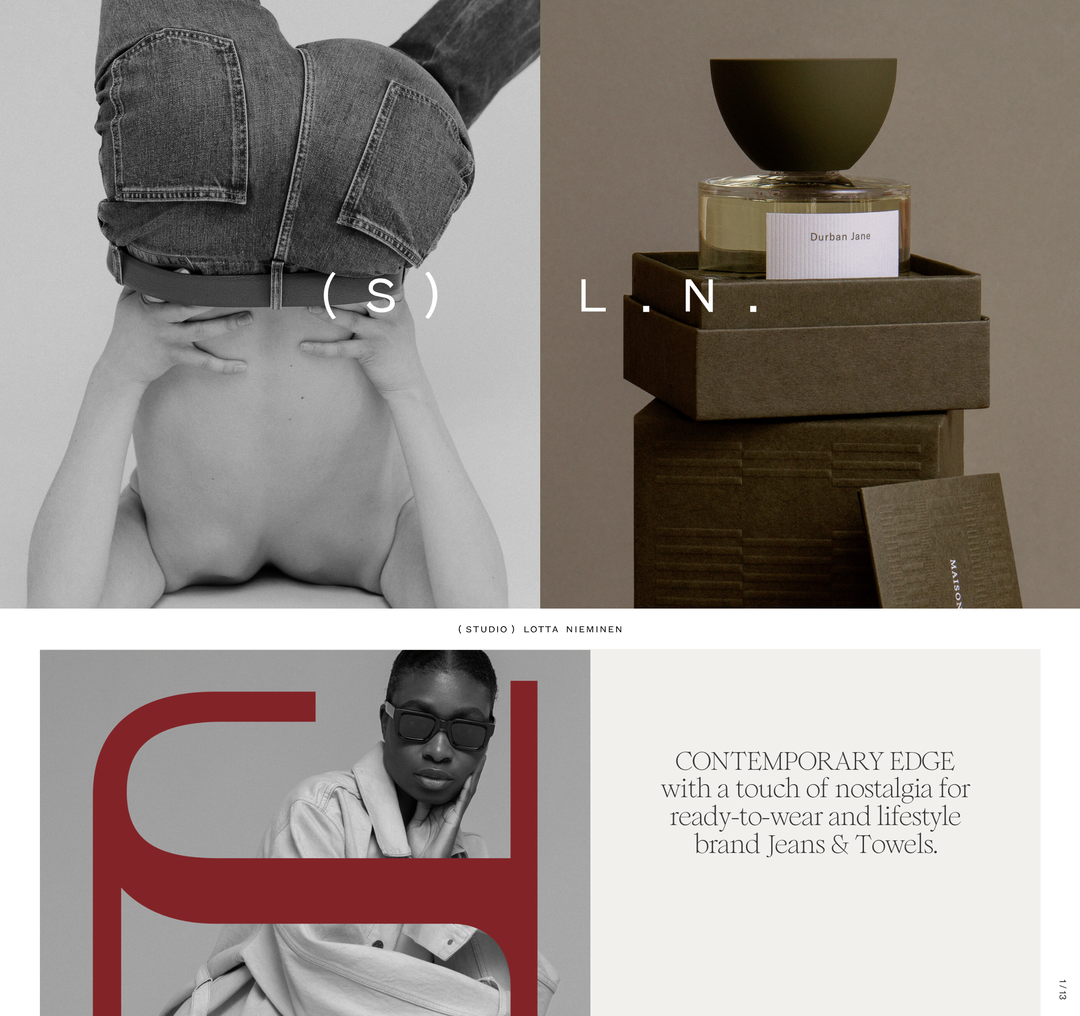
(Studio) Lotta Nieminen, 2025
Lotta recently made her first full-time hire, theoretically unlocking her use of the word “we” at last. Others are already operating as an unofficial “we”, like Elana Schlenker, whose studio, Studio Elana Schlenker, functions as an unofficial partnership. Her frequent collaborator, designer Jordi Ng, holds a full-time job elsewhere but often works on Studio Elana Schlenker’s projects, with her and Elana splitting responsibilities and payouts equally. Both Elana and Jordi work on projects independently, but when they work together, “we’re co-owners in every way except name,” Elana says. Some clients already recognise the setup. “Especially with the A24 book projects we do together, they always say, ‘Elana and Jordi – hey, please work on this with us.’” As a joke, they’ve reacted by branding their decks with SCHNG, a portmanteau of their last names. “Though I don’t think anyone’s ever noticed,” she says. If Jordi ever left her full-time role and stopped taking independent freelancing opportunities to join Studio Elana Schlenker as a full partner, Elana says, the name would have to change. “I wouldn’t be comfortable with her working under my name. It just wouldn’t feel right.” Still, renaming a studio can be tricky – it severs continuity and risks forfeiting the investments built around a founder’s identity. For now, Elana’s workaround is transparency: she credits Jordi on everything and treats authorship as shared, even if the studio positioning isn’t. Everything is credited to both designers and to Elana’s studio. “It gets awkward. Not between us, but to navigate. I get really hung up on – is that fair? Is it dishonest?” she says. “I know it’s just a crisis of semantics, but I think about it all the time.”
Studios named after their founder – Porto Rocha, Leslie David Studio, Collins, Creech, RoAndCo – might sound self-important. But often, they’re just the path of least resistance: a practical shorthand that provides clarity and ownership by signaling who’s responsible for the work (or in some cases, who used to be). Pentagram nods to five founders without naming them (unless you’ve spent enough time in the New York office to know which conference room is which), while Gretel sounds like a person but never was. Studio names can basically be plotted along some kind of weird spectrum of self-awareness. Then again, the origin behind a studio name can be stupider and simpler than any symbolic gesture. People use their names because it’s easy. Designers spend their days naming things for other people. When it comes to naming their own studio, they panic. Lotta jokes that “I would imagine coming up with a name for a studio would be even harder than naming my child!” Designer Abby Muir, who runs an independent practice in Brooklyn, admits she occasionally entertains the idea of coming up with a studio name before quickly abandoning it: “Given the effort-to-return ratio on a good name, it’s not really a priority for me. I’d rather go on a walk or hang out with my friends.” she says.
“Coming up with a name for a studio would be even harder than naming my child!”
Lotta Nieminen
Still, clarity and ego are often confused. This is especially true in a creative industry that continues to reward hierarchy and confidence – traits more often socialised into men. The tension between visibility and humility or equity and identity is semantic, and at times, highly gendered. Maybe that’s why some male creative directors seem more comfortable building pyramids with themselves at the top. Meredith is introspective about how gender norms shaped her own hesitations around naming and self-presentation. “There’s definitely a confidence factor where I think, would a man even be asking himself the question, ‘Should I call myself a studio?’” she says. Lotta had similar doubts when she added the (Studio) to her name, and wondered if it might come off as “a scam to make myself sound bigger”. She ultimately resolved these feelings by putting the “Studio” of (Studio) Lotta Nieminen in parenthesis, a way in her mind to get around the “funny aspect of being called a studio when you’re just one person”.
Across industries, data backs up the idea that women are more likely to question their professional legitimacy in this way. A 2024 study by Harvard Business School associate professor Katherine B. Coffman found that women apply to fewer competitive, high-paying roles because they worry they don’t meet every qualification – whereas men tend to apply even when they fall short. A 2018 LinkedIn Gender Insights Report echoed this pattern, showing that women apply to 20 per cent fewer jobs than men despite similar job-search activity. It may be the case that even asking “am I studio”, or “should I be” is holding women back from simply building the kind of practice they want, or reflecting something that already exists.
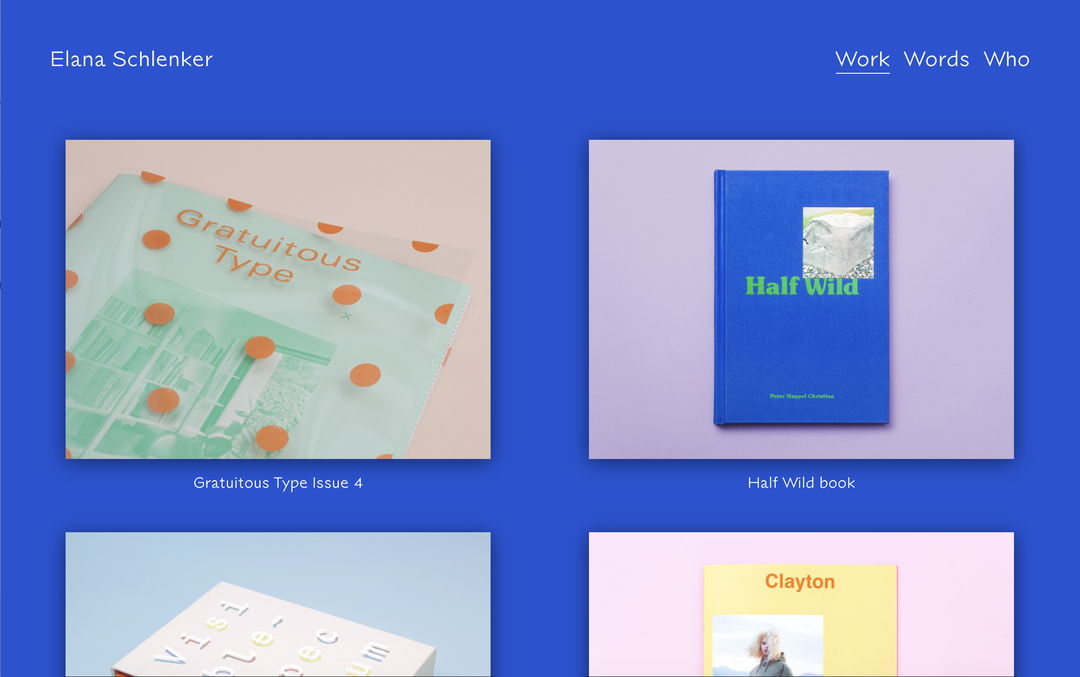
Elana Schlenker, 2016
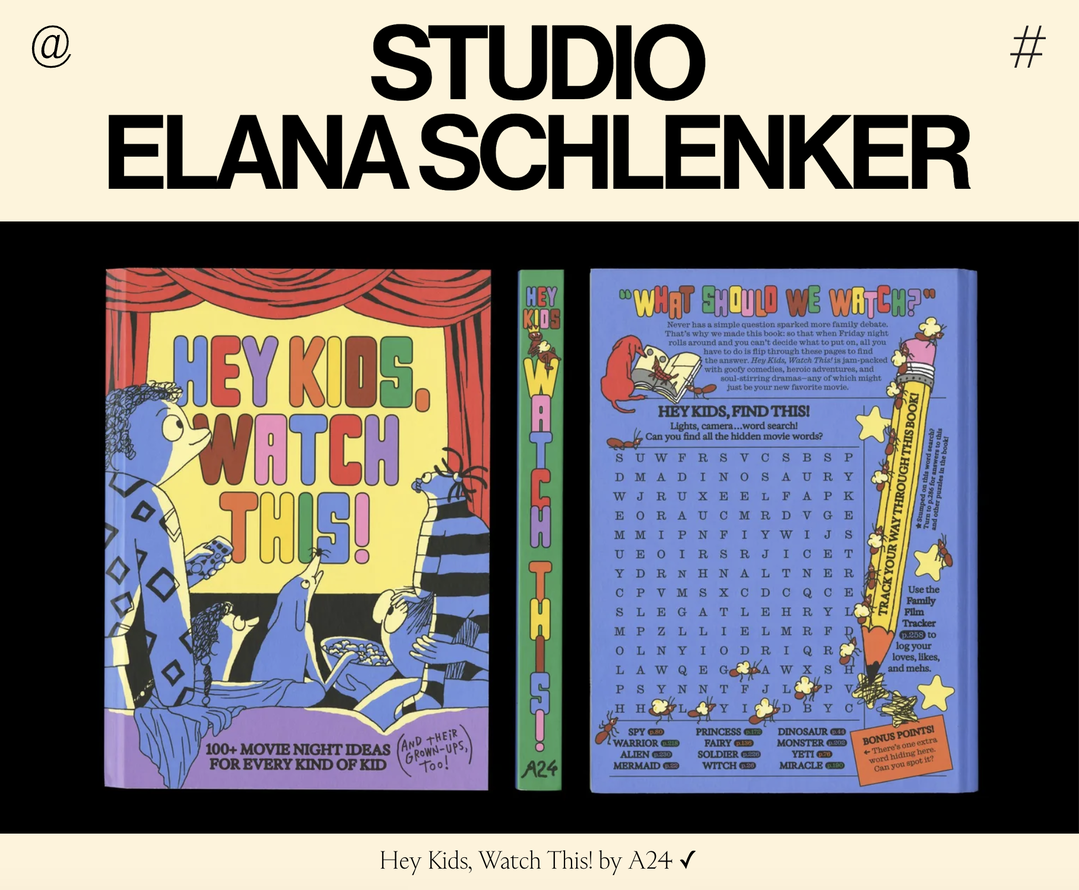
Studio Elana Schlenker, 2025
Even if a woman’s caution about calling her practice a studio might be borne out of internalised sexism, it can still help protect against other forms of external prejudice holding her back. A non-name name lets a studio be read as a collective, gender-neutral output, rather than the work of a single woman whose identity might unconsciously (or, consciously) factor into hiring decisions. The name A Present Force may be explicitly inspired by women’s work, but it’s still androgynous in tone. This allows Meredith to dial up or down the emphasis of being a “female-founded studio” based on who and what she’s pitching on. After all, for all the bigots out there, there are just as many clients these days who are explicitly seeking collaborators of a certain background – whether that’s queer designers for a LGBTQIA+ non-profit or Gen-Z women for Gen-Z skincare (one of the big sells for the original The Wing branding was that it was done by an all female team!)
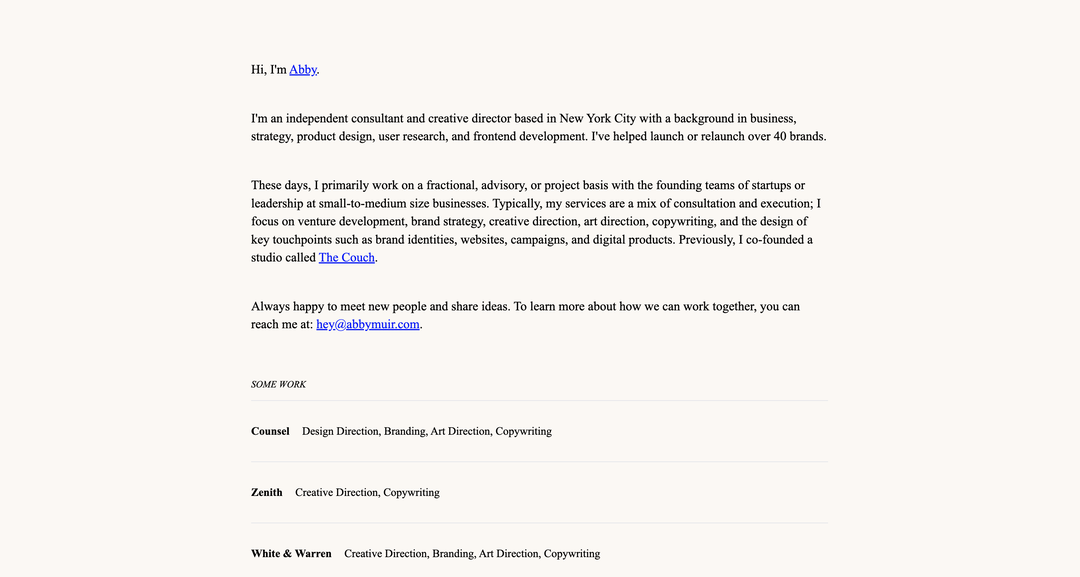
That instinct to keep identity at arm’s length isn’t shared by everyone. Abby Muir – designer, model, redhead – is a clear example. She doesn’t want to be a practice, a studio, or a brand. She prefers to be, in her words, “just Abby”. From 2017-2019, she co-ran a digital studio called The Couch with three peers. When it closed shop, she knew she had no desire to found another collective. But that didn’t mean she wasn’t ambitious. In the six years since she went solo, she’s designed full retail environments, led branding projects for Fortune 500 companies, and worked across naming, web, and art direction – all under her own name. As an extrovert, Abby sees building rapport with founders and collaborators as one of the most rewarding parts of her work. Being name-forward reinforces that person-to-person orientation. It also changes the emotional stakes. If a client is frustrated, they’re not angry at a company: they’re frustrated with Abby. And that’s fine by her. “I think going by my own name underscores the fact that I’m a human,” she says (specifically, when you’re mad at Abby she says “this is who you're mad at”). “Obviously I'm still participating big time in capitalism, and so any way that I can remind myself and the people around me that, at the end of the day, we’re all just a bunch of people, is a good thing.” As Abby notes, clients tend to extend more grace to individuals than to entities as well. A person can have a sick day. A business can’t.
“I think going by my own name underscores the fact that I’m a human.”
Abby Muir
That preference runs throughout the way Abby presents herself and her not-a-studio. Her site is mostly plain text: a short list of clients, a bit about her background, and a running catalogue of what she’s “into” lately (presently: Ursula Le Guin’s Earthsea series, After School, Tokyo Girl, Baldur’s Gate 3, and collecting Y2K-era Miu Miu and Dior.) It’s clear that when you hire Abby, you’re getting a full, complex person with a particular set of tastes, opinions, skills, and a love for Miuccia Prada. The secret to making this work, Abby believes, is that she’s a great account director and project manager. There’s no need to be a studio with a full team when she can plan the work and do the work herself just fine. But, if someone is interested in an account director, a project manager, and the full humming machinery of an agency, she still tells them to go hire one. What she offers is closer to a temporary co-founder: a thought partner who will sit in the room with them and figure out, “what are we making today?” Despite being solo, Abby is not alone. Just like Meredith, she works with a wide network to accomplish whatever needs doing. She’s fanatical about crediting these collaborators too; again in opposition to the conventional studio model, which prefers to simply house all talent until one big umbrella. Abby sees credit as a quiet measure of power: being able to say “I brought this person in to draw the type” or “I worked with that studio on strategy” signals a special kind of pull that’s hard to show off at a capital-S Studio. Of course, she says: “People still ask me when I’ll start a studio.”
Fear of being seen as “too small” is a common rationale for “founding a studio”. Lotta, Elana, and Meredith all acknowledged that establishing themselves as a studio has likely helped them win bigger projects, bigger clients, and bigger budgets at times. Elana says that a studio name is usually “not a turnoff to people who have smaller budgets but it leaves the door open for people who have bigger projects”. A studio setup buys you authority over process, too. You get to declare “this is how we work” – my favorite approach: “I only do one revision round” – instead of absorbing whatever structure a client brings with them. If you don’t like moodboards, you simply don’t do them.
But being perceived as too big can have its own downsides. Studios might be less likely to bring you on as a collaborator if they think of you as competing for the same clients. An individual is a mercenary; a studio is a rival. The nimbleness people project onto individuals can also vanish the moment you call yourself a studio. Even if you are truly a “small but mighty” team of one, working under a studio name might cause people to assume a certain amount of overhead and employees. In a competitive field, that change in optics can reposition you more than you intended. Once something is formalised, it also carries the weight of being undone. Starting a studio means you might eventually have to close one. Pivoting gets harder, too. Elizabeth the person can decide to learn animation. A studio doing the same can feel like it’s changing its entire value proposition.
Abby Muir, 2025
In my own practice, I worry that if I look too formal or studio-like, I’ll lose the oddball, low-budget projects that make my day-to-day interesting. In a wobblier economy, being small also signals nimbleness; a flexibility to work on projects in different ways and at different scales. Lately, multiple clients have even told me outright that they reached out to me, a person and not a studio, because they’re burnt out on studios. Independents are perceived as talent without the dog and pony show. Why spend $80k just to get handed a lukewarm probiotic soda in a conference room? Why care about a conference room at all if most of the project is happening on Zoom anyways? My woo-woo opinion is that the people who seek out a solo designer are actually better clients. Their reluctance to default to a studio for the sake of optics usually means they’re more curious, more experimental, and more open to having their mind changed by the people they work with.
Being an unabashed human is not without its drawbacks. Being a person is only a selling point until it’s inconvenient. Elana Schlenker talked about the emotional calculus of taking maternity leave while being the public face of her business: “Am I gonna dissuade a cool project from coming in because someone sees, ‘she’s on leave,’ even though I’m only out for a couple months?” A client risks a designer being out on maternity leave. They don’t risk it with a business. The closeness that wins work increases exposure at the same time. Staying reachable makes collaboration feel personal; it simultaneously erodes any separation between professional responsibility and personal availability. Lotta feels that we’re in an era of “designer as influencer” – though her own social media is “just a portfolio for people who can’t find my website, nothing personal” – but it’s up to every individual to decide where their personality ends and the product begins. Meredith felt this tension when naming A Present Force. “If I separate my name from this thing, I don't have to feel so rejected when things don’t work out. If people hate the work, that’s cool, they don’t have to know I made it,” she says. Detaching your name from your studio creates a form of protective padding between the designer as a person and the work as a product. Lotta experienced the same shift when she became a studio. “When I was starting out, on every intro call I was thinking, ‘I hope they like me,’ ‘I hope they pick me,’” she says. “Now, I’m thinking – let’s see if I like you.” A studio isn’t a mask, but it does mark a transition away from feeling personally auditioned on every call.
“Studios might be less likely to bring you on as a collaborator if they think of you as competing for the same clients. An individual is a mercenary; a studio is a rival.”
Elizabeth Goodspeed
At the end of the day, whether you call yourself a studio or an independent is mostly about perception. A studio is a castle. Clients cross your moat, knock on your portcullis, and agree – implicitly or explicitly – to follow the rules of the house. The lord or lady of a studio are granted the indulgence of having “processes” and philosophies: they build the systems, declare the values, and determine how, and who, enters their space. But hosting comes with upkeep. Once you set expectations, those expectations become part of the job. A host has to make the bed and lay out clean towels; a studio has to design as well as maintain the environment in which design happens. Working under your own name is more Don Quixote than Rapunzel. You’re a pilgrim on a journey; sacrificing order earns you variety.
As Cher said in 1996 when her mother suggested she settle down and marry a rich man: “Mom, I am a rich man.” The studio is always sold as the ideal future. Sometimes it turns out to be something designers already are.
Share Article
About the Author
—
Elizabeth Goodspeed is It’s Nice That’s US editor-at-large, as well as an independent designer, art director, educator and writer. Working between New York and Providence, she’s a devoted generalist, but specialises in idea-driven and historically inspired projects. She’s passionate about lesser-known design history, and regularly researches and writes about various archive and trend-oriented topics. She also publishes Casual Archivist, a design history focused newsletter.