Publishing and problem-solving; a quick interview with Christoph Niemann about his book, Abstract City
Abstract Sunday is Christoph Niemann’s online spot for The New York Times in which his personal world is revealed through down-the-line wit and everyday observations, all depicted in the gloriously straight-faced universal language of diagrams. Recently ABRAMS collected these brilliantly effective schematic stories and published them into as a book titled Abstract City which covers such ubiquitous themes as electric cable frustration, public transport irrationality, the love of/the hate of coffee and everybody’s favourite – creative block.
Looking at Christoph’s work is like getting great answers to FAQs about him and absurdity of life in New York (though he is now based in Berlin). The simplicity that one just “gets” his work belies a crazy talent to hide the metaphorical iceberg we like to call The Brief and it’s this sort of skill (plus an excellent sense of humour) that places him far and away from the crowd. We caught up with him to ask a few (hopefully non-frequently asked) questions about publishing and problem solving…
Hi Christoph, how did the original Abstract City start and why publish it in book form?
In 2008 I was asked by Brian Rea of The New York Times to start a series of visual essays for the opinion section of nytimes.com. I had always tried to give my drawings a personal twist, but had never come up with my own stories before. I was completely out of my comfort zone — which was exactly what I was looking for, because I was afraid that I would eventually become too comfortable with the work I was doing.
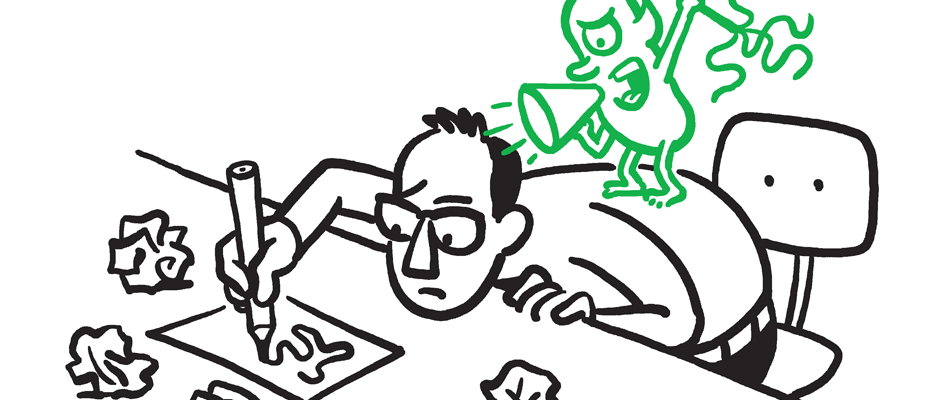
There was a considerable amount of anguish and despair involved in coming up with new chapters. But even though the process wasn’t pretty, there was a point where I felt that despite the varying styles and approaches, the different essays started having something like a narrative. And as much as I like the flexibility and reach of the web, I am just too old school to resist the temptation of a properly printed book.
Has your work always been so schematic and your subject matter always so personal?
When I started drawing, all I cared about was raw skill: the more fancy highlights per square inch in a given illustration the better. I studied graphic design, and realised that the approach of picking a style based on the idea was much more powerful than the other way around. I am a fan of the visual style of infographics, but I especially like them for their deadpan quality to present puns. When you deliver a silly joke you shouldn’t giggle.
It was actually part of the assignment to do “personal” stories, which frankly freaked me out a bit, since I knew that my personal history is just way too bland to entertain an audience with more than 10 minutes worth of titillating tales. Ultimately I found that what I enjoyed most was connecting with the reader through the poetry and absurdity of our common experiences.
"Ultimately I found that what I enjoyed most was connecting with the reader through the poetry and absurdity of our common experiences."
Christoph Niemann
Do you think that your particular role as graphic designer and illustrator could be generalised as “problem solver”?
I absolutely think of myself as a problem solver! Any assignment, whether self-generated or from a client, needs to be broken down into a set of problems that I then try to solve — a process that is a lot less sexy than one would think (I always thought this would feel like playing ping pong with ballet moves, but it’s more like doing math while lifting weights).
You must never forget though, that nobody enjoys looking at something that feels like it was created through lifting weights while doing math. It is crucial that once you have solved the problem you spend just as much time making things look like you just came up with it as you were sitting in a pretty café, dreamily slurping your macchiato.
So what is the best problem you have ever solved?
The thing I dislike most about these visual essays is the lack of a crushing deadline. When I work for newspapers and magazines I usually have days or even hours instead of weeks and months. I always liked the intensity of working under an impossible time pressure (my record is for an OpEd illustration about Pakistan’s nuclear arsenal — 45 minutes from receiving the article to delivering the final illustration).
So to bring back the adrenaline of proper deadlines into my personal work I decided to live draw the NYC Marathon — while actually running it. I’m not sure if it’s the best problem I have solved. Maybe it was just the silliest one— but definitely the most physically challenging.
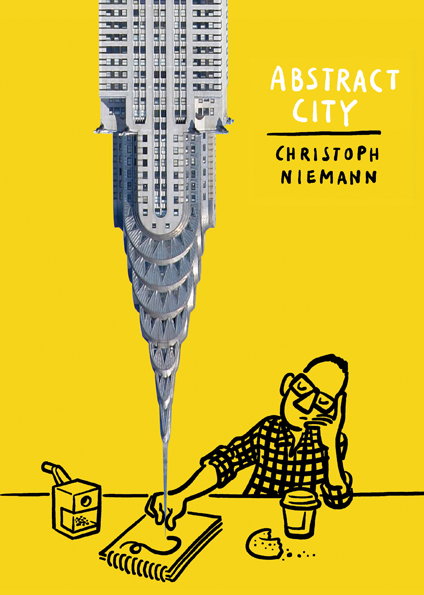
Christoph Niemann: Abstract City. Published by ABRAMS
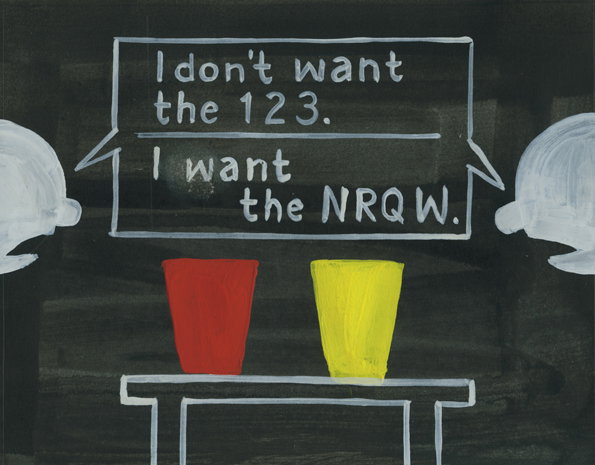
Christoph Niemann: Abstract City. Published by ABRAMS
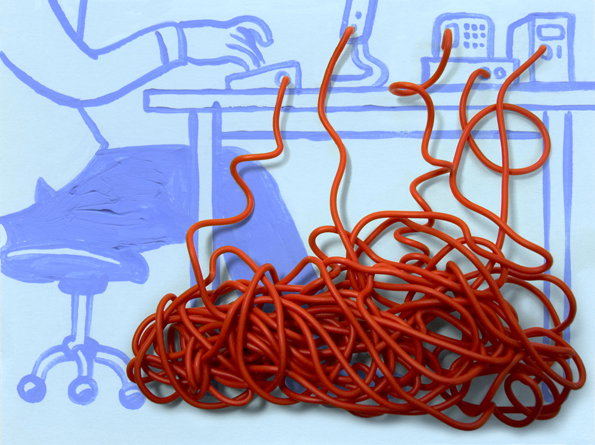
Christoph Niemann: Abstract City. Published by ABRAMS
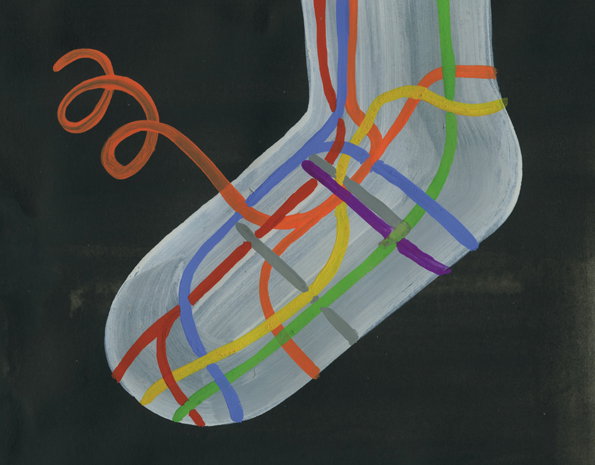
Christoph Niemann: Abstract City. Published by ABRAMS
Share Article
About the Author
—
Bryony was It’s Nice That’s first ever intern and worked her way up to assistant online editor before moving on to pursue other interests in the summer of 2012.