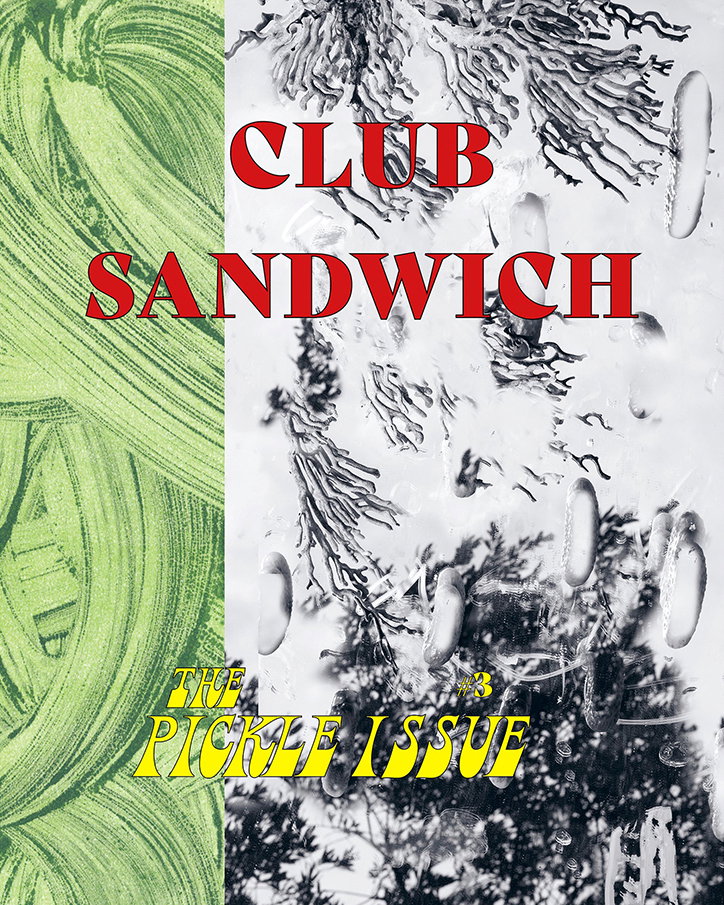
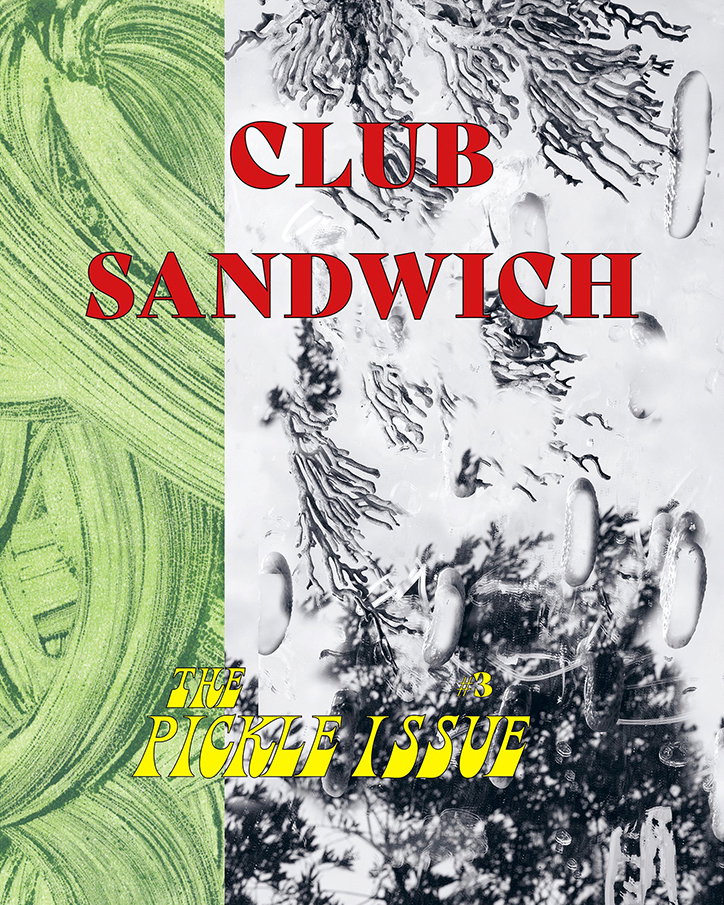
Club Sandwich magazine's latest issue is dedicated to... the pickle!
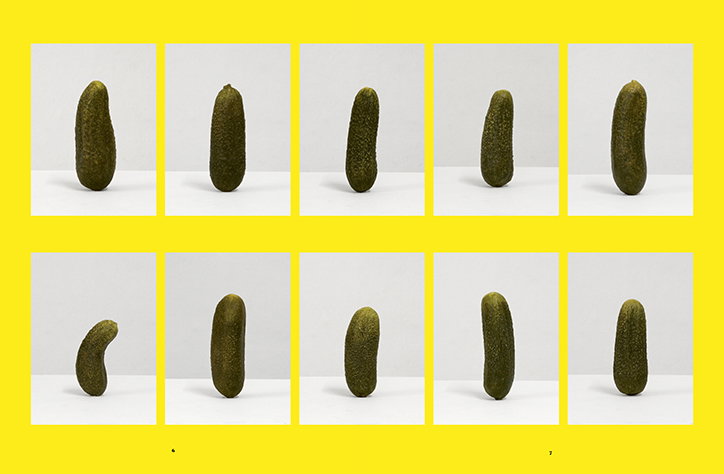
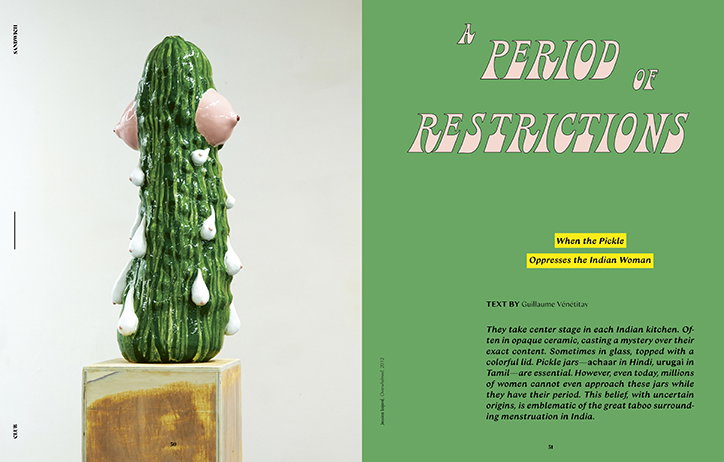
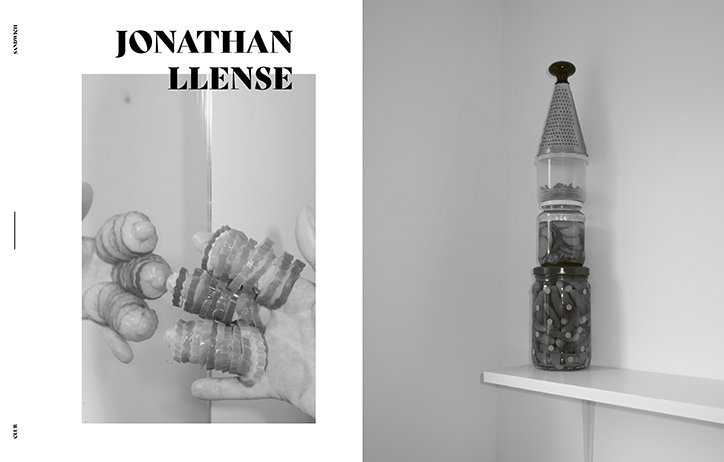
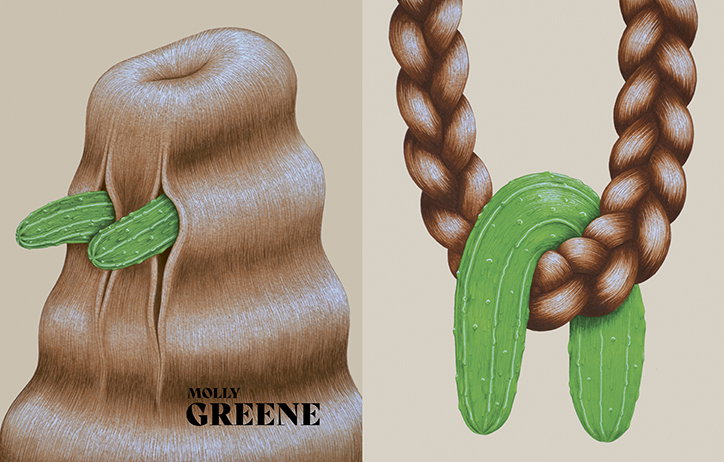
If there’s one thing we never knew we needed in our lives but now can’t live without, it’s a magazine dedicated to pickles. With 144 pages entirely dedicated to the green, brine-pickled snack, and with contributions from Max Siedentopf, Clay Hickson, Stella Murphy, Alex Gamsu Jenkins, Alexander Coggin and many more, Club Sandwich magazine has firmly won a place in hearts, or should we say stomachs.
The publication was started in 2015 by Anna Broujean, originally from Paris but now a travelling freelance creative. Having graduated from ENSP (the French National School of Photography), Anna was doing a residency in Montreal at the time and wanted to come back to Europe with “something different” in her portfolio. “I wanted to create a magazine that could gather everything I knew how to do and that would give me enough space to experiment, try out new things,” she recalls. And so Club Sandwich was born.
So far, Anna has produced three issues, the first on eggs, the second on mushrooms and the most recent on pickles. Through stories exploring these singular items, Club Sandwich looks at the culture of food, exploring it through the contexts of history, sociology, anthropology, economy, politics and art. “I’m passionate about food in a theoretical approach and at the time [of starting the publication], I couldn’t find any magazines talking about food as social sciences while still being fun with a strong interest in art. In my vision, those three elements had to be linked,” Anna explains.
While she mostly runs the magazine herself, taking on the role of art director, editor in chief and graphic designer, Leïla Boutaam helps out with editorial content and Marie Saraiva (Anna’s mum!) chips in on the administrative side of things. Since Anna is not a graphic designer, the aesthetic of Club Sandwich is produced without constrains or parameters to adhere to, instead, reflecting Anna’s sole vision. “I have a lot of freedom, or at least, I allow myself a lot of freedom,” she explains. “I wanted a magazine that could be pop and serious, fun and clever so that’s the way I’m designing it. I like colours and I don’t like following rules.”
Club Sandwich
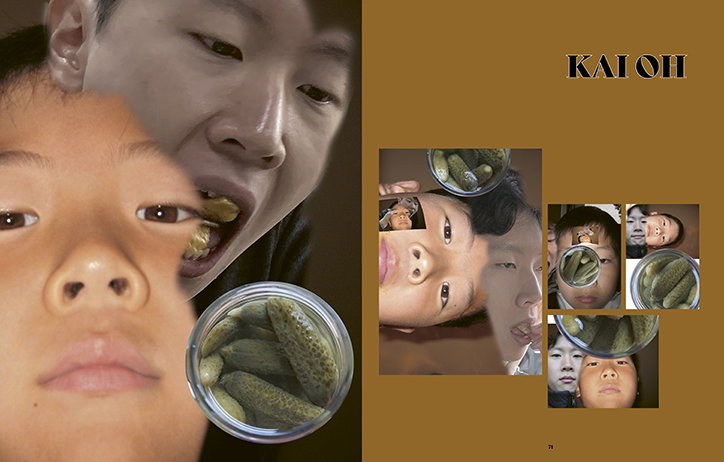
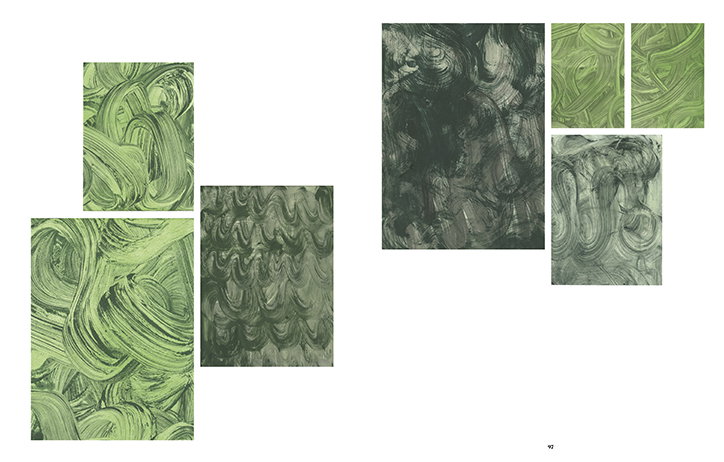
This latest issue, as is Anna’s customary way of working, features a host of contributions: “I commissioned 30 upcoming or contemporary artists,” she adds on this point. “A contribution I really like is Breanne Trammell’s paintings; she was inspired by the gummy pickle belts that she found in a gas station on her way to a residency while we were talking about collaborating on the magazine. She was inspired by their shapes and colours and ended up sending me 32 incredible mono-prints. It really shows how inspiring food can be.”
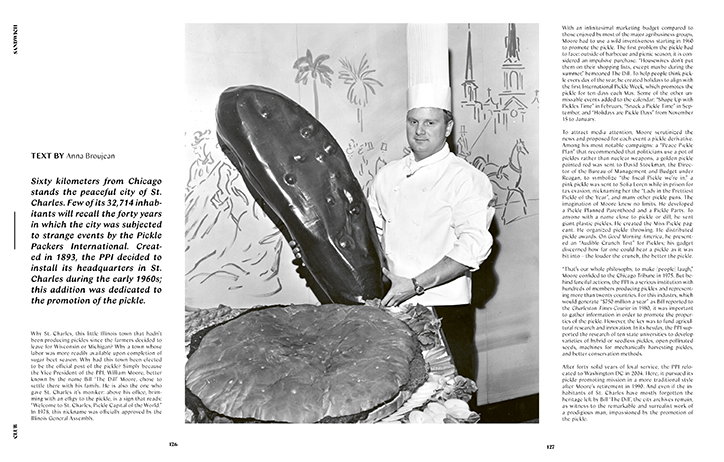
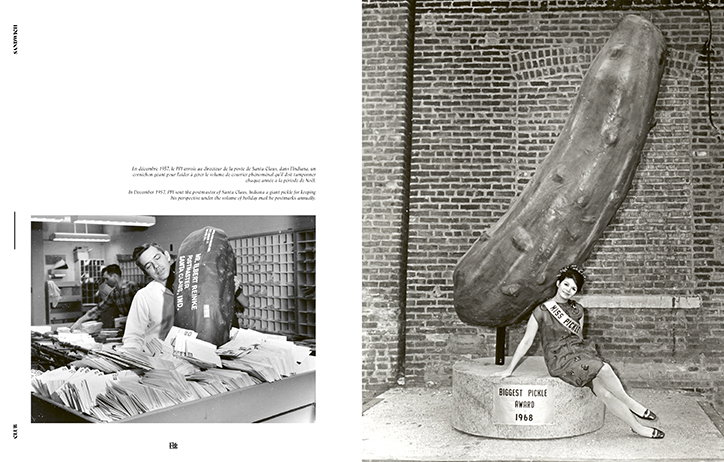
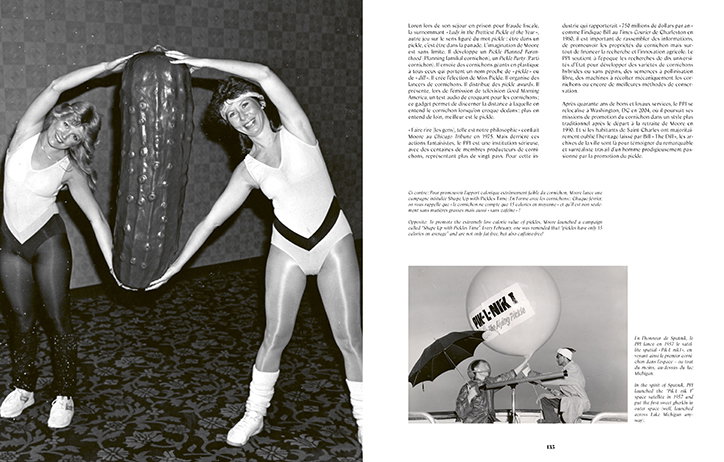
Besides Breanne’s prints, the pickle issue also features an article focussing on Saint-Charles, a city in Illinois declared “pickle capital of the world in the 60s”. Anna continues: “Bill Moore was then in charge of the Pickle Packers International and had to promote the pickle with very limited fundings, hence some weird marketing methods. I heard about this story and decided to investigate. The city gave me access to their archives and the photos are crazy: mermaids ridding pickles, pickle driving cars, the election of Miss Pickle… The images are incredible and have rarely been seen before.”
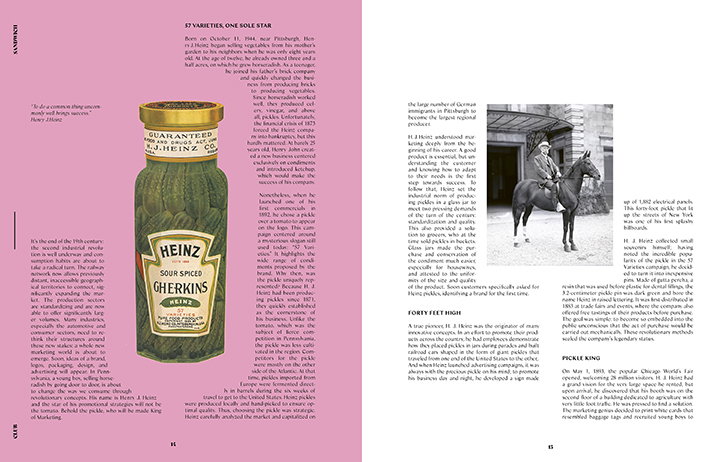
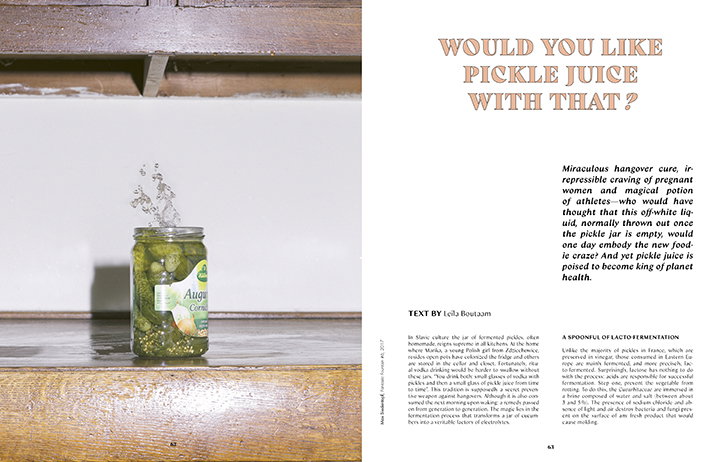
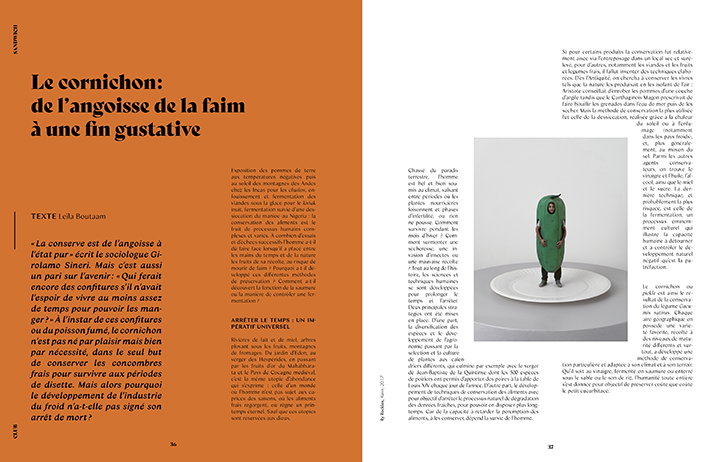
While these stories reflect the playful nature of Club Sandwich, its stories are as likely to teach you something new, as they are to make you laugh. One article, for example, looks at how the pickle was born out of necessity, preserving fresh cucumbers to survive periods of food shortages. “The article also questions why, with the development of artificial refrigeration industry, we still consume pickles and canned food in general and how it became linked to pleasure,” Anna explains. It’s this clever balance of humour and insight which makes Club Sandwich so successful. After luring you in with images of workout gear-clad women holding giant pickles, it delivers fascinating stories which prove how food is much more than just something we eat.
Club Sandwich
Club Sandwich
Club Sandwich
Club Sandwich
Club Sandwich
Club Sandwich
Club Sandwich
Club Sandwich
Club Sandwich
Club Sandwich
Club Sandwich
Share Article
Further Info
About the Author
—
Ruby is Senior Creative at It's Nice That, overseeing our visual output across platforms and projects. Before that, she was associate editor on the editorial team, after joining in September 2017 following graduation from Central Saint Martins.