Launch Recite Me assistive technology
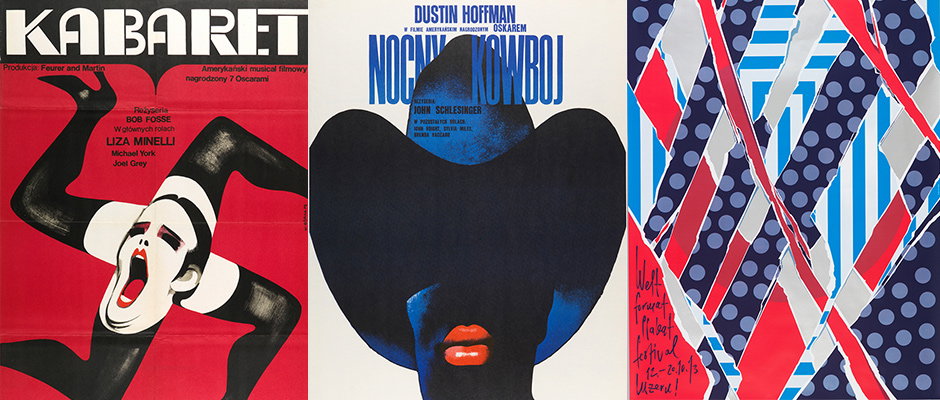
Three movie posters side by side. The first is for “Kabaret”, featuring a stylised figure with a white face and open mouth against a red background. The second is for “Nocny Kowboj”, showing a person in a large black hat with bright orange lips. The third is an abstract composition of red, blue and white geometric shapes and stripes.

New show at Cooper Hewitt examines How Posters Work

—
Date
13 April 2015

We feature a fair amount of poster deign here on It’s Nice That but in the pell-mell rush for aesthetic appreciation it’s rare to take time out to consider how this particular design discipline works. Luckily the Cooper Hewitt Museum in New York has forced our hand with its new show How Posters Work. Displaying 125 of the museum’s 4,000-strong collection, the aim of the exhibition is to illustrate how poster designers go about maximising the potential of the medium.

To this end the show is organised in 14 subsections with relevant examples demonstrating each theme, which are focus the eye; overwhelm the eye; use text as image; overlap; cut and paste; assault the surface; simplify; tell a story; amplify; double the meaning; manipulate scale; activate the diagonal; make eye contact and make a system.

Those featured range from classic designers of the early 20th Century to some of today’s leading practitioners and the museum’s director Caroline Baumann calls it “a true visual feast.” She continues: “This exhibition reveals the design techniques behind some of the most iconic and beloved posters in the museum’s collection, from the hard-edged designs of Ladislav Sutnar to the ever popular psychedelic posters of the 1960s, which epitomise sensory overload.”

How Posters Work runs from 8 May to 15 November.
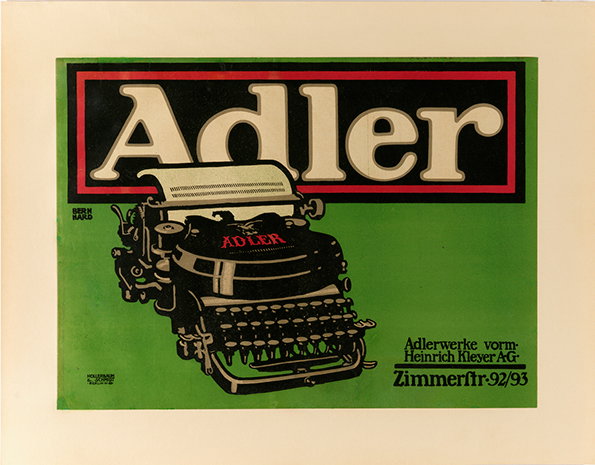
A vintage advertisement for Adler typewriters featuring a black typewriter against a bright green background. A large black banner at the top contains the word “Adler” in bold white lettering. Smaller text in the bottom right reads “Adlerwerke vorm–Heinrich Kleyer AG” and “Zimmerstr 92/93”.
Above

Lucian Bernhard: Adler (Photo by Matt Flynn, copyright Cooper Hewitt, Smithsonian Design Museum)
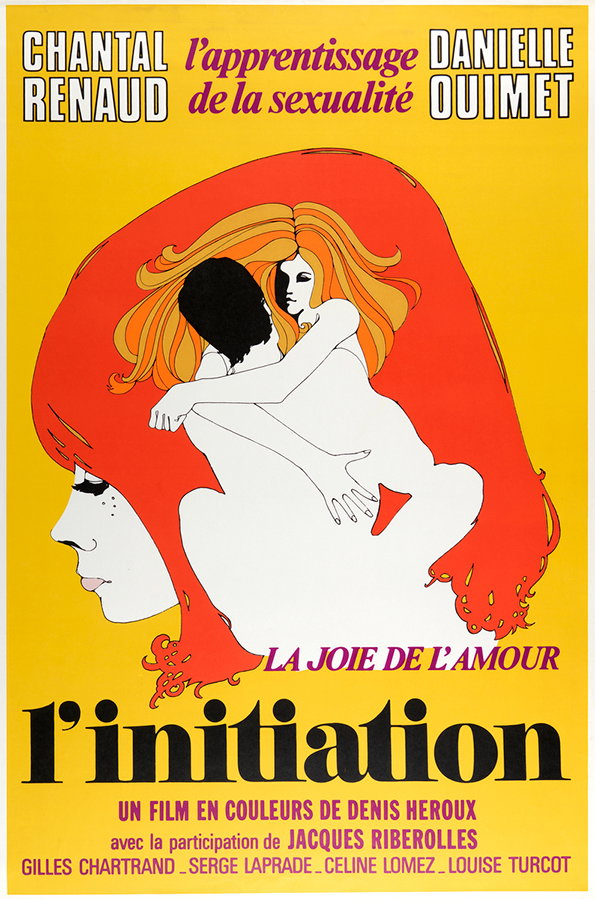
An illustration for a film poster on a yellow background. A large profile of a person with red hair contains a smaller scene of two figures embracing. Text at the top reads “Chantal Renaud”, “l’apprentissage de la sexualité” and “Danielle Quimet”. Below the illustration, the title “l’initiation” appears in bold black type above the phrase “La joie de l’amour”. Smaller text at the bottom credits the film to Denis Heroux and lists several cast members.
Above

Jacques Delisle: l’initiation (Photo by Matt Flynn, copyright Cooper Hewitt, Smithsonian Design Museum)
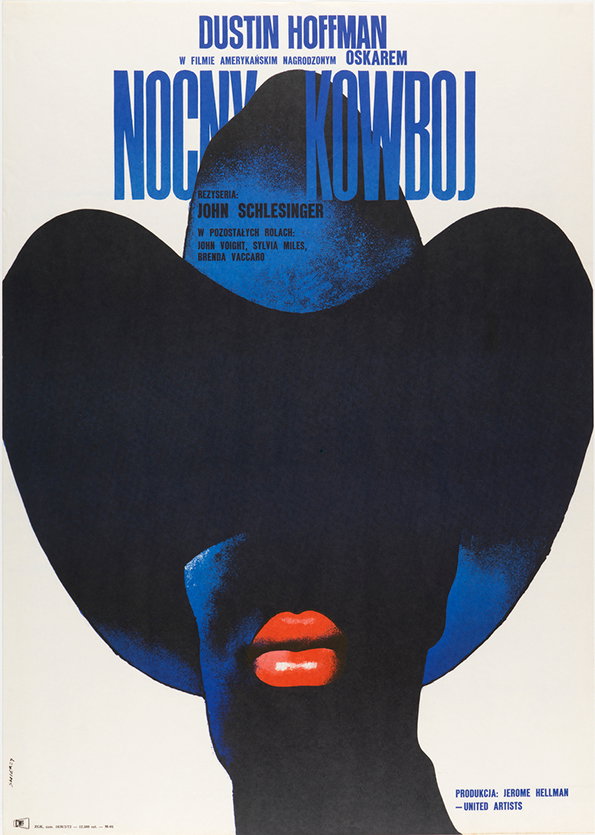
A movie poster for the film Midnight Cowboy, featuring a stylised silhouette of a person wearing a wide-brimmed hat. Only the bright red lips are visible against a dark blue face. Text at the top reads “Dustin Hoffman” and “Nocny Kowboj”, with the director “John Schlesinger” listed below.
Above

Waldemar Swierzy: Nocny Kowboj/Midnight Cowboy (Photo by Matt Flynn, copyright Cooper Hewitt, Smithsonian Design Museum)
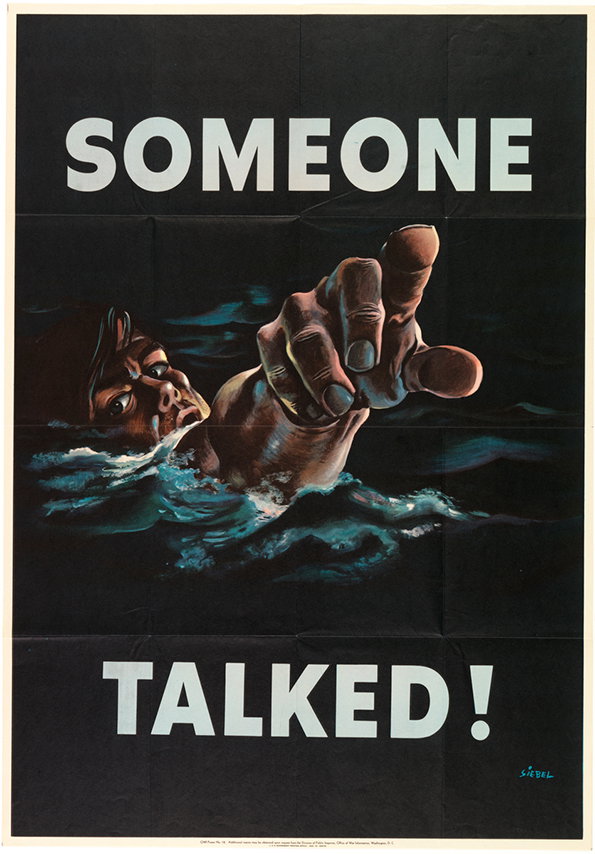
An illustration for a poster shows a person emerging from dark, churning water. They point a finger directly at the viewer, with the bold white text “SOMEONE” above and “TALKED!” below.
Above

Frederick Siebel: Someone Talked (Photo by Matt Flynn, copyright Cooper Hewitt, Smithsonian Design Museum)
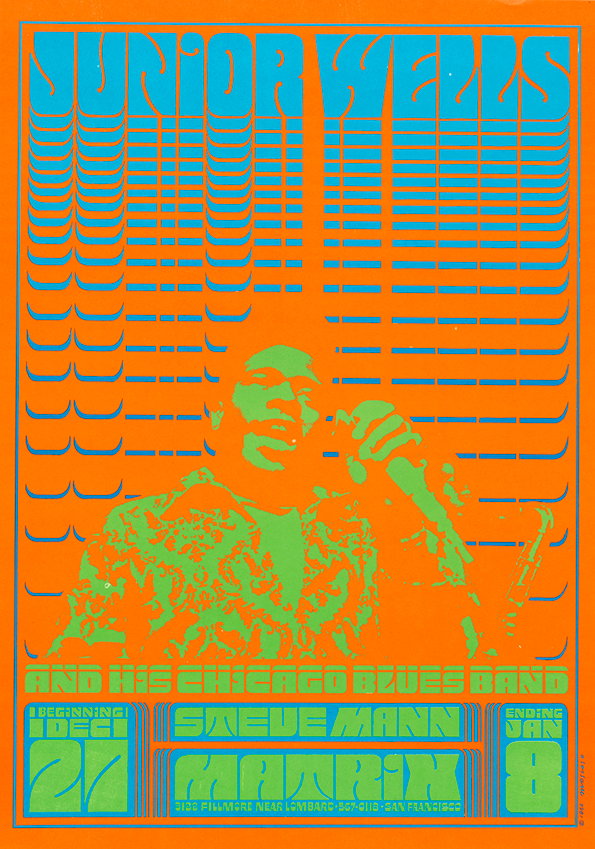
A psychedelic concert poster in orange and blue featuring a stylised portrait of Junior Wells. Bold, distorted typography at the top reads “Junior Wells”, with “And his Chicago Blues Band” below. The bottom section lists the performer “Steve Mann” and the venue “Matrix” in San Francisco. The dates are shown as “1 Dec” and “Jan 8”.
Above

Victor Moscoso: Junior Wells (Photo by Matt Flynn, copyright Cooper Hewitt, Smithsonian Design Museum)
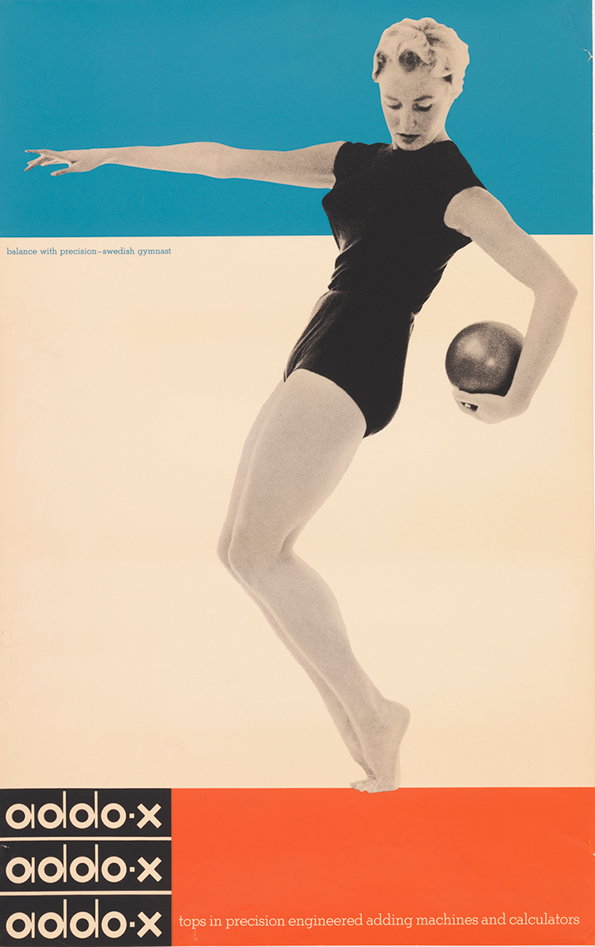
A person in a black leotard balances on one foot, holding a ball in one hand with their other arm extended. They are set against a split blue and cream background. At the bottom, a red band features the “addo-x” logo repeated three times. Beside it, text reads “tops in precision engineered adding machines and calculators”.
Above

Ladislav Sutnar: A B Addo (Photo by Matt Flynn, copyright Cooper Hewitt, Smithsonian Design Museum)
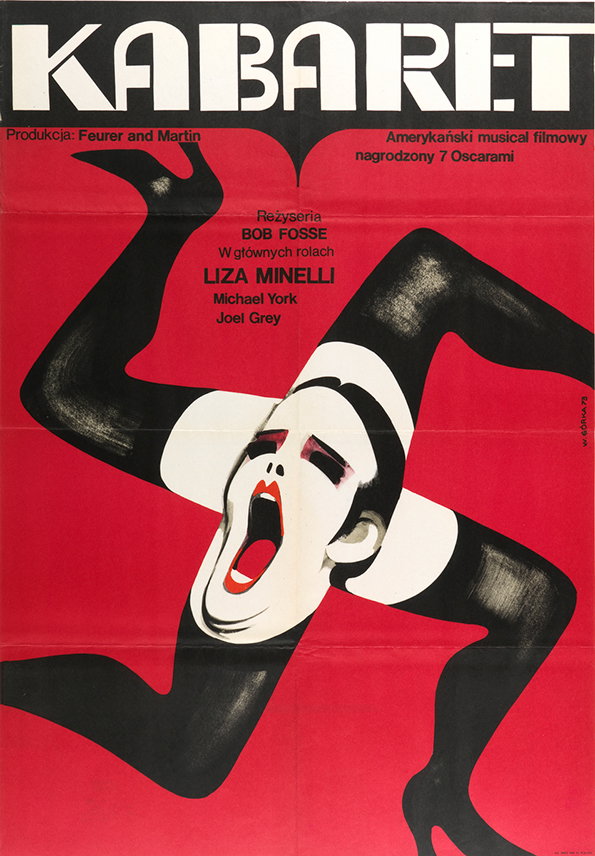
A graphic movie poster for the film Kabaret on a bright red background. A stylised figure in black and white is twisted into a shape resembling a swastika, their mouth open in a scream. Text at the top reads “KABARET”, with credits below for director “Bob Fosse” and stars “Liza Minelli”, “Michael York” and “Joel Grey”.
Above

Wiktor Górka: Kabaret/Cabaret (Photo by Matt Flynn, copyright Cooper Hewitt, Smithsonian Design Museum)
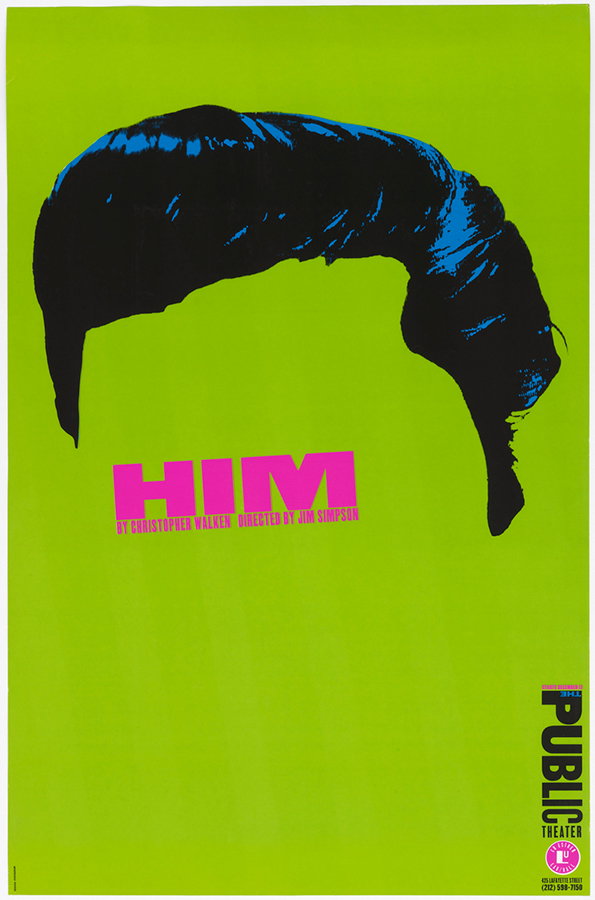
A lime green poster features a high-contrast, blue and black silhouette of a person’s hair and forehead. Bold pink text reads “HIM”, with smaller text below stating “BY CHRISTOPHER WALKEN DIRECTED BY JIM SIMPSON”. The Public Theater logo appears vertically along the bottom right edge.
Above

Paula Scher: Him – Public Theater (Photo by Matt Flynn, copyright Cooper Hewitt, Smithsonian Design Museum)
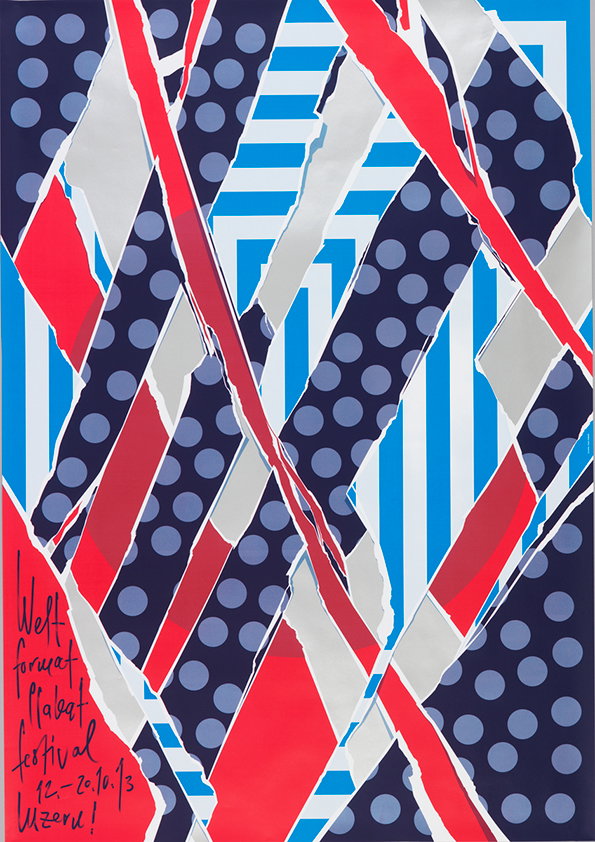
A collage of torn paper strips in red, grey, blue and white. The strips feature patterns of polka dots and stripes, layered in a chaotic, criss-cross arrangement. Hand-written red text in the bottom left reads “Welt format plakat festival 12.–20.10.13 Wuzeru!”.
Above

Felix Pfäffli: Weltformat Poster Festival (Photo by Matt Flynn, copyright Cooper Hewitt, Smithsonian Design Museum)
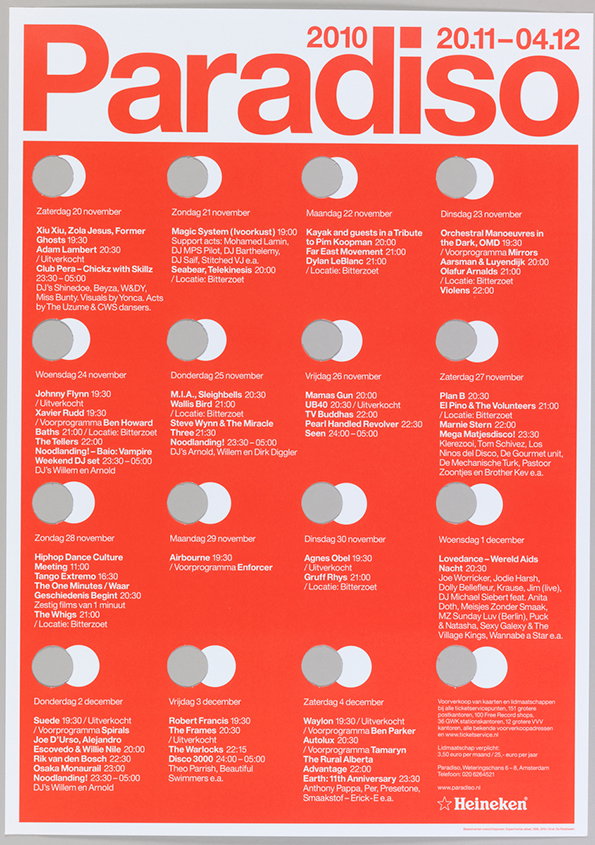
A red and white event calendar for Paradiso, dated “2010 20.11–04.12”. The layout features a grid of daily listings for musicians and performers, punctuated by white circular shapes. The bottom right corner displays the Heineken logo.
Above

Experimental Jetset: Paradiso (Photo by Matt Flynn, copyright Cooper Hewitt, Smithsonian Design Museum)
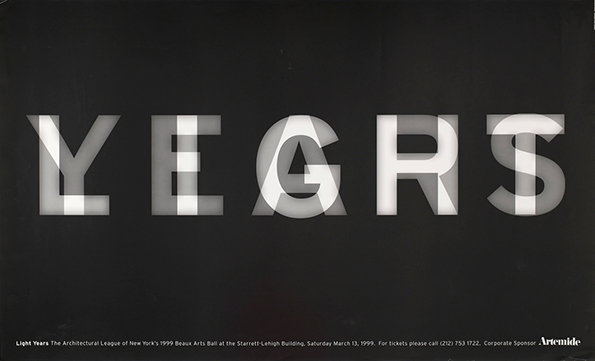
A typographic poster on a black background features the word “YEARS” in large, white, semi-transparent letters. The letters overlap and shift, creating a blurred, layered effect. Small white text at the bottom reads “Light Years” and provides details for a 1999 event at the Starrett-Lehigh Building.
Above

Michael Bierut: Architectural League of New York (Photo by Matt Flynn, copyright Cooper Hewitt, Smithsonian Design Museum)

Share Article

About the Author

Rob Alderson

—

Rob Alderson is editor-in-chief of It's Nice That. He rejoined the company in 2026, having previously held the same role between 2011 and 2015. In between he was editor-in-chief of WePresent, and editor of Design Week.
It's Nice That Newsletters

Fancy a bit of It's Nice That in your inbox? Sign up to our newsletters and we'll keep you in the loop with everything good going on in the creative world.