Interactive: Jake Barton on designing media exhibits for the 9/11 Museum
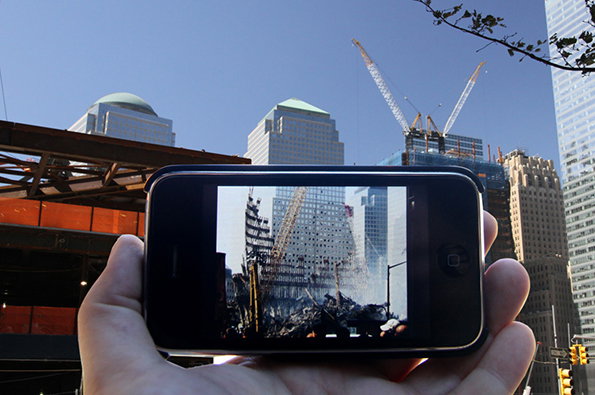
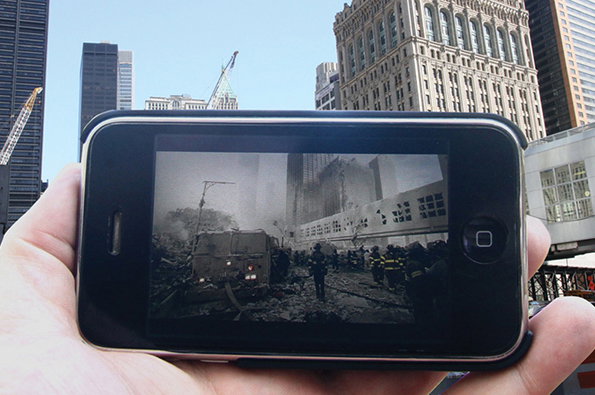
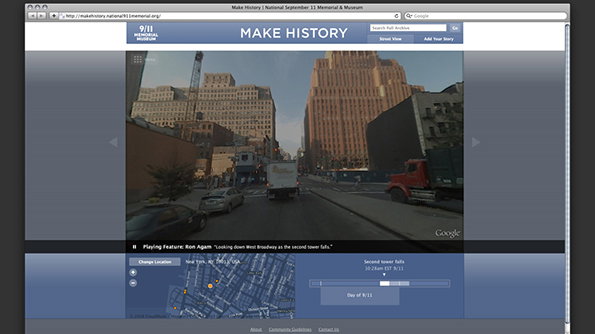
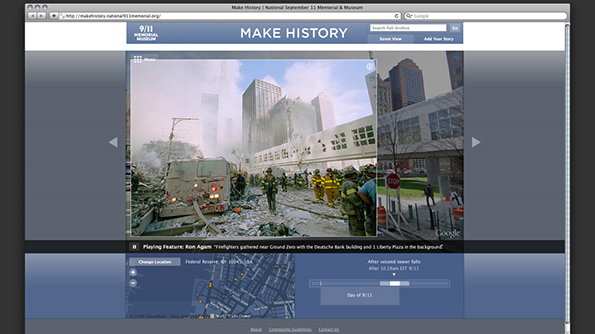
There was a great deal of coverage of the 9/11 Memorial Museum when it opened last week, and on the whole the arts and design press focussed on the architectural angle. But museums are (or should be) much more than buildings; and Brooklyn-based interactive design studio Local Projects was tasked with bringing this complex and controversial chapter in contemporary history to life.
Founder Jake Barton has the day etched on his memory. “I heard about the planes from a random New Yorker in a small shop in Harlem, and I eventually made my way downtown by bicycle to see the events with my own eyes. Like all New Yorkers it was traumatic, and for me the event really signalled a change in my city.”
Local Projects: 9/11 Museum
Local Projects: 9/11 Museum
Local Projects worked both on the overall vision for the museum and designed and produced 90 multimedia pieces. How though do you begin to make sense of an event like this? “You begin with the audience and the highest aspirations for how to transform that audience. What are they to feel? How can your work change them or provoke them to think differently about something? Most of all how can you engage people and make the exhibit a productive part of their experience and world view?
“The material is very challenging, and certainly like many involved there were nightmares and personal trauma. But the biggest challenge was trying to make the right visitor experience, to balance telling the full truth with the need to engage and make things relevant.”
The other challenge is the breadth of the target audience; multi-generational, international, people who were there or who loved lost ones to schoolchildren who weren’t even born.
“We broke down the audience as an early exercise and saw that at the extremes we have people who lived through the event, survivors for whom there is a direct experience, and then also people who know nothing about the event.
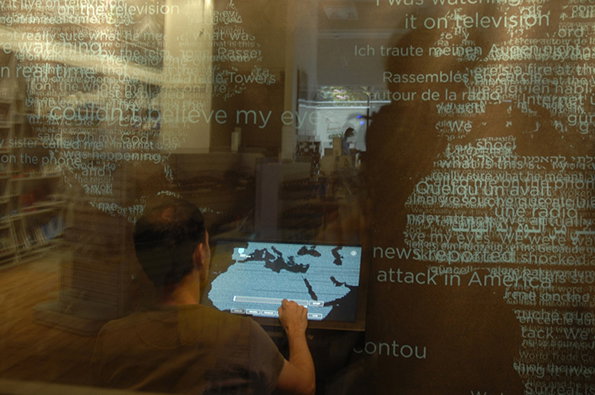
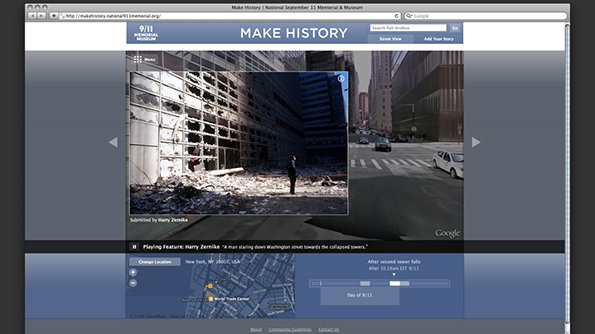
“We always wanted to use the stories from one to engage and educate the other. This meant rethinking the museum as a platform, a space to gather and exchange stories. This also allowed us to think about experiences that would address the evolving meaning of 9/11.
“So you design for such a broad demographic by considering the extremes and engaging them on their own terms. In this case the same experience is meant to engage both in an exchange between them.
“I’d say the 9/11 Museum has tried hard to make exhibition experiences that allow people to tell their own story, leaning into the controversy by allowing people to speak their mind. It’s a cathartic and important part of the exhibition, inviting people with multiple viewpoints to comment on controversial topics.”
It was also a learning experience for Jake and his team. “We discovered that a museum doesn’t need to be finished, that it can be a platform, an evolving dynamic changing set of experiences that hold truths and histories that evolve.
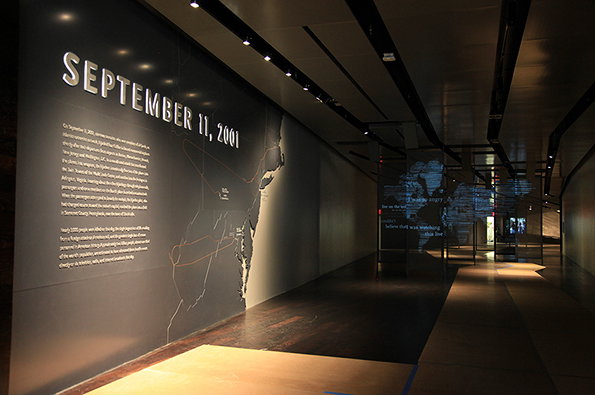
“We have en exhibition called the Timescape that algorithmically defines the post 9/11 world by scraping and assembling different news articles every night. It frames how the world looks and understands the impact of 9/11 each and every day.”
Local Projects: 9/11 Museum
For his own part, Jake says it was an “honour” to work on the project. “It’s estimated that a third of the world watched the event live, making it one of the most documented events in human history. The weight of all those personal connections to the event made for a challenging but deeply rewarding project.”
And with such a weighty piece of work now open to the public, are there any other complex themes or subjects he’d like to explore? “I would really like to make a difference with climate change. I don’t really understand how to make a positive impact as it seems so difficult to get humans to engage talking about and dealing with a subject without clear villains, answers or present-danger threats, but everyone knows it’s the biggest problem we face.”
Local Projects: 9/11 Museum
Local Projects: 9/11 Museum
Local Projects: 9/11 Museum
Share Article
Further Info
About the Author
—
Rob Alderson is a freelance writer, editor and strategist. He was previously editor-in-chief of It’s Nice That and WePresent, and editor of Design Week. He publishes the newsletter Undo, which tries to make sense of how AI is changing design work, the design process and the design industry.