Launch Recite Me assistive technology
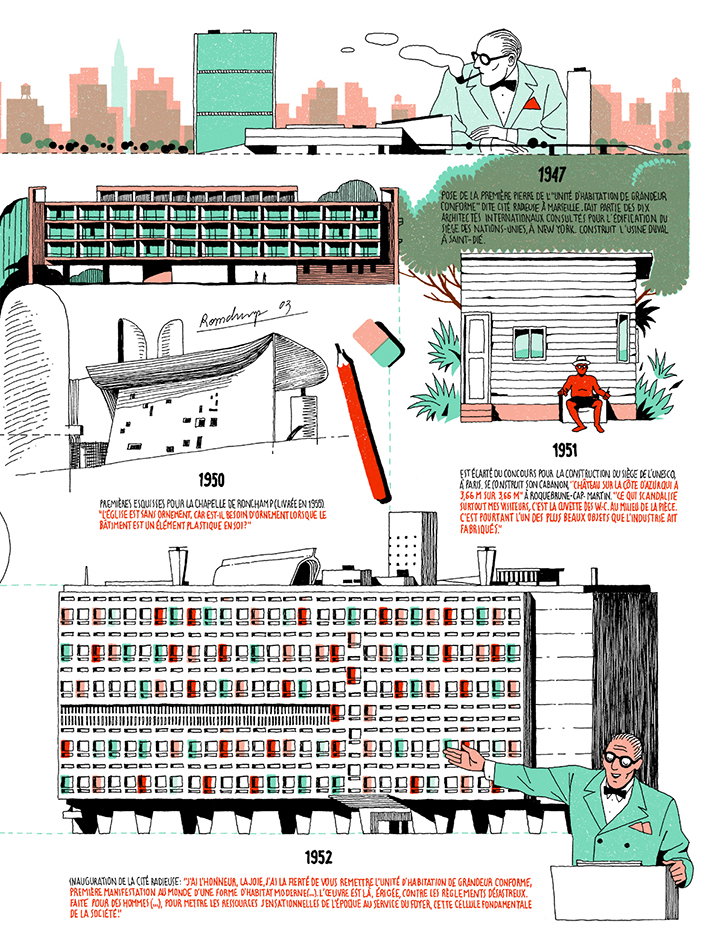
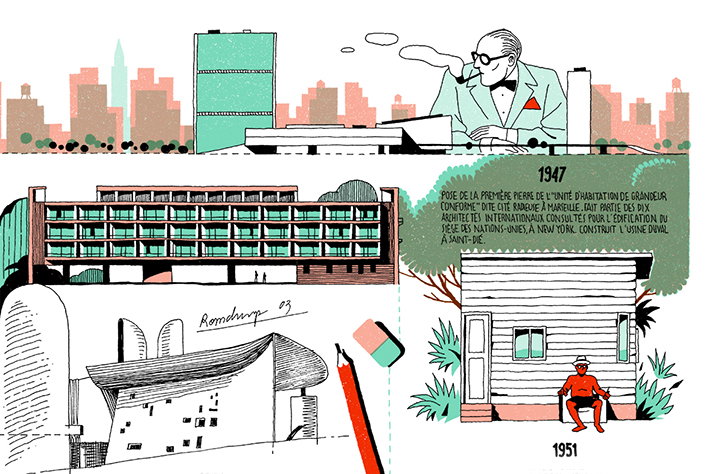
An illustration divided into four panels showing the work and life of Le Corbusier. One panel shows the architect smoking a cigar against a city skyline, while others depict his buildings and a sketch of a structure. Text labels mark the years “1947” and “1951”.

Vincent Mahé beautifully illustrates the life and work of Le Corbusier for Télérama

—
Date
30 October 2015

Anyone tasked with recounting Le Corbusier’s life and career has their work cut out for them. The Swiss-born architect was prolific to say the least, from his pioneering modernist designs to his contributions to urban planning, including the realised city of Chandigarh in India. This year marks the 50th anniversary of his death, which was celebrated with a brilliant exhibition at the Centre Pompidou in Paris this year.

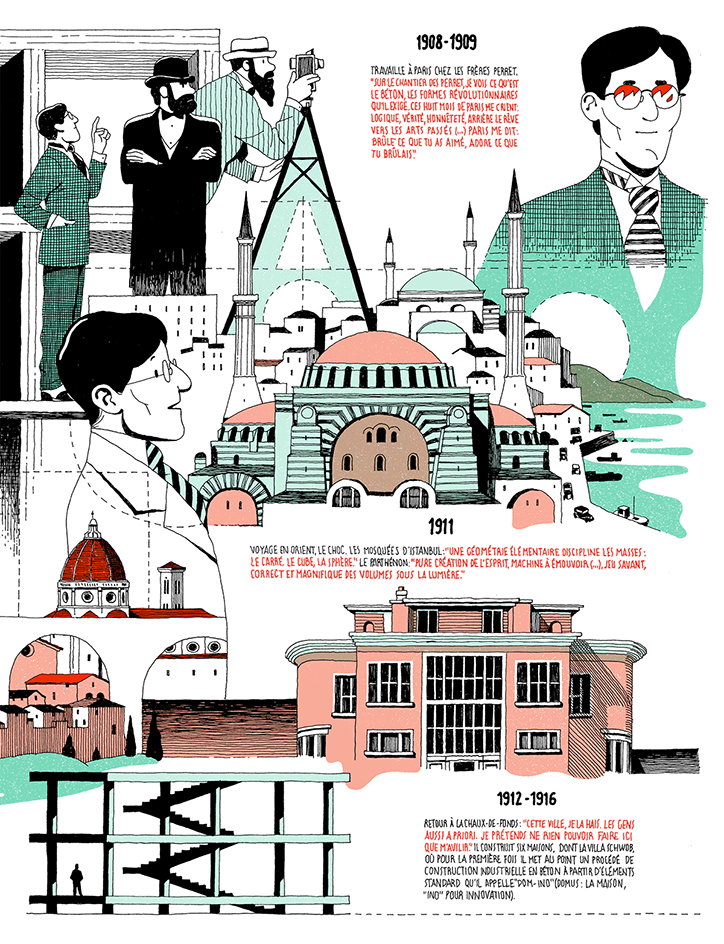
For a special issue of French weekly Télérama, Paris-based illustrator Vincent Mahé, whose skilful work has landed him on It’s Nice That before, gamely illustrated four double-page spreads depicting Le Corbusier’s life and work. Vincent’s peach and mint green illustrations trace the architect’s life, from his beginnings in a small Swiss city near the French border studying at the local art school to his stint contributing to and later editing the magazine L’Espirit Nouveau with painter Amédée Ozenfant. They also capture everything in between designing his famous Villa Savoye and living out his days, largely naked, by the Mediterranean at Roquebrune-Cap-Martin.
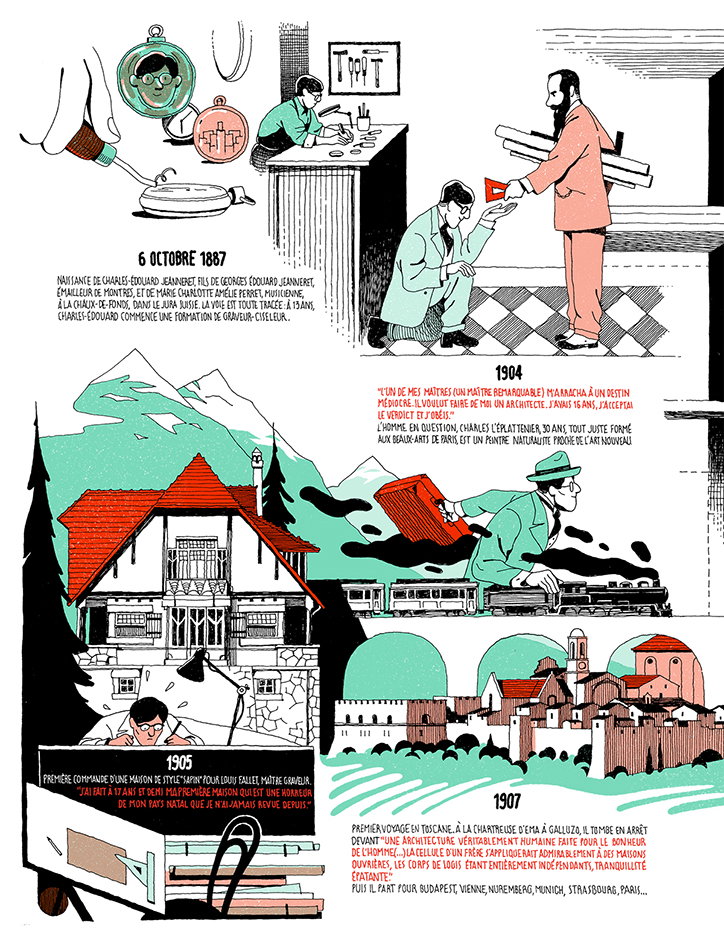
An illustration depicting a timeline of Le Corbusier’s early life. The top panel shows a watchmaker’s workshop with the date “6 octobre 1887”, while the bottom panels show early architectural projects from 1905 and 1907.
An illustration depicting the early influences of architect Le Corbusier. The image is split into three chronological sections with French text describing his experiences in Paris, Istanbul and Switzerland.
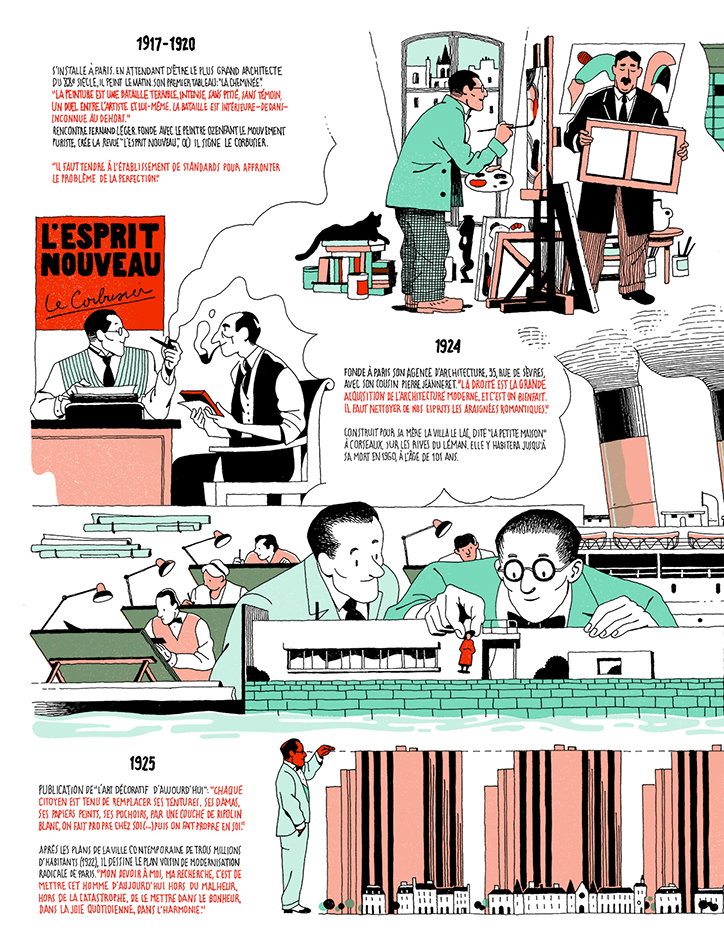
An illustration of the architect Le Corbusier, depicted in several scenes across a comic-style layout. He is shown painting in a studio, sketching at a desk, and leaning over an architectural model of a city. French text and dates, including “1917–1920”, “1924” and “1925”, provide a biographical timeline.
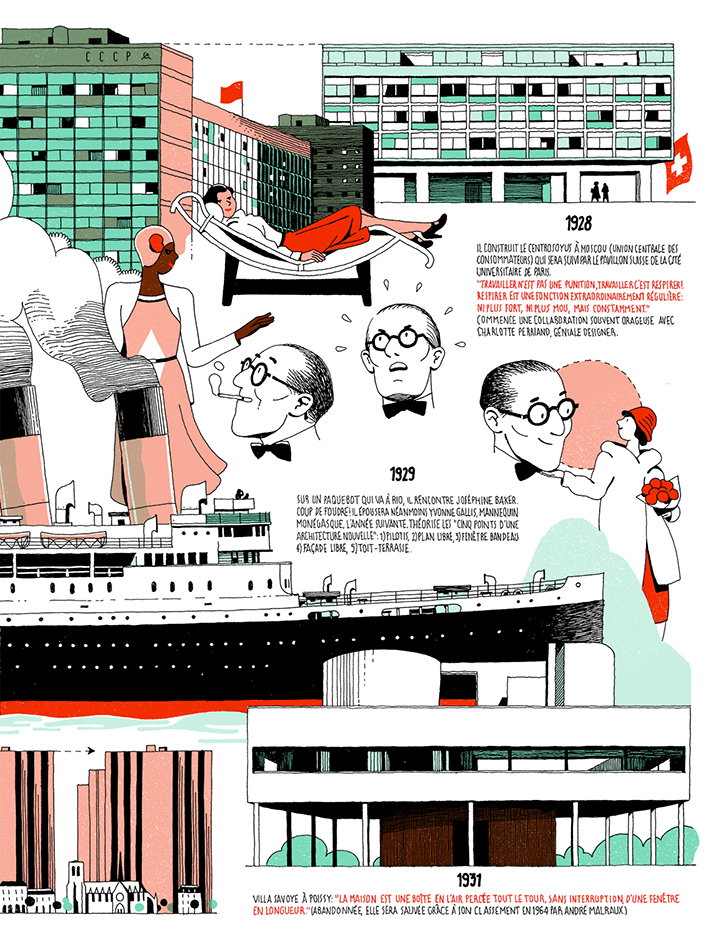
An illustration depicting a timeline of Le Corbusier’s life and work. The scene features a large ship and modernist buildings, with text boxes marking the years “1928”, “1929” and “1931”.
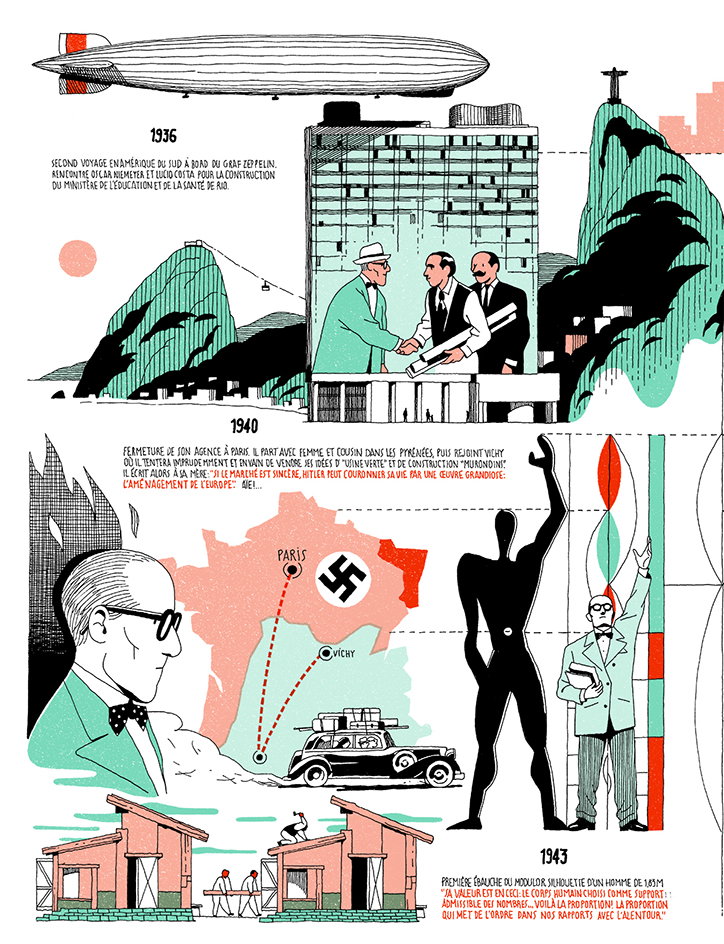
An illustration depicting a timeline of events from 1936 to 1943. It features a zeppelin, figures in suits shaking hands, a map of France with a swastika, and architectural sketches. French text accompanies each date, detailing historical movements and projects.
An illustration of a timeline of architectural projects, featuring a figure in a suit and glasses. The layout includes sketches of buildings and blocks of French text dated 1947, 1950 and 1952.
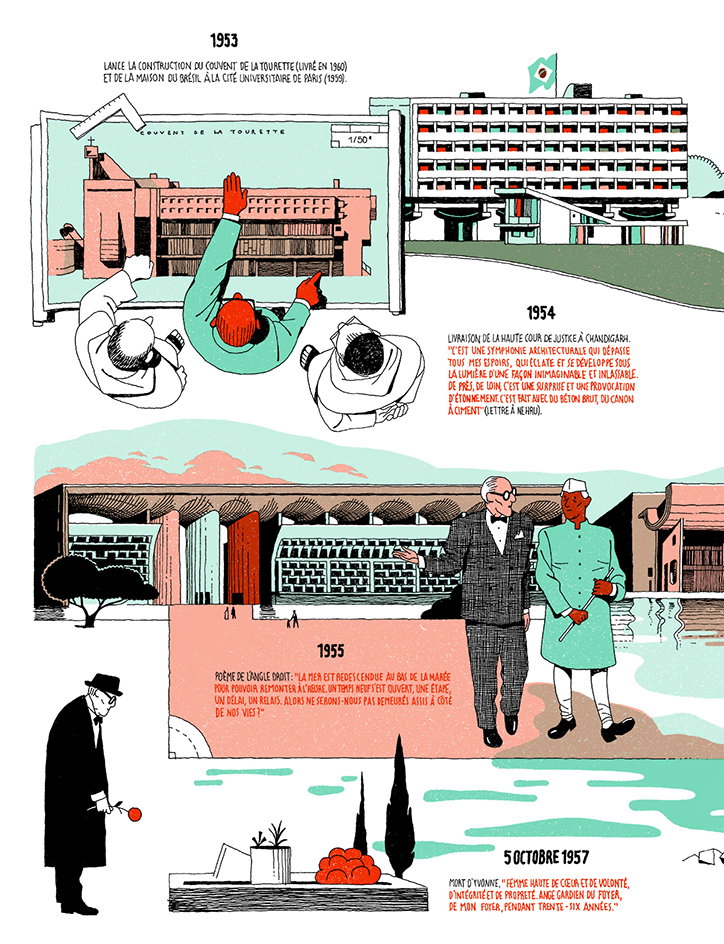
An illustration of a timeline of Le Corbusier’s work, featuring architectural drawings and figures. The layout is divided into sections for 1953, 1954, 1955 and 1957, with French text describing various projects.
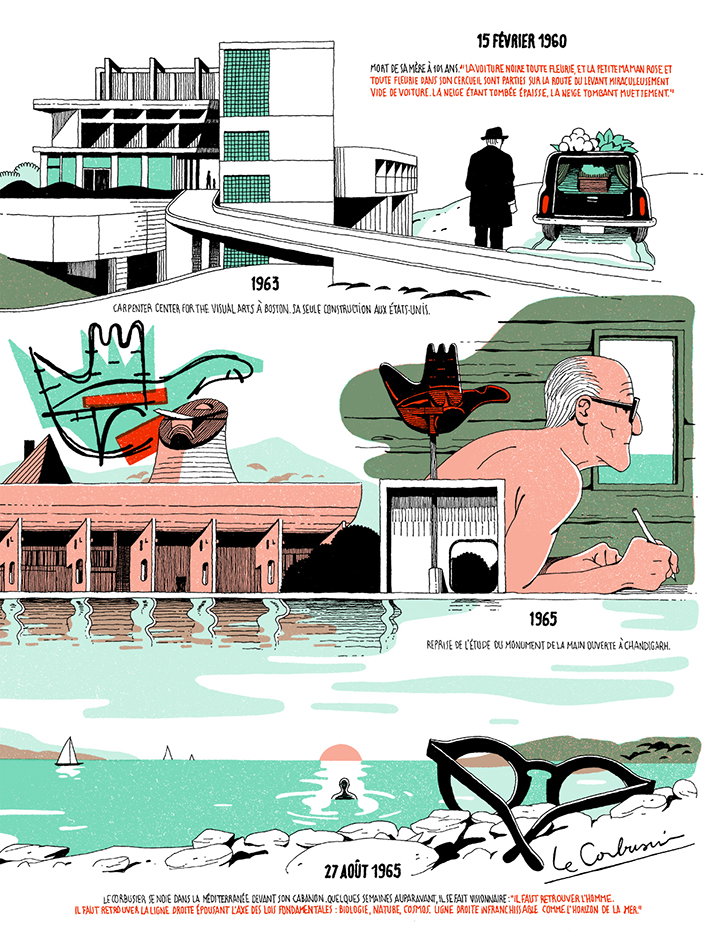
An illustration depicting a timeline of Le Corbusier’s final years. The composition features architectural sketches, a portrait of the architect, and a final scene of a figure swimming in the sea under a setting sun. French text marks key dates from “15 février 1960” to “27 août 1965”.

Share Article

About the Author

Alexander Hawkins

—

It's Nice That Newsletters

Fancy a bit of It's Nice That in your inbox? Sign up to our newsletters and we'll keep you in the loop with everything good going on in the creative world.