


- Words
- Rima Sabina Aouf
- Artwork
- Zach Hackman
- —
- Date
- 1 September 2026
- Tags
How can we claw our way out of bad screen time?
After two decades of convergence in technology design, the door is open to experimentation and alternative visions.
Share
Share

This opinion piece was first published in the Good Screens Report from It’s Nice That’s Insights team. In the age of bad screen time, the report explores the growing appetite for devices that make a positive impact on our lives, and how brands can respond to this moment creatively.
Sam Altman and Mark Zuckerberg have diagnosed our problem with smartphones. “It feels a lot like being jostled on a crowded street in New York,” said the OpenAI CEO while discussing his plans to build an AI-focused antidote with legendary former Apple design lead Jony Ive. We’ve lost the “sense of presence that you have when you’re with other people”, said Zuckerberg, while launching Meta’s wearable alternative, which takes the screen from your pocket and places it, instead, one inch from your eyeball.
Since the Ray-Ban Meta Display glasses were announced in September 2025, Silicon Valley has largely converged on eyewear as the form factor that will replace the smartphone – or at least significantly augment the way we interact with it – for an age of agentic AI. The preceding year’s frenzy of short-lived alien hardware, from the Rabbit R1 to the Humane AI pin, has since been replaced by a steady drumbeat of other eyewear offerings from Google, Samsung, Snap and several smaller companies, with a version from Apple rumoured to be on the way.
“2026 can presumably only be termed a tech-lusterfuck.”
Rima Sabina Aouf
But have the juggernauts of the tech landscape correctly identified the cause of our current digital malaise, let alone the solution to it? I’m not so sure. It’s true that many of us report feeling addicted, stressed and out of control with our screen time and are in search of something different. It’s also true that well-executed in-lens display glasses like Meta’s are impressive, recalling the rush of new functionality that made the iPhone so transformational when Steve Jobs held it up on stage at MacWorld in 2007. However, many products replicate and in some cases intensify the problems that have been fermenting for years, rather than solving them. If the Financial Times crowned 2018 the year of the “techlash”, 2026 can presumably only be termed a tech-lusterfuck.
Above all, these problems are structural. Smart glasses and other such innovations might diminish the “bad screens” of smartphones, but the business models built on the attention economy and maximal data exploitation remain the same and form a fundamental part of our uneasy relationship with tech.
Zach Hackman: Good Screens, for It’s Nice That
“This one device to rule them all does everything, but it does no one thing particularly well.”
Rima Sabina Aouf
These are also problems of design. Starting with the Nokias and Blackberrys of the early 2000s and accelerating with the arrival of the iPhone and smartphones running Android OS, we have witnessed a great convergence, where the single-purpose objects that used to make up our lives – music players, cameras, calendars, notebooks – have been subsumed into one all-encompassing piece of hardware.
This one device to rule them all does everything, but it does no one thing particularly well. It’s a fine media player, not a great one. A fine e-book, wallet, timer, calculator, but not a great one. Worst of all, going to use any one of these tools opens up the danger of becoming distracted by another, especially any that have sent push notifications – curtailing you from performing your desired function before you’ve even started.
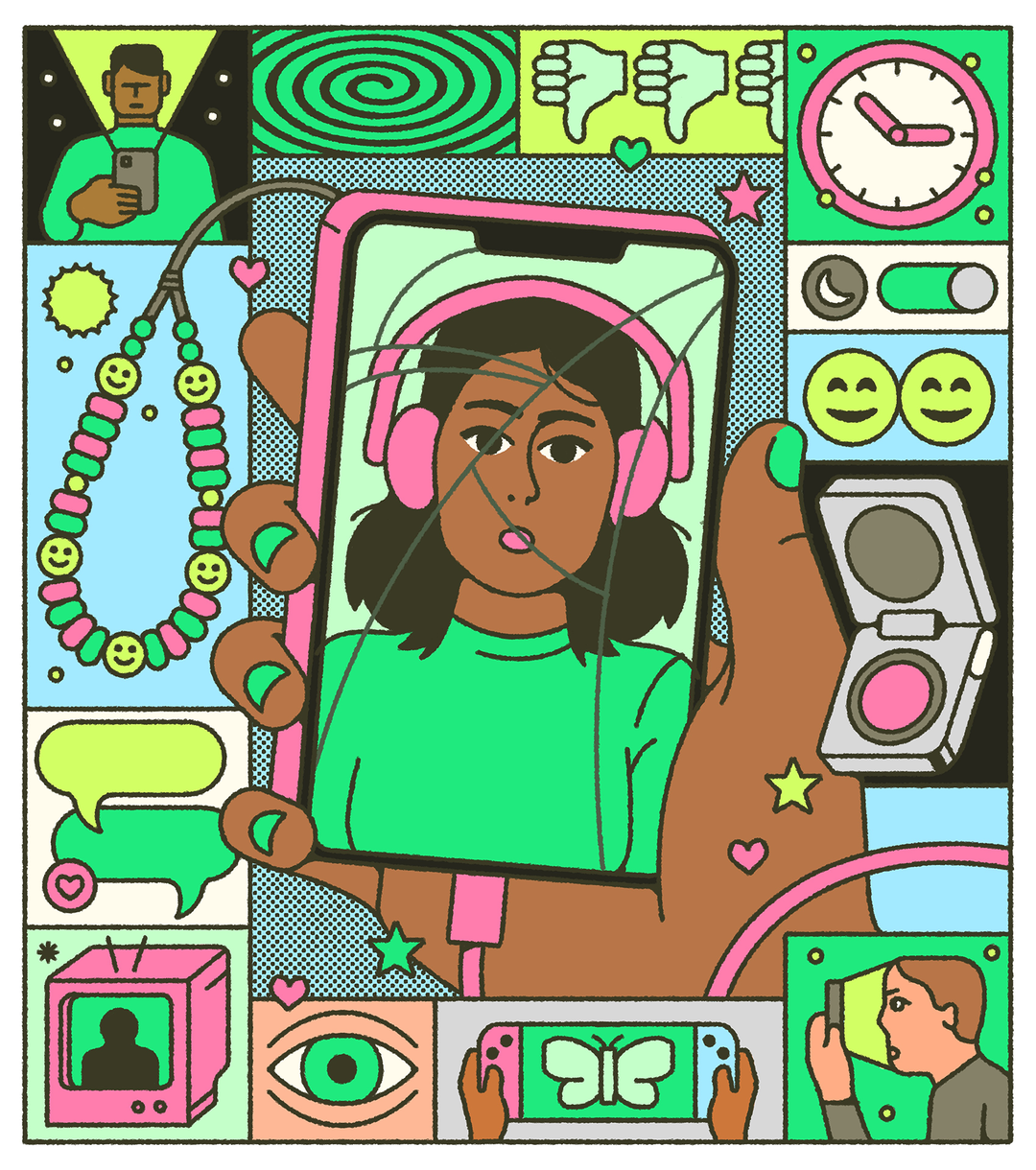
That is why, at the fringes of consumer technology, a movement towards device divergence has been quietly, haphazardly building for several years. This is especially true of Gen Z, which has embraced devices such as the Kodak Charmera, a digital keychain camera, and the viral homemade payment wand, recently adapted by tech company Cash App into a compact NFC-powered accessory for phone-free purchasing. This steady deconstruction of the smartphone led product design students at ECAL to imagine future versions of the device, including one designed as a modular keychain of charms at Milan Design Week 2026.
Zach Hackman: Good Screens, for It’s Nice That

This is a probably an extreme we are unlikely to reach, but nevertheless, the bubbling consumer desire for single-purpose objects – sometimes linked to nostalgia, sometimes welcoming of new form factors – has opened up opportunities for smaller technology brands to be truly creative and meet the moment with hardware that is as charismatic as it is functional. A recent example is Swedish brand Atonemo’s Streamplayer and even more so its NTS Radio Player with its big, mash-me Radio 1 and 2 buttons and its wheel of gleeful genre icons. The device blends the analogue and the digital, letting users access streamed music without having to interact with their phone screen.
It is impossible to overstate the impact of another Swedish company, Teenage Engineering, in this space, both through its own products and as a founding partner of indie-cool phone brand Nothing. They have helped bring colour, playfulness and physical interaction to the forefront of technology design in a way that’s been rare in the mainstream over the last two decades and helped cement the audio-object aesthetic as the peak of desirability.
“Hardware choices mean little without also addressing the underlying systems of power.”
Rima Sabina Aouf
Part of the hardware resurgence is the recognition that a physical object has a power that mere software does not. Social media blocking apps and smartphone screen customisations are nice but ultimately limited in their ability to build healthy screen habits, as studies show that the mere presence of a person’s smartphone in the same room reduces their cognitive capacity. This is where “calm technology” devices like the Light Phone, Brick and reMarkable tablet come into their own, acting as a visual cue for healthier routines.
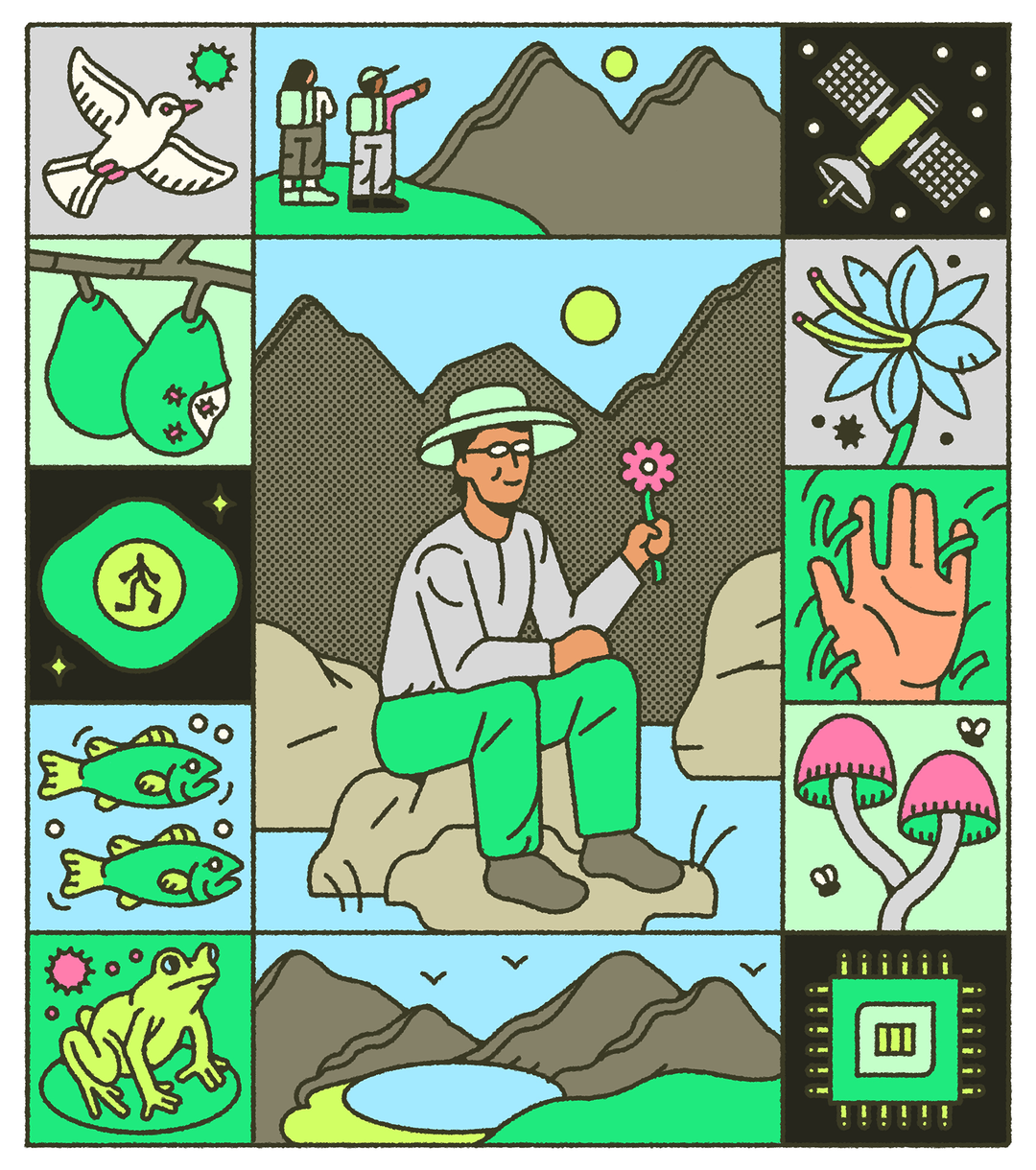
However, if brands genuinely want to unpick some of the damaging patterns of consumer technology today, their hardware choices mean little without also addressing the underlying systems of power. One of the viral trends of the year has seen DIYers welding Raspberry Pi computers into Polly Pocket shells, prompting observations that the “coolest girls you know are building cyberdecks”. Based on open-source designs, this trend is not just about aesthetics – it’s also a subversive grab at ownership and control over technology in the face of corporate rapaciousness. Even if a lot of those off-grid projects end up on-grid, the ethos is the same.
Zach Hackman: Good Screens, for It’s Nice That

It’s difficult, but not impossible, for commercial projects to meet this challenge. US company Framework manages it with its modular, customisable and attractive computers, designed to teach customers to repair and mod their own tech. So too does Swiss company Punkt, whose pleasantly calm-looking smartphone also promises the enhanced privacy and security of an underground vault. With the shift in public mood, even big companies locked into maximising shareholder returns may have the incentive to get ahead of government regulation by really addressing safety, wellbeing and data protection, rather than tinkering at the edges.
We are entering an exciting decade. Since the iPhone launched nearly 20 years ago, the way we interact with technology has looked much the same for almost everyone on the planet, but now the door is inching open to diversity, experimentation and alternative visions from small brands and creatives. It will be chaotic. There will be flops. But for those who show their users real respect, it is a time to shine.
Zach Hackman: Good Screens, for It’s Nice That
Share Article
Further Info
Insights is It’s Nice That’s research department. We inspire and inform the creative teams behind some of the world’s biggest brands, through cultural research to spark brand storytelling, dedicated year-long inspiration packages, and strategic visual trend work. If you’re in need of insights, get in touch at insights@itsnicethat.com.
About the Author
—
Rima Sabina Aouf is a London-based freelance journalist specialising in design, tech, innovation and sustainability. She is a contributing editor at Dezeen and runs the Drek newsletter on AI in design.