

- Words
- Olivia Hingley
- —
- Date
- 18 May 2026
- Tags
The designers injecting DIY charm into Pigeons & Planes’ annual mixtape
Jean Pierre Consuegra and Leo Horton muse on the beauty of long timelines, the power of the Instagram DM and why creative partnerships are best when you’ve got different specialisms to bring to the table.
Share
Share
Designing for music is known for many great things: creative freedom, working with other artists, having fans obsess over your work and seeing it live on t-shirts, album covers and posters across the globe. One not-so-great thing that it’s also known for is its short timelines. Designers in the industry are frequently struck down by colossal briefs with week-long turnarounds, and filing work without feeling they’ve had their chance to make it its best, all part and parcel with a hefty dose of brain fry. But this isn’t the case for Jean Pierre Consuegra and Leo Horton’s work on See You Next Year 3, the annual mixtape of Pigeons & Planes, beacon of the blog era and now iconic music platform. For this project, the pair got something they’d rarely encountered: a long timeline.
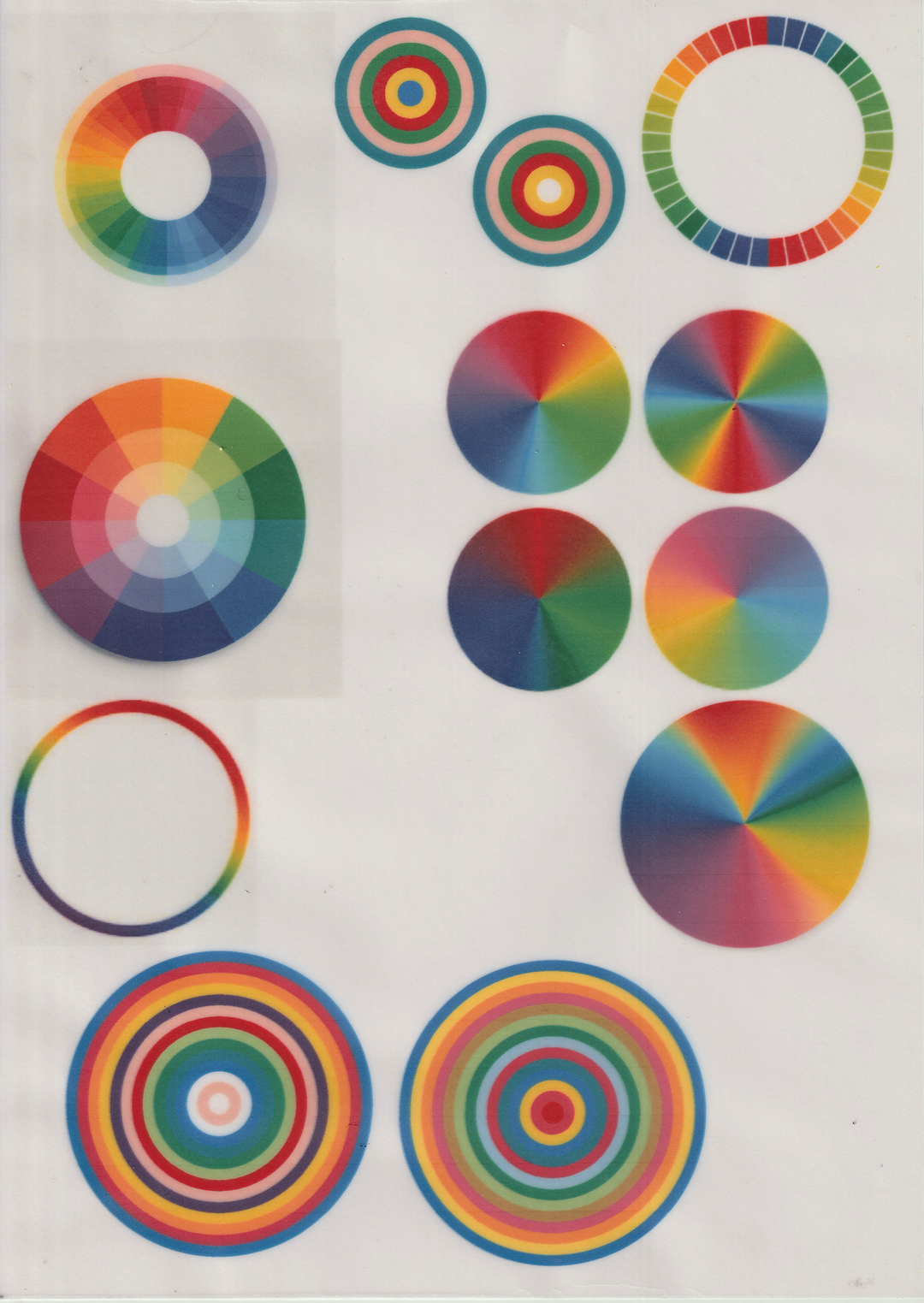
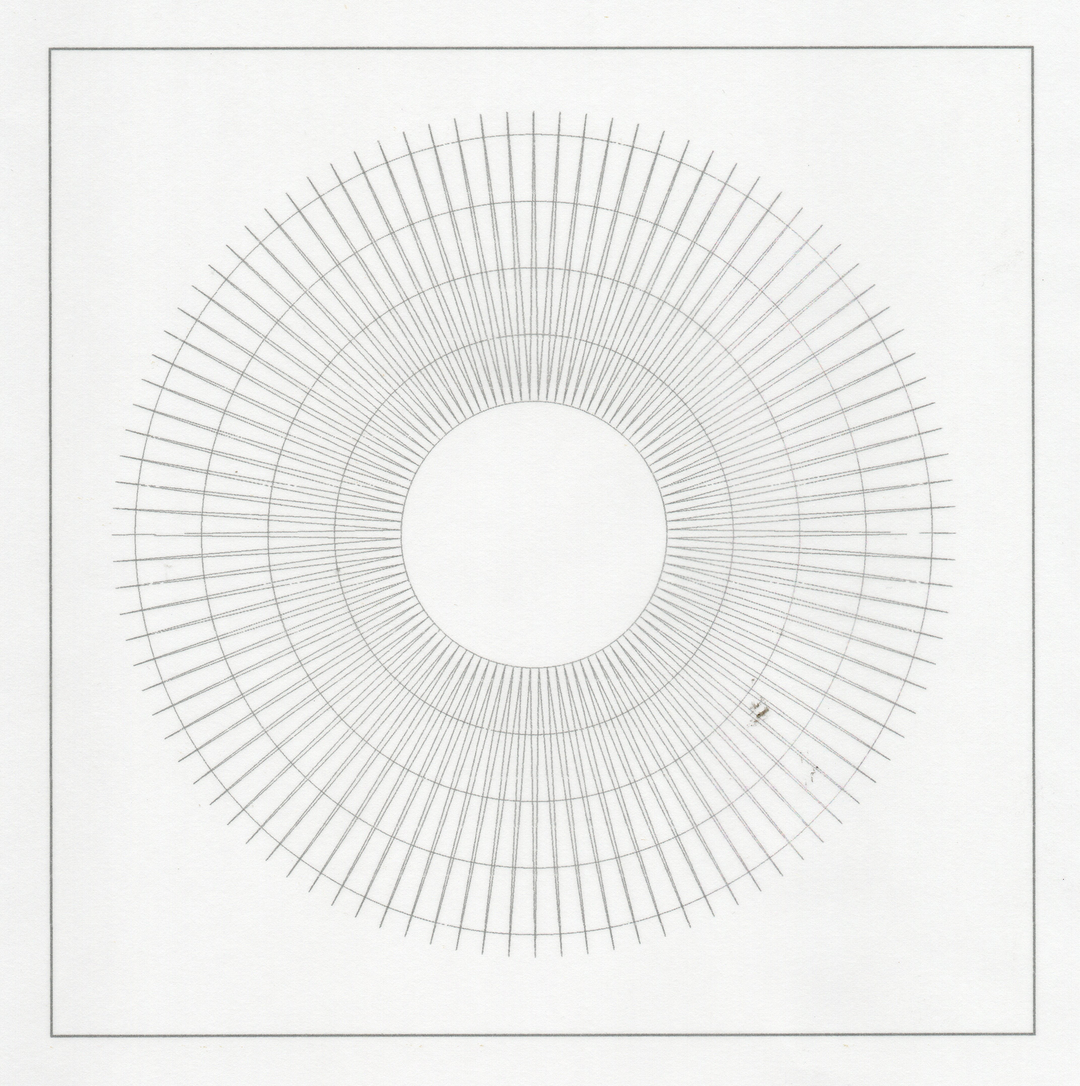
This space meant exactly that – space. To experiment, to iterate, to take time away from their laptops to let ideas marinate, all resulting in a very weighty reference folder overflowing with possible avenues and rejected drafts (it’s very big, we saw it). For the mixtape – which brings together some of music’s most exciting emerging talent on collaborative tracks – Jean and Leo wanted to echo the DIY ethos, turning to scanners, candy-coloured stamps, handwritten wordmarks, impulsive screenshots and a smattering of ants (because why not?), to achieve it.
Just before the mixtape’s release, the two designers chatted to It’s Nice That about the project, as well as musing on the beauty of long timelines, why creative partnerships are best when you’ve got different specialisms to bring to the table, and just how important a random Instagram message can be in winning your dream commission. In the rallying cry of Jean Pierre: “Always DM people, man!”
INT:
How did the Pigeons & Planes mixtape project land on your desk, and why was it one you wanted to work on together?
Jean Pierre Consuegra (JPC):
I’ve been working at Pigeons & Planes (P&P) for about a year now as a kind of art director. But this is a big annual project, separate from our regular work, which has a much bigger scope – so I definitely wanted help! I’ve loved Leo’s work since I saw it a year ago when we worked independently on Clairo’s work. We hopped on a meeting after I messaged him telling him I loved his work and all that stuff. And was this the first project that we worked on together, right?
Leo Horton (LH):
No, it was the second! We’d done that poster for All Points East before.
JPC:
Oh yeah! We did like a Lorde poster for a show at All Points East, that went super well. I feel like we meshed together and this was the next thing that came to the table. This is the project that we’ve had the most time on, whereas a lot of the projects that we’ve been taking on have been super quick turnaround. It was nice to sit with all the drafts – we had over 250 drafts of just covers and the singles!
LH:
I would just echo that, I really love Jean Pierre’s work. I feel like we also both kind of bring a lot of different things to the table through our practices. Logos and hand-written things are a bit more up my alley, but Jean Pierre has the ability to really push it to a place where it feels super graphic, maximalist and really special. Both of our highlights meld together in an interesting way.
JPC:
Leo’s a cracked illustrator! And I can’t draw at all. I’ve drawn throughout my life, but I’m really bad at it – I think that’s always been a really big limitation on my end. Leo can whip up some shit up really quickly and his bar, for like ‘goodness’ – sorry, that’s not the correct term! – but it’s so high. You know what I mean? Like he never sends me some like half-assed shit. That’s hard to come by.
LH:
The back and forth we have is also really interesting. During the P&P project, it wasn’t so much that we were both working on the same thing at the same time, but more that we were kind of like climbing up a ladder and like nailing in each rung as we were going.
INT:
It’s a match made in heaven!
JPC:
For sure.
Jean Pierre Consuegra & Leo Horton: Pigeons & Planes, See You Next Year 3 – Rainbow Scans
Jean Pierre Consuegra & Leo Horton: Pigeons & Planes, See You Next Year 3 – Rainbow Scans
Jean Pierre Consuegra & Leo Horton: Pigeons & Planes, See You Next Year 3 – Doodle Explorations
“Music is open to interpretation – it doesn’t really have any existing visual baggage.”
Leo Horton
INT:
So P&P relaunched its website earlier this year after taking it down seven years ago. It’s been really nice to see it return to its roots and get this renewed energy from a longer form approach. How does it feel to be part of this burst of energy, if you could describe it as such? And would you say the mixtape design aligns with this return to this like core values, almost maybe a bit ‘2008’, the year it first launched?
JPC:
It’s really exciting. Alex Gardner is one of the main people there and I saw that he and P&P followed me. I’ve been a fan of P&P for like a long time – I was really into rap music when I was younger. And like the blog era! They were one of the biggest people there. So I DM’d Alex and I was like, ‘I would love to work with you guys in any capacity’, and this was before they had plans to bring back the website. So I got in right before then, and it’s been really awesome. It’s fully back to where they started and they’re starting way more editorial and in-depth content, not just templates on Instagram.
A lot of what we did for this compilation does relate back to everything that I’ve been doing there. It’s very raw, scanned in and textural but also minimalist in ways. Honestly I have to thank Leo for the scanned-in thing. I didn’t have a scanner before I started working with Leo, and I remember for like that Lorde poster he sent me a really like hi-res scan of this thing that he made and I was like, ‘Oh, I should get a scanner! That would complete me.’ So I’ve been just using it nonstop.
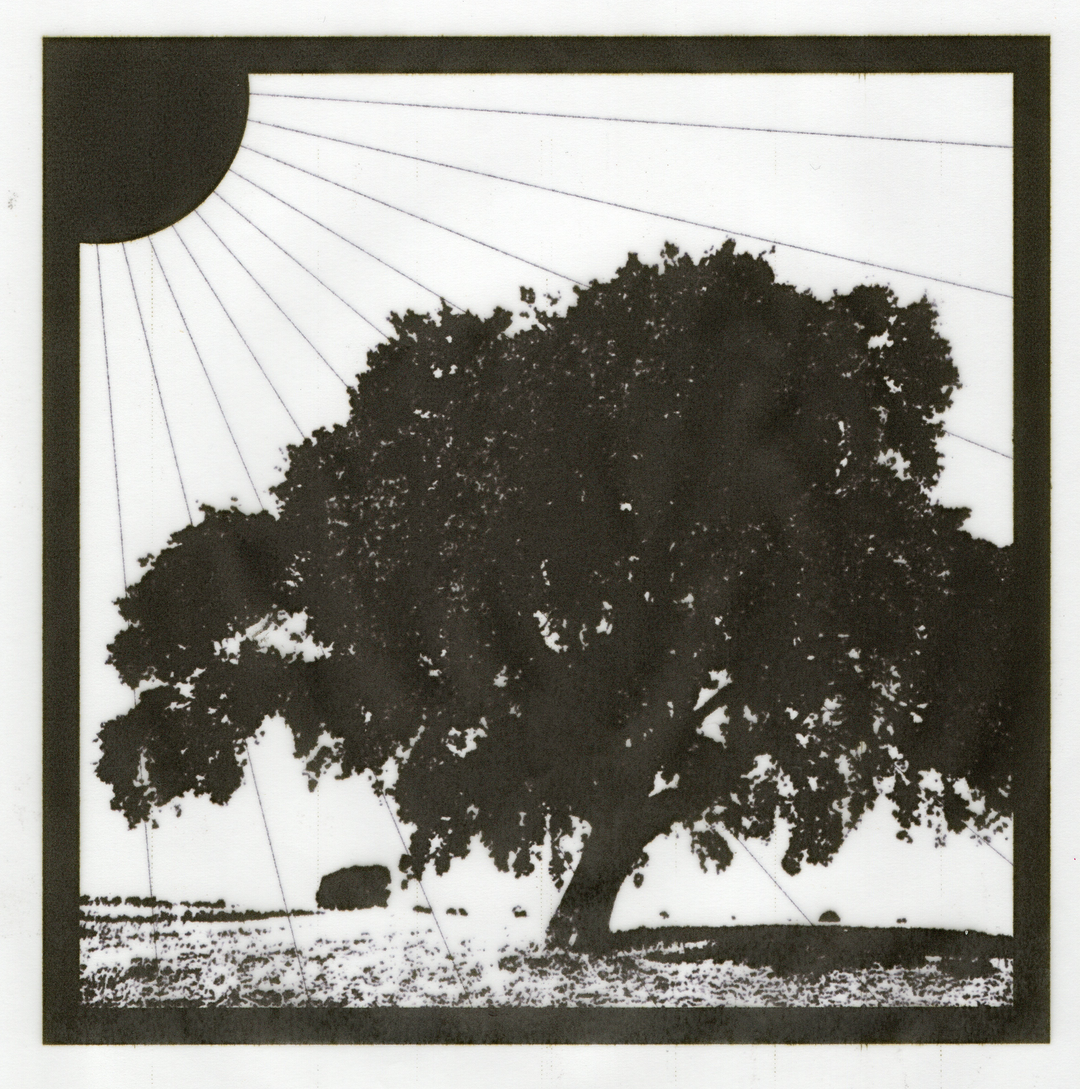
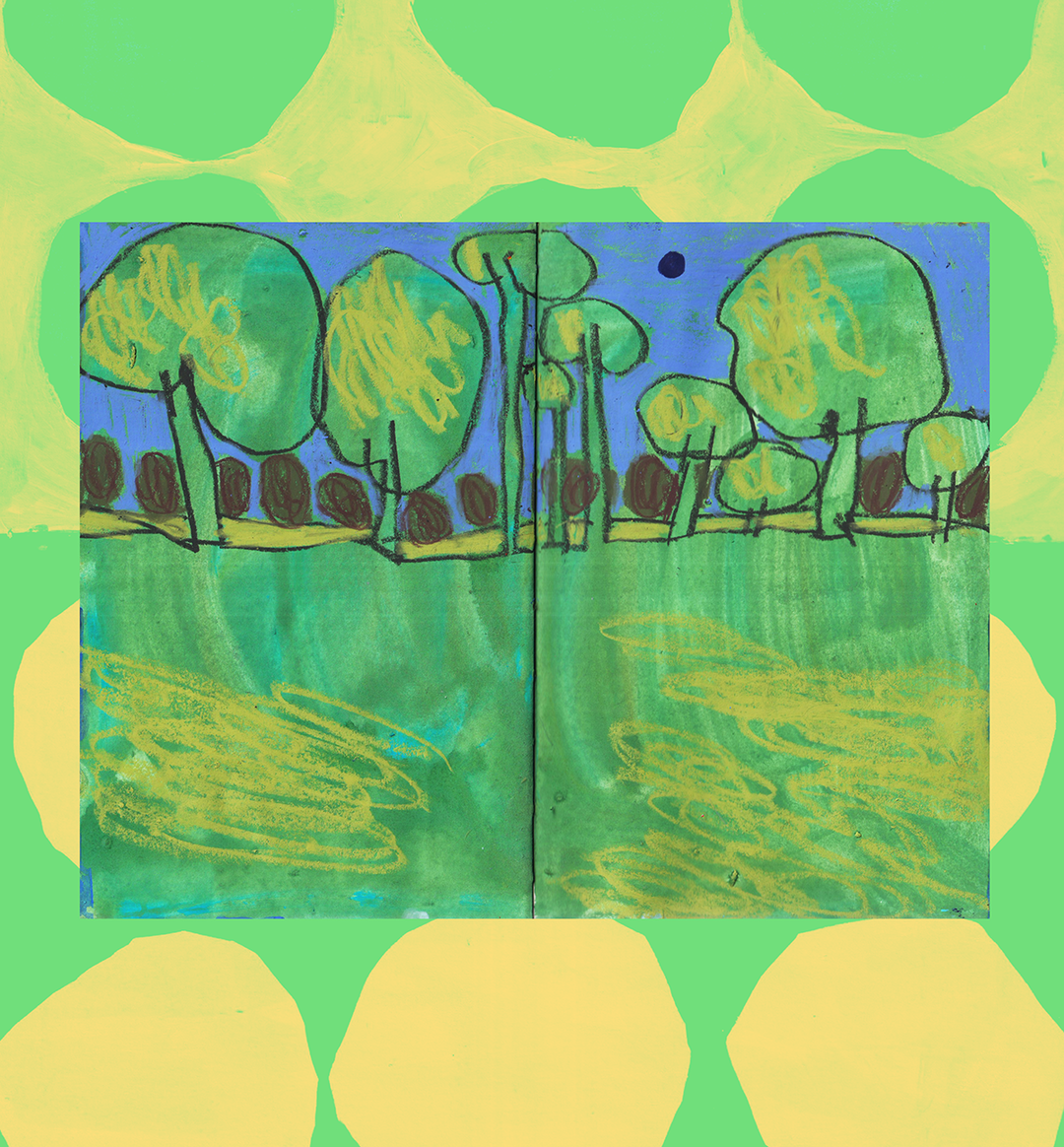
Jean Pierre Consuegra & Leo Horton: Pigeons & Planes, See You Next Year 3 – Tree
INT:
A lot of both of your design work is in the music space. Why is it a world that you enjoy coming back to time and time again?
LH:
I started doing design around music before I even knew I wanted to be a graphic designer. I’ve always loved music, and from a young age I realised that you could approach musicians through social media; I grew up in South Carolina, which isn’t necessarily like the ‘centre’ of arts and culture. To realise that I could have access to these indie artists who I really enjoyed was a wake-up call for me, I saw that it was actually accessible to do this sort of work, and it snowballed from there. It might not be like the most lucrative type of design you could be doing compared to branding or corporate design, but I do think it has this way of linking you to changes in culture, and linking you with fans of artists. The reach, scope and breadth of the design has expansive potential – it really does lead to more things: it lands on people’s laps, and in their phones.
JPC:
I think we’re both cut from that same cloth. I just started designing like six years ago, but music’s been there like the entirety of my life. When I work in the music space, that’s where my best work is created. I’ve worked in branding and editorial stuff, and I feel like when you take the music aspect of it away it’s a lot harder. I find the branding world to be quite difficult to navigate. Hopefully I get better at it in the future! The music world can be a lot more creative and a lot more fun to work with because you’re working with other artists: that bounce between the two, you can come up with great ideas. I think that design in the music industry is light years ahead of design in the branding world because of that. It’s not like the most lucrative thing, but, you know, we live off of it.
LH:
I feel like music is open to interpretation – it doesn’t really have any existing visual baggage, maybe when you get it. So maybe designers who are more inventive have a lot to sink their teeth into and we can express ourselves a bit more than other genres of design. I really love that aspect.
“Always DM people, man!”
Jean Pierre Consuegra
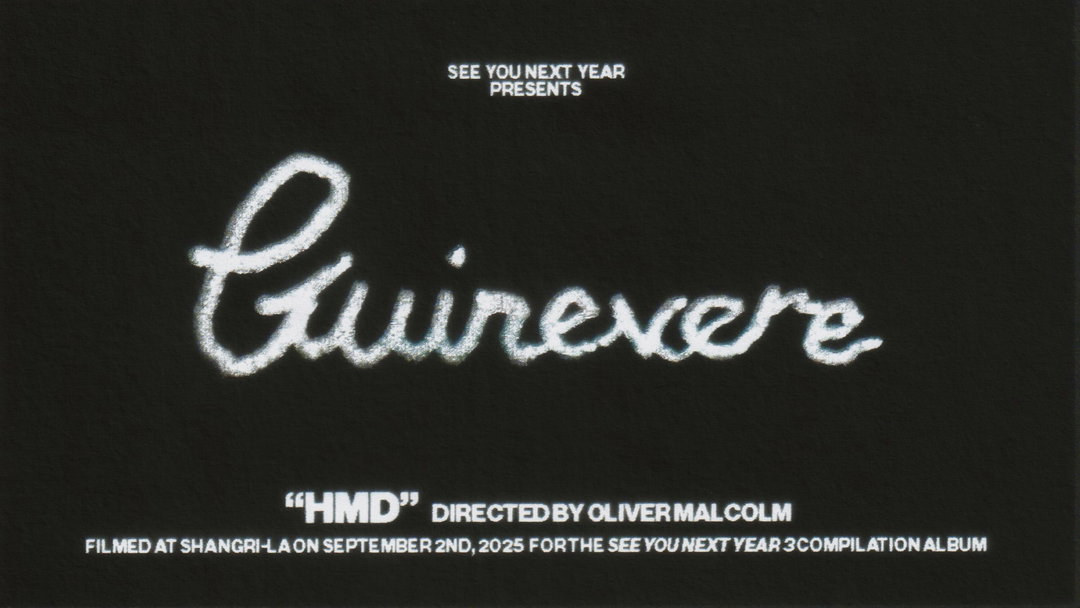
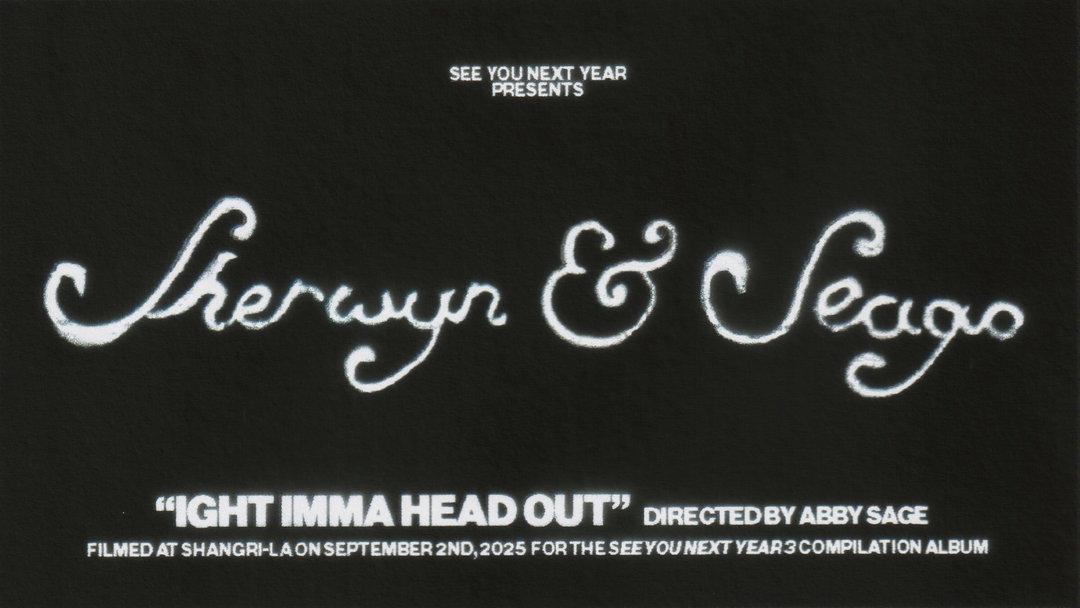
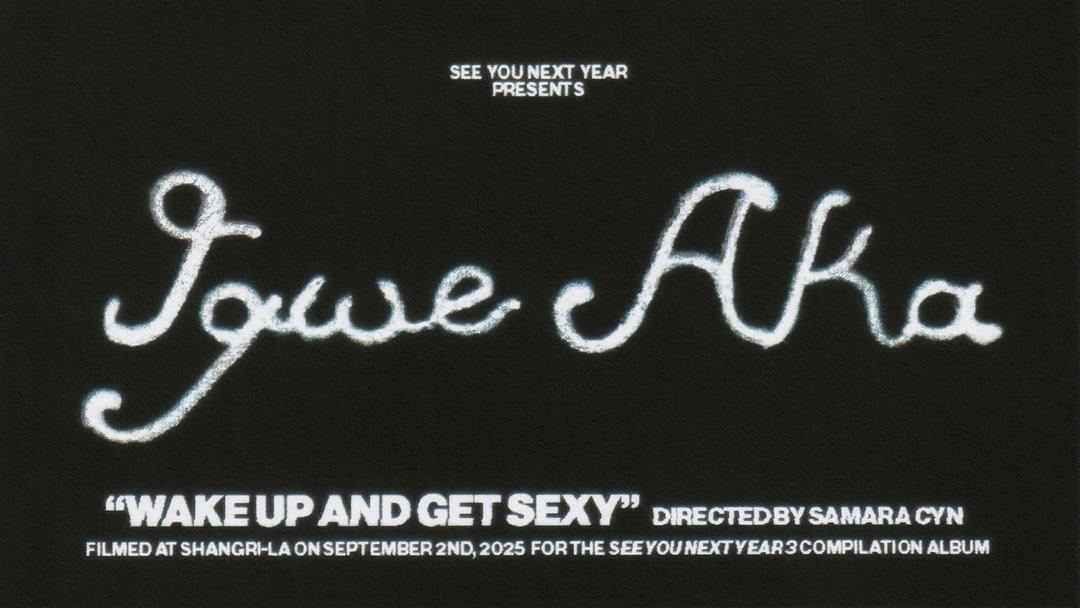
1 of 5
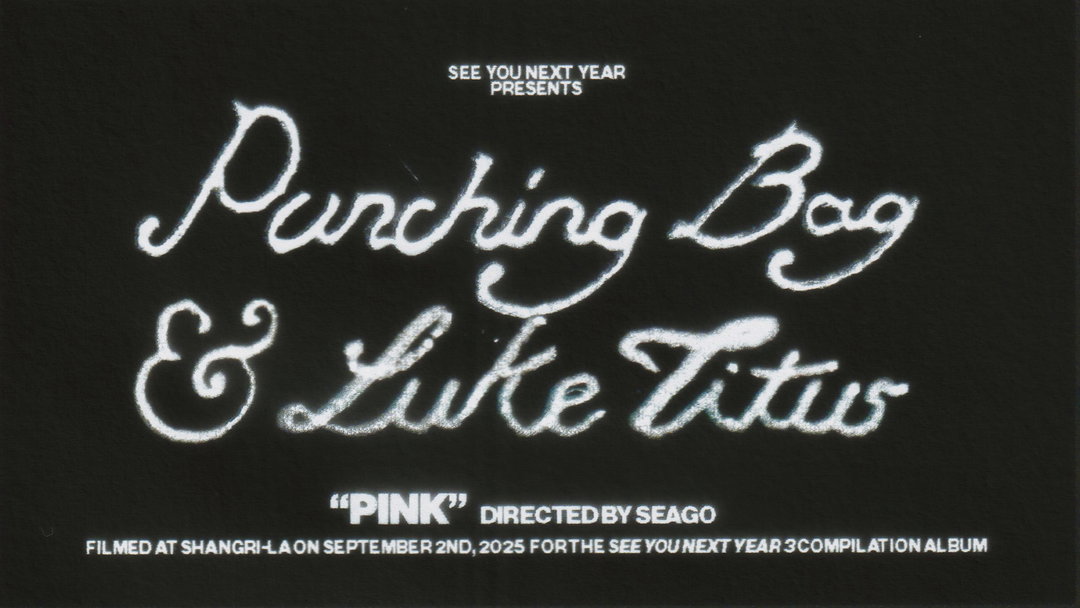
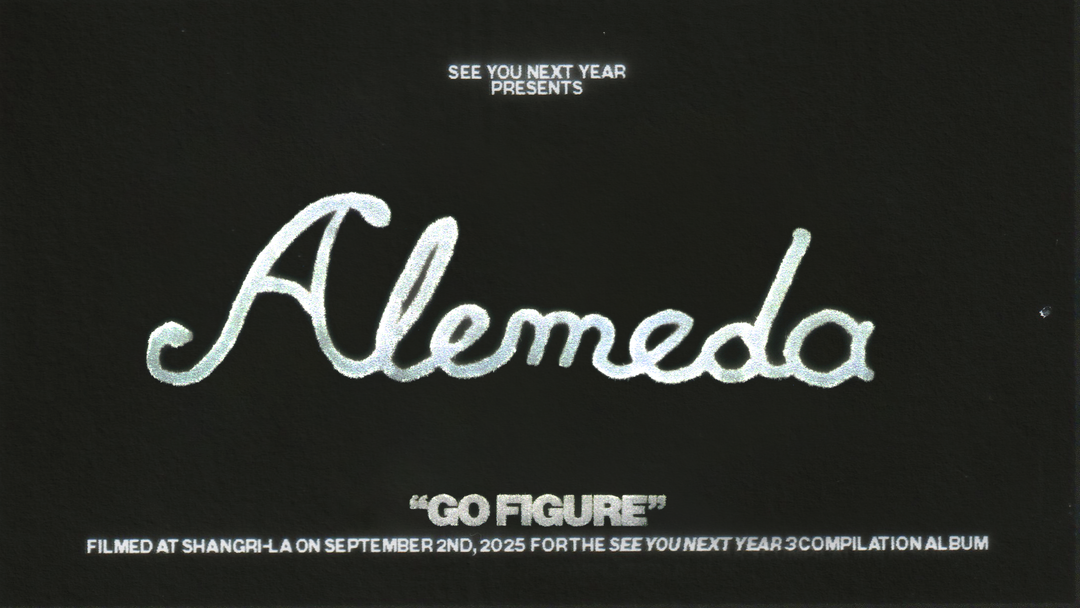
Jean Pierre Consuegra & Leo Horton: Pigeons & Planes, See You Next Year 3 – Title Cards
1 of 5
Jean Pierre Consuegra & Leo Horton: Pigeons & Planes, See You Next Year 3 – Title Cards
INT:
You mentioned both working on the Clairo stuff, and I think for me that’s some of the best design to come out of these past few years. The people that have been brought onto that project, the ecosystem and how it feels different but fits together is amazing.
JPC:
It’s like the Avengers of design!
INT:
It really is!
JPC:
I got brought in a bit later, for the anniversary side of Charm. But before the anniversary, it had been out for a year, and I remember seeing that list of designers and I was like, ‘What the fuck? I need to somehow get on that list’ – and thank God I was able to do that! Without that project, Leo and I wouldn’t even be working together. That’s been the best thing that’s come out of the Clairo thing. I’ve never worked with anybody at this capacity before and it feels so fucking good to be able to work with someone else, because this job is so isolating!
LH:
It’s also really cute, I feel like all the Clairo designers at some point kind of all became ‘professional friends’. It sort of became a nice school of designers in some sense, linked together through that. So shout out Jimmy Booey who’s her artistic director for digging deep and finding all these different creative folk to get involved.
JPC:
Yeah. And always DM people, man! If you see someone that’s following you and they have mutuals with someone, just DM them. That’s exactly how I got that as well, I just DM’d Jimmy because he followed me and I was like ‘Please, please!’
INT:
The power of the DM.
JPC:
No, really!
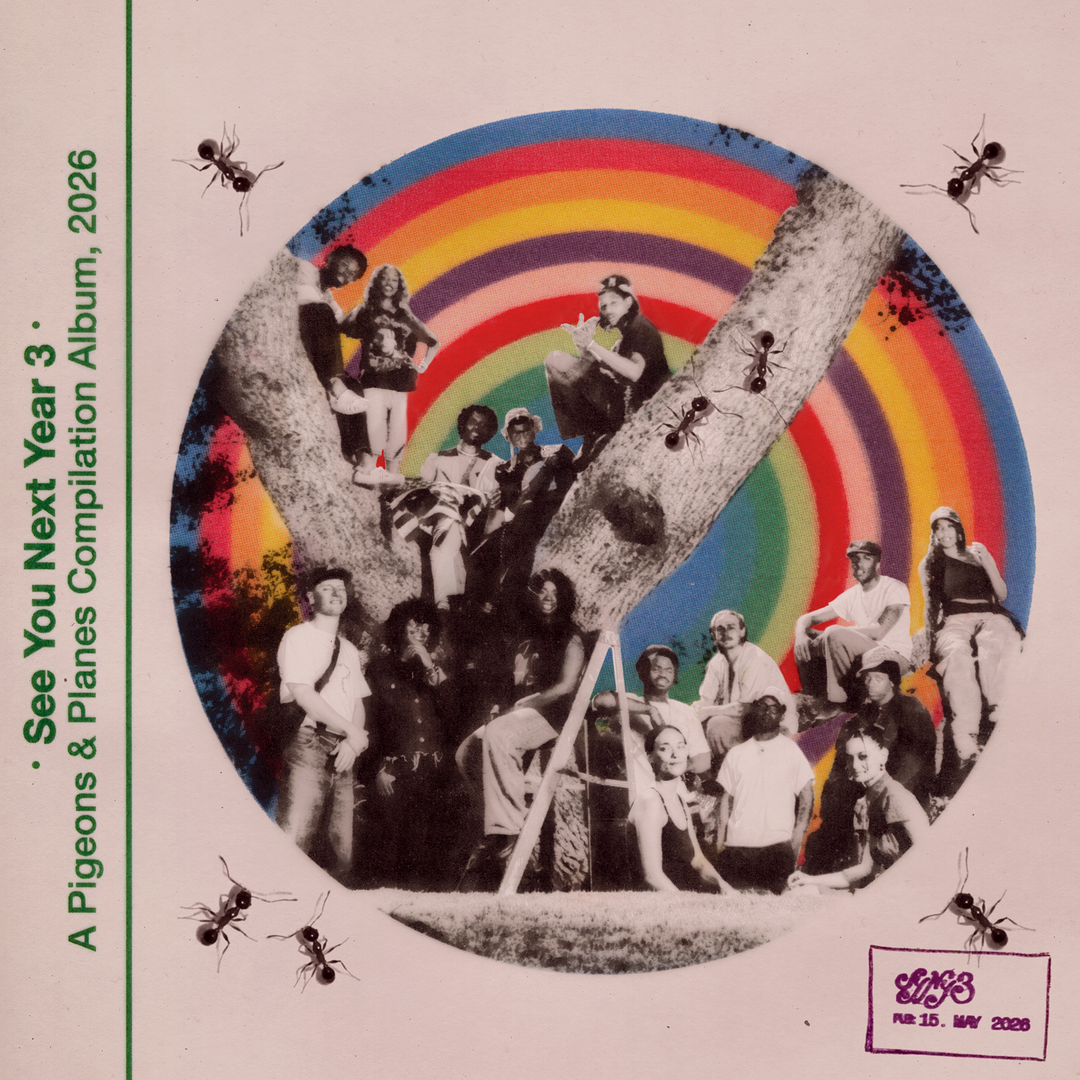
Jean Pierre Consuegra & Leo Horton: Pigeons & Planes, See You Next Year 3 – Front Cover
INT:
So collaging, in both the practical and broader sense of the word – taking different things and sticking them together – is present in both your practices, but in different ways I’d say. How did you bring it into the P&P project?
LH:
I feel like Jean Pierre is definitely a maestro of collage. I do a lot of collage work, image treatments and scene building based on collaging in little elements and collecting them to build a bigger picture. In this context I felt like I was creating the base elements that would be getting collaged; we knew we would be kind of working in this collage-y, cumulative way. We really wanted to use photographs we were given to highlight the musicians; at its core the album is about celebrating these rising artists, so we had a lot of video content and photo content that we wanted to work with. When it comes to smaller elements, like the stamps or the lettering, it was a matter of having this massive collection of content that we could pull from, that we could mix and match rigorously, getting all these nice little building blocks and putting them together until it feels full and rich, like its own little world.
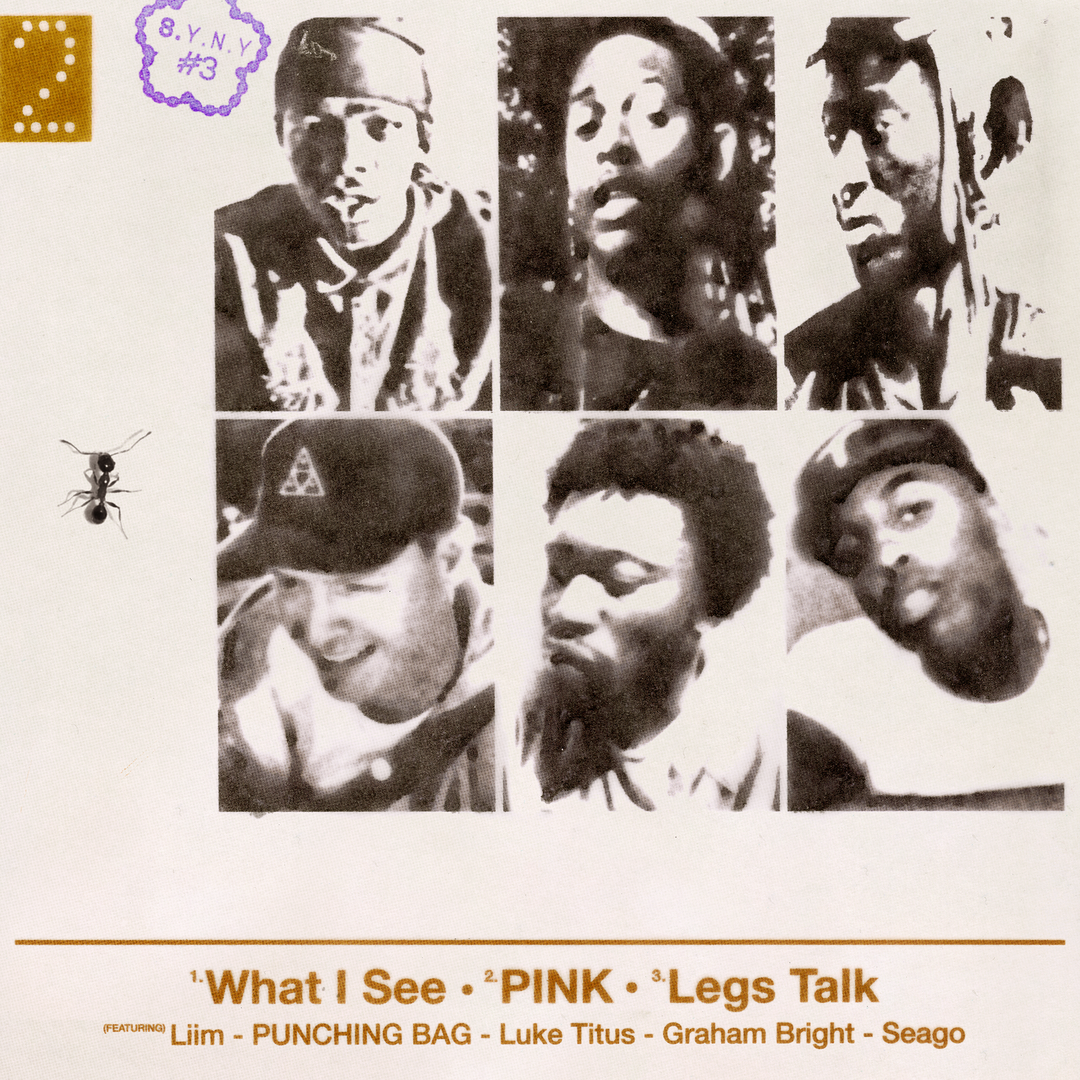
Jean Pierre Consuegra & Leo Horton: Pigeons & Planes, See You Next Year 3 – Album and Single Drafts
“It was a matter of having this massive collection of content that we could pull from, that we could mix and match rigorously.”
Leo Horton
INT:
That’s a lovely way of putting it. On incorporating this video footage, what was the process of working out what parts and moments of this moving image would be right for the final work?
JPC:
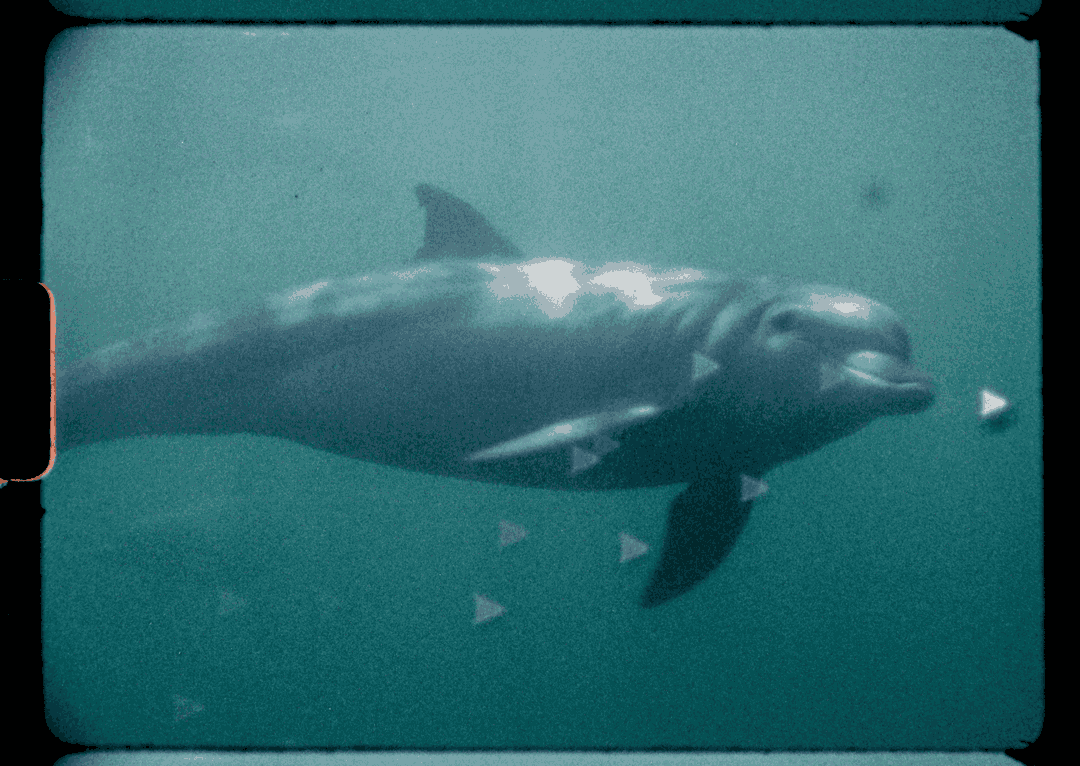
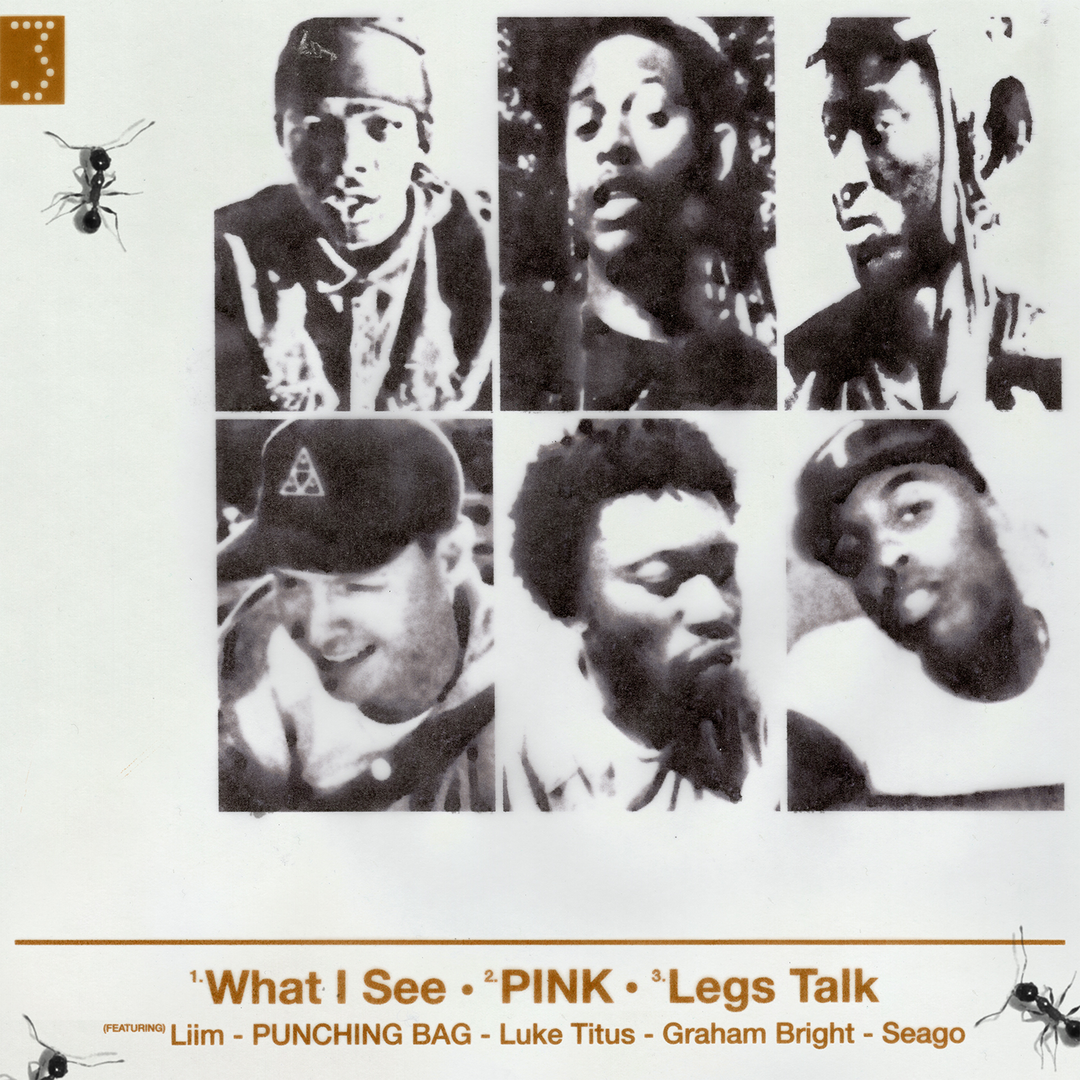
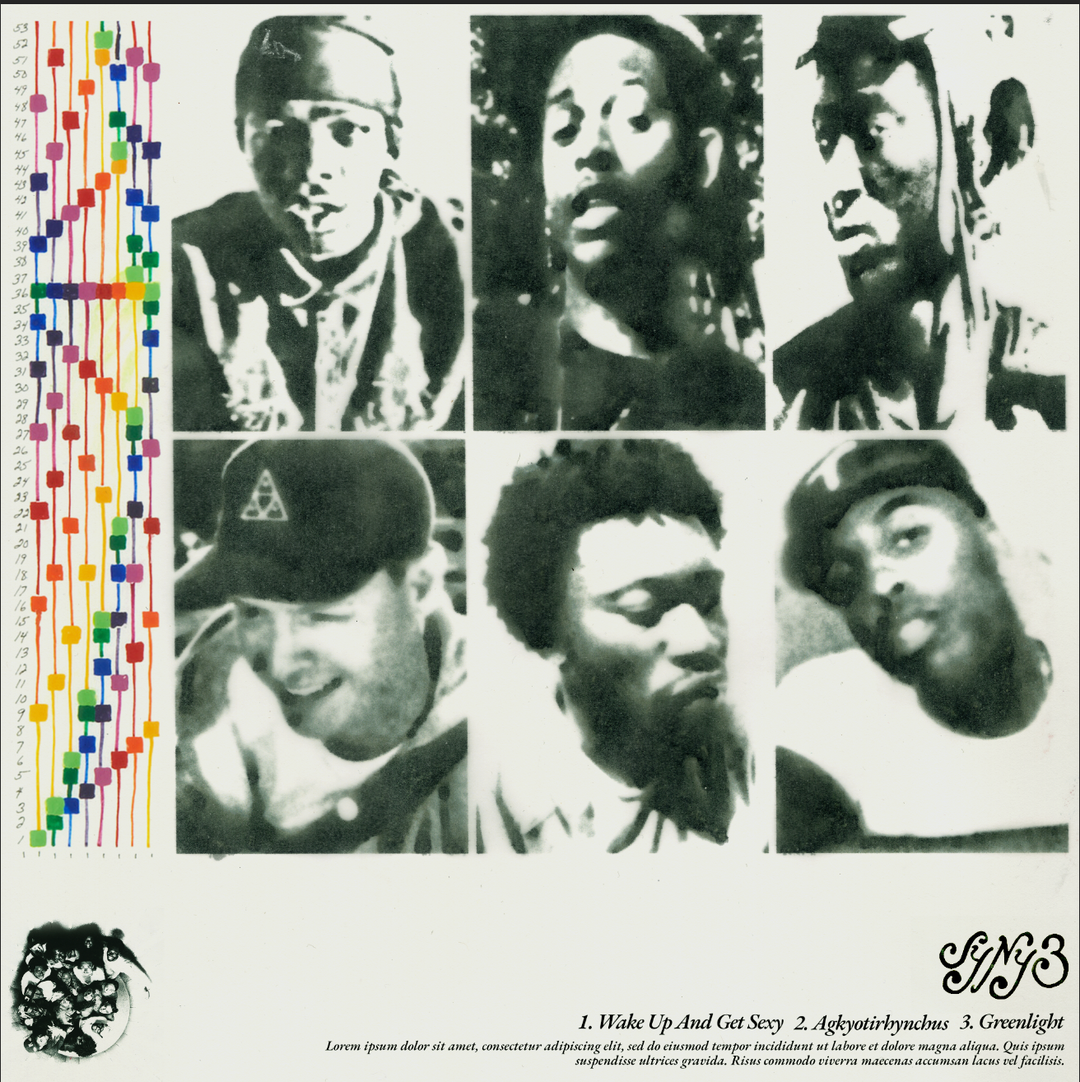
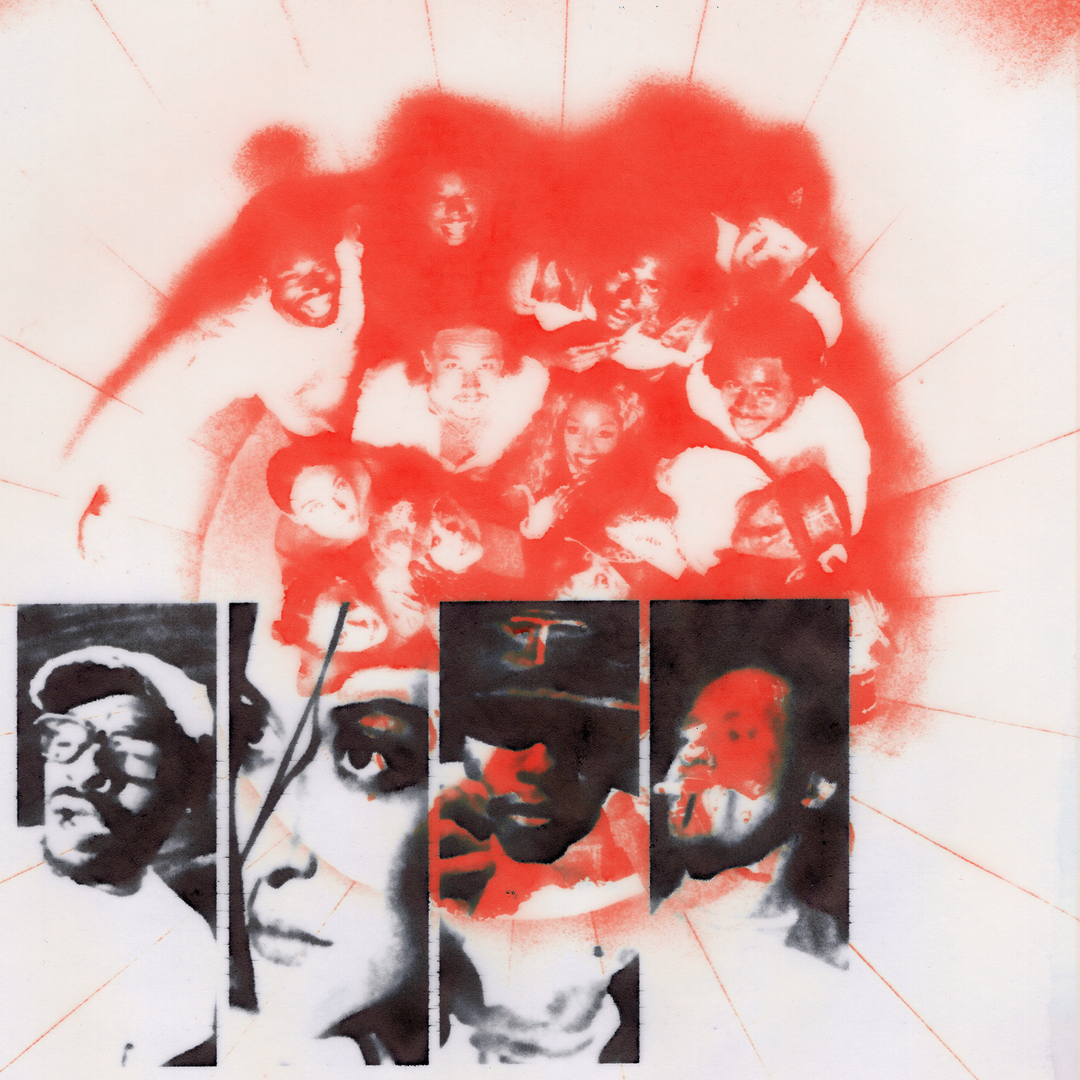
I skimmed through all the videos and watched them over and over again to get the strongest portrait of the artist. At first we tried like their entire bodies in the frame and then we tried a couple versions of them like very close up, and then a little bit less close up. I legitimately just opened up the videos on the web provider that we stored them on and then screenshotted them. Then we printed them on translucent paper to get that inky, blotchy effect, then we scanned them back in and then removed and placed them where they needed to be with blending modes, so we didn’t lose that softness. I think if you were to cut them out you’d have harsh edges – that’s not what we wanted.
LH:
I definitely think working from the videos and from these random screenshots gave us this low resolution texture, which we interpreted as a softness. We really wanted to highlight not the ‘pixelatedness’ of it, but rather the blurriness. The blurriness makes them like iconic portraits that feel candid as well, which you might not get from a proper photo shoot, where it’s very staged or everybody’s posed and feeling cool.
JPC:
We wanted to accentuate the DIY rawness of all those videos too, and a lot of the music kind of has this DIY tone to it too. A lot of the songs were put together pretty quickly, and I think that’s part of the charm of it all. That’s something that we wanted to accentuate with the design tone: this group of people just got together and just made these songs. It wasn’t that fast for us to do it, but like we could fake it – we could make it look quickly put together; the compositions are all pretty rudimentary and pretty straightforward.
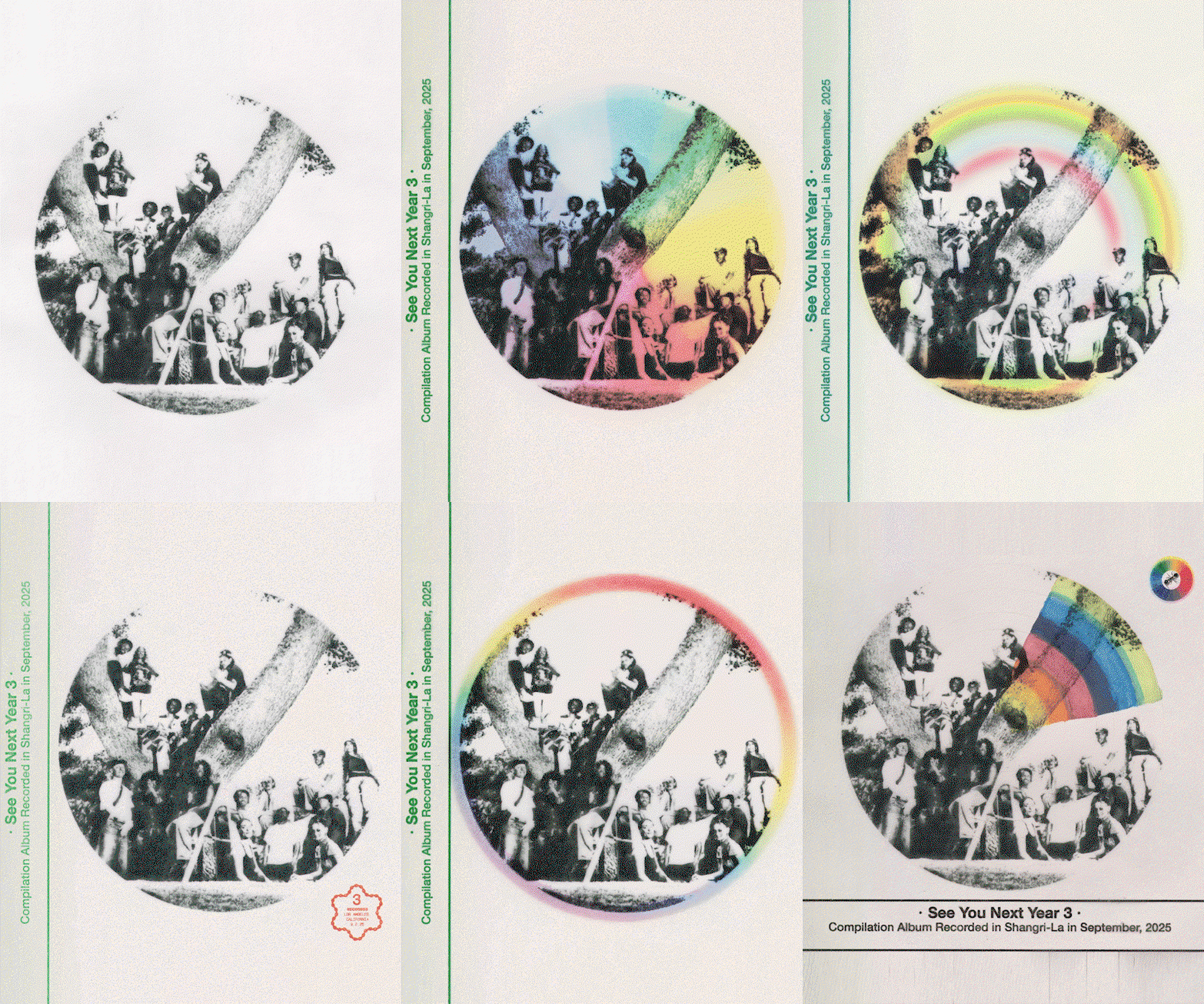
Jean Pierre Consuegra & Leo Horton: Pigeons & Planes, See You Next Year 3 – Album and Single Drafts

Jean Pierre Consuegra & Leo Horton: Pigeons & Planes, See You Next Year 3 – Wordmark
INT:
On the custom wordmark and the title cards, they have this lovely hand-drawn almost quite like ethereal feel to them. How did they come to life?
LH:
We pulled together a lot of different scripts and references – that’s part of our practice whenever we’re starting off a project. I really love these much older references, turn-of-the-century, 1800 into 1900s-era design and lettering. I had a lot of old postcard references and these old scripts, I think they’re timeless in a special way. Honouring that felt important and I think it highlights like these different voices in a way that feels a lot more personal, a lot more human-centric than if we were to go for something more rigid, more digital or serif-y.
JPC:
There’s not even a vector or anything for the wordmark, because even getting into the vectoring of it would have just looked too crisp. I just told them to use the scan and put it on a multiply layer if it’s on black and a screen layer if it’s on white and all that stuff.
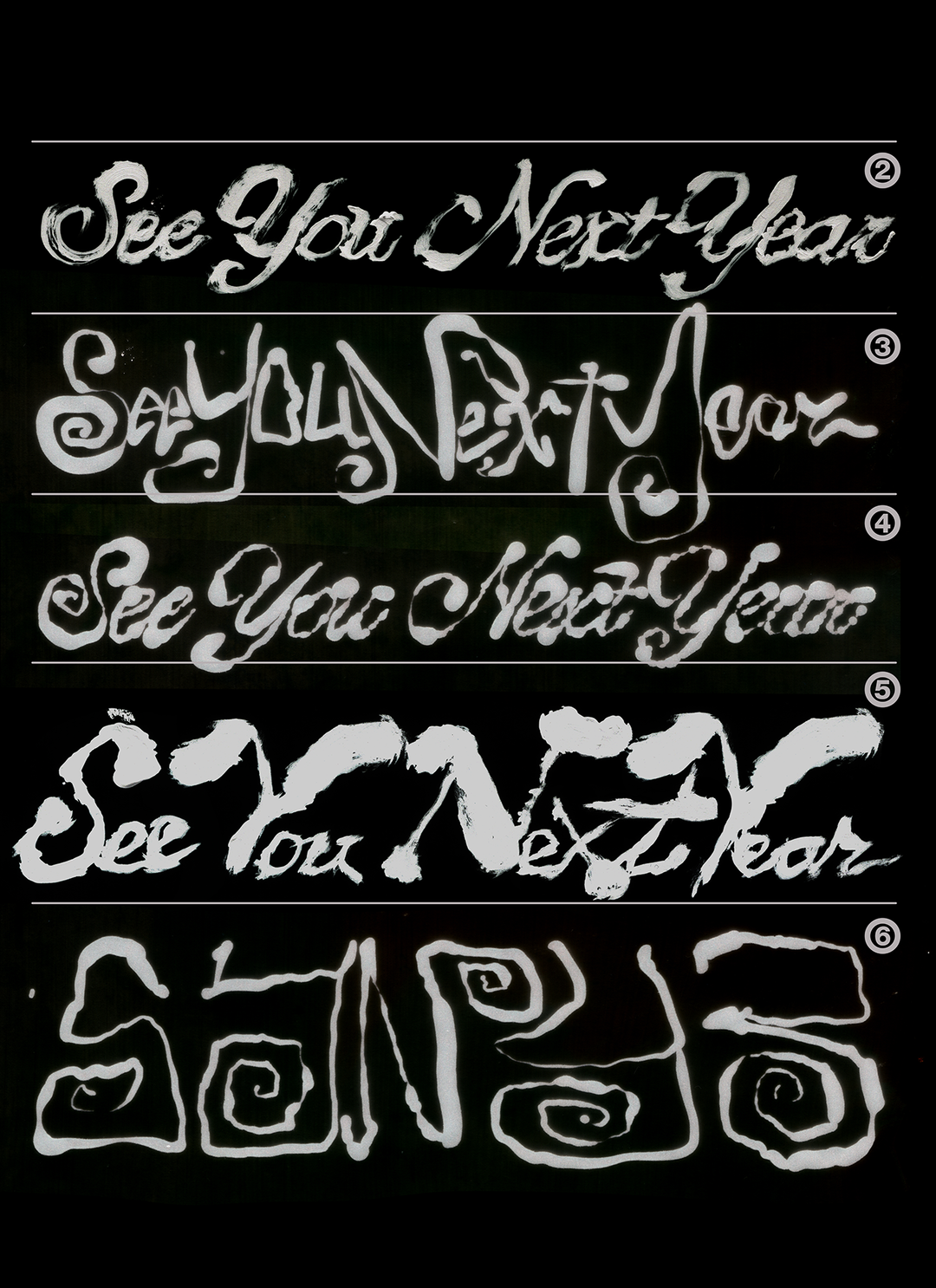
Jean Pierre Consuegra & Leo Horton: Pigeons & Planes, See You Next Year 3 – Wordmark Explorations
1 of 6
Jean Pierre Consuegra & Leo Horton: Pigeons & Planes, See You Next Year 3 – Album and Single Drafts
1 of 6
Jean Pierre Consuegra & Leo Horton: Pigeons & Planes, See You Next Year 3 – Album and Single Drafts
“There were versions with a fuck-ton of ants, there were versions with a medium amount of ants, and then we landed on a very minimal amount of ants.”
Jean Pierre Consuegra
INT:
I love all these little recurring moments and motifs littered throughout the whole project, the horde of ants and the illustrative stamps. How did they come to exist and what do you think they add to the overall design?
JPC:
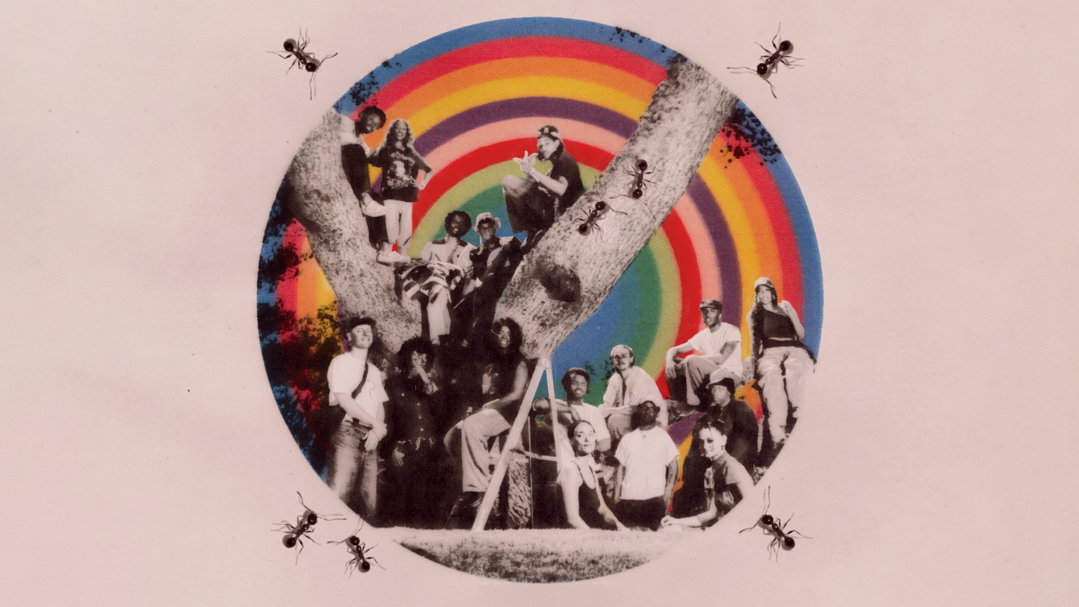
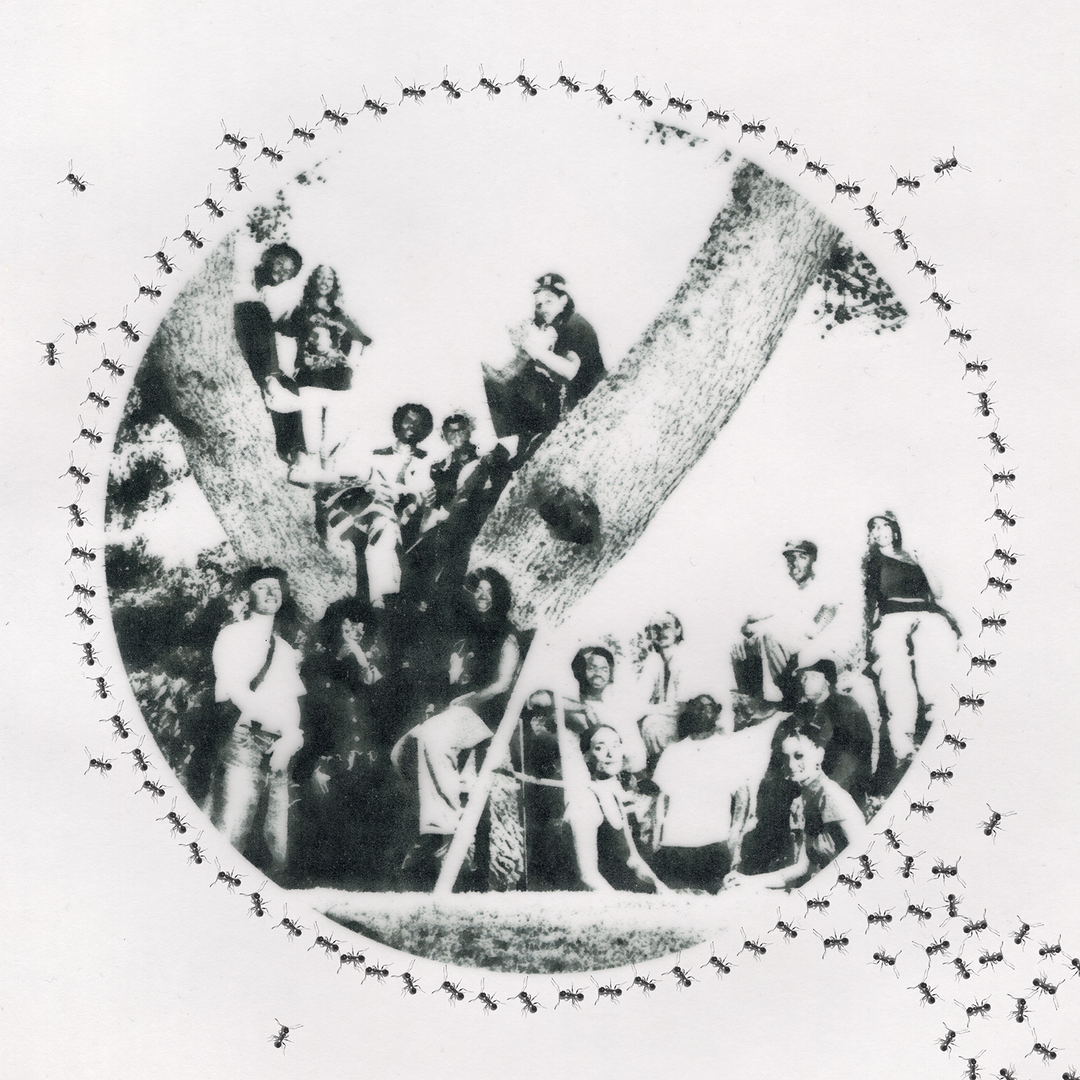
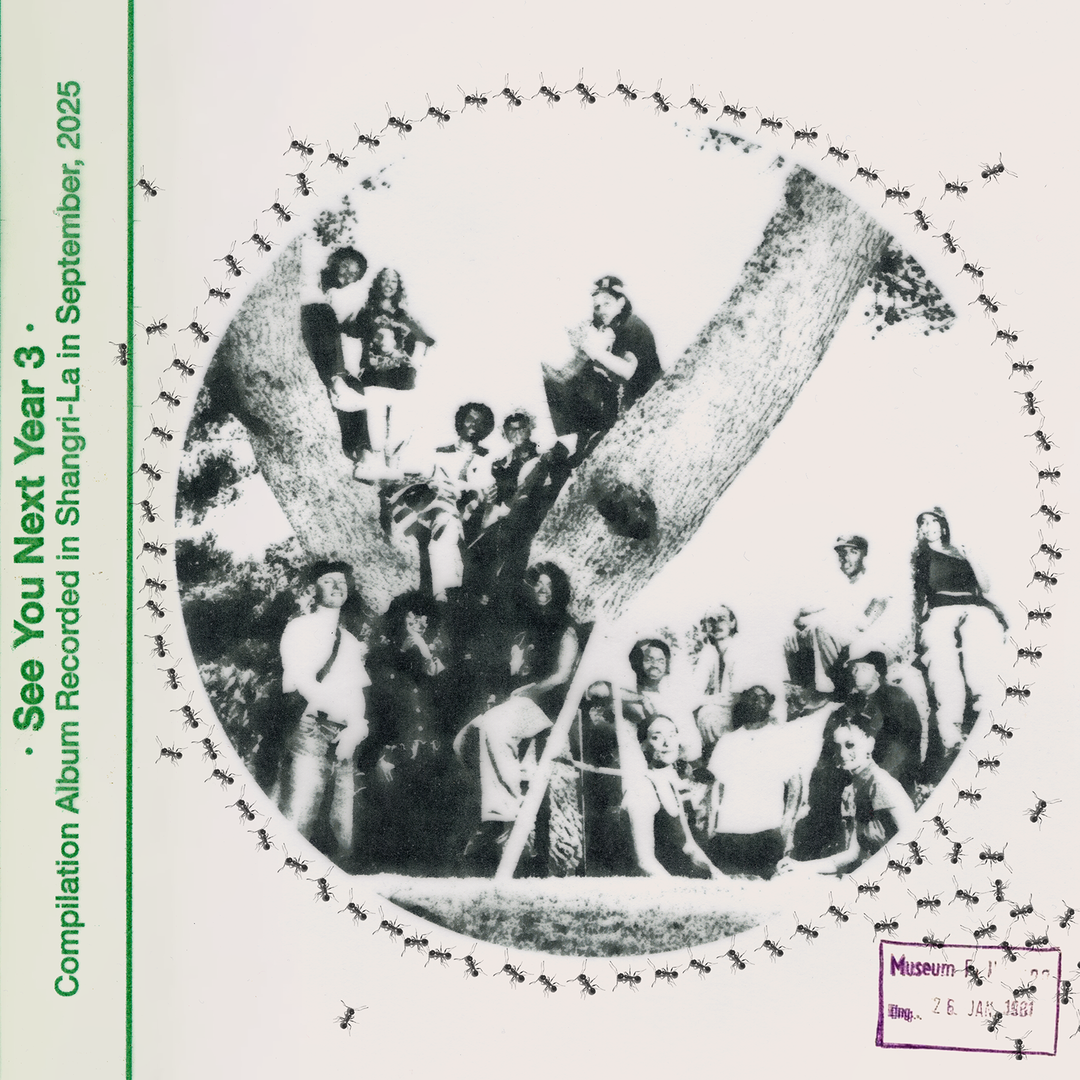
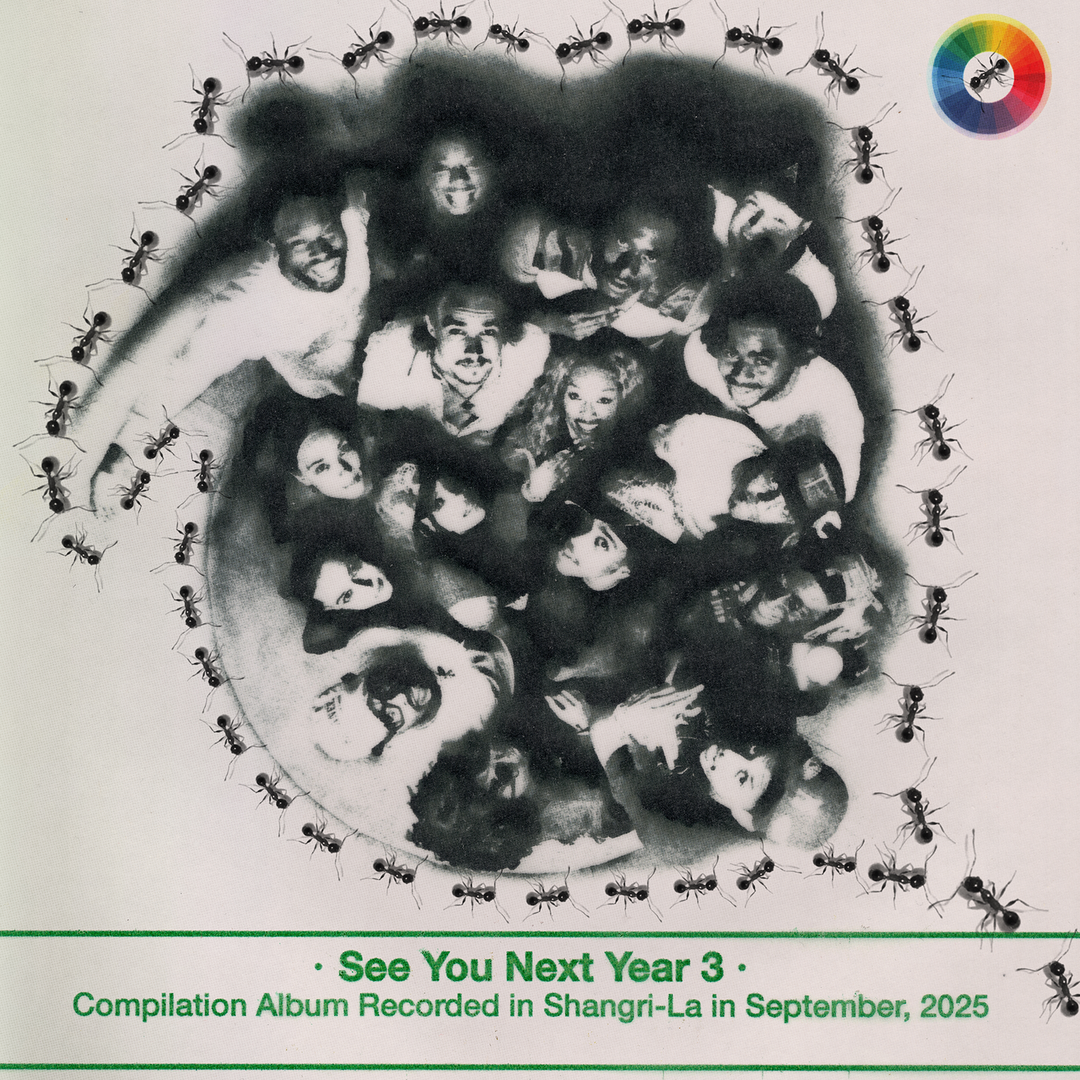
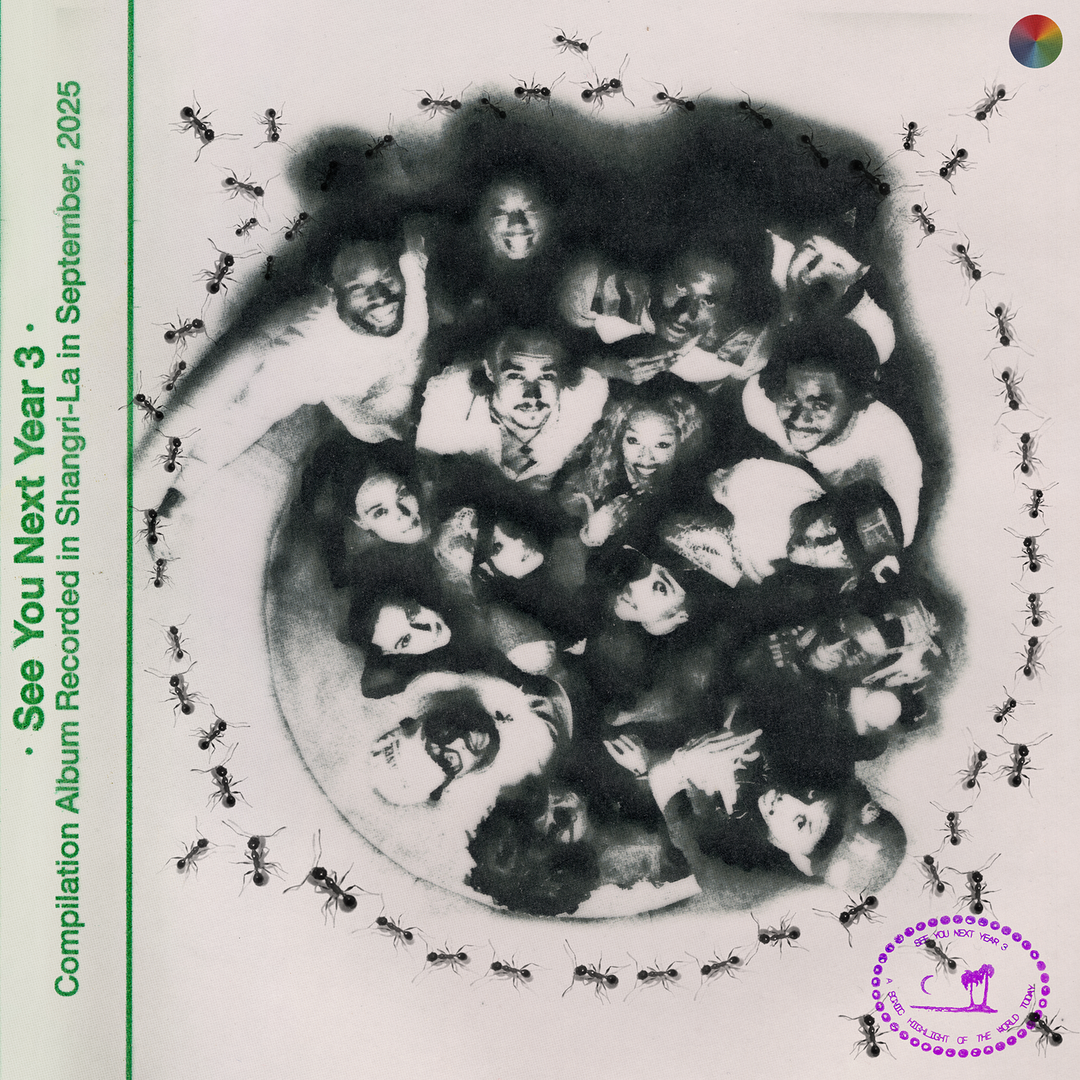
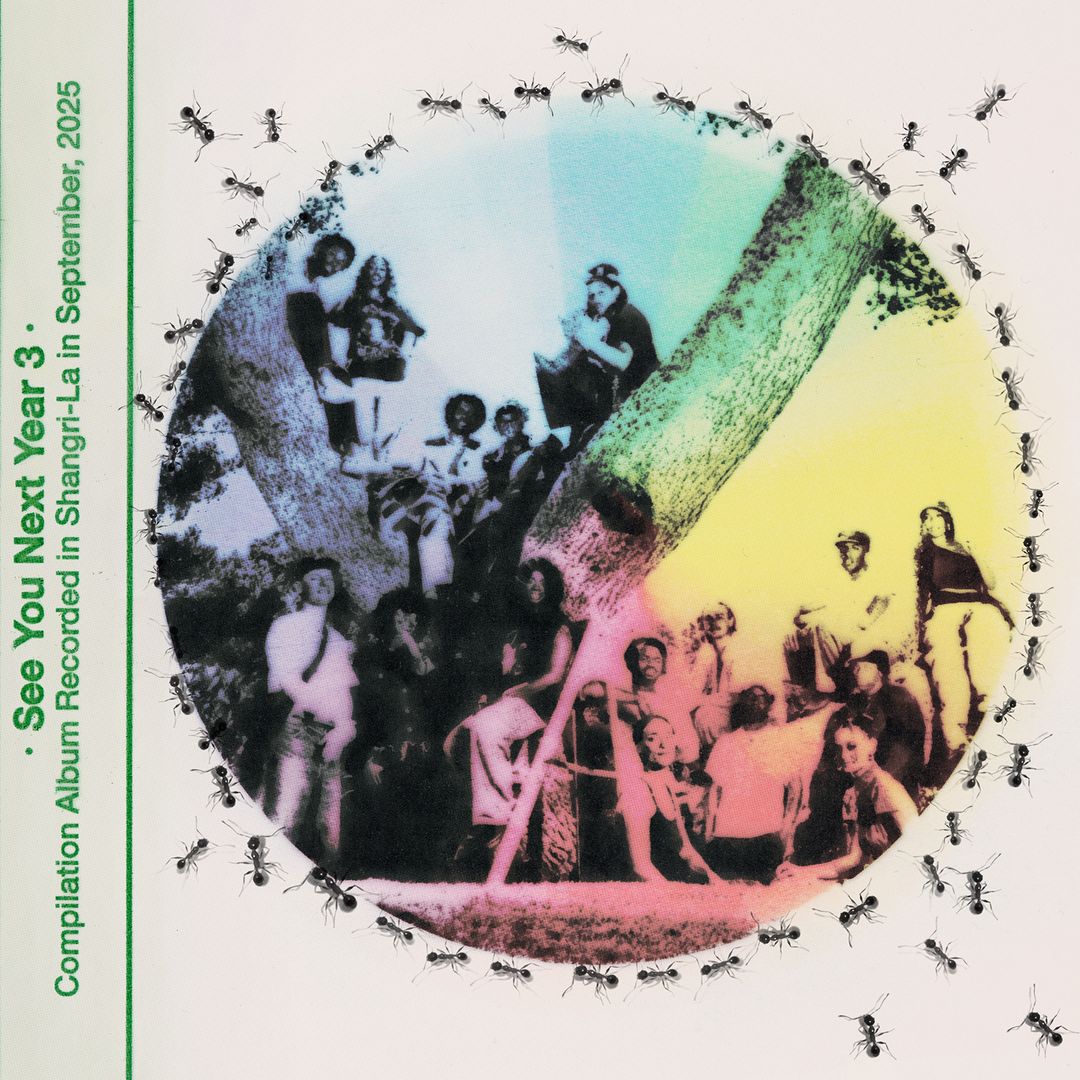
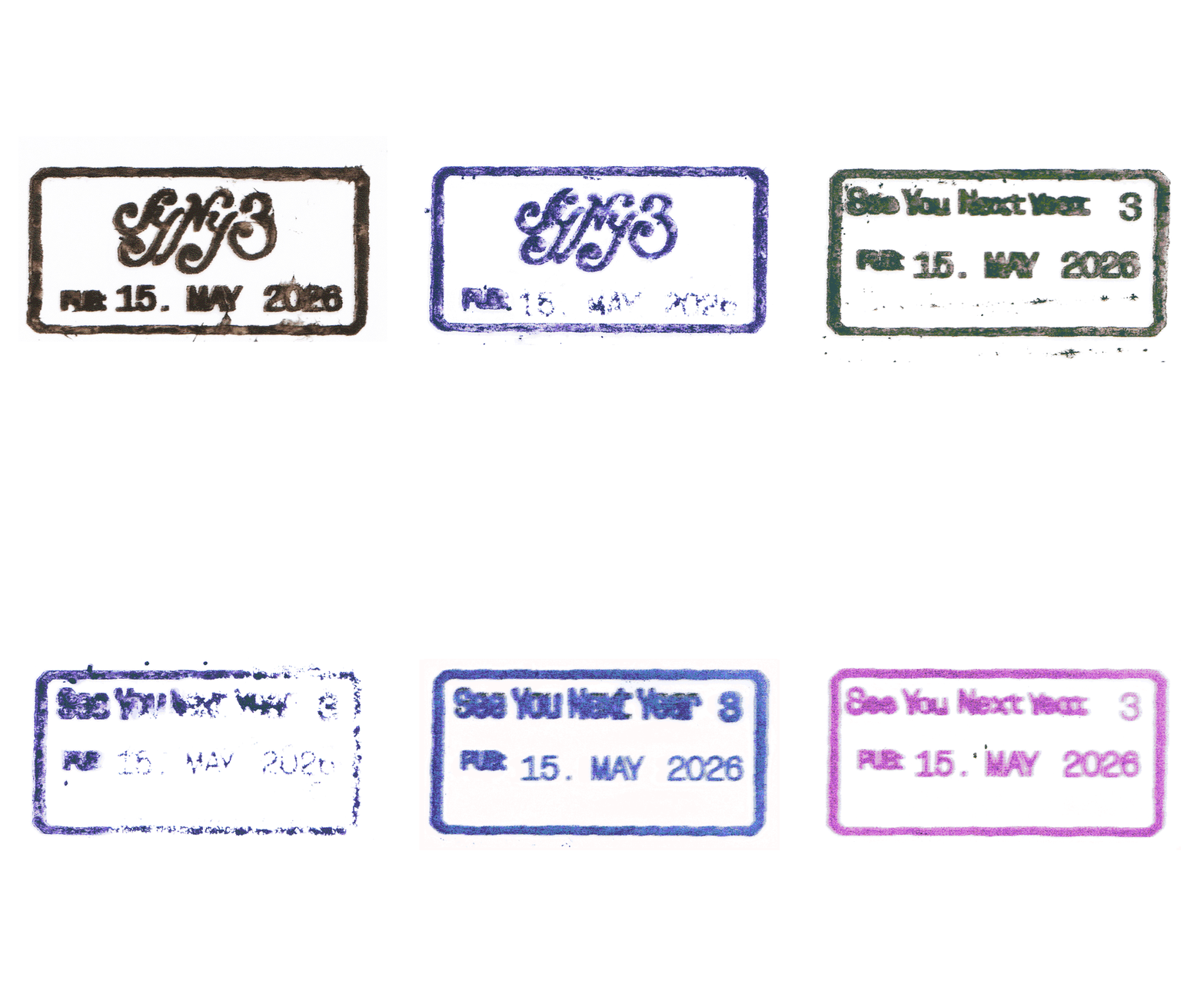
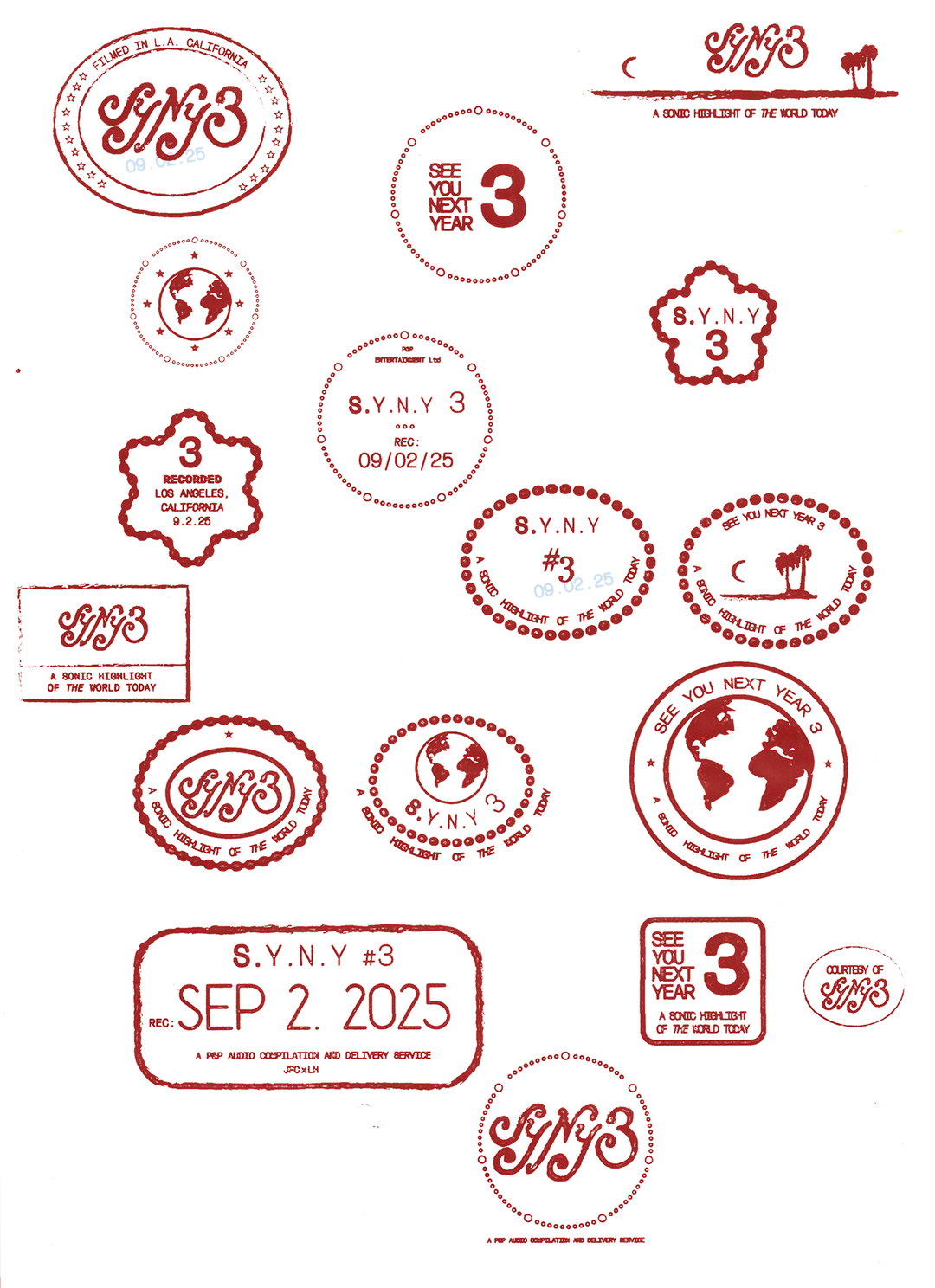
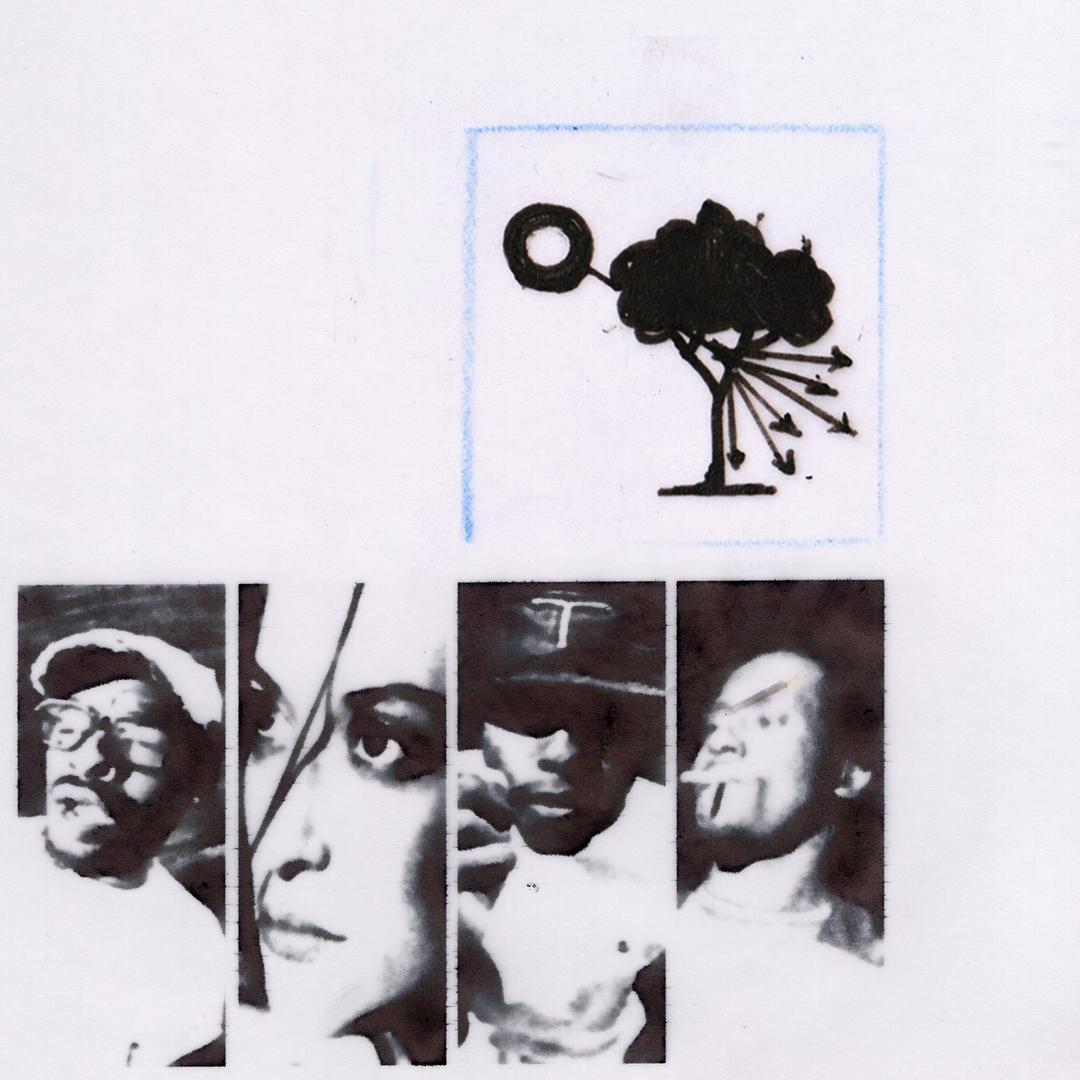
We were wondering if you were going to ask about the ants! There’s no real deep reasoning behind the ants really. We did want to convey this nature thing because a lot of the videos were filmed outside in Rick Rubin’s Shangri-La studio in Malibu, and I knew I wanted to make that the main thing on the cover photo of them on the tree. I also know that the P&P team likes when I use ants on stuff. There were versions with a fuck-ton of ants, there were versions with a medium amount of ants, and then we landed on a very minimal amount of ants. I like the idea that not everything needs to have a deep meaning, sometimes pretty is enough. Unless, Leo, you have some technical reasons why you liked the ants?
LH:
I have some technical reasons why I like the ants! Without the ants it would all be paper and prints, and I think the ants just casting a little shadow adds a lot of depth to things.
JPC:
True.
LH:
It does push it past just being a scan of a graphic, it makes it an activated scene. I also think that together with the stamps it does kind of tell a little story, and it gives a sense of this miniature scale that everything is like existing on. It felt like we were bringing life to our covers – the ants and the stamps were that final last step to make it home.
JPC:
That’s a good way of putting it, the scale thing. I didn’t really even think about that!
Leo: Yeah. I also like how they draw the eye around the scene. The stamps also have a bit of a candy colour to them, so I love these moments where they’re interacting with them – they look like they’re nibbling at the stamps. I love little details; I always love rewarding a closer look. It might just be a thumbnail on Spotify, but I love for a cover art to just have these little things that draw the eye close and that make you want to enlarge it.
INT:
Rewarding that in-person experience too? Maybe something you wouldn’t recognise on the thumbnail but when you go and buy it in person, you're like, ‘Oh, there’s all these things I didn’t see before.’
LH:
Exactly.
JPC:
It’s so hard to think about when you’re like making album art about the Spotify thumbnail and how small it’s going to be, it’s like such a pain in the ass to think about the scale of everything and how it’s going to be viewed.
Jean Pierre Consuegra & Leo Horton: Pigeons & Planes, See You Next Year 3 – Stamps
Jean Pierre Consuegra & Leo Horton: Pigeons & Planes, See You Next Year 3 – Stamps
“I like the idea that not everything needs to have a deep meaning. Sometimes pretty is enough.”
Jean Pierre Consuegra
INT:
So many different formats and scales! I’m sure a mixtape is quite a tricky balance tonally, because there’s lots of different styles and subgenres involved. How do you go about capturing a little essence of everyone and no one, all at the same time?
JPC:
It was about not letting the design be at the forefront. Not letting the designs be so loud that they take over everything, making it work so it can fit within all these kinds of music by not doing so much. They’re all different kinds of genres and different types of singers, but they all have this throughline of DIY, and that became our throughline. I think it makes the entire compilation cohesive musically, and I think design-wise it does the exact same thing.
LH:
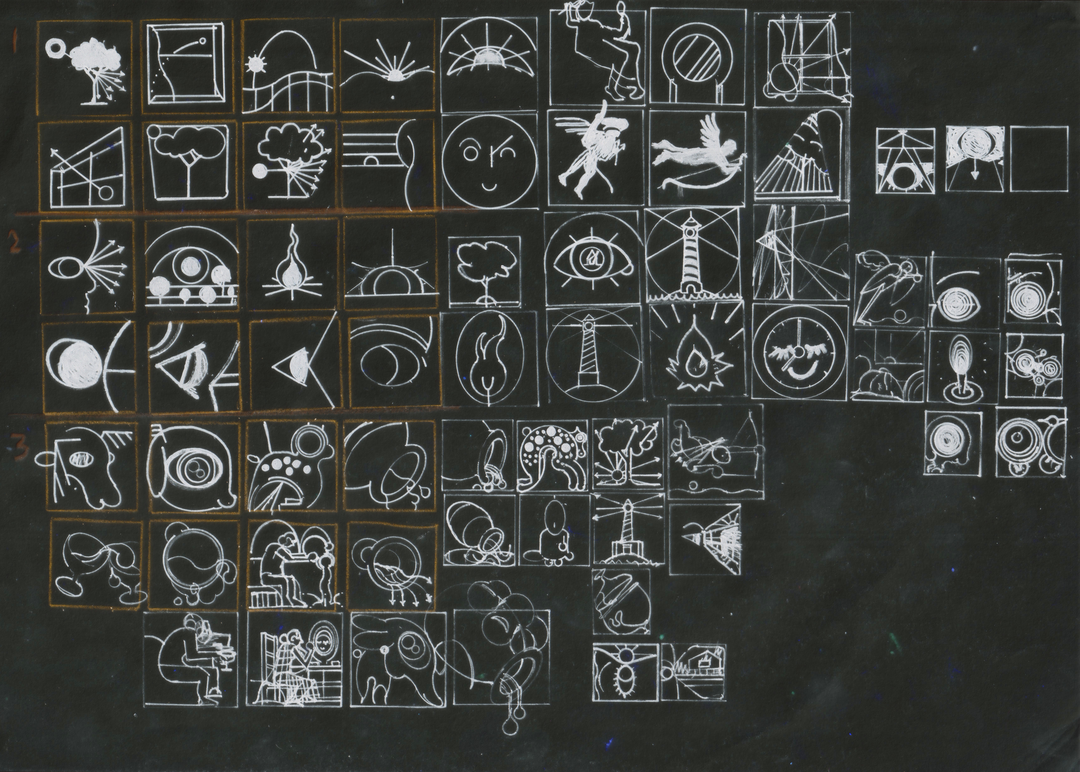
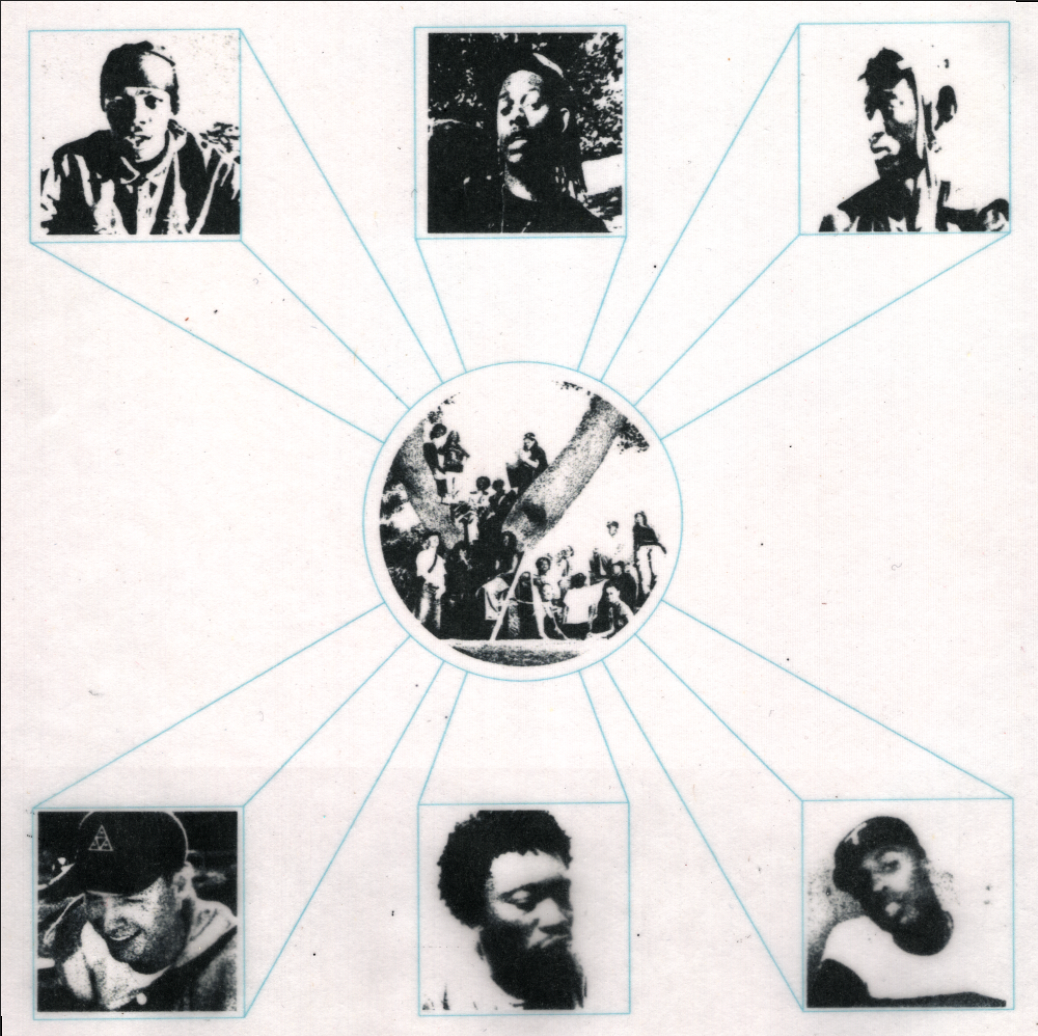
I agree. Some of our early drafts were almost diagrammatical, it was us making sense of the question of how to represent all these different artists? So many of the songs also have many artists on them, so you couldn’t really have one person’s name on it. We had some ideas that were lines going all over, leading to like the name of the singles or like even icons for each single. I think in the end it was a matter of settling on something that was really simple, that centres the artists but also centres that feeling of physicality and DIY-ness, with a little stamp of like officiality at the end.
Jean Pierre Consuegra & Leo Horton: Pigeons & Planes, See You Next Year 3 – Album and Single Drafts
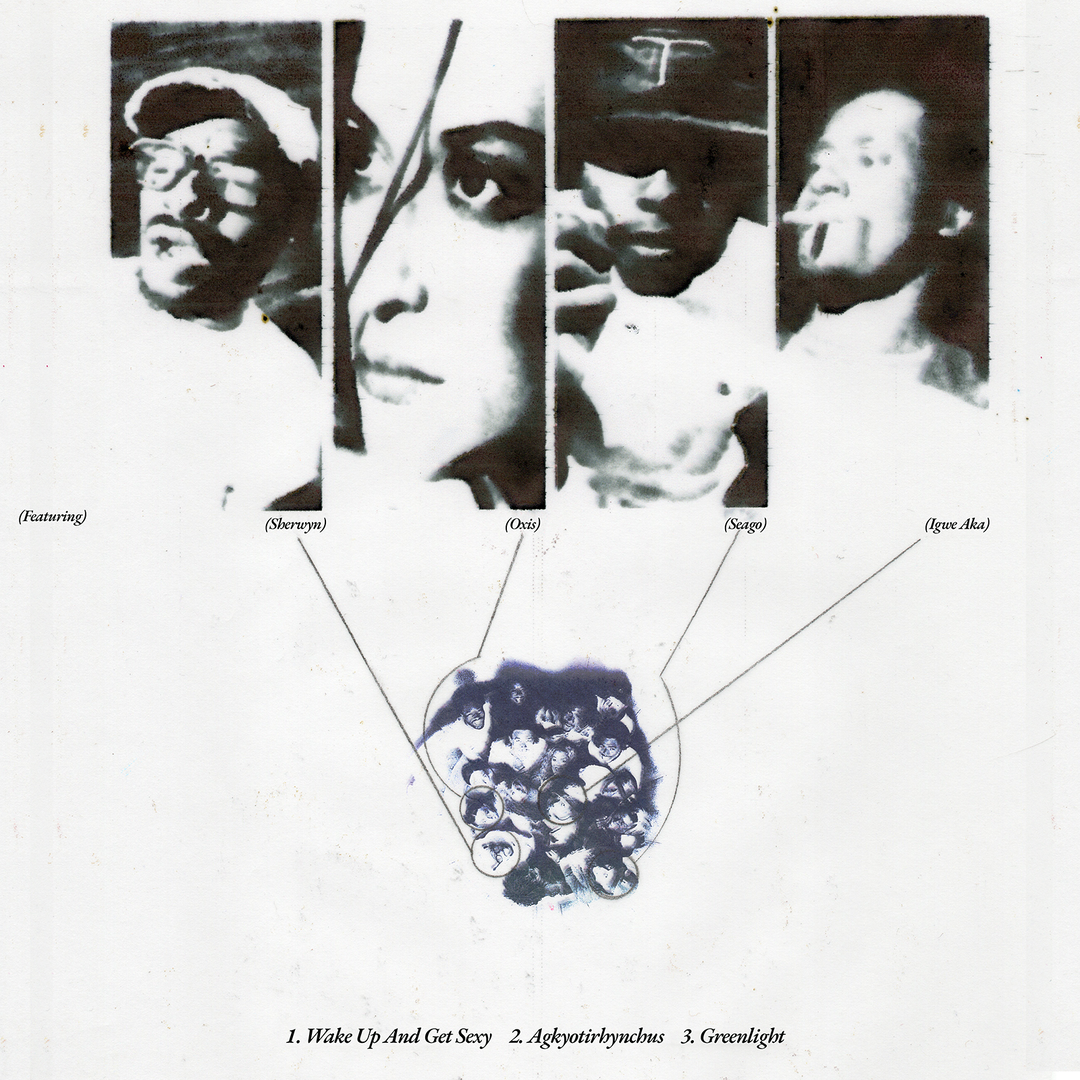
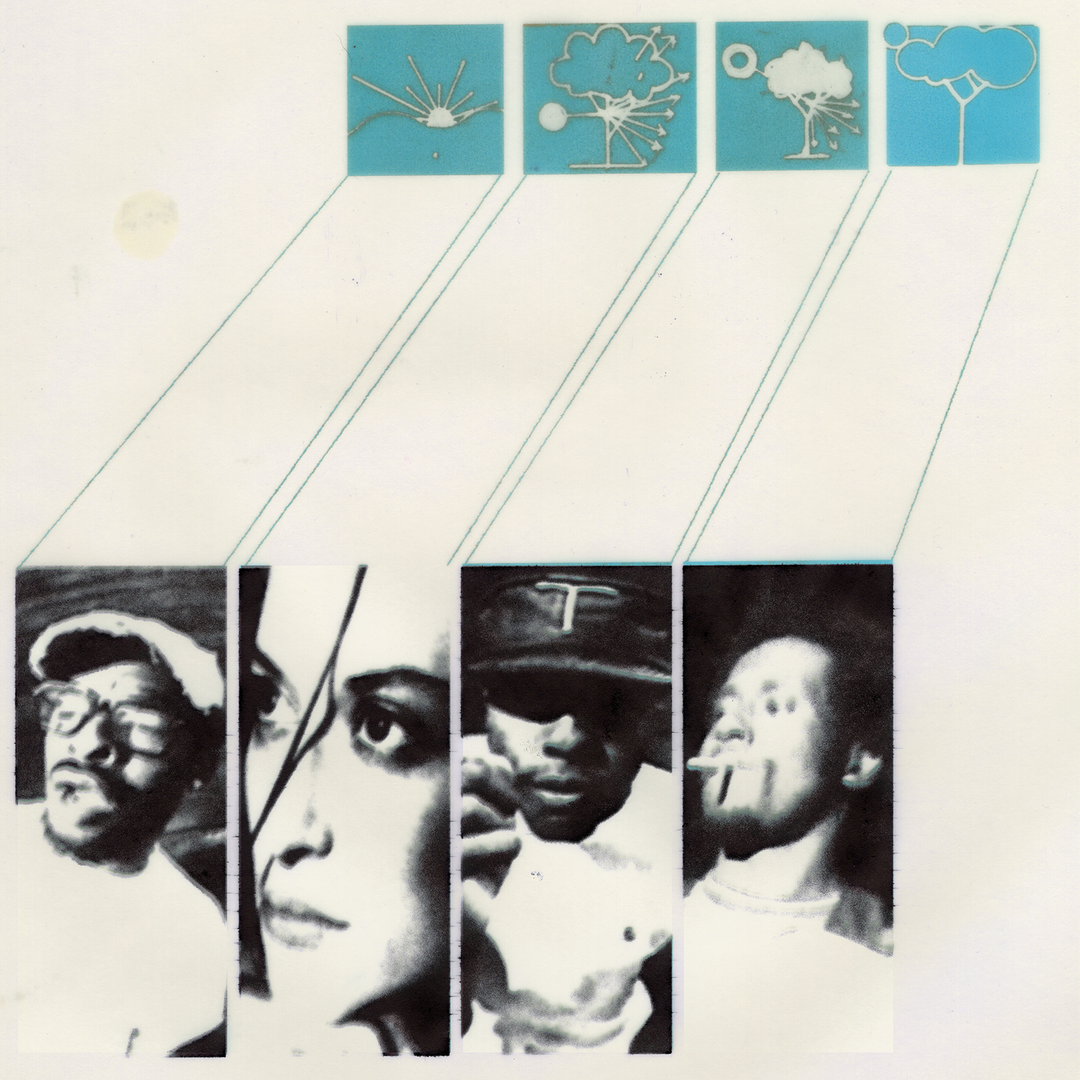
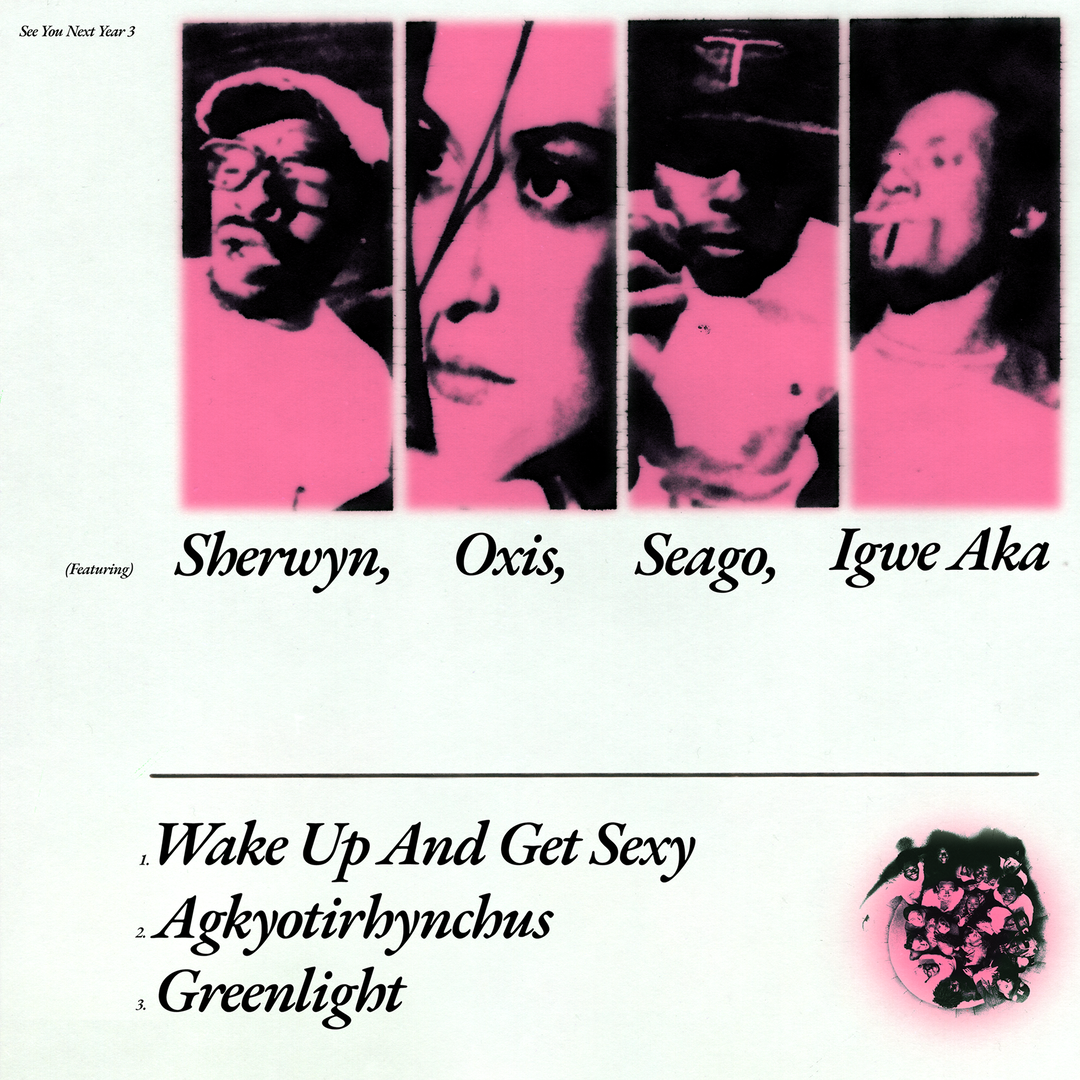
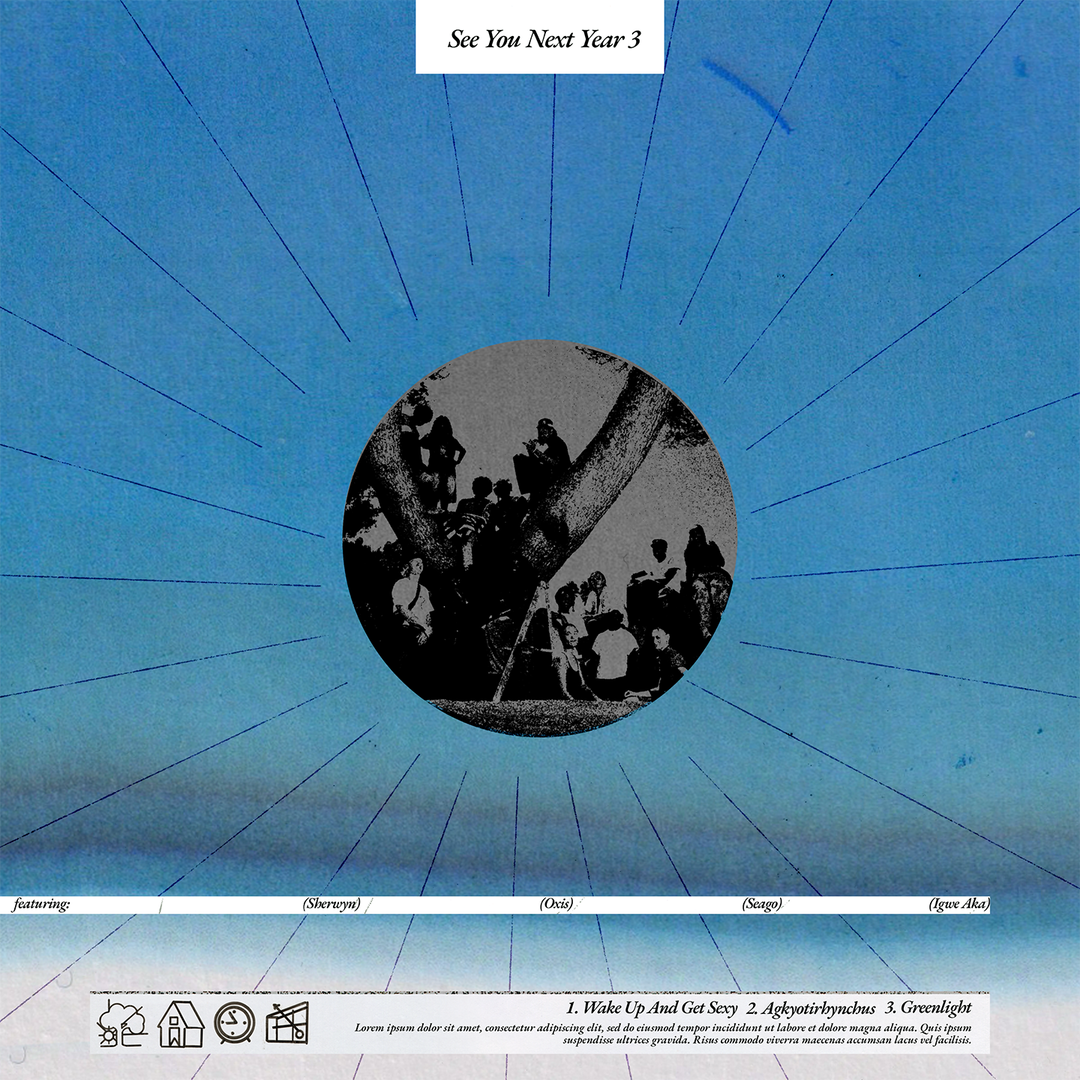
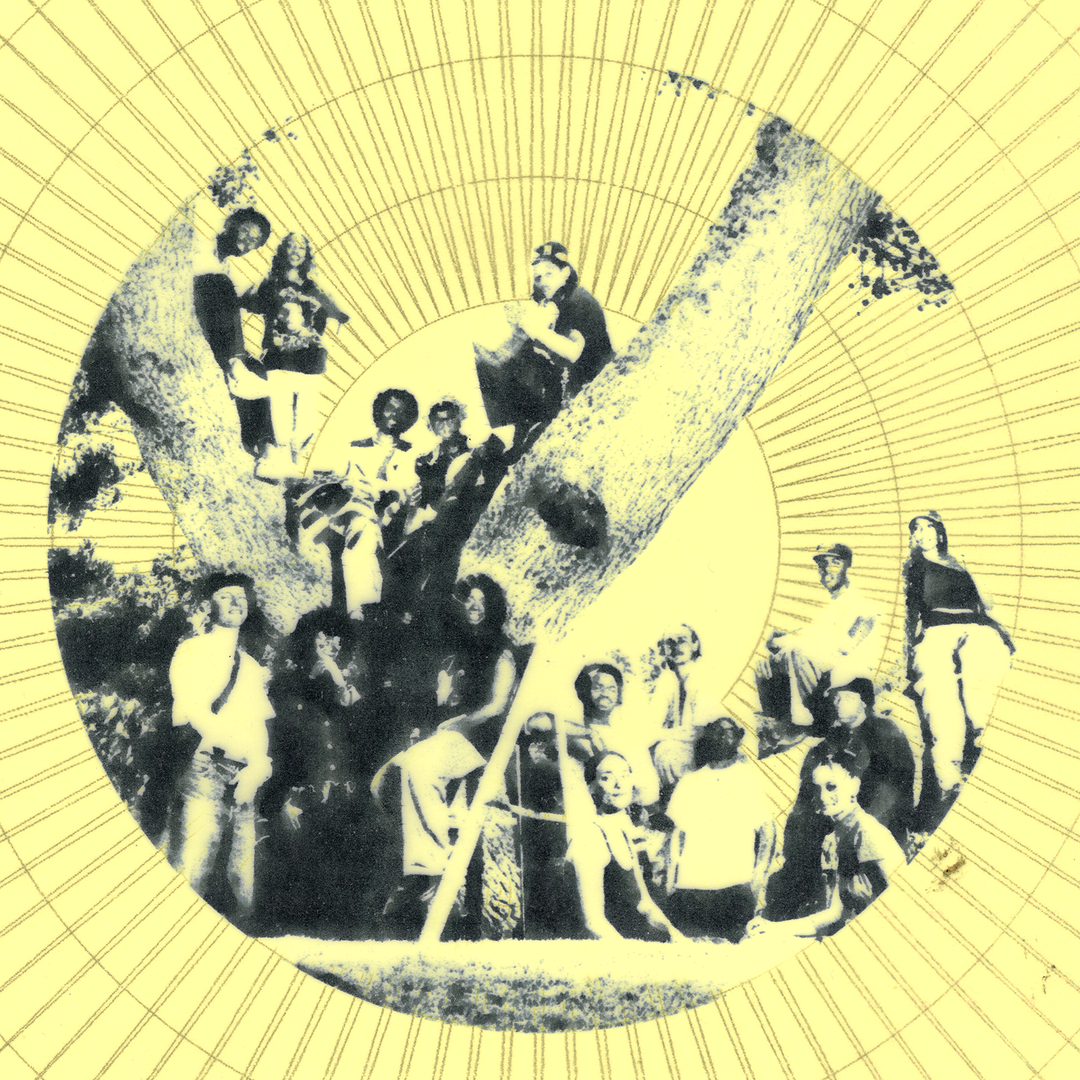
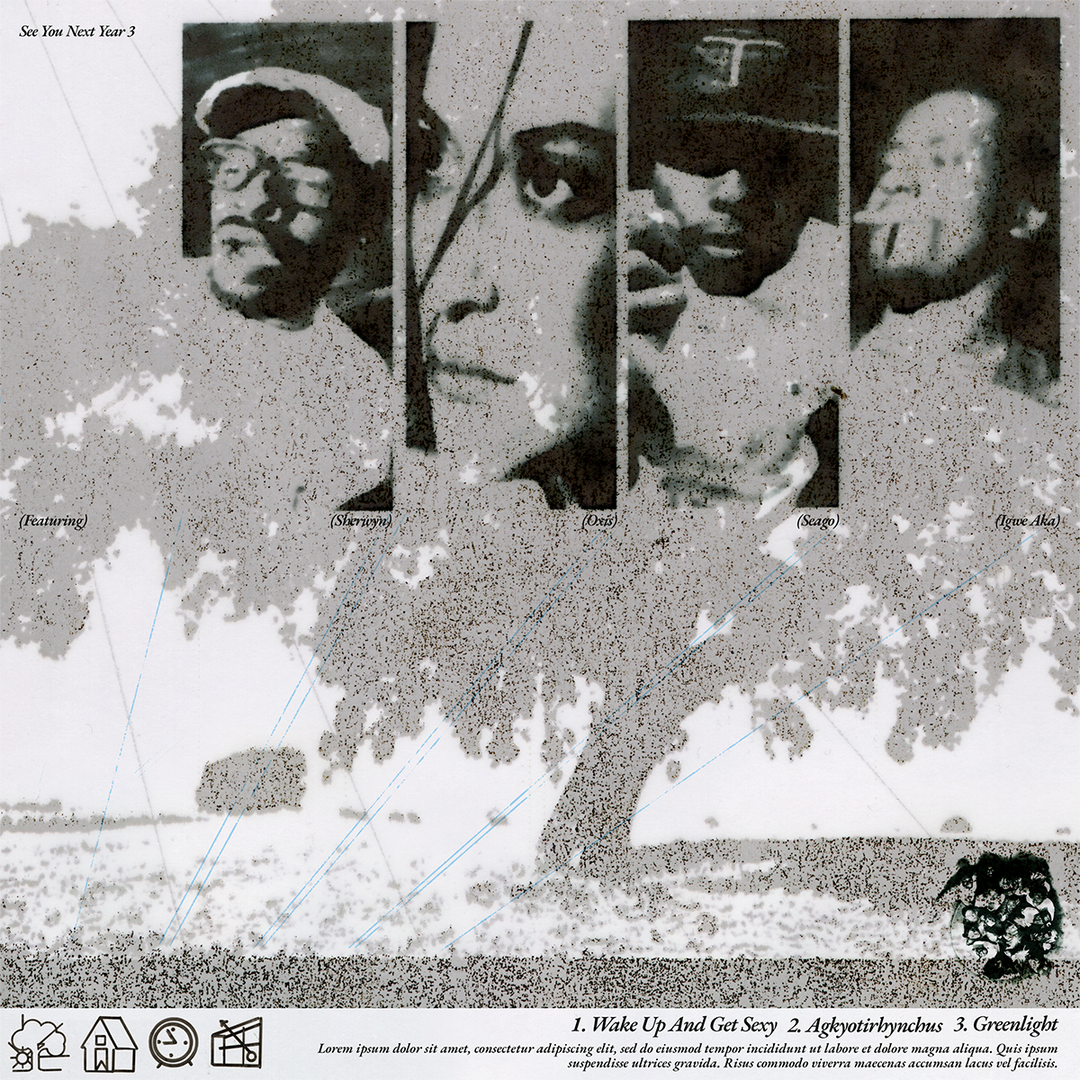
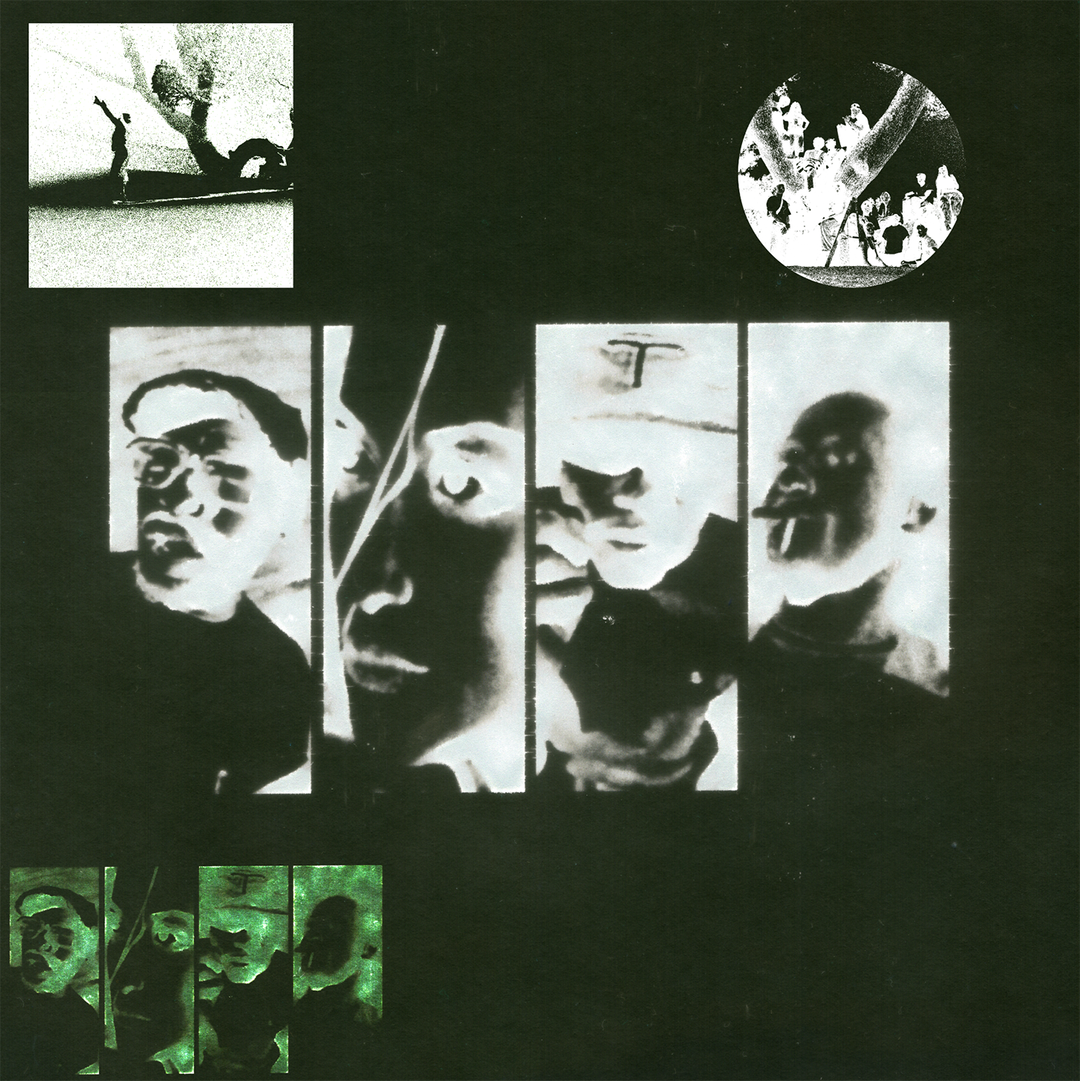
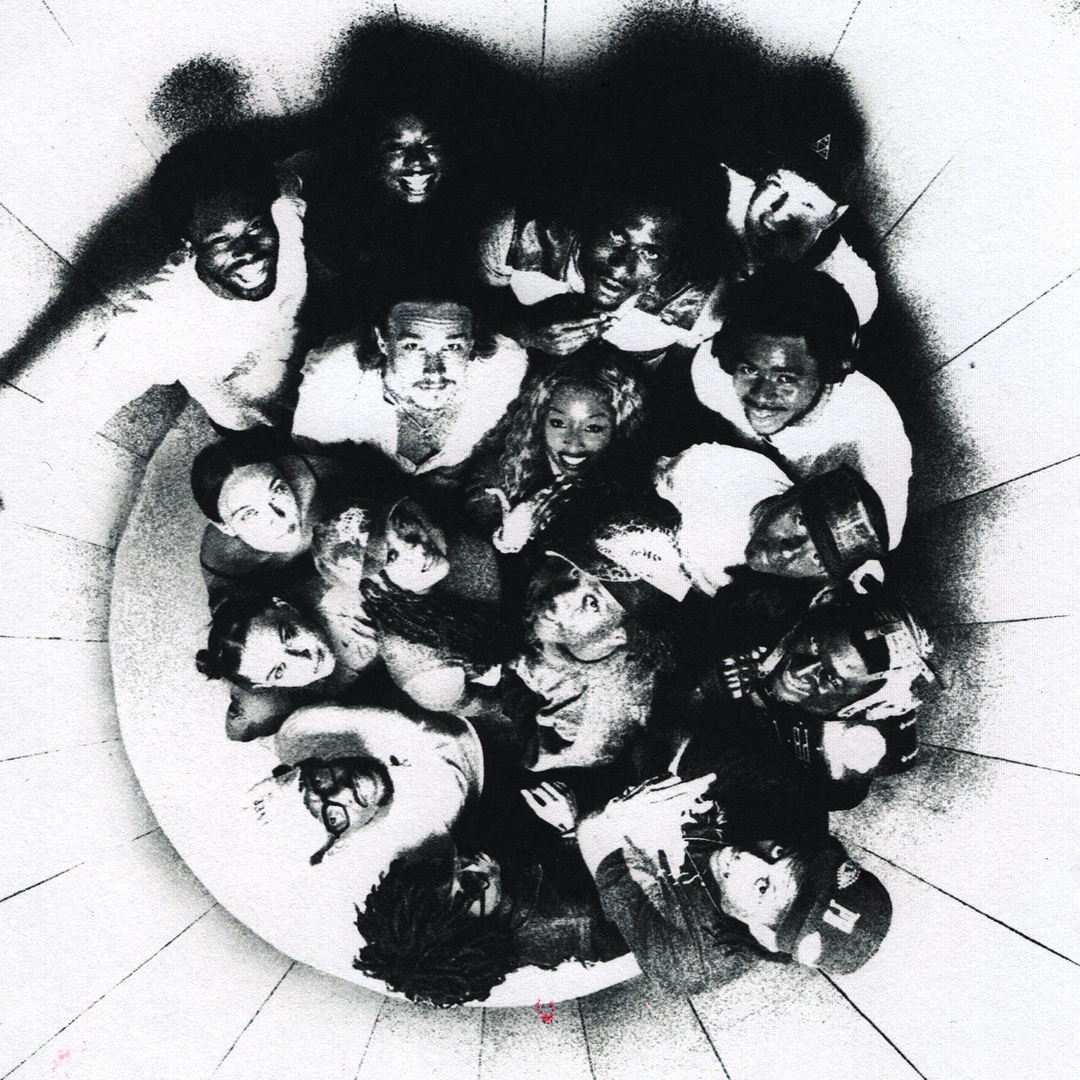
1 of 11
Jean Pierre Consuegra & Leo Horton: Pigeons & Planes, See You Next Year 3 – Album and Single Drafts
1 of 11
Jean Pierre Consuegra & Leo Horton: Pigeons & Planes, See You Next Year 3 – Album and Single Drafts
INT:
You mentioned that you’ve had more time on this than any other music project. Do you have any big learnings or takeaways from working on such a long and mammoth project?
JPC:
You know, whenever I wrap a project and I’m finally done with it I’m like, ‘I wish I could have done this differently and this differently and this differently’. I criticise everything that I do as soon as I finish it! But I really don’t feel that way about this project. Maybe that’s because this is my first project with someone else, so I can appreciate it from an outside perspective? Maybe that sort of turns off that sort of ‘critic-mindedness’ a bit, because I didn’t do all of it. Looking back, I wouldn’t change anything really – it went so smoothly.
LH:
I’d echo that. I’m a bit different. I feel like when I’m done with a project I just cast it out of my mind… sometimes to a fault. But I feel like also the length of this project was really important. Working on something over a long time, especially with Jean Pierre, was new for me. We both get a lot of like last-minute commissions or like week-long things that we have to slam.
JPC:
The worst!
“It showed us the value of these more patient projects.”
Leo Horton
LH:
It showed us the value of these more patient projects, and developing something closely together. I think it just cemented our collaborative process, in a lot of important ways that we’ve taken into like other projects since then, which is really exciting.
JPC:
I mean, we both just had to pull two weekenders this last month. Both of our brains are kind of fried. At least I’m speaking for myself… but like my brain is really fried. These timelines are only getting more ruthless it seems. I think me and Leo both work really fast, but there’s something to be said about being able to just sit with a fucking project and like just think about it, instead of it being this panicked feeling. Sometimes great work comes out of those short timelines, but when you miss you don’t have time to fix it.
I think people just need to get their timelines in order, and that’s coming from me and I’m not a timely or punctual person at all! I think if we didn’t have that much time it would have been a lot louder, a lot more in your face; design wise, that’s the first thing that comes to mind, how to make something pop immediately? I enjoy the subtlety of this because we just had a lot of time to sit with it, and it doesn’t need to be the loudest thing to be the prettiest thing.
INT:
So the key takeaway is: more time!
JPC:
Yeah! Give us more time.
Share Article
About the Author
—
Olivia (she/her) is associate editor of the website, overseeing the day-to-day editorial projects as well as Nicer Tuesdays events. She joined the It’s Nice That team in 2021. ofh@itsnicethat.com
To submit your work to be featured on the site, see our Submissions Guide.