


- Words
- Olivia Hingley
- —
- Date
- 29 April 2026
- Tags
London’s Ours! Celebrating the posters, billboards and publicity stunts that put two fingers up to Thatcherism
A book from Four Corners reflects on the creative legacy of The Greater London Council, a radical political body that revolutionised the intersection of art and politics.
Share
Share
One of the most annoying things about Margaret Thatcher (there’s many), is how quotable she is. A classic of hers – ‘There’s no such thing as society’ – printed in a Woman’s Own interview in 1987, summarises her obsession with ‘individual responsibility’ and her incessant inability to see government as something that should be closely involved with the wellbeing of the nation’s people. Over the years I’ve found it a particularly enjoyable task to mentally log examples that proves just how wrong Thatcher was. A new book from publisher Four Corners, London’s Ours! Images from The Greater London Council 1981-1986, is a very beautiful and extensive piece of evidence to add to the list.
The Greater London Council (GLC) was a top-tier local government administrative body that ran from 1965-1986, involved in planning and governance of the capital. In 1981, it was won by Ken Livingstone who sat at the left of the Labour party and stood in fierce opposition to Thatcher’s rampant neoliberalism. Under Livingstone and his young, radical cohort, the GLC became overtly political, tackling issues of sexism, homophobia, racism, nuclear disarmament amongst other causes. Its core means of promoting and celebrating this alternative vision was art; over its five years, the Livingstone GLC produced countless posters, billboards and bold publicity stunts, all the while putting money into the pockets of artists and practitioners.
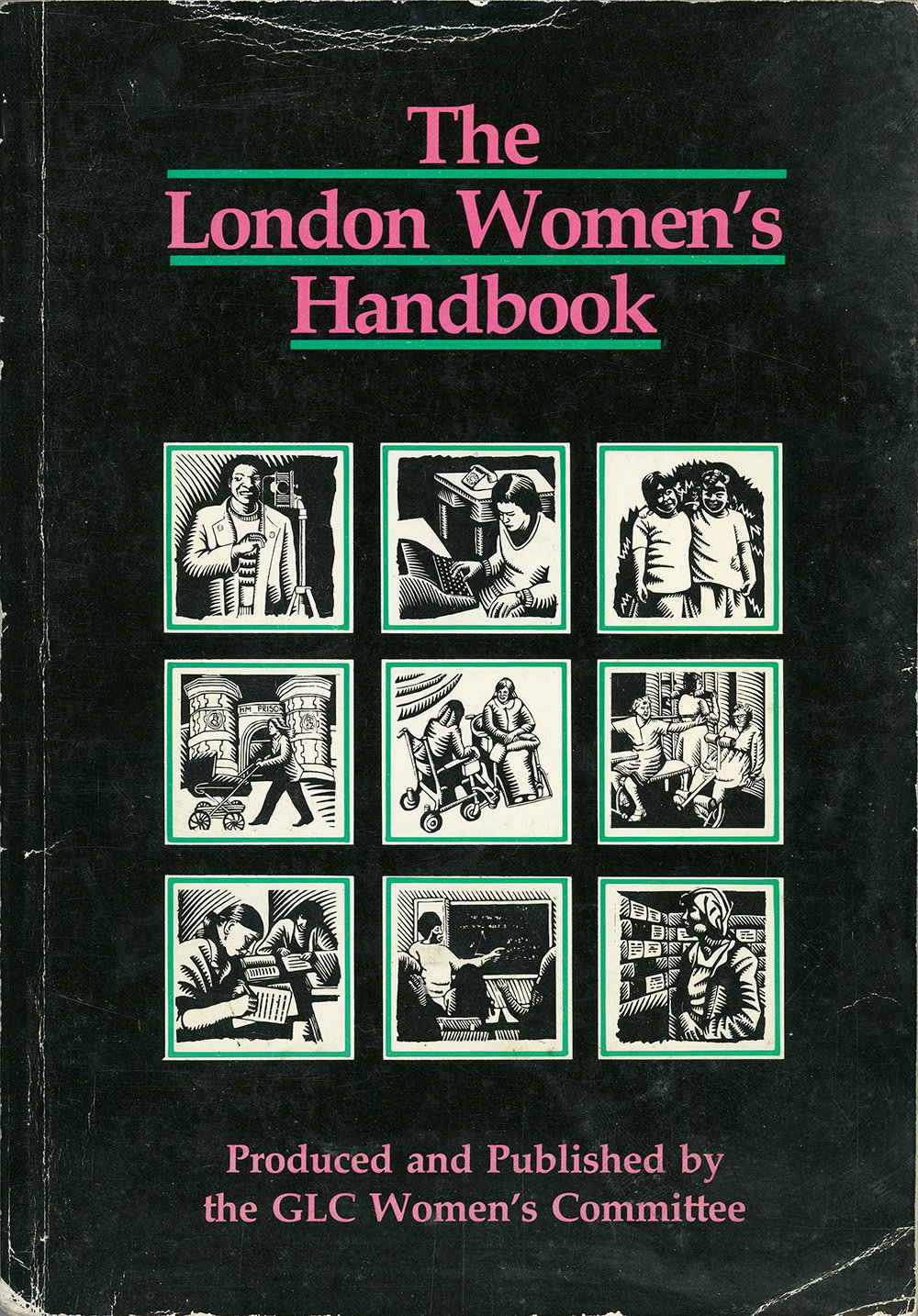
The new book’s bustling front cover directly echoes this plurality. It draws on a booklet produced by the GLC in 1986, which featured an image from a previous event – the June 1984 Change Festival. “The image used on this cover is a photograph from that same event,” says the book’s designer Claire Mason. “The sight of the people of London squashed into all nooks of County Hall speaks of an optimism and upbeat mood wrapped up in a festival atmosphere that perfectly captures the spirit of the book.” The mirroring of GLC ethos even extends into the typeface, Max R. Kaufmann’s 1939 design Balloon, which is “intentionally democratic” in its alignment and sizing. “As a brush script, it offers a human touch,” Claire continues. “In the 1980s, with shifts in technology, older typefaces like Balloon were revived and reused in new contexts. It was a perfect antidote to the corporate modernism of the previous era.”
Below, in conversation with It’s Nice That, the book’s writer – cultural historian and artist Hazel Atashroo – gives an enlightening deep dive into the visual methods of the GLC, highlighting its iconic campaigns, dedication to creative community and lasting impact on the legacy of political art.
It’s Nice That (INT): Why did the Greater London Council (GLC) have such a strong, consistent and prolific visual output? How did it align with its methods and activism?
Hazel Atashroo (HA):
Part of the GLC’s purpose was to communicate information to Londoners about issues affecting them, and to promote the public services available to Londoners that the GLC supported. While previous GLC administrations had always promoted visiting the parks, the fireworks displays or the concert halls, the Labour left at the GLC imbued its public communications with a new, overt political and campaigning tone, challenging the government on issues such as racism, migration, sexism, gay rights, civil defence and public service cuts, to make the consequences of the Thatcher government’s policies for Londoners clear, and to present the GLC’s alternatives.
It was also about winning Londoners’ hearts and minds. We have to remember the 1980s was a period dominated by a reactionary right-wing press – often racist, sexist and homophobic in its messaging, that also sought to ridicule the Labour left and its transformation of the GLC at every opportunity. It had to defend itself, and promote its alternative vision for London, and the country and – in the global sense – Britain’s place in the wider world.
To convey its vision, visual communication was central: posters, leaflets, information booklets and billboard campaigns accompanied daily press releases and lively press photoshoots with the GLC leaders, which promoted what the Labour GLC was doing for London, or calling out where it thought the Thatcher government was selling Londoners short.
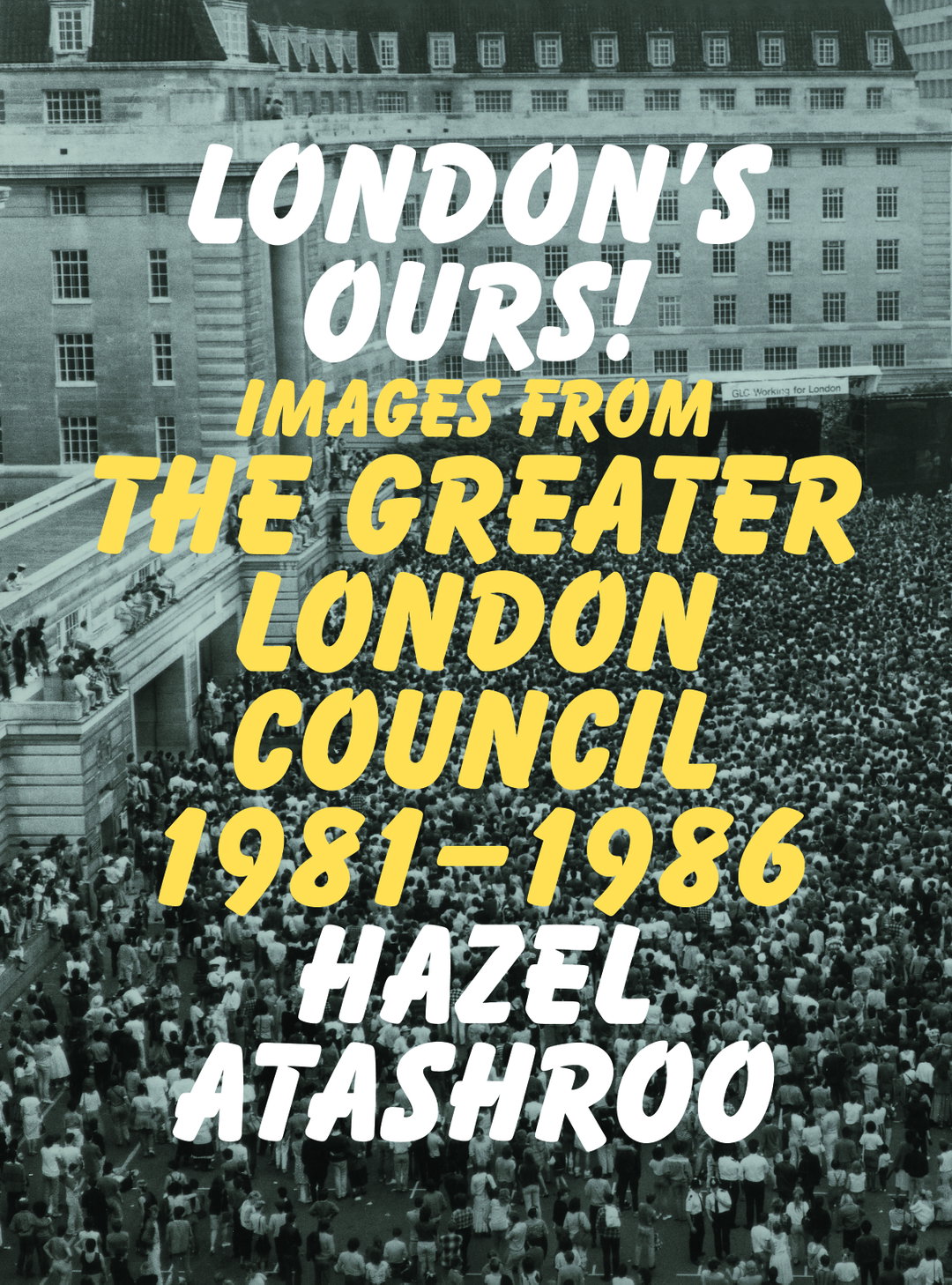
London’s Ours! front cover – design by Claire Mason
“They knew the power of a publicity stunt.”
Hazel Atashroo
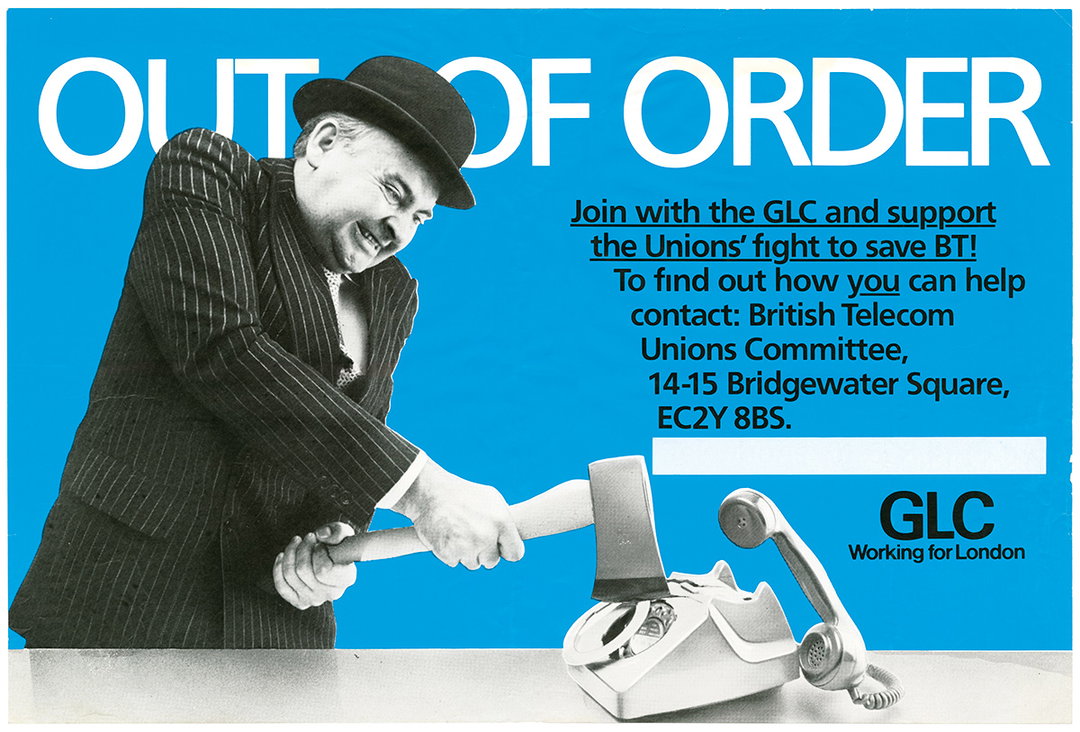
Out of Order, poster, 1984
INT:
Are there any key features, styles or trends across the GLC’s visual output? And are there any recurring artists or collectives of note?
HA:
The GLC did have its own design department that produced much of its everyday communications output, and certain features recurred in promotional material. All activities were clearly branded with the logo and slogan, ‘GLC Working for London’, emphasising the GLC’s role as a funder, organiser and promoter of London’s culture and public services.
But interestingly, the GLC also engaged a wider creative community, drawn from London’s more radical artists, designers, independent photographers, film makers and community theatre and arts practitioners, those who were politically aligned with its messaging. Peter Kennard led on the GLC’s anti-nuclear Peace Year visual campaign, producing the logo, a visually arresting photomontage billboard campaign and sets of informational anti-nuclear peace posters, which were distributed to any groups who requested them for display. A copy of these posters are now held in the V&A Collection and were recently exhibited with Kennard’s work at the Whitechapel.
Another group supported by the GLC were the Docklands Community Poster Project, which was a community arts initiative led by Loraine Leeson and Peter Dunn. London’s Docklands were undergoing the early stages of their corporate redevelopment in the 1980s, with barely any consultation with the people who actually lived there. The project worked alongside existing community activism to provide a striking visual communication of the concerns of the people of Docklands through collaged photo-murals, placed on billboards around the area. The GLC also supported the group to bring an ‘armada’ to parliament – a boat with a banner stating their demands was sailed to Westminster, an action that achieved press attention for the group and its demands.
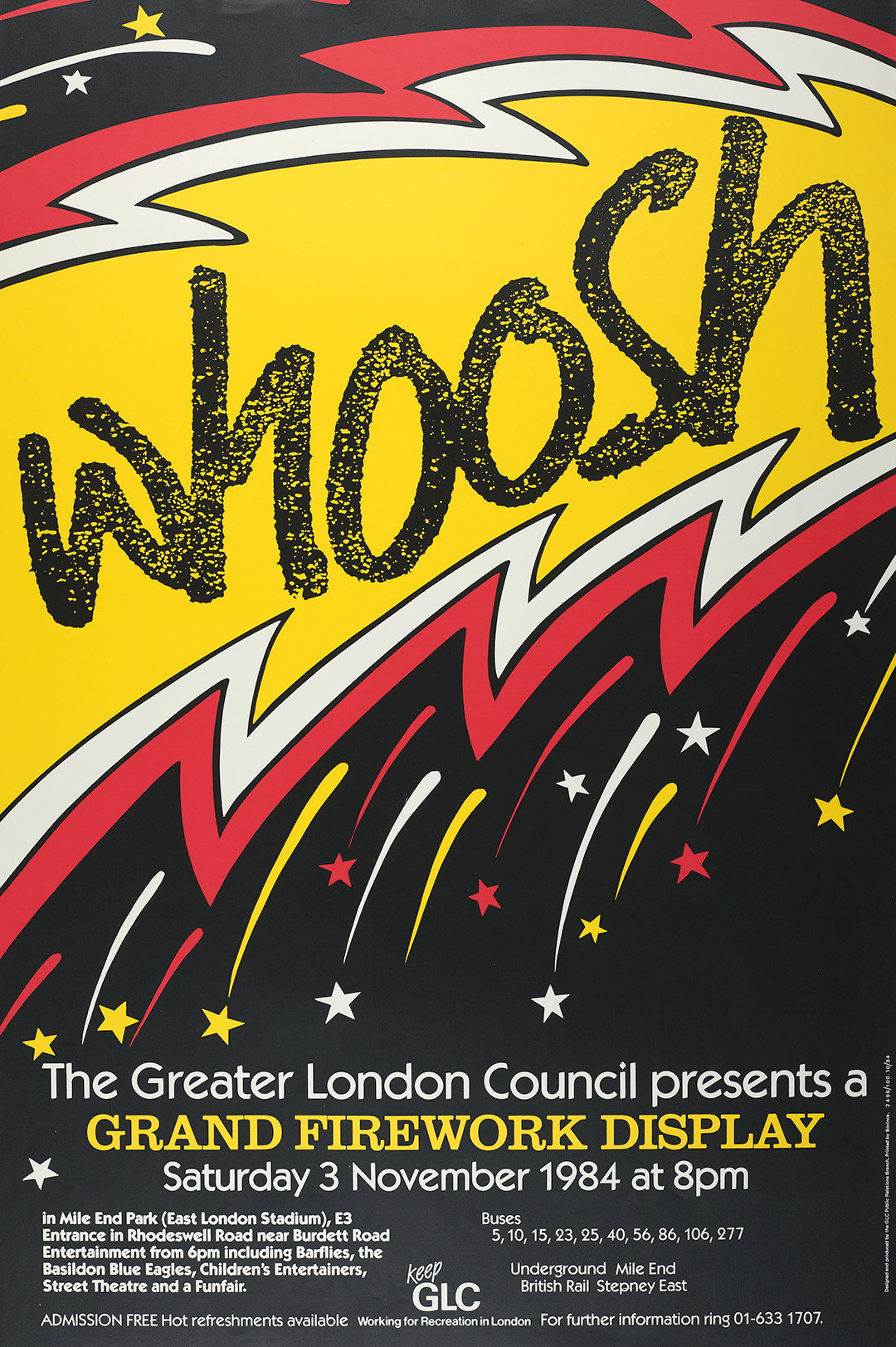
GLC Firework displays, poster 1984 © The London Archives, City of London Corporation
“There was a sense of London as a collective project.”
Hazel Atashroo
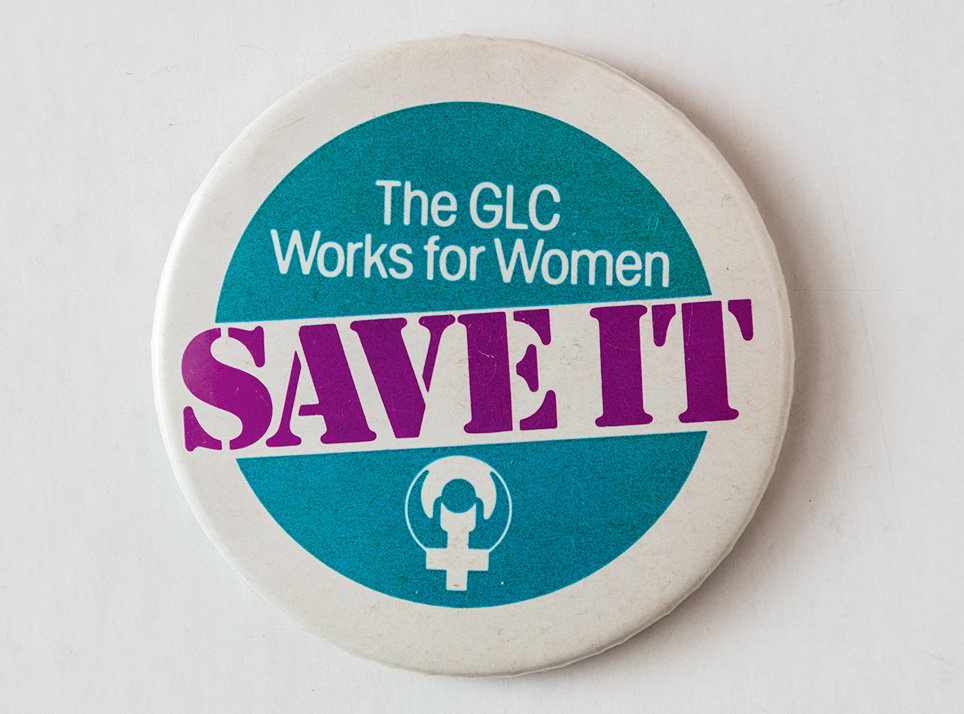
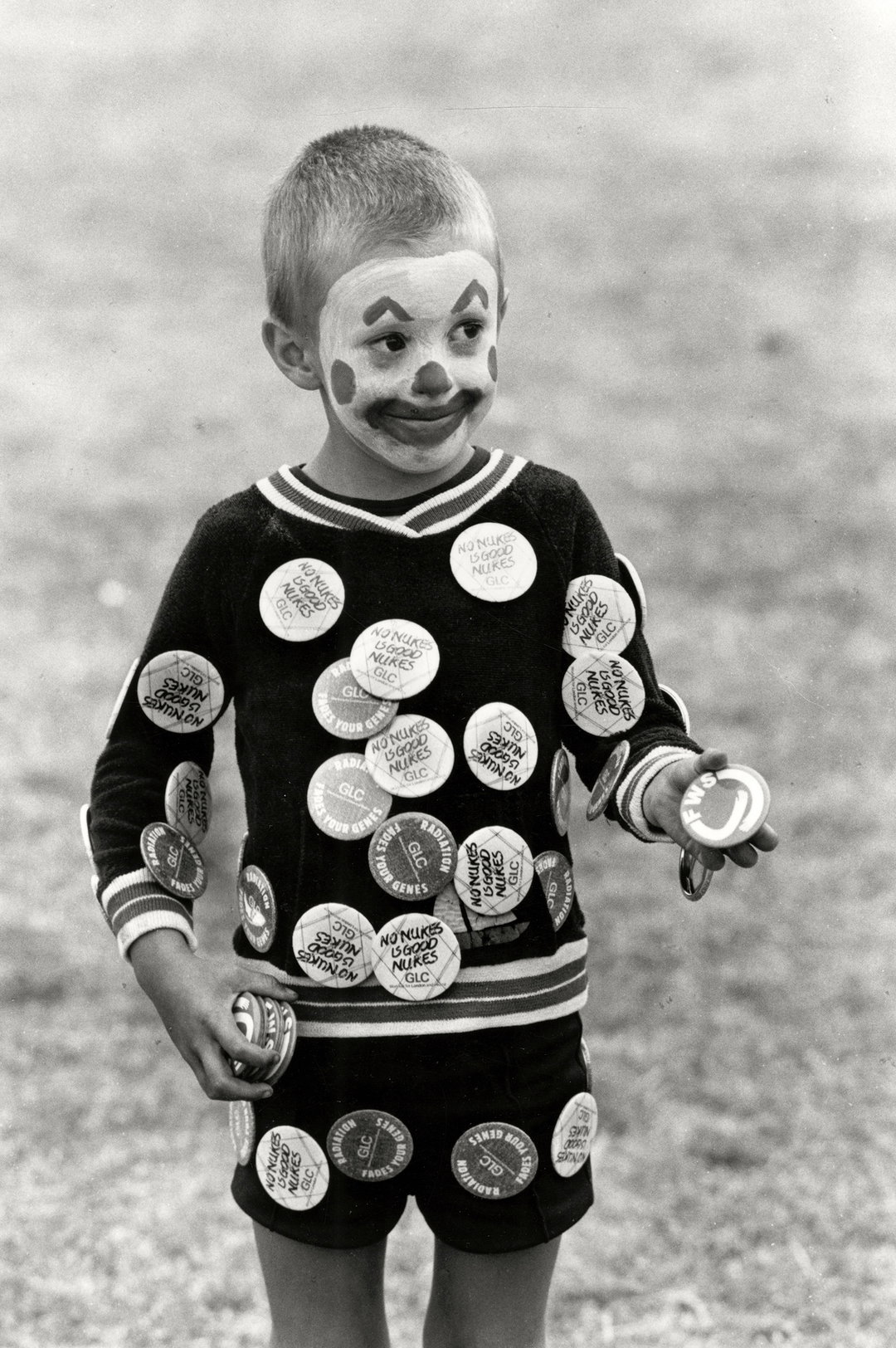
Badge from the GLC’s anti-abolition campaign
INT:
Did the GLC cite any key figures or movements from art or political history that inspired its visual world?
HA:
Amongst the artists who worked in collaboration with the GLC, or were commissioned by the GLC, many did draw on visual languages with historical precedence. Photomontage as a critical, political art practice has a long history; John Heartfield’s political photomontages were a key influence on Peter Kennard, for instance, in much of his work against war and the nuclear state.
The GLC commissioned several mural artists to produce artworks for public spaces, on political themes for anti-nuclear and anti-racist projects across London. Mural paintings, as political public artworks, often supported with state funding, also have a long history – notably in Mexico and the United States. These were influential for many mural painters, and particularly those aligned with left politics, working in Britain since the 60s. (Anyone with an interest in this might like to check out the For Walls With Tongues heritage project that documented mural painting in Britain.)
“It challenged a misguided notion that had persisted in politics in the postwar period – that arts funding should be thought of as an apolitical activity.”
Hazel Atashroo
INT:
How did the GLC balance a sense of visual intrigue and beauty with translating a strong and accessible message?
HA:
I think where the GLC collaborated with artists in its communication, it made for quite original approaches, sometimes in the communication of quite complex messages. For instance, the terrifying consequences of a nuclear attack or accident in London – and the scientific facts about this – may have been quite difficult for the general public at the time to imagine or fully understand. I think the visual content of the GLC / Peter Kennard poster campaigns really bring this home, some are quite chilling.
The more general GLC poster and ephemera designs in the archive that we selected for this book draw on a really broad variety of aesthetics; there are posters for children’s activities and sports, posters for industry and employees, posters for mothers or for pensioners. It’s interesting to consider how each is aimed at the intended audience, there is a lot to ‘read’ into their designs.
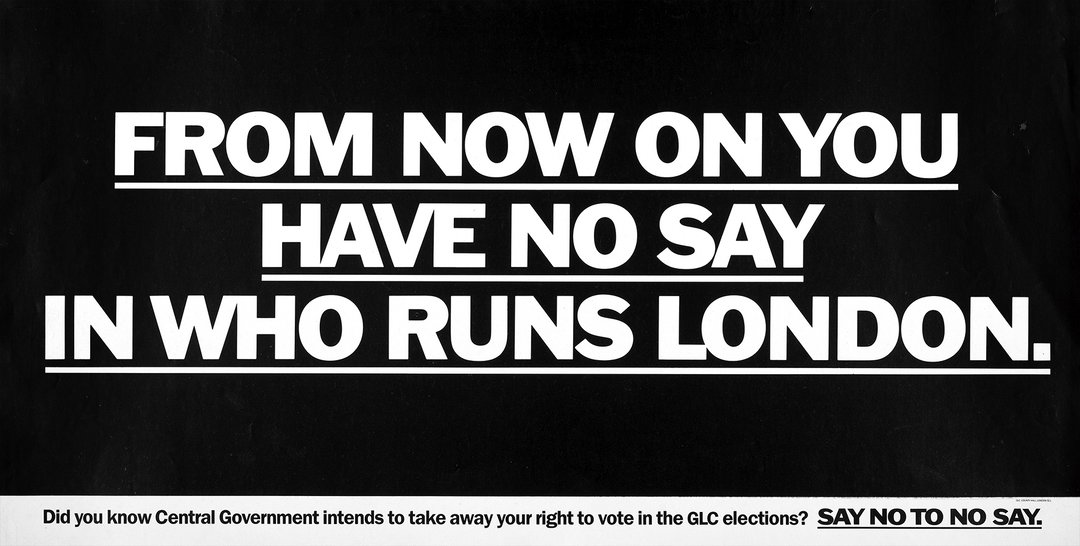
Boase Massimi Pollitt poster, 1984 © The London Archives, City of London Corporation
INT:
At the time, how did the GLC’s visual output contrast with that of Thatcher’s government?
HA:
Famously, Thatcher came to power with the support of the ‘Labour isn’t working’ Saatchi & Saatchi advertising campaign in 1979, the success of which heralded a new era of demand for advertising agencies in politics.
The Conservative party’s visual presence also resided in the press image of the ‘Iron Lady’ herself, both as a new, neoliberal Tory archetype, and as one of middle class morality, respectability and fiscal responsibility. Thatcher’s public image, her clothes, her poise, appeared tightly controlled and choreographed. This contrasted with the GLC’s politicians, who had a younger, more dynamic, attention-grabbing image; they knew the power of a publicity stunt. I’ve come across archive press photos of Ken Livingstone bouncing on a trampoline to promote the opening of the Brixton Recreation Centre – can’t imagine Thatcher doing something like that!
While advertising campaigns may have been perceived as unnecessary expenditure by the Conservatives, in 1986 (the year of the GLC’s closure) the Tories also famously ran a campaign to promote a new idea of popular capitalism – the ownership of shares by citizens in newly privatised utilities. Shares in companies like British Gas, were promoted under the slogan ‘If you see Sid, tell him’, a £159 million campaign run by Young & Rubicam. The same year, the Conservatives’ scare-tactics public health campaign, ‘AIDS: Don’t die of ignorance’ took a tone that only further stigmatised gay communities in the 1980s.
There was a sense of London as a collective project in the ethos of the GLC’s output, as opposed to conservative popular capitalism’s focus on the individual. Furthermore, the GLC demonstrated much more awareness of the struggles of London’s minority communities, in supporting the Lesbian and Gay Centre, for example, and stood firmly against the fear-mongering tone of Thatcher’s discourse on minorities.
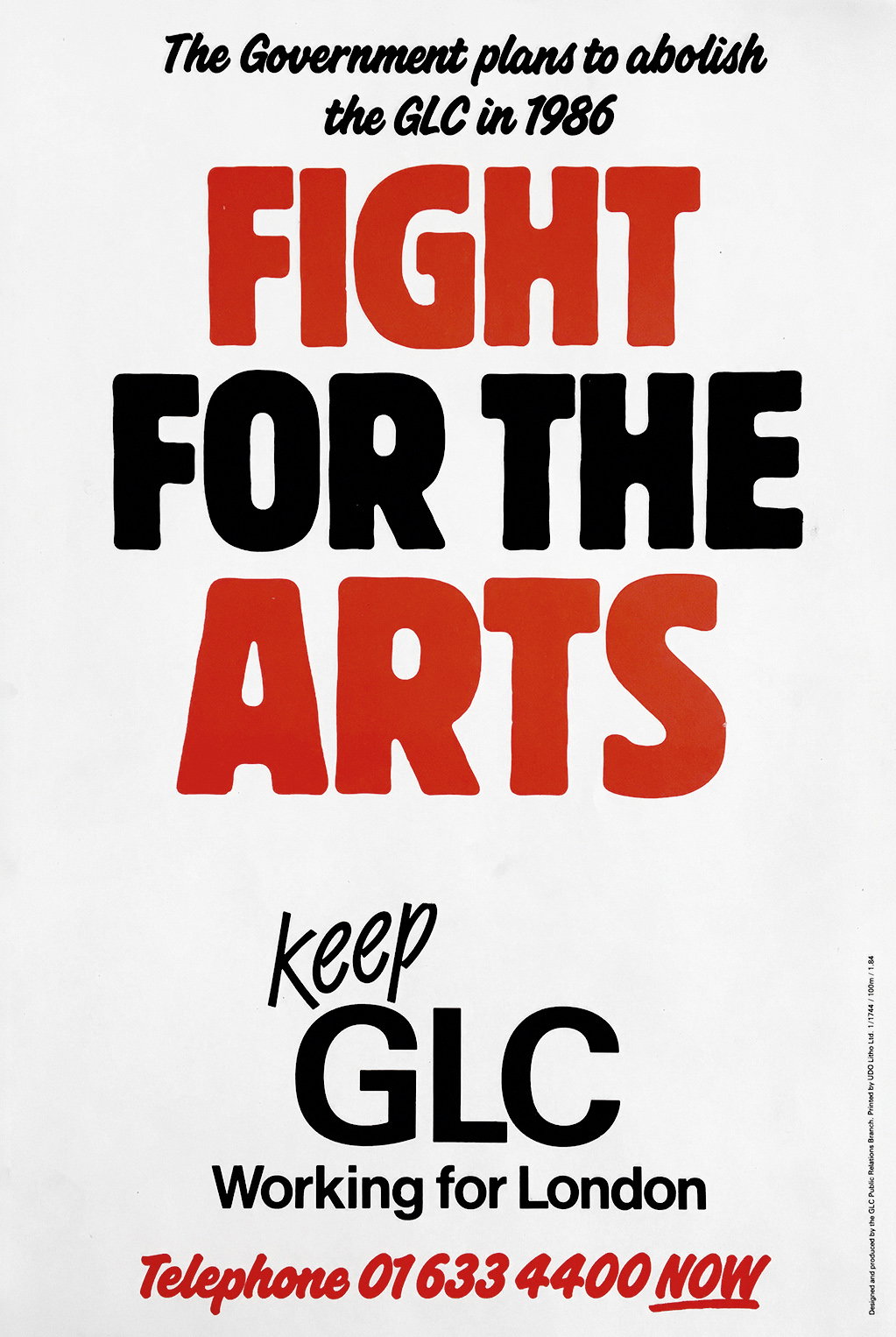
Fight for the Arts, poster, 1984 © The London Archives, City of London Corporation
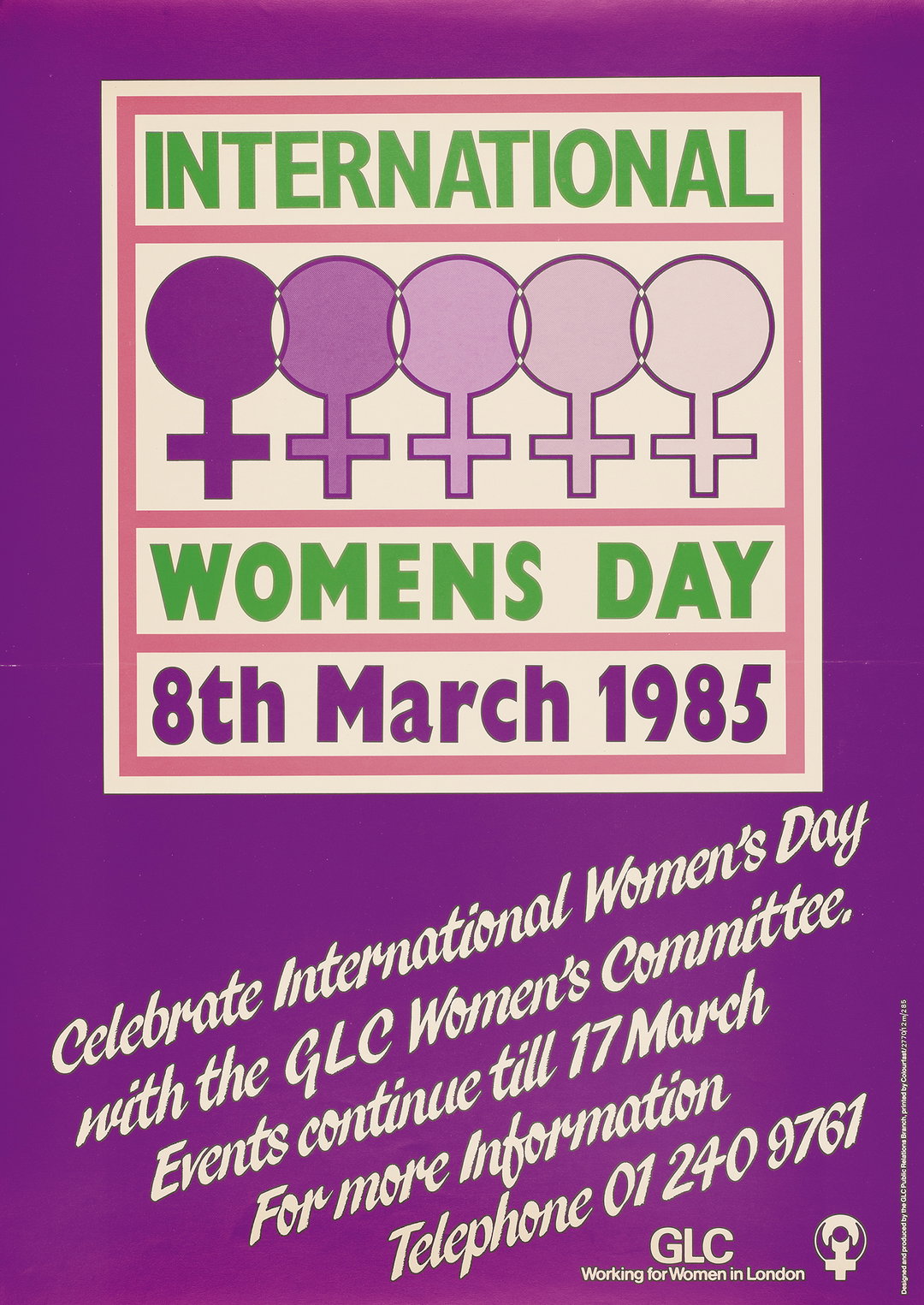
1 of 5
International Women’s Day poster, 1985 © The London Archives, City of London Corporation
1 of 5
International Women’s Day poster, 1985 © The London Archives, City of London Corporation
INT:
So much of this art was intended for the streets, rather than the white walls of a gallery. How did the GLC tailor its output to street walls, large formats and mass reproduction?
HA:
Firstly, the GLC had an arts and recreations budget that traditionally, since the 1960s, had been allocated to a few ‘centres of excellence’ of arts in London – specifically, opera, ballet and classical concert halls. The Livingstone GLC however perceived these organisations as too exclusive, and also sought to sponsor a lot of grassroots groups – community organisations and arts projects and public festivals. Rather than sponsoring work that only spoke to narrow, art gallery visiting audiences, it chose to focus on supporting creative work that engaged with local sites and communities. This meant that art with a public presence and community input – such as murals, or community workshops – took priority.
The GLC didn’t make art themselves – but it supported artists to participate in some of the GLC’s themed campaigns to promote a variety of social issues. The GLC’s commissioned work, including public murals and billboard poster campaigns, did have a presence on London streets, the idea being that they would be seen by as many people as possible.
At times, the GLC did promote art work to be shown in gallery exhibitions – but usually this was for underrepresented communities in the arts, often for Black artists, who were frequently neglected by the existing gallery system as a whole throughout the 1980s. It supported local community galleries, like the Brixton art gallery, which had inclusive exhibitions.
“The spirit of community-oriented, political cultural practice certainly persists.”
Hazel Atashroo
INT:
Do you have any favourite pieces of ephemera from the GLC? Why have these particular ones stayed with you?
HA:
There are many thought-provoking images in this book that might surprise readers, with what’s changed a lot (and what hasn’t) since the 1980s. The selection encompasses many aspects of London life and municipal services, from early recycling posters to dial-a-ride transport or equal opportunities leaflets for women in the Fire Brigade: they all tell a story.
The GLC put on many popular festivals and events to promote its work and entertain Londoners at the same time. As a music fan I was often intrigued by the lively posters and lineups: Orange Juice, Steel Pulse, Misty in Roots, Pauline Black, Billy Bragg, to name but a few. There’s also a superb poster for a youth ‘hip hop jam’ breakdance festival… No wonder these free events drew big crowds. Speaking of music, we also included the sleeve of the GLC-supported dub reggae record featuring Ranking Ann, produced to protest against the policing bill: you can find that one on the internet, the lyrics are quite hard-hitting.
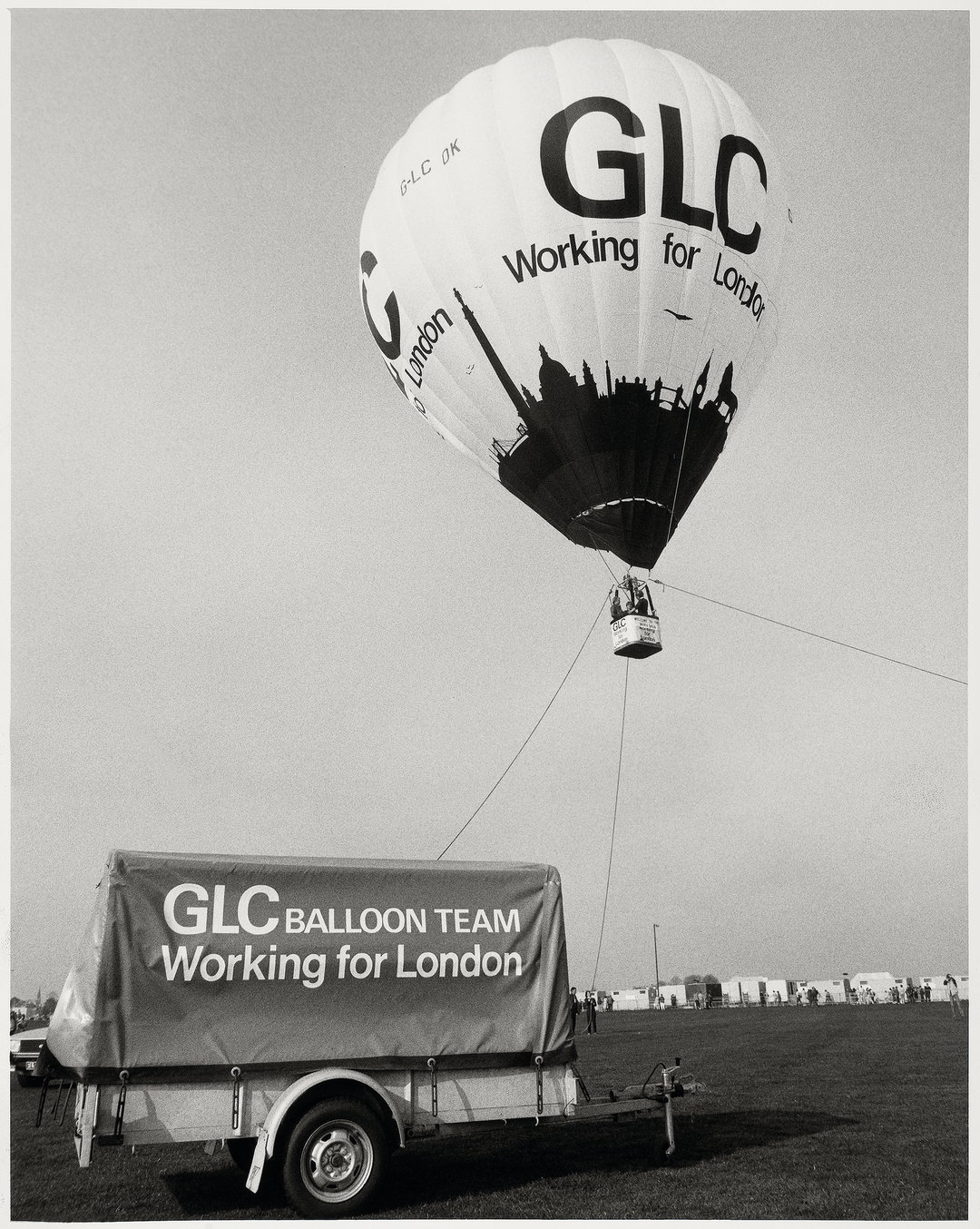
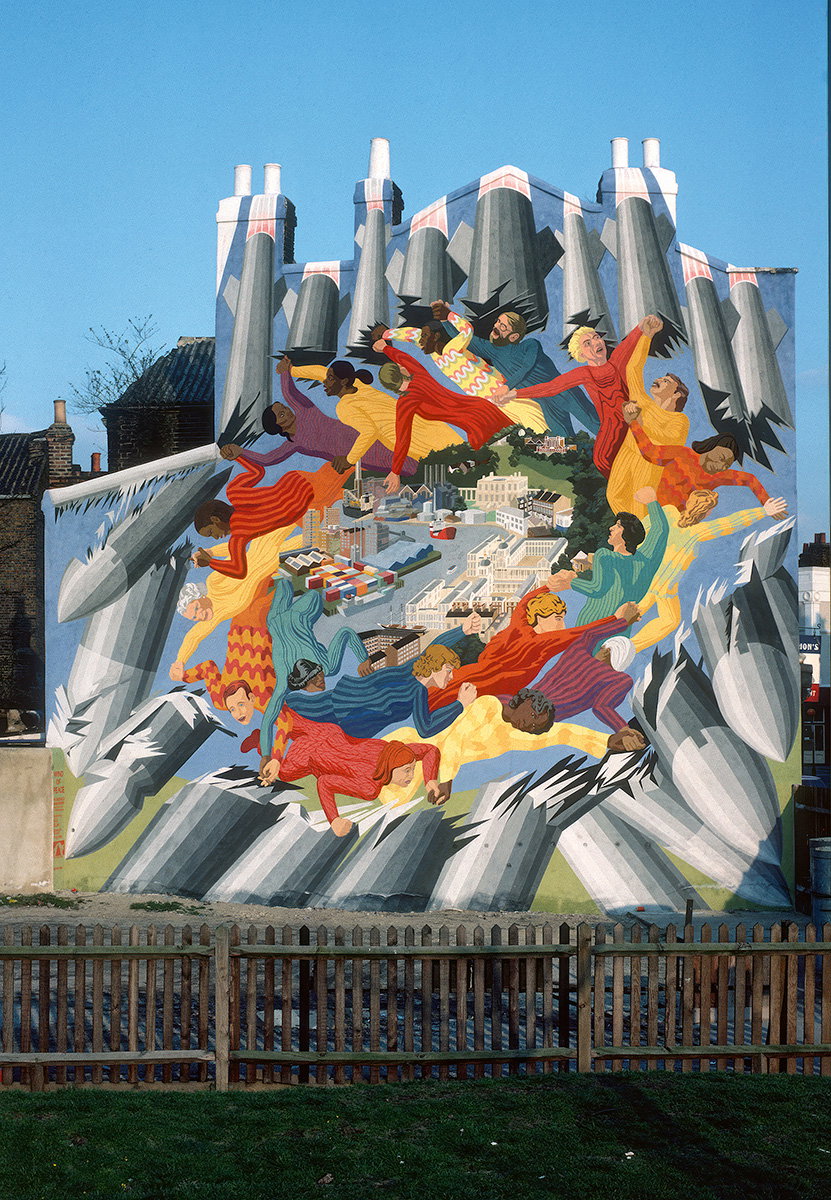
Murals are a somewhat ephemeral art, subject to graffiti, weather, and inevitable changes in building ownership and architecture over time. Many of the GLC-sponsored murals didn’t survive beyond the 1990s. I would love to have actually seen the Anti-Racist Year mural art works, commissioned from Black artists Gavin Jantjes, Lubaina Himid, Chila Kumari Burman and Keith Piper, and Shanti Panchal – but to have them well documented in this book is the next best thing. I always love to pass by the beautifully restored Hackney Peace Carnival Mural by Ray Walker, when in Dalston – there’s a perfectly placed bench to admire it from, if you get a chance. See if you can pick out the details in the crowd, there’s a GLC balloon!
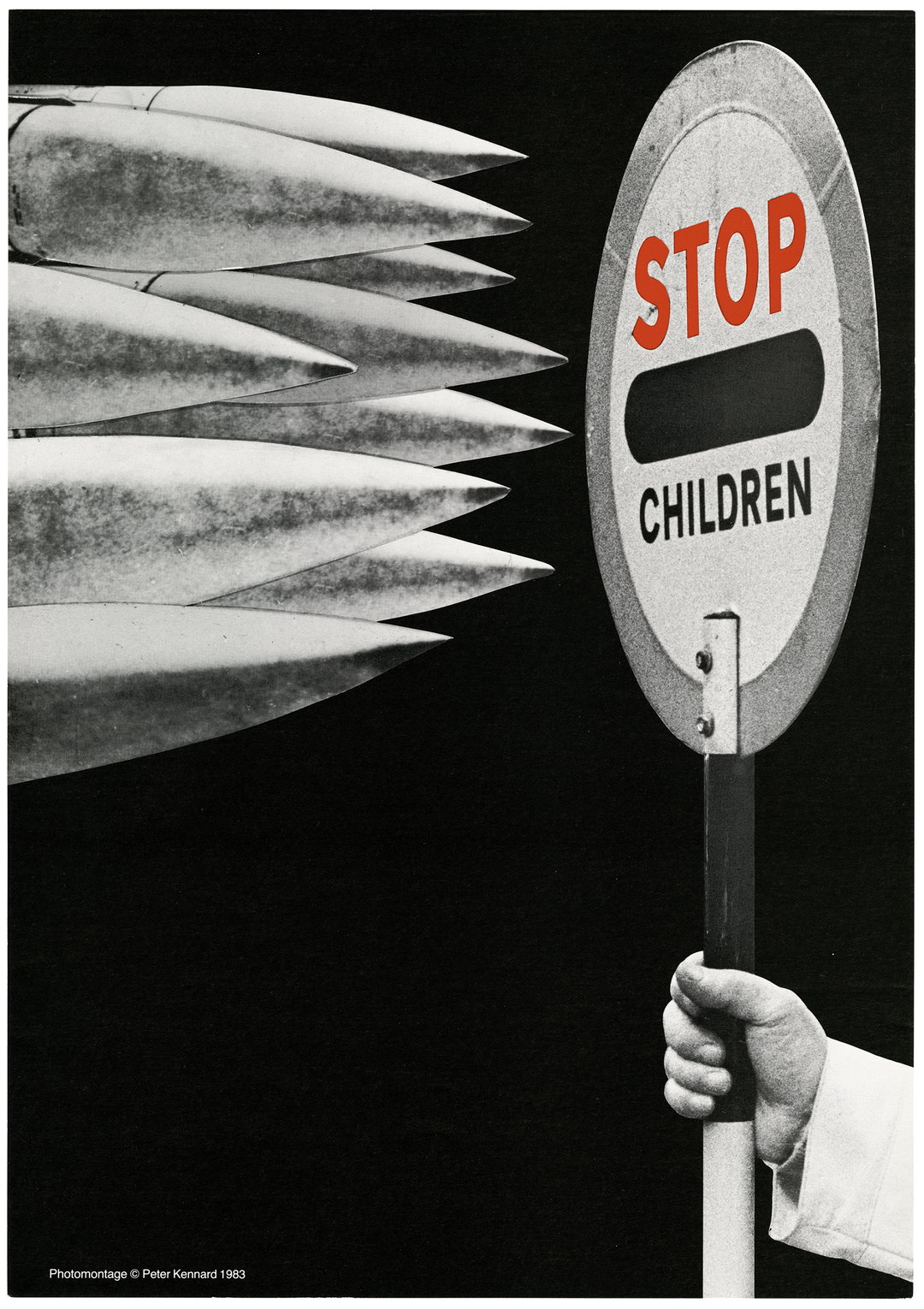
GLC Peace Poster, Peter Kennard, 1983 © Peter Kennard
INT:
What is the legacy of the GLC today? How did it change the way we think about art and political messaging?
HA:
We could speculate that the impact of the final five-year GLC administration on London is actually quite significant, despite the seeming finality of its closure and, along with it, the end of its social democratic vision for London, with the GLC’s abolition in 1986. The GLC rethought so many aspects of running London in a short space of time. One impact is that it significantly pioneered equalities approaches that would become common practice, emphasising women’s, lesbian and gay communities (LGBT+ terminology wasn’t in use until later), and ethnic minority communities right to the city, its public services and spaces, and to cultural representation.
The GLC’s impact on London’s cultural life can’t be overestimated. It challenged a misguided notion that had persisted in politics in the postwar period – that arts funding should be thought of as an apolitical activity. Directly acknowledging the politics of all culture, and all funding decisions, arts sponsorship at the GLC became overtly political instead.
INT:
Studying the GLC in the context of today, how does it make you reflect on current political approaches to art? What you think movements could learn or take away from the GLC?HA:
It’s hard to generalise about this, because a lot has changed in London. The network of community centres and youth clubs that once supported more grassroots and community cultural practices has shrunk in recent decades, along with their funding. Renting space in London is now prohibitively expensive, gone are the days where there were empty buildings that could easily be squatted, or where the dole or enterprise grants were available that might support creatives finding their feet. The field of community arts practice is also far more professionalised than it was in the 1980s, with more commissioned in the context of large mainstream cultural institutions seeking to reach local resident communities in their work. London also has a more developed, international art world and market presence compared to the 1980s, and even seemingly public-oriented practices, like the creation of murals or public sculpture, often form a part of the furniture of private, corporate land and spaces in the city, unconnected to local communities. So the contemporary situation for artists is quite different.
However, the spirit of community-oriented, political cultural practice certainly persists, much of it on a voluntary basis now by ordinary people with good ideas, who see a need in their local community and work to find ways to address it – whether that be cultural, an educational theatre project, an equipment lending library, a community cinema, or environmental, like a river action group, a nature reserve campaign or a community food garden. I think if today’s politicians really want to tap into this kind of proactive, creative energy, they need to put their money where their mouth is and invest in this work, because the GLC’s experience is proof that it is these initiatives that create the politically engaged artists and communities of the future.
You can pre-order a copy of London’s Ours! here, and a copy that includes a limited edition letterpress print by London Centre for Book Arts here.
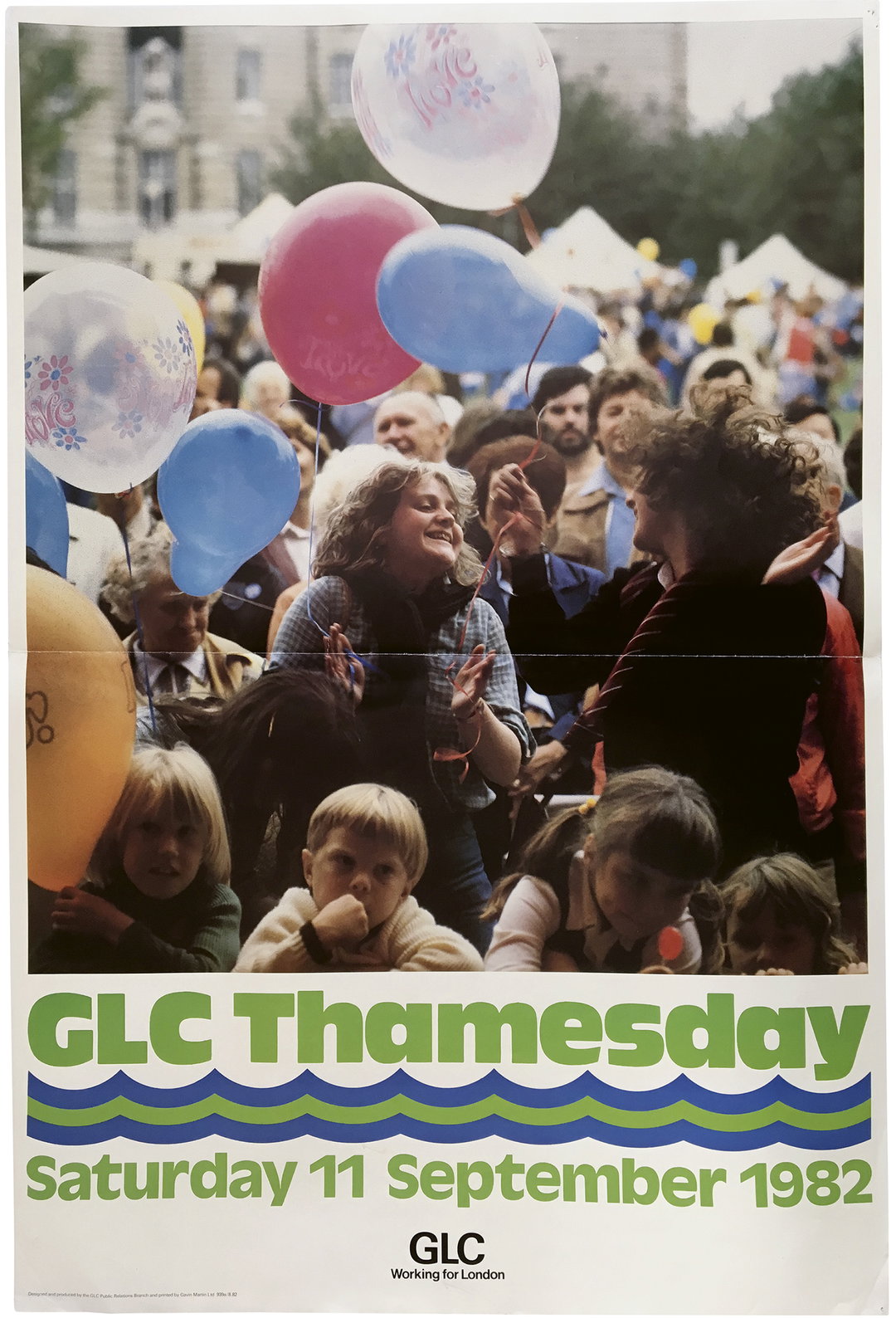
GLC Thamesday poster, 1982
Hero Header
Let’s Beat Racism Together, poster, 1984 © The London Archives, City of London Corporation
Share Article
Further Info
About the Author
—
Olivia (she/her) is associate editor of the website, overseeing the day-to-day editorial projects as well as Nicer Tuesdays events. She joined the It’s Nice That team in 2021. ofh@itsnicethat.com
To submit your work to be featured on the site, see our Submissions Guide.