




- Words
- Billie Muraben
- —
- Date
- 11 February 2016
- Tags
Making propaganda about propaganda: Metahaven’s new film considers fantasy and truth in internet culture
Share
Share
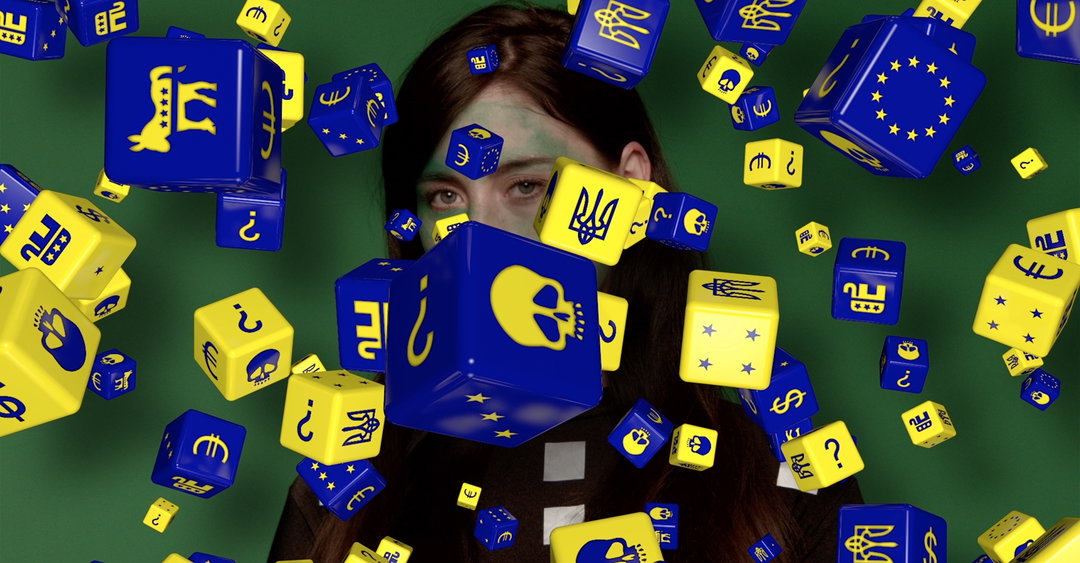
Design studio Metahaven’s work concerns issues such as information democracy, corporate identity and the fallout of Web 2.0. Founded by Vinca Kruk and Daniel van der Velden, they are recognised as key thinkers and producers in design and more broadly. In 2014 they were commissioned by Lighthouse and The Space, a BBC and Arts Council England not-for-profit service, to make an online documentary that challenged the internet as “a weapon of mass disruption”.
The Sprawl is the result of this, a multi-channel video installation, feature-length film and episodic online documentary that considers the “ways in which fantasy can be designed so as to seem or feel like a truth”, as Daniel van der Velden of Metahaven describes.
"Mostly it is about how propaganda multiplies within that upload/download architecture"
Metahaven
Until recently propaganda has been associated with linear narratives taking place in singular media, but with the internet all media has converged and it is here that The Sprawl steps in. “Mostly it is about how propaganda multiplies within that upload/download architecture; an architecture in which both fact and fiction can exist side by side and even overlap,” Daniel says. Aesthetically the film is a continuation of the work Metahaven has become synonymous with, that which occupies and overcrowds its context often to the point of satire. Daniel describes their intent as communicating a sort of “truth futurism.” He continues, “we mean to say that you should perhaps more forcefully stand for, defend the right to have and believe in your own truth”.
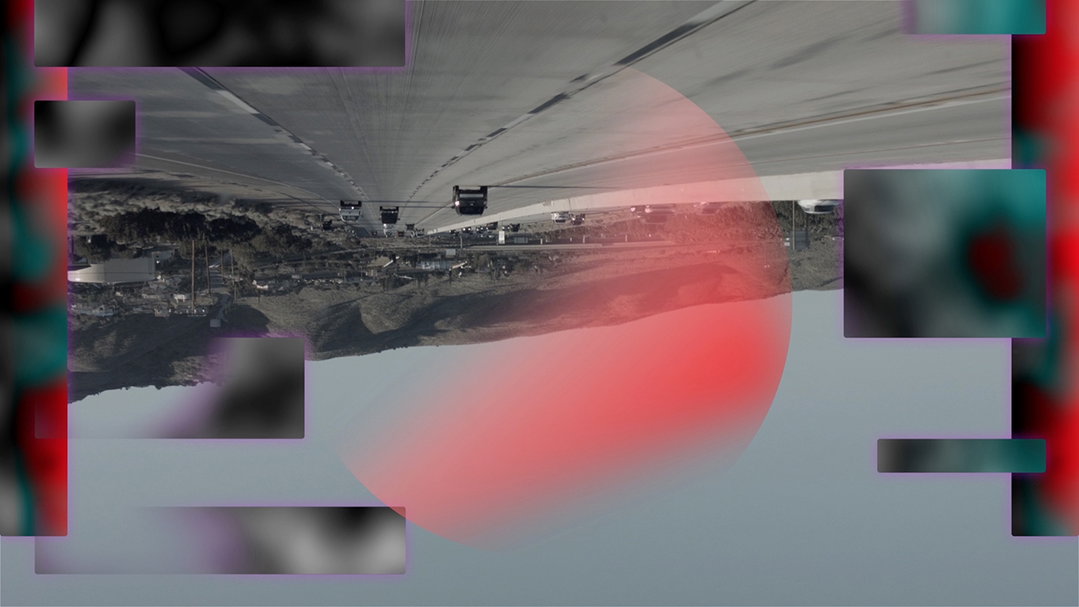
Metahaven: The Sprawl (Propaganda About Propaganda), HD video still 2015, courtesy of Lighthouse and The Space
The film spans the aesthetic and narrative traditions of documentary, art film and music videos, and is particularly inspired by the “deepest corners of YouTube”, which Daniel considers to have “taken over much of the space formerly occupied by television… steadily invading the space of qualified cinema”. The Sprawl imagines an exaggerated worldwide social media based on both the internet activism essential to movements such as Wikileaks, Anonymous, the Arab Spring and Occupy Wall Street as well as the censored media outlets of contemporary Russia and Ukraine.
Inspired be social media ‘memes’, The Sprawl nods to the multiple truths available in contemporary media expression. “Multiple ‘bubbles’, if you will, of narratives that all seem to make sense from some point of view, yet are mutually exclusive, disregarding each other, not liking each other, denying any negotiation. The only things they still have in common are their subject matter, and their internet hosting platform,” Daniel says.
"We analysed [Rick-rolling] first along the lines of the KLF, and their _Manual_ to create a UK No.1 hit, [which had] even mentioned _Never Gonna Give You Up_"
Metahaven
One of Metahaven’s earlier projects, the book Can Jokes Bring Down Governments, analysed one of the first and still active memes, of Rick Astley’s Never Gonna Give You Up. Otherwise known as Rick-rolling, it is used to signal someone being hacked and has been applied in many contexts of political and social malcontent. “We analysed it first along the lines of the KLF, and their Manual to create a UK No.1 hit, [which had] even mentioned Never Gonna Give You Up” Daniel says, “the song then resulted into an infinitely reproducible pattern… [shifting] from a non-political to a political expression.”
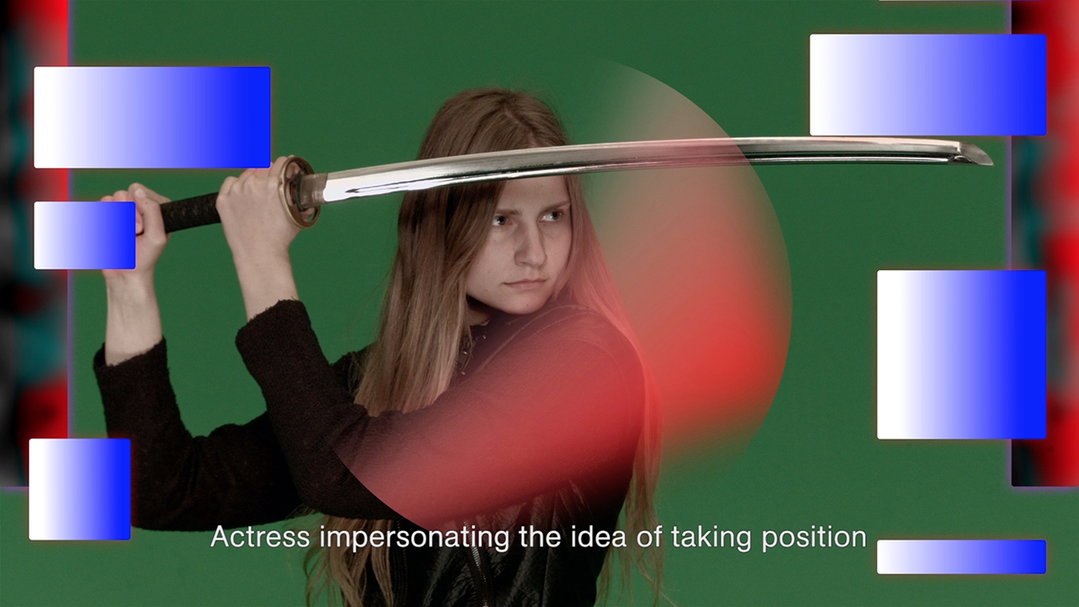
Metahaven: The Sprawl (Propaganda About Propaganda), HD video still 2015, courtesy of Lighthouse and The Space
Memes, such as the Rick-roll, are an example of the “parts” of the internet The Sprawl makes an homage to. Looking to the failings of, and juxtapositions implicit to online media Daniel highlights the problems inherent to movements such as Occupy: “it lacked ‘verticality.’ Horizontality is able to undo many of the limitations inside political discourse… [but] the structure can at the same time become very muddled when it is about making decisions. If progressive politics needs a new form of futurism, we can say that it needs to project a world and thus, to design its own truth. Whether you like it or not, this is propaganda.”
Fantasy is intrinsic to the projection of a new order, it is complex and however makeshift or problematic is in discord with what exists whilst being adopted by the existing Internet and meme culture. But at the same time “fantasy as a way for people to dream up new futures for themselves is an open call”, says Daniel, and it’s here that Metahaven’s The Sprawl comes in, exploring how fantasy and propaganda have gained prominence over transparency and accountability.
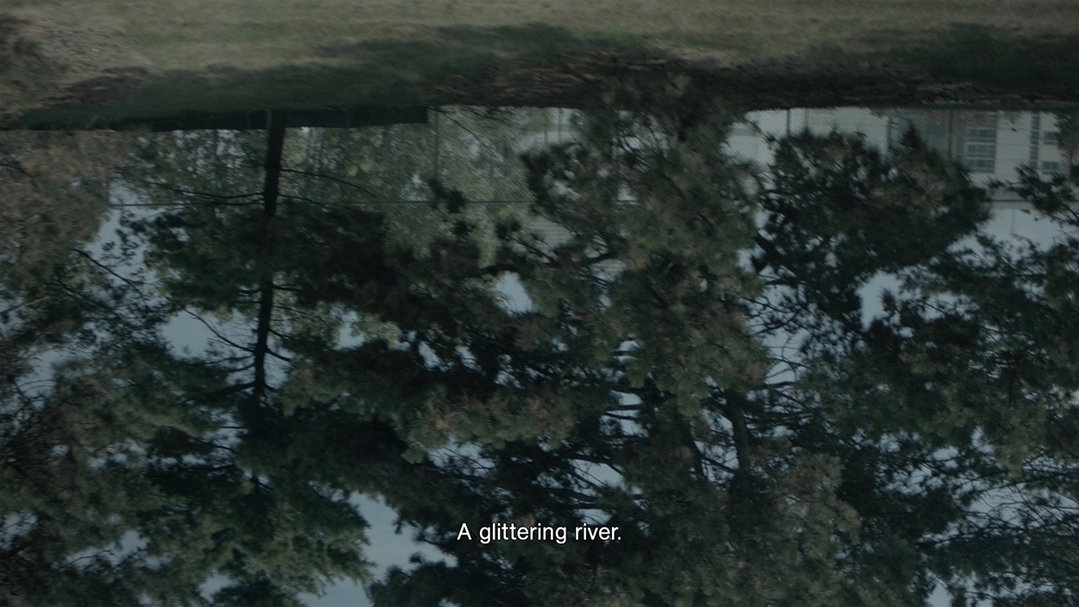
Metahaven: The Sprawl (Propaganda About Propaganda), HD video still 2015, courtesy of Lighthouse and The Space
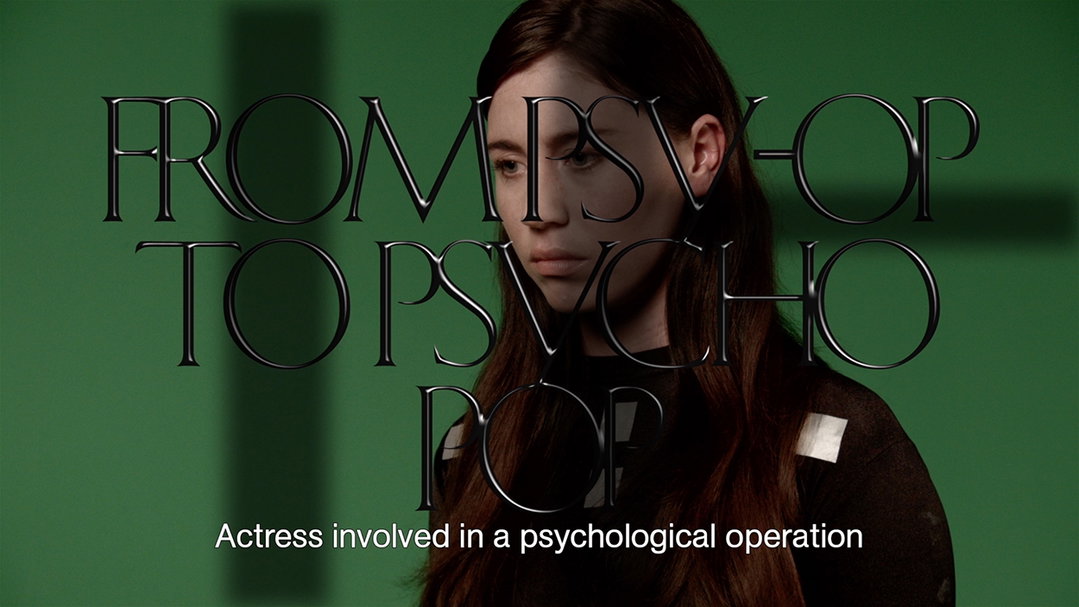
Metahaven: The Sprawl (Propaganda About Propaganda), HD video still 2015, courtesy of Lighthouse and The Space
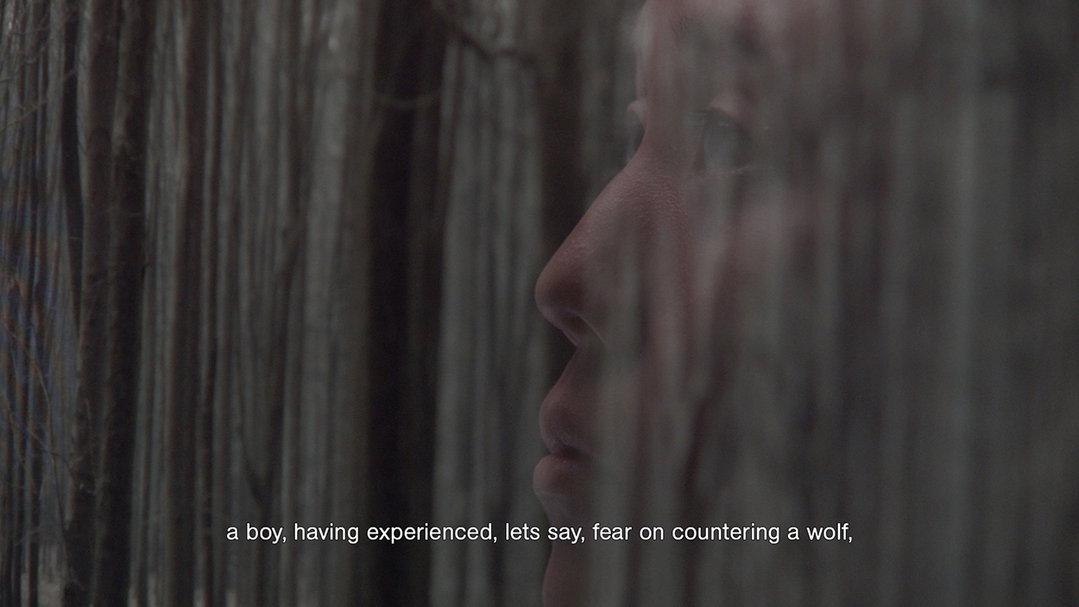
Metahaven: The Sprawl (Propaganda About Propaganda), HD video still 2015, courtesy of Lighthouse and The Space
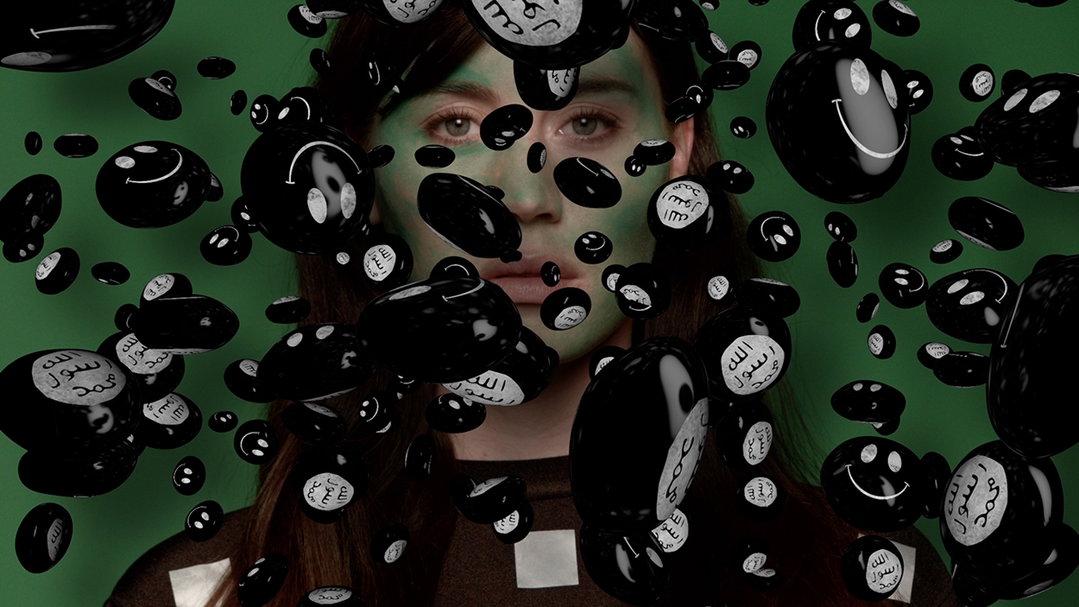
Metahaven: The Sprawl (Propaganda About Propaganda), HD video still 2015, courtesy of Lighthouse and The Space

Metahaven: The Sprawl (Propaganda About Propaganda), HD video still 2015, courtesy of Lighthouse and The Space
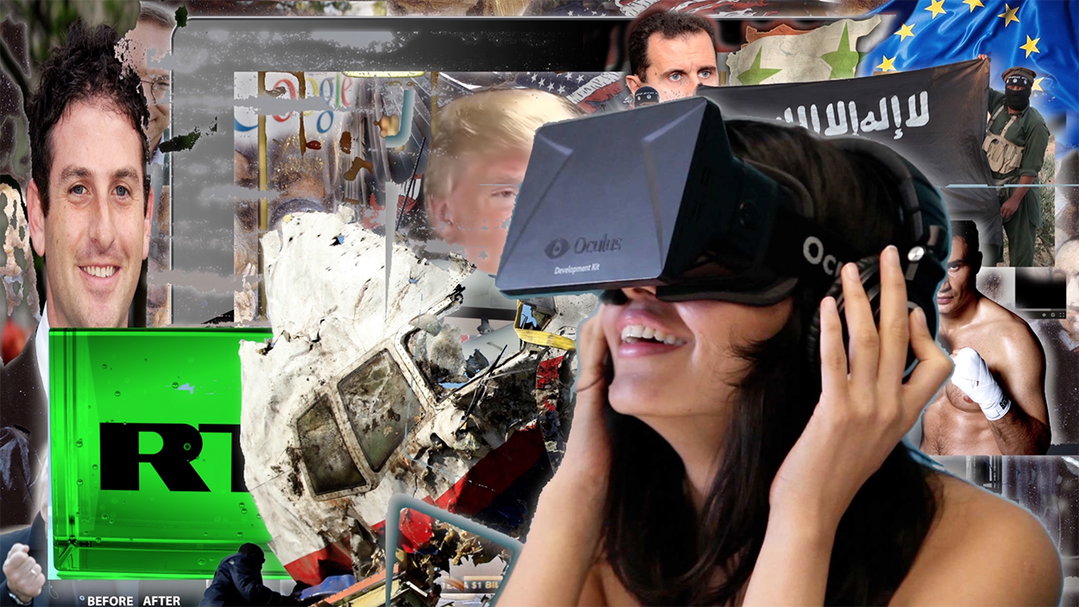
Metahaven: The Sprawl (Propaganda About Propaganda), HD video still 2015, courtesy of Lighthouse and The Space
Share Article
Further Info
About the Author
—
Billie studied illustration at Camberwell College of Art before completing an MA in Visual Communication at the Royal College of Art. She joined It’s Nice That as a Freelance Editorial Assistant back in January 2015 and continues to work with us on a freelance basis.
