

- Words
- Olivia Hingley
- —
- Date
- 31 March 2026
- Tags
Good magazines copy, great magazines steal: The Fence on mining the archives to create one of the UK’s best periodicals
With its purely illustrative approach and ever-changing masthead, The Fence feels far from run of the mill, but here founder and editor Charlie Baker and art director Mathias Clottu explain why they’re not scared of embracing tradition.
Share
Share
The Fence is a magazine that feels hard to define. Within the 60-odd pages of its most recent issue, features include an ode to the deceased multi-millionaire owner of the Segway company, a suggestively splattered double-spread dive into sex in club dark rooms, and a page dedicated to whether different ingredients will make a drinkable martini – kimchi juice and borsch, among others. It’s exactly this unpredictable breadth of entertaining writing that’s made it one of the best periodicals to come out of the UK’s publishing landscape in the past decade, but it isn’t the only thing that’s grown a dedicated readership. The magazine’s deceptively simple, thorough and illustration-led design has done a hefty amount of work too.
“We’re not scared of tradition – we’re very much mining the archives.”
Charlie Baker
‘Good artists copy, great artists steal’ is a quote lazily thrust around, pasted on Stock images and reshared via Pinterest, wistfully spoken by an A Level art teacher to a class of bored teenagers, often misaligned to Pablo Picasso, popularised by Steve Jobs and it’s maybe even a bastardised line from a T.S Lewis essay. Yes, it’s contrived, but when it comes to The Fence, it does actually have some truth about it.
In 2018, when first devising ideas for the mag, founder and editor Charlie Baker could often be found in The British Library leafing through old copies of The Face, NME and The Modern Review, and he regularly references Spy Magazine and Private Eye as key influences. What’s more, its quippy tagline ‘The UKs only magazine’, is a direct nab from The Army Man, a satirical magazine founded in the late 1980s by George Meyer, a writer who went on to work on The Simpsons, which lead with the tagline ‘America’s Only Magazine’. “So it’s a very obvious lift,” says Charlie. “We’re definitely very open about how we’re taking ideas from dead magazines. We’re not scared of tradition – we’re very much mining the archives.”
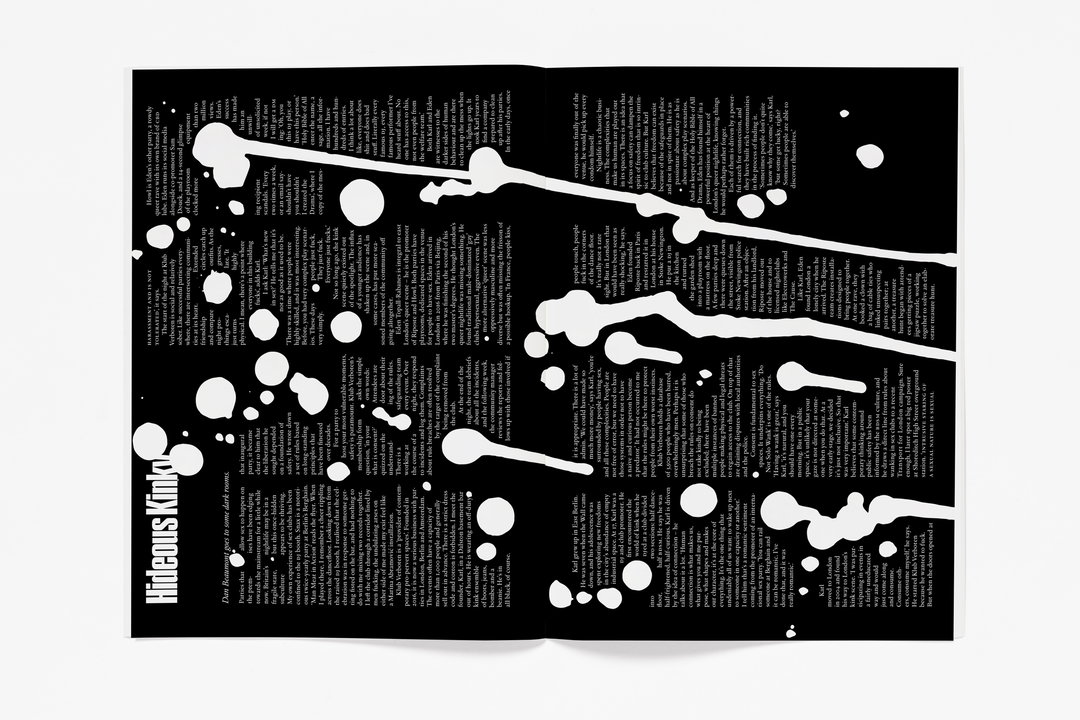
The Fence – Issue 26
“We use the bespoke typeface to fill the space and be loud when we need to.”
Mathias Clottu
Charlie noticed, at the tail end of the 2010s, an uptick in print magazine subscriptions, and a growing UK interest in the New Yorker, and he felt there was space to add something of his own, something “in more of the classic English humorous tradition”. Importantly, it wasn’t set to be something just “for the boys” or solely those looking middle-age dead in the eyes, as is often associated with such media, but something for everyone. It’s true, when I first picked up a copy of The Fence I was first inclined to think it in the same vein as my parents’ piles of Private Eye, ones I opened and sadly never seemed able to muster the same eye-watering laughter it evoked in them. In the pages of the first copy of The Fence I picked up, I was pleased to find something both my mum would enjoy (an encounter with a historian trying to clear Oliver Cromwell’s name) and something I would too (a story about Princess Diana’s favourite cafe).
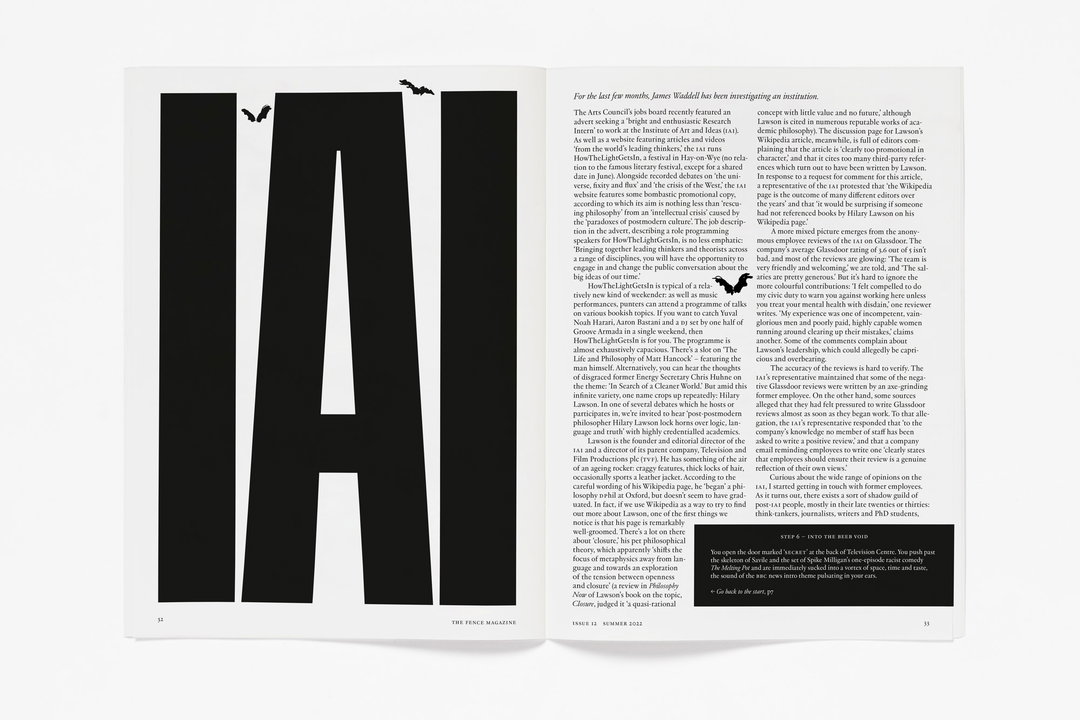
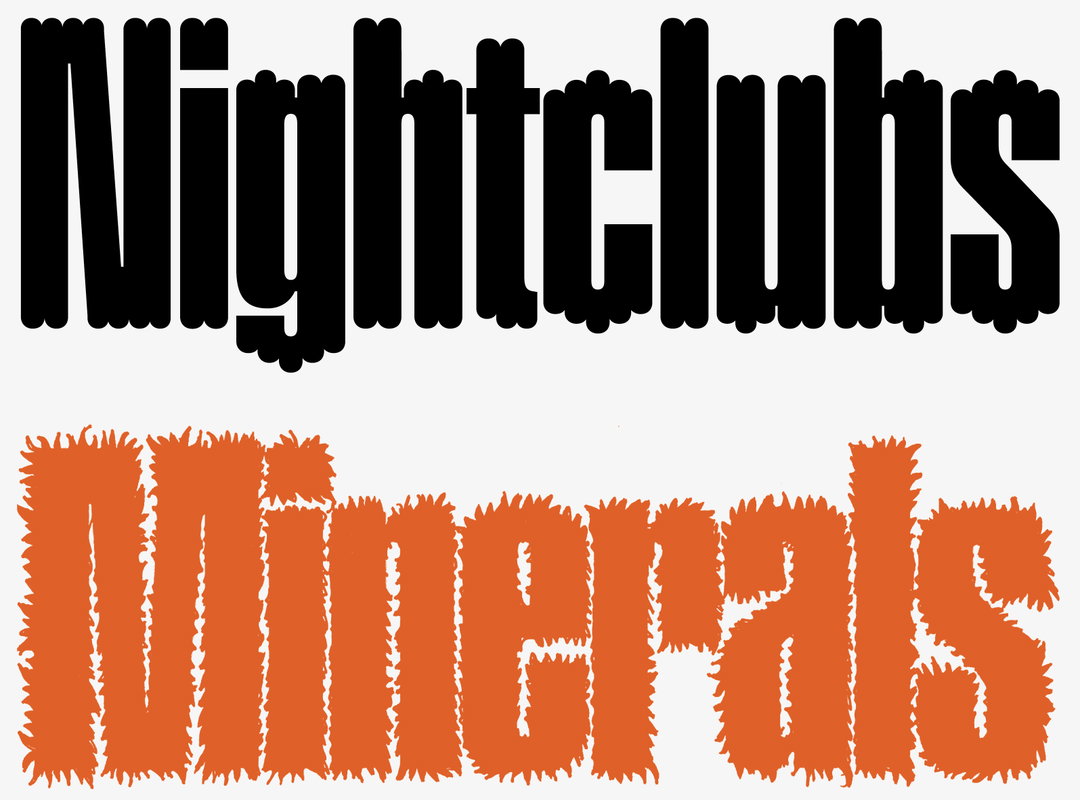
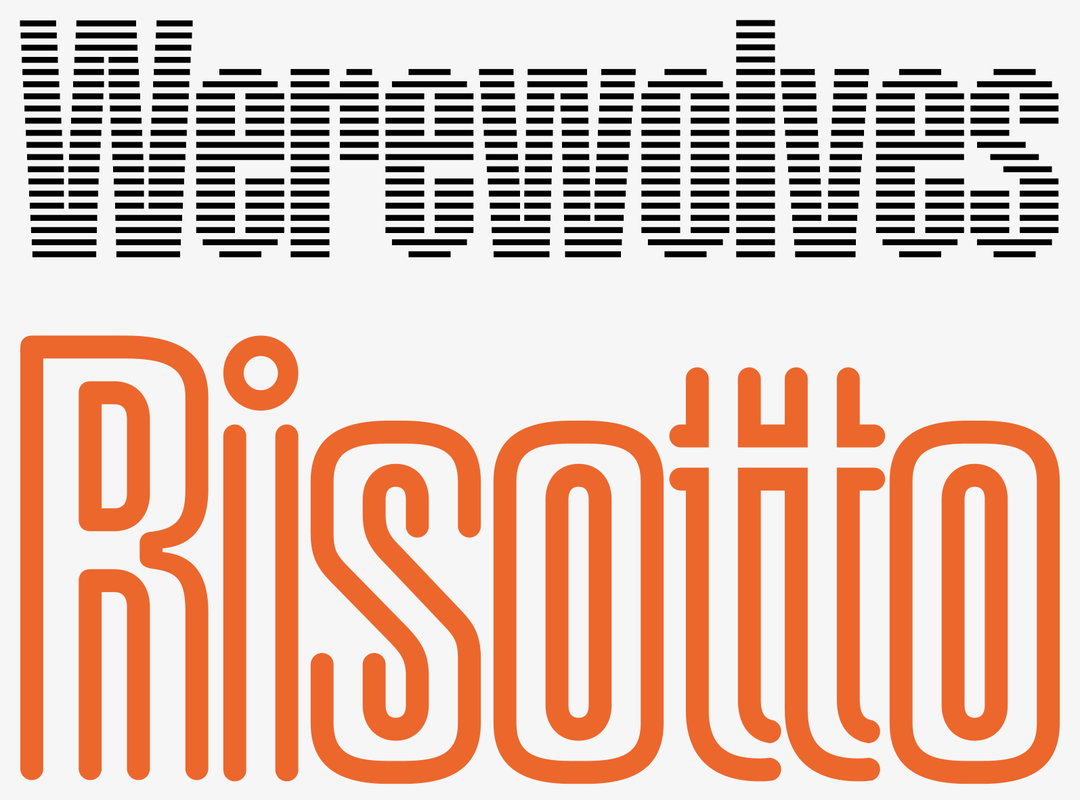
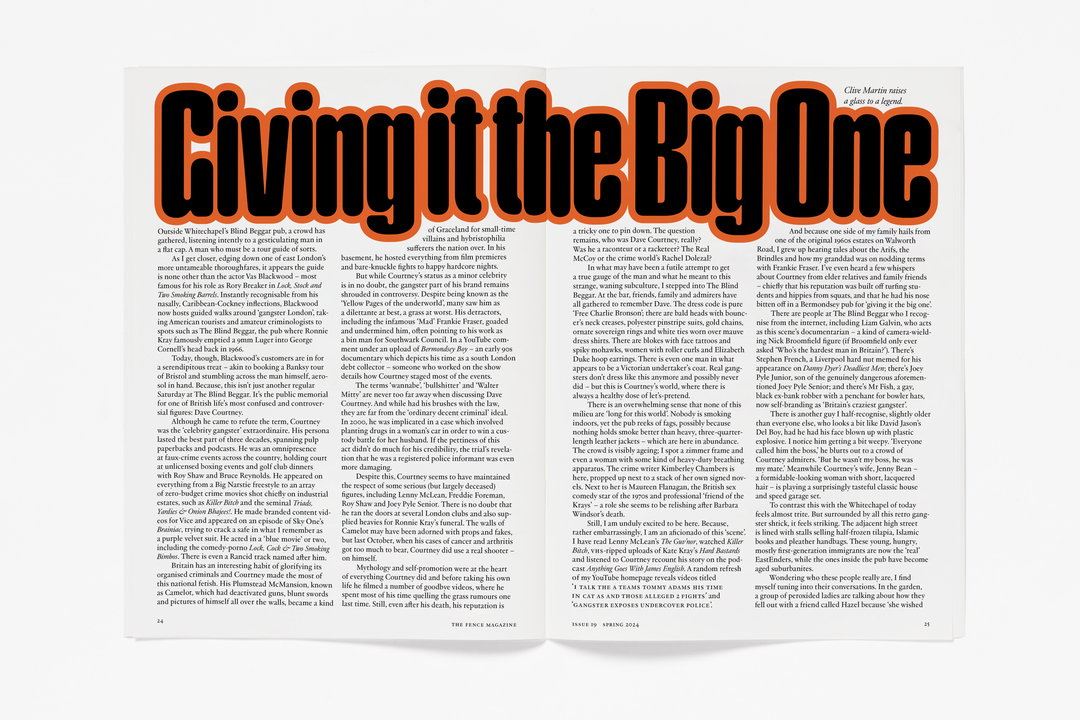
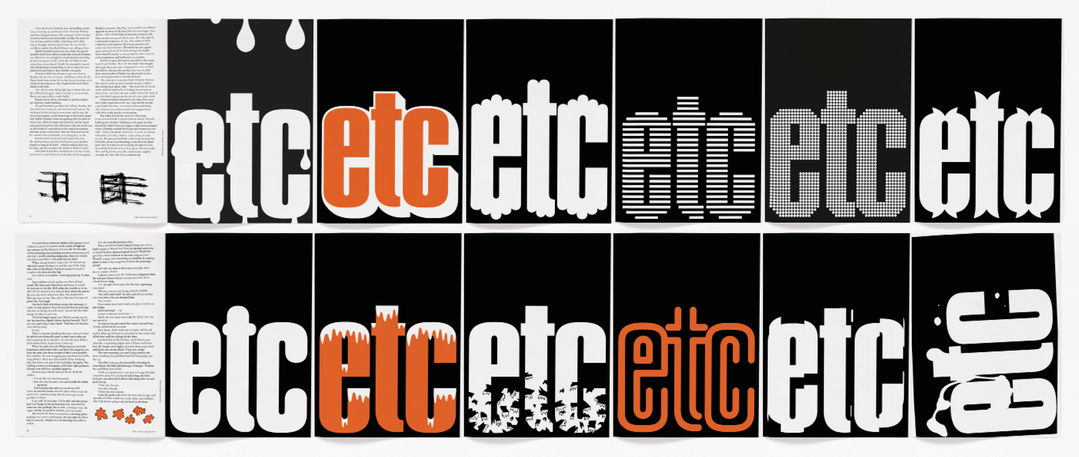
Studio Mathias Clottu has art directed The Fence from day one, and its eponymous founder Mathias also has no fears of tradition, using his vast library of old magazines for inspiration, adding the French publications La Quinzaine Littéraire and Canard Enchaîné to the long list of references. Mathias defines the design as “rigorous yet flexible”; he wants it to be akin to a reader returning to a favourite restaurant – finding comfort in well-worn habits, but still, within that recognisable format, holding the potential for surprise. The traditional side of things translates in the typography, the body serif text is set in a modern take on the 17th century Jannon’s typeface, and is what Mathias describes as “no-fuss, something that’s easy to read but also elegant and clean”. The long and blocky bespoke typeface, designed by Adrien Vasquez from Abyme foundry, and used primarily for titles and the magazine’s masthead, draws on the long history of woodblock printing and midcentury poster typefaces – “we use the bespoke typeface to fill the space and be loud when we need to”, says Mathias.
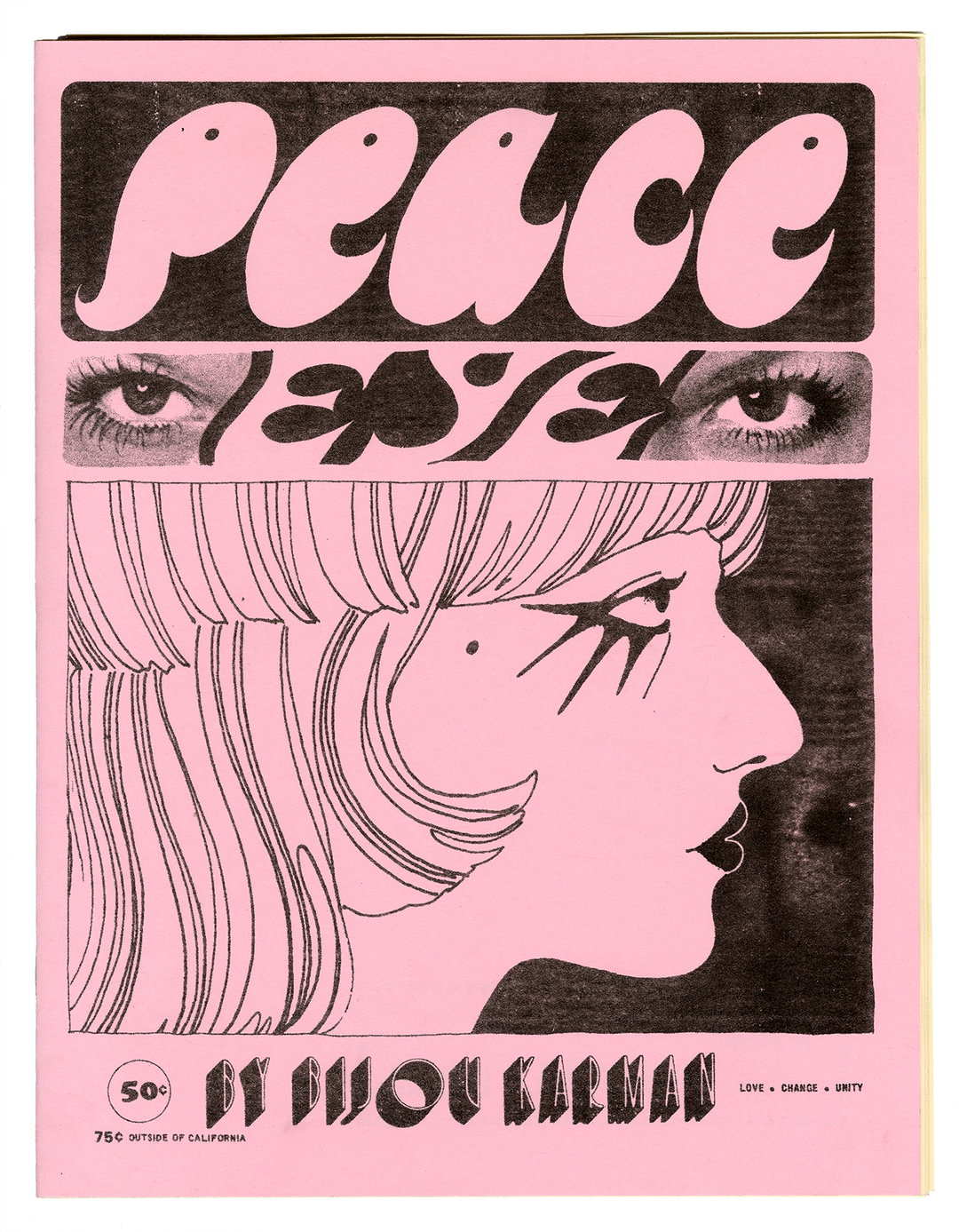
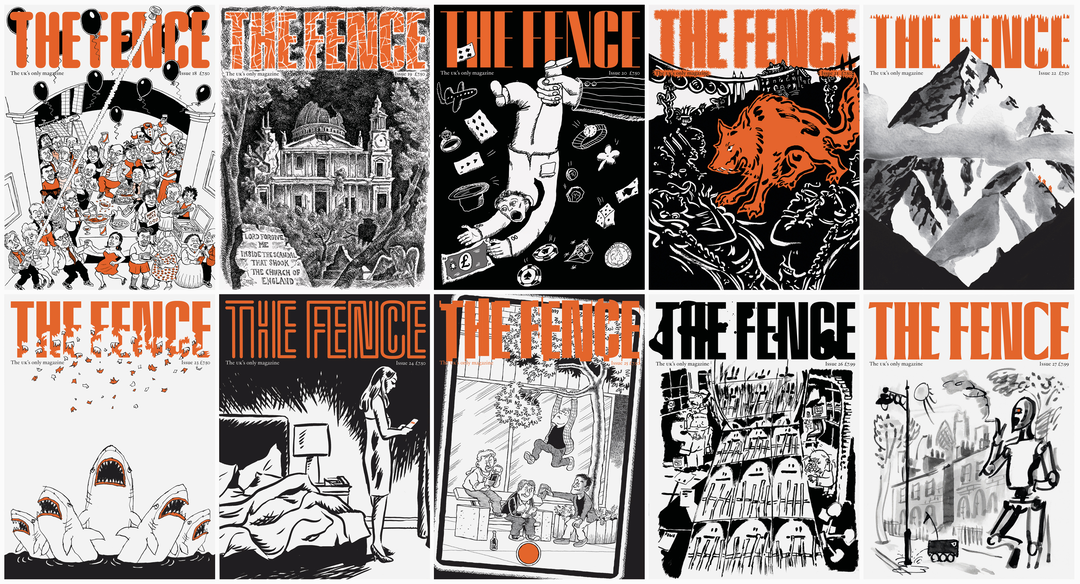
The bones of this display typeface are space for experimentation. At the top of The Fence, you might often find that the masthead has been “mess[ed] up”, Mathias says. For each issue, Adrien develops the masthead, adding playful, illustrative features that respond to the cover story. Past designs have included a pannacotta biscuit treatment, it’s bulbous edges mimicking the cooker cutter shape; one had drips falling from each letter, possibly blood, possibly a suggestion of a sweltering heatwave; while a recent issue removes the middle of each glyph to emulate a neon sign, heightening the tired isolation of the cover star’s messy bedroom scene. Once published, there are no rules to how these bespoke mastheads might be used again. The latest issue, issue 26, was a print special – using its pages to pay homage to all things print and the medium’s potential for playfulness – and it recycles and repurposes these illustrative mastheads, dropping them around like easter eggs. Clearly, Charlie and Mathias aren’t just mining other magazines’ archives, but their own too.
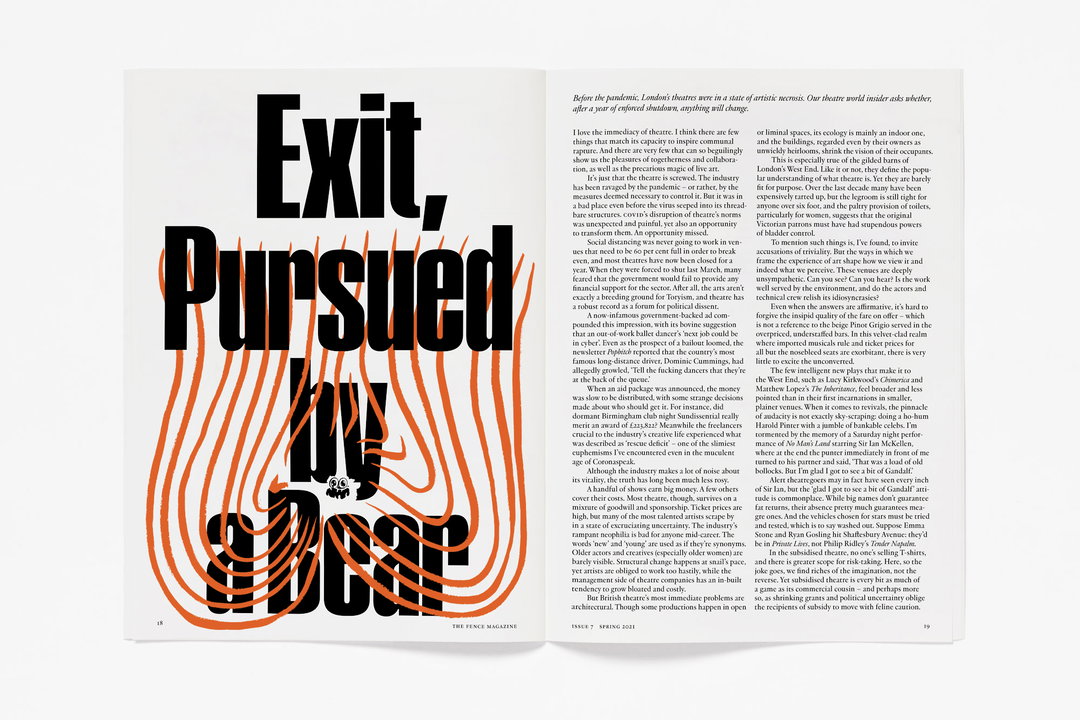
The Fence – Issue 7 (Illustration: Martin Groch)
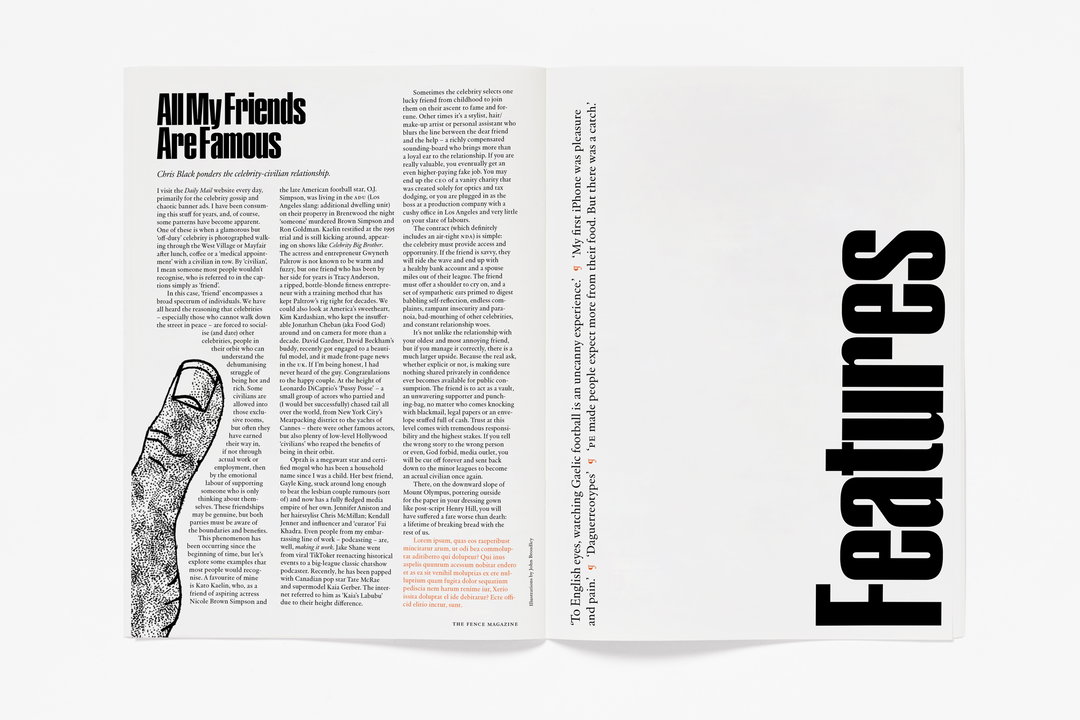
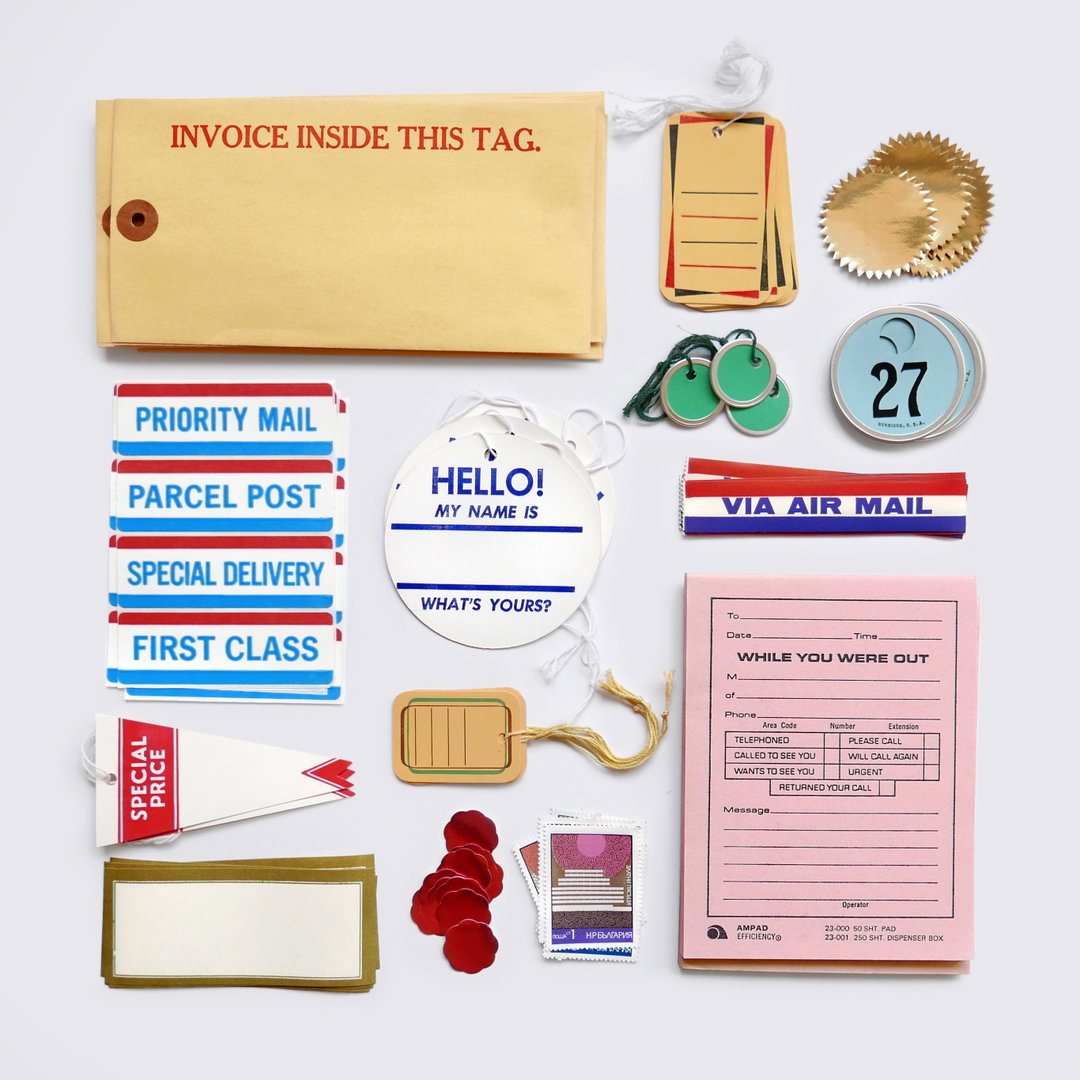
The Fence – Issue 26 (Illustration: John Broadley)
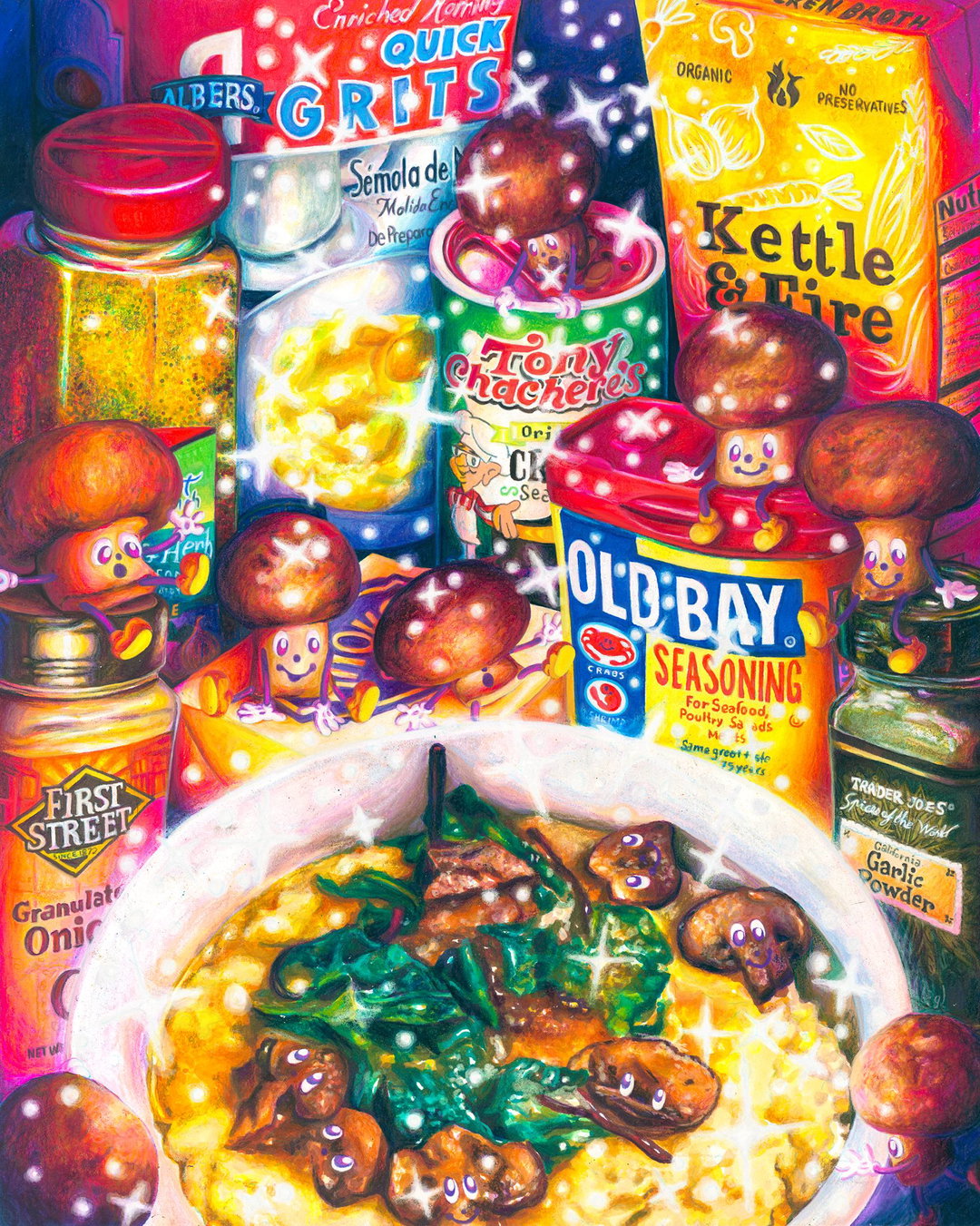
The Fence – Issue 12 (Illustration: Nishant Choksi)


1 of 4
1 of 4
“I’ve always liked the idea of a magazines’s art department designing it’s own advertising.”
Mathias Clottu
The Fence – Issue 19
“I feel like there needs to be a revolution in the way print magazines are distributed for it to become a proper renaissance.”
Charlie Baker
It’s a bold move to “mess up” the masthead, arguably the most recognisable visual facet of a magazine, but other rules and consistency across the design help to maintain The Fence’s recognisable identity. One is its use of colour – or lack thereof. Leading with a primarily black-and-white palette, its one accent colour is a rich orange… or red. No one seems quite certain: “I like calling it orange, but it’s in-between – a typographic red”, says Mathias, “it really depends on the lighting.” The application of this orange-red isn’t fixed – sometimes the masthead wears it proudly, and it’s infused into cover art to varying degrees, sometimes to just indicate the liquid and spill of pints in a pub, and sometimes taking over entirely. For the print issue, however, it was absent on the cover, appearing only on the magazine’s fastening staples.
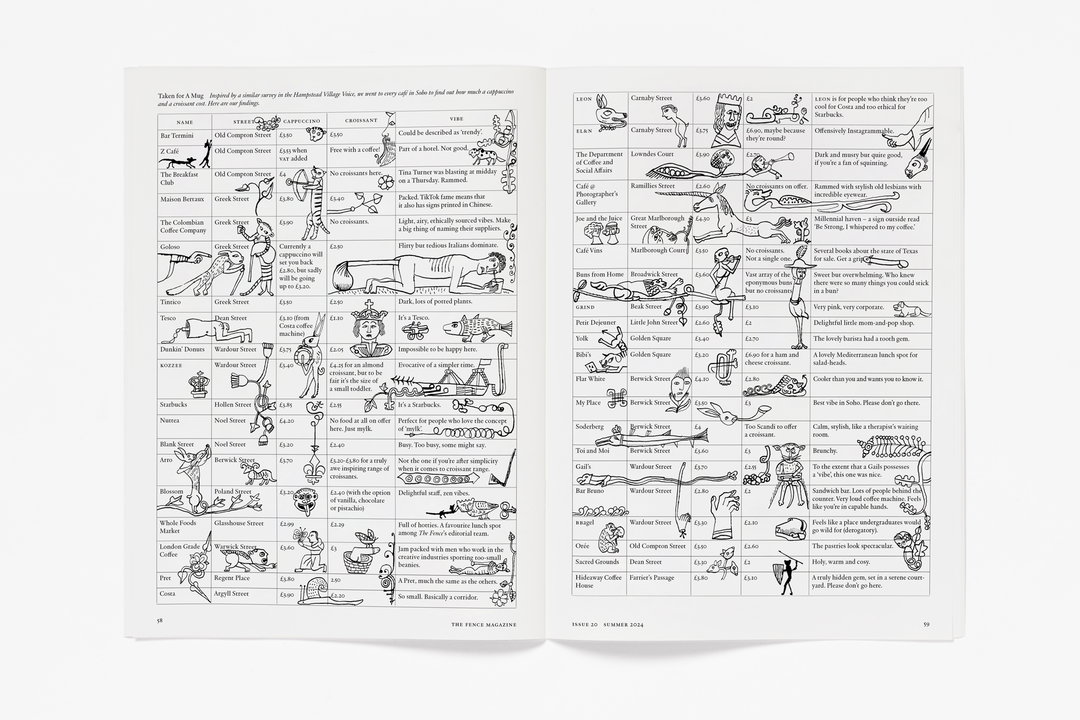
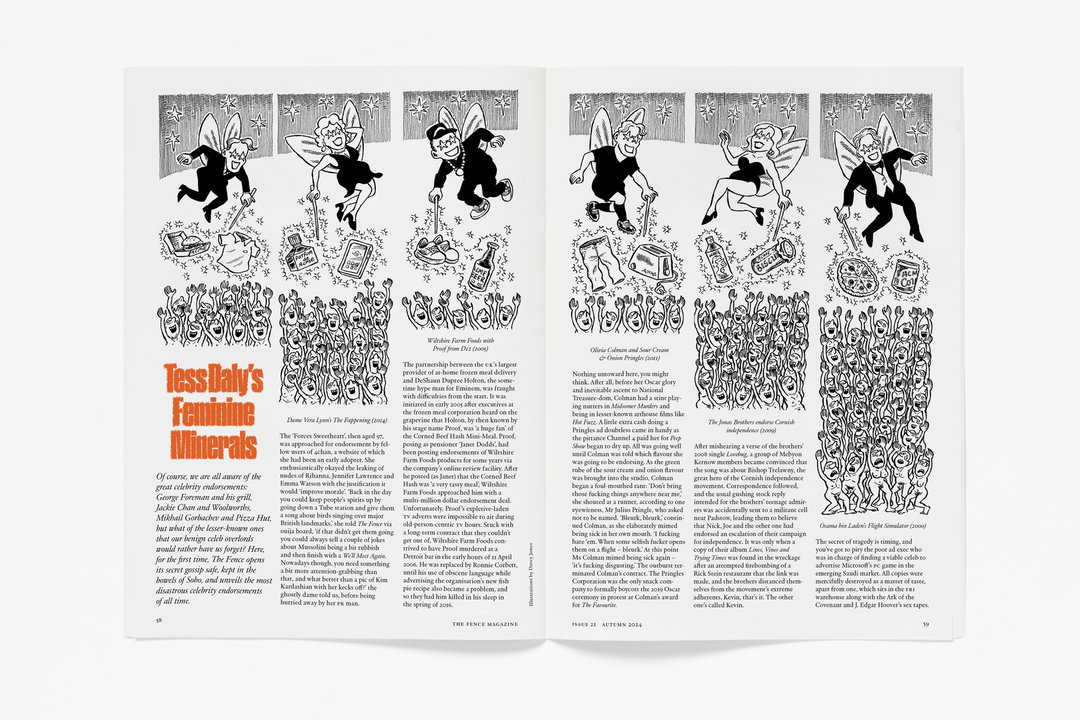
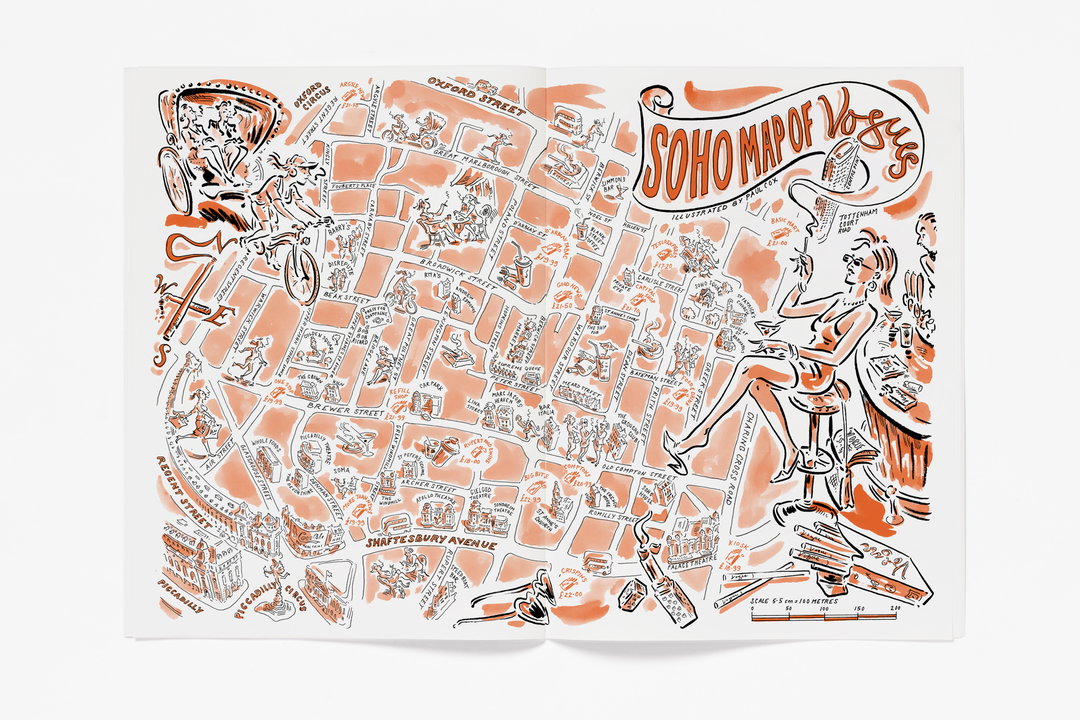
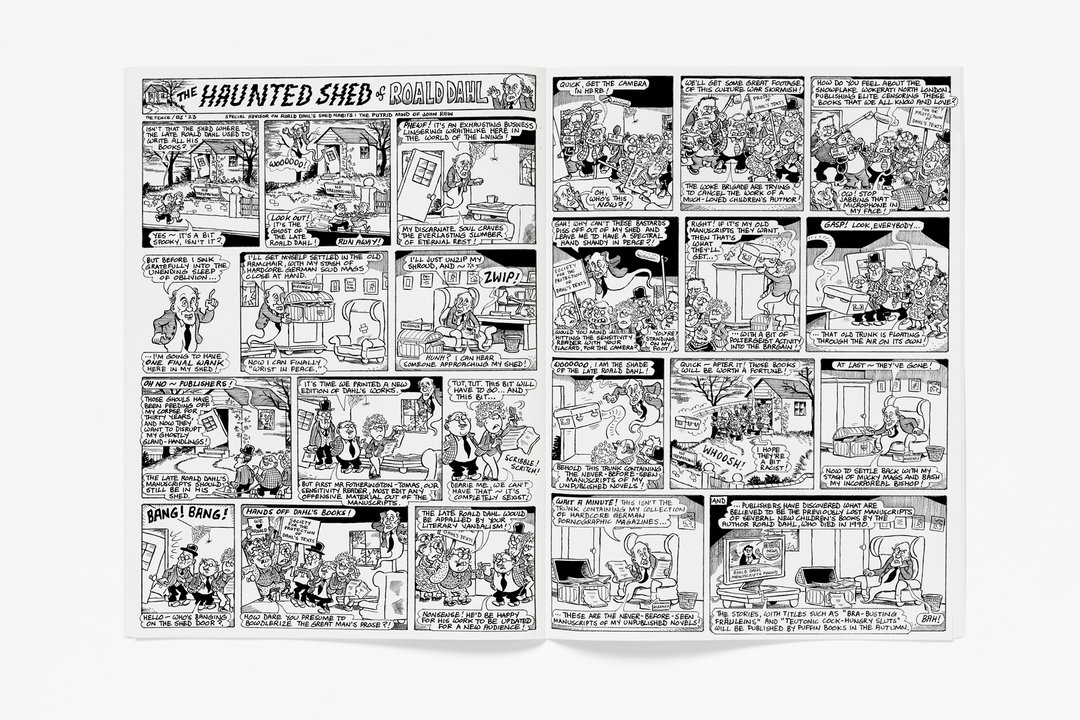
Perhaps the most recognisable visual aspect of The Fence is its purely illustrative approach – a photograph is yet to grace one of its spreads. “To start with, it was economical,” says Mathias, “and on every level, not only financially. It’s a more direct way of getting something we imagine onto paper – illustration has a broad reach.” It’s true, as some of The Fence’s writing veers into the strange and surreal, pen on paper feels much more fitting than the concrete materiality of a photographed image.
Working with a handful of recurring illustrators, Charlie and Mathias will lay out all the finished text and work out where each illustration will go, so each illustrator has an idea of theme, how many illustrations they’ll need to provide and what size. Ideally, says Mathias, when it finally comes to printing, there should be as little white space as possible. But Mathias has no interest in creating strict briefs, often giving illustrators “carte blanche”; some adhere closely to topics touched on in articles, and others go more off piste. “The best art direction is to choose the right people and let them do what they do best,” says Mathias. In issue 26, a column of Chris Black’s stream-of-consciousness foray into modern celebrity is simply interrupted and malformed by a giant thumb illustrated by John Broadley. It pleasingly frames your own as you hold the mag, an illustrative touch added purely for fun.
Mathias views the magazine as much a platform for new illustrators as it is a platform for new writing, and he commissions illustrators across styles and across locations, spanning Europe and the US. Despite The Fence’s founding locale and close interest in the inner-workings of London (its newsletter Capital Letter acts like an unofficial tour guide of the city and Charlie sees The Fence as building on the noble traditional of the first ever iterations of magazines in the 18th century: “gossipy publications about London”) Charlie revels in having a mix of well-worn Londoner artists and those who’ve rarely been paid to illustrate it. “It’s good to have that balance between people who know the subject like the back of their hand and people who are trying to sort of work it out, to whom you’re giving quite a difficult task,” says Charlie. “I think if Mathias only commissioned illustrators who were English and working in that sort of poppy English style, it would be to the detriment of the magazine.”
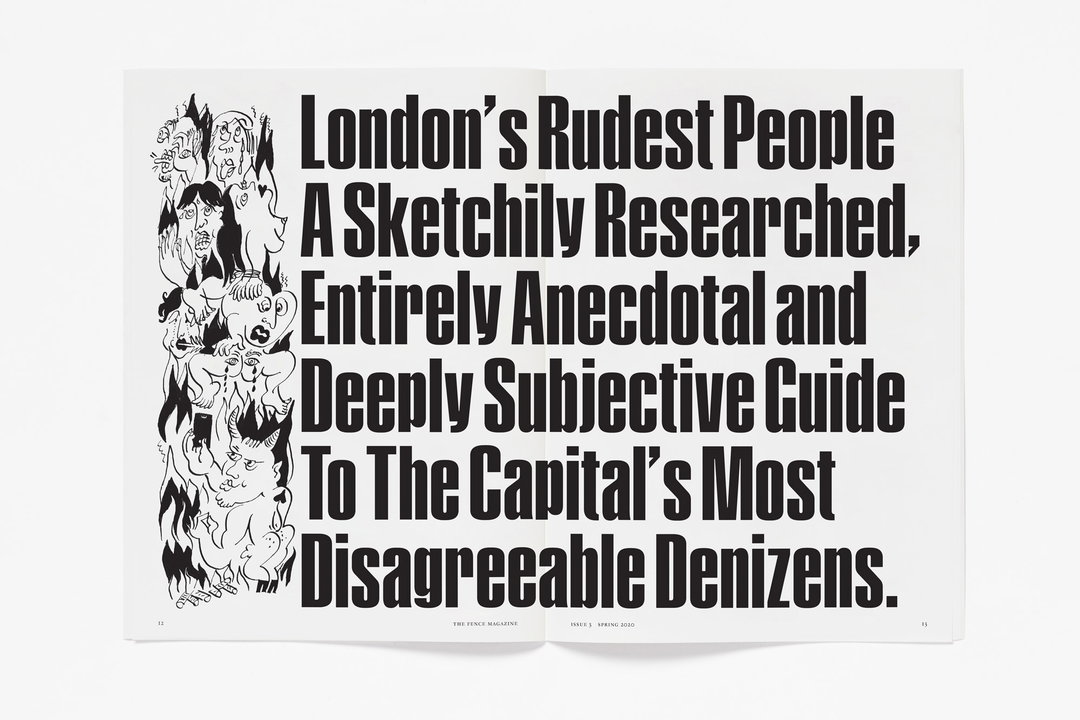
The Fence – Issue 3 (Illustration: Olga Prader)
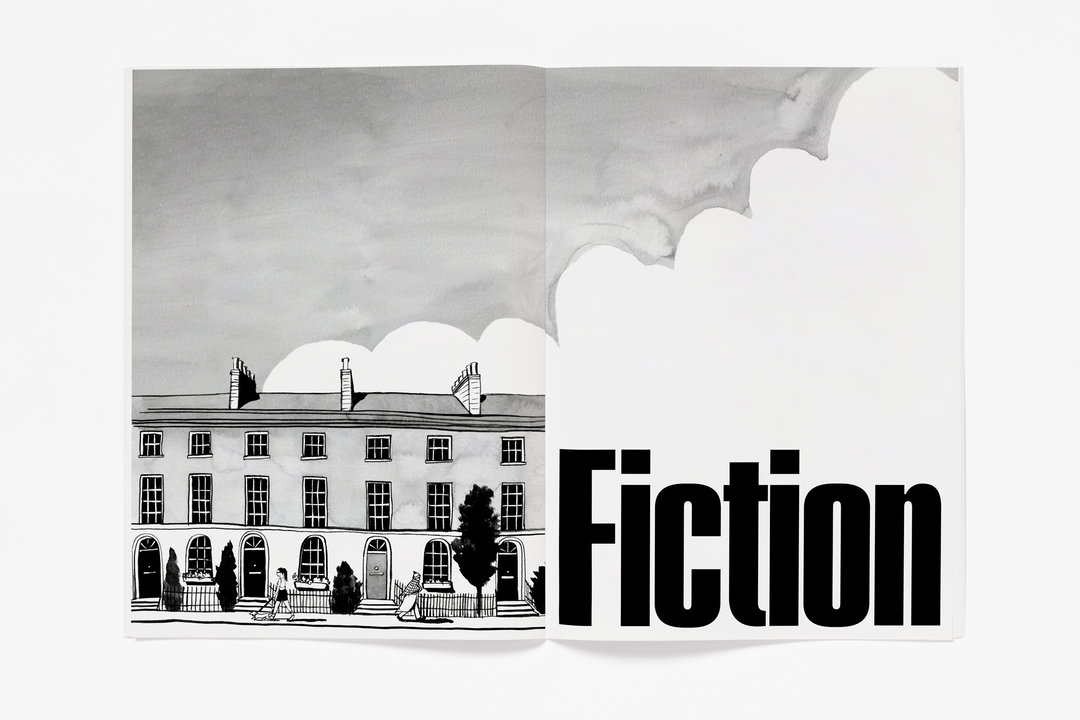
The Fence – Issue 25 (Illustration: Natalya Lobanova)
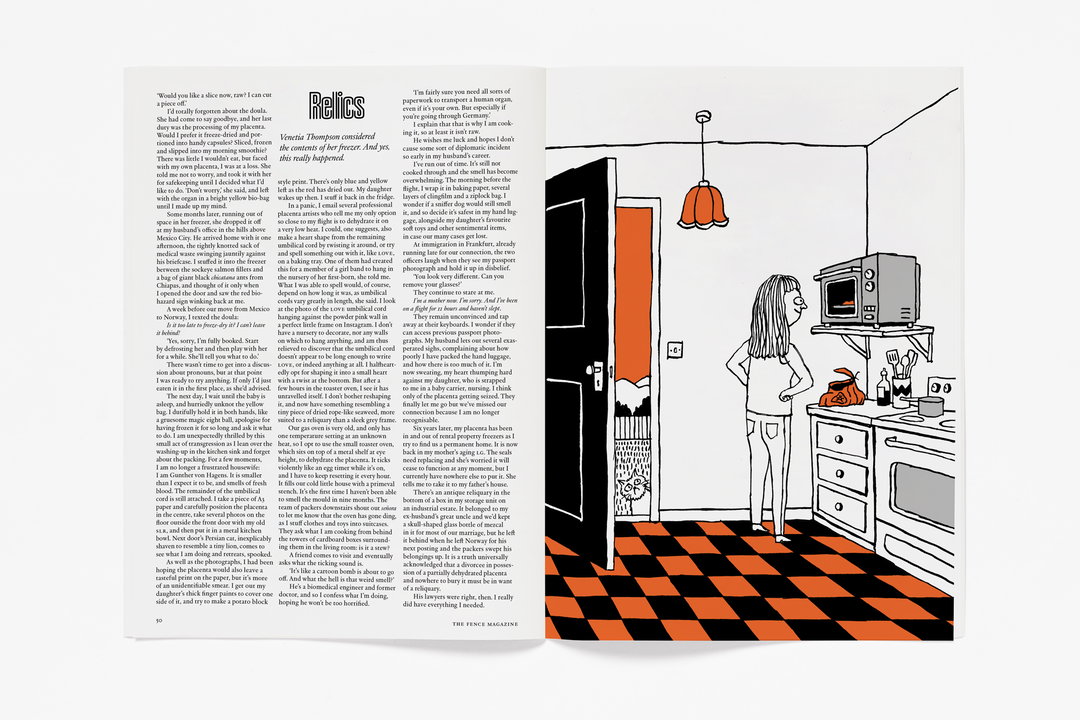
The Fence – Issue 24 (Illustration: Ed Steed)
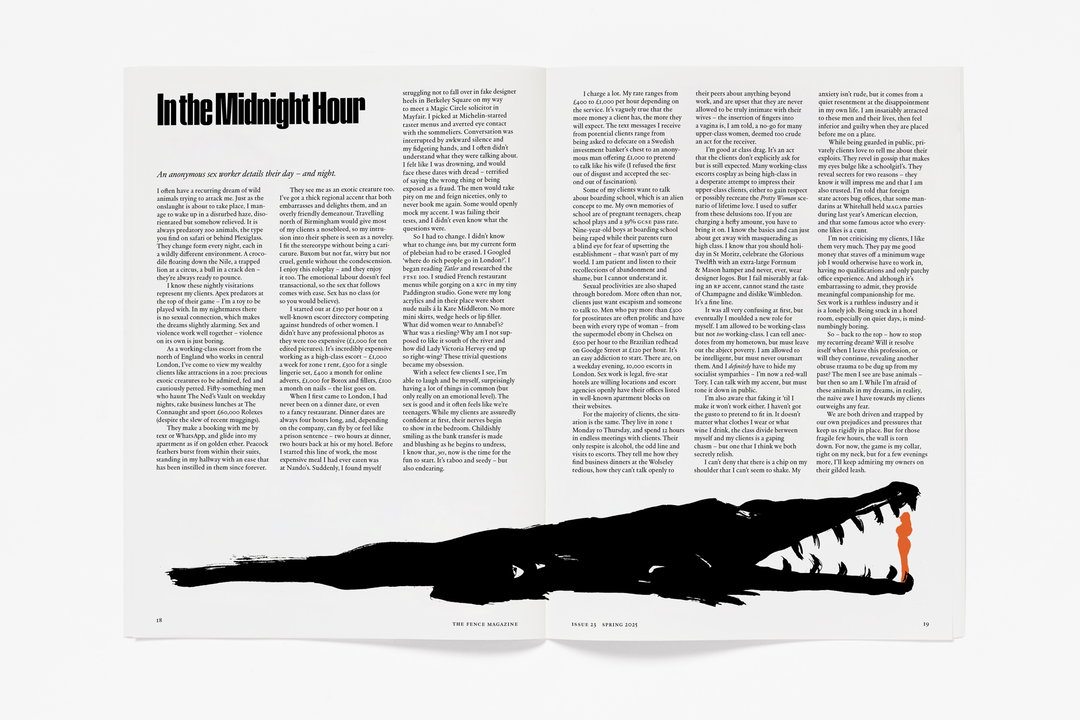
1 of 5
The Fence – Issue 23 (Illustration: Nishant Choksi)
1 of 5
The Fence – Issue 23 (Illustration: Nishant Choksi)
The Fence – Overview
Even in new ventures Charlie and Mathias seem dedicated to staying true to their illustrative roots. They’re currently planning advertising in the magazine, but they won’t be shoehorning branded graphics from clients into their carefully constructed pages: Mathias and one of the illustrators from The Fence roster will work with clients to create something unique and bespoke. While you might not see something like this happening today, Charlie is keen to tell us it’s another lift, this time from Deyan Sudjic and Peter Murray’s architecture magazine, Blueprint. It also helps that years ago, when assisting the London-based designer John Morgan, Mathias worked on a phoney ad agency called Vault Six, which created fake advertising for The Artist’s Institute magazine in New York. “I mean, in The Fence they won’t be fake!” says Mathias. “I’ve always liked the idea of a magazine’s art department designing its own advertising.”
“The beauty of a magazine is it’s never perfect – you can always do better in the next issue.”
Mathias Clottu
It’s easy to posit The Fence as a key player in the print and analogue resurgence that’s been purported over the past couple of years or so; in London, at least, it’s hard to go into a magazine shop that doesn’t have it stocked in a prime location. One key reason, Charlie suggests, is that people have just finally cottoned on to how bad of an experience reading on your phone is. But he’s also keen to put some parameters on this so-called ‘resurgence’. “I think the sense of scale is important,” he says. “How many new print shops have opened up? How many of these new print magazines are providing jobs? And how does the success of print in the last three years compare to the success of a Goalhanger podcast company?” He continues: “I feel like there needs to be a revolution in the way print magazines are distributed, for it to become a proper renaissance where it’s providing jobs, and not being this kind of ‘Hey, nice thing to do for two or three years then I need to sort of go and work for one of the big boys or get a real job’.”
What seems to scare so many off print, among other things, is its supposed ‘permanence’, the inability to go back into a webpage to edit and perfect, but Mathias’ core sentiment and driving force of flexibility goes against that notion – he revels in the iteration magazine-making allows, and the pleasure of when it hits that sweet spot. “The beauty of a magazine is it’s never perfect – you can always do better in the next issue,” says Mathias. “Sometimes there are moments of pure pleasure where we hit the right spots for a cover, or a specific illustration – I think that can only be done with humans.”
There’s a certain level of honesty and readiness from Charlie and Mathias to admit how much of The Fence is inspired by magazines of old, and while it evidently has foundations in print tradition, the closer you really inspect it, the less ‘traditional’ (in the most basic interpretation of the word) it seems. The design is playful and iconoclastic – the solely illustrative approach, messing with the masthead, or spreads printed vertically so you turn the mag upside down to read (a surefire way to get some strange looks on the tube). Together, Charlie and Mathias have created something recognisable enough that you know you want to return, but just unpredictable enough to never know what exactly you might be met with – this jigsaw of old-printed matter they’ve woven together seems to have given them the insight on how it important it is to add their own unique quirks and ways of doing things. Things that, in 20 or 30 years time, the creators of a new publication might just say they’ve stolen from The Fence.
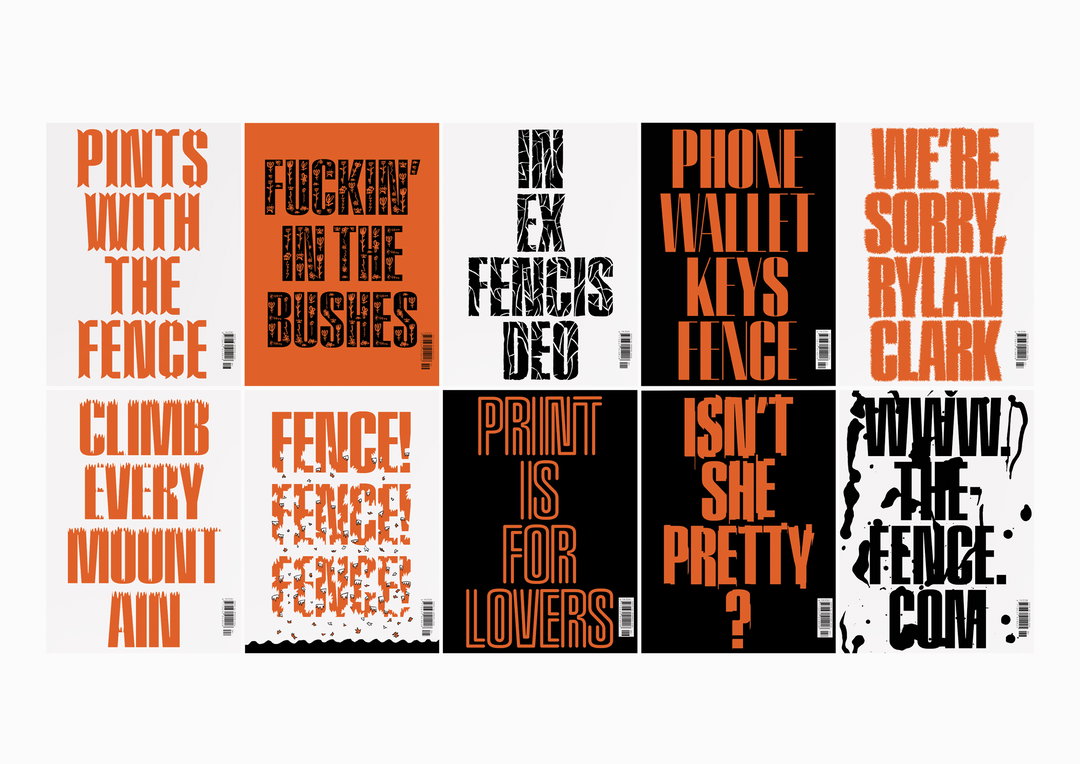
The Fence – Back Covers
Hero Header
The Fence – Front Covers
Share Article
Further Info
About the Author
—
Olivia (she/her) is associate editor of the website, overseeing the day-to-day editorial projects as well as Nicer Tuesdays events. She joined the It’s Nice That team in 2021. ofh@itsnicethat.com
To submit your work to be featured on the site, see our Submissions Guide.