




- Words
- Jenny Brewer
- —
- Tags
Mistakes, chaos and meditation: inside the mind of Bráulio Amado
It’s Nice That chats to one of the most revered graphic designers of his generation, about finding idea gems in the sprawl of New York, and the routines and parameters that forge his best work.
- Words
- Jenny Brewer
- —
- Tags
Bráulio Amado has made it his mission to champion the infra-ordinary. He’s trained himself to see things that many others have grown accustomed to not seeing – the background noise and detritus of everyday life – and as such, it has become his creative fuel.
Recently, Bráulio gave a brilliant talk at Nicer Tuesdays about his work and background, growing up in Almada, Portugal, learning that grids weren’t his thing at Pentagram, and then honing his instinct for experimental graphic design at Bloomberg Businessweek under Richard Turley, before starting his eponymous practice. But there was one aspect of his talk we wanted to dig into in more detail for The Everyday Edition: his eye for beauty within the quotidian. As he explains in our conversation, this is more than an impulse – it is something he’s trained himself to do, and is part of a rigorous process that sees him always choose the path less trodden.
It’s Nice That: One of the best parts of your talk at Nicer Tuesdays was when you talked about finding ideas in unexpected places where other people might not look. Why do you think these boring, dismissed details are so interesting to you, and other creative people?
Bráulio Amado: I feel like nowadays we spend a whole day looking at a computer, completely bombarded with information and then when we leave the computer, we’re looking at our phones. Around us there’s architecture, there’s ads, there’s all this stuff that’s so designed… so this practice of looking at the damaged and mundane things that I would usually ignore was like a meditation, in a way, to avoid looking at all this stuff that’s constantly trying to get our attention. There’s an exercise in trying to stop and force yourself to look at something you would usually dismiss, and reflect a little bit on what it is. Even if it’s something that’s purely functional or boring, I feel like there’s always something in there – especially when it comes to, like, stuff on the street that’s been destroyed or abraded. Often, I feel like something bad or ugly creates really cool textures.
INT: Do you think it’s your way of dealing with the chaos and noise of the city – rather than trying to take in everything, to zoom in feels calming in a way?
BA: As a person who grew up in a city, I find it very exciting and very familiar. But because it’s so familiar I feel like it’s a cool exercise to try to look at it in an abstract way and look at the things that you’re so used to, like look at the sidewalk and try to see this from a different perspective. Obviously this is nothing new – I feel like there’s so many people in art that have done these exercises like Duchamp, John Cage… it’s about trying to look at what’s already there in a different way.
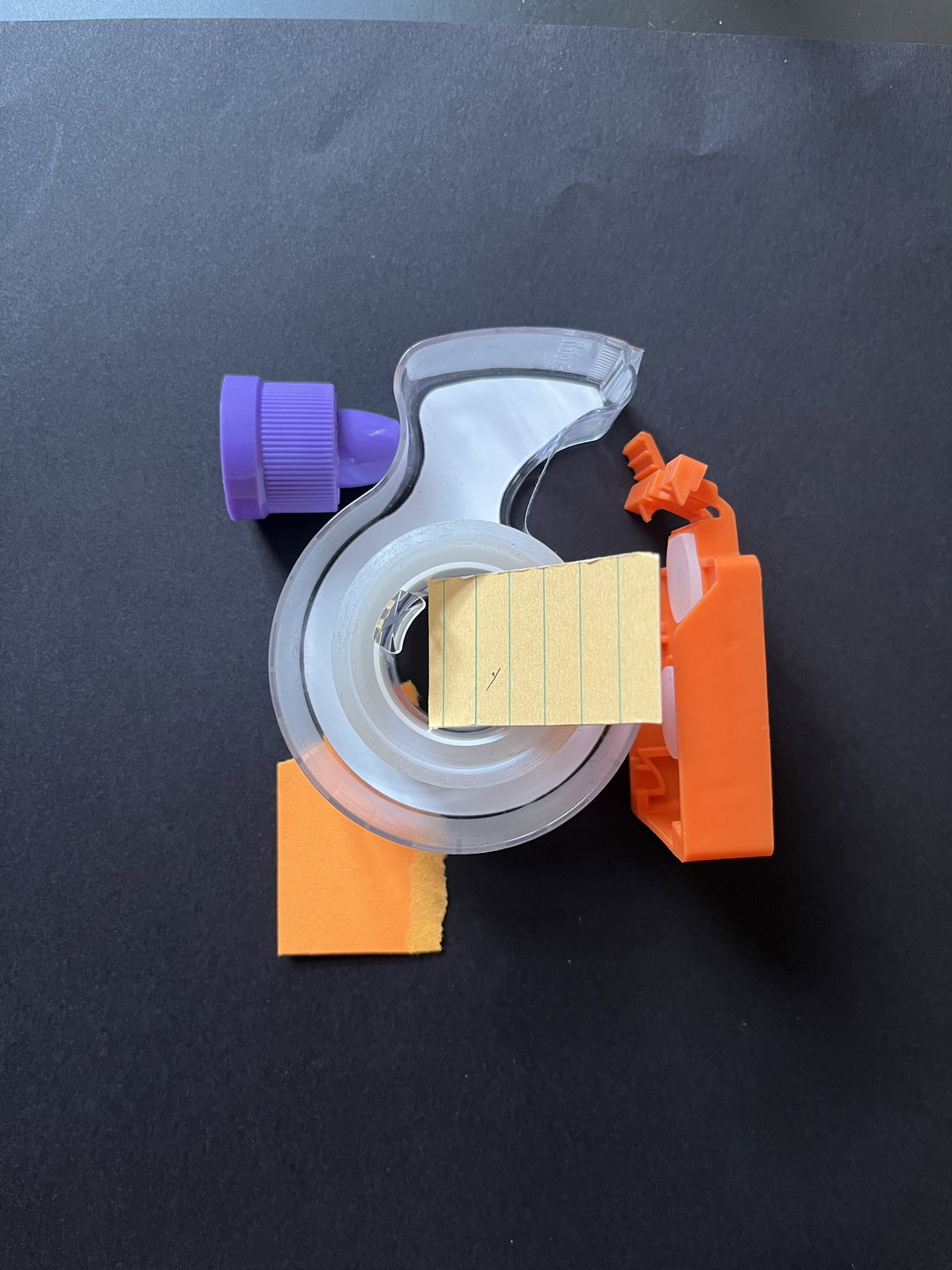
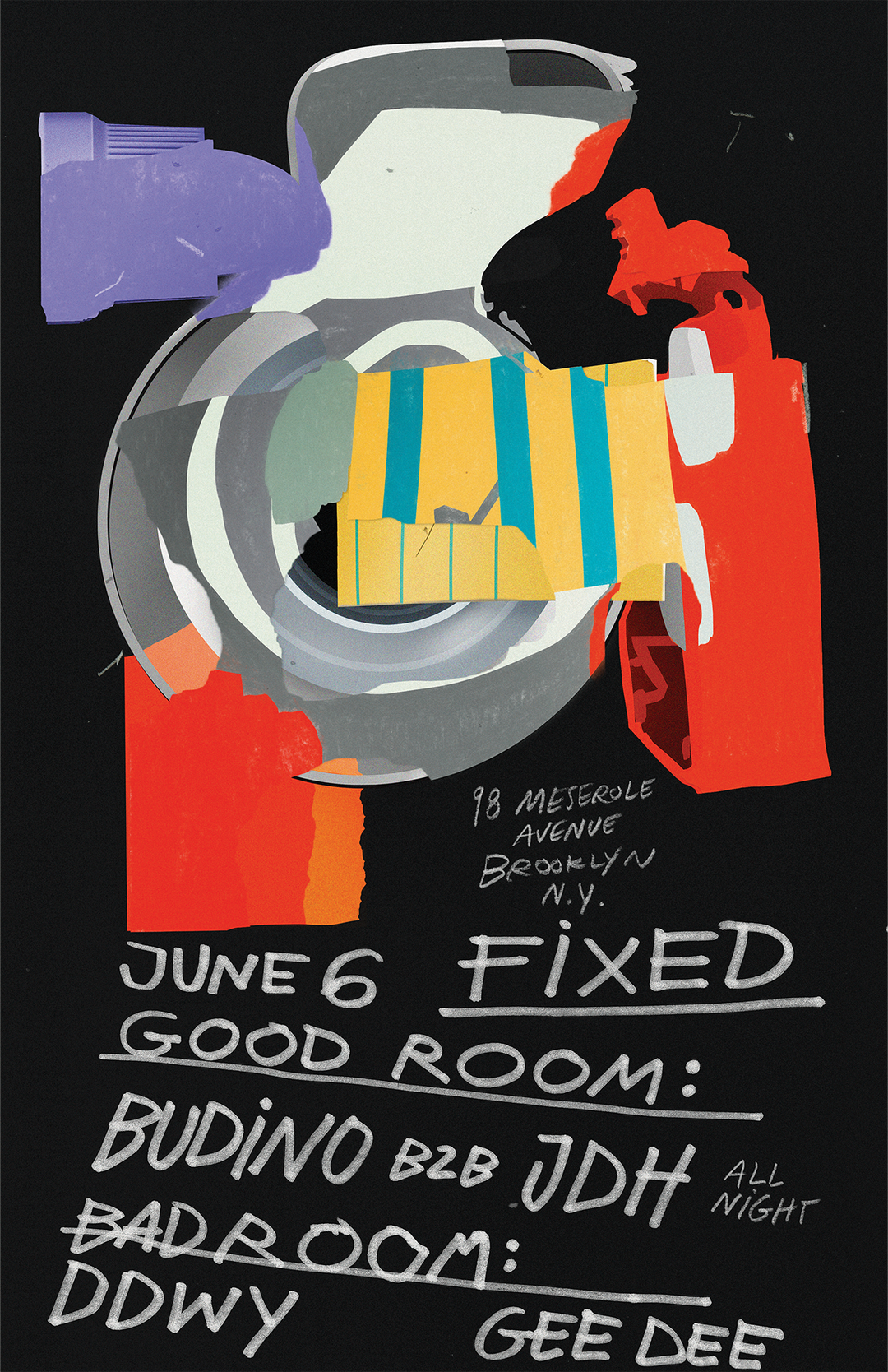
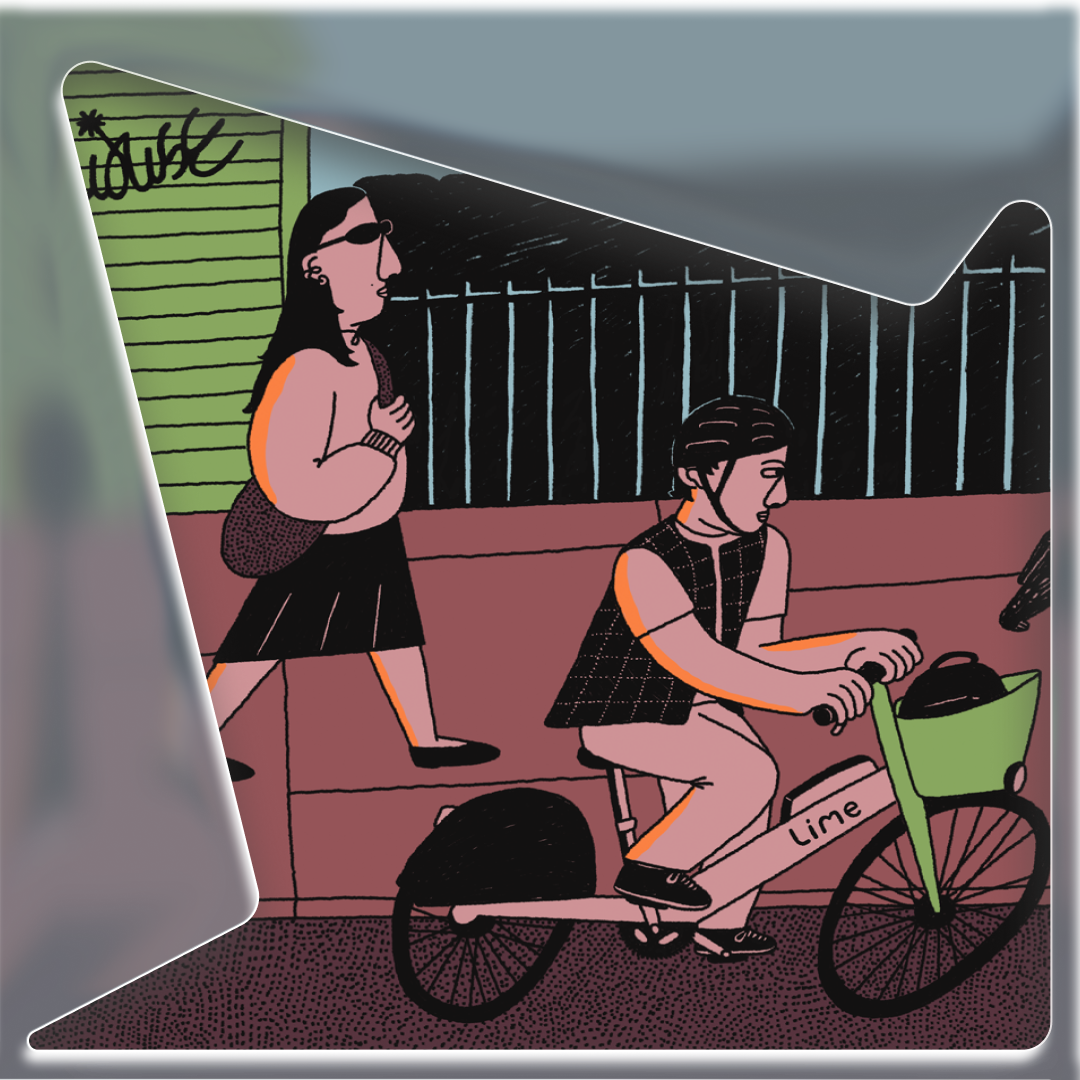
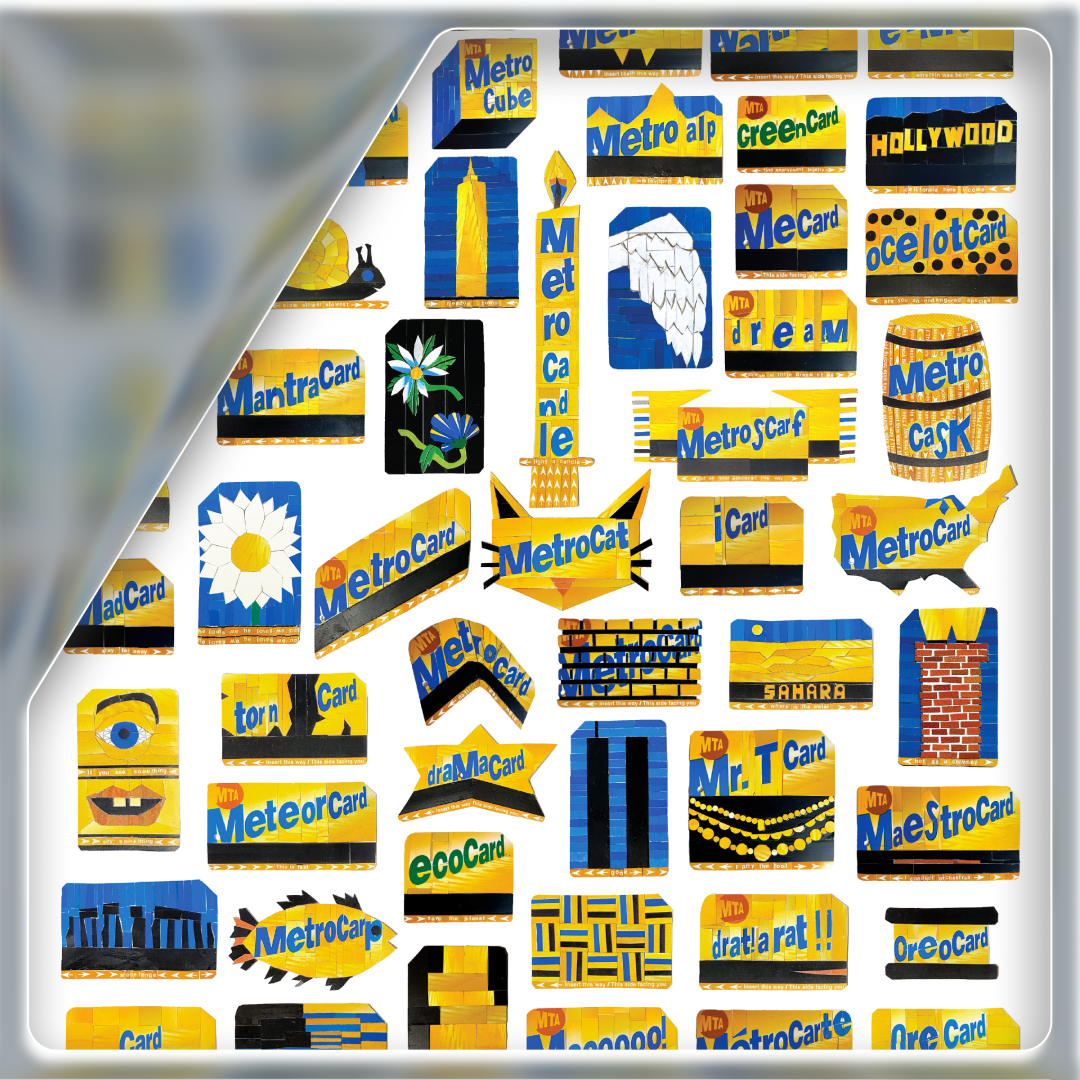
With the Good Room posters, because I’ve done hundreds, maybe thousands at this point, it got to the point where I didn’t know what to do anymore! So just going through my phone and looking at the silly things I photographed on the street, and using them as a basis for a poster, became like a game – like, okay, I have this photo of a napkin, what can I make from this? Even if in the end it doesn’t look like a napkin, I have to do something with this. Obviously being a club poster lends itself to a lot of different things – music, dancing, darkness, it’s sweaty, people are drunk, so I feel like I can make it super weird and it still matches what a club could be.
INT: It’s quite expressive to design for…
BA: Which is funny because sometimes clients ask for a similar thing, I’m like okay, but you’re not a club, you’re a beauty brand. I can’t just go on the streets and photograph trash, it doesn’t make sense!
But the fun of it is that it’s an exercise, that I try to make it hard for myself. Often, I can see what it’s going to be right away, but that makes it too easy and you’re just executing. The ones I have more fun with are where you don’t quite see it and have to explore and find something in it. It’s been very helpful for me even applying that mindset and logic to other works, because sometimes when you read a brief, you have ideas and it’s visual, but oftentimes it’s not. So it’s about dissecting it, and researching etc, and then you have everything in front of you and it’s like, alright what can I do with all this.
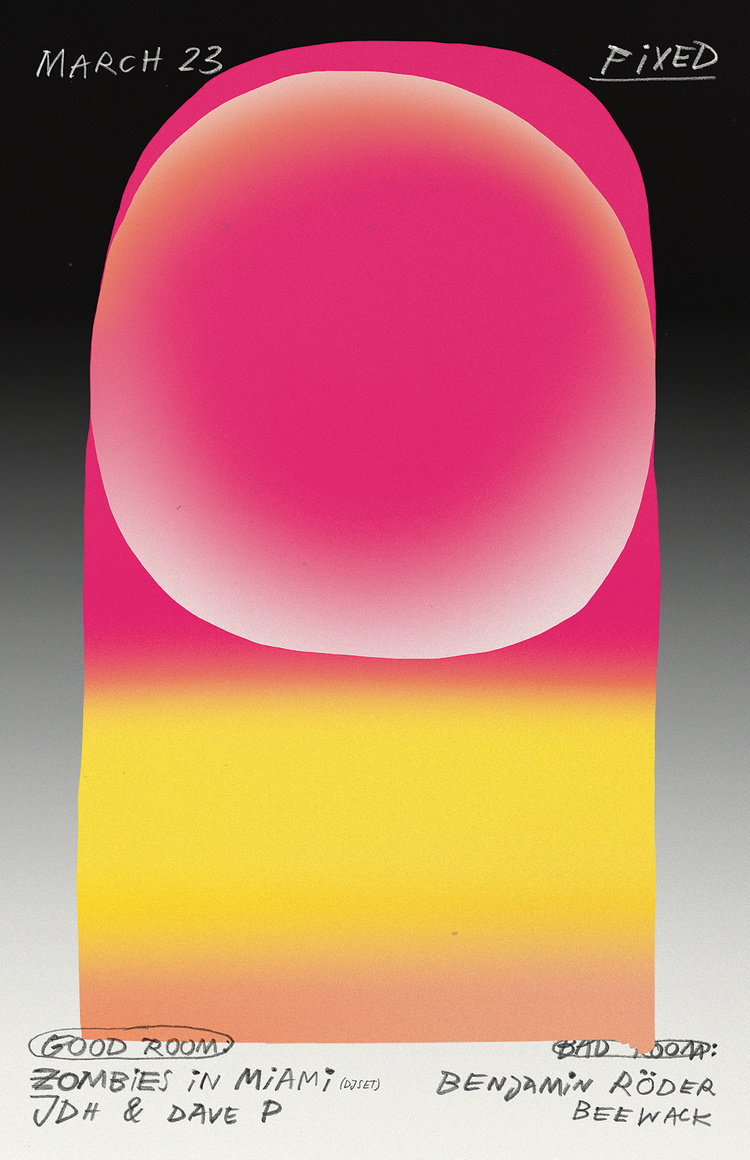
Bráulio Amado: Good Room poster (Copyright © Bráulio Amado)
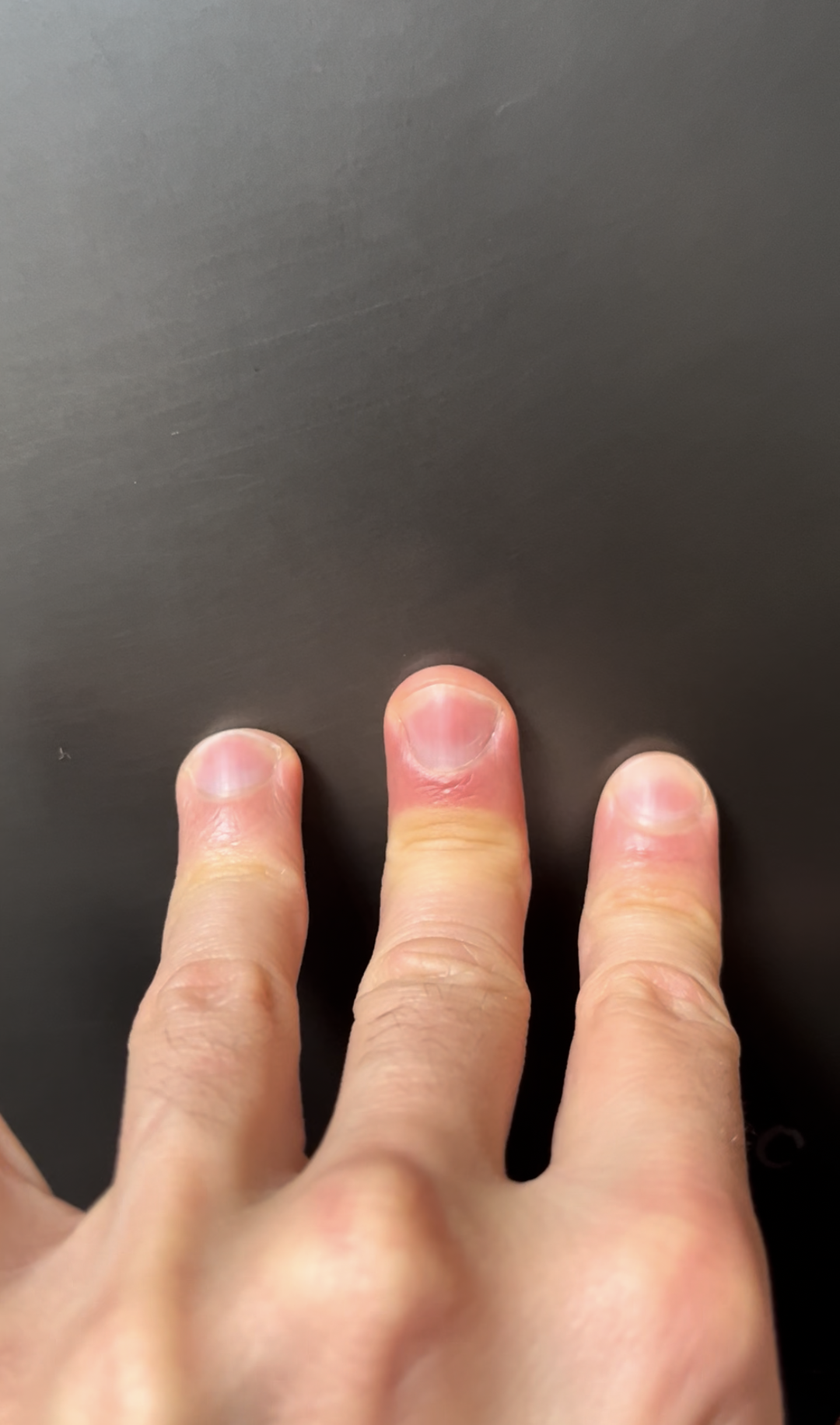
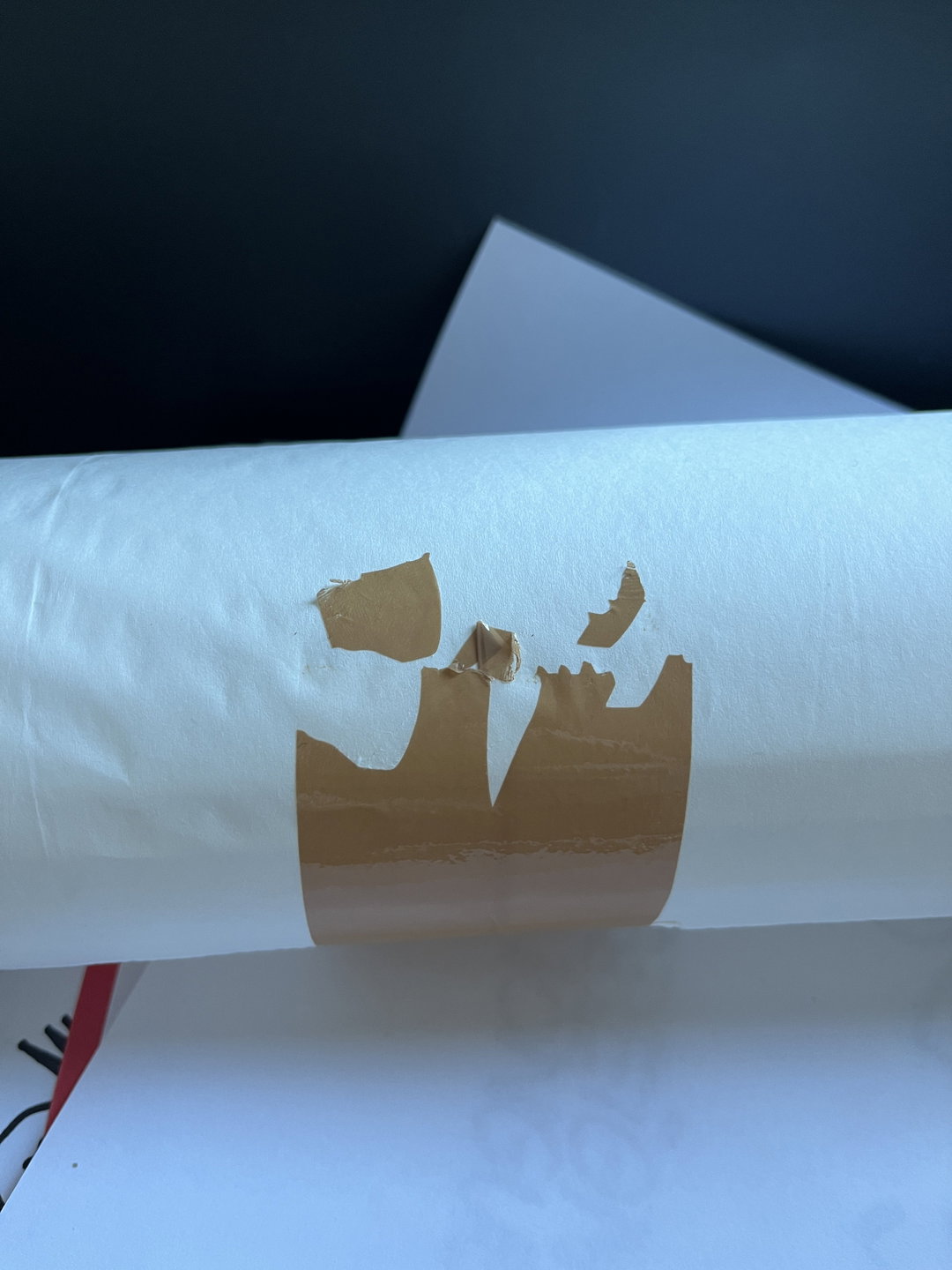
Bráulio Amado: process photo for Good Room poster (Copyright © Bráulio Amado)
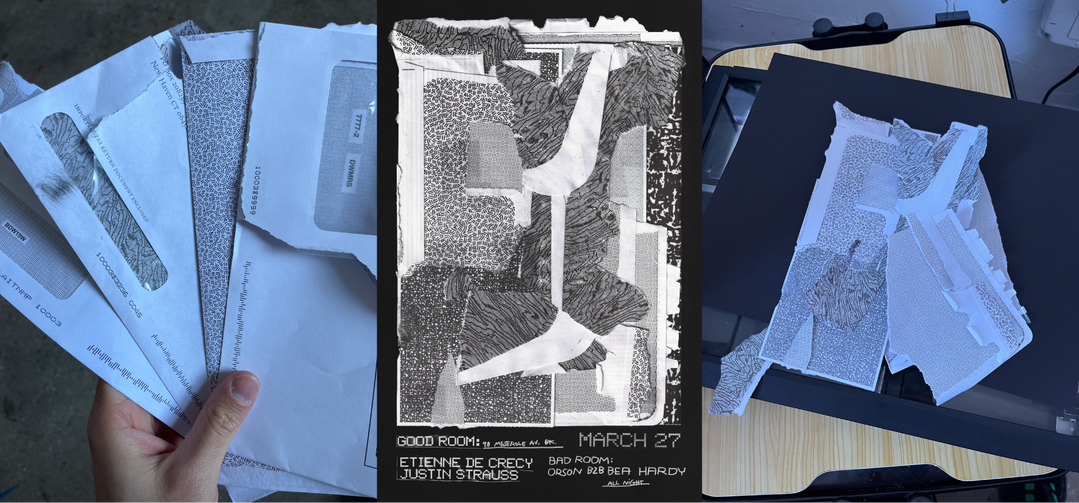
Bráulio Amado: process and poster for Good Room (Copyright © Bráulio Amado)
INT: How are you recording all of that stuff you’re seeing on your walks – do you just have a zillion photos on your phone of random stuff?
BA: I try not to take too many because it becomes obsessive, and then it takes away the fun of walking around and admiring, you know. The whole point of this is I don’t want to be on my phone. To try to notice what’s there and not distract myself with my phone or music and just be more present. At the same time I feel like I’ve done it so many times that I don’t want it to become a gimmick either. So over the last few posters I’ve been trying to use silly objects from my desk and just combine them. I’m building little sculptural things in a way, even though it is just like [he holds up a stapler and an unidentifiable knick knack, and comedically shoves them together]. The whole point of making art, for me, is trying to always discover new ways to get results and do things.
“I’m always trying to come up with different ways of doing things, to keep it exciting and push myself.”
Bráulio Amado
INT: So you must try all sorts of different processes in order to abstract that thing from the first source to whatever it might become – you spoke about doing more painting and letterset recently. Are there processes that you’re enjoying at the moment, and is it always about finding a new way to mess about with something visually?
BA: I mean, it depends. I’m very lucky that I have a client [Good Room] that allows me to just play, and have a place to output all the experiments that I do. But I actually do love painting, it’s really fun… but then I don’t want to just paint 20 posters and take the fun out of it. So I’m always trying to come up with different ways of doing things, to keep it exciting and push myself. Whenever I try to do something that I don’t know how to do, there’s always accidents. Like, I don’t know how to paint very well, but I’m trying not to be precious with paint and just see where it goes and make mistakes. Then it’ll be like, ooh this little thing that happened by mistake – next poster I’m gonna zoom in on that and try to make this mistake intentional. Then it’s like a snowball, like okay, now how can I mess this up.

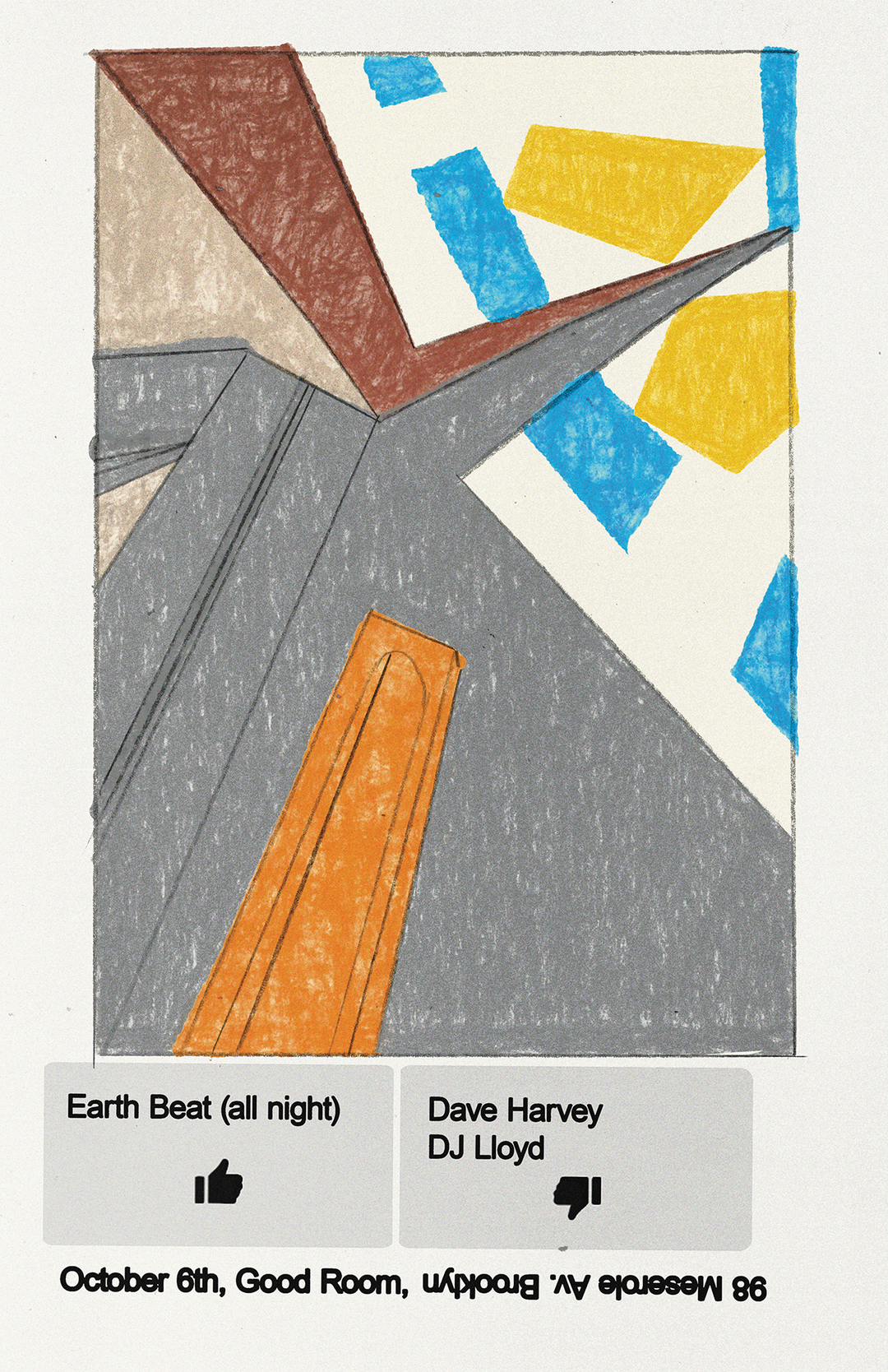
1 of 6
Bráulio Amado process photo for Good Room poster (Copyright © Bráulio Amado)
1 of 6
Bráulio Amado process photo for Good Room poster (Copyright © Bráulio Amado)
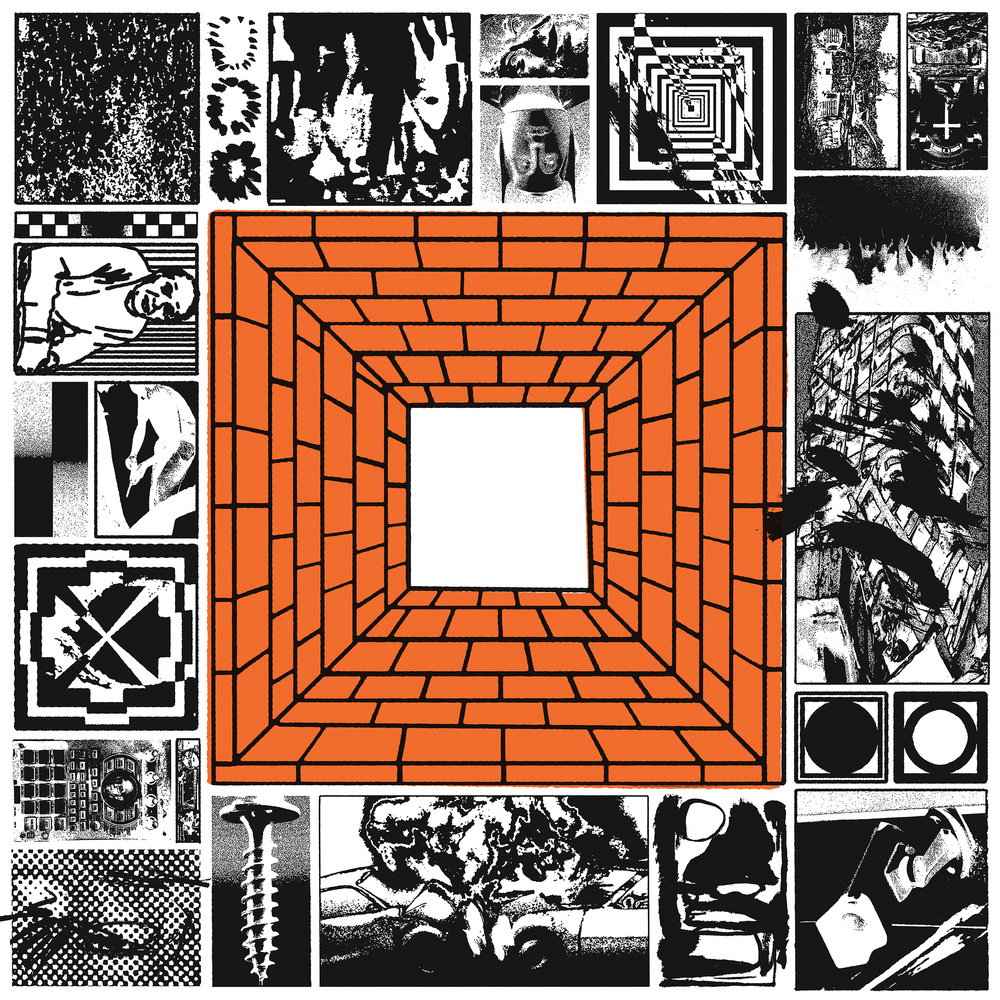
Bráulio Amado: Zeropolis, 1000 Walls album cover (Courtesy of AnalogueTrash Records)
INT: So you’re always building on these experiments…
BA: I’m taking the concept or the brief as a creative exercise, in a way. I set myself limitations, like I have to do a poster with only tape and a marker and paper. What can I do with it in two hours? Making it playful. From that exercise, accidents will happen and I’ll start from there for the next poster, I’ll explore this little thing that happened that I wasn’t expecting and evolve from that. I saturate myself in exploring and pushing it, then eventually I go back and look at what new exercises I can do to create something new.
INT: Do you feel like you have to learn how to be experimental and trust your gut, to follow a path even if you don’t really know where it’s going? Have you always had that instinct, and is that something that you feel like you can learn as a creative person?
BA: Definitely. I mean, I definitely learned from Bloomberg, not only because they wanted us to be experimental and play, but also because we were all playing and learning with each other. That’s the kind of thing I miss that now I’m working on my own. I mean, I collaborate with people, and I love that. But for the posters, it’s me trying to use what’s around me as my collaborators. At Bloomberg, I was working with people that ended up pushing you to places where normally you wouldn’t go, because they’re not inside your head.
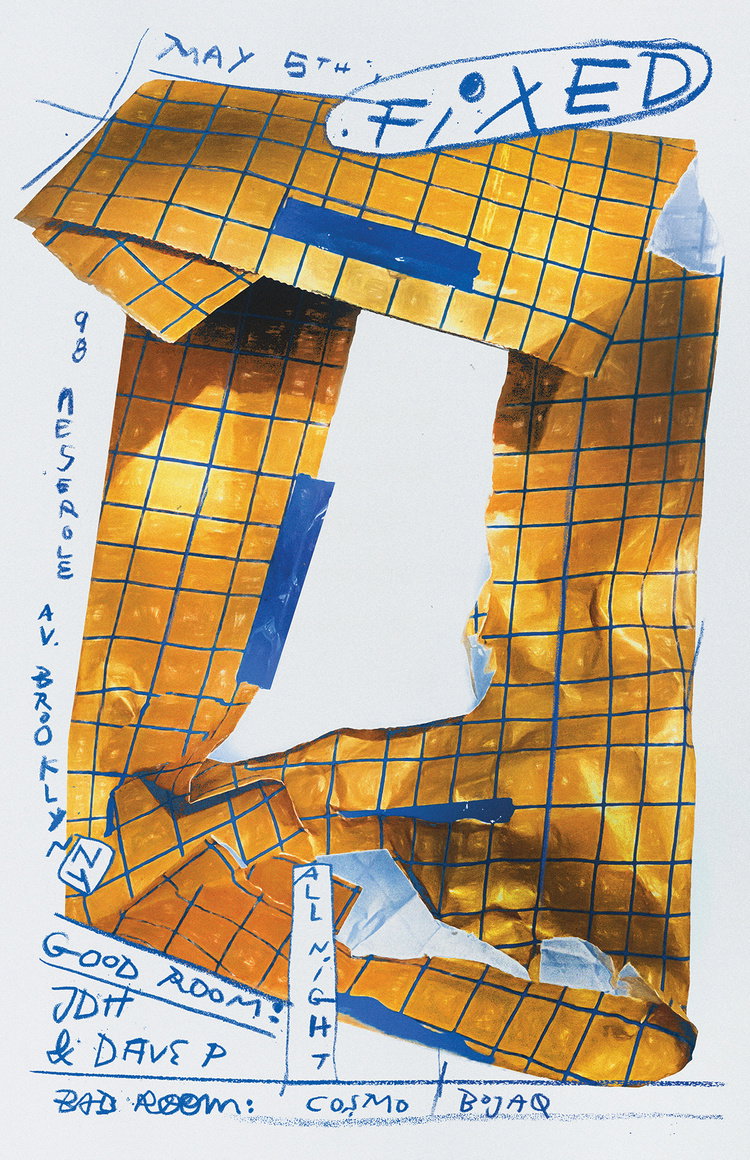
Bráulio Amado: Good Room poster (Copyright © Bráulio Amado)
“The idea informs the style; I don’t want the style to inform the idea because then it feels like it’s limiting.”
Bráulio Amado
INT: Do you have techniques for being this experimental and abstract on a job where it’s time pressured? Do you use downtime to explore, and keep a catalogue or sketchbook to turn to in those moments?
BA: Absolutely. It depends who I’m working for, but even for Good Room, often I use a lot of killed work from other clients, sketches and stuff that I’ll pick out and twist it a little bit to make sense for a poster. But for other clients, like if it’s an editorial illustration, I often just sketch really loosely, like black-and-white, almost like stick figures, as bad as possible – just to explain the concept. Then once the concept is approved, I can think about what the best style is for that idea. Because then the idea informs the style; I don’t want the style to inform the idea because then it feels like it’s limiting. I mean, sometimes people come to me for a specific style that I do, and then I just do it. But then you miss the playful part of it getting somewhere new, that could serve what you’re trying to do even better.
INT: Your work does vary visually but it has this consistent thread through it..
BA: Yeah my practice is very chaotic! I’m very lucky because I feel like I do so many different things and I do have different styles, so if someone comes to me and wants a particular style, like record covers that don’t have much budget, then I’m like “Alright, cool. You know what you want. I can do it.” But sometimes when I’m doing it I’m like “How about if we do this in this style?” I’m not pushing every project to like an experimental, playful thing. But if I see something that could be fun if we push it somewhere else, I show it as idea number two. And especially when you show them the process and thought behind why you decided to show this other idea, often they get excited too. You kind of have to show the receipts for how you got there.
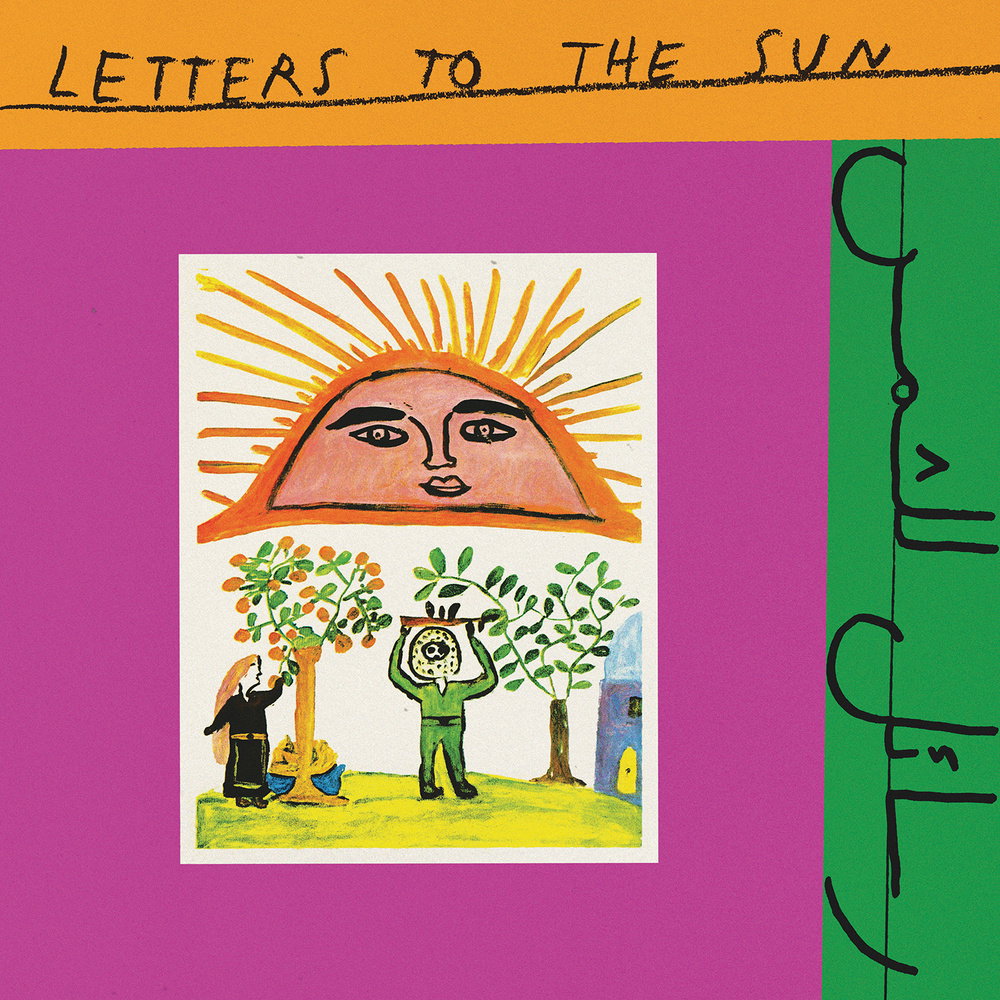
Bráulio Amado: Letters to the Sun album cover (Copyright © Bráulio Amado)
INT: Is there any specific projects you can think of apart from the posters, where you feel like this more experimental visual approach played a big part?
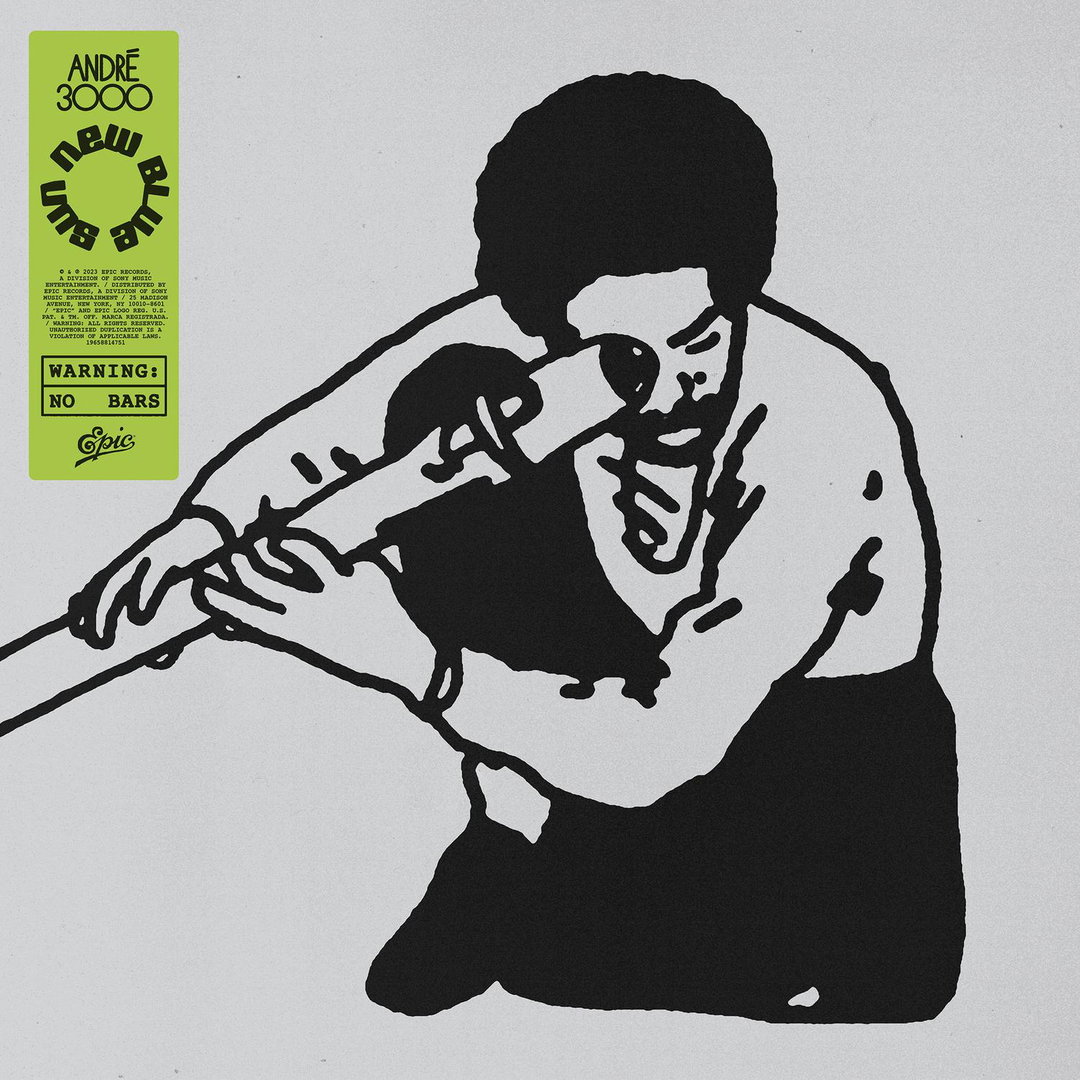
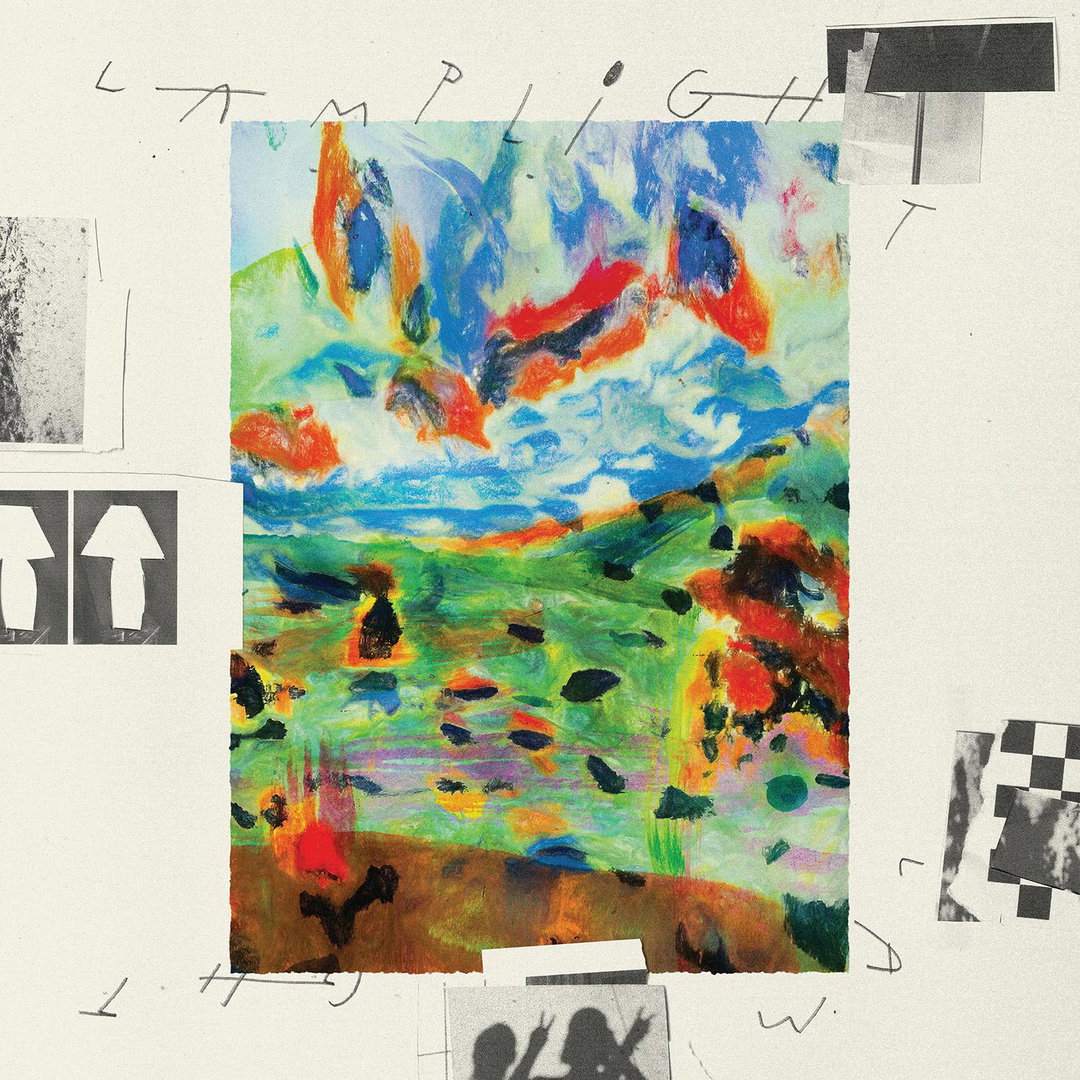
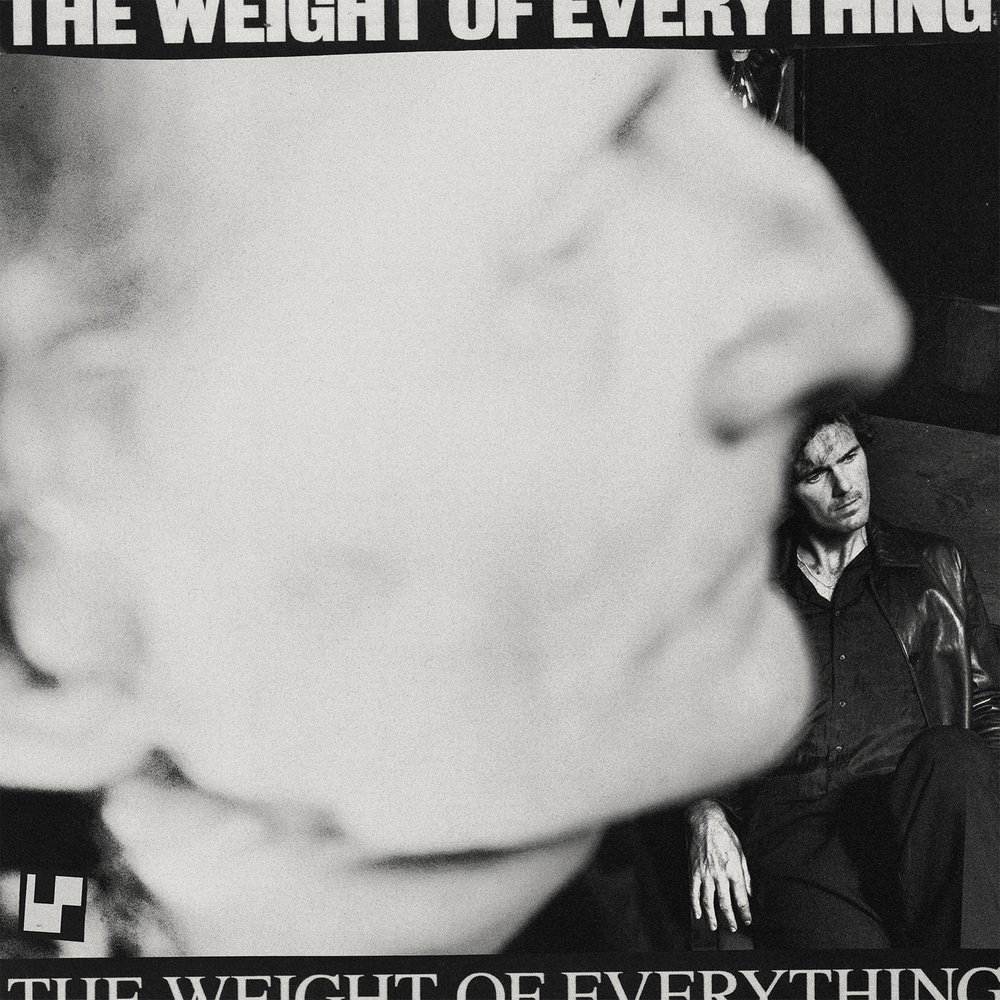
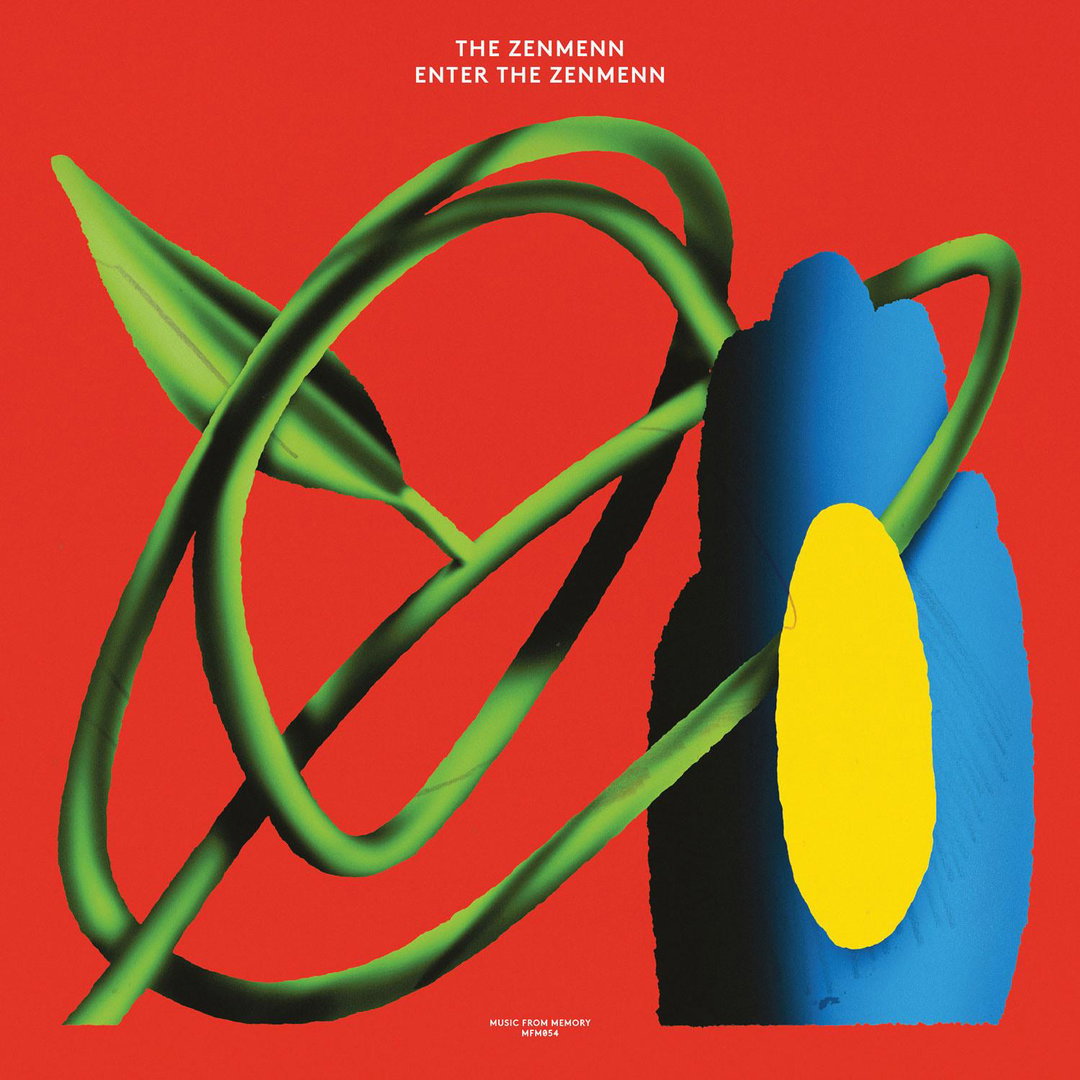
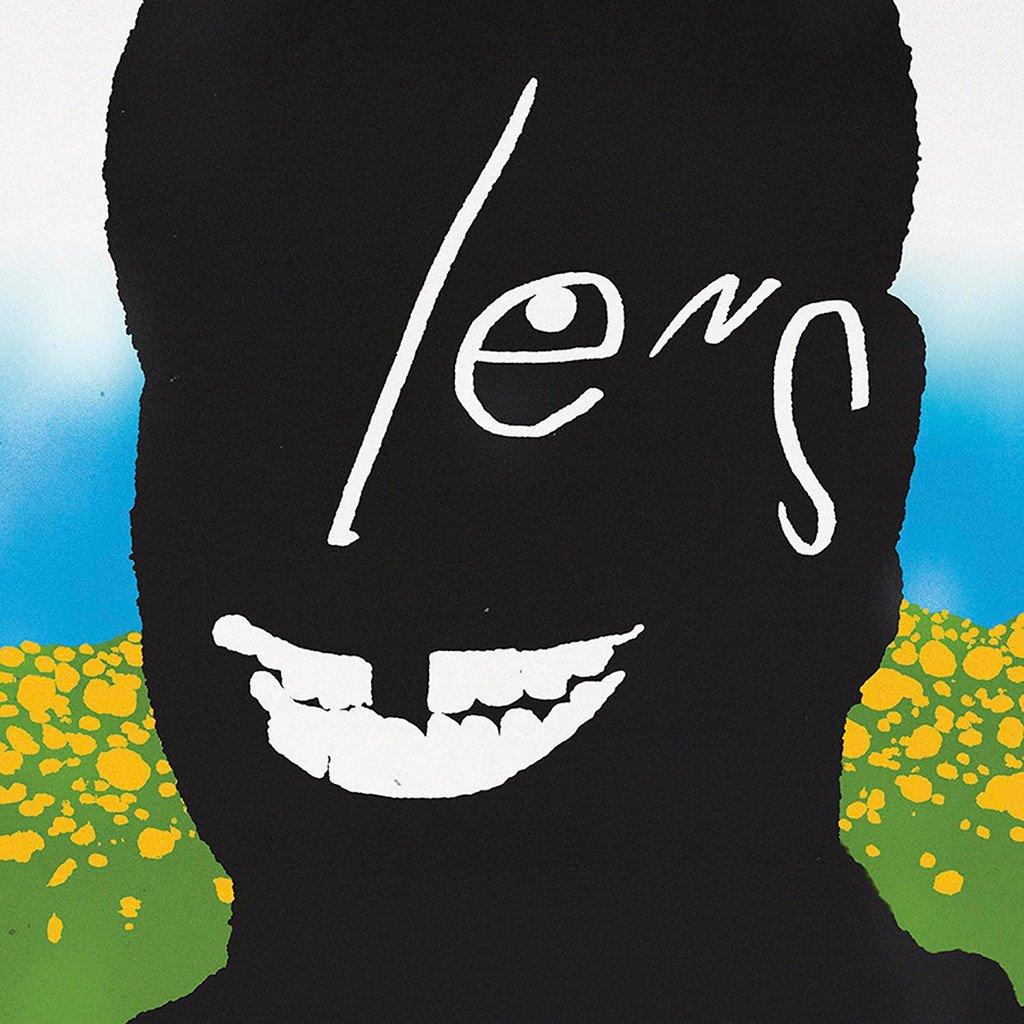
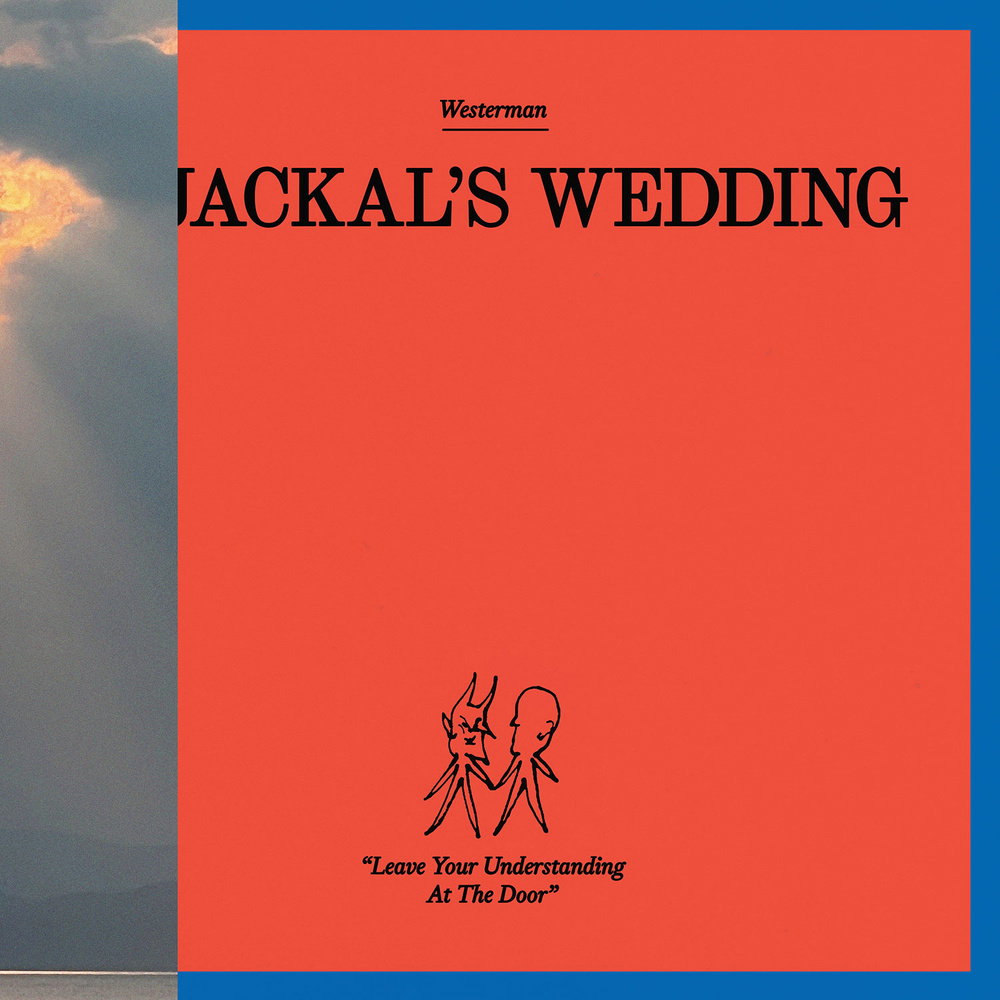
BA: I think the record covers definitely end up going there too. Often there’s a moodboard but it’s usually all over the place, so it’s just me reacting to the music or riffing off the title and researching different meanings to the title and playing with it. And everyone reacts to music differently, so often I share an idea of what they want, and then a sketch for another idea that might not be exactly what they asked for, but I explain why think it makes sense based on my research and experiments. This is also a collaborative project, so I’m opening up the game and saying “we can go this way and this way,” then the artist is involved in the project too. We’re both experimenting and seeing where it goes. Plus then we involve photographers and more people in the project. So record covers are a little world of exploring, similar to the posters, but because it’s not just me, it feels cooler and richer, in a way.
INT: That makes sense, to bounce off other people. I guess it depends on the team because there’ll be creative people out there that feel like every time they try and do this, it’s sort shut down.
BA: I mean that still happens a lot, yeah! But it’s part of what we do I guess. That’s where the Good Room’s posters are very helpful because I reuse ideas for myself since they don’t want it. But ultimately it’s not like I’m trying to do something that represents my work, I’m mostly just excited to be delivering, especially if it’s a band, like whatever you have in mind, I want to make sense with your artwork. But there’s also bands that don’t really have an idea of what they want their album to look like, so then it just becomes fun to figure it out together.
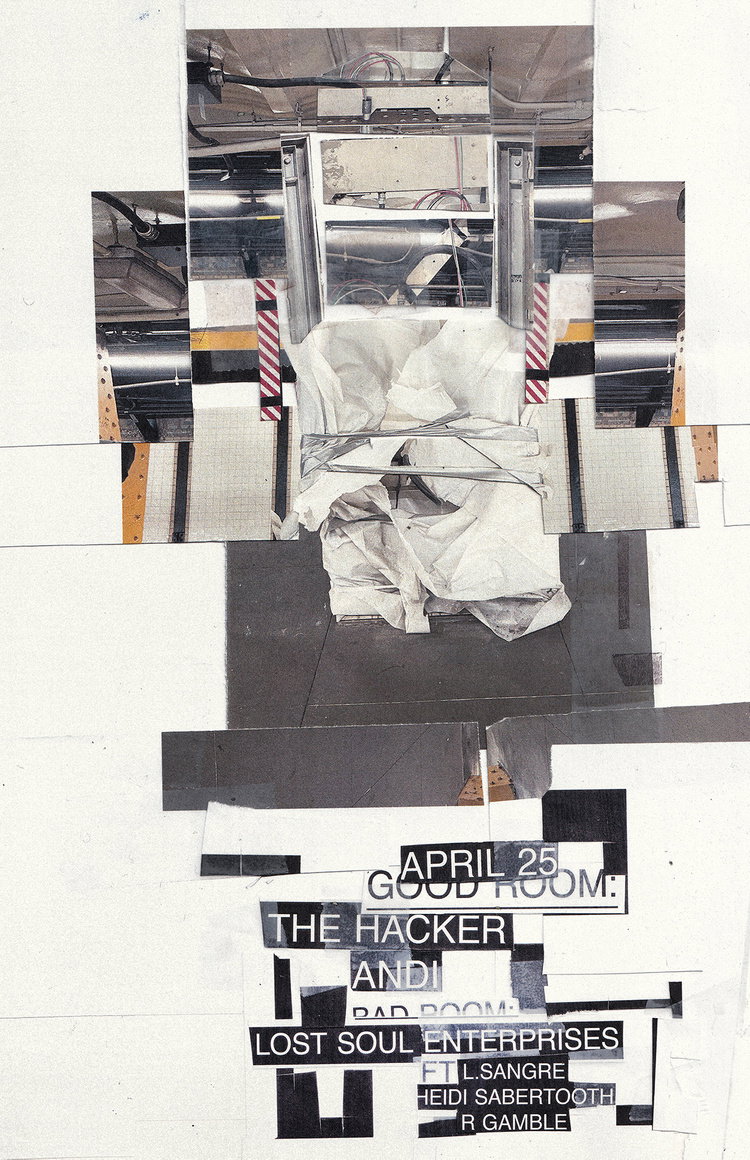
Bráulio Amado: Good Room poster (Copyright © Bráulio Amado)
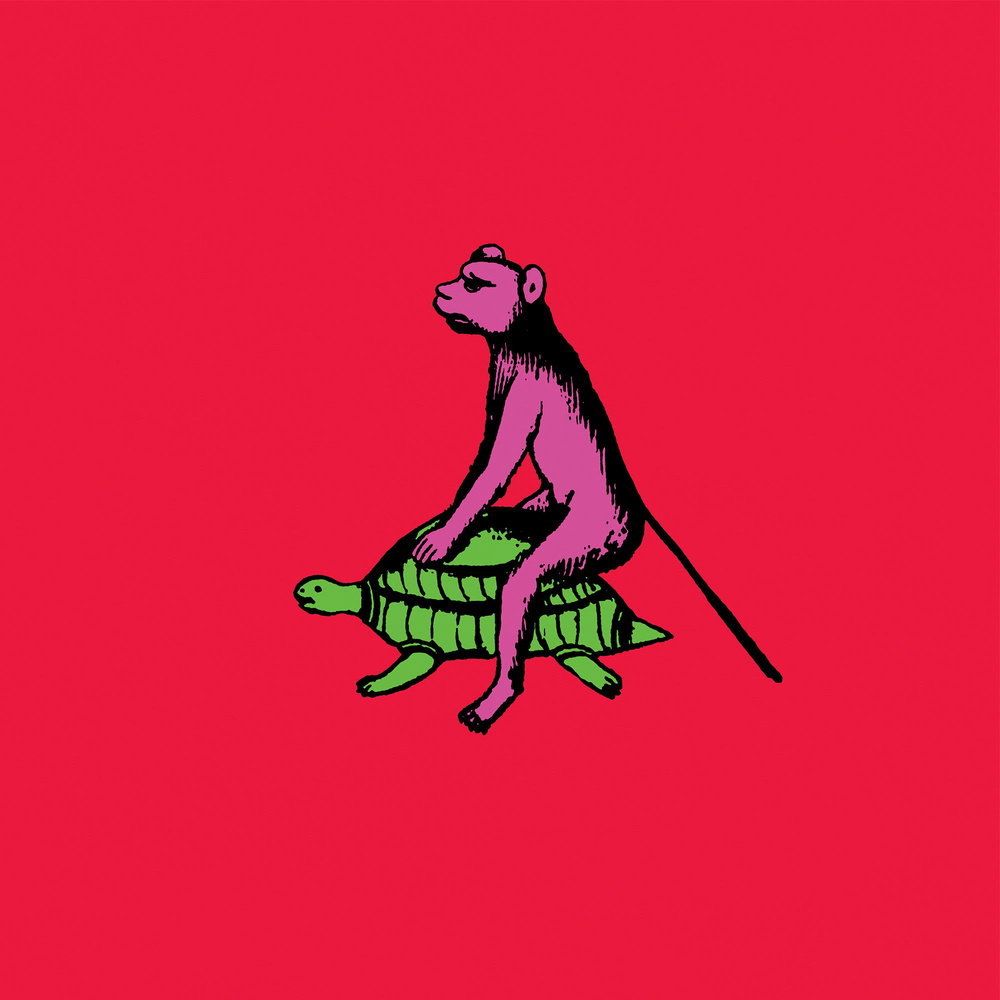
1 of 8
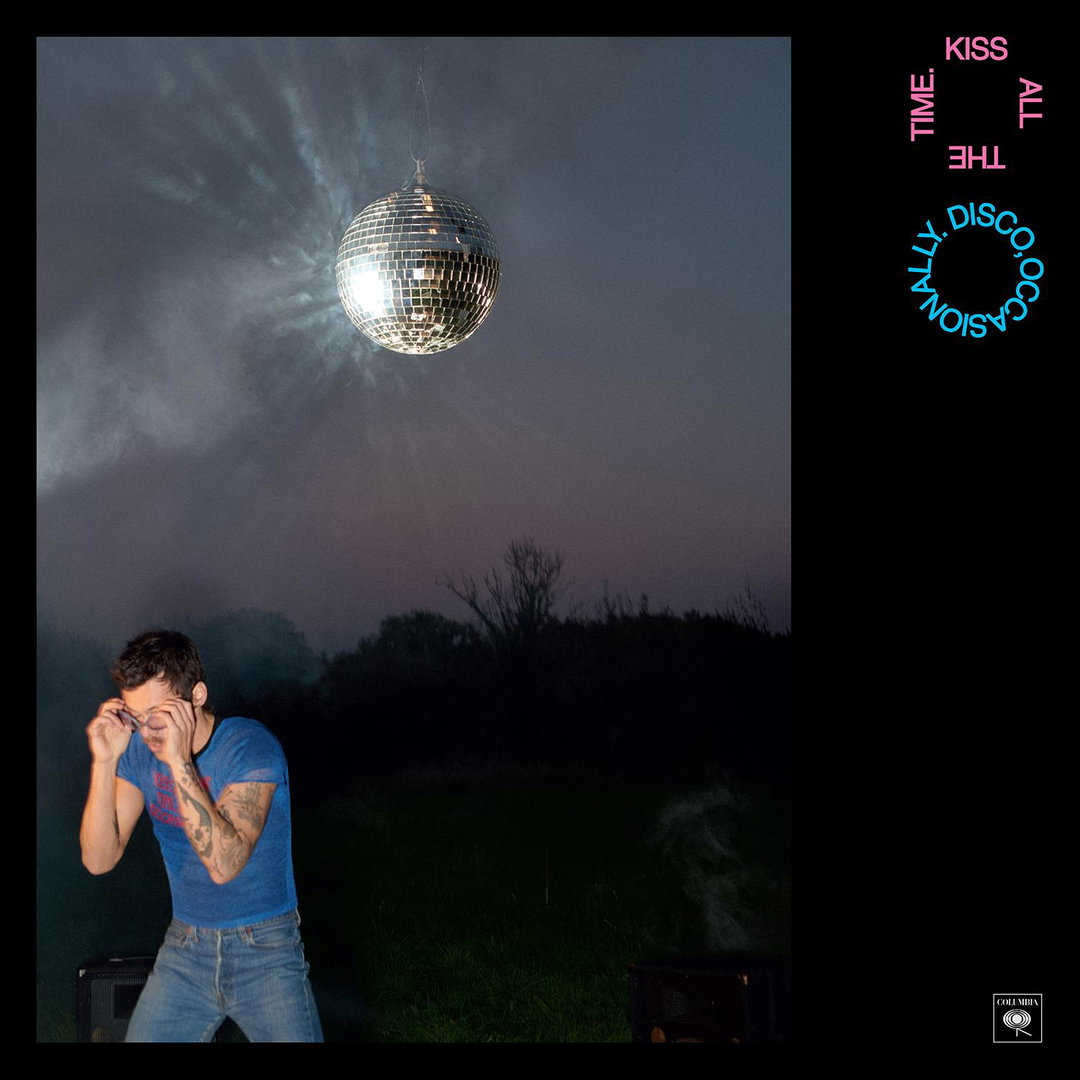
Bráulio Amado: Harry Styles, Kiss All The Time. Disco, Occasionally record cover (Courtesy of Sony Music)
1 of 8
Bráulio Amado: Harry Styles, Kiss All The Time. Disco, Occasionally record cover (Courtesy of Sony Music)
INT: That freedom must be fun but then also quite scary! In terms of other routines, is there anything else that you do, when you’re really not loving it, or you’re totally stuck, or you’re going crazy on your own in your studio? Are there any other rituals you turn to?
BA: In the beginning, when I was working in an office, it was harder because you have to be in the office, on the computer, so you have to do research or something. But when I started working for myself and I had my own studio, I was like “Oh, I can be surrounded by stuff I like.” Books and records and all these things. Also I manage my own time. So it’s not like I have to be on a computer. If I know if I don’t have any good ideas, I don’t know if it’s going to be helpful for me to stay at my desk to please my boss or whatever. Maybe it’s better if I go for a walk and look at stuff, or go to the library and look at images, or go to a museum, or... I mean, I live in New York City, so there’s so many places you can go that will inspire you and take your mind off of it and maybe push you somewhere else. But even going to places like museums and galleries, when you’re already struggling with your own ideas and then you see art and then you’re like, “Ah, damn it!” It doesn’t help! So the alternative is like, walking to the park and just kind of like take away like take your mind off of it. Sometimes being in a park and just looking at people, especially during the day, just walking around doing their own things, makes me think, “Oh yeah, this is just a job. It’s okay.”
“Sometimes having ideas means that you might be having a day where you don’t have ideas.”
Bráulio Amado
INT: It gives you perspective I guess..
BA: If it’s a bad day. Sometimes I just don’t have a good idea and it’s okay. I’ve definitely had clients where I was killing myself trying to figure out something and I was always missing it. It feels humiliating, but at the same time, it’s not like we’re economists or something, right? Like we just have to input numbers and we know how to do it and it’s always going to work. Sometimes having ideas means that you might be having a day where you don’t have ideas. Obviously that also sounds privileged to be like, I just don’t have any ideas. More often I need the money, so I have to come up with something! But that’s when you have to talk with friends, ask them “What am I missing here?” And research, not just on a computer, but in books – it takes away a bit of the pressure of having to come up with something.
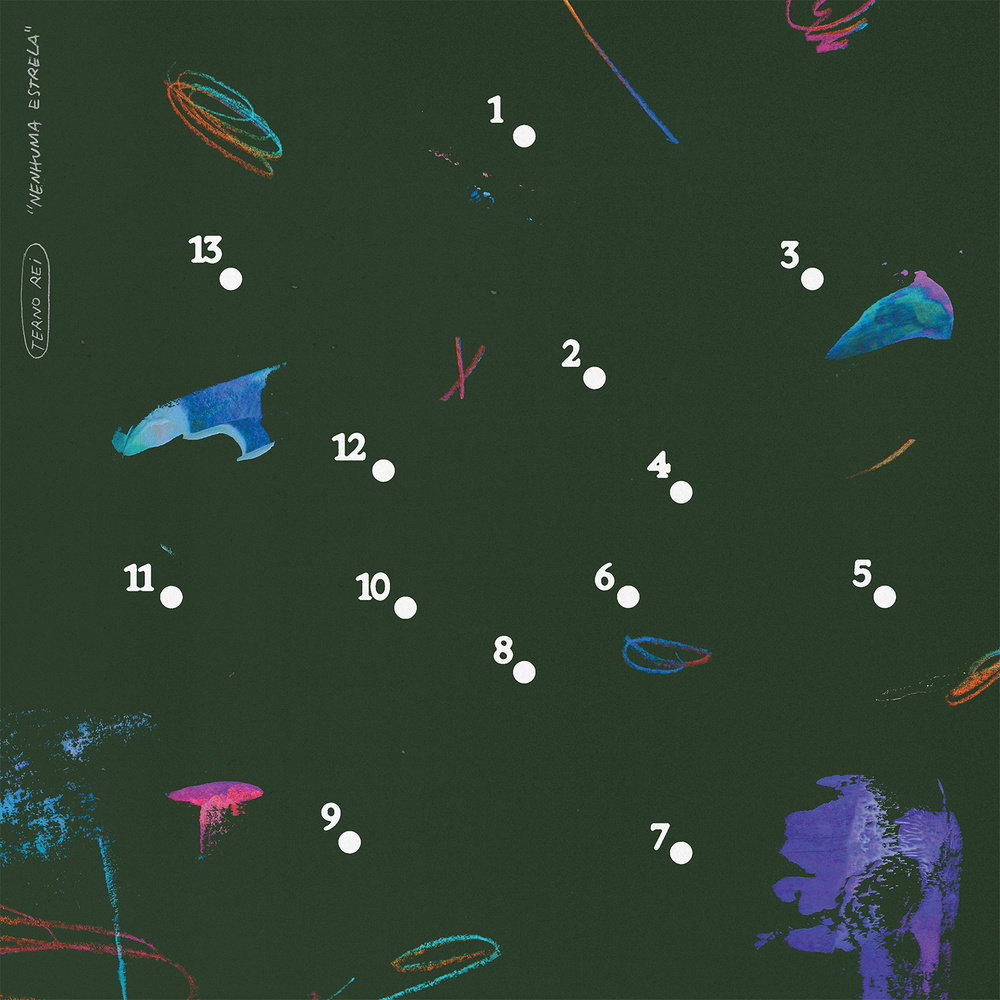
Bráulio Amado: Terno Rei, Nenhuma Estrela (Courtesy of Balaclava Records)
INT: That’s good advice…
BA: For a while I was also trying meditation, but I’m still really bad at it – clearing my head. It’s funny because it feels counterintuitive. Like you struggle with something, you need more ideas, and the idea of meditation where you try to remove your ideas, it actually helps because you relax a bit. So sometimes I do a 20-minute meditation. There’s a place in my neighbourhood that does lunchtime meditations, so sometimes I go there but that’s 45 minutes and that’s too much for me, for someone who’s not experienced with meditation, and I tend to fall asleep! But then sometimes after having a nap in the afternoon it’s like, “Yes! I’m ready.”
INT: That reminds me I wanted to ask you – were you creative as a kid?
BA: My aunt is a painter and I was very inspired by that. And my grandmother, when she retired, she also started painting, my aunt taught her. I wouldn’t say I grew up in an artistic family. I remember when I started drawing, I was bad, but then when I got a computer, that’s when I realised there were all these tools I could use to help me to achieve what I would like my work to be. That also helped me figure out that was I was doing was called graphic design, and I wanted to do that. Because I was doing covers for my friends’ bands and posters when I was in middle school and high school.
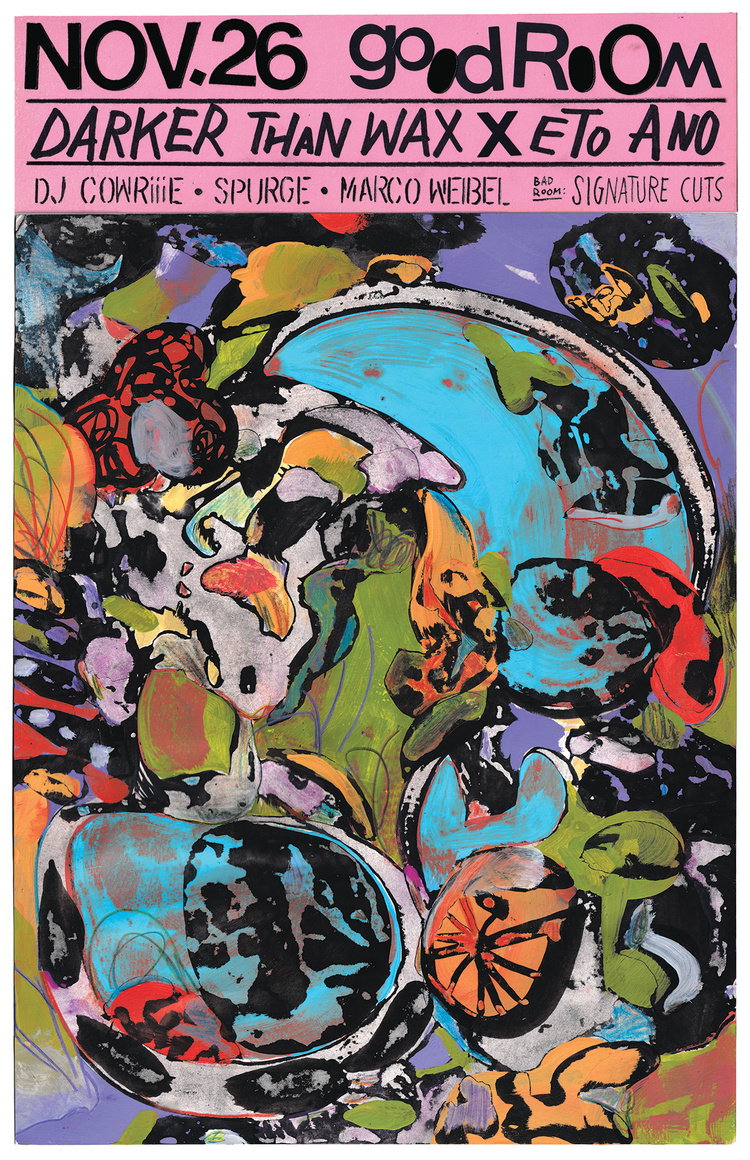
Bráulio Amado: Good Room poster (Copyright © Bráulio Amado)
“It doesn’t matter how bad it is, it’s more about doing and forming a community and adding to the community. Rather than trying to be perfect.”
Bráulio Amado
INT: It sounds like it was always kind of about music, which is true for a lot of creative people and graphic designers, isn’t it? There’s some kind of symbiosis with music and design and art, isn’t there?
BA: Yeah. Definitely. Also I was always very much into punk, hardcore, DIY music, which was all about doing it on our own, being part of a independent DIY circuit. So it was not only inspiring but also inviting, everyone could do it. It doesn’t matter how bad it is, it’s more about doing and forming a community and adding to the community. Rather than trying to be perfect or become a famous artist, we were just doing it for each other. So that attitude also helped me open up and be like, “Oh it doesn’t matter.”
INT: Last question, what are you working on at the moment? Anything you can share?
BA: I’m working on a record cover for a band, but I can’t say who it is yet. But I’m purely the graphic designer this time, the band asked a painter to do the painting and I’m just designing the packaging. But it’s very exciting and it’s been fun – soon I’ll be able to tell you what it is! Besides that I’m working on this book about gay porn posters from the 60s, 70s and 80s by Elizabeth Purchell who does this podcast named Ask Any Buddy. It’s about the history of gay porn and erotic movies and the posters, which are not what porn posters look like nowadays, they’re very artistic and and really cool. There’s a punk theme to it, trying to be subversive and and tasteful. So it’s actually been really fun to be designing a book that I’m not illustrating, it’s not about me, I’m just purely admiring all the images that I’m sent and trying to make sense of it.
INT: Amazing, thanks so much for chatting Braulio, can’t wait to see it. What are you going to do now?
BA: Thanks! I dunno, maybe I’ll go for a walk around the block.
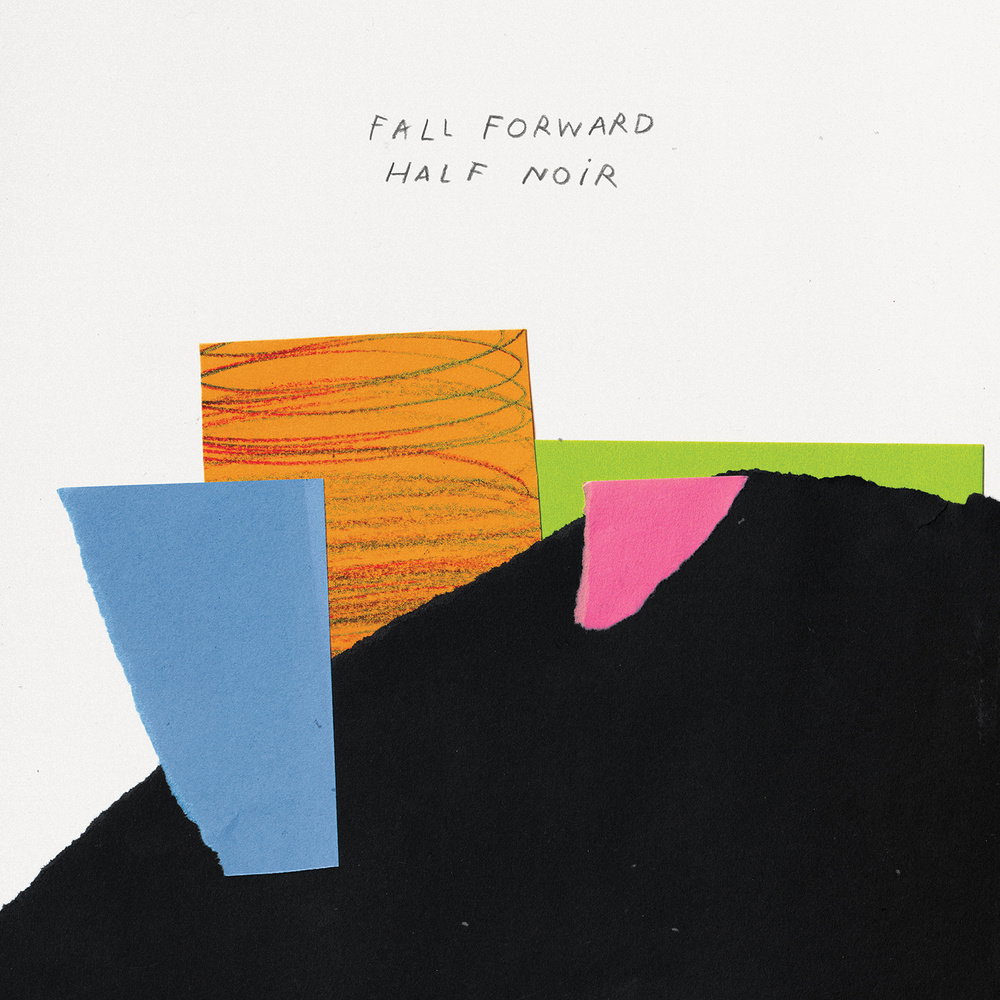
Bráulio Amado: Fall Forward, Half Noir single cover (Courtesy of Fallin’ Trax)

Bráulio Amado: Fall Forward, Half Noir single cover (Courtesy of Chaos)
Further Info
About the Author
—
Jenny oversees editorial output across It’s Nice That. Get in touch with writing pitches for features or opinion pieces, big creative story tips, or questions about all things editorial. jb@itsnicethat.com
To submit your work to be featured on the site, please see our Submissions Guide.