



- Words
- Paul Moore
- —
- Tags
Mark Bohle’s Pica Pica is a playful collection of 80 sketchbooks filled with daily drawing exercises
This designer puts sketchbooks to use, so much so that he’s nearly at his 300th sketchbook, and in his collections of routine drawings published by Handshake, great ideas and interesting compositions are teased out with a rigorous work ethic.
- Words
- Paul Moore
- —
- Tags
We all have artists whose sketchbooks we’d love to dig into. To see where an idea originated or how it evolved over time. The sketchbook is like a mixtape of demos from a favourite band – seeing bare concepts or skeletal artistic forms has proven to be an invigorating experience. Nowadays, it’s very common for musicians to release demos, artists to release concepts and storyboards or designers to show making-of videos. It’s all a part of evidencing the human touch and the kind of intuition, dedication and spirit in creation. For Barcelona-based artist and designer Mark Bohle, the moment where Handshake asked him if he would be interested in doing a book on his daily sketchbook routine was an uplifting one. It’s not just amazing for artists to see, but it was an illuminating experience for Mark, who realised so much about his own work when curating his most recent 50 sketchbooks at the time. The result was called Pica Pica, and a sequel to that project is out now.
Mark runs the graphic design studio NAM with Nam Huynh, and teaches typography and visual experimentation at Elisava University. It speaks to his educational background that he would release Pica Pica, a type of education for artists of all kinds. Mark, for over a decade, has used a plain moleskine sketchbook – and he’s nearly reached his 300th book. “The process was never important. I just used sketchbooks without giving any importance to it,” says Mark, referring to sketchbooks as having the same importance as a hammer or a shoe, serving one specific need and nothing else. “This changed with the publication of Pica Pica, since then there was a switch. For the good as for the bad. The drawings now are ‘better’ but I do not know if this makes them more sympathetic.”
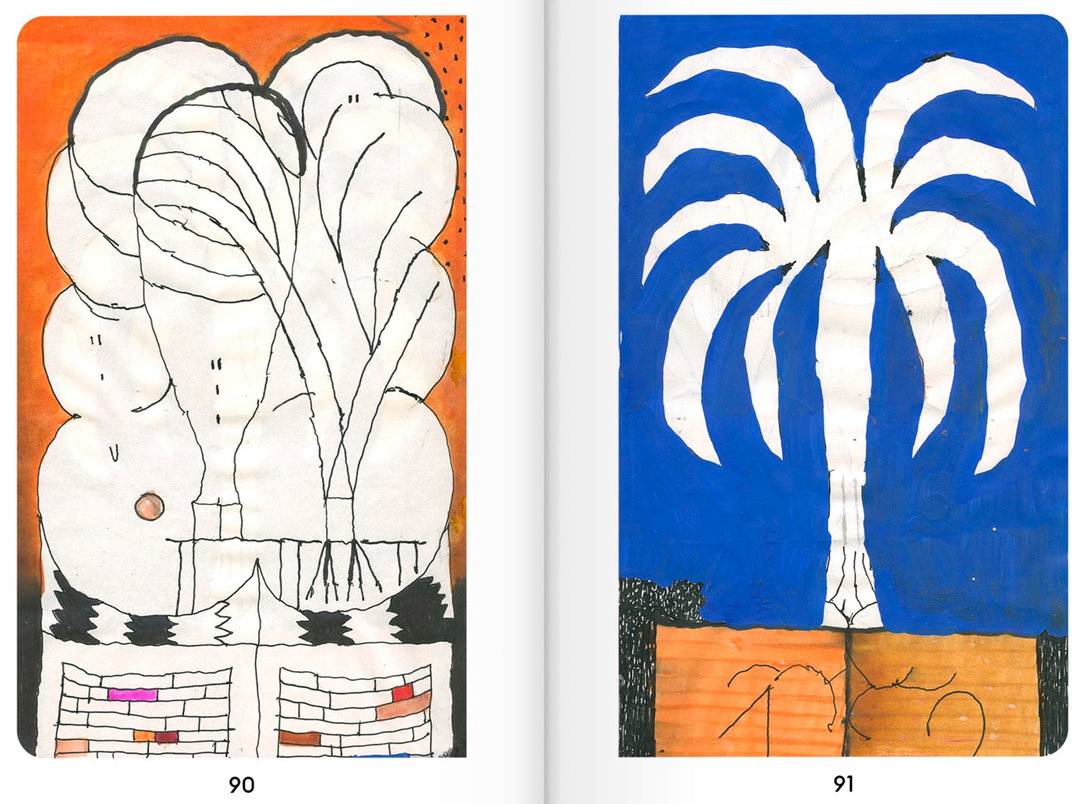
Handshake & NAM: Pica Pica 2 (Copyright © Handshake & NAM, 2025)
Mark says that sketchbooks and large-scale works fuel each other. Clay Hickson, in his talk at Nicer Tuesdays in LA, spoke similarly about the importance of daily practices such as sketching and how that leads to a stronger connection to creative output. The sketchbook becomes a type of self-reference library in which one can remember the ideas that appear everyday, but are threatened to be lost otherwise.
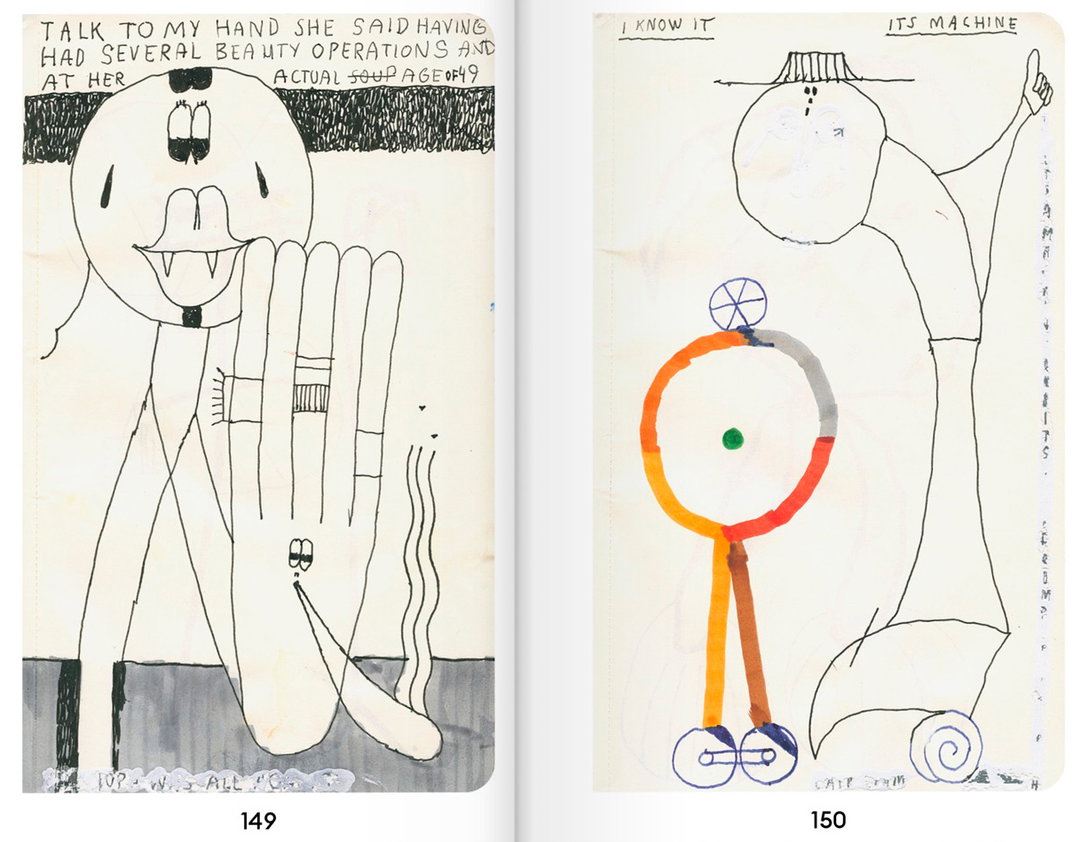
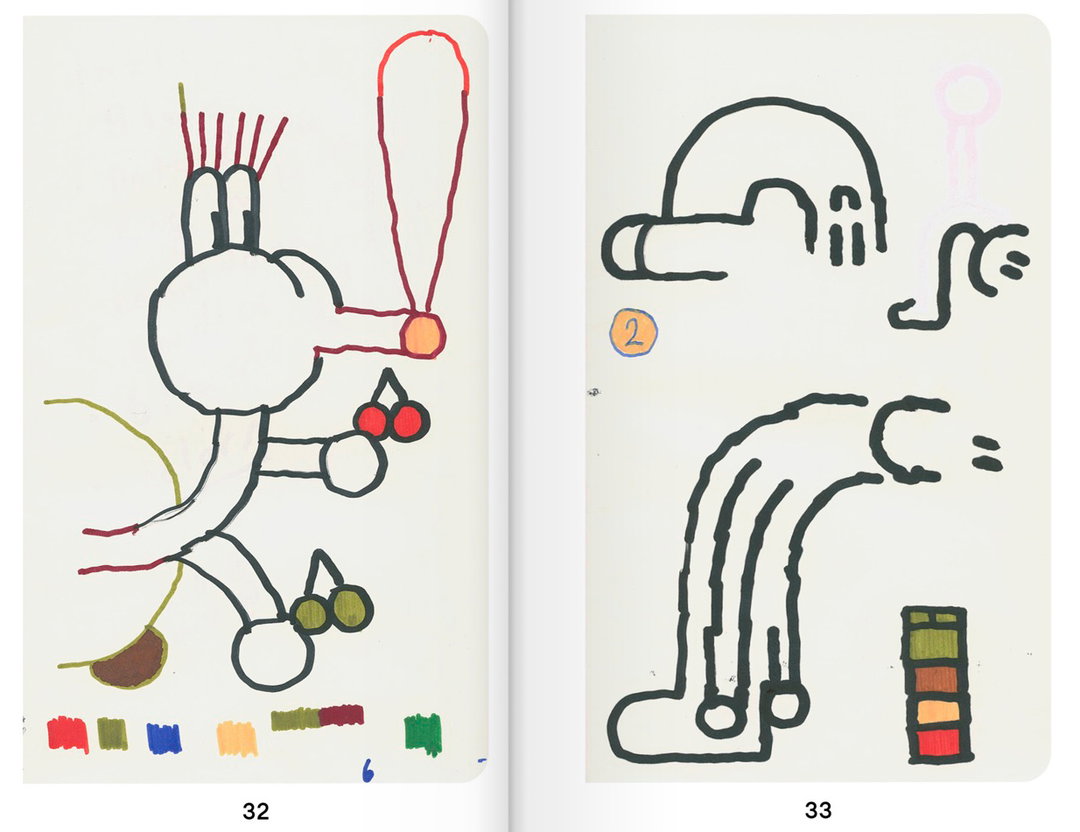
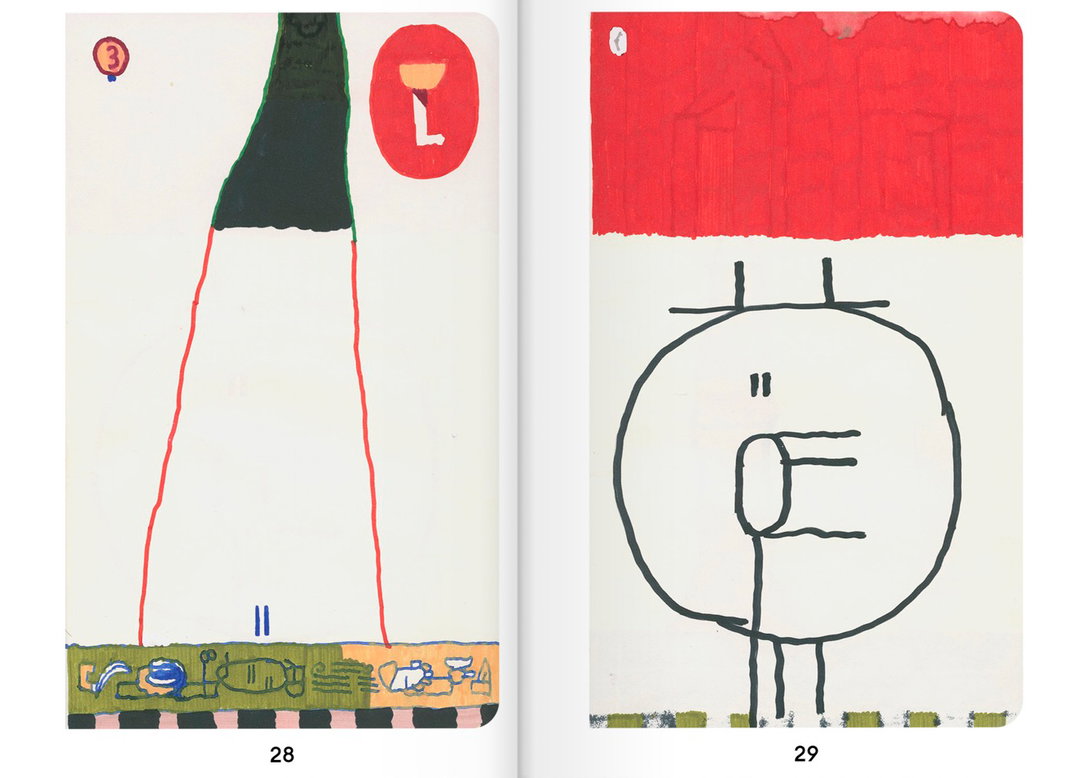
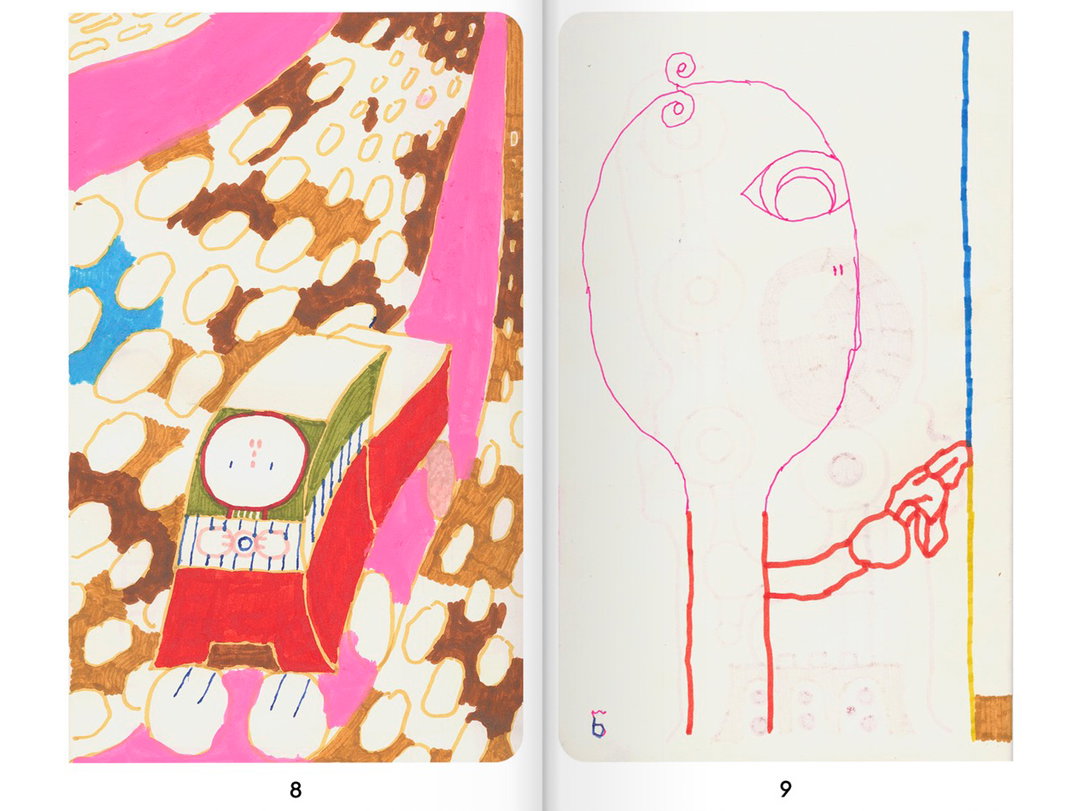
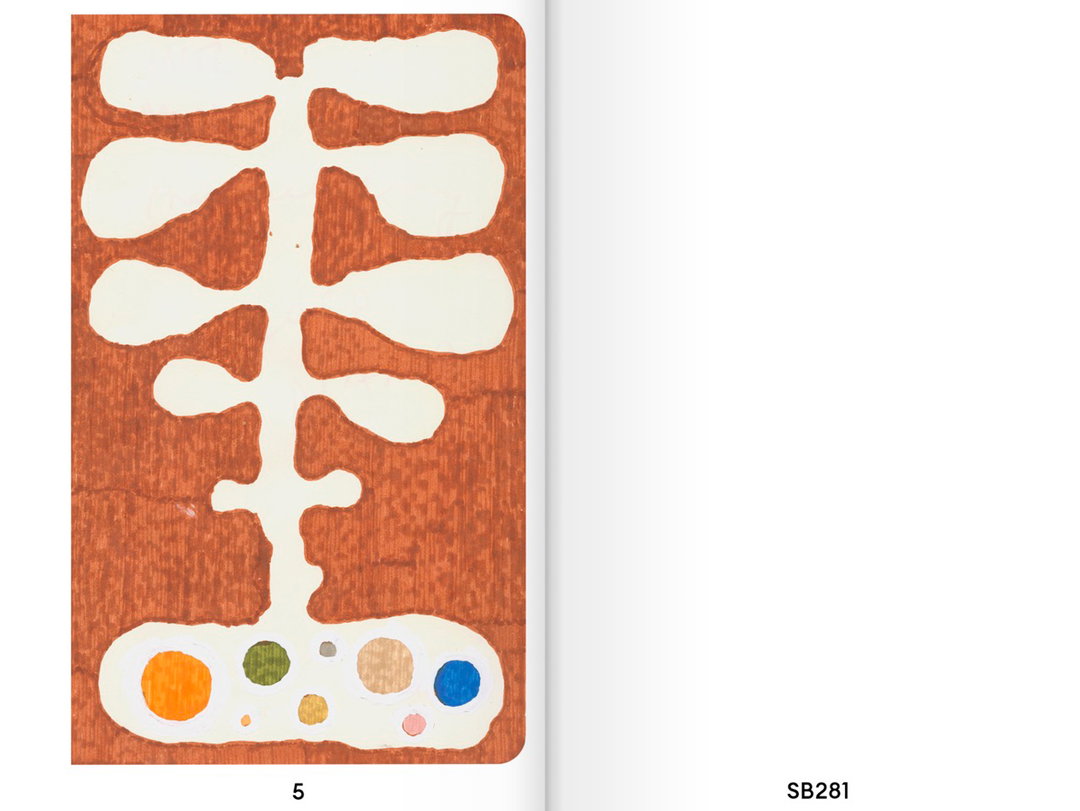
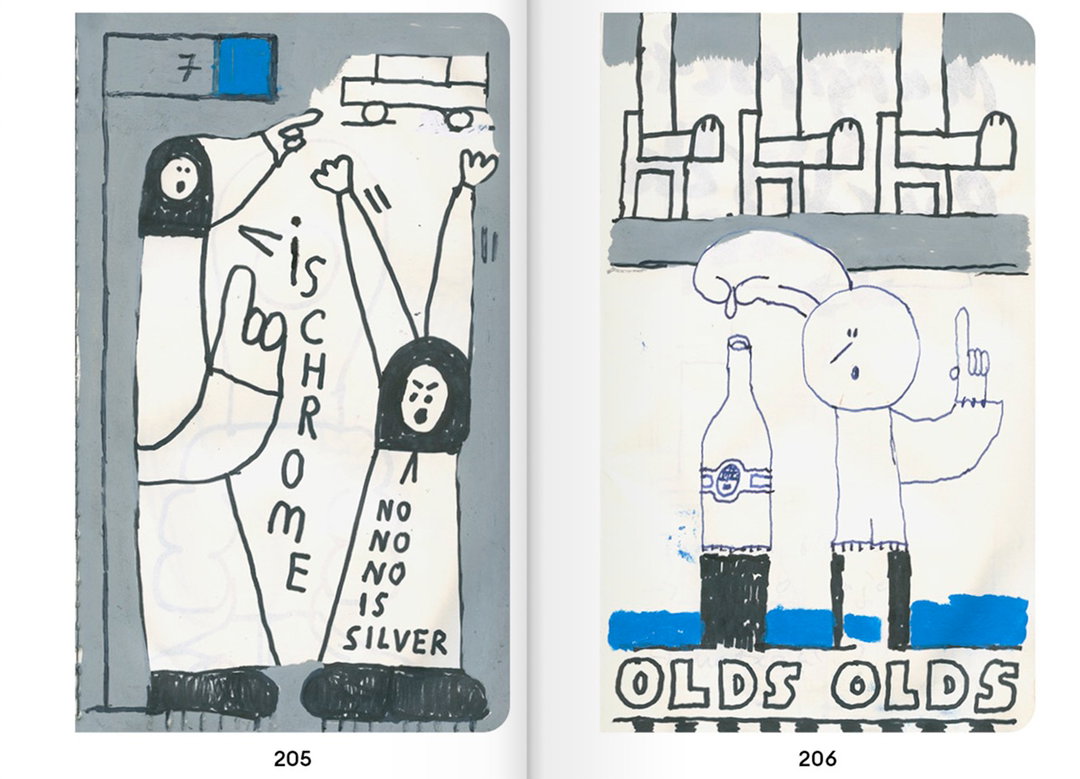
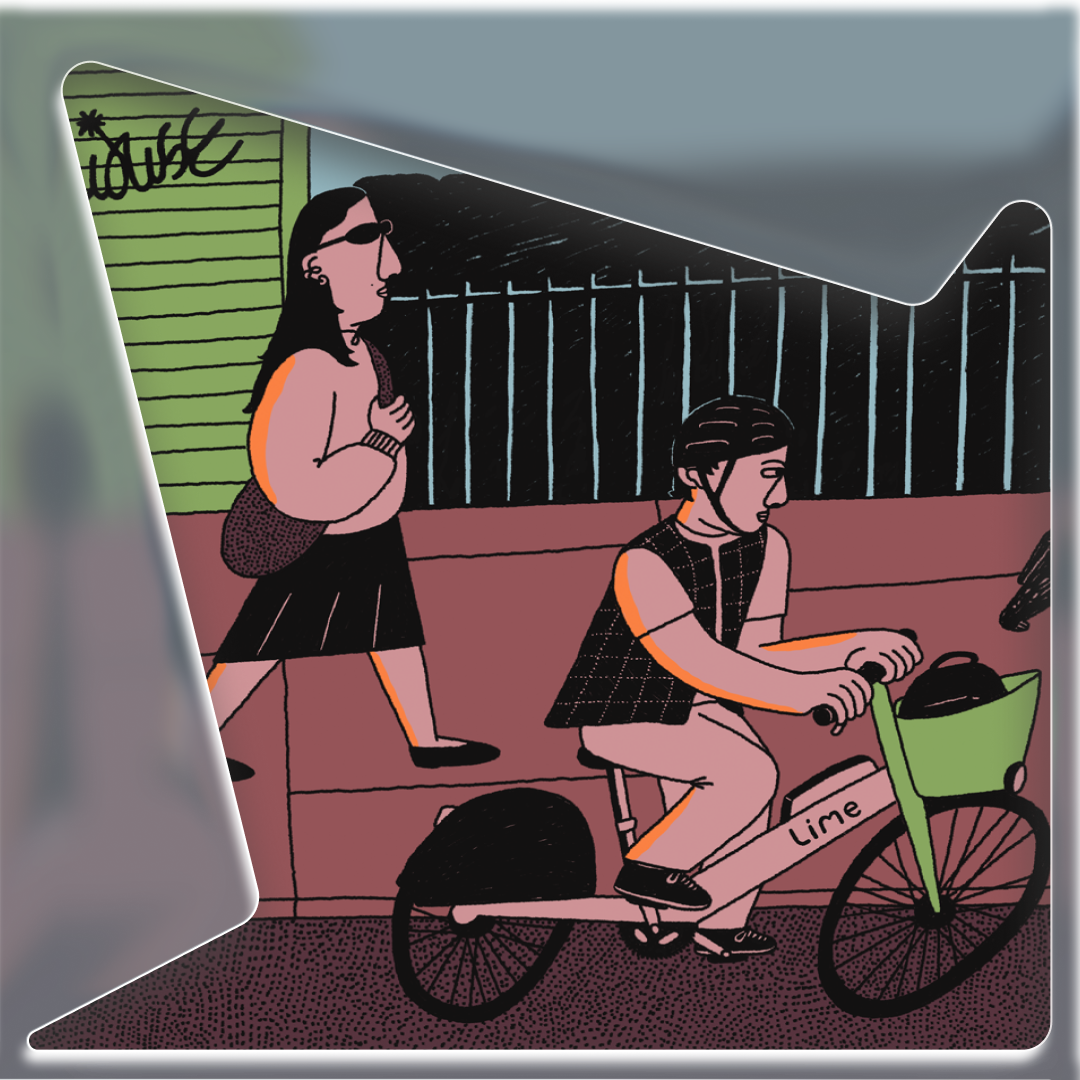
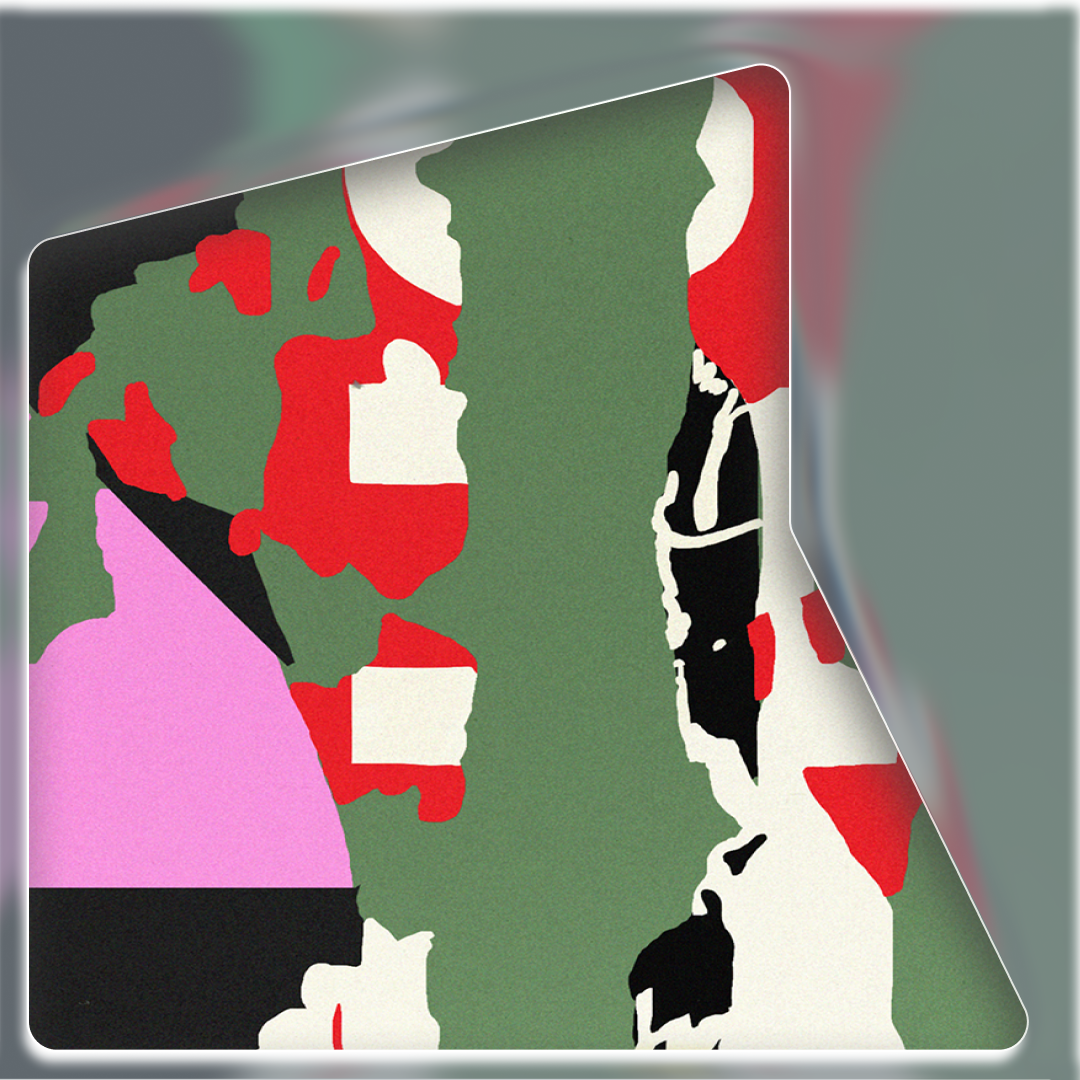
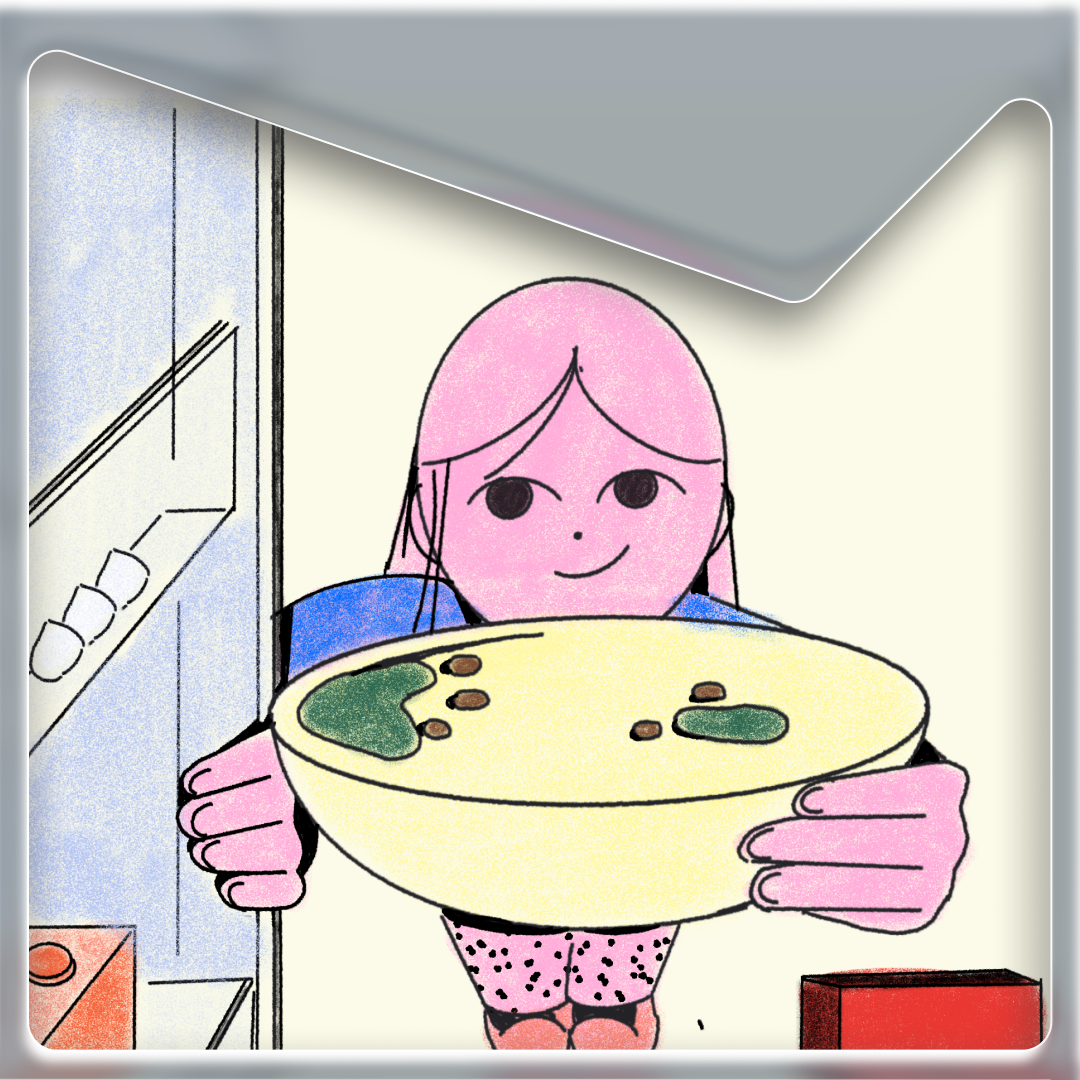
The works in both Pica Pica collections are beautiful in their simplicity – the negative space shines through, accentuating the sketch-like nature of the project, but draws closer inspection to the contents of the pages (it’s also exciting to see how this use of space reflects his larger works). Exploded cartoons, moments of a face being visible, but not quite! Colours are experimented with in circular motions like leaf spots or tiger stripe ombrés. The textures of his “fat” marker pens are reminiscent of the overlapping rows of felt tips on childhood drawings. There is a large degree of playfulness here – inherent to the nature of sketching, the real draw here is the dereliction of materials, form and concept. Mark carries out illustrations in a workman-like fashion, drawing out the most charismatic flourishes through a type of automatic-making. Sure, it’s unromantic, like a hammer or a shoe, but it speaks to the furious work ethic of being a contemporary designer.
“At some point I realised that drawing feels better to me without having an idea. Turning the page and starting to draw, let’s see what happens. Maybe you find an interesting moment and maybe not,” says Mark. “It’s rather a question of work than of creativity. The ideas don’t just drop by, they need to be constructed.” It’s obvious that an everyday routine, a dedication to work, inspires imagination to manifest naturally. As Mark approaches the end of a sketchbook, he describes the German expression “tick”, a type of going back and forth, back and forth – he finds himself looking through the book more and more, pulling out the best ideas and seeing other “bad” ones blend into each other. “What is even better is finishing a sketchbook, closing it and adding it to the bookshelf. There are very few better moments in life,” says Mark.
GalleryHandshake & NAM: Pica Pica 2 (Copyright © Handshake & NAM, 2025)
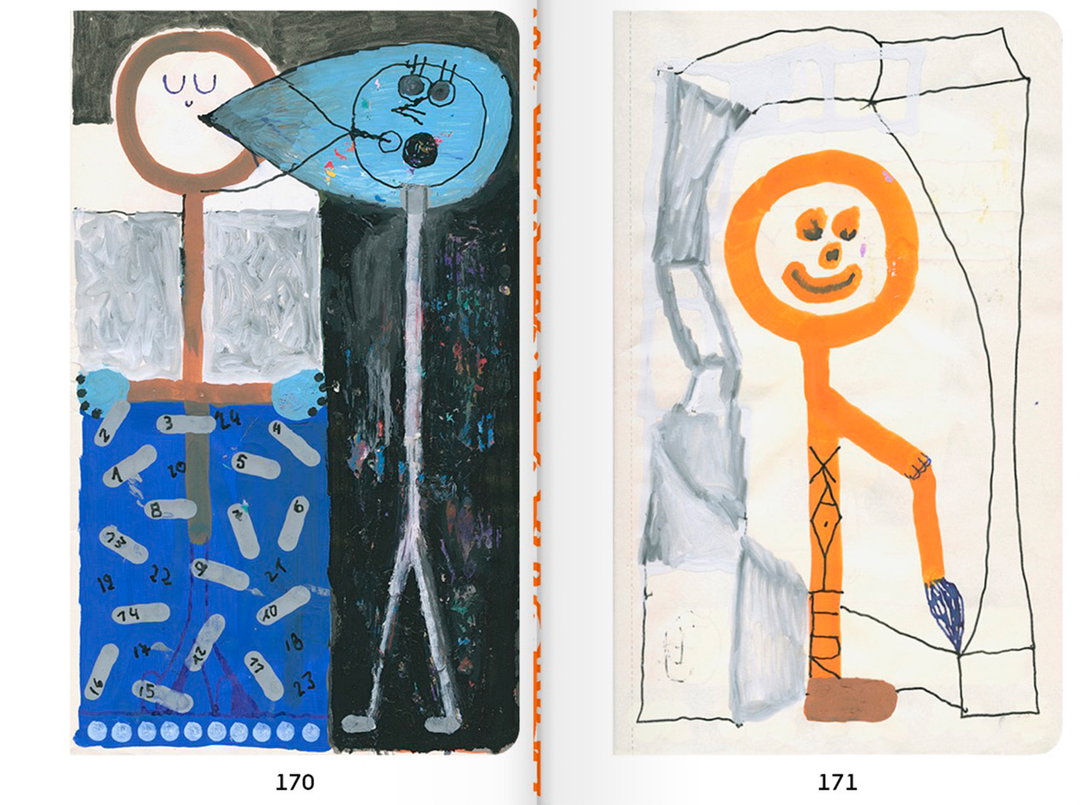
Hero Header
Handshake & NAM: Pica Pica 2 (Copyright © Handshake & NAM, 2025)
Further Info
About the Author
—
Paul M (He/Him) is a Junior Writer at It’s Nice That since May 2025. He has a strong interest in graphic design, digital kitsch, multimedia painting, collage, nostalgia, analogue technology and all matters of strange stuff. pcm@itsnicethat.com
To submit your work to be featured on the site, see our Submissions Guide.