




- Words
- Megan Williams
- Illustrations
- James Paris
- —
- Tags
Sanitise subculture at your peril: why brands should take fans seriously
Fandom has become a part of the brand strategy playbook, but to genuinely resonate with people on that level demands more than an idle Discord channel or a hollow event.
- Tags
I love talking to people about football. But I always dread the inevitable question: what’s my club? My response is always meandering. Growing up, I emulated my dad’s allegiances to a top flight club, but they drifted once I moved away from home. My national team will always have my heart, but that’s different to a club you choose. Perhaps I should just say my partner’s club, which I often watch alongside him, though largely because I want to know firsthand whether or not Saturday is ruined. I usually own up in the end – I don’t really have a club – and move the conversation along quickly. However, the question of who can claim fandom always lingers.
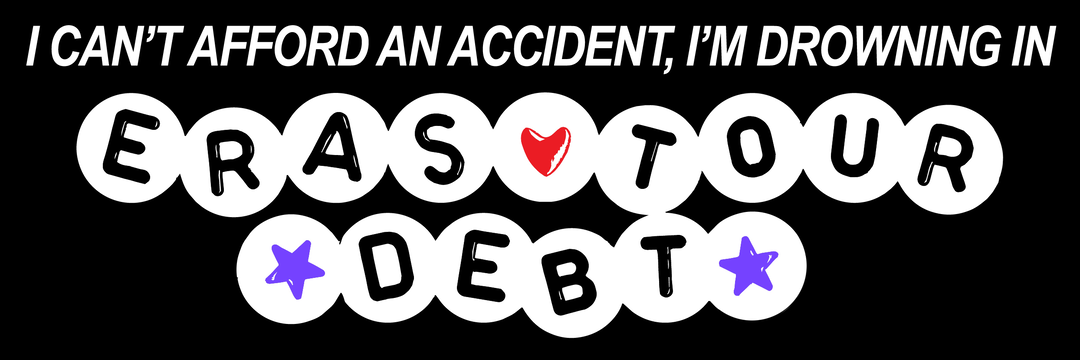
Not only for me, it turns out. The same question has been percolating through the traditional arenas of fan culture – sport, music, film and TV – and brands that sit well beyond. It’s why sticker-style illustrations have seeped into case studies, and why, in the brand strategy playbook, old favourites like “community” and “authenticity” have been upgraded to “fan culture”. We are now in the age of the “superfan economy”, and the potential gains of tapping into it aren’t lost on marketers. Yet a “fan” is not simply a synonym for a repeat customer or a social media follower, and many brands fail to see, or wilfully ignore, this distinction. A fan is an ardent disciple, proud ambassador, fierce defender, and impassioned storyteller rolled into one. These are feverish, borderline spiritual relationships that are hard to please and even harder to cultivate.
“These are feverish, borderline spiritual relationships that are hard to please and even harder to cultivate.”
Megan Williams
The pandemic years seemed to concentrate fandoms, the links between people and their newly available idols narrowing through direct-to-fan experiences and content. This was when stages were swapped for bedrooms (lavish though they might have been), and photoshoots for livestreams. A time when the high priestess of modern fandom, Charli xcx, jumped on Zoom to announce a new album, before inviting fans to observe and collaborate on the creation of the record itself – a move that seemed less about throwing them a bone and more a product of genuine curiosity.
Yet the nature of direct-to-fan contact has been shifting in recent years. Music tech analyst Cherie Hu found that platforms modelled on monthly subscriptions in exchange for exclusive creator content, like Patreon, are increasingly used for free or one-off engagements. Vault disbanded its similar monthly model last year. Perhaps routine ‘drops’ weren’t the silver bullet for reciprocal fan engagement they once seemed. “The problem with direct artist subscriptions is that they flatten all this activity into one signal: Did you pay this month?” Cherie argued. “An emotional relationship turns into a quiet obligation.”
“Branded zines are joined by Easter eggs and user-generated content which, while pleasant, can feel a little limp without much else to back them up over time.”
Megan Williams
These patterns reflect an overall sense that fandom has, for many, become transactional. People get the same impression from the many brands trying to manufacture fan culture, too. In her 2010 book about zines, archivist Teal Triggs noted how even in the 1990s, “the fanzine as a graphic form was co-opted” by global brands. These days, branded zines are joined by Easter eggs and user-generated content which, while pleasant, can feel a little limp without much else to back them up over time. The hollowness extends to many of the events that are marketed at TV and gaming fans but ultimately register as contrived: too much emphasis on sponsors and scripts, not enough on genuine entertainment and connection. It all feels out of step in an age where global music stars and world-class footballers are running public finstas documenting their everyday lives and creative processes on their own terms. Audiences are seeking looser, more organic relationships and a chance for their voice to be heard.
Truly listening can be a difficult pill to swallow; not all of it is pleasant. Ask Chappell Roan. Or the film execs and showrunners who now adapt stories “to cater to subsets of diehard devotees”. Or any agency that’s redesigned a football club crest, knowing it’s often a thankless task at best, poisoned chalice at worst. (Non-partisan consensus seems to be that Liverpool is just about the only club in Europe that’s successfully moved towards a more minimal crest.) Yet the aim shouldn’t be to neutralise the intensity of people’s feelings but to anticipate them through meaningful, sustained exchanges.
“The aim shouldn’t be to neutralise the intensity of people’s feelings but to anticipate them through meaningful, sustained exchanges.”
Megan Williams
In The New Formula for Fandom, strategist Zoe Scaman warns that not every brand will be able to leverage fandom properly. Attempts to do this can easily descend into cringe territory. But Zoe notes that the principles of fandom offer at least some avenues for brands to explore, say, by properly nurturing networks of likeminded people (an idle Discord channel won’t cut it, I’m afraid) or delivering an original spin on rewards.
Take Adult Swim’s in-person illustration challenges, which are not only a way for fans to interact with their favourite animators and one another; they’re also a chance to get scouted. In this case and so many others, it works because the barrier between the object and subject is dissolved, which is an essential component of fan culture today: passing the mic – or the pen. Just like Charli xcx did with How i’m feeling now, or Adidas did with artist Émile-Samory Fofana, whose history of bootlegging merch paved the way for a unique partnership. From designing Adidas qamis – official ones, this time – to directing the photoshoot in Guinea, Émile-Samory’s imprint is felt throughout the entire project. As he describes, “This collaboration is the intersection of two worlds and represents what happens when they collide.”

These projects are lessons in the beauty and power of co-design, which underpins the most successful fan relationships. If a zine – or any other material associated with fan culture – really does feel like the most appropriate expression of a star, club or brand, at least make sure the fans have a seat at the table when it’s being made. It’s also worth remembering that, despite the intensity of fan culture, not everything has to be so on-the-nose, as Astrae’s work with Nike and NBA star Ja Morant reminds us. The campaign visuals embody the intimacy and rawness of fanzines and scrapbooks without cosplaying as a fan-made artefact (even if, as luck would have it, the studio’s founder is an ardent basketball fan). Sometimes inspiration is better than imitation.
“At least make sure the fans have a seat at the table when it’s being made.”
Megan Williams
The biggest lesson is that the foundations of fan culture can be laid, but it can’t always be engineered or predicted. Danish label Ganni didn’t know that a rogue hashtag in 2015 would spearhead the club dynamic around the brand. When the first World Cup sticker book launched back in 1970, nobody would have foreseen the outpourings of nostalgic love for Panini – not Fifa – over 50 years later when it was announced that the partnership would soon be ending. Both examples were nurtured with time, but there’s a stroke of serendipity involved too. Fan culture sometimes comes at you sideways. (I like to think this explains my slightly wonky claims to football fandom.) A good brand just knows what to do with it when it does.

About the Author
—
Megan Williams is a London-based writer, editor and researcher who regularly covers photography and visual culture. Her writing has been published by WePresent, AnOther, The Guardian, British Journal of Photography, Creative Review and more.