


My childhood died in 2017 when Club Penguin was shut down by its parent company Disney. It died again in 2022 when the fan-made revival Club Penguin Rewritten was shut down by the City of London Police upon Disney’s request due to copyright infringement. My days of waddling around as a pink penguin throwing snowballs at unsuspecting users were almost behind me, extended only by the grace of fans who volunteered their game development skills out of love for the original game.
Club Penguin Rewritten was the ultimate bootleg made possible by fan labour, through which fans expressed their love for the brand or media franchise that captured their hearts. However, a community of fans existed long before the fan-made revivals. Unable to contain my obsession with the game, I created a Club Penguin blog with bootleg graphics to take part in the worldbuilding shaped by fanlore. We made YouTube videos, chat rooms and Twitter posts to circulate fan theories – like the one about tipping the iceberg. Community was an important byproduct of that labour which extended Club Penguin’s life, even after the game was officially gone.
“Sometimes, bootlegs hold the community together.”
Lucy Pham
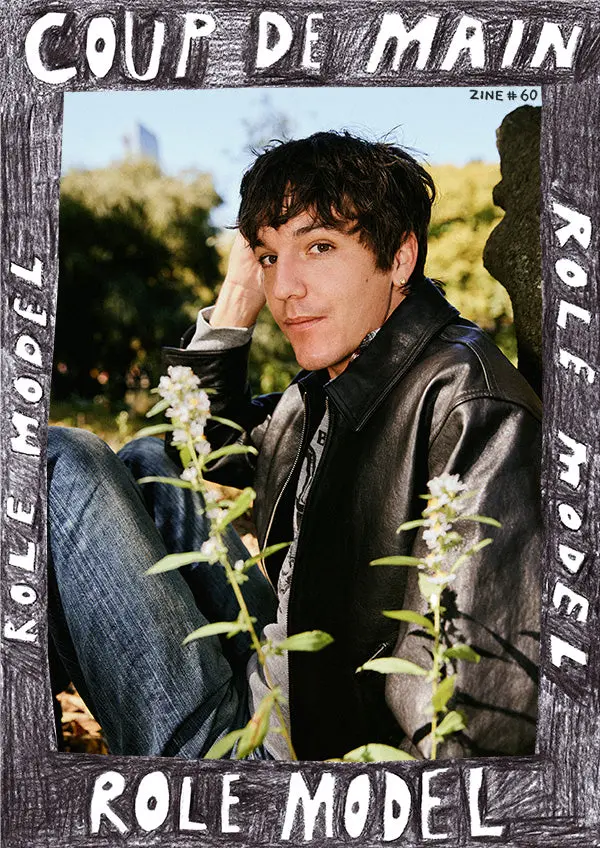
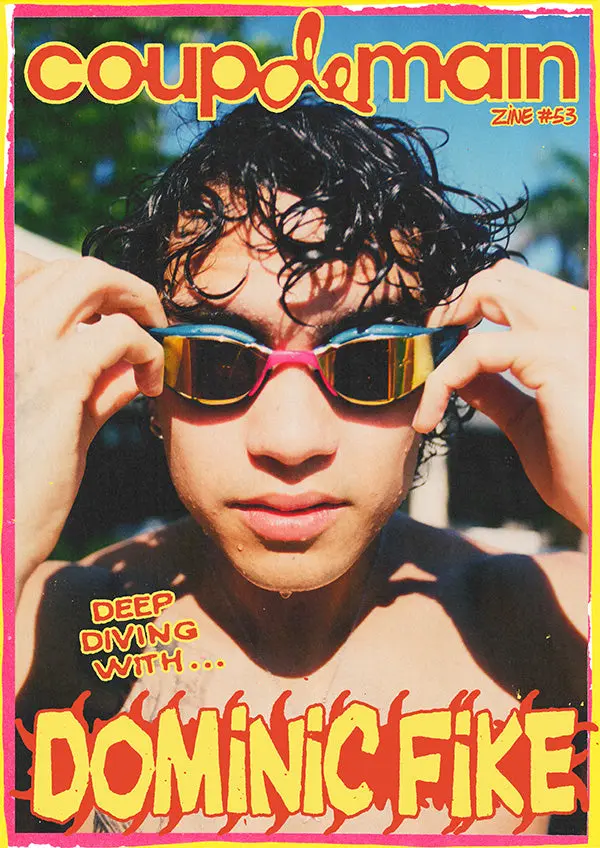
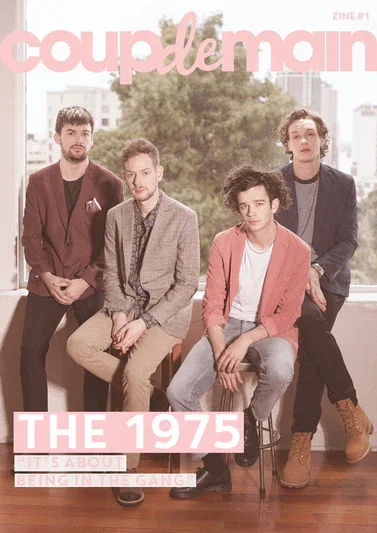
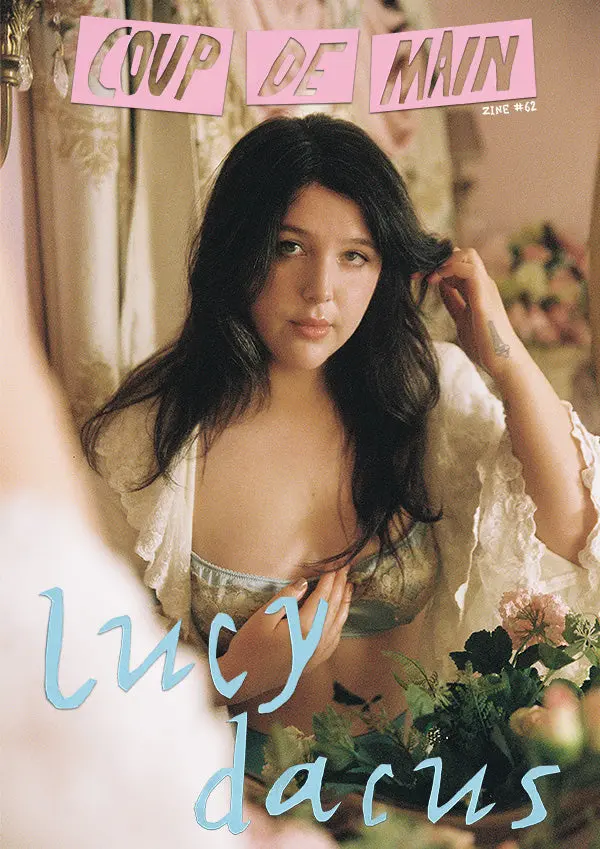
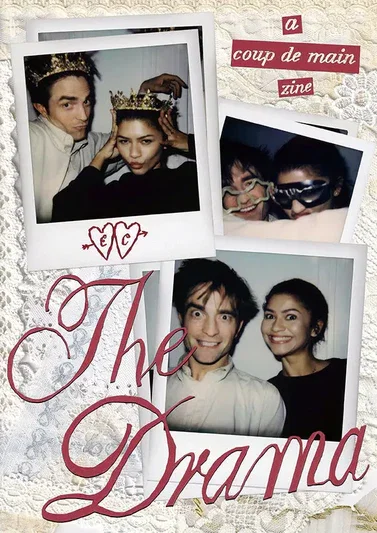
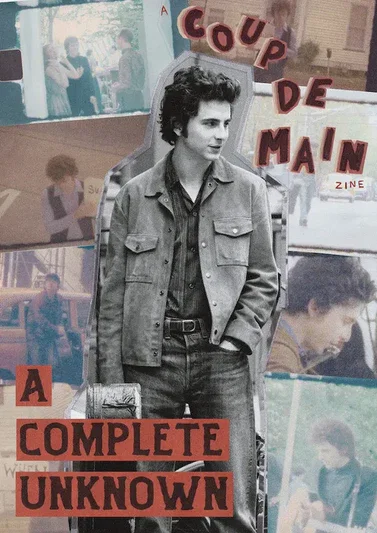
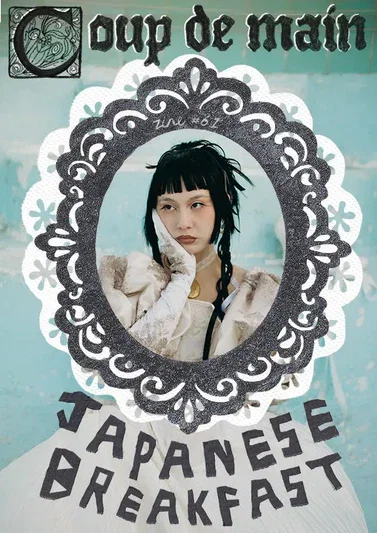
Fan labour builds community and loyalty, and brands are trying to emulate it. During Taylor Swift’s Eras Tour, fans began making and exchanging friendship bracelets inspired by her music. Afterwards, Swift began releasing hoodies and garlands inspired by the friendship bracelet tradition. New Zealand-based Coup de Main is a pop culture magazine which regularly interviews artists like The 1975, Paramore, and Clairo; excerpts are published in the form of zines which take on a DIY fanzine aesthetic.
Fan labour is also often creative, ranging from fan art and design to zine making; such activities often venture into bootlegging territory. Sometimes, bootlegs hold the community together. The rise and fall of Club Penguin and its fan-made descendants demonstrates a tension between the brands that own the intellectual property (IP) and the fans who rally around it. The unauthorised but laborious Club Penguin spin-offs – some of which accumulated millions of users – are a testament to the original game’s success. But, Club Penguin’s success was only possible because of the dedicated players who logged on everyday to build their own narratives. It begs the questions: how much of a brand’s success is generated by the parent company who owns the IP versus loyal fans and consumers? What could brand designers stand to learn from stan culture?
Copyright © Coup de Main
1 of 6
Copyright © Coup de Main
1 of 6
Copyright © Coup de Main
Portland-based graphic designer Kel Lauren specialises in merchandise design for some of your favourite artists such as Ariana Grande, Olivia Rodrigo and Chappell Roan. Although they now do it professionally, merch design was originally an amateur pursuit that began in middle school. “I made bootleg t-shirts for my friends growing up because we were all deep into Beatles stan culture at the time.” They routinely checked Tumblr after school: “as if I was going to log online and discover new pictures of Paul McCartney that I could make into t-shirts for myself or for my friends.”
Why bother making your own merch when there’s no shortage of merch for members of The Beatles – one of the most famous rock bands in the world? For Kel, official merch didn’t always speak to them the way that a unique reference might, such as a lyric from Mamunia, a song by Paul McCartney and Wings about being grateful for the rain. “It was niche enough where that’s never going to be sold in stores,” so Kel took things into their own hands.
They made a design in Photoshop, printed it on heat transfer paper, cut it up, and re-collaged it on a long-sleeved, fitted shirt. Lyrics ran down the sleeves and across the upper back while graphics appeared on the front. At their first Paul McCartney concert, Kel wore this t-shirt while posing for a photo in front of the Hollywood Bowl sign.
Little did the 8th grader know, they would be designing the core tour merch line for Paul McCartney over a decade later. “When I went and saw Paul again this past October, I took my mom to recreate that picture, but I was wearing a shirt that I was actually commissioned for. It was a perfect full circle moment.” Looking back on their fan labour, they describe a fervour rooted in creative agency: “I’m unstoppable. I have access to the Internet. I can do anything.” For Kel, making merch was a way of expressing their admiration for the artists who deeply impacted them.
These bootleg Paul McCartney t-shirts were the precursor for Kel’s professional practice. Their interest in graphic design continued throughout high school when they assembled an AP Studio Art portfolio full of speculative projects based in the music industry, including album packaging, merchandise, and campaigns. “When I say stan culture built my career, I’ve been making t-shirts since I was a child. I’ve been doing this for so long,” they say.
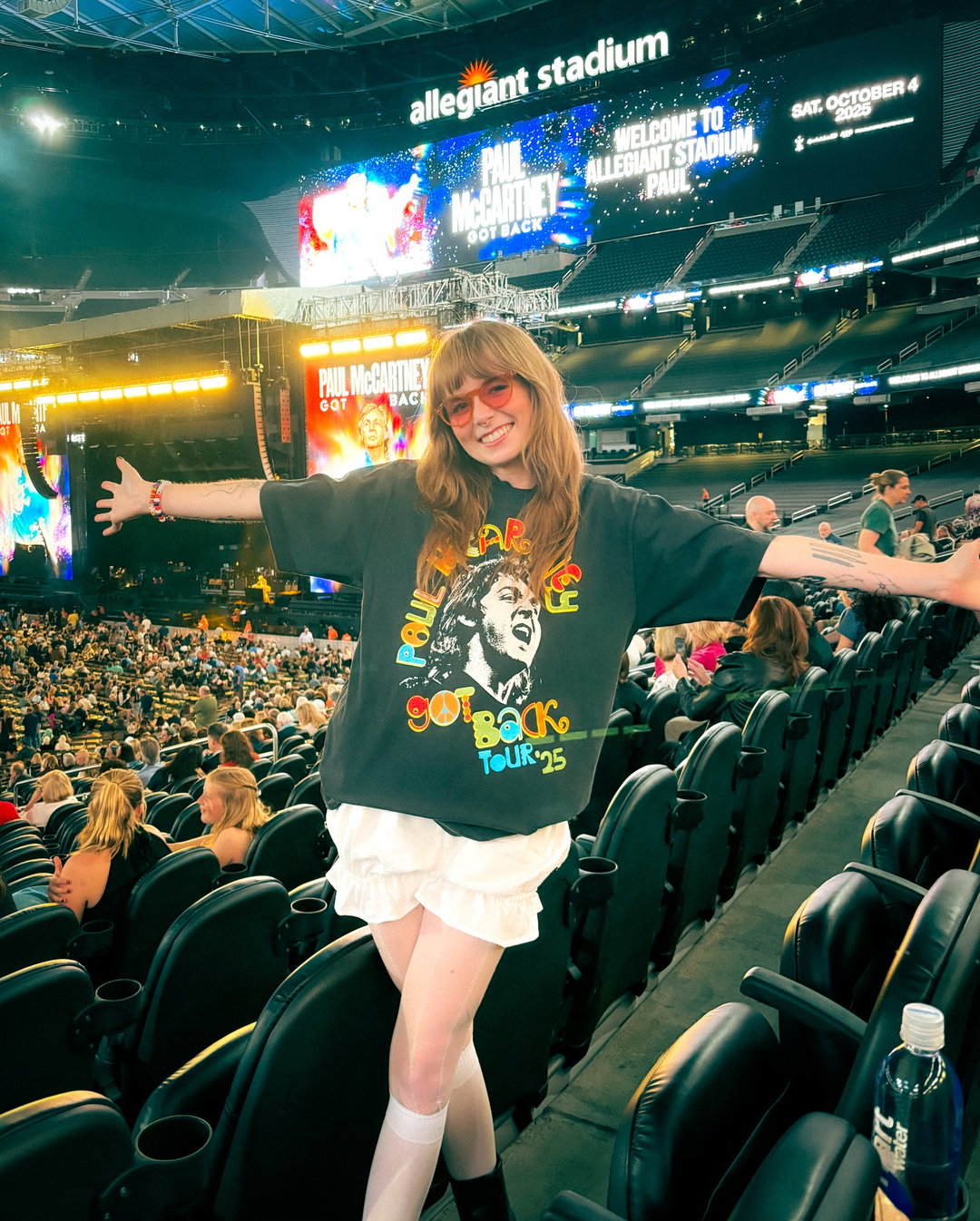
Kel at a Paul McCartney show in 2025 (Copyright © Kel Lauren)
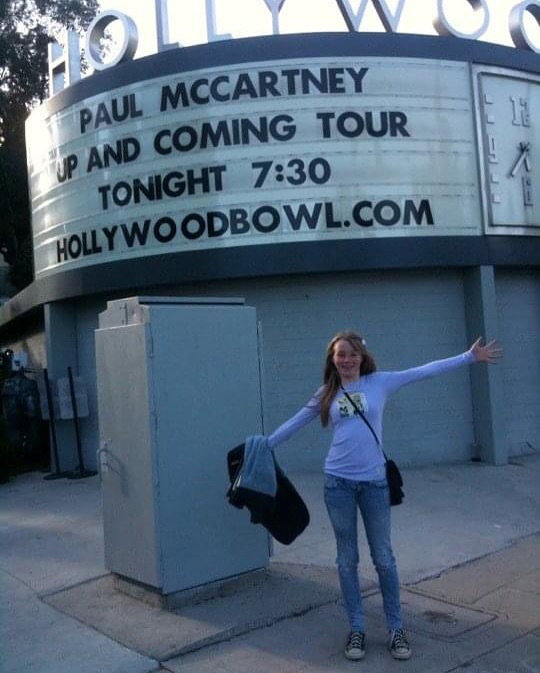
Kel (age 14) at a Paul McCartney show in 2010 (Copyright © Kel Lauren)
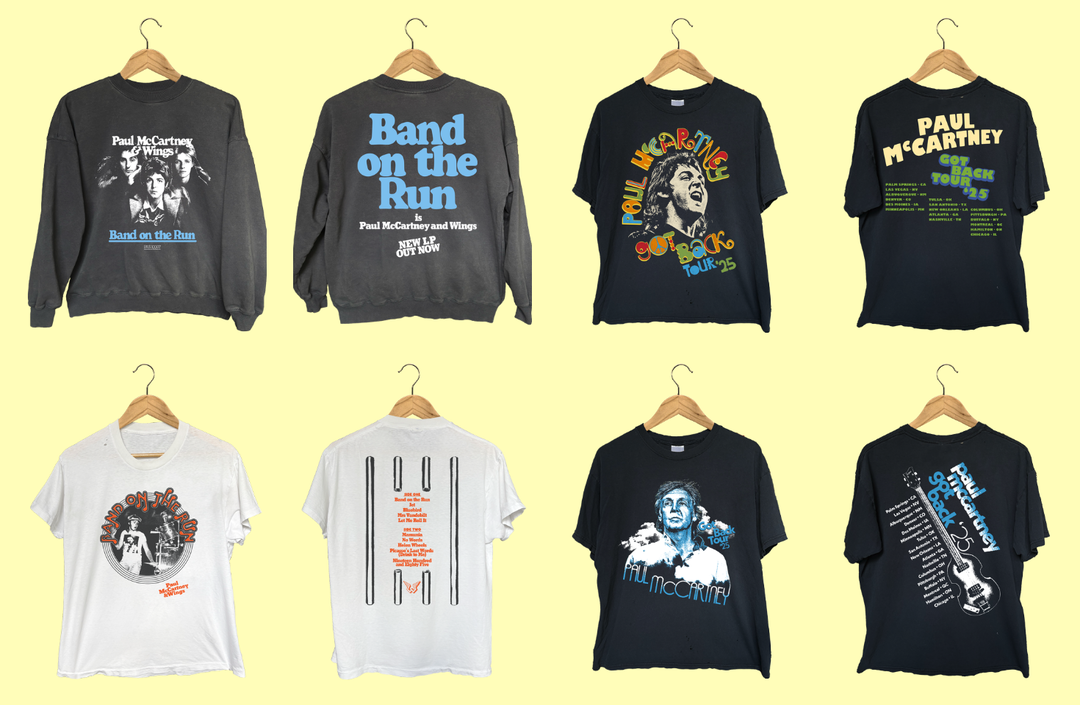
Kel Lauren: tour merch for Paul McCartney and Wings (Copyright © Kel Lauren)
In reality, professional practice looks a lot different from fan labour. Unlike fan and bootleg designers, official merchandise designers have to consider legal matters ranging from image and lyric rights to non-disclosure agreements (NDA). The industry’s secretive and competitive culture also inhibits sharing, in contrast with the collaborative nature of fan spaces. As much as Kel would like to share their work with fellow fans, NDAs prevent them from doing so. As a silver lining, NDAs help form a degree of separation between their professional life and public reception from an especially passionate fanbase.
Some merch designers try to develop collections with mass appeal, but trying to design for everyone might come at the expense of creative risk-taking. “It can inadvertently hurt artists by wanting to constantly play it safe because you kind of end up sanitising the image.” Kel adds, “It tells me that someone is lacking confidence in their creative image, and that could be because they have too many voices swirling around them.”
Safe bets often amount to a little more than printing an album cover on a t-shirt, but fans don’t always respond well to such uninspired designs. Fans won’t hesitate to criticise, but Kel feels that designers get mischaracterised when this happens: “I promise you there were a lot of really good creative people on the team. There were just people in the middle who didn't have the best taste. They override a lot of stuff.”
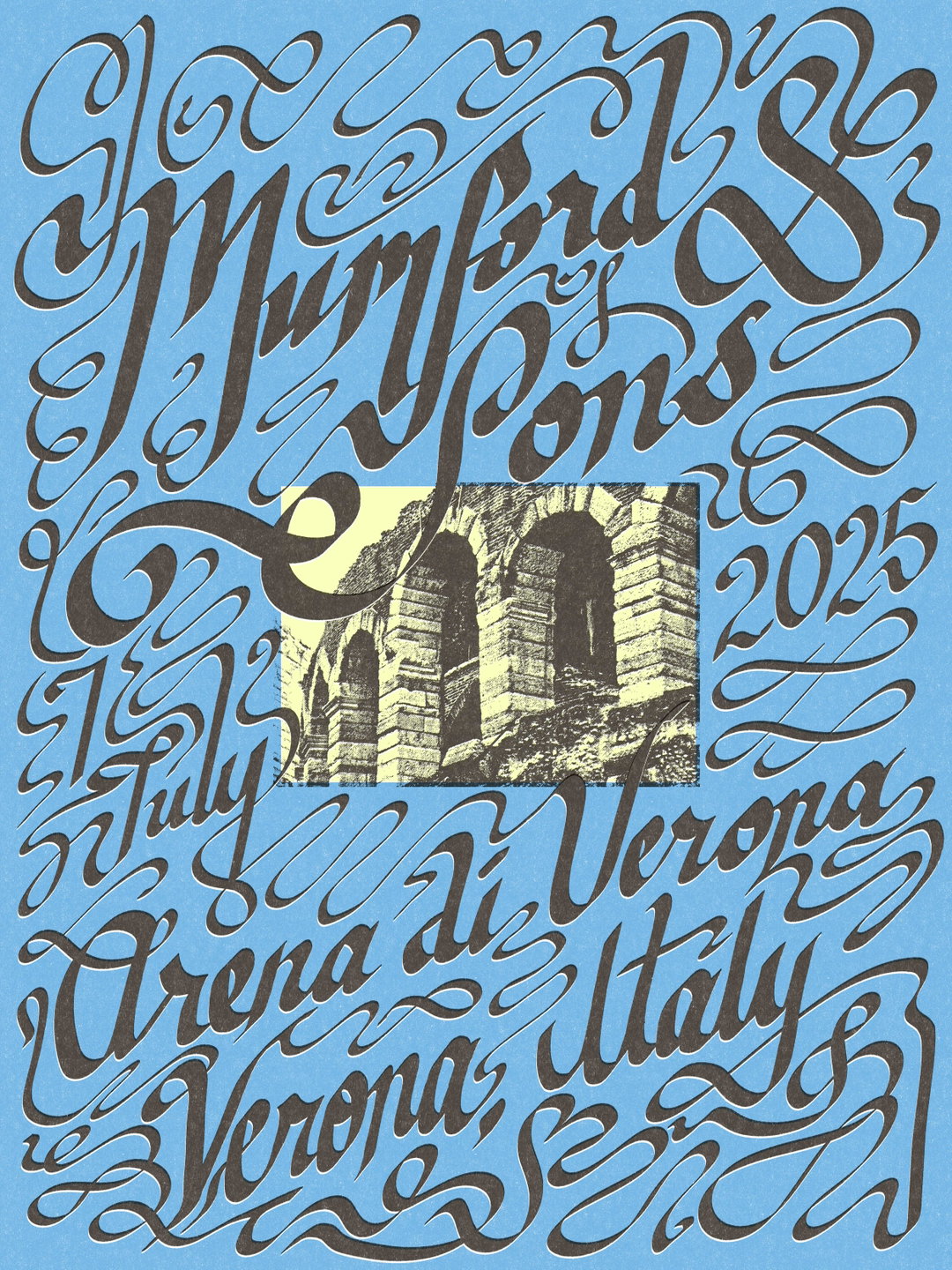
Kel Lauren: Mumford & Sons tour poster (Copyright © Kel Lauren)
“Safe bets often amount to a little more than printing an album cover on a t-shirt, but fans don’t always respond well to such uninspired designs.”
Lucy Pham
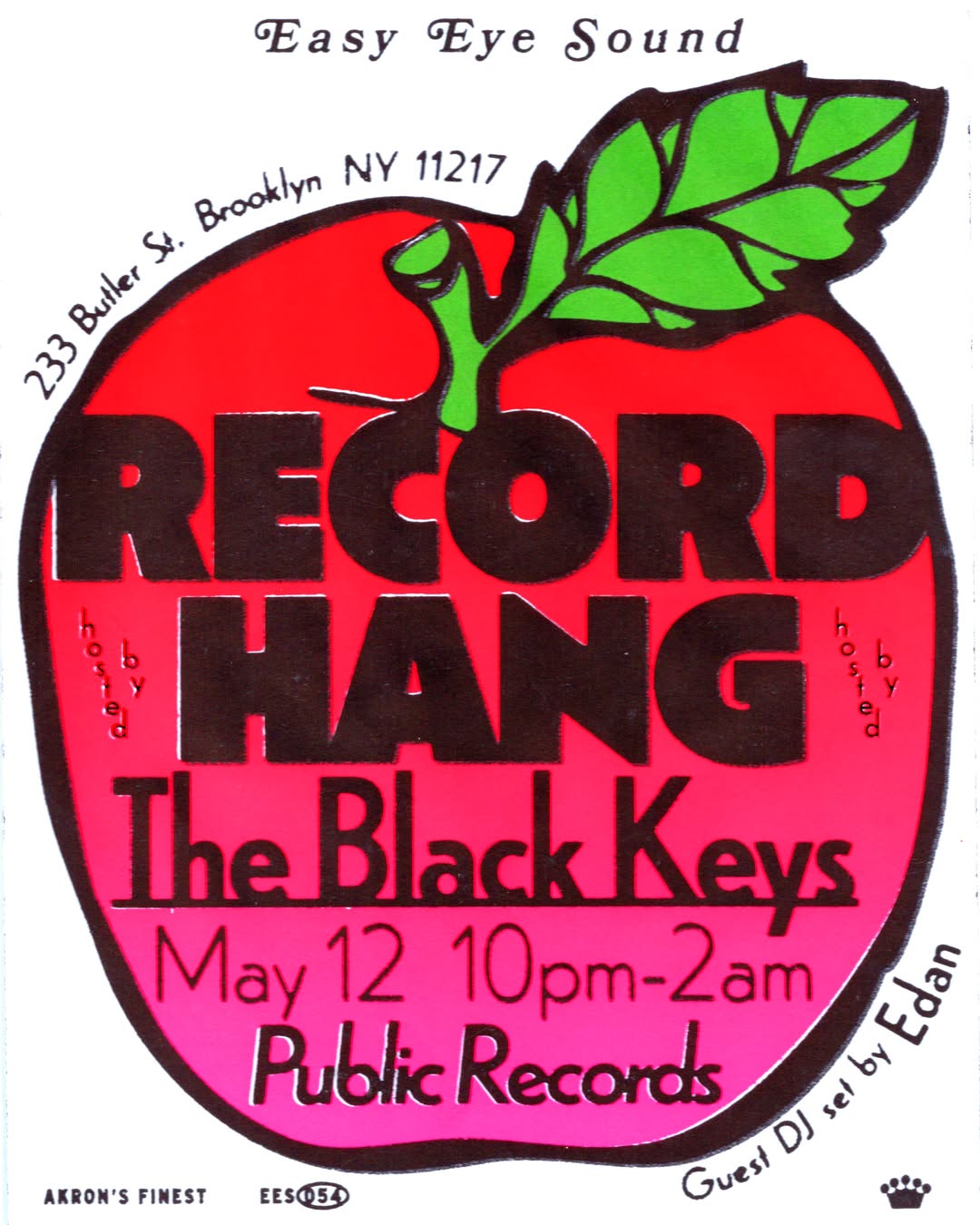
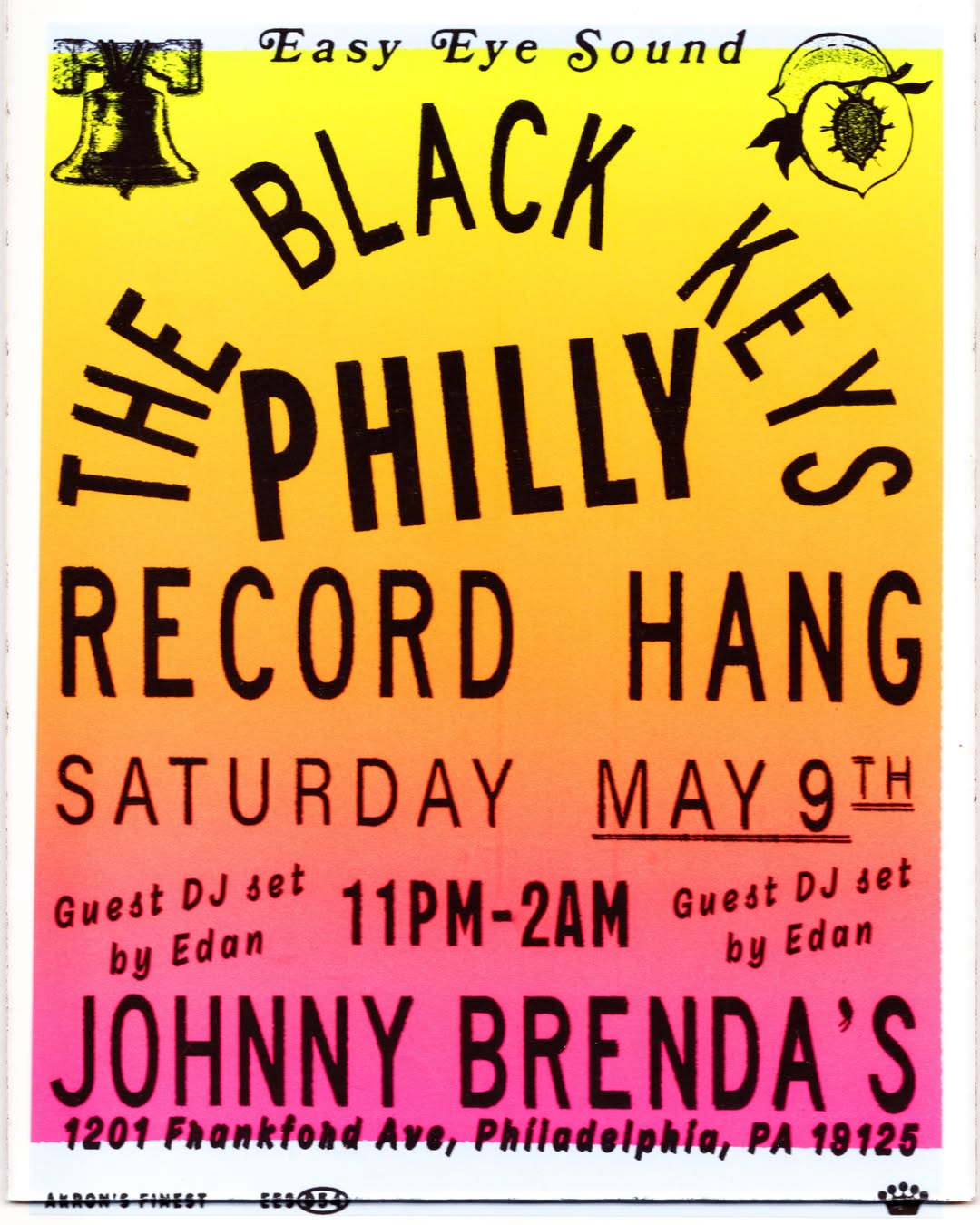
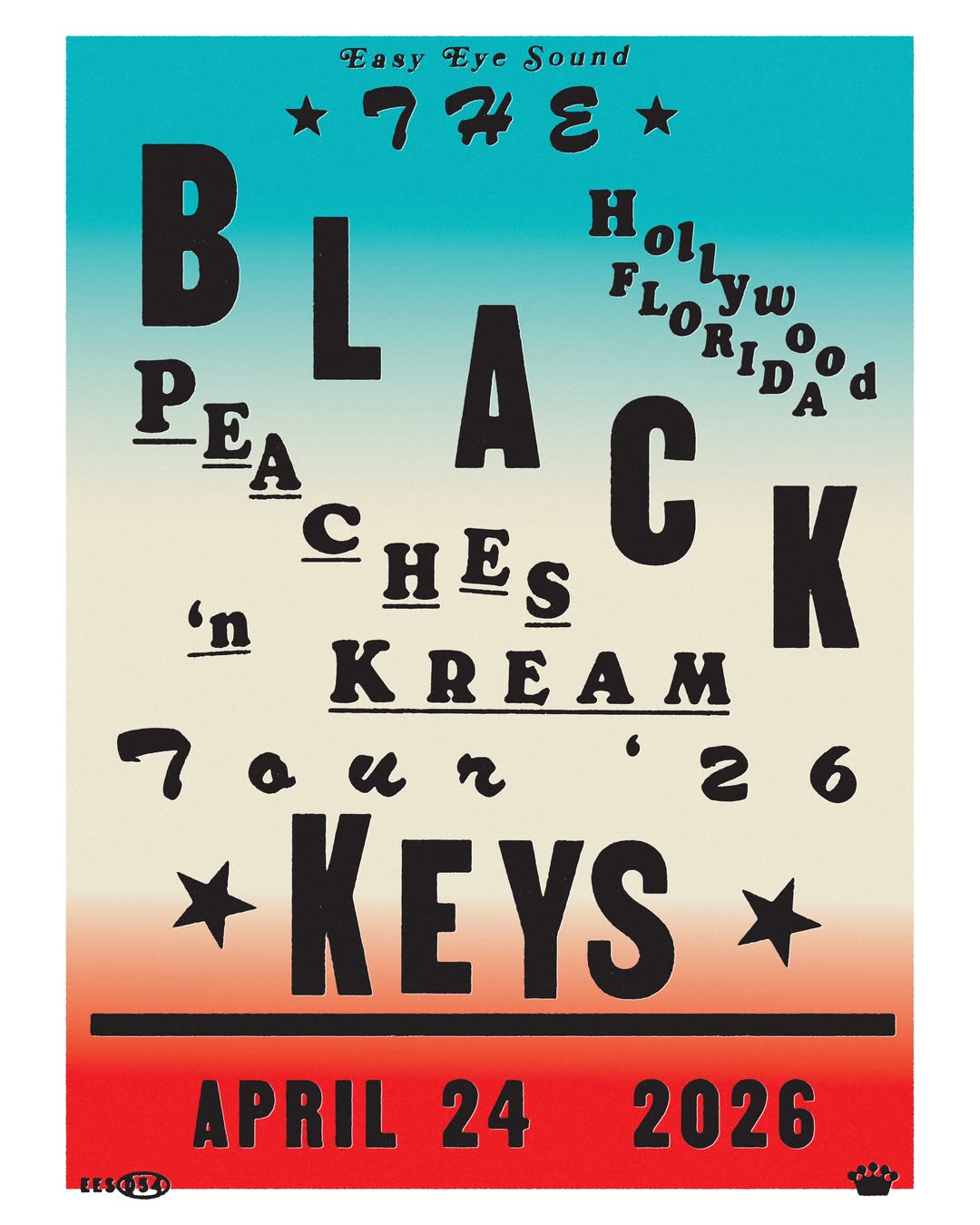
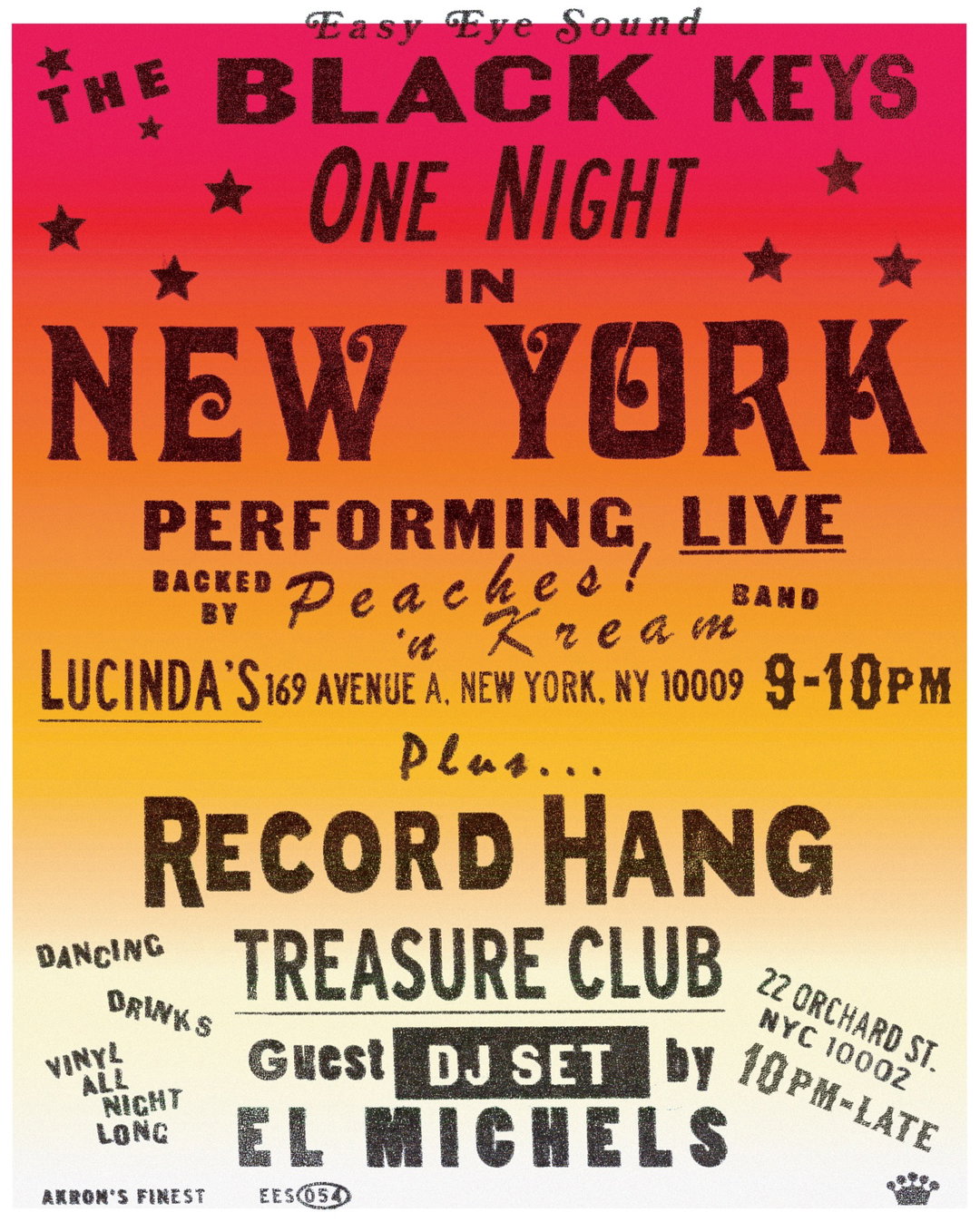
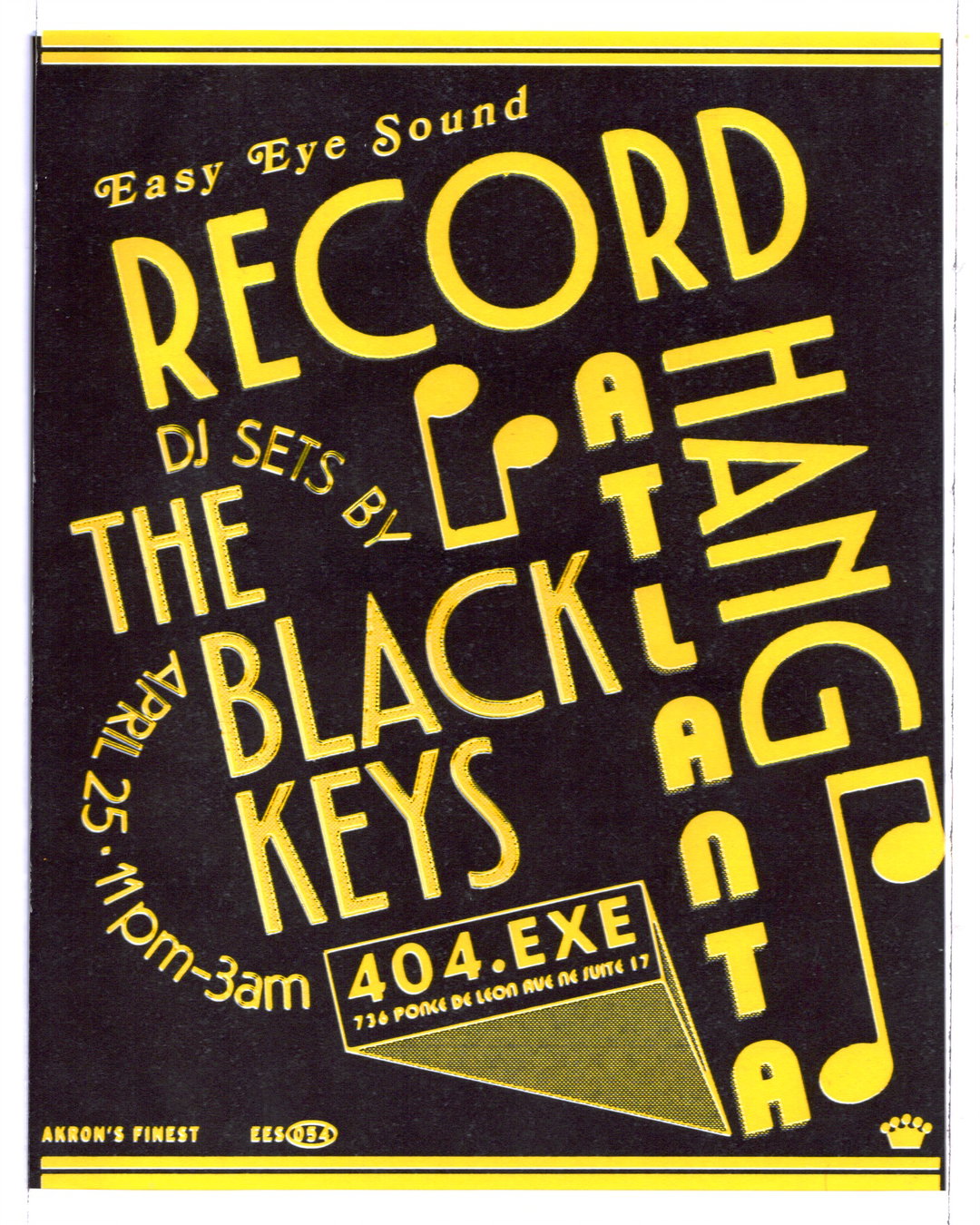
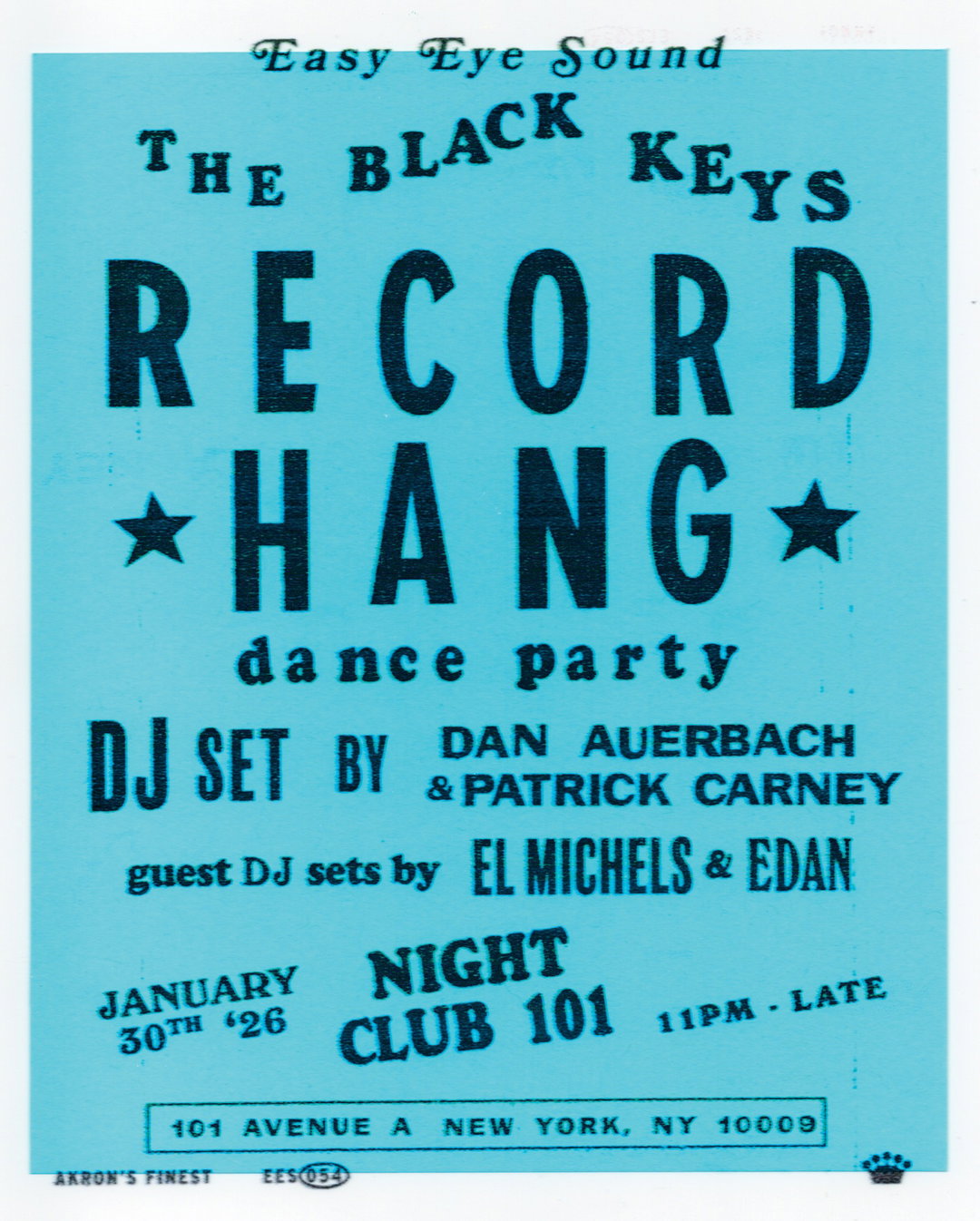
1 of 6
Kel Lauren: Tour poster for The Black Keys (Copyright © Kel Lauren)
1 of 6
Kel Lauren: Tour poster for The Black Keys (Copyright © Kel Lauren)
These swirling voices are the middle men between brands and fans. They are often creative managers, directors, or C-suite executives – people who dominate boardrooms but not the demographics of the fanbase they are trying to reach. Having been in these boardrooms, Kel recalls advocating for design decisions, only to be overruled by higher-ups who may be out of touch with fans. Since then, they’ve learned to keep tabs on fan feedback to strengthen their case when proposing merch designs. “I really try to understand the fan perspective because that’s ultimately what merch is. It is fan service. It’s a bridge between the artist and the fan.” Merch design is a way of expressing care for the fanbase, the way fans often care for each other. Kel adds: “I want to make sure that they feel like their favourite artist cares about them.”
Creatives can begin to think like fans by meeting them where they are: in forums, Discord servers, Reddit threads, and other places where fandoms build communities. By immersing themselves in fan spaces, designers can get in on inside jokes and better understand what the music represents to the fans. “It’s part of my research. I love seeing what people are saying, and I ultimately want to serve them stuff that they’re happy with,” says Kel.
Beyond providing honest feedback and insider information, they also forecast trends. “As fans, we see the spark in a lot of these artists. Fans have their finger on the pulse long before labels do,” Kel remarks. When artists deviate from that initial spark or become too formulaic with their brand image, they risk disconnecting from their fans.
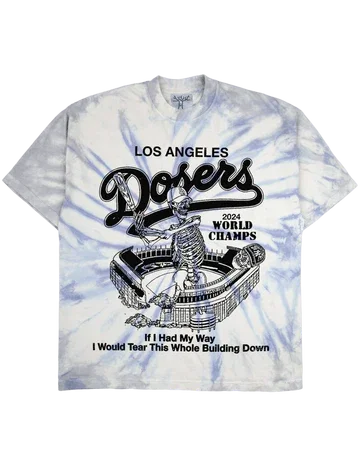
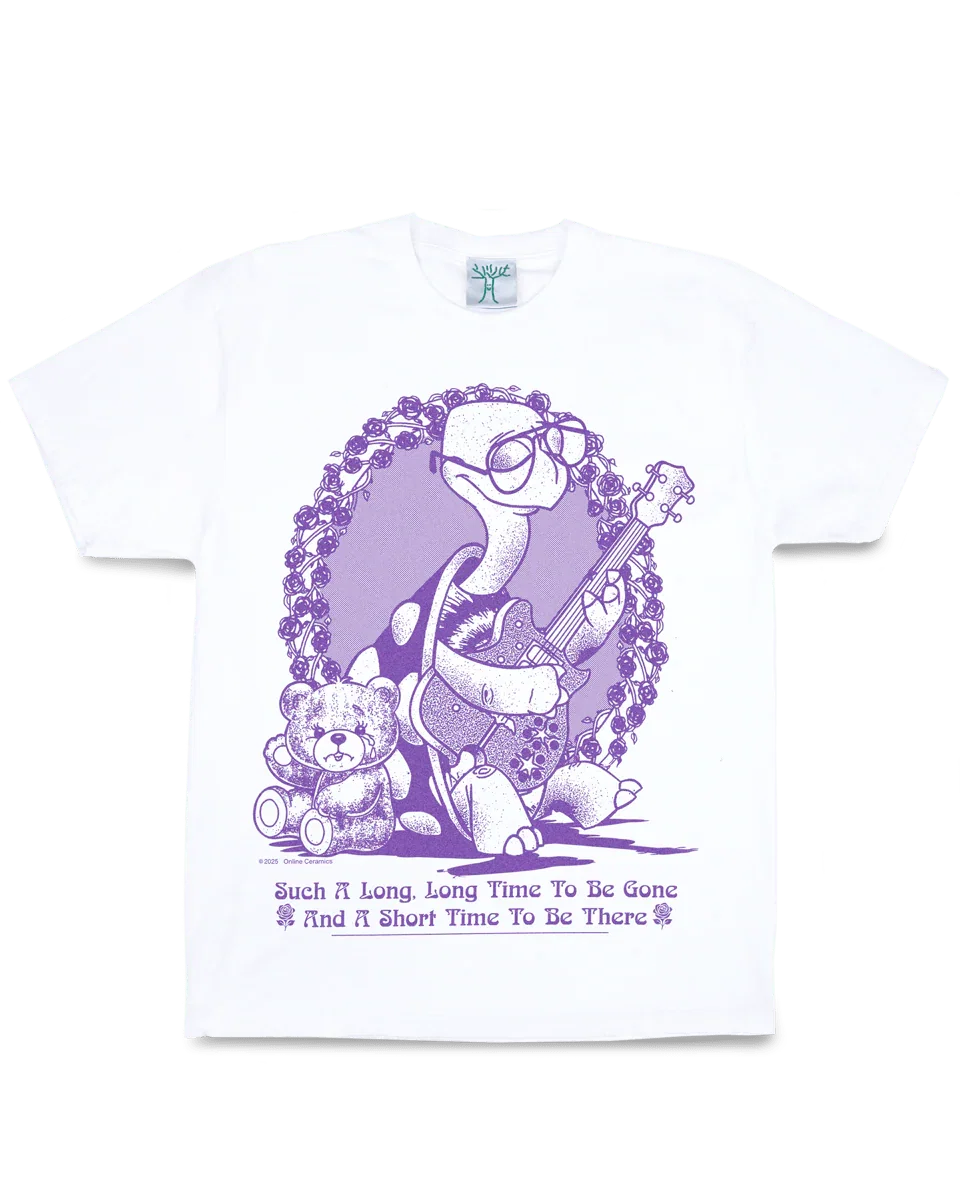
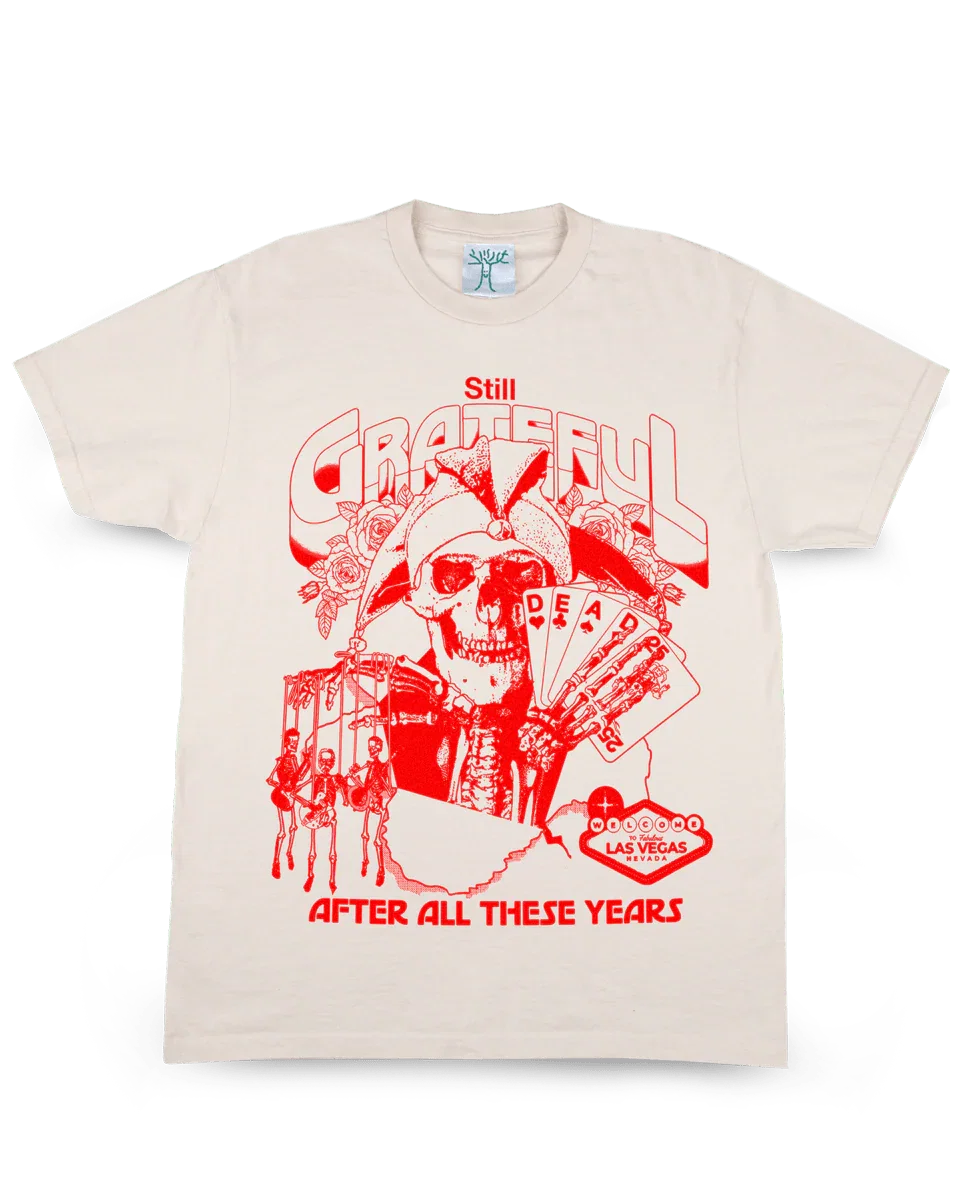
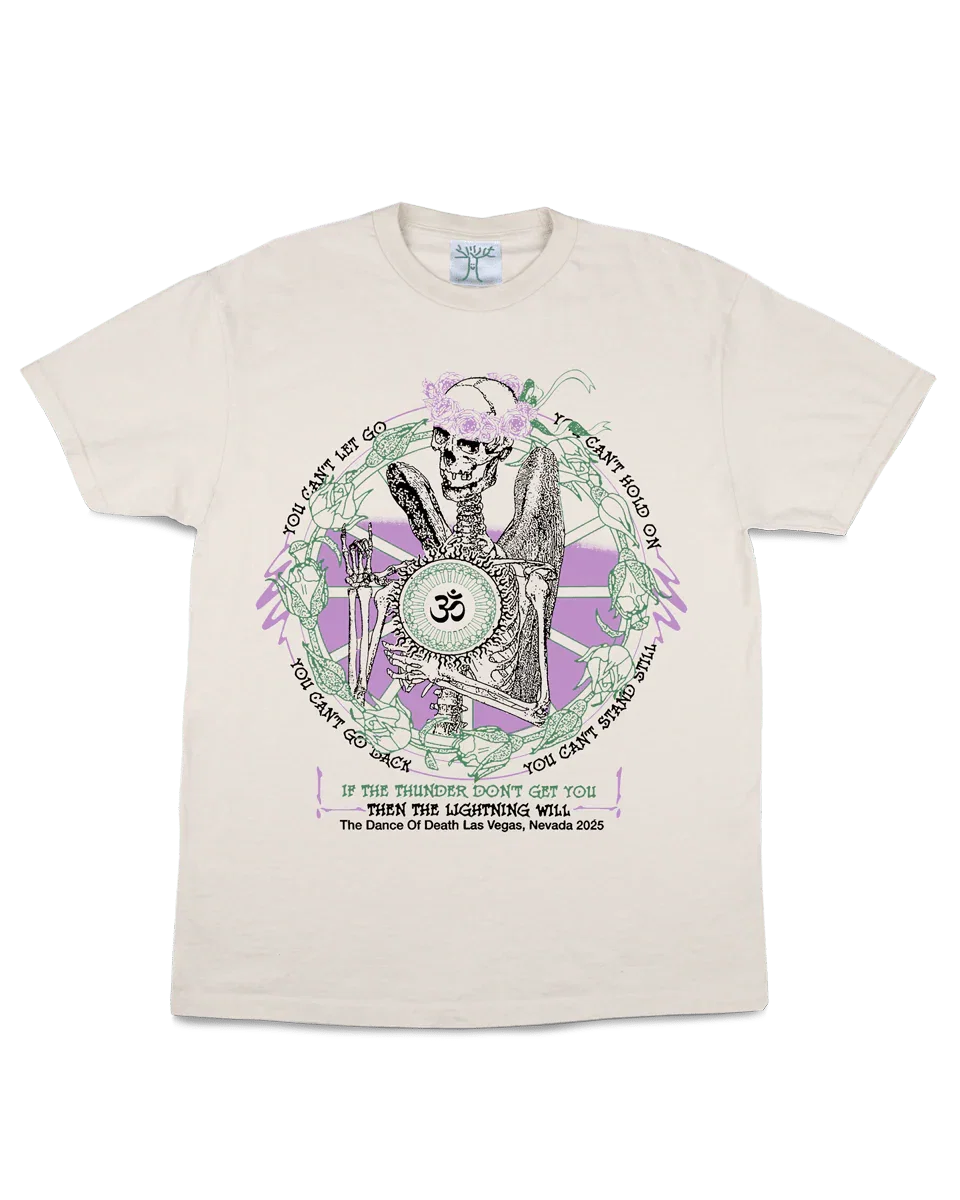
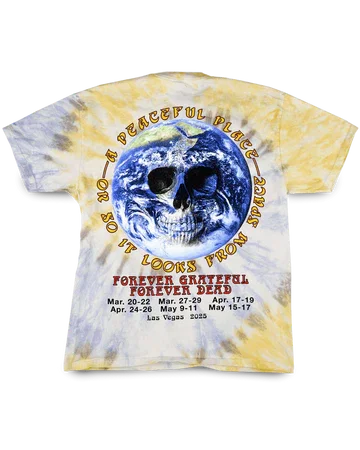
1 of 6
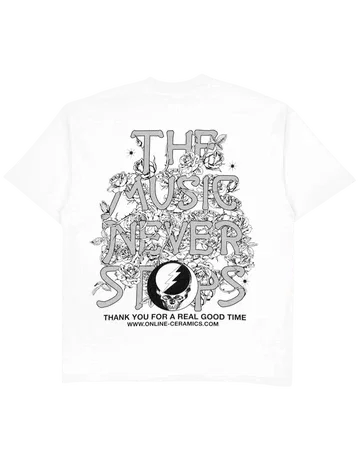
Online Ceramics: Grateful Dead t-shirt (Copyright © Onine Ceramics)
1 of 6
Online Ceramics: Grateful Dead t-shirt (Copyright © Onine Ceramics)
“They’re probably tapping into something that you’re missing.”
Kel Lauren
Fans inevitably create their own bootlegs when official merch doesn’t live up to their expectations. However, brands tend to be highly protective of their image. If fans push it in a direction it doesn’t like, the company may step in, but Kel thinks that this isn’t necessarily the way to go. “I think artists who go after bootleggers are insecure about something.” Rather than diluting a brand, Kel believes that fans are “catering to gaps that the artist is missing”. As part of their design process, Kel will sometimes browse Etsy to see what fans are looking for. The DIY haven offers a window into the visual culture and easter eggs that resonate with audiences.
Kel’s parents were fans of the Grateful Dead, also known as Deadheads. Looking retroactively, DIY culture thrived among Deadheads, making them pioneers in merch design. “It created a really cool culture of propagating the Grateful Dead IP. They’re some of the most iconic merchandise graphics in the world. Their attitude around it is really interesting because it lent itself well to the general movement at the time, of things being really free-spirited and communal.”
That DIY lineage can be found in brands like Online Ceramics, a Los Angeles-based company. Before officially designing merch for A24 films and artists like SZA, the brand got its start in 2016 with Grateful Dead bootlegs made by Elijah Funk and Alix Ross. They were two college Deadheads who bonded over art and music; the former had been making t-shirts since he was twelve. John Mayer, who formed Dead & Company with former Grateful Dead members, came across Online Ceramic’s bootleg merch. Charmed by their appropriation of corporate logos to represent Grateful Dead songs, he invited them to design merch for Dead & Company.
For the brands that feel threatened by fan-made designs, Kel encourages them to simply hire fans because “they’re probably tapping into something that you’re missing”. They suggest that open portfolio calls are a practical and ethical way of soliciting fan labour, even if it requires more leg work for management teams to sift through portfolios. “If you care about your fan base, if you care about the people who built the career of this artist, you’ll put in the time,” they urge.
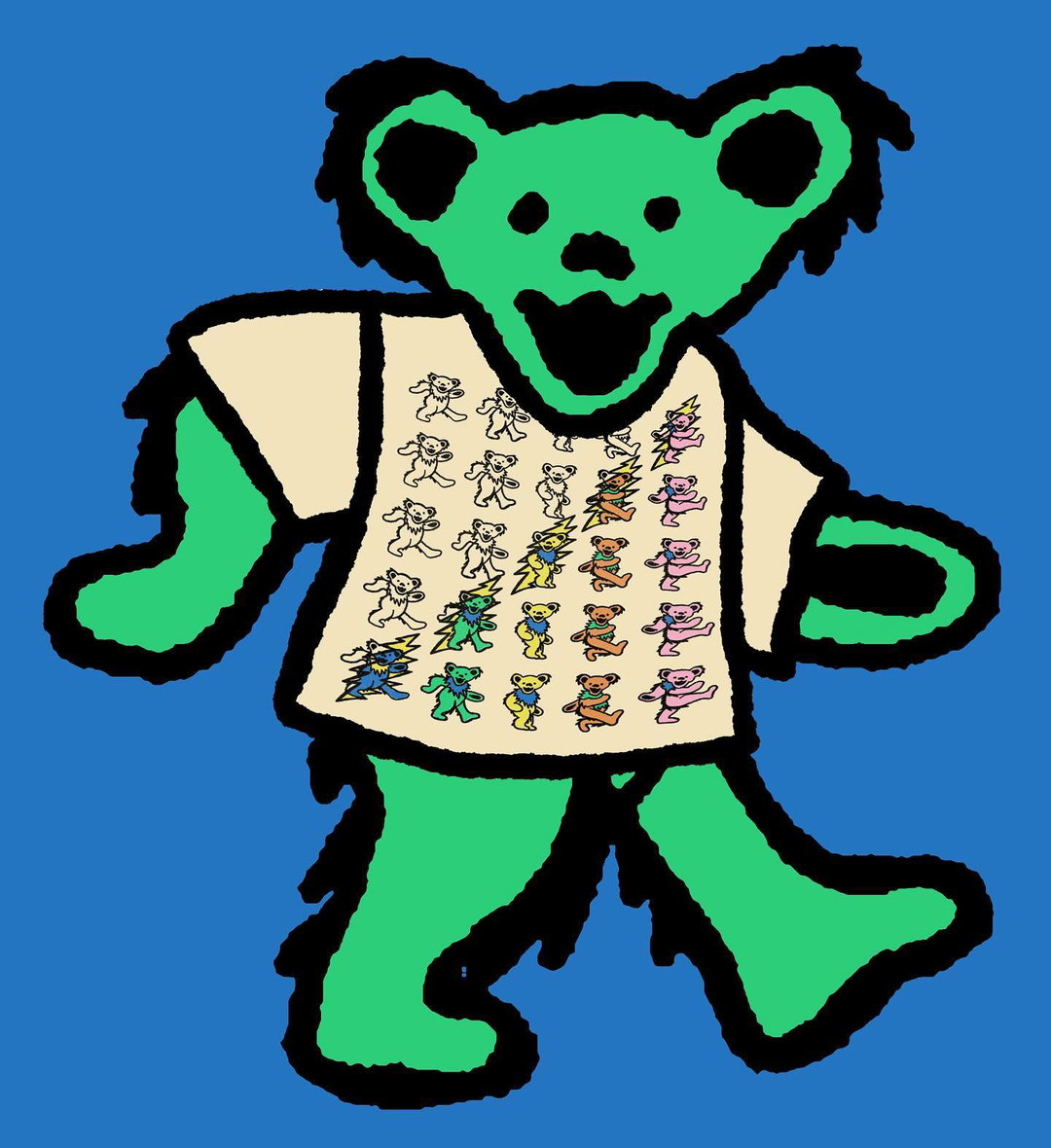
Kel Lauren: Grateful Dead t-shirt design (Copyright © Kel Lauren)
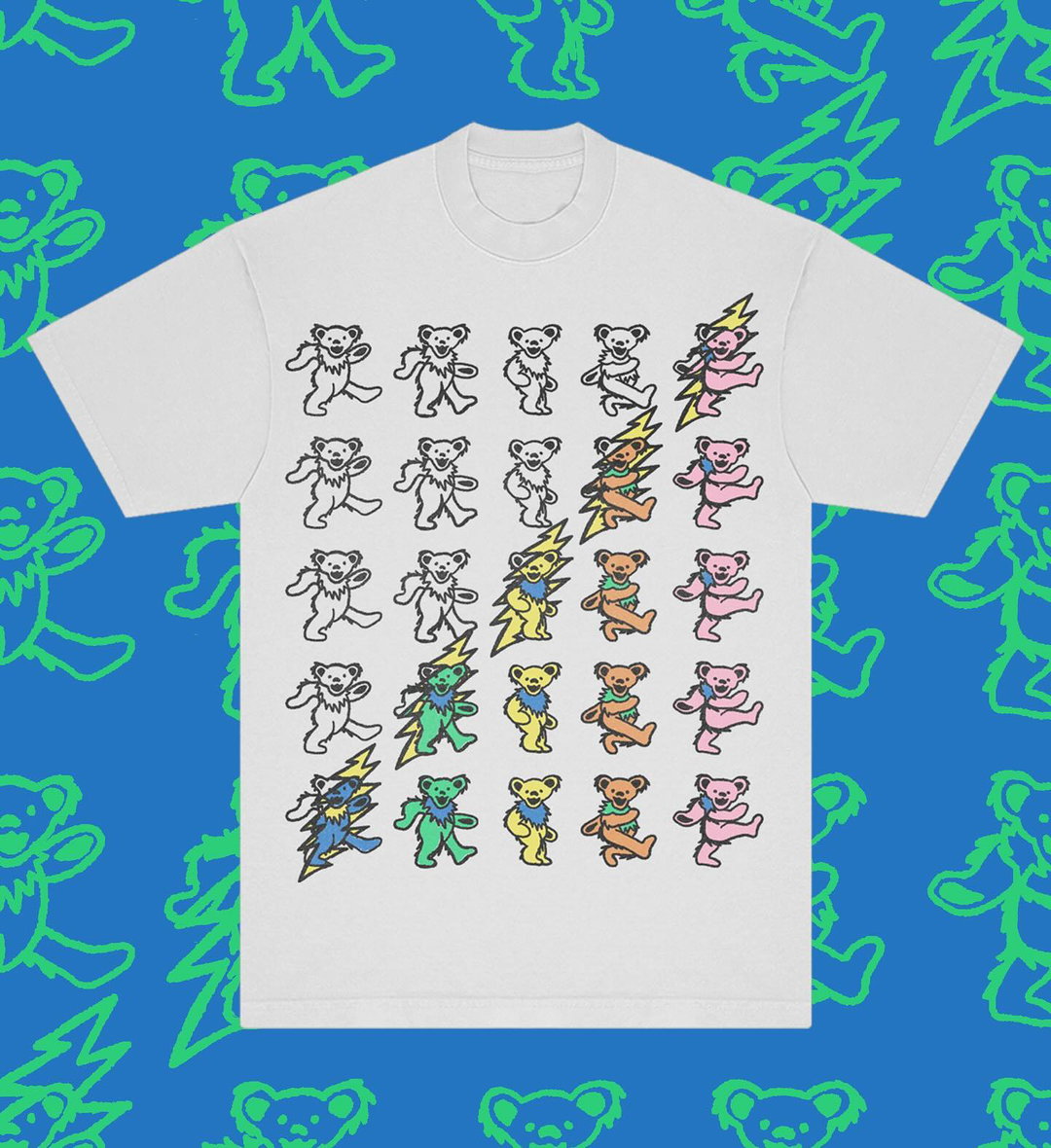
Kel Lauren: Grateful Dead t-shirt design (Copyright © Kel Lauren)
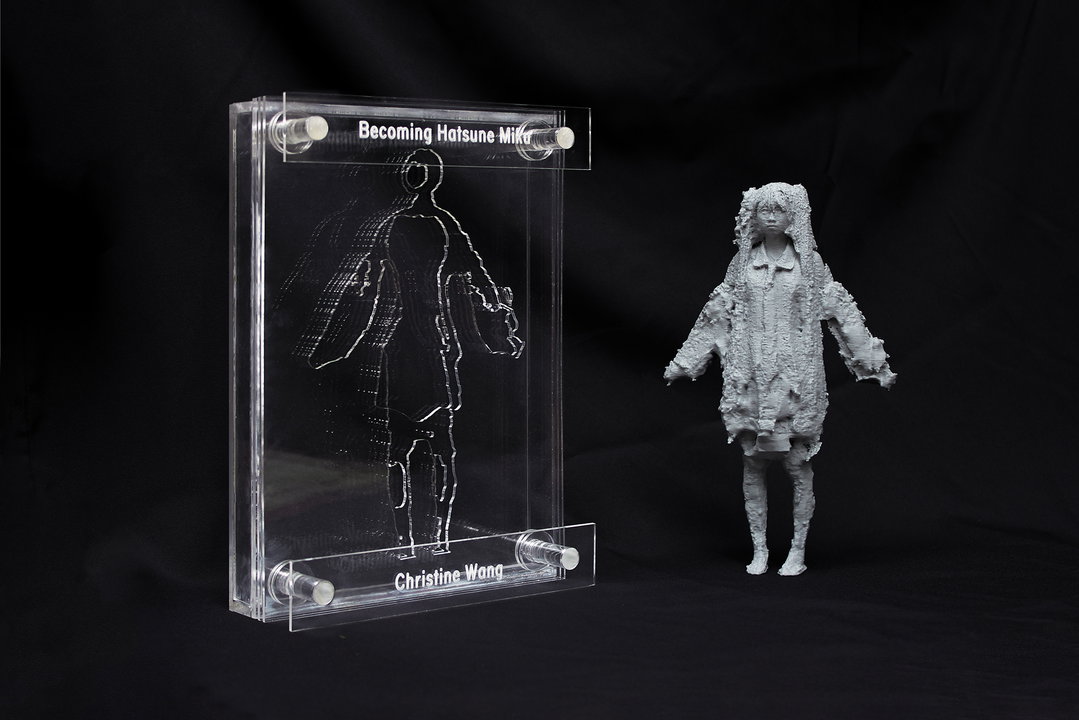
Christine Shihua Wang: Becoming Hatsune Miku (Copyright © Christine Shihua Wang, 2025)
What happens when fans are the driving force behind a brand? In the case of Hatsune Miku, her music “career” (if a fictional character could have one) is truly built by fans. Miku is the turquoise-haired anime mascot for Crypton’s voicebank for Vocaloid, a voice synthesiser developed by the Yamaha Corporation. What’s unique about her is that the vast majority of songs performed by her are made by fans, rather than through ‘official’ channels or the company who owns her image. The Vocaloid fandom blurs the boundaries between the original versus the fan-made, which Christine Shihua Wang explored as part of her undergraduate degree project Becoming Hatsune Miku at the Rhode Island School of Design.
Christine was a fan of Vocaloid since childhood, but rediscovered that passion during her teens when she came across a subculture of utaite – users who perform covers of Vocaloid songs using their own human voice. She was drawn to the contrast between the electronic synth tones of Miku’s voice versus the distinct human qualities of utaite – “All these individual utaite would have their own signature flairs that they would implement when they were singing. You could really see their personality through that. It felt a bit more human.”
For fans, Miku is comforting and endearing because her identity isn’t fixed to a dedicated lore. Her malleability makes it possible for fans to form personal connections with her by projecting themselves onto her. “You can really use [her] for your own creative purposes. I feel like that inspires a lot of creatives [...] because you are also accessing the cultural cache she already has,” says Christine.
The tension between the digital versus the physical was at the centre of Christine’s degree project, which included a website and printed publication. Dressed in Miku cosplay, a significant part of fandom culture, she made a 3D scan of her body to create a hybrid of herself and Miku. This was used to produce a 3D-printed figurine, for which she designed a display case inspired by the packaging of collectible mascot figurines.
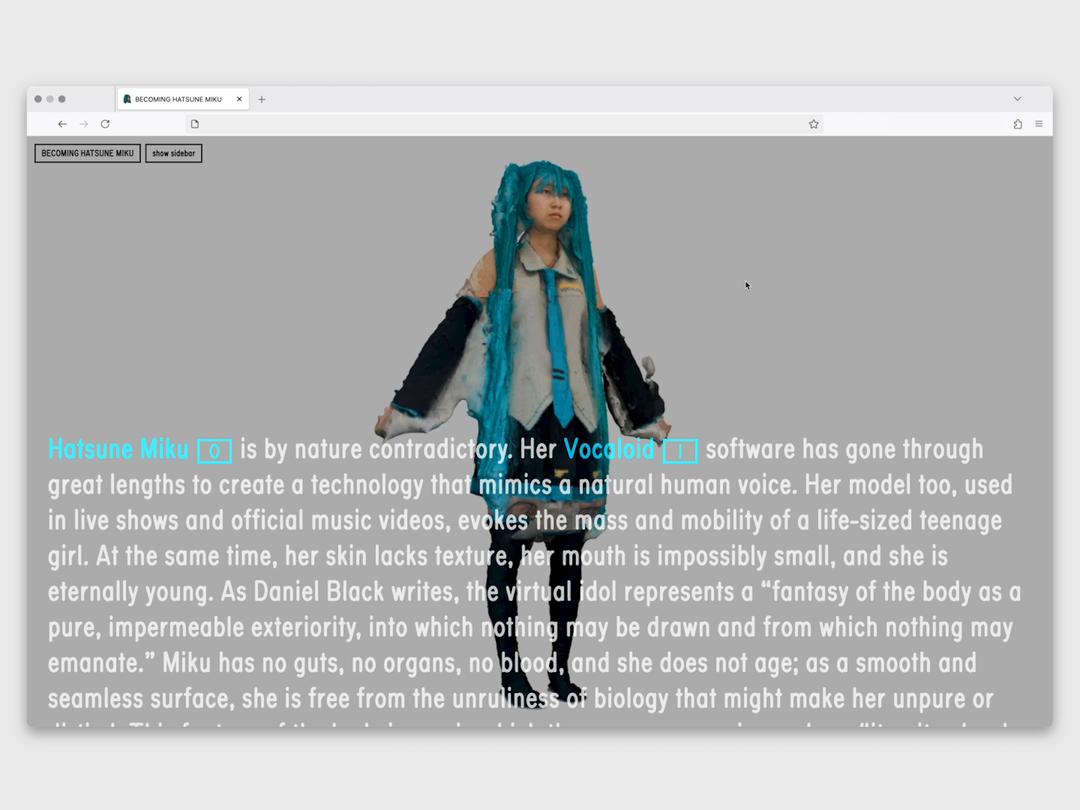
Christine Shihua Wang: Becoming Hatsune Miku (Copyright © Christine Shihua Wang, 2025)
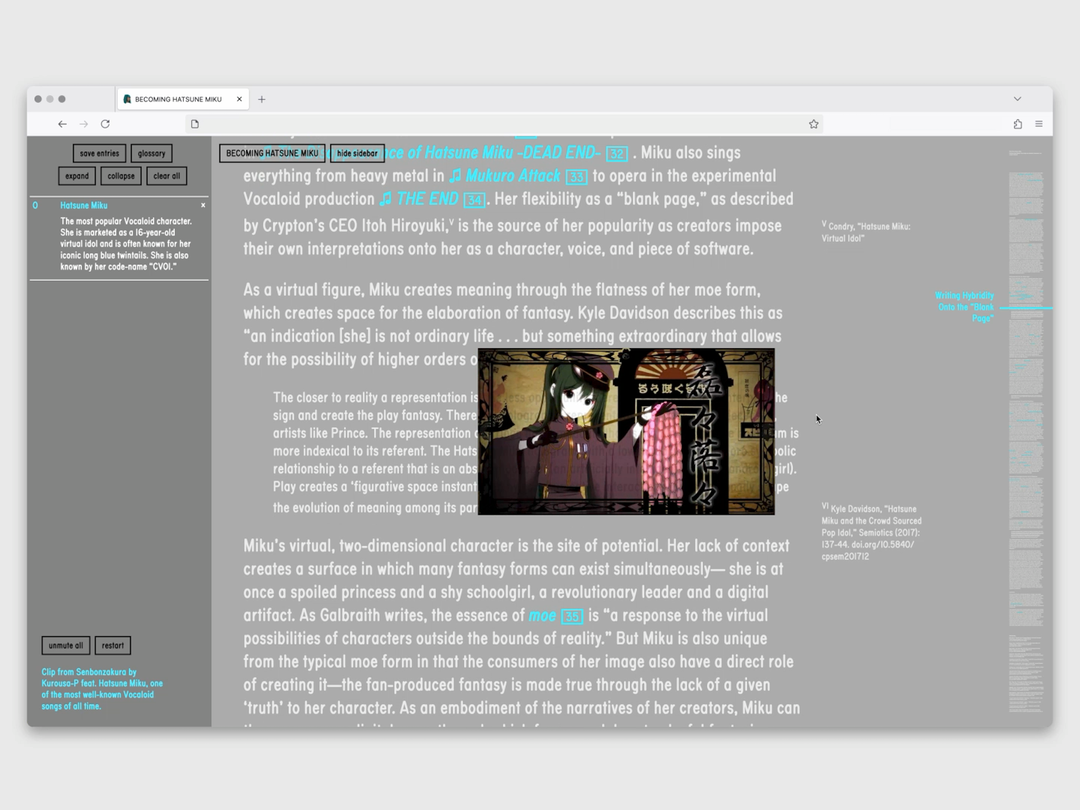
Christine Shihua Wang: Becoming Hatsune Miku (Copyright © Christine Shihua Wang, 2025)
“Her malleability makes it possible for fans to form personal connections with her by projecting themselves onto her.”
Lucy Pham
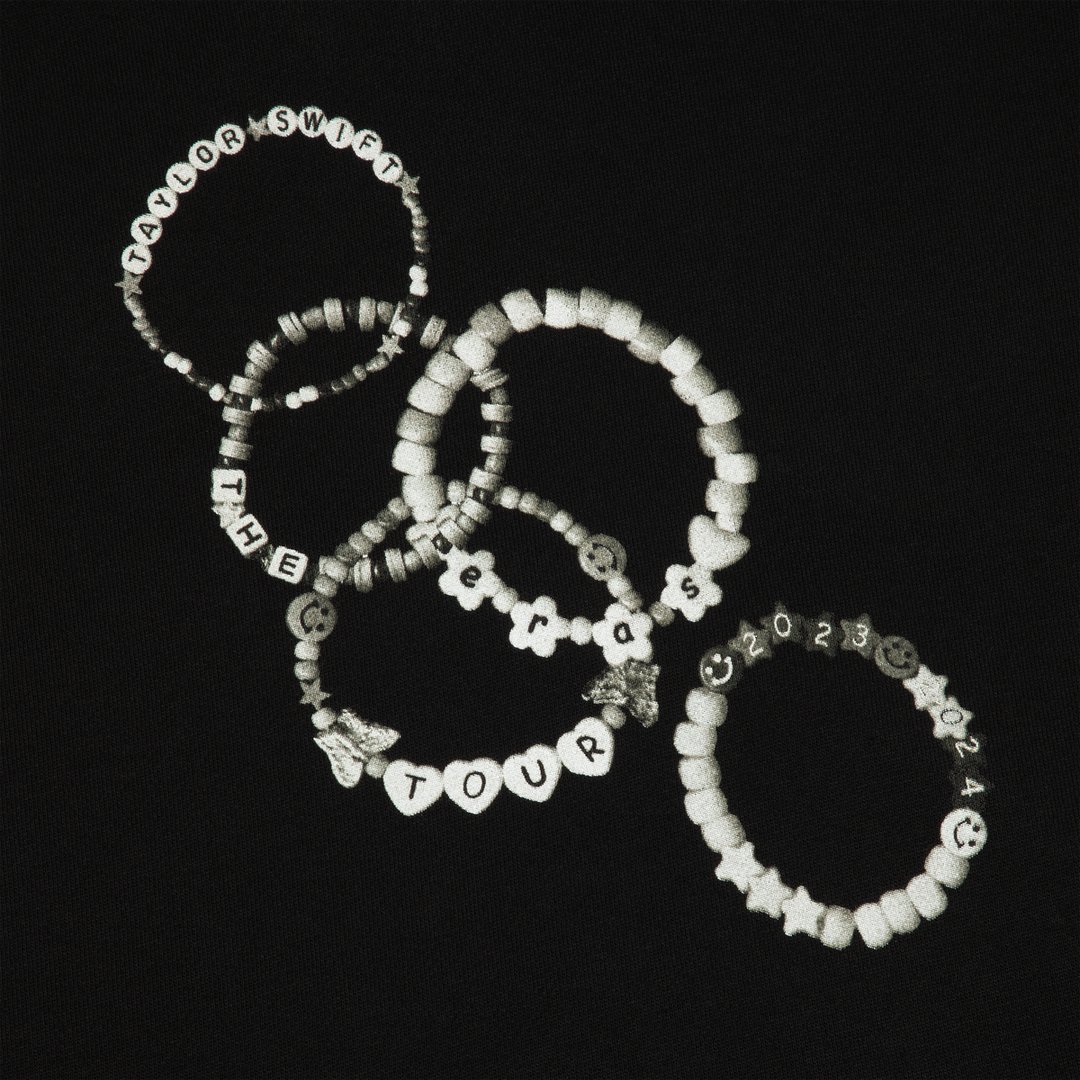
Taylor Swift: The Eras Tour friendship bracelet hoodie design (Copyright © TAS Rights Management, LLC & Taylor Swift, 2025)
“That sort of consistency within a brand – that’s not really natural in a person’s everyday life.”
Christine Shihua Wang
Miku’s coauthored identity is rendered in Christine’s 3D-printed figurine, which was made by transferring the 3D scan to 3D software to 3D printing. In the process, she recorded the “glitchy artifacts” created from moving the hybrid model back and forth between the physical and the digital. Miku’s image is constantly being reinvented, stitched together by fans. “I felt that really spoke to the interesting things that happen when you have this dynamic that isn’t seamless,” Christine explains. “It made a lot of sense to me to do those 3D scans to try and replicate what they were supposed to originally represent, but then see how that becomes a new image in the process.”
How does a brand maintain a consistent narrative when it’s shaped by thousands of fans? “Hatsune Miku is unusual because of the fact that she’s able to essentially be anything and so that in itself is very inconsistent, sort of like anti-branding.” Christine lists some of the many versions of her that exist: the “spoiled princess” or the “shy schoolgirl”, the blue-haired versus the pink-haired (also known as Sakura Miku).
In efforts to form authentic relationships with fans, Christine senses that some brands feel “shoehorned in”, as they try to form connections that aren’t really there. “Part of that comes back to how inorganic the rigidity of a brand feels sometimes. That sort of consistency within a brand – that’s not really natural in a person’s everyday life, where things are always looking different around them. [...] The corporate attitude of brand consistency is trying to apply something that it doesn’t usually apply to.”
When the possibilities are endless, fans maintain order by coming back to Miku’s established iconography, like her turquoise hair or long pigtails. In forming new narratives, there’s a balancing act between relying on familiar imagery and introducing new grammar into her visual language. Christine maintains that while some of Miku’s characteristics are flexible, her gender and age tends to stay the same. While a fan-made rendition of an old, male Miku might technically exist, she suggests that it all really comes down to how other fans receive alternative narratives. If very few fans accept a rising narrative, it might as well not be considered a “true” lore. Even with seemingly infinite interpretations, fan reception ultimately determines what sticks.
In the end, designers and fandoms negotiate what is and isn’t core to the brand; everything else remains open for remixing and interpretation.
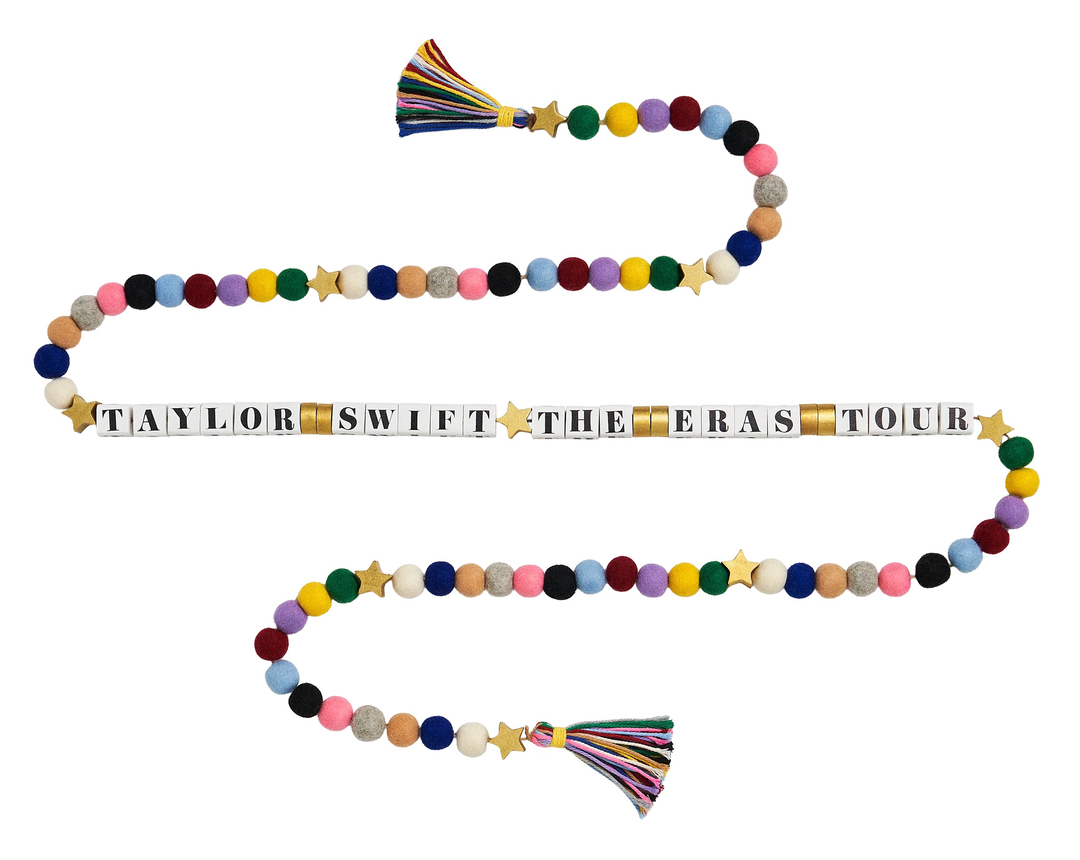
Taylor Swift: The Eras Tour friendship bracelet garland (Copyright © TAS Rights Management, LLC & Taylor Swift, 2025)
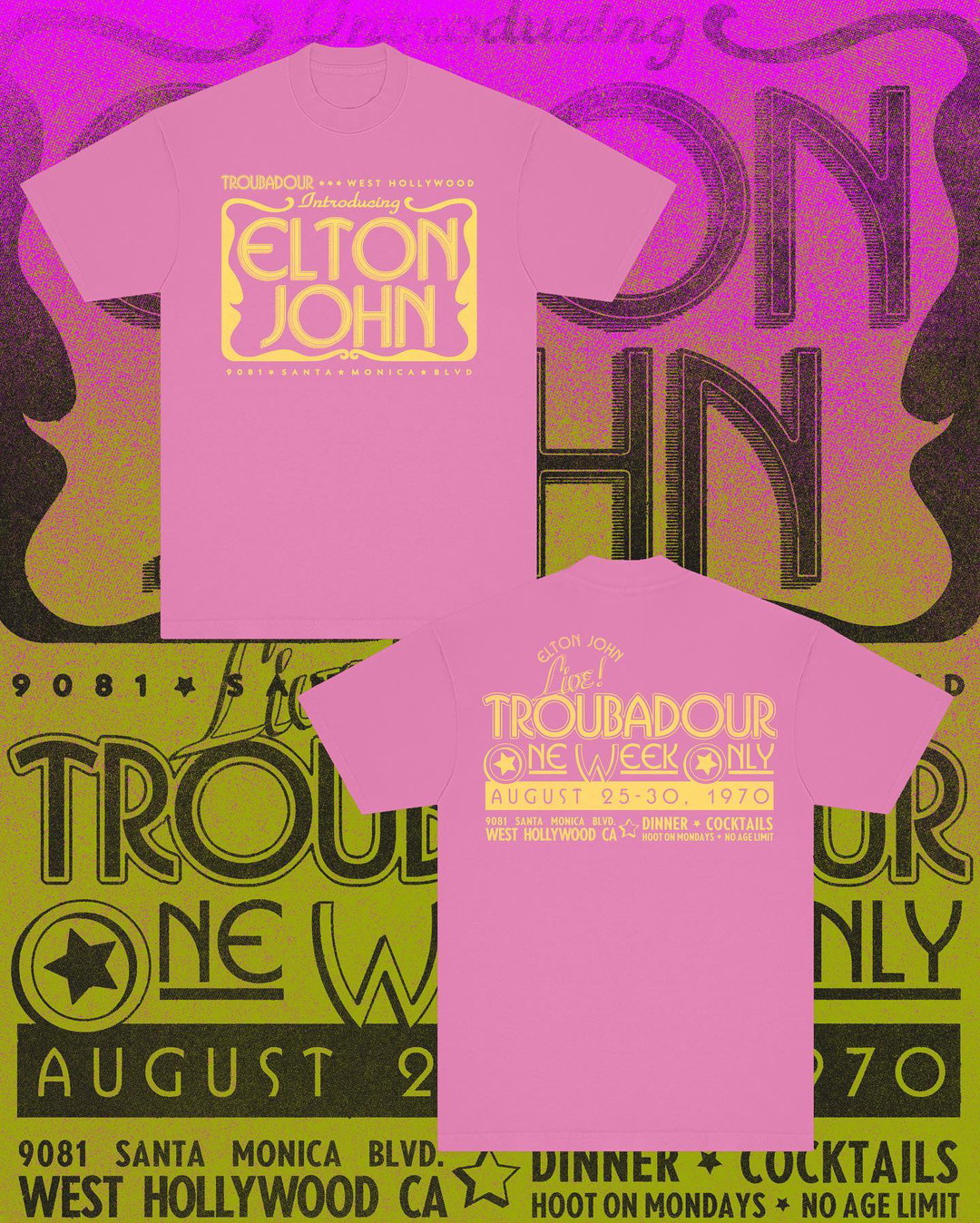
Kel Lauren: tour merch for Elton John (Copyright © Kel Lauren)
About the Author
—
Lucy Nguyen Pham (she/her) is a designer with a background in art history and art museums. She recently graduated from the Rhode Island School of Design with an MFA in Graphic Design. Her thesis Observer Performer was a meditation on internet culture, amateur practice, and reclaiming agency through graphic design. You can reach her through her website or on Instagram.