John Morgan Studio to create identity and book for the British Pavilion at Venice Biennale

Island, Holy Rosary Church at Shettihalli, designed by John Morgan Studio, photo by Bhaskar Dutta
John Morgan Studio has been commissioned to create the visual identity and accompanying book for Island, the British Pavilion at the 16th International Architecture Exhibition – La Biennale di Venezia, which opens in May. The pavilion has been designed by Caruso St John Architects in collaboration with artist Marcus Taylor and will be comprised of a roof-top public space inspired by Shakespeare’s The Tempest, Brexit and Venice’s vulnerability to the sea.
Commissioned by The British Council, Caruso St John Architects’ design will involve building a raft-like structure on the top of the existing British Pavilion building, a tea house building inside the Biennale’s Giardini in 1897. The new public space aims to give the impression of an island above, with a sunken world – the original teahouse – below. The project responds to the this year’s theme of “freespace”, developed by the Biennale curators Yvonne Farrell and Shelley McNamara of Grafton Architects.
Curators Adam Caruso, Peter St John and Marcus Taylor said: “An island can be a place of both refuge and exile. The state of the building, which will be completely covered with scaffolding to support the new platform above, suggests many themes; including abandonment, reconstruction, sanctuary, Brexit, isolation, colonialism and climate change.”
The elevated piazza will allow visitors to assemble in the Biennale garden with views across the lagoon. During the Biennale, which runs from 26 May to 25 November, the space will host poetry readings, performances, films and talks. In contrast to the isolationist sentiment of Brexit, neighbouring national pavilions will also be able to hold events at the British Pavilion.
Sarah Mann, director of architecture, design and fashion at the British Council and commissioner of the British Pavilion 2018 said, “Rather than presenting an exhibition, we want to offer an unmediated experience through a new piece of architecture, which offers a generous space to reflect and to come together.”
The visual currently being used to illustrate the proposal is an image of the The Holy Rosary Church at Shettihalli in India by Bhaskar Dutta. The gothic church becomes submerged in water every monsoon season following the construction of the Hemavati Dam and Reservoir in the 1960s.

John Morgan Studio: Island
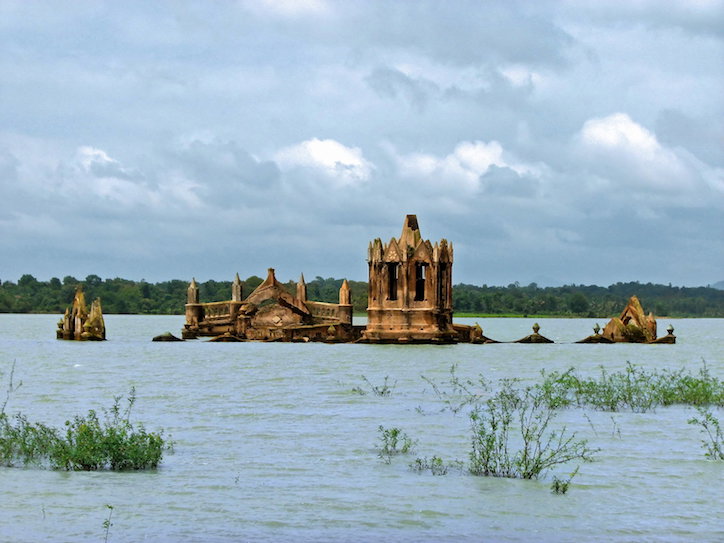
Bhaskar Dutta: Holy Rosary Church at Shettihalli
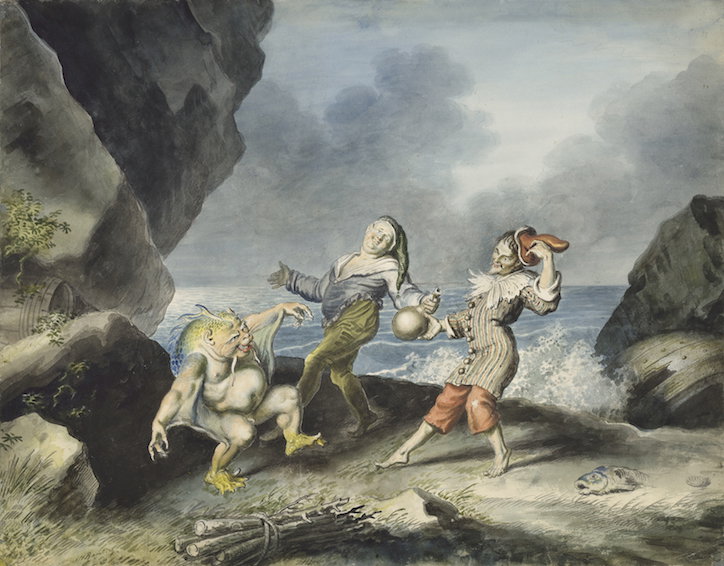
Johann Heinrich Ramberg: The Tempest, Act II Scene 2
In partnership with

Hero Header
Share Article
Further Info
About the Author
—
Laura is a London-based arts journalist who has been working for It’s Nice That on a freelance basis since 2016.