

Launch Recite Me assistive technology
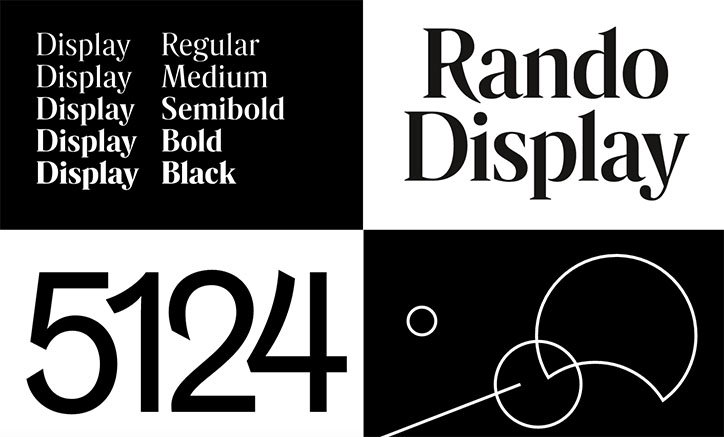
A typography specimen for a typeface called “Rando Display”. The image is split into four quadrants showing different weights, numerals and a geometric line drawing.

Camelot’s typefaces bring both the contemporary and historical to the table

—
Date
26 July 2016

Independent foundry Camelot designs typefaces inspired by history – both canonical and vernacular – and informed by contemporary life, and technology. Founded by Maurice Göldner, Katharina Köhler and Wolfgang Schwärzler; the Leipzig-based foundry instantly fell into favour with its fellow designers, having been used by the likes of OK-RM, Fabian Bremer and in Ortner Schinko’s identity for Sigrid Stöckl.

Its Rando typeface is an homage to the German Romanesque architectural style from the late-19th Century; Rosart, a text typeface based on a specimen by designer Jacques-François Rosart from the 18th Century is updated with shorter curves for digital application; and Gräbenbach, inspired by grotesque type and hand-painted signs, is a typeface that combines the sharpness of digital design with the warmth of hand-drawing. Their newest typeface, Lelo, is based on monospaced typewriter fonts, updated with a jarring combination of pointy and rounded edges. The foundry’s work balances being scholarly and contemporary with ease, being informed by but not tied to history.
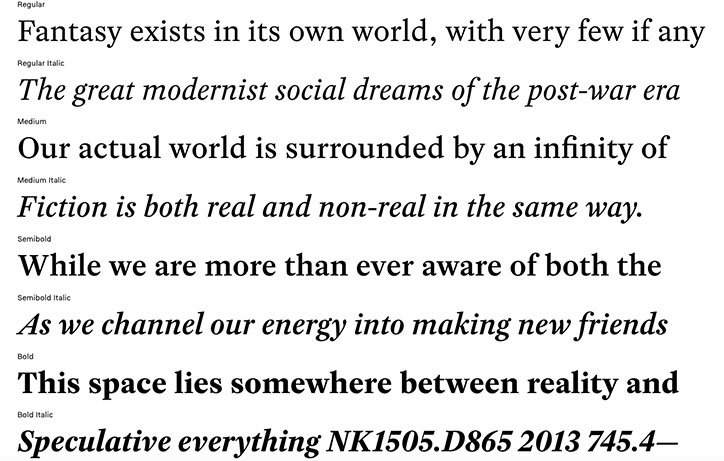
A typography specimen showing a serif typeface in various weights and styles. Each line of text is labelled with its weight, from “Regular” to “Bold Italic”.
Above

Camelot: Typefaces

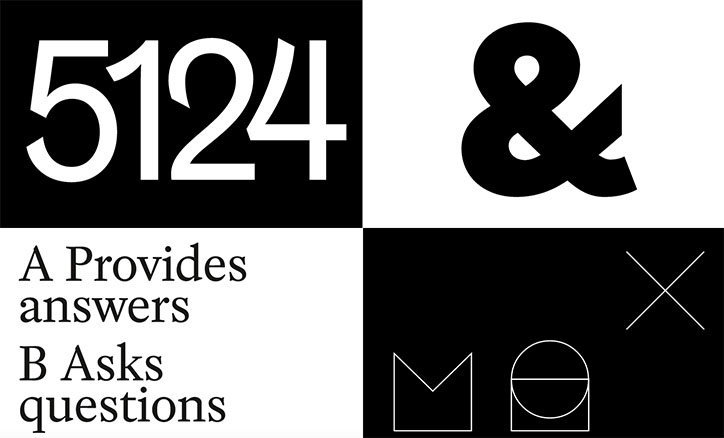
A black and white graphic divided into four quadrants. The top left shows “5124” in white on black, and the top right shows a black ampersand on white. The bottom left reads “A Provides answers B Asks questions” in black on white. The bottom right features thin white line drawings of a cross, a mountain shape and a semi-circle on black.
Above

Camelot: Typefaces

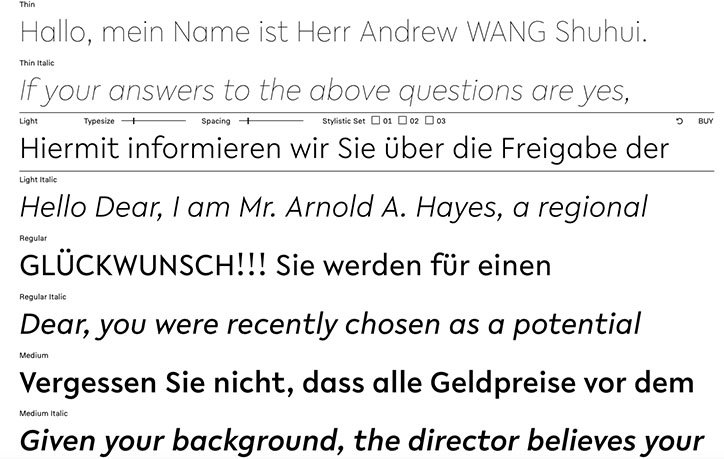
A specimen of a typeface showing various weights and styles, from thin to medium italic. The text consists of fragments of spam emails in German and English, including phrases like “Hallo, mein Name ist Herr Andrew WANG Shuhui.”
Above

Camelot: Typefaces

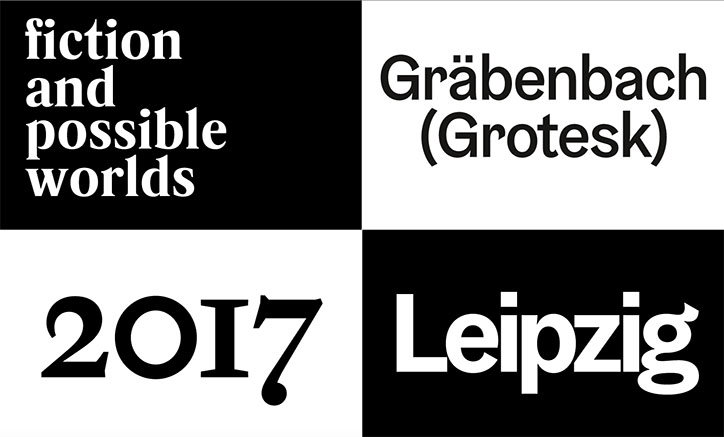
A graphic divided into four quadrants of alternating black and white. The text reads “fiction and possible worlds”, “Gräbenbach (Grotesk)”, “2017” and “Leipzig”.
Above

Camelot: Typefaces

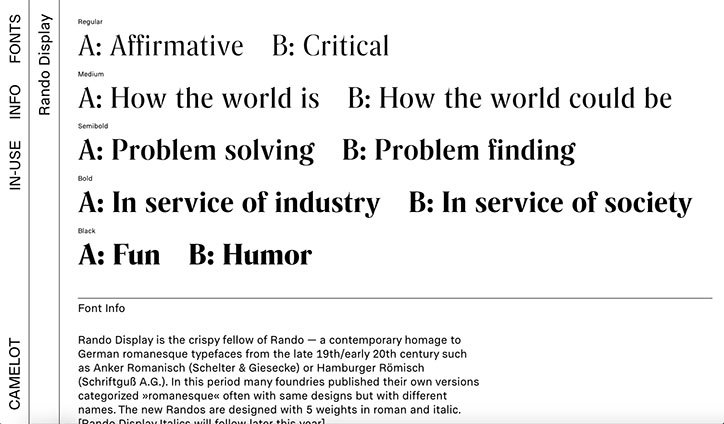
A specimen of the Rando Display typeface showing five different weights from regular to black. Each weight is paired with contrasting phrases, such as “A: Affirmative” and “B: Critical”. Below the examples, a block of text provides font info and the history of the typeface.
Above

Camelot: Typefaces

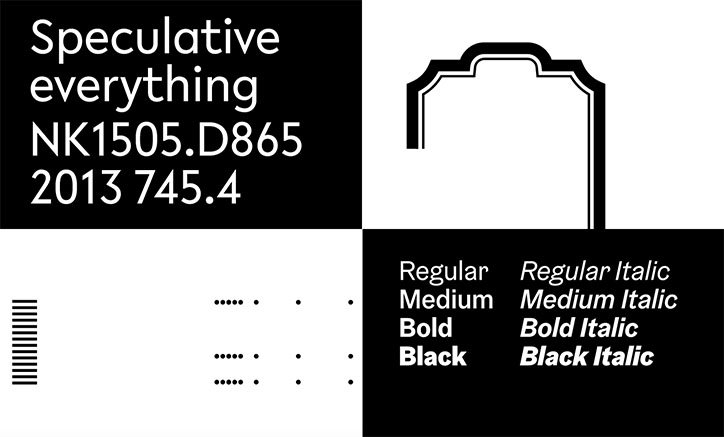
A black and white graphic divided into four quadrants. The top left reads “Speculative everything” followed by “NK1505.D865” and “2013 745.4”. The bottom right lists font weights including “Regular”, “Medium”, “Bold” and “Black”, each with a corresponding italic version. The remaining quadrants contain a simple line drawing of a doorway and a series of dots and lines.
Above

Camelot: Typefaces

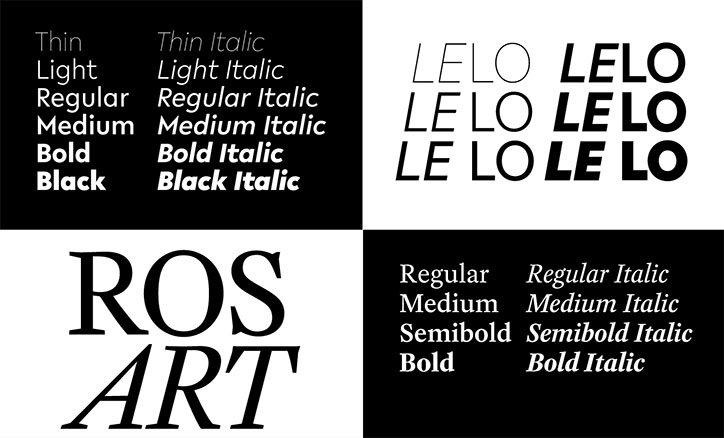
A four-panel grid showcasing different typeface weights and styles. The panels display various iterations of the words “Lelo”, “Ros Art” and lists of font weights such as “Thin”, “Bold” and “Black”.
Above

Camelot: Typefaces

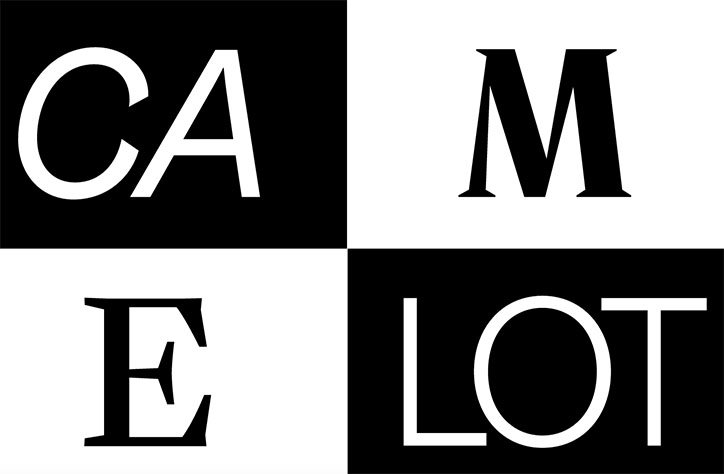
A graphic logo divided into a four-square grid of black and white. The white text reads “CAMELOT”, with each word segment placed in a contrasting colour block.
Above

Camelot: Typefaces

Share Article

About the Author

Billie Muraben

—

Billie studied illustration at Camberwell College of Art before completing an MA in Visual Communication at the Royal College of Art. She joined It’s Nice That as a Freelance Editorial Assistant back in January 2015 and continues to work with us on a freelance basis.
It's Nice That Newsletters

Fancy a bit of It's Nice That in your inbox? Sign up to our newsletters and we'll keep you in the loop with everything good going on in the creative world.