

Deborah Khodanovich’s font honours the most trivialised form of communication – gossip
Inspired by a rich history of women in crafting spaces, this graphic designer merges thoughtful typeface design with embroidery, knitting and lace to create a homage to the often demonised art of gossip.
Deborah Khodanovich, a Toronto-born graphic designer who’s currently in grad school at RISD, thinks about gossip differently than most people. “Gossip and blackletter typography, at first glance, couldn’t feel more opposite,” says Deborah. Whereas gossip is whispery and covert – blackletter roots itself in permanence, weight and authority. However, both share an interesting history. “Gossip, often weaponised against women, has been trivialised as idle chatter, despite its role in building and sustaining social networks. Blackletter, too, carries the weight of being both revered and feared, a font that once represented the pinnacle of printed knowledge.”
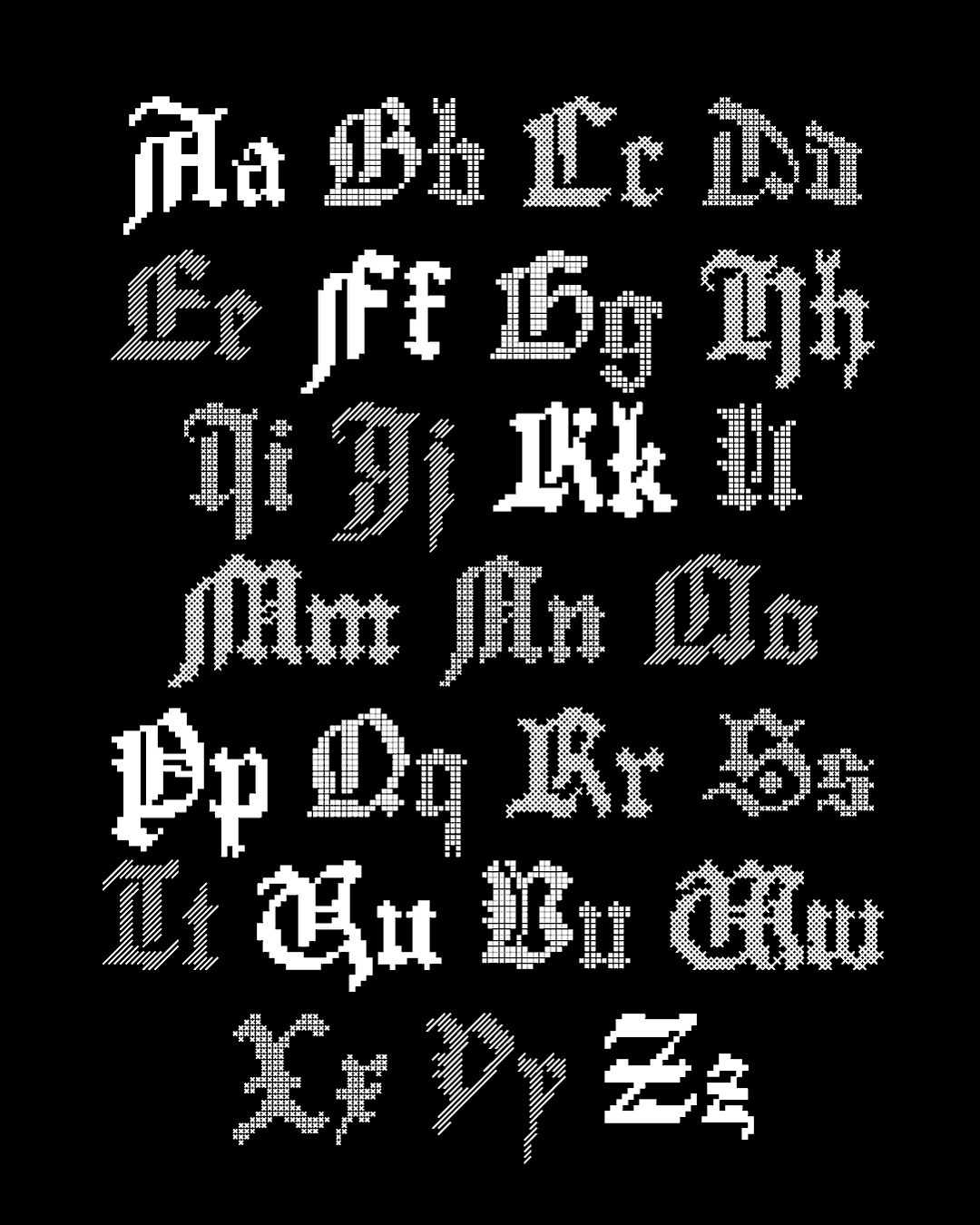
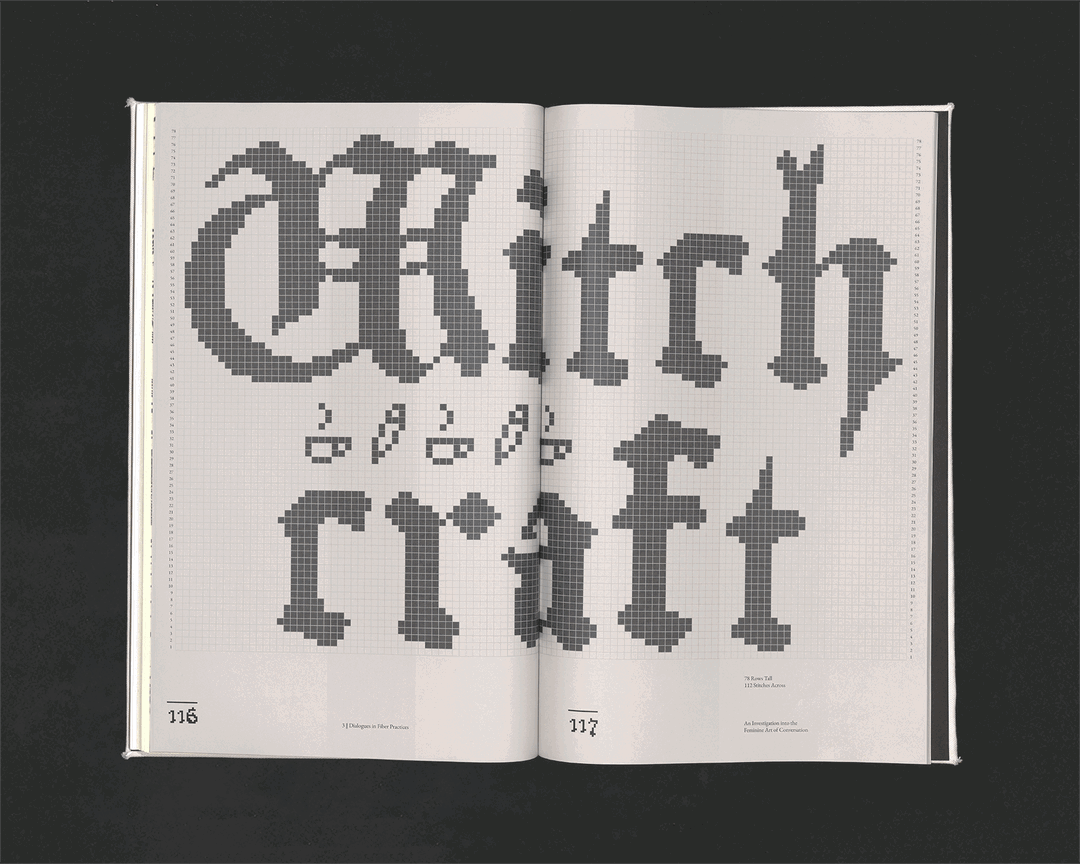
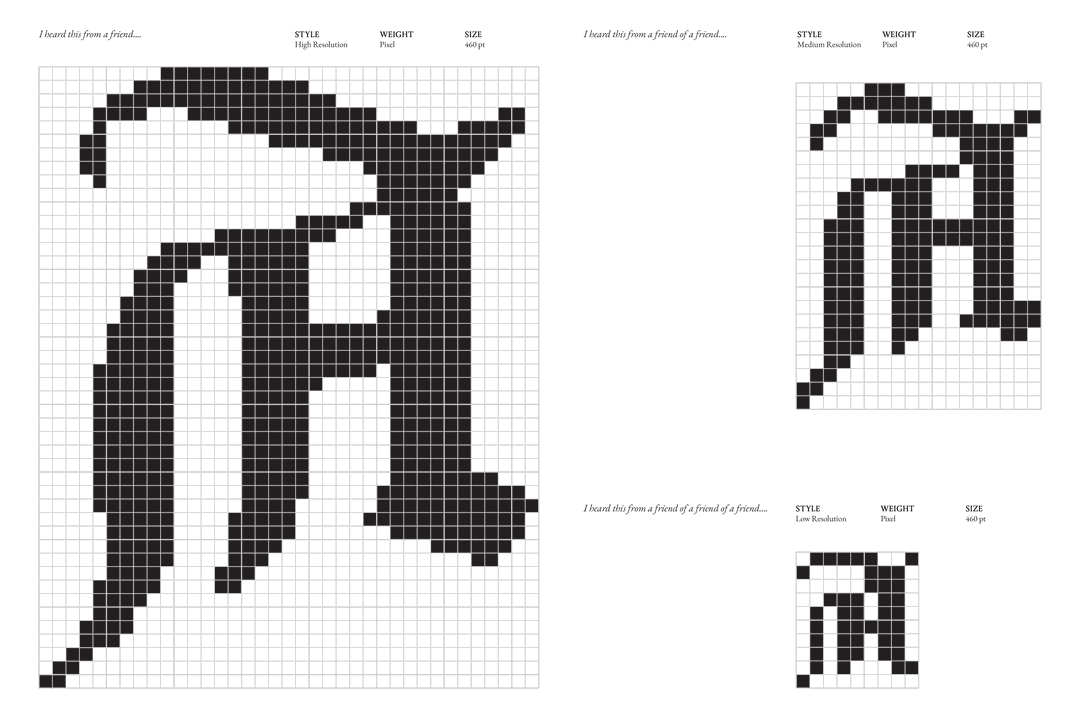
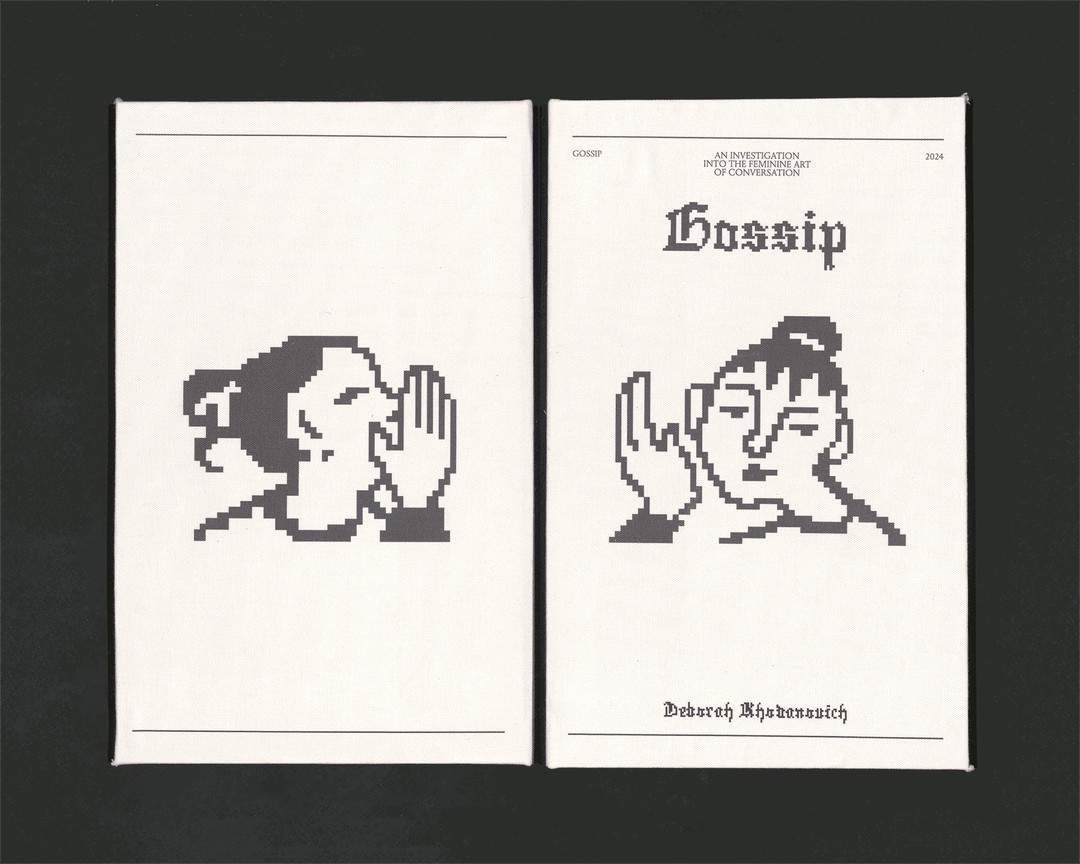
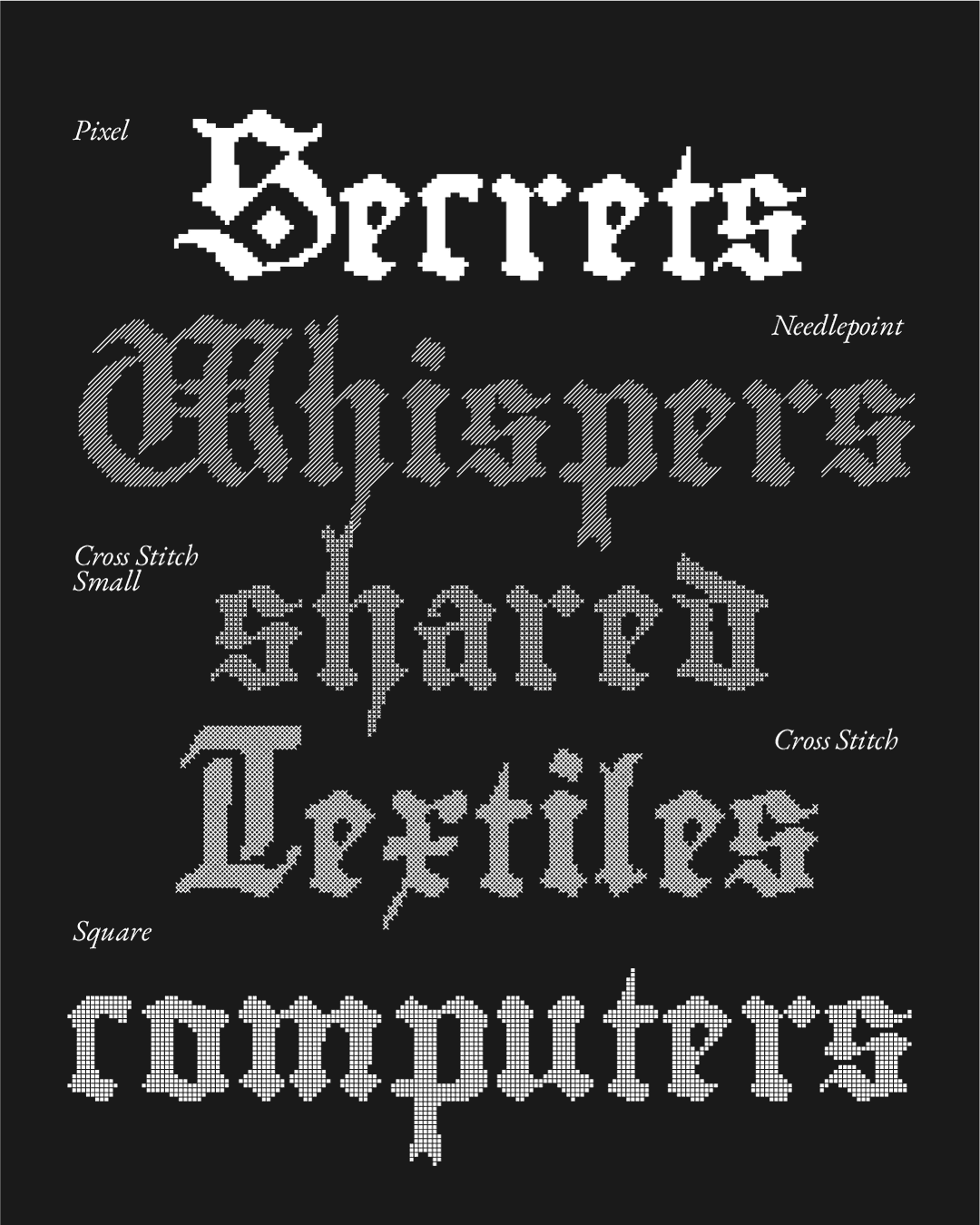
Her typeface Gossip – a blackletter pixel font – connects text with textiles whilst bringing something that feels ancient to the web. In equal parts modern and gothic, the typeface takes inspiration from Susan Kare’s original Mac icon sketches and Gutenberg’s Textura, seeking to digitise the ancient for a new platform of information dissemination. The whole point is that it can easily be turned “back into textiles”, considering textiles happen to use pixel grids too – therefore creating an infinite loop of changing information that transcends media, just like gossip itself.
Deborah Khodanovich: Gossip: An Investigation Into The Feminine Art Of Conversation (Copyright © Deborah Khodanovich, 2025)
“I’ve been obsessed with gossip since forever. I’m a very relationship oriented person, with my love and care for my friends & community (and vice versa) being quite a big value driver,” says Deborah. “Gossip to me is far from a bad thing, but rather a tool that communities use to understand and uphold their own values, shared beliefs and to be able to take care of one another through knowing what’s going on in each other’s lives.” Determined to make a meaningful commentary on gossip through typography, Deborah researched how gossip has been demonised by “the church and the patriarchy to keep women silent” in the 16th and 17th centuries. Gossip can be seen as threatening, but also useful because it’s informal. Not only can it evade censorship, it also exists outside of the concrete nature of the written word – instead, gossip is fleeting, personal and untraceable. “I’ve also been calling gossip a craft, rather than an art, because I think it’s a skill to master and understand,” says Deborah.
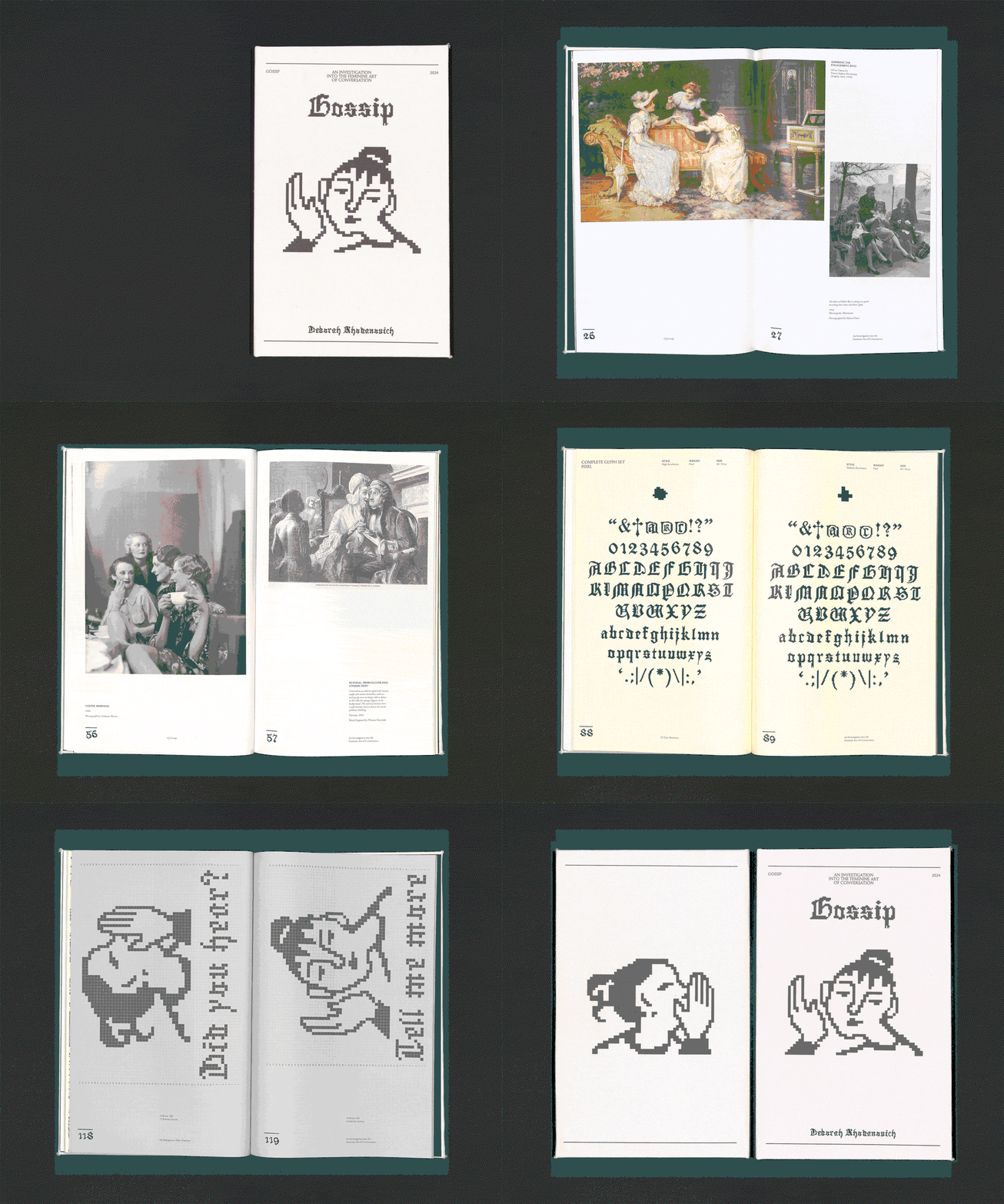
In Deborah’s book Gossip: An Investigation Into The Feminine Art Of Conversation, the relationship between textiles and gossip is central. Whilst taking a textiles class, Deborah learned about historical safe spaces where women were allowed to gather together without men – these were usually crafting spaces – and Deborah hypothesised that, due to arduous long shifts of knitting, weaving and embroidery, this is where gossip prevailed.
Gossip is also a revival of sorts. Gutenberg’s Textura was the first font he made with a moveable type to typeset the Bible in. Shortly after, blackletter became a key part of visual communication for its permanence and weight, but in Deborah’s view, it’s linked to histories of control, which gossip naturally challenges. In a humorous twist, Deborah takes the font made for the Bible and sets a font related to gossip in it, reclaiming the church’s demonisations of groups and unions whilst creating a typeface that is accessible across the digital and the analogue.
Deborah used program Glyphs to create something that resembled 16th century designs for lace and embroidery as well as keyboard mapped versions of Susan Kare’s Cairo glyphset, using the pixel map just like gridded paper. “Since weaving and punchcard knitting is known to be some of the first ‘coding’ that we have, it’s what led to the binary system of code, Ada Lovelace with the first computer, and all that good stuff,” says Deborah. “There’s already a natural relationship between textiles and computers, so to have these pixels of our web and textiles also overlap is just ‘chef’s kiss’.”
Deborah Khodanovich: Gossip: An Investigation Into The Feminine Art Of Conversation (Copyright © Deborah Khodanovich, 2025)
Deborah Khodanovich: Gossip (Copyright © Deborah Khodanovich, 2025)
Deborah Khodanovich: Gossip: An Investigation Into The Feminine Art Of Conversation (Copyright © Deborah Khodanovich, 2025)
Deborah Khodanovich: Gossip (Copyright © Deborah Khodanovich, 2025)
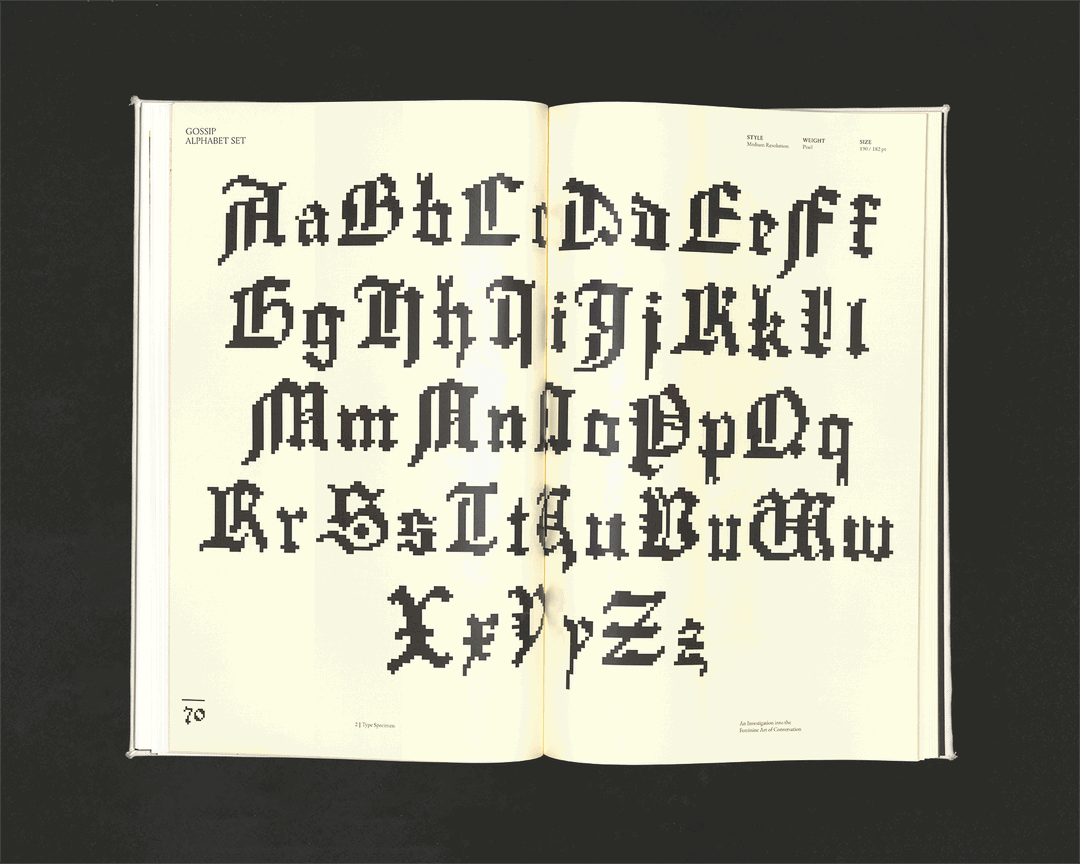
Deborah Khodanovich: Gossip: An Investigation Into The Feminine Art Of Conversation (Copyright © Deborah Khodanovich, 2025)
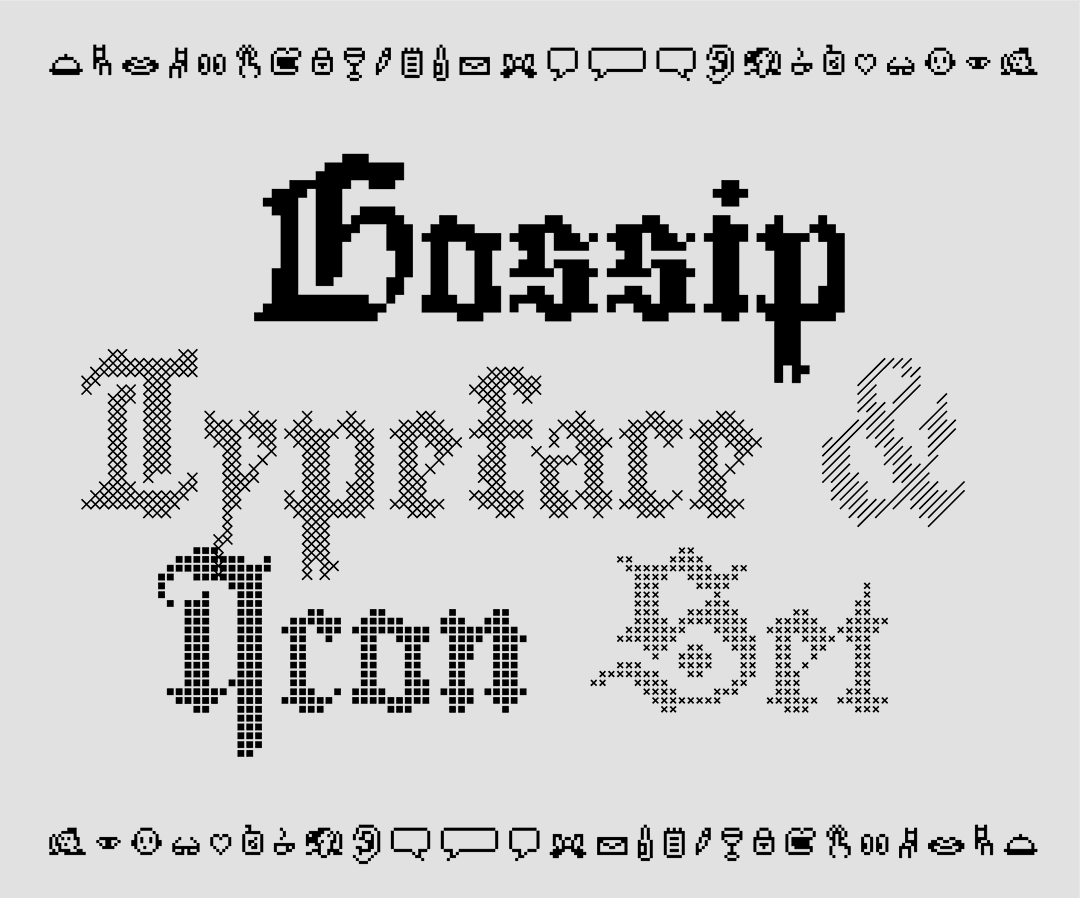
Deborah Khodanovich: Gossip (Copyright © Deborah Khodanovich, 2025)
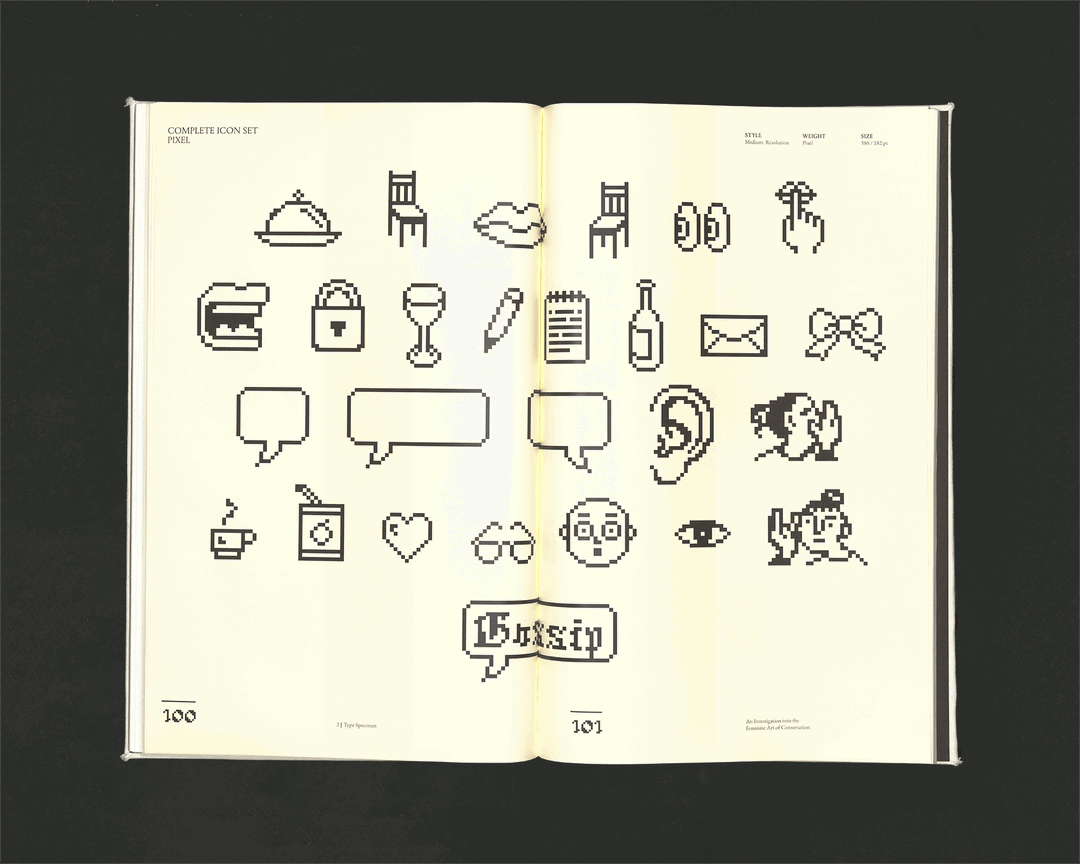
Deborah Khodanovich: Gossip: An Investigation Into The Feminine Art Of Conversation (Copyright © Deborah Khodanovich, 2025)
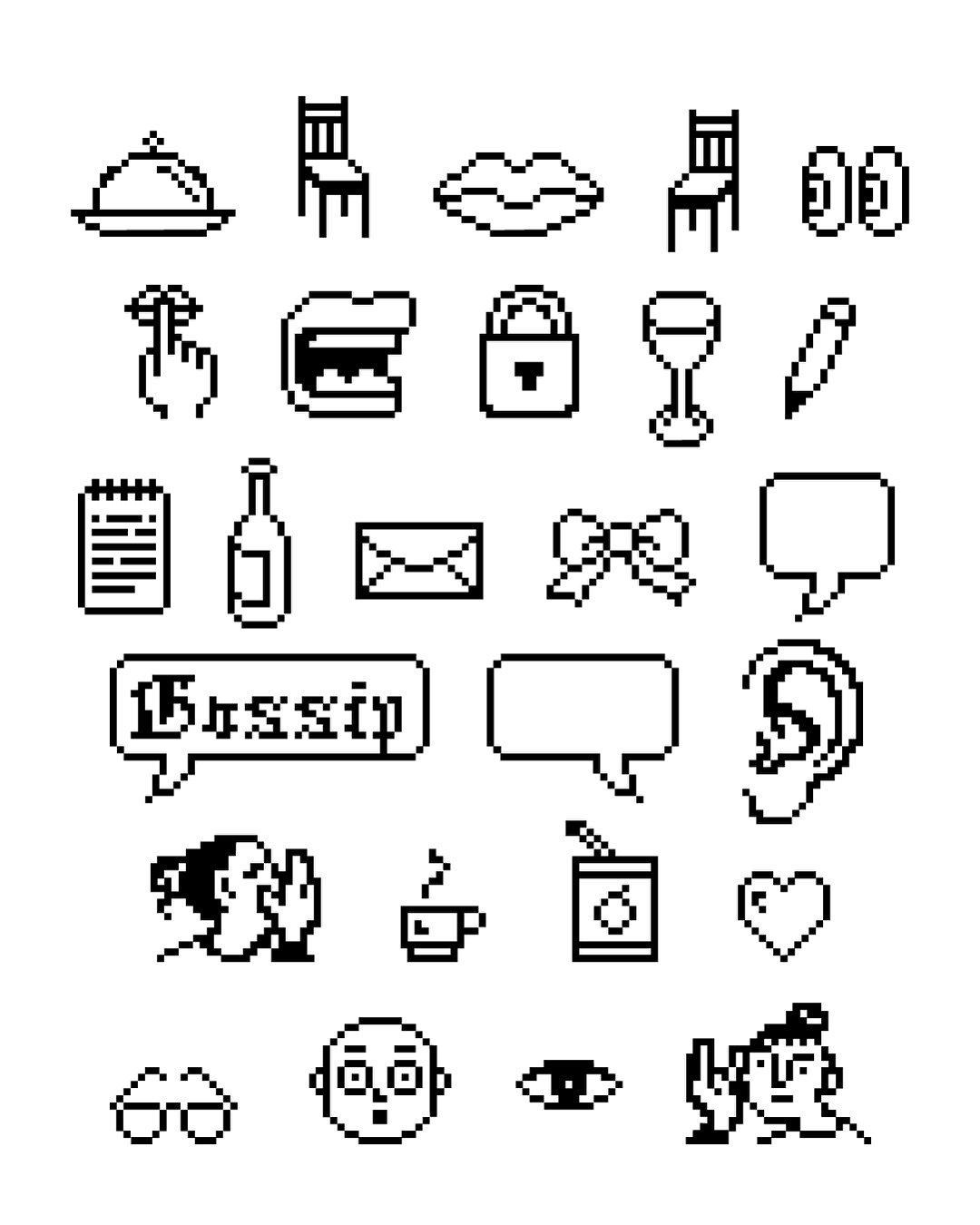
Deborah Khodanovich: Gossip (Copyright © Deborah Khodanovich, 2025)
Deborah Khodanovich: Gossip: An Investigation Into The Feminine Art Of Conversation (Copyright © Deborah Khodanovich, 2025)
Hero Header
Deborah Khodanovich: Gossip (Copyright © Deborah Khodanovich, 2025)
Share Article
Further Info
About the Author
—
Paul M (He/Him) is a Junior Writer at It’s Nice That since May 2025. He studied (BA) Fine Art and has a strong interest in digital kitsch, multimedia painting, collage, nostalgia, analogue technology and all matters of strange stuff. pcm@itsnicethat.com
To submit your work to be featured on the site, see our Submissions Guide.