Designers in Residence show explores design's disruptive potential
It seems fitting that the Design Museum’s Designers In Residence show has opened just days before London Design Festival kicks off. LDF is often derided – unfairly but loudly – as a celebration of design vacuousness, of shinier shelves and more ergonomic chairs. This year’s DiR exhibition is a celebration of design’s power, an exploration of how it can improve some of society’s fundamental building blocks – housing, play, money and the law.
The theme for this year’s programme was “disruption” (chosen as ever by Design Museum director Deyan Sudjic) and it’s a term that has been rendered confused to the point of meaningless by its overuse. But Deyan and the curatorial team wanted to rescue and resuscitate it from its detractors, to focus on disruption as a productive rather than destructive force. At a time when many of us are frustrated at the way the world seems to work, James Christian, Ilona Gaynor, Torsten Sherwood and Patrick Stevenson-Keating have shown that disrupting the status quo can be a massive opportunity for change and renewal.
Design Museum Designers In Residence (Photo by Luke Hayes)
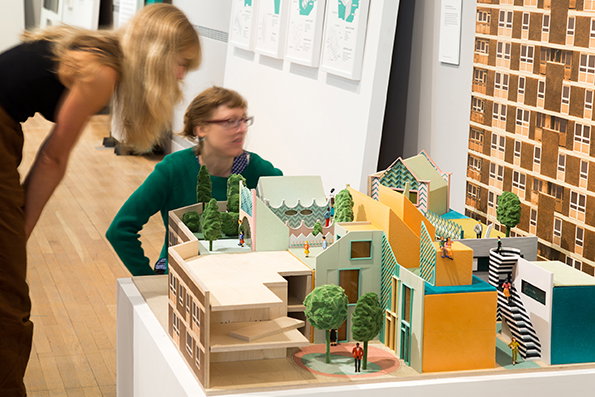
James’ work looks at housing – one of contemporary London’s defining issues – and how we could reimagine public living spaces. While the evolution of housing is often seen as a continuous march of progress and improvement, James has looked back at 17th and 18th Century slums around St Giles and London Bridge to see what we can learn from places London’s architectural historians would previously have probably overlooked. He’s savvy enough not to romanticise them, but he does identify several factors – such as the attitude to communal areas – which could help address the depersonalising effects of so much housing here.
Through a brilliant model, diagrams and even a comic strip, James brings his vision to life based on hypothetical plans for the De Beauvoir estate in east London. His work is not presented as the definitive answer to London’s housing problems, but it serves as a great starting point for thinking again about our attitudes. Ilona Gaynor goes even further along this route, with a project that offers no concrete conclusions.
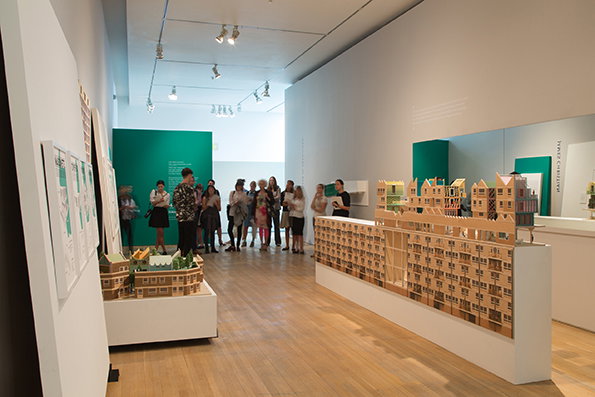
Design Museum Designers In Residence: James Christian’s work (Photo by Luke Hayes)
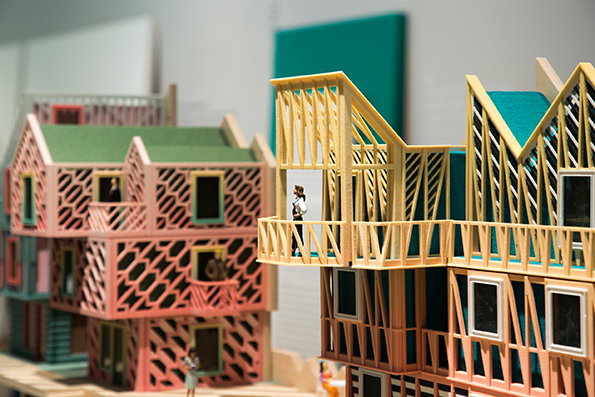
Design Museum Designers In Residence: James Christian’s work (Photo by Luke Hayes)
Design Museum Designers In Residence: James Christian’s work (Photo by Luke Hayes)
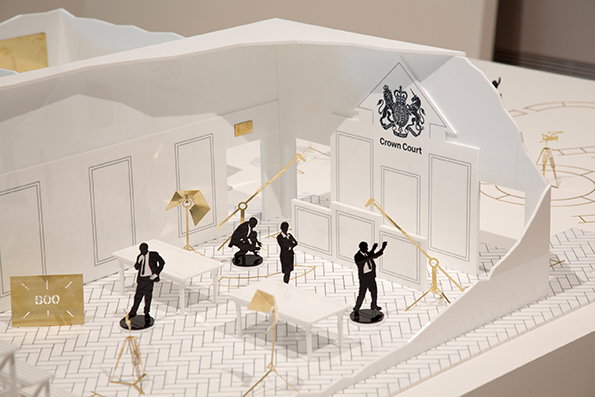
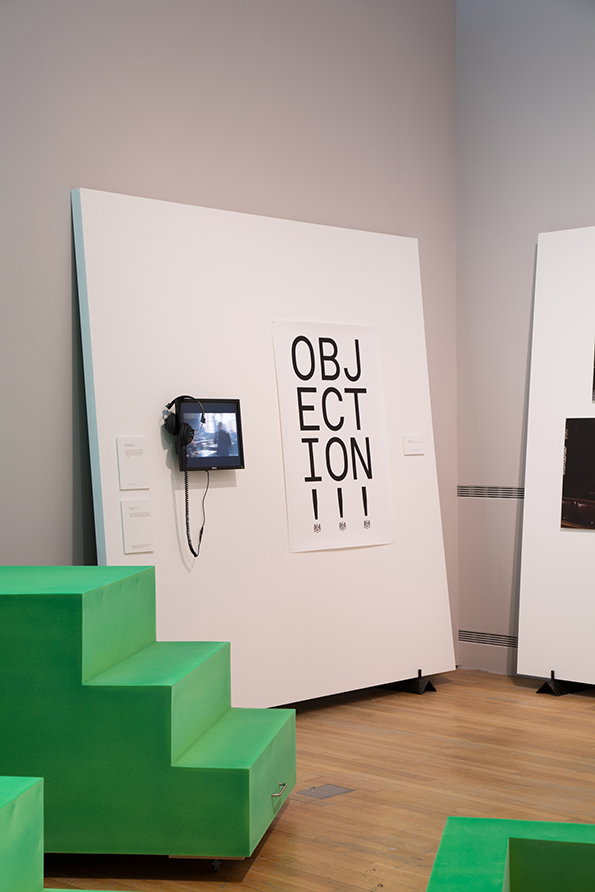
She describes herself as “a designer of ruses” and her DiR work revolves around the fixing of a live televised National Lottery draw. She is interested in the courtroom process as a piece of social theatre, and her exhibits stretch this idea of it as a ritual ripe for the entertainment age. There are diagrams, sketches and photographs; there are the lottery balls in question and a pair of scales but we’re not sure if they have been tampered with. There is the royal crest found in coatrooms rendered in neon, a diorama of the sort used by TV and film directors to plot court scenes and furniture with CGI-ready green-screen coverings.
Design Museum Designers In Residence: Ilona Gaynor’s diorama (Photo by Luke Hayes)
Design Museum Designers In Residence: Ilona Gaynor’s work (Photo by Luke Hayes)
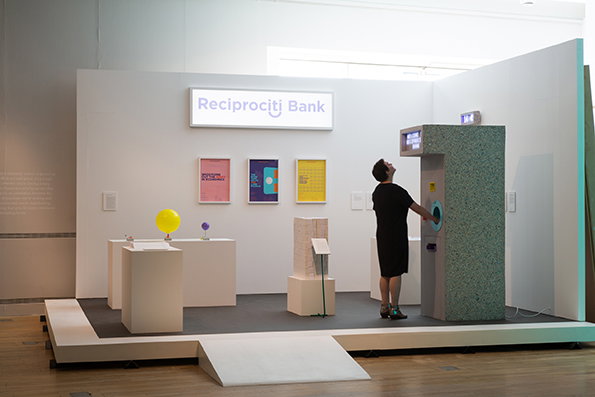
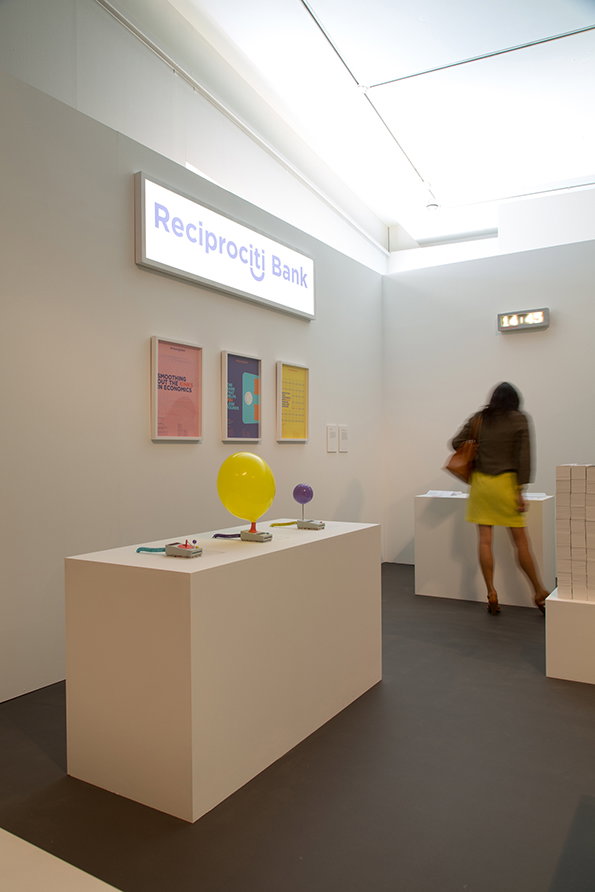
It’s complex and unsettling and demands time and thought and patience. In short it’s exactly the kind of thing DiR should be doing. But if that sounds too heavy, there is more immediate yet no less intelligent fare on offer on the other side of the exhibition. Patrick Stevenson-Keating has explored our attitudes to capitalism in its most direct manifestation – our relationship with money. Through the ubiquity of credit cards and the increasing popularity of online and contactless payment services, Patrick believes we have become too separated from the physical act of paying for stuff. He’s built contraptions that re-engage us with financial transactions, such as payment machines where you have to crank round every penny you’re spending with a handle, or one that displays the amount proportionately leaving your account by inflating an attached balloon.
It’s silly stuff that makes a serious point. He has also installed an interactive ATM which reads your card, displays your recent purchases for all in the gallery to see, and lets users set a gestural code to withdraw fake notes. Undeterred by privacy concerns, visitors at the press view were queuing up to have a go, which suggests we’re open to interacting with money in a more fun way.
Design Museum Designers In Residence: Patrick Stevenson-Keating’s work (Photo by Luke Hayes)
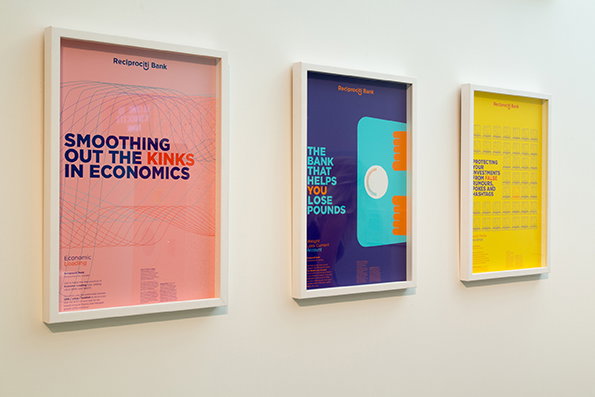
Design Museum Designers In Residence: Patrick Stevenson-Keating’s work (Photo by Luke Hayes)
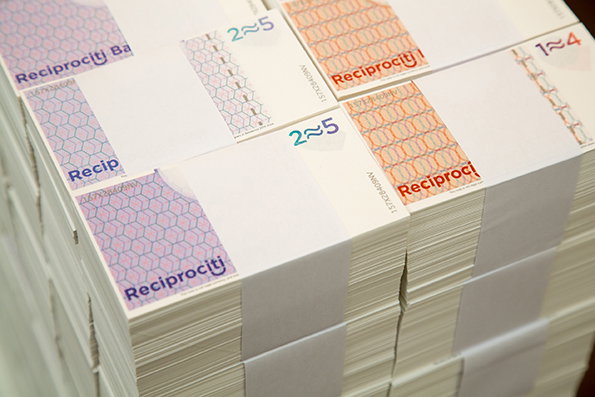
Design Museum Designers In Residence: Patrick Stevenson-Keating’s work (Photo by Luke Hayes)
Fun plays a big part in Torsten Sherwood’s work too. He’s created modular building blocks that interlock with each other to create structures that are versatile, quick to assemble and sustainable. Although there are obvious ramifications for disaster relief, this is primarily about play, and re-connecting with the nostalgic joy of building things. Alongside the sculptures there are some great insights into his process, materials and reference points, which range from Dieter Rams’ call for as little design as possible, to the unusual staring point: “What if LEGO wasn’t a brick?”
Crucially though there is also an area for visitors to get their hands on Torsten’s creations, to build their own structures and experience his work for themselves.
This is a show in which the visitor can and should get involved; physically, emotionally and intellectually. It’s very well-curated, giving each designer’s work room to breathe and the exhibition design by the brilliant Hunting & Narud ties it all together into a cohesive whole. It’s interesting that the show sits in the museum’s large second floor space, on the same floor as the new Capsule Collection which showcases some gems from the design archives. Where one show looks back and revels in well-known design treasures, the other looks forward, provoking and challenging design’s future role.
Designers In Residence runs until 8 March 2015.
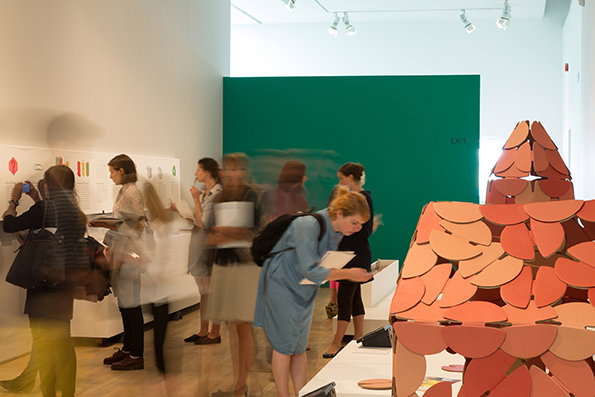
Design Museum Designers In Residence: Torsten Sherwood’s work (Photo by Luke Hayes)
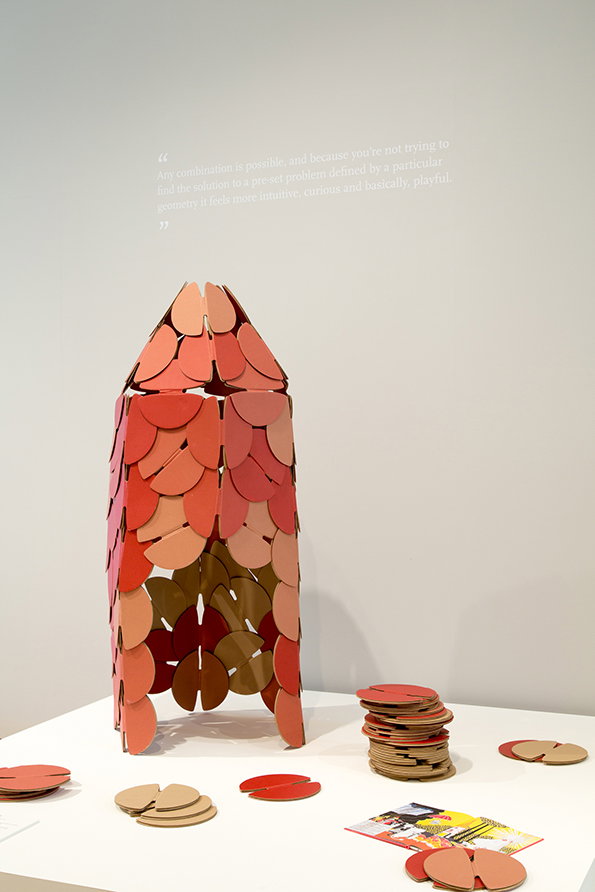
Design Museum Designers In Residence: Torsten Sherwood’s work (Photo by Luke Hayes)
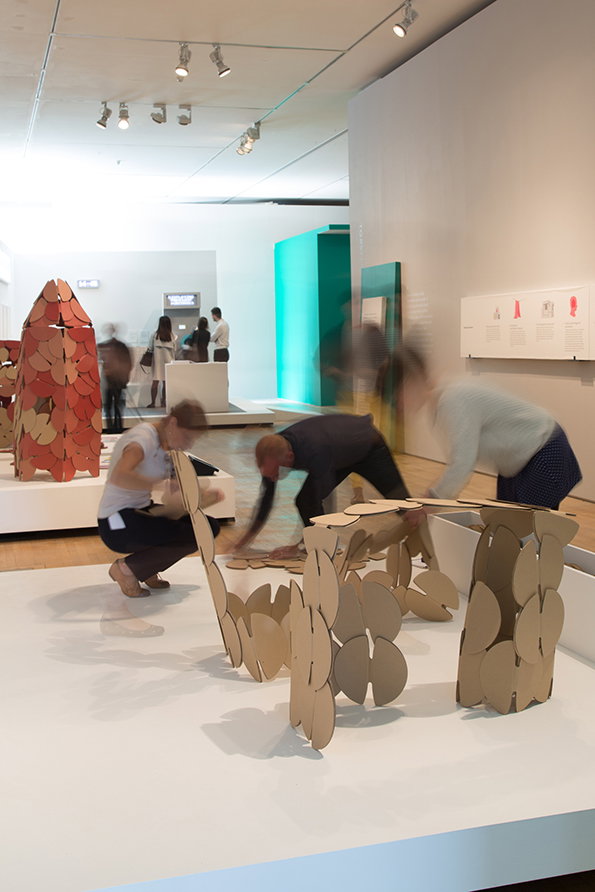
Design Museum Designers In Residence: Torsten Sherwood’s work (Photo by Luke Hayes)
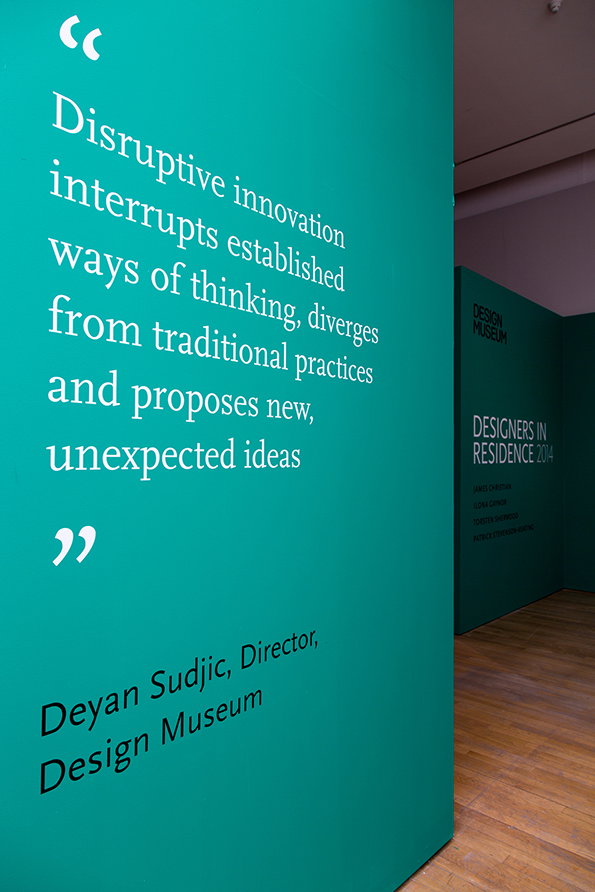
Design Museum Designers In Residence (Photo by Luke Hayes)
We are excited to present a social evening with this year’s Designers in Residence and Special Guests on Tuesday 14 October. Come along to meet the designers and find out more about their interests and working methods through informal presentations, followed by drinks and discussions. Tickets cost £14 (£10.50 students) and includes entry to the show. Find out more here.
Share Article
Further Info
About the Author
—
Rob Alderson is a freelance writer, editor and strategist. He was previously editor-in-chief of It’s Nice That and WePresent, and editor of Design Week. He publishes the newsletter Undo, which tries to make sense of how AI is changing design work, the design process and the design industry.