Launch Recite Me assistive technology
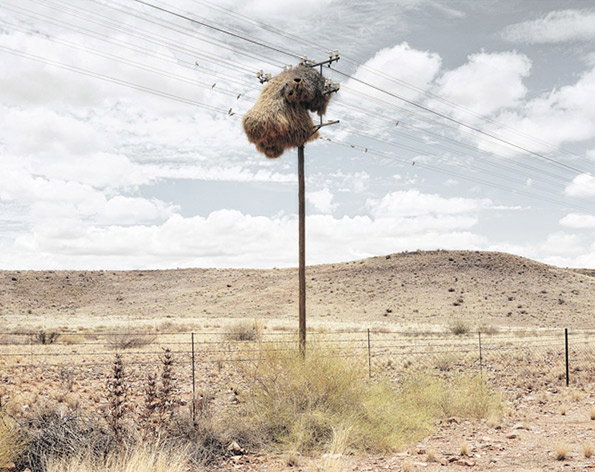
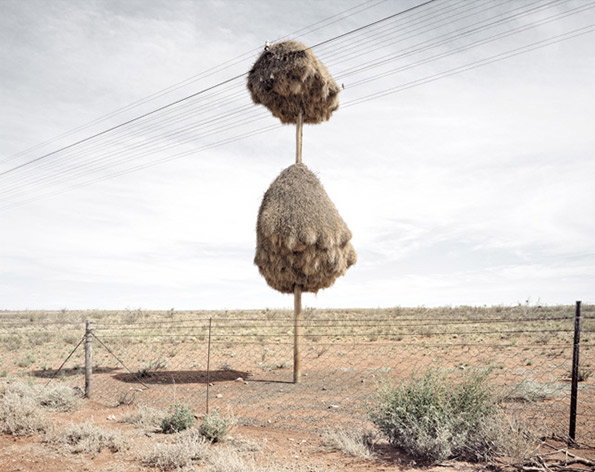
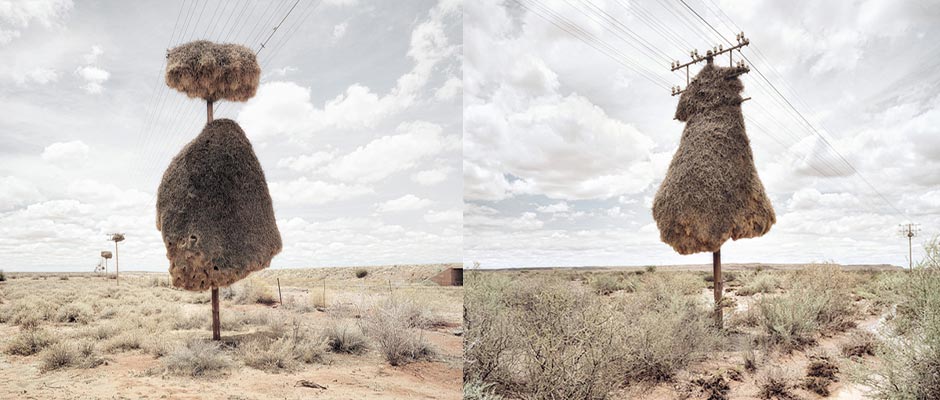
Two photographs of a utility pole in a dry, scrubland landscape. Large, dense nests of twigs and grass are built around the pole, obscuring the structure.

Those are birds nests?! Dillon Marsh explores our relationship with the natural world

—
Date
13 February 2013

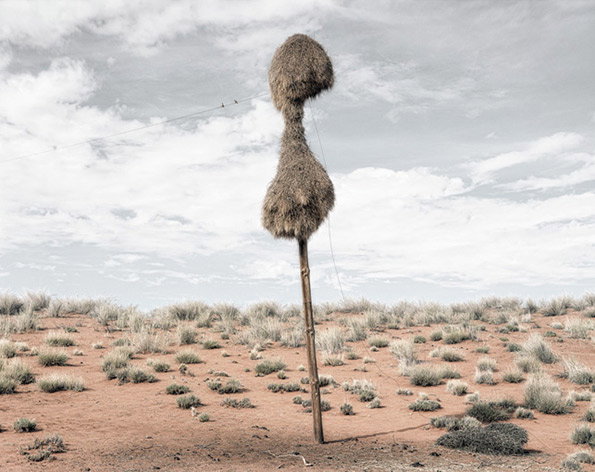
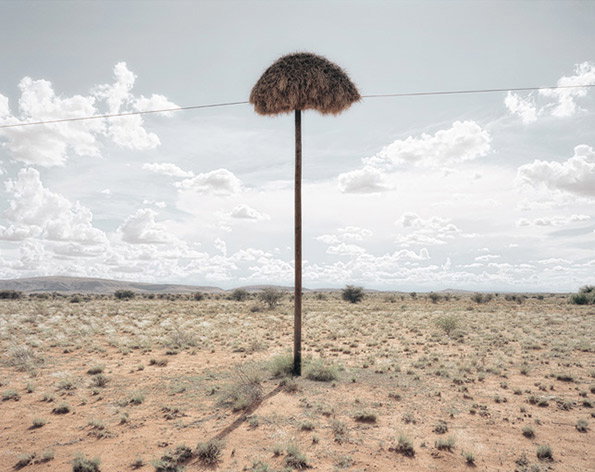
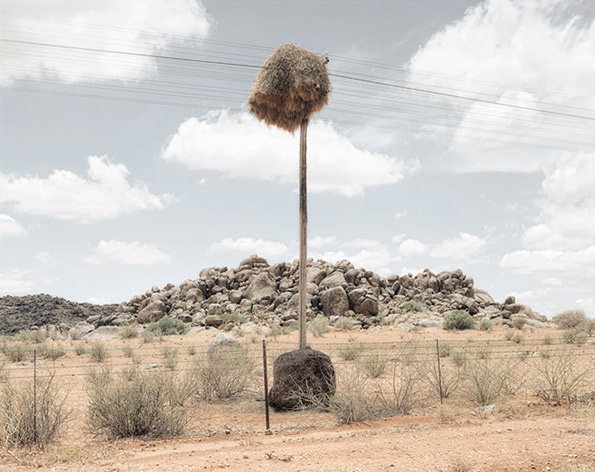
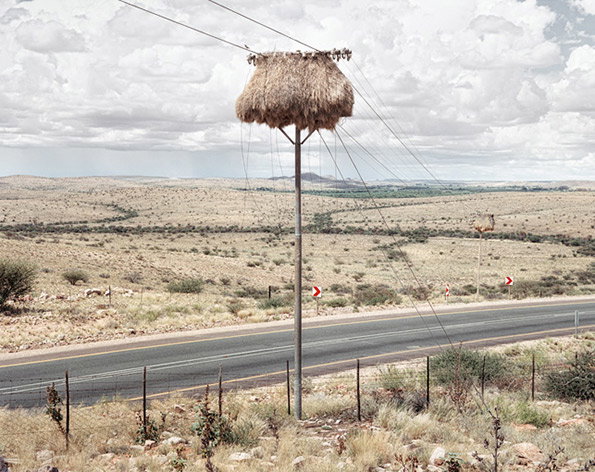
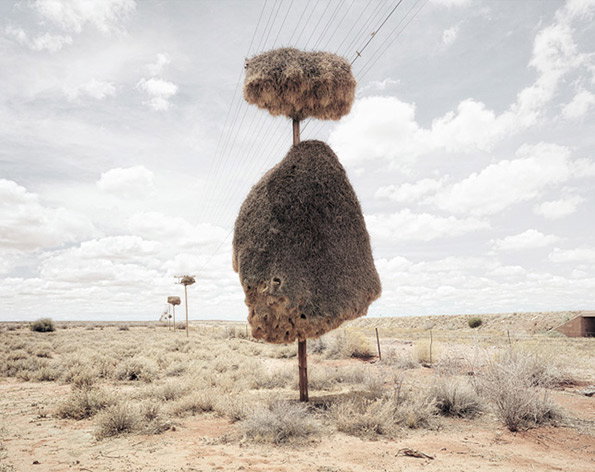
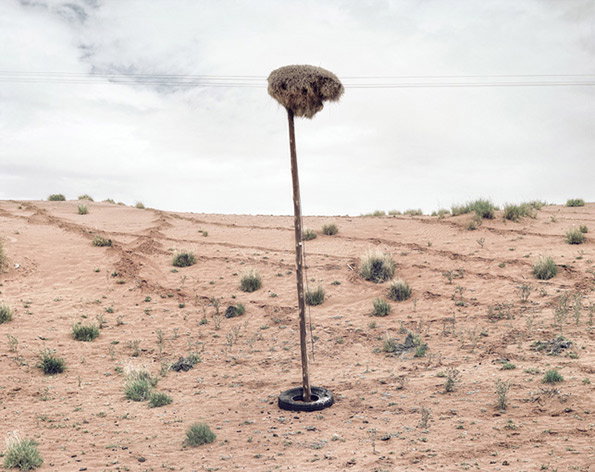
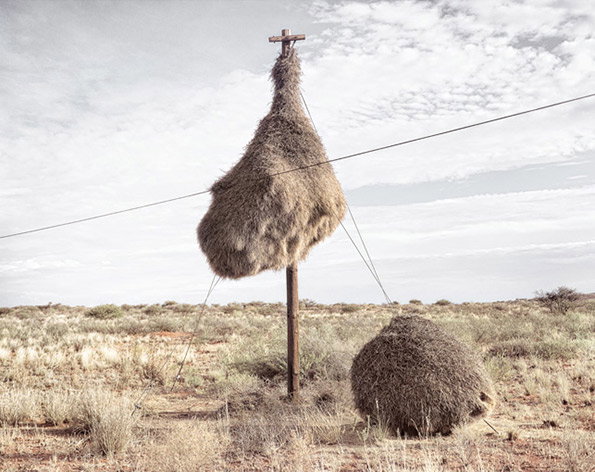
Starter for ten – what do these images show? If you said the nests of sociable weaver birds built around telephone poles in the southern Kalahari region, then give yourself a pat on the back (you liar!). This intriguing series Assimilation is the work of South African photographer Dillon Marsh, a huge talent whose work explores the symbiotic relationship between society and the landscapes in which it sits.

This set shows the natural world co-opting human structures for its own ends, at other times he depicts illuminated crucifixes, telegraph poles “disguised” as trees and trees which have died but not yet fallen.

“In these series I seek to find things that are out of the ordinary, picking them out of the landscape where they might otherwise blend in,” he says. “I choose objects that can be found in multitude within their environment so that I can depict a family of objects in a series of photographs. By displaying each project as such, I feel I am able to show both the character of the individual members, and the characteristics that make these objects a family.”
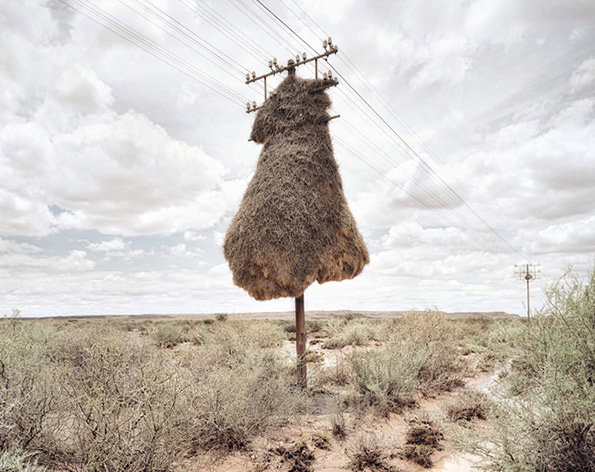
A large, bell-shaped mass of dried grass and hay is draped over a utility pole. The pole stands in a sparse, scrubby landscape under a cloudy sky.
Above

Dillon Marsh: Assimilation

A large, hairy mass of organic material is draped over the top of a utility pole. The pole stands alone in a dry, rocky landscape under a cloudy sky.
Above

Dillon Marsh: Assimilation

A tall, slender pole stands in a dry, sandy landscape dotted with scrubby grass. Two large, bulbous clumps of brown organic material are attached to the pole, one at the top and one in the middle.
Above

Dillon Marsh: Assimilation

A tall, thin pole stands in a dry, sandy landscape under a cloudy sky. A large, rounded clump of dried grass or thatch sits atop the pole, resembling a giant nest.
Above

Dillon Marsh: Assimilation

A tall, thin wooden pole stands in a dry, sandy landscape. A large, dense nest of dried grass is perched at the top, with a second smaller nest at the base.
Above

Dillon Marsh: Assimilation

A massive, woven bird's nest sits atop a utility pole beside a road. The pole stands in a vast, arid landscape under a cloudy sky.
Above

Dillon Marsh: Assimilation

Two large, organic nests made of twigs and grass are stacked vertically on a thin pole. They stand in a flat, arid landscape under a bright, cloudy sky.
Above

Dillon Marsh: Assimilation

A tall wooden pole stands in a sandy, arid landscape, topped with a large bird’s nest. The base of the pole is anchored inside a black rubber tyre.
Above

Dillon Marsh: Assimilation

Two conical mounds of dried grass stand in a sparse, arid landscape under a pale sky. One mound is perched atop a tall wooden pole, held in place by thin tension wires.
Above

Dillon Marsh: Assimilation

Two large, textured nests made of dried grass and twigs are stacked vertically on a thin pole. The structure stands in a flat, arid landscape under a pale sky, with power lines stretching across the background.
Above

Dillon Marsh: Assimilation

Share Article

About the Author

Rob Alderson

—

Rob Alderson is a freelance writer, editor and strategist. He was previously editor-in-chief of It’s Nice That and WePresent, and editor of Design Week. He publishes the newsletter Undo, which tries to make sense of how AI is changing design work, the design process and the design industry.

It's Nice That Newsletters

Fancy a bit of It's Nice That in your inbox? Sign up to our newsletters and we'll keep you in the loop with everything good going on in the creative world.