Frieze Sculpture 2018 proves the power of art in the public realm
The UK is experiencing a heatwave, and what better way to experience this warm, balmy weather than spending an evening wandering through one of London’s parks. Yesterday afternoon, It’s Nice That ventured down to Regent’s Park for the reception of Frieze Sculpture. With the summer’s heat lifting the scent of flowers into the surrounding air, and with members of the public already mingling amongst the works of art; it was instantly apparent the uplifting effect sculpture could have on a person.
Inaugurating the three month event, Dr Tristraam Hunt, director of the V&A comments, “the story of London’s parks as opposed to its private gardens is one of free and open access to all”, and as a fellow journalist at the reception comments, “it’s funny, because usually in these situations the press are here to see the work first, however, in this case, the public have beaten us to it”. When walking through the garden, it was apparent that each work sparked wonder in the viewer — groups of runners posed for selfies, sunbathers lounged in the grass nearby, and the more curious tourists sat and immersed themselves within the art.
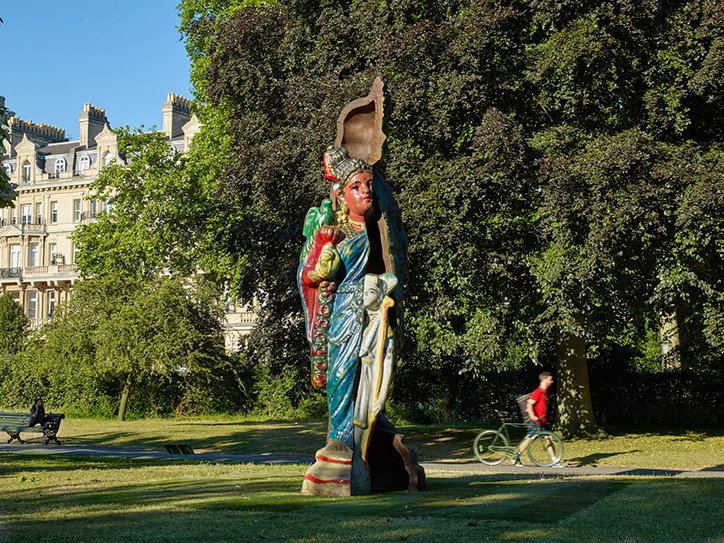
Bharti Kher: Djinn Family, 2018, Hauser & Wirth
“We watch people encounter the sculpture with befuddlement and excitement, especially those who come through the park daily or incidentally”, explains Clare Lilley, the curator; “I watch conversations happen that wouldn’t ordinarily take place — this is the power of sculpture in the public realm; it is their ability to make connections between people”. Art has always had the capacity to bring people together, and in our current political climate, it is important that international works from creatives are placed shoulder to shoulder in an accessible space. Frieze Sculpture Park, open from today until 7 October, brings together twenty-five new and significant works by leading contemporary artists from around the world, including Elmgreen & Dragset, Tracey Emin, Kimsooja, Rana Begum, Haroon Gunn-Salie, Michele Mathieson and Conrad Shawcross, among others.
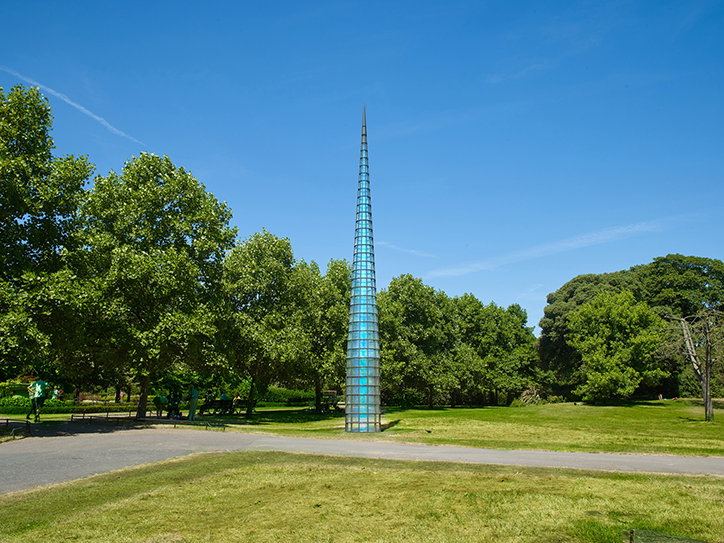
Kimsooja: A Needle Woman: Galaxy was a Memory, Earth is a Souvenir, 2014, Axel Vervoordt Gallery
“The path of the sun is something that activates many sculptures in the park”, Clare Lilley explains. One such sculpture is a new work by Rana Begum — a piece whose five vertical slabs of coloured glass stain the grass with rainbow reflections. “It was really important for me to make sure the work was facing the right way — sunrise and sunset”, Rana tells It’s Nice That. As Clare comments, “I know the landscape of the English Gardens very well. I work with the terrain, responding to the trees and open areas, sitting the works according to whether they need intimacy or open space”. No. 814 picks up the morning light, which then travels across the sculpture as the day goes on. “It’s about making someone aware of their surroundings”, Rana tells us, “those moments when people realise how light and colour can completely affect us”. As a passerby observes, “without the sun, the piece would be different altogether”.
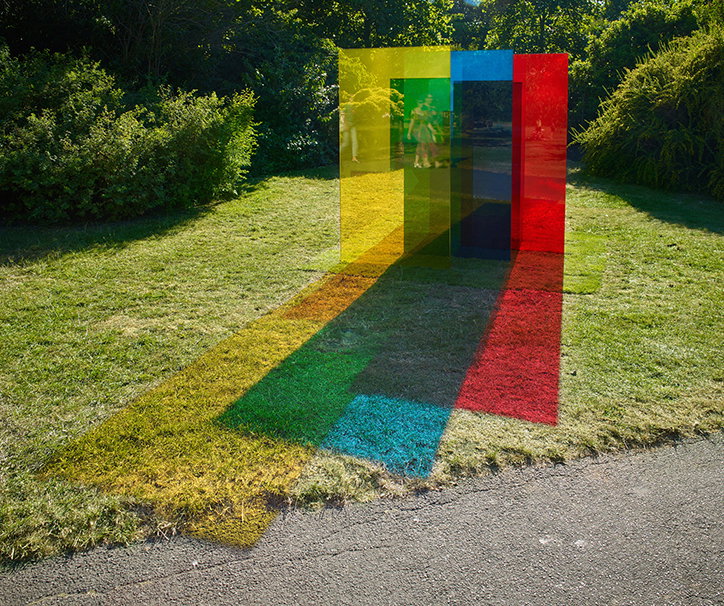
Rana Begum: No. 814, 2018, The Third Line, Jhaveri Contemporary, Kate Macgarry
Many of the sculptures are affected by the weather, built for an outdoor environment. Conrad Shawcross’s Optic Labyrinth is a large, “austere” immersive structure, “a contemporary take on standing stones”, he explains; “it is meant to look industrial from the first instance, but on closer inspection every panel is different, so the way they respond to light is dynamic and subtle”. As the light moves across the specially designed steel mesh, it causes strange ever-changing patterns, symbolic of the ancient riddles associated with Stonehenge.
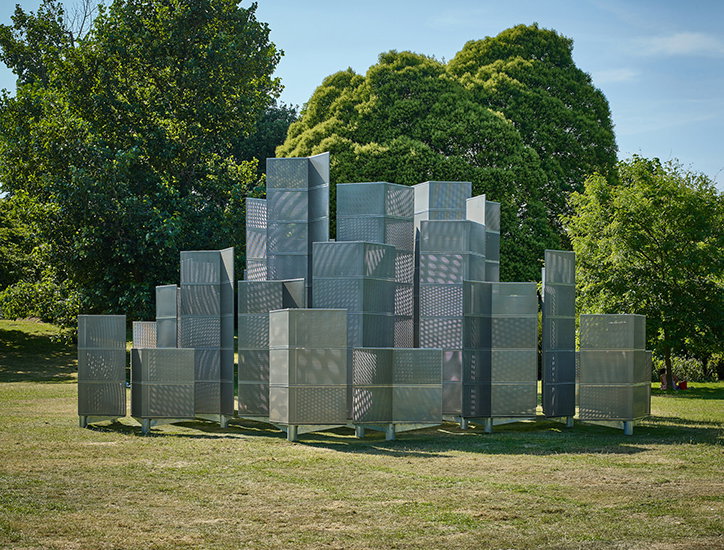
Conrad Shawcross: Optic Labyrinth, Arrangement I, 201, Victoria Miro
Public sculpture can be symbolic simply because it is public; Michele Mathison’s piece Parallax works with this idea — showcasing a tangle of broken street lamps representative of the decayed infrastructure of Johannesburg. When the political climate in South Africa worsened, so did public space and this “became symbolic for the state of the nation”, Mathison explains; “these broken street lights became accidental sculptures, signifiers for civic decay”.
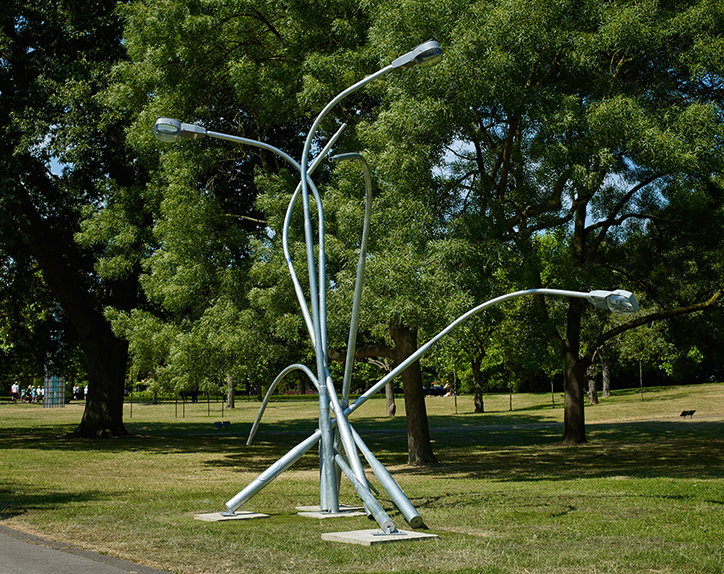
Michele Mathison: Parallax, 2018, Tyburn Gallery
Haroon Gunn-Salie’s work Senzenina is similarly political, presenting the miners from the Marikana massacre of 2012 — men who were shot down for demanding a living wage. “Haroon has used police footage of the protestors at the precise moment before they open fired, and has then cast them as statues and memorialised them”, Clare explains. Their missing hands and heads are symbolic of loss; their life-like size entices an interaction with them in a human way. It is clear from this exhibition that public sculpture can speak politically in ways other art cannot; the simple fact that they are outside and accessible, changes our interpretation of them.
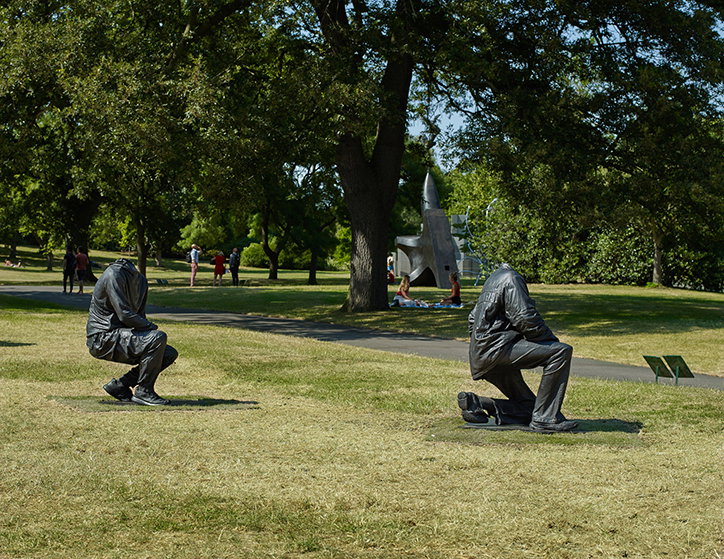
Haroon Gunn-Salie: Senzenina, 2018, Goodman Gallery
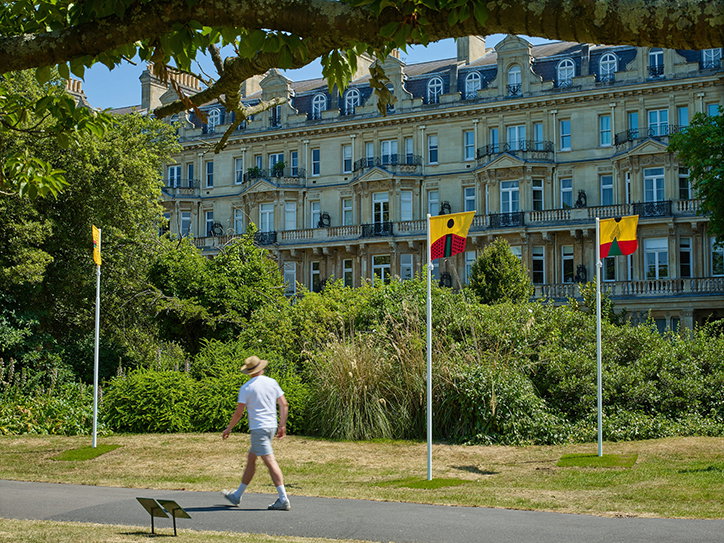
Larry Achiampong: PAN AFRICAN FLAGS FOR THE RELIC TRAVELLERS’ ALLIANCE, 2018, Copperfield