

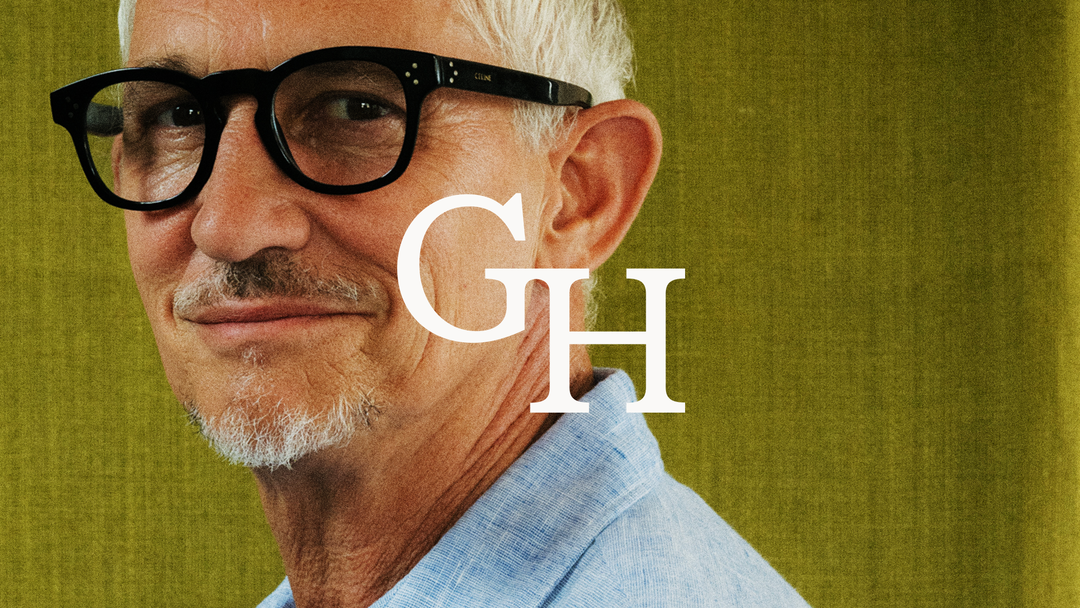
Goalhanger’s visual overhaul respects credibility, clarity and human focus
The podcasts company’s new print media-inspired identity reflects its standing as a multi-format platform that hosts an array of personalities.
People aren’t just listening to podcasts anymore, they’re sharing a dialogue. Co-founded by former footballer and broadcaster Gary Lineker and Tony Pastor, Goalhanger is an award-winning UK podcast network known for engaging and accessible flagship shows such as The Rest Is suite of podcasts: The Rest Is History, The Rest Is Politics and The Rest Is Money. But as the network continues to excel in delivering rigorous, intellectual discussions on a number of topics, its brand identity was lagging behind in an audio culture that’s becoming increasingly visual.
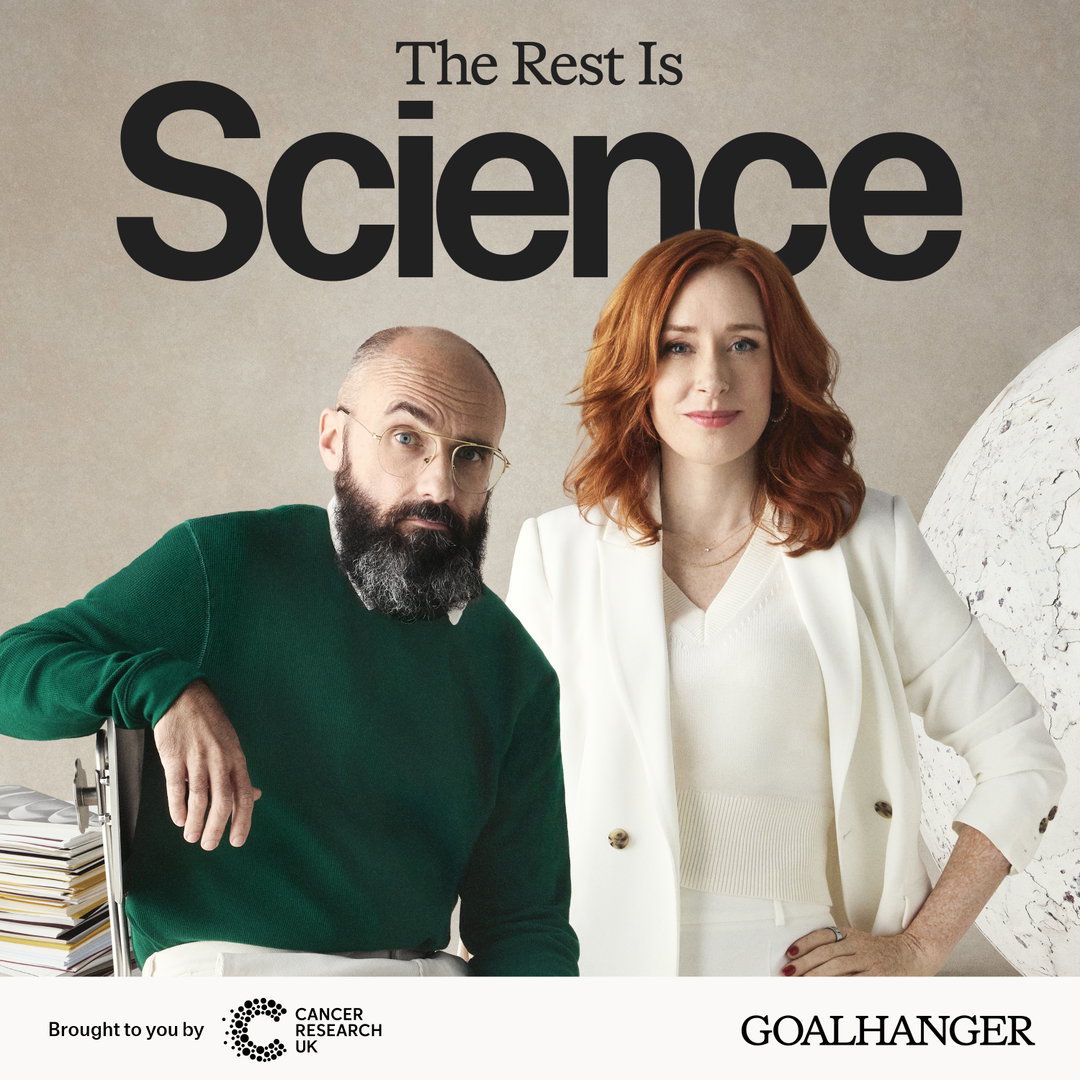
This is where creative directors Stephen Mai and Alistair Dixon stepped into give Goalhanger a visual identity overhaul. “Goalhanger had outgrown the identity it started with. We were still visually positioned as a podcast company, while the business had evolved into a multi-format media platform operating at national scale,” says Stephen. “The gap between perception and reality had become too wide.” With new short artwork, photography, logos, style guides and full video assets featuring all of Goalhanger’s hosts, this rebrand captures how podcasting is becoming visual and how our media landscape brings together audio, video, live events and membership.
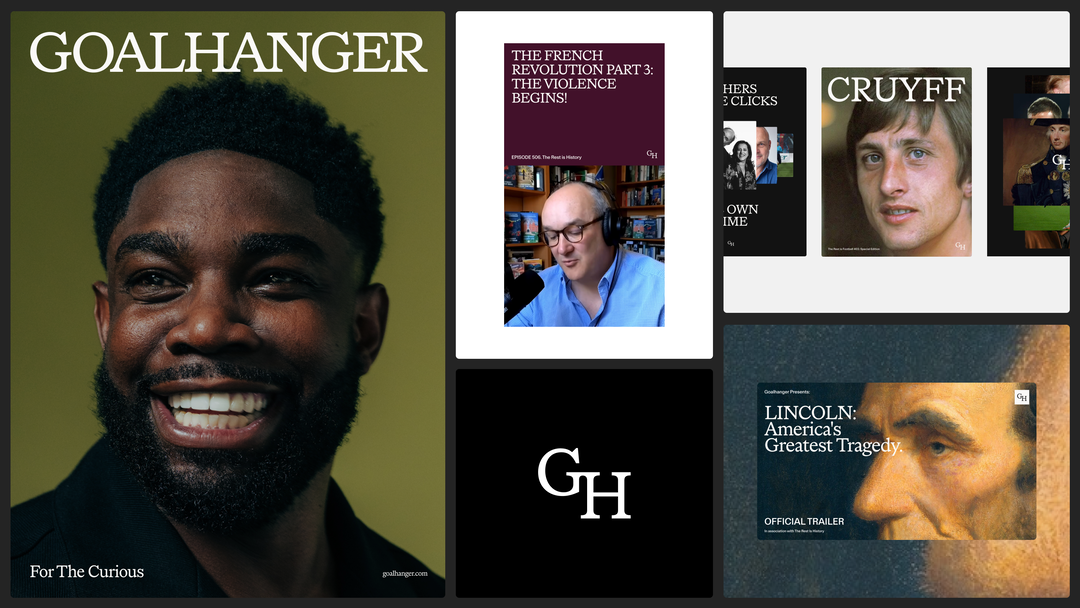
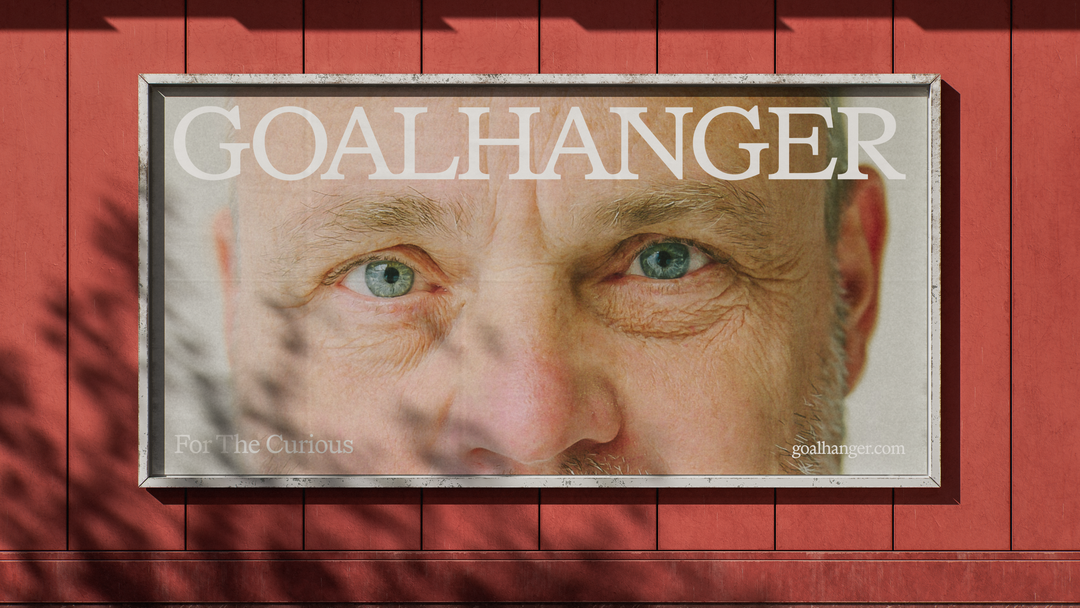
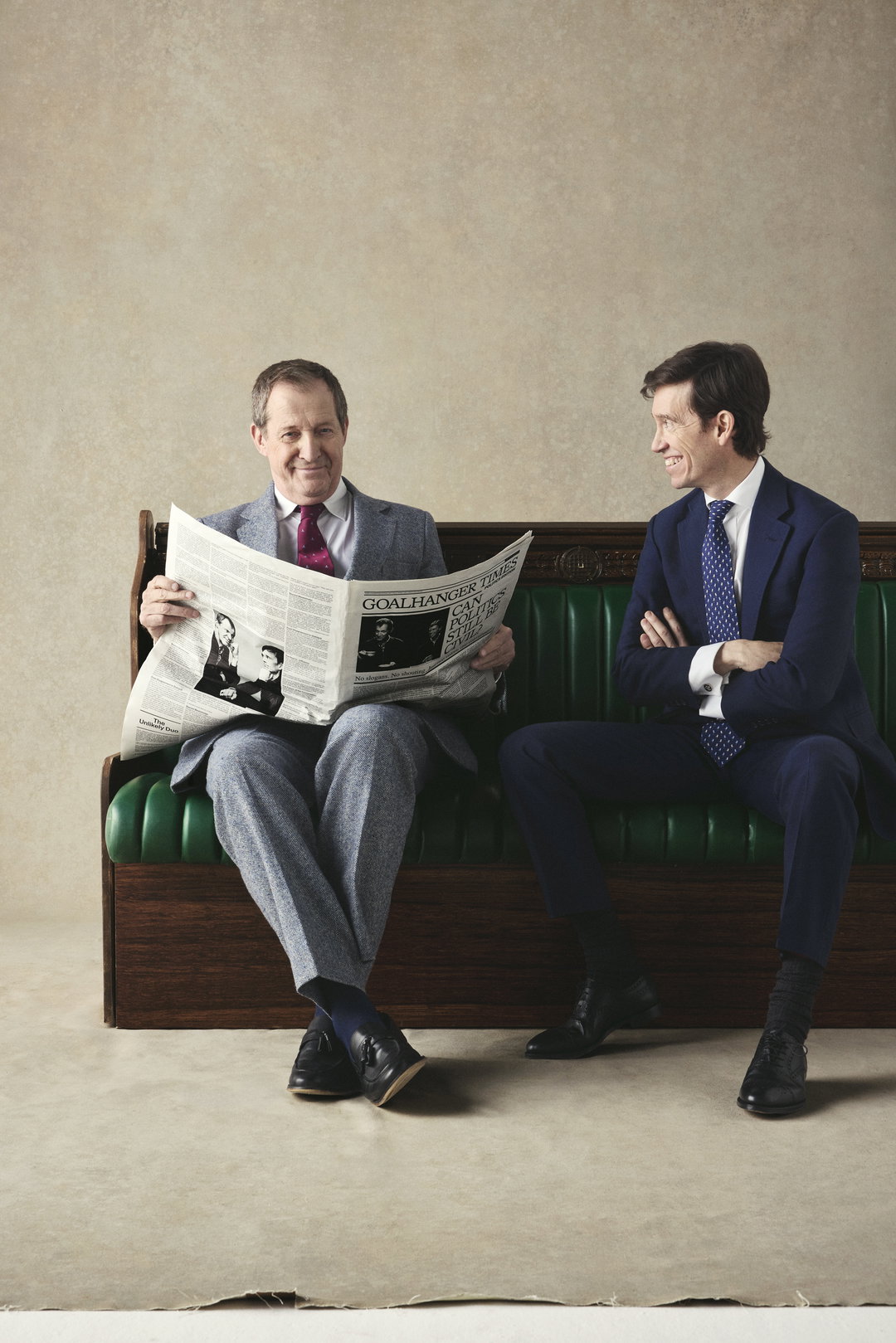
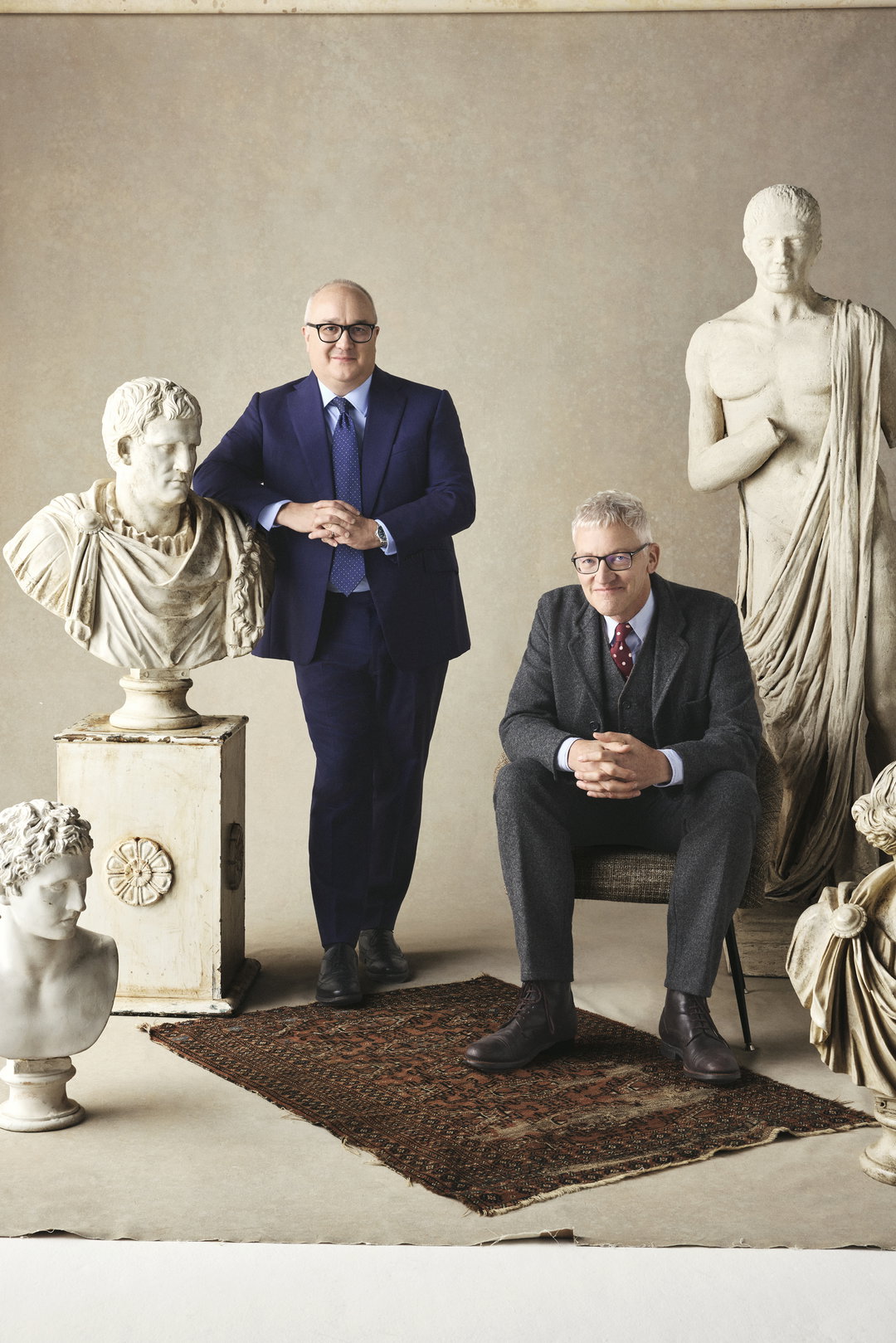
Amongst some of the reasons why the brand identity needed to change is that the former identity didn’t express the personalities driving the platform. Another is that Goalhanger needed to differentiate itself from traditional broadcasters and podcast networks. “We pulled references from print magazines – not TV – and we chose photography and video styles that feel grounded and real, rather than broadcast-polished,” says Stephen.
Whilst making sure the system was timeless enough to navigate any future pivots, Teo Villacci and Liam Kay from Otto Studio have built a new visual language for Goalhanger that centres the charismatic hosts that millions of people tune into every week in a move to focus on conversation-led media. “Goalhanger’s influence comes from a simple truth: people trust people,” says Stephen. “The hosts, their expertise, their chemistry, their differences are the engine of the entire platform. The brand needed to centre that, visually and structurally.”
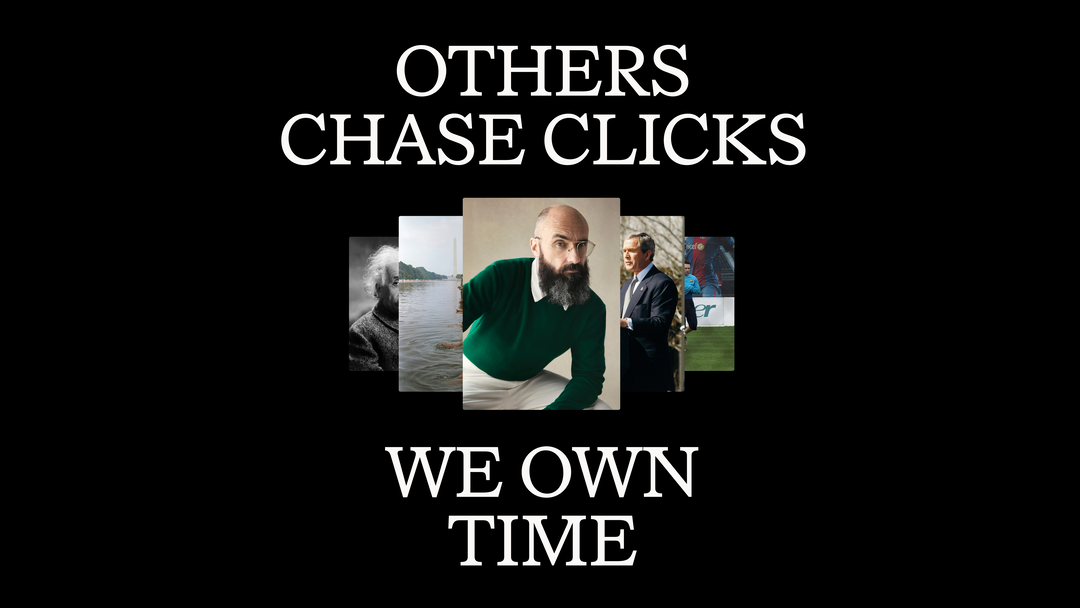
The logo and wordmark are central to the identity, with the latter being refined to be instantly recognisable, whereas the former acts as a shorthand, carrying the same clarity whilst being independent. Attention isn’t dying out, it’s just becoming far more selective. In the podcast world, long form media demands attention and recognisability, even if it’s consumed passively. Goalhanger posits the idea that attention today is earned through clarity and credibility, not volume. “The brand language slows you down rather than pulling you into constant acceleration. That’s intentional,” says Alistair. “At the same time, A.I. is rapidly turning speed, volume and surface-level content into commodities, the brand leans into that by emphasising human presence, physical craft and cultural texture. We built and crafted real sets. The photography is raw. The typography is timeless.”
Goalhanger (Copyright © Goalhanger, 2025)
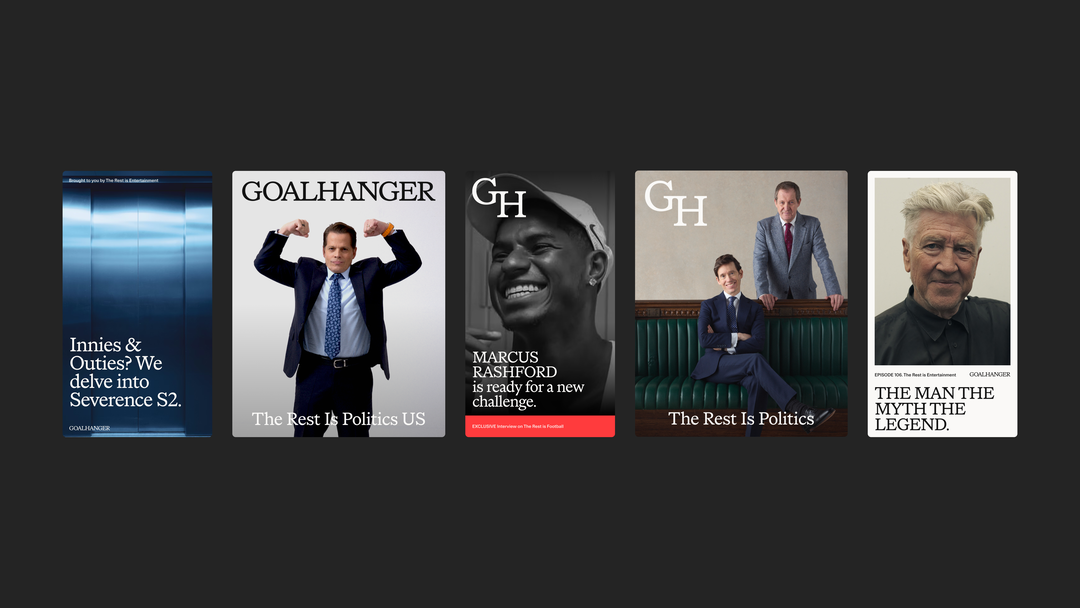
Whereas AI may be turning human focus into a luxury, Goalhanger respects focus and rewards listeners and viewers for it. The human part also plays a huge role. From worn rugs and historical sculptures to green leather parliamentary benches, these choices of imagery go further than pure decoration, they create a sense of lived-in intelligence and cultural weight. Also carrying that humanity is the brand’s typeface, ABC Marist, which introduces editorial authority. “It doesn’t behave like a neutral system type. It behaves like a voice,” says Alistair.
The biggest challenge of the brand overhaul came with the fact that Goalhanger podcasts are no longer just audio. They live across YouTube, social media, live events, studios, merchandise, streaming. What used to be designed primarily for 1x1 podcast artwork now needs to evolve across motion, thumbnails, physical spaces, seamlessly and simultaneously. “That complexity can easily pull brands into overly templated systems built purely for scale. The risk is visual efficiency at the cost of character,” says Stephen. But this transition from audio-only to fully visual doesn’t reduce the role of sound, Stephen reassures, but places a great responsibility on design to reframe the listening experience. In a world of accelerating image-based media, one must rebel against the norm whilst serving the needs of their listeners. “Ultimately, humanity comes from refusing automation as a constant go-to aesthetic,” adds Alistair. “The brand feels human because it was crafted slowly, deliberately and collaboratively.”
GalleryGoalhanger (Copyright © Goalhanger, 2025)

Hero Header
Goalhanger (Copyright © Goalhanger, 2025)
Share Article
Further Info
About the Author
—
Paul M (He/Him) is a Junior Writer at It’s Nice That since May 2025. He studied (BA) Fine Art and has a strong interest in digital kitsch, multimedia painting, collage, nostalgia, analogue technology and all matters of strange stuff. pcm@itsnicethat.com
To submit your work to be featured on the site, see our Submissions Guide.