




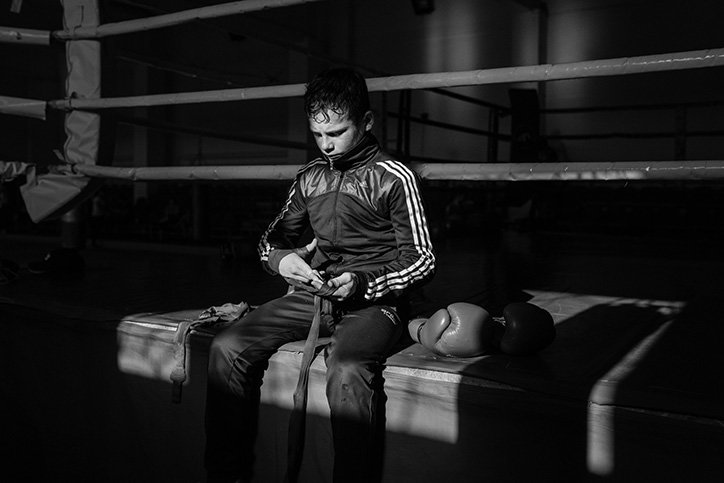
Photographer Joe Newman documents a boxing gym for young people in a Ukrainian war zone
London-based photographer Joe Newman initially set out to become a cinematographer, but after working for a while in documentary filmmaking, he began to gravitate more towards the documentation of people, culture and events via photojournalism. Beyond his press work, Joe draws on the conventions of art photography as well as a documentary-focused approach to pursue self-initiated projects that have a political and anthropological interest.
“I like to merge the two worlds of documentary and art photography,” Joe tells us. “For me, photography is an ambiguous medium and you must embrace that and not force it to explain what it can’t. Photography excels in its ability to create atmosphere and mood but also in documentation, which is the key concept behind my work’s visual identity. I like to mix portraits and fly-on-the-wall documentary, shooting in both digital and film, black and white and colour, to create dynamic and atmospheric images.”
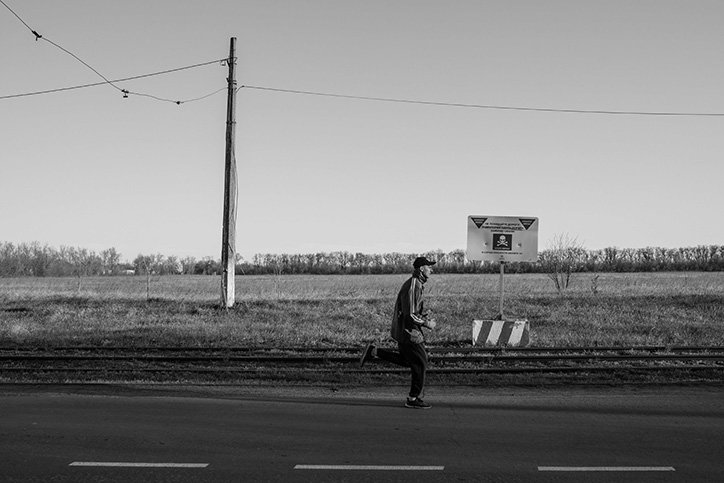
Joe’s recent series Sweat Not Blood documents the Ukrainian conflict in the wake of socio-political unrest and the war in the east against Russian separatists. Rather than addressing the struggle and brutality directly, Joe looks towards the hope for the restoration of a unified national identity that rests on younger generations. One way in which the country is attempting to combat the violence that has injured it is through sport – in particular, boxing. For Joe, “with its old Soviet sporting infrastructure and coaches, combined with the new modern enthusiasm for the sport, boxing seemed perfect to illustrate a wider political transformation in Ukrainian society.”
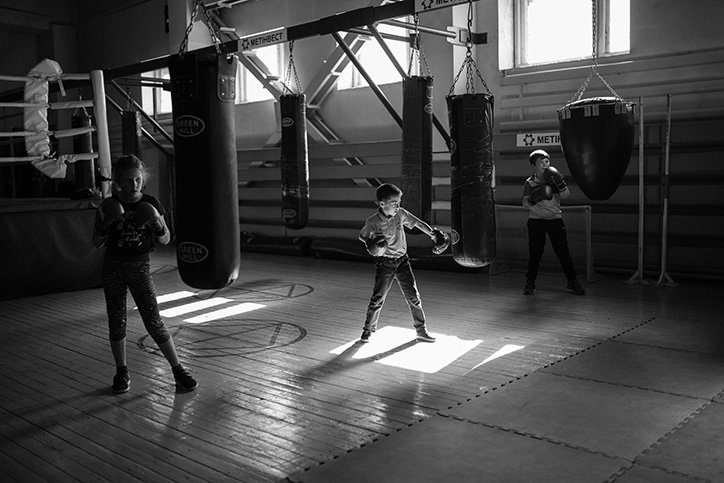
Joe Newman: Sweat Not Blood
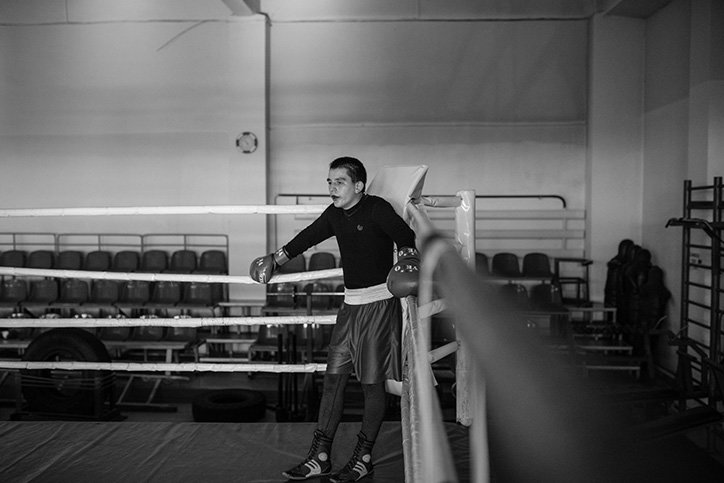
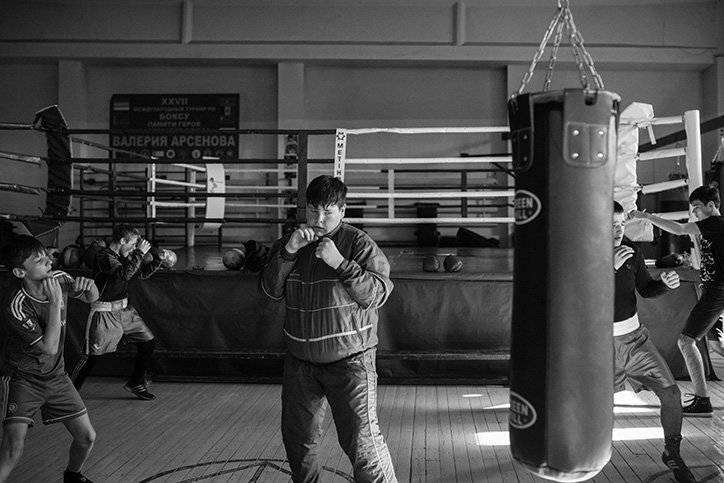
Sweat Not Blood focuses on a gym “surrounded”, Joe says, “by bullet-riddled buildings and mines”, and situated on the front line of the war, in a small town near Donetsk in eastern Ukraine. “The gym was set up to help local kids and young adults train and focus on boxing,” says Joe. “It was a large sporting gymnasium built in the Soviet era, when competing against the USA was a national obsession, and now a small corner of it was being used as a refuge to help kids mentally escape the horrible situation of living in a war zone. I felt this was an interesting metaphor for the country’s current conflict with the concept of Ukrainian identity and its relationship with Russia. A country that has found it hard to shrug off its soviet past is now in search of a cohesive national identity. It is places like this soviet gym situated on the front line between Ukraine and Russia that they hope will create the sporting heroes to strengthen patriotism towards a modern Ukraine.”
With influences in documentary filmmaking, like that of Louis Theroux, Nick Bloomfield and Jon Ronson, Joe’s approach predominantly takes the form of observing and recording. “Mostly I just let them do their thing and try to give as little direction as possible,” he says. His attentiveness to form, framing and the play of light and shadow, however, comes from his appreciation of techniques in art photography that, for him, “create visual atmosphere and tension”, such as those employed by Saul Leiter, Sally Mann and Vivian Maier.
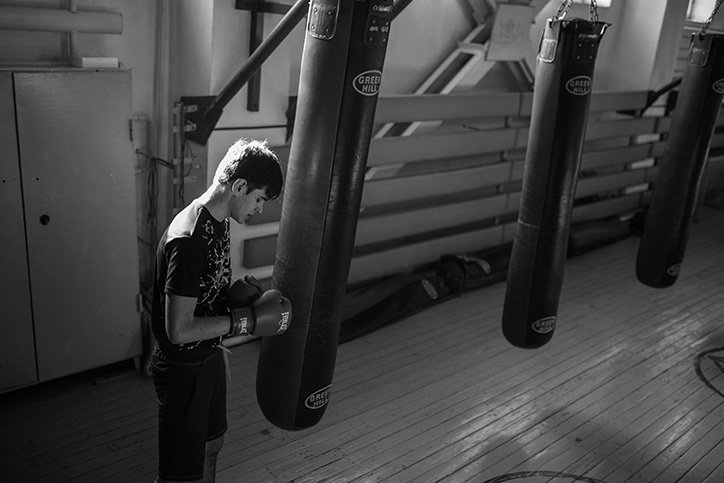
Shot in black and white, the photographs that make up Sweat Not Blood convey the significance of the boxing gym as a space set apart from the violence of war. There is clear focus and determination in the stance and expression of each figure photographed; the children and young adults seem barely to notice the gaze of the camera. Joe says: “I particularly like the image of the boy bathed in light wrapping his fists before getting into the ring. It was completely unplanned and when I shot it I knew how striking it was going to look. I also felt it reflected the atmosphere I wanted to go for in the series as a whole.”
Sweat and Blood delivers a photographic social narrative in advocacy of an initiative to channel and transform the violence that defines life on the front lines of war. The series documents how this brutality which infiltrates the national consciousness during times of conflict is redirected towards something constructive, something to take pride in.
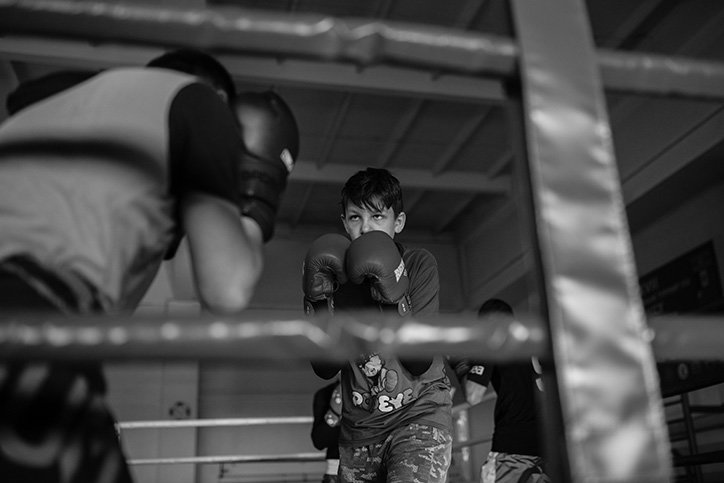
Joe Newman: Sweat Not Blood
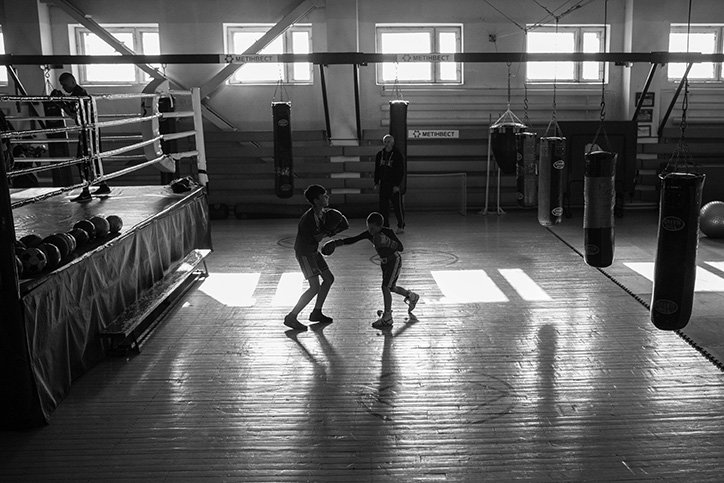
Joe Newman: Sweat Not Blood
Joe Newman: Sweat Not Blood
Joe Newman: Sweat Not Blood
Joe Newman: Sweat Not Blood
Joe Newman: Sweat Not Blood
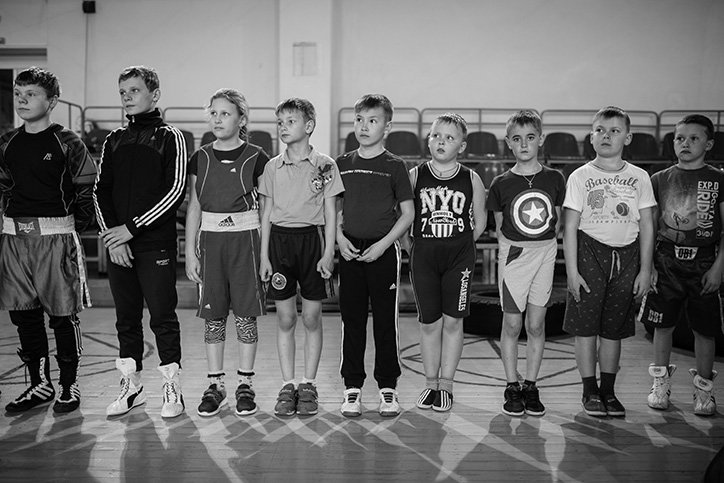
Joe Newman: Sweat Not Blood
Share Article
Further Info
About the Author
—
Rowe joined It’s Nice That in the summer of 2019 as an editorial assistant. She wrote many fantastic stories for us, mainly on hugely talented artists and photographers.