Curating for online and keeping it interesting - we chat with MUBI
Hans Ulrich Obrist, “Serpentine Superstar”, as The Guardian dubbed him, knows a thing or two about curation. He describes his inspiration – Ballets Russes founder Sergei Diaghilev – as “a junction maker,” adding: “When I became a curator, I wanted to be helpful to artists. I think of my work as that of a catalyst – and sparring partner.”
It’s a good starting point for the notion of curation itself: selecting work that delights, challenges and sparks ideas. It’s a good philosophy whether selecting for the white walls of the gallery, the screening rooms of a multiplex or your comfy couch at home, and it’s the last scenario that online film service MUBI works with so brilliantly. The site posts one film a day, usually a cult, classic or award-winning one, and users have 30 days to watch that film before it falls off the site. The key, of course, is the curation; so we were keen to find out just how the team comes up with a selection of work that never fails to excite; whether that’s because it’s beautiful, challenging or surprising.

Luis Buñuel: El bruto (poster)
We’d imagined a vast team making these decisions, so it’s something of a shock when we meet Chiara Maranon, who takes care of pretty much all the curation for the site’s UK iteration. The key to her choices, she says, is enhancing the sense that MUBI is a democratic platform, not just something for the chin-stroking cinephiles. “We’re interested in making sure cinema’s not just for people who know lots about it – we have a sense of fun. People shouldn’t feel that film has an ‘it’s not for the types of me’ attitude.”
But for all its openness, MUBI isn’t a Netflix – you’re not going to find Mrs Doubtfire or Homeward Bound in its 30-strong archive. “It’s not about trying to be exclusive, it’s highlighting interesting, amazing, curious weird stuff,” says Chiara. “I like to think of MUBI as a friend who recommends films to you. Adding a new film daily shows that we’re very eclectic – if you don’t like the one today, there’ll be another one tomorrow and you might like that.”
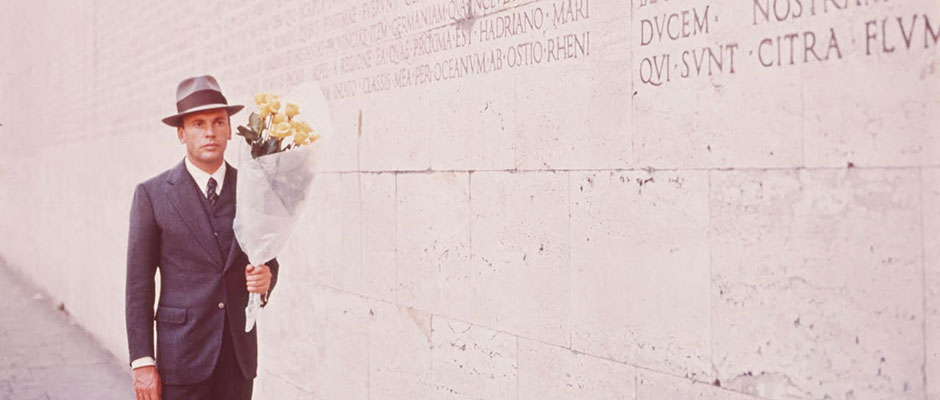
And eclectic it certainly is: on the site at the time of writing films include The Brute by Luis Buñuel, Orson Welles’ F for Fake, Bernardo Bertolucci’s The Conformist, From What Is Before by Lav Diaz, Nicolas Winding Refn’s Drive and Michael Moore’s exploration of American gun culture, Bowling for Columbine. So how do such a varied bunch of films make their way onto MUBI in the first place? As with most behind-the-scenes-creativity stories, it’s a mix of spreadsheets, distribution issues, lists and hard graft.
As well as contact with individual film-makers, festivals and independent distributors such as Soda, New Wave Films and Axiom; MUBI has access to a few of the “mini majors,” including Pathé and Studio Canal. Available films that catch the eye of the acquisitions team are put into a long-list, then pored over by Chiara. “Inevitably [the films] have had to go through a very subjective filter when we receive them – that’s one of the hardest parts, you’re in front of a huge list of films and it is difficult to choose the right ones,” says Chiara.
“Then during the research process you start finding the links between films and also possible ways to offer those films together with other films you have from before. That’s a very extensive part of the process, bringing those down to a piece of paper. In the end we only have to show 365 films a year so you can be very selective.”

Nicolas Winding Refn: Drive (Still)
While genre films are generally a success according to Chiara, the team can be surprised at what gets the clicks and what doesn’t. “People tend to like genre stuff as it’s easier to make a commitment with a film you know how to approach,” she says. “With authors, too, people know what they’re getting into, and our Godard retrospective did very well, for instance. We tend to be very reactive with current affairs and festivals, which give us opportunities to show more niche content in context.
“One amazing example for this was when the Pope resigned (something that doesn’t happen very often!) and the next day we were showing Nanni Moretti’s Cannes selection We Have a Pope, in which Michel Piccoli is elected as the new Pope against his will.”
"[The site] makes films more visible and gives them the respect they deserve. For me, that’s more like real cinema, and that’s a really beautiful thing.”
Chiara Maranon
While film has the power to open our eyes to scenarios, periods in time, places far away and emotions we can’t articulate; sometimes we need someone to help lead us to those films in the first place. When they’re whittled down to just 30, it makes it all much easier. “We’re showing films in a way that makes them coexist with each other, and give them a momentum. Unlike large libraries that force you to infinite scrolling, MUBI gives visibility to films, and the respect and attention they deserve, so that they don’t get lost. For me, that’s makes it more similar to a real cinema than to any other platform, and that’s a really beautiful thing.”
Try free for 30 days here!

Michael Moore: Bowling for Columbine (still)

Lav Diaz: From What is Before (Still)

Nanni Moretti: Habemus Papam (still)
Share Article
Further Info
About the Author
—
This article was sponsored by a brand, so is marked up by us as Sponsored Content. To understand more about how we work with brands and sponsorships, please head over to our Work With Us page.