Onformative's kinetic sculpture visualises the thought processes of machines
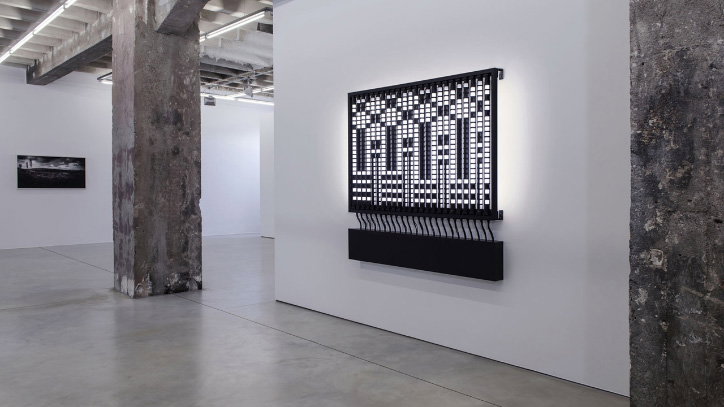
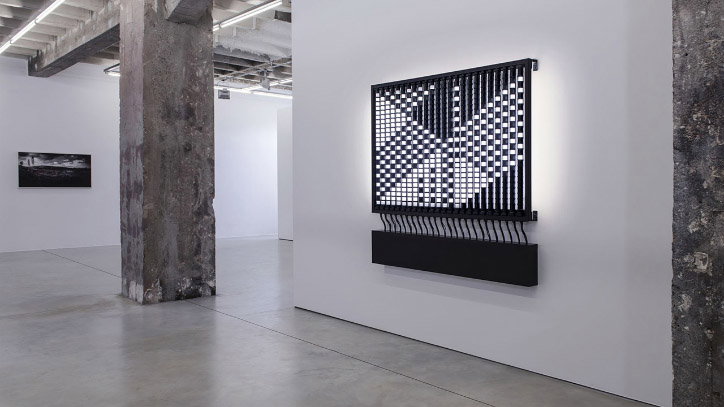
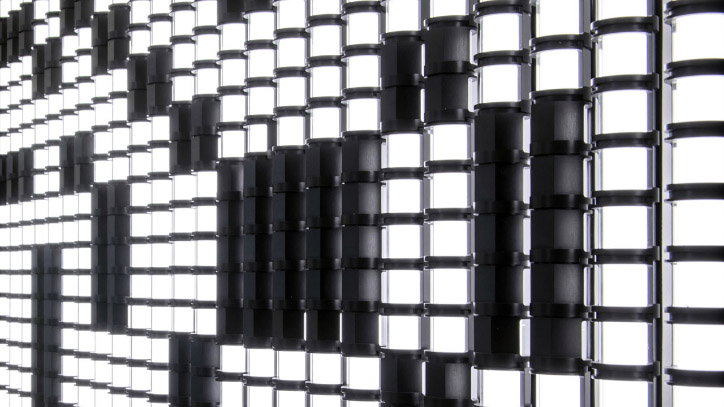
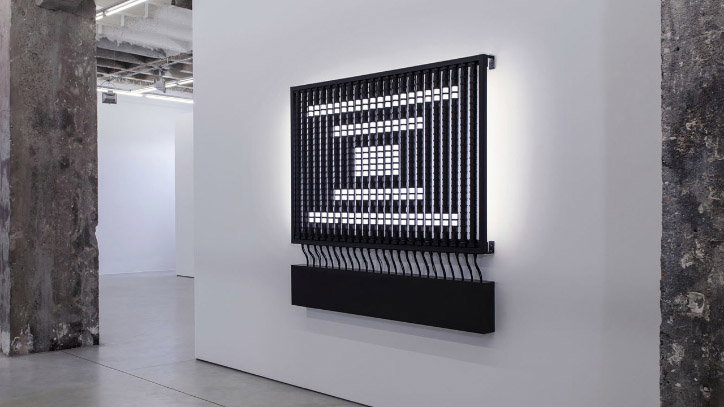
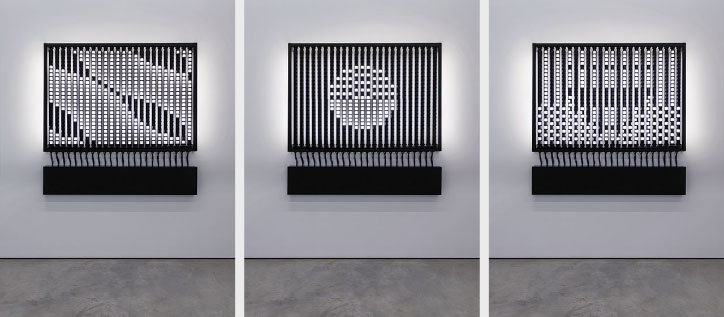
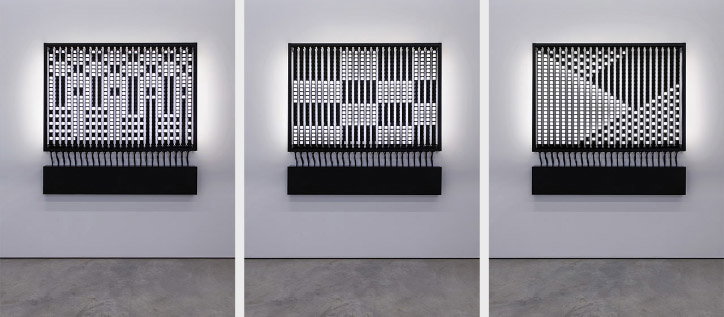
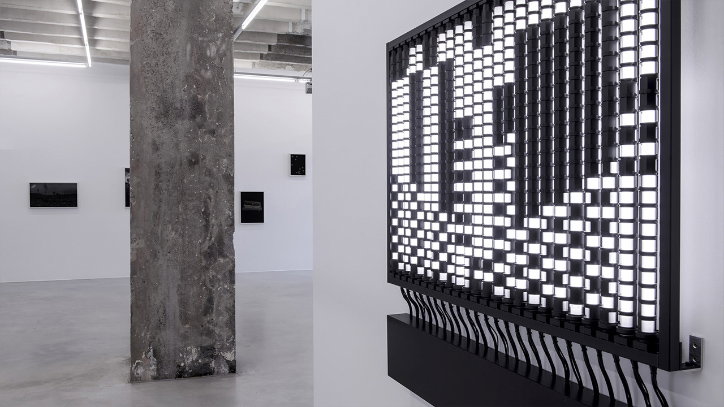
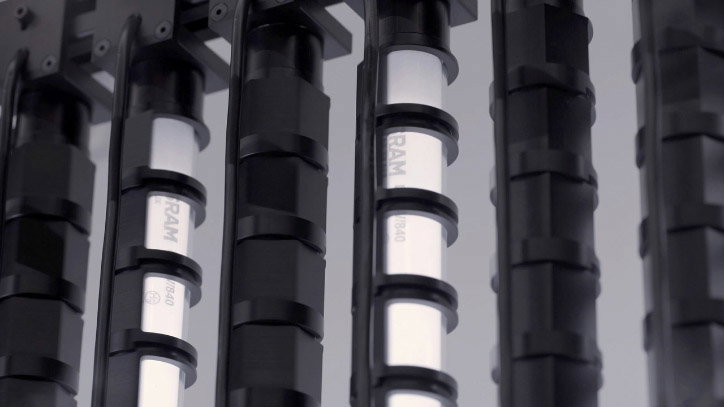
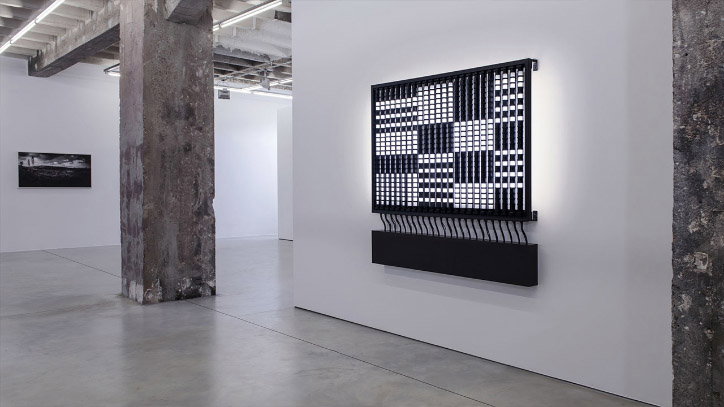
True/false, is a kinetic sculpture that explores what lies in between the fundamental states of on or off, true or false and which embodies the entities that are able to adopt either one of the two states and switch between them. Comprising rows of tubular lights and rotating black metal segments, the installation is constantly moving, forming an image or pattern and then instantly setting off the next via a series of mesmerising chain reactions.
The sculpture was developed by Berlin-based digital art and design studio, Onformative. Founded in 2010 by Julia Laub and Cedric Kiefer, the studio grew out of the creative coding community where it “first laid its roots by writing libraries, leading workshops, and giving talks on the topic of generative design.” Since then it has been evolving and refining its interdisciplinary and collaborative practice into one that’s emotionally led, “continually searching for new forms of creative expression”. Onformative’s work is inherently experimental and sits in the space where art, design and technology intersect.
The studio works across a range of mediums including interactive installations, generative design, and data-driven narratives and has worked on commissions for brands such as Porsche, Nike, IBM and Montblanc. Alongside this, however, Onformative is committed to developing its own self initiated work of which true/false is the latest piece.
True/false is the product of several years of development – it started with the creation of a custom algorithm to examine the patterns created through the process of a machine. Previous experiments within the ongoing series included sound and light projections to document other facets of the “thought processes” of machines. This iteration, however, explores “what lies in between states of memory and dictation to make shifting factors tangible and palpable.”
Two algorithms dictate the behaviour of true/false. The first constantly generates new visual content based on a simple set of rules that output abstract patterns and graphic shapes. This constant conception means a new image is generated by the algorithm at the same time as the sculpture is displaying the last.
The second, “more important” algorithm, is the one responsible for the logic of the installation. The ongoing transformation taking place is based on the individual shifting elements and their correlation to each other. No segment can move independently and so the elements instructed by the algorithm to move must work in unison to achieve the command. The algorithm controlling the motion calculates the combination of required left and right turns to achieve the final image – this process of building the image can be observed by the viewer and is what generates the hypnotic fluid movements of the sculpture.
In making this “thought process” visible, Onformative’s installation is perpetual and never-ending, making physical a computation process that is usually executed in a matter of milliseconds without our knowledge. Having previously been exhibited at Node17 Forum for Digital Arts in Frankfurt and at the Friends Space in Berlin, the sculpture will be installed in Onformative’s studio throughout 2018 to be viewed on request.
Onformative: true/false
Onformative: true/false
Onformative: true/false
Onformative: true/false
Onformative: true/false
Onformative: true/false
Onformative: true/false
Onformative: true/false
Share Article
Further Info
About the Author
—
Ruby is Senior Creative at It's Nice That, overseeing our visual output across platforms and projects. Before that, she was associate editor on the editorial team, after joining in September 2017 following graduation from Central Saint Martins.