Filmmaker and writer Pedro Neves Marques merges biopolitics with sexual politics
New-York based artist, writer and filmmaker Pedro Neves Marques, in his first UK solo exhibition at Gasworks, is interrogating the biopolitics at play in a nation battling the threat of mosquito-transmitted diseases. Speaking of his politically engaged practice, Pedro tells us, “I try to be very aware of the potentials of each art and medium, and choose what’s best for what I want to say. With a background in visual arts, as well as political critical theory, I’ve come to use exhibition spaces for the environmental and curatorial freedom they allow.” Entitled It Bites Back, the Gasworks exhibition brings together a series of works made in the context of Brazil’s ongoing war against the Zika and dengue virus-transmitting Aedes aegypti female mosquito.
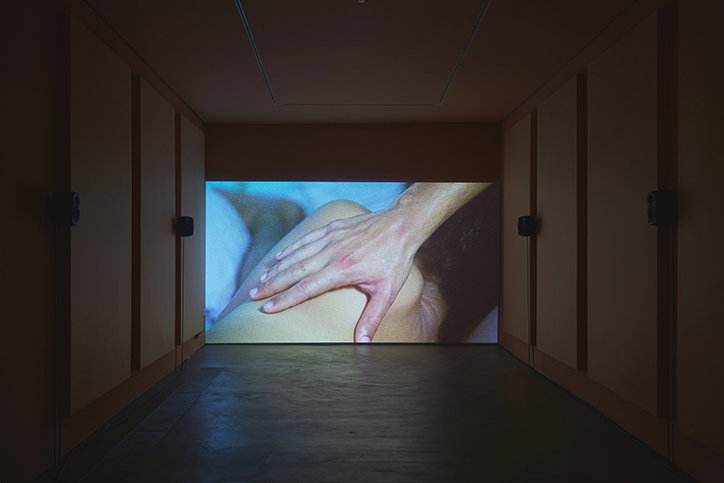
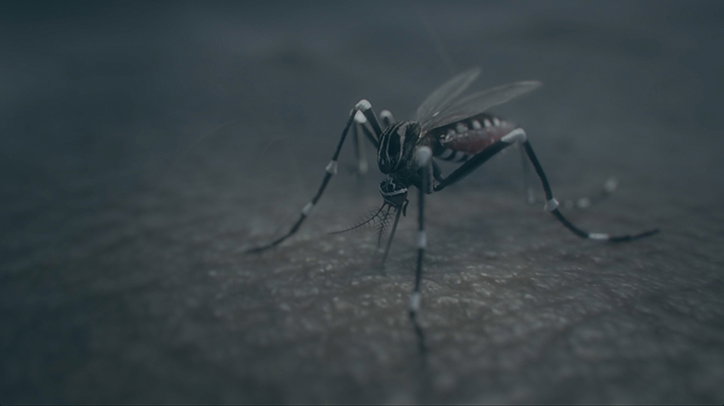
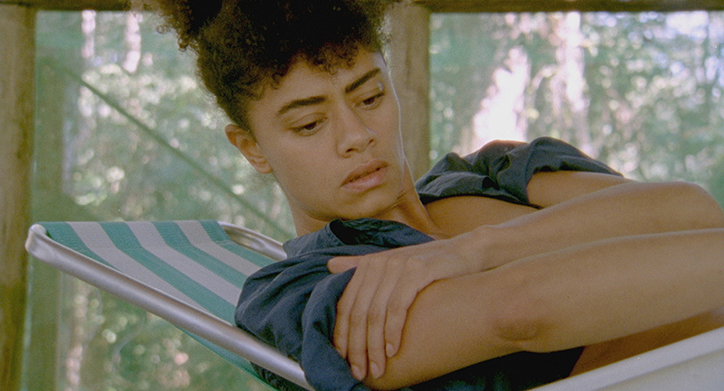
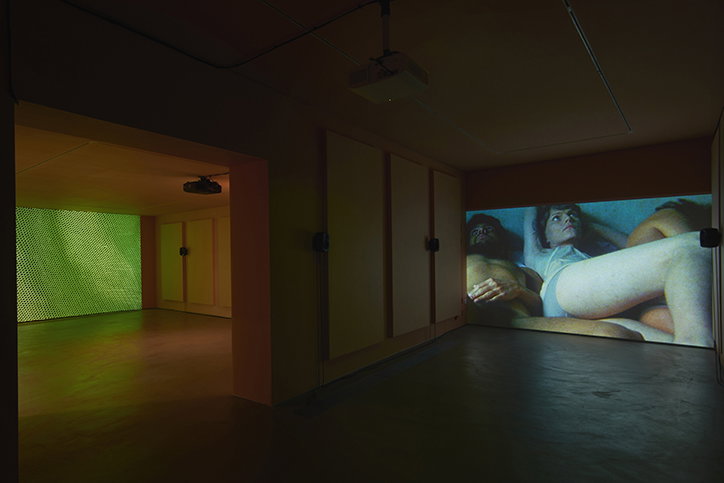
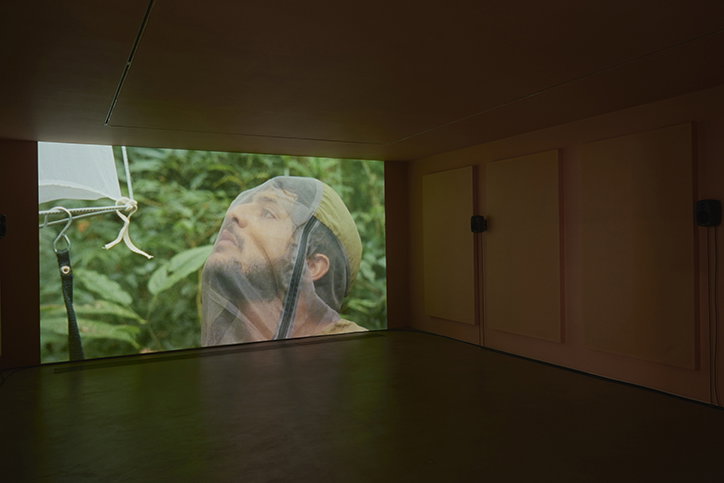
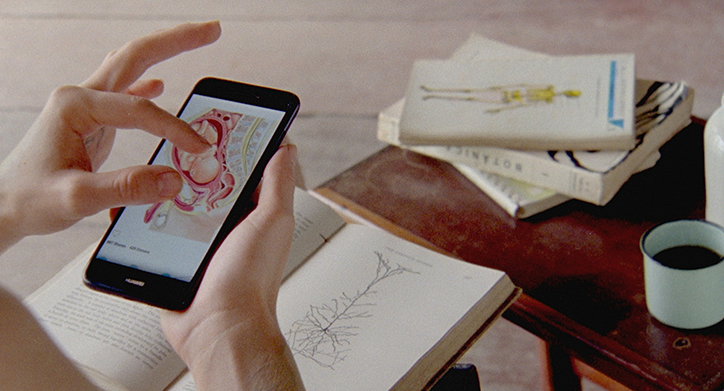
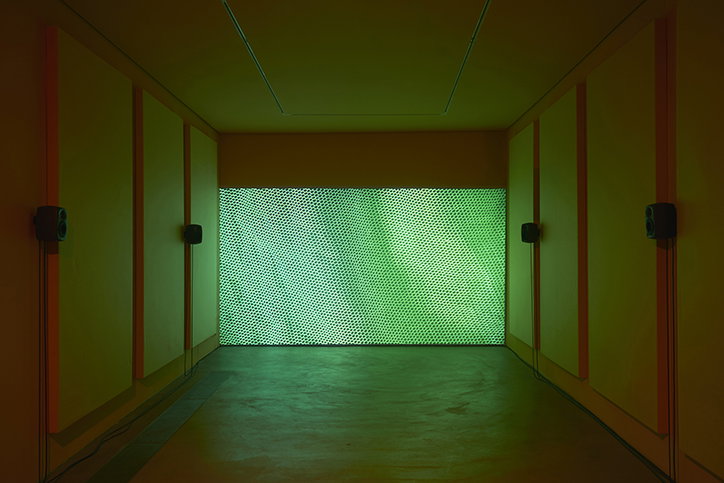
Projected between two dimly lit adjoining rooms, Pedro’s two-part film A Mordida (The Bite), divided into The Gender of the Lab and Sex as Care, combines documentary filmmaking and interview-based reporting with staged narratives. Paying acute attention to the body, both in terms of individual embodied ontology and the concept of a nation as a body, Pedro uses the mosquito to conduct an ethnographic investigation into gender politics and sexual hierarchies. In The Gender of the Lab, this functions on a molecular level. The film is based on the work of Oxitec, a British biotechnology company that has developed a method for breeding transgenic male mosquitoes carrying a “lethal gene” to reduce the population of the biting insects and combat the Zika virus epidemic. When the genetically-modified male insects mate with the biting females, they pass on this “lethal gene” and the offspring die before reaching the mature stage at which they become capable of viral transmission. With the female Aedes aegypti typified as a blood-sucking enemy of the nation, the male insect becomes a biological weapon used to cull his own population, his sex organs employed as a tool of the state against his female counterpart.
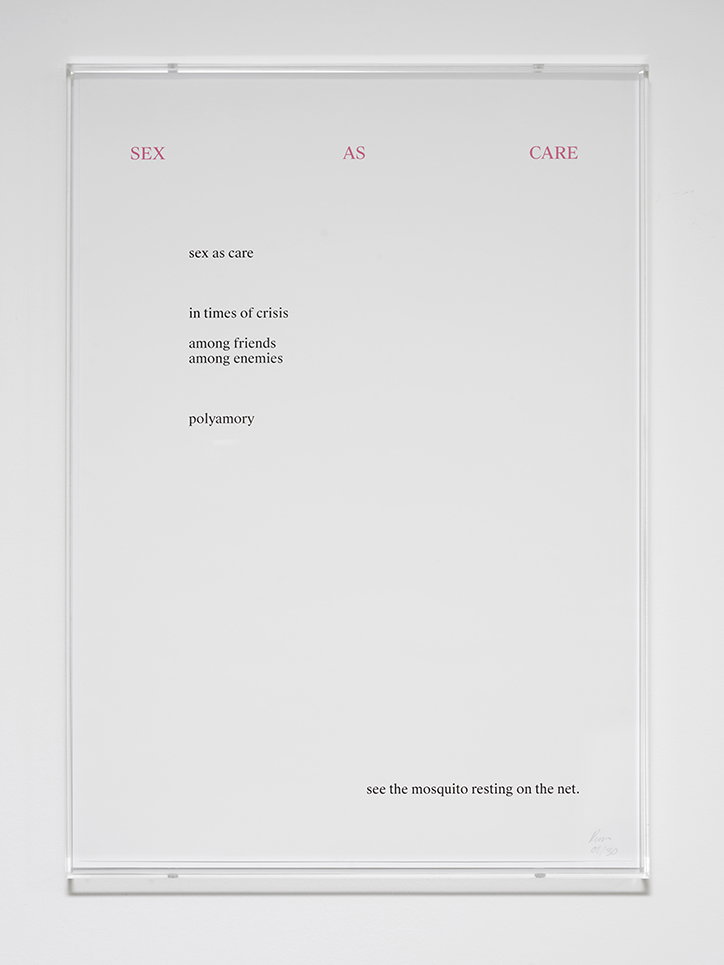
In Sex as Care, Pedro situates this biological warfare alongside slow-moving imagery of languorous bodies, a cis man, a cis woman and a transgender woman, tangled together on a bed in a shadowy room. Pedro’s pairing of these films serves to draw out the ways in which the highly sexed biotechnological procedures conducted in the laboratory coincide with binary, hierarchical conceptions of gender and sexual politics on a societal level. As the artist states in one of his Viral Poems which appear sporadically on the screen, “the militarisation of biology” translates easily into “the language of suppression”. The casual intimacy of Sex as Care, combined with the considerations that arise from the poems, poses a contrast to the controlled and clinical laboratory environment and, in turn, posits a more fluid approach to sexual relations as a counterpoint to a prescriptive societal understanding of gender dynamics.
Set against a socio-political backdrop of far-right statesmanship and the spread of gender-based violence with the election of Brazilian president Jair Bolsonaro in January (an outspoken opponent of same-sex marriage and abortion), Pedro’s film projects a possible future in which, to quote Viral Poems, “sex as care in times of crisis” might offer a cure to a systemically enforced endemic of social injustice. Sex as Care is not, however, an attempt to definitively solve the problems with binary thinking. As Pedro says, “if you pay close attention you can tell the bodies never truly give themselves to one another. There is this tension, this irresolvable conflict between the women and the man.” While the work may approach a cure, then, the systemic infection of “male toxicity” has not been totally eradicated.
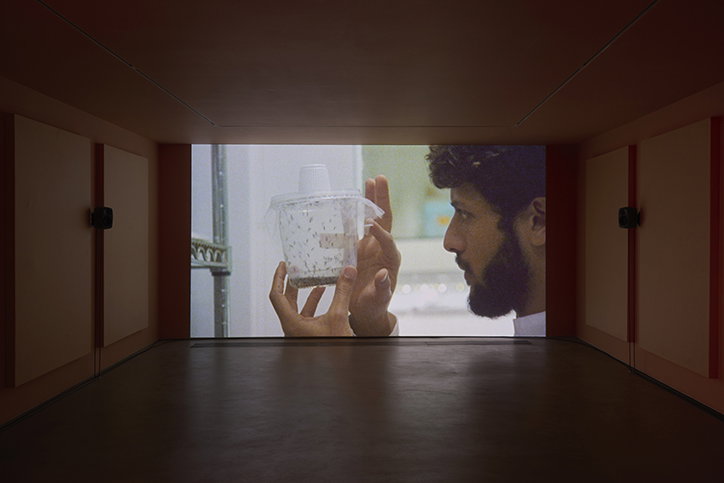
Pedro Neves Marques: It Bites Back
Pedro Neves Marques: It Bites Back
“The heart of the films is without a doubt the notions of epidemics and virality, both biologically and culturally speaking”, Pedro tells us. “I mean both the virus carried by the mosquito, with all the fears of disease and contagion it entails, as well as the rise of conservative, reactionary politics in Brazil (and elsewhere) – how it too feels like an epidemic beyond logic or reason”. As such, Pedro plays with the multiple meanings carried by “viral”. “The virus of culture and the virus of nature go hand in hand”, as he writes in another poem. In these terms, the films deliver a critique of far-right ideologies as constituting a kind of collective sickness. Meanwhile, the multiplicity of platforms and media across which It Bites Back is spread engages with virality as a means of understanding information distribution in contemporary culture, particularly in a digital environment. Alongside the films, a ceiling-mounted flat screen renders a hyperrealistic CGI animation of the Aedes aegypti feeding on human blood, spreading disease and mating with a transgenic male. This is accompanied by a digital model of the Zika virus which is posted on Gasworks’ social media channels as a mode of “viral intervention” – a literal take on the idea of going viral that flags up the fabricated realities and potential toxicity of what we encounter online.
The interconnected works comprising It Bites Back bleed together in the ambient soundscape created by London-based music producer Haut. Low-level vibrations and pulsing tonal fluctuations swarm about the audience and fill the gallery with an eerie and oppressive perpetual hum. Pedro talks about how the “body horror” expressed in “how pulpy, moist, and sweaty the films are” finds an analogue in this soundtrack – “the physicality of its sub bass, of its artificial nature, with this uncanny sound between animal and plant”. Appropriately for the exhibition’s subject matter, this manifold engagement of the senses makes for an immersive bodily experience.
Pedro tells us that he plans to expand on The Bite with “a more comprehensive narrative short film” which “has a bigger focus on the psychology of characters”. And that’s not all: “I’m already writing a couple of new films, one again focusing on genetics and the ethics of veganism, and another lengthier film, simultaneously ethnographic and science fictional, with a friend and amazing actress Zahy Guajajara in Brazil. I’m also planning to publish a book of poems soon”. In the meantime, It Bites Back is on display at Gasworks up until 16 June.
Pedro Neves Marques: It Bites Back
Pedro Neves Marques: It Bites Back
Pedro Neves Marques: It Bites Back
Pedro Neves Marques: It Bites Back
Pedro Neves Marques: It Bites Back
Pedro Neves Marques: It Bites Back
Pedro Neves Marques: It Bites Back
Share Article
Further Info
About the Author
—
Rowe joined It’s Nice That in the summer of 2019 as an editorial assistant. She wrote many fantastic stories for us, mainly on hugely talented artists and photographers.