Takehiko Nakafuji’s new body of work is a powerful, high contrast documentation of the Hong Kong protests
During several trips to the region last year, the Japanese photographer documented the democratic protests, saying “I felt that I had to take photographs of this reality as a photographer.”
During his time in school, Takehiko Nakafuji first picked up a camera and started to capture things around him with great consideration. It was his first “conscious” take on photography, and often he would attend punk rock gigs and take pictures of his surroundings. Pursuing his new-found interest, he dropped out of university and succeeded to graduate from Tokyo Visual Arts, before holding his first solo show in 1995 – an exhibition of his Tokyo street photography works. Since then, he’s held countless exhibitions, published eight photo books and received two photography awards.
A tremendous career to date, the Japanese photographer has built an impressive portfolio of works – all of which centre around city snapshots of the likes of Japan, Eastern Europe, Russia, Berlin, Cuba, China, Paris, New York and Hong Kong. And when he’s not teaching photography workshops, running his small gallery, or doing promotional shoots for camera production companies, Takehiko spends his time on his own endeavours, working intuitively and with high contrast in mind. His photography style is somewhat definitive and instantly recognisable – a monochromatic aesthetic that Takehiko gives thanks to photographer Daido Moriyama, a teacher at Tokyo Visual Arts who had a great impact on his work to come.
One thing to note is that Takehiko is not your typical street photographer. “I am not the type of photographer who walks with a camera and takes photos in one’s daily life,” he tells It’s Nice That. “When I decide to take photos, I stay in that place (no matter if it’s in or out of Japan) for a certain period of time and walk around that town from morning until night, as I focus on taking photos of random moments I encounter in that place.” Takehiko chooses to avoid looking at his work or making selections until he’s returned home, which allows him to sharply focus on the shooting process at hand.
Takehiko recently visited Hong Kong several times in the space of last year, participating in an exhibition at Tai Kwun Contemporary – a group exhibition focusing on the concept of ‘cyberpunk’, running synchronically with the democratisation protests that were prevailing in the region. “During the preparation period, the protests started and became more and more intense,” he says. “When I saw the news, I couldn’t believe it was happening.” On the day in which he was transporting his works into the museum for the opening, the protests then reached their peak. “Certainly,” he continues, “I was very moved by the situation and felt that I had to take photographs of this reality as a photographer.”
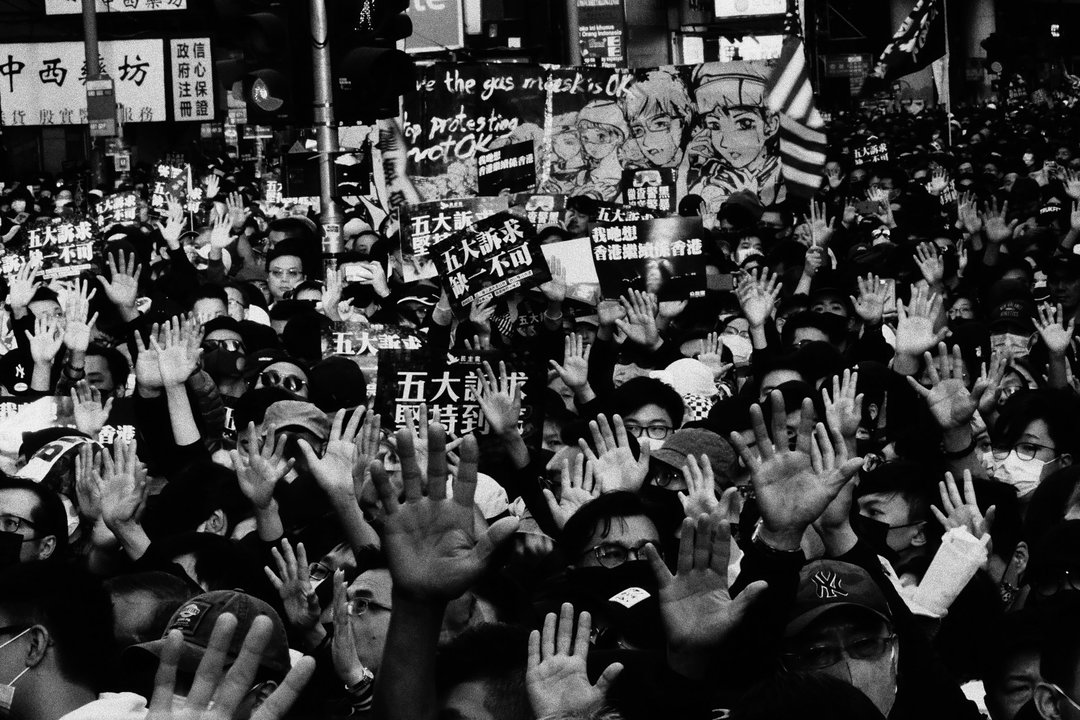
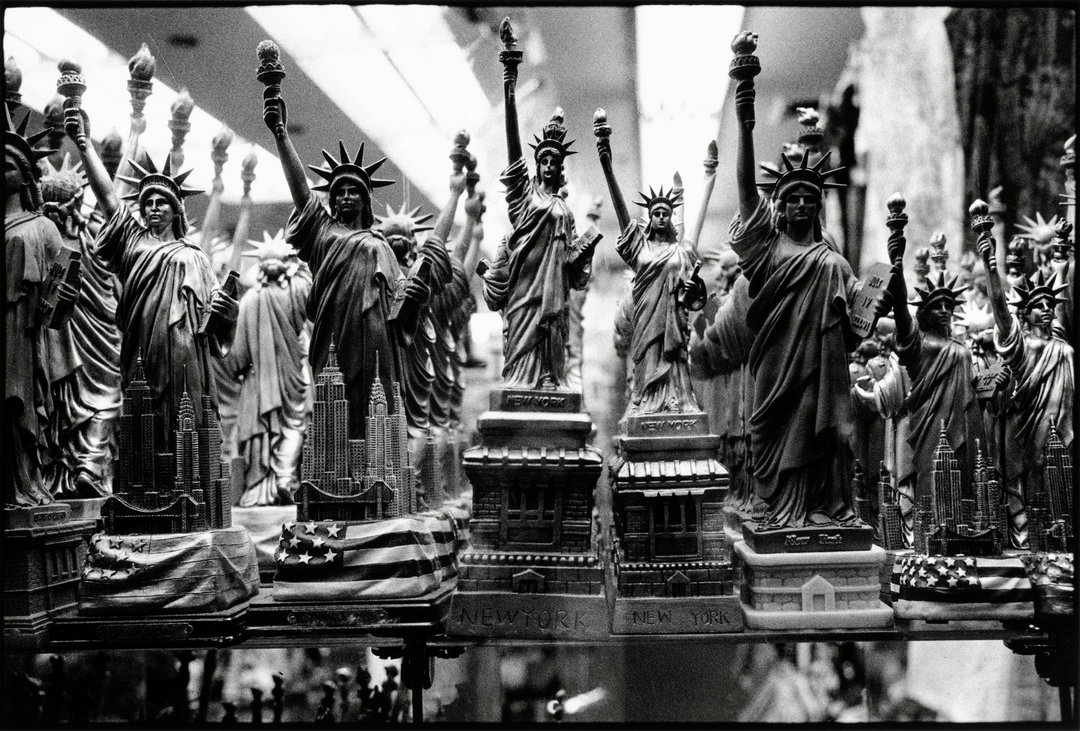
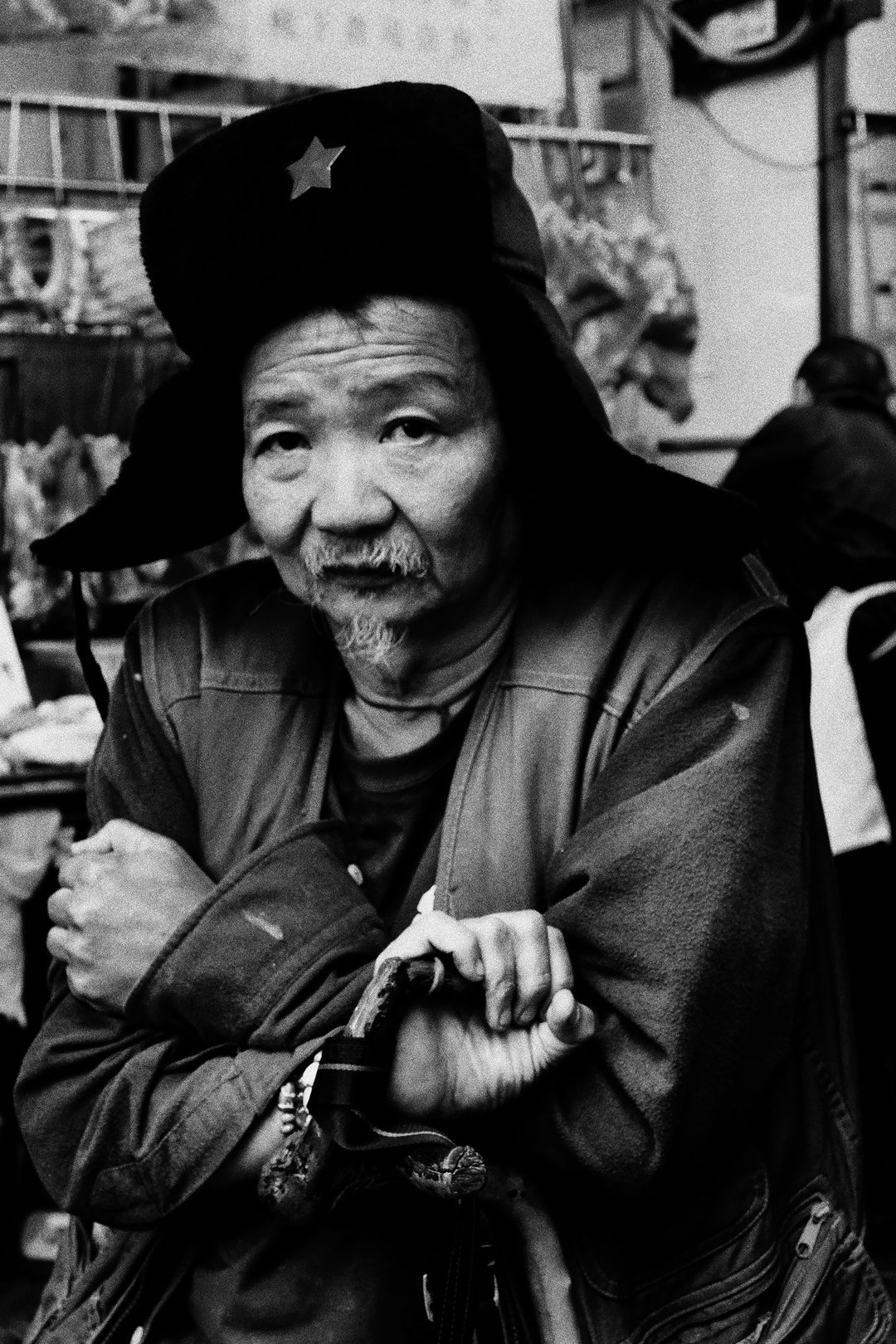
Takehiko Nakafuji: Hong Kong 2019 (Copyright © Takehiko Nakafuji, 2020)
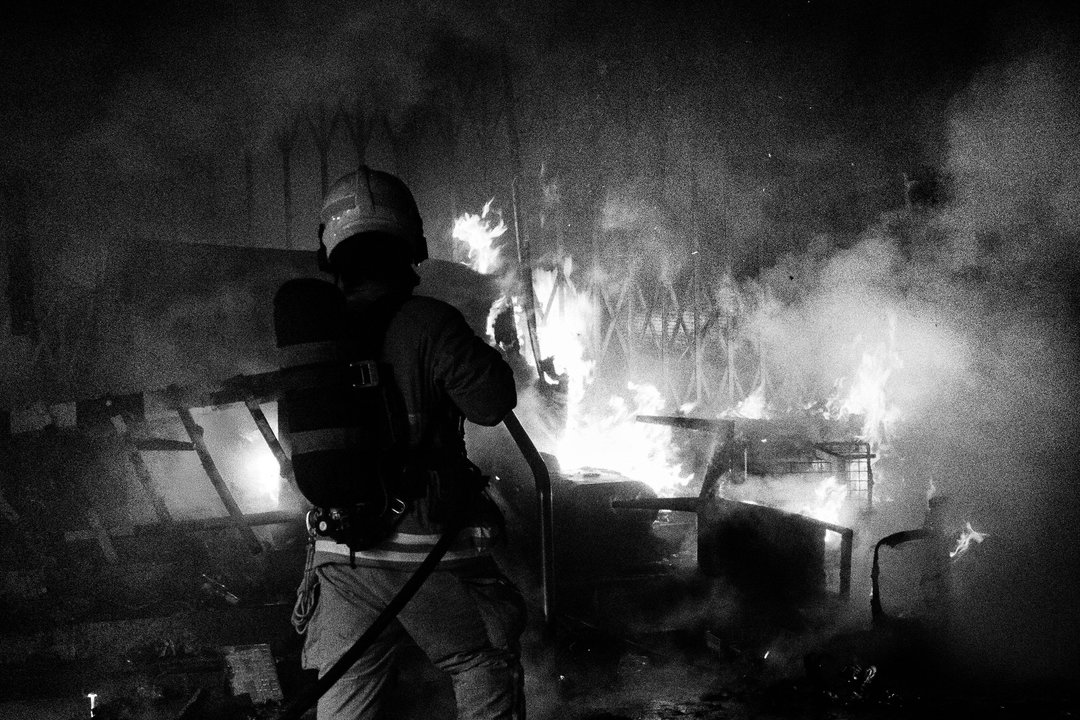
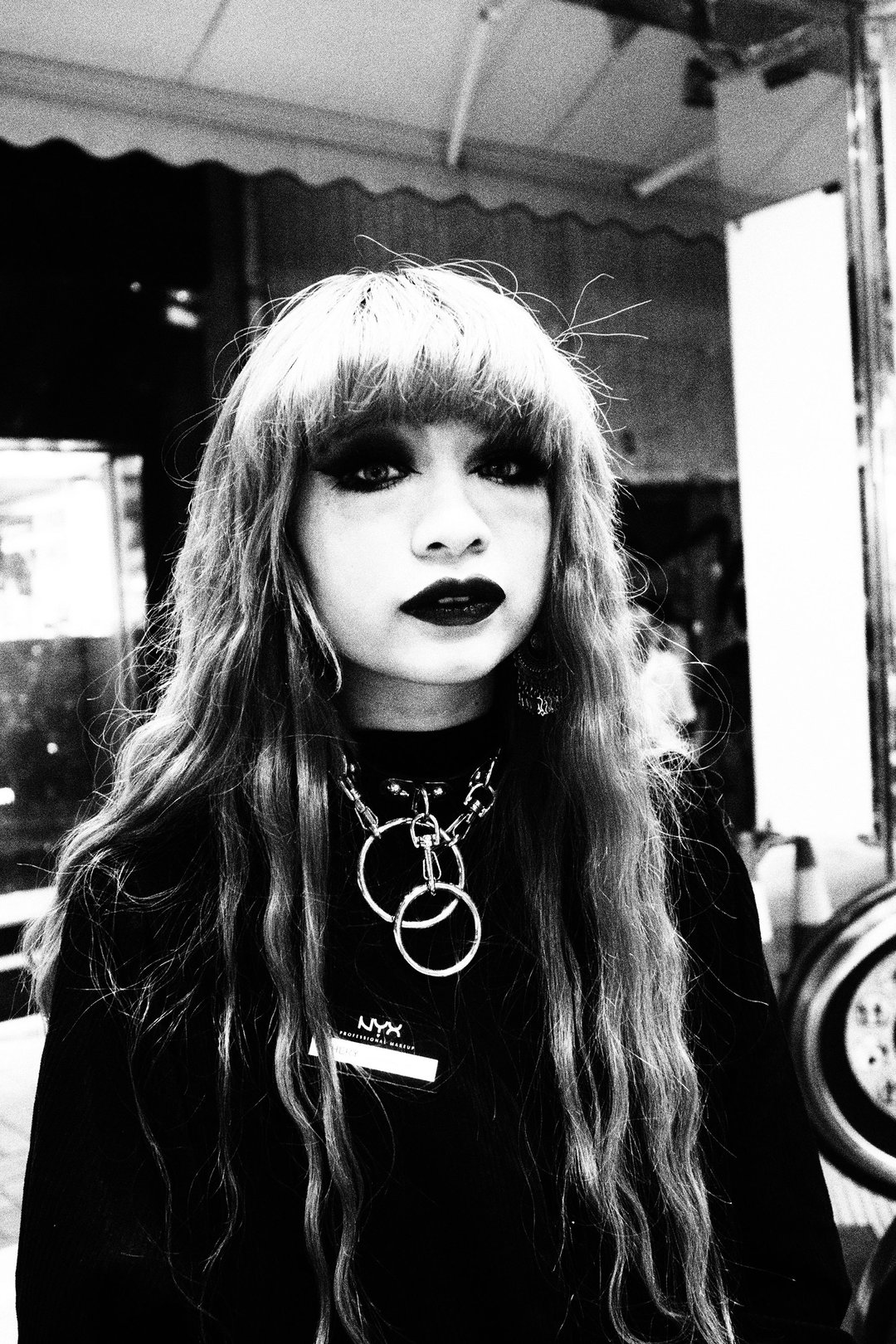
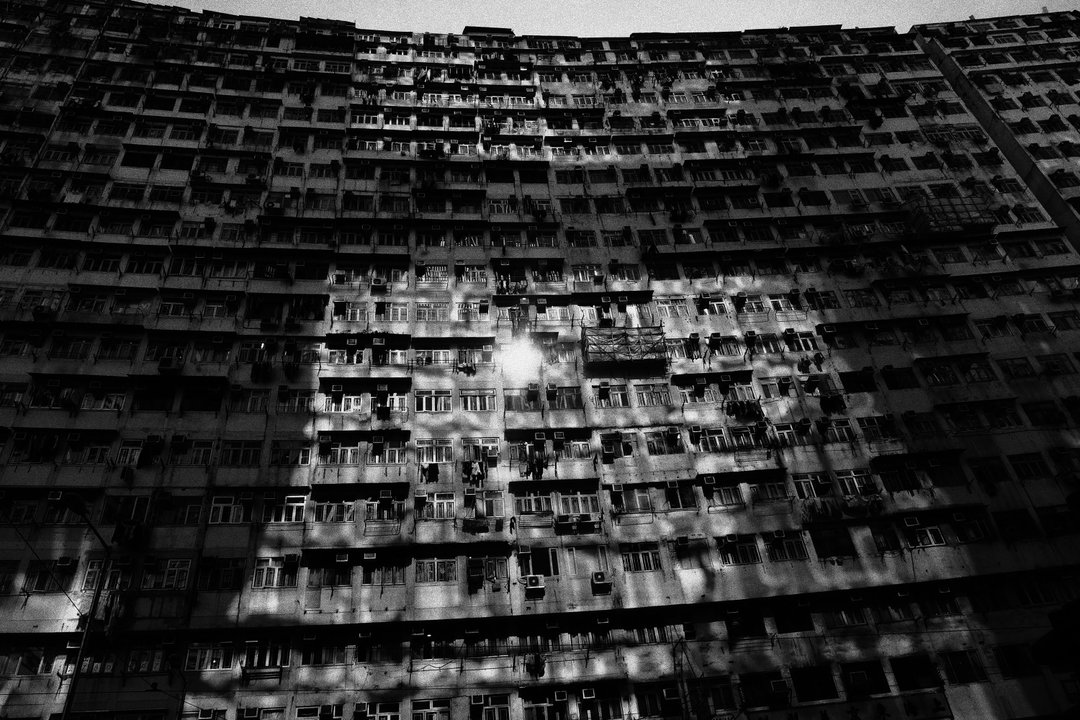
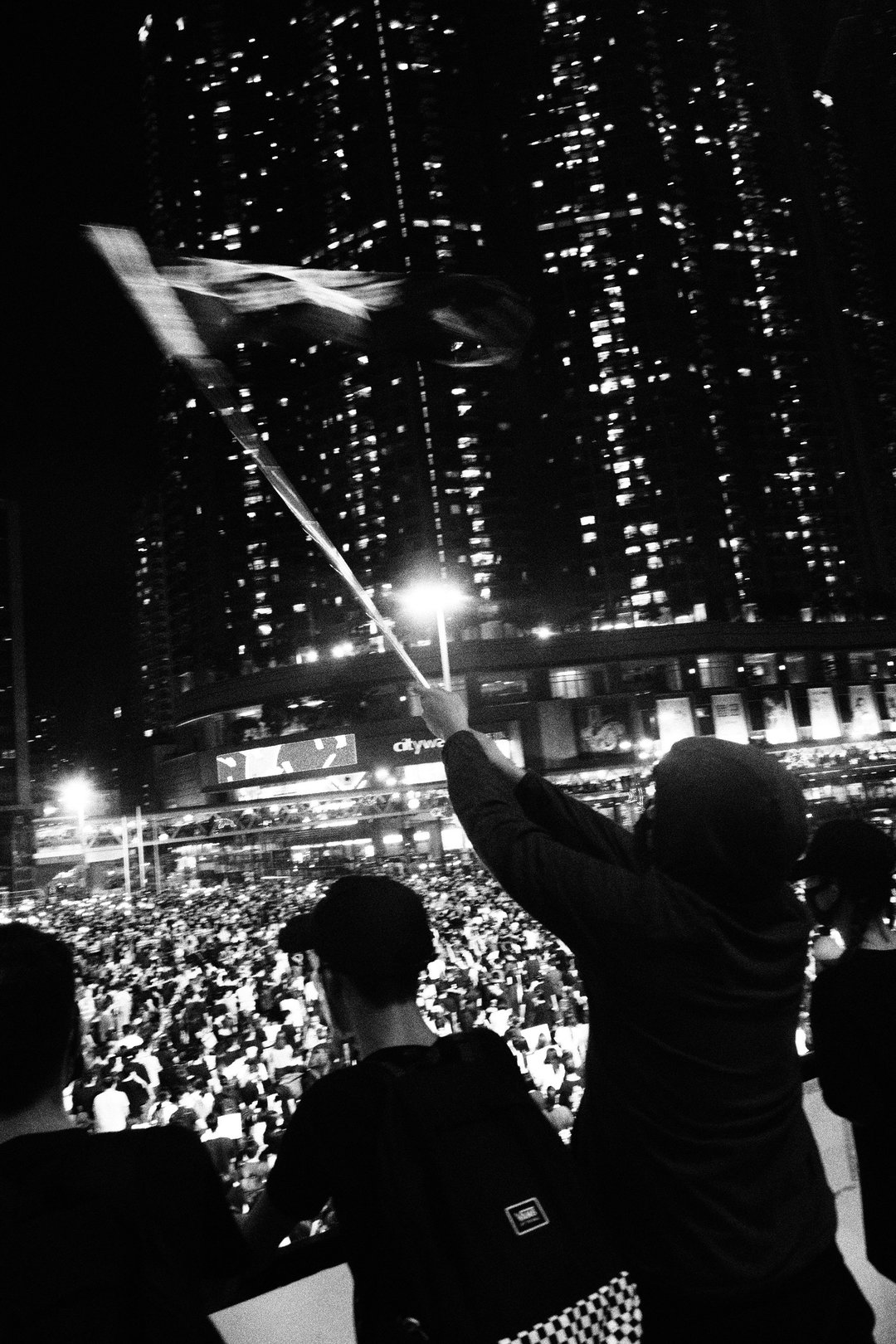
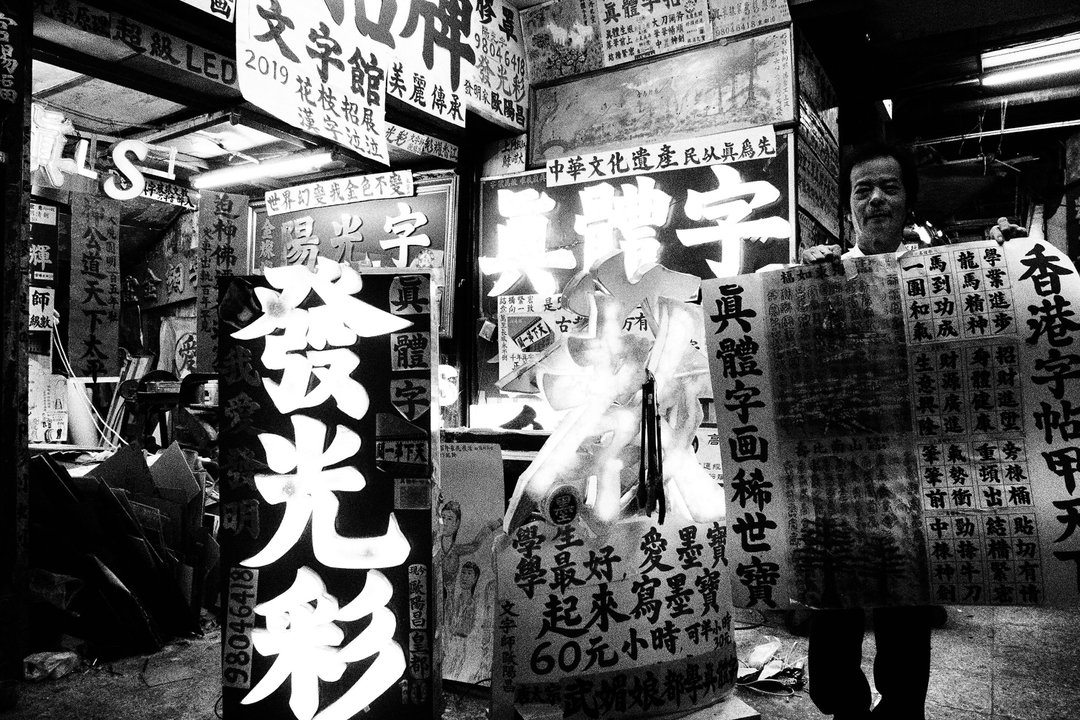
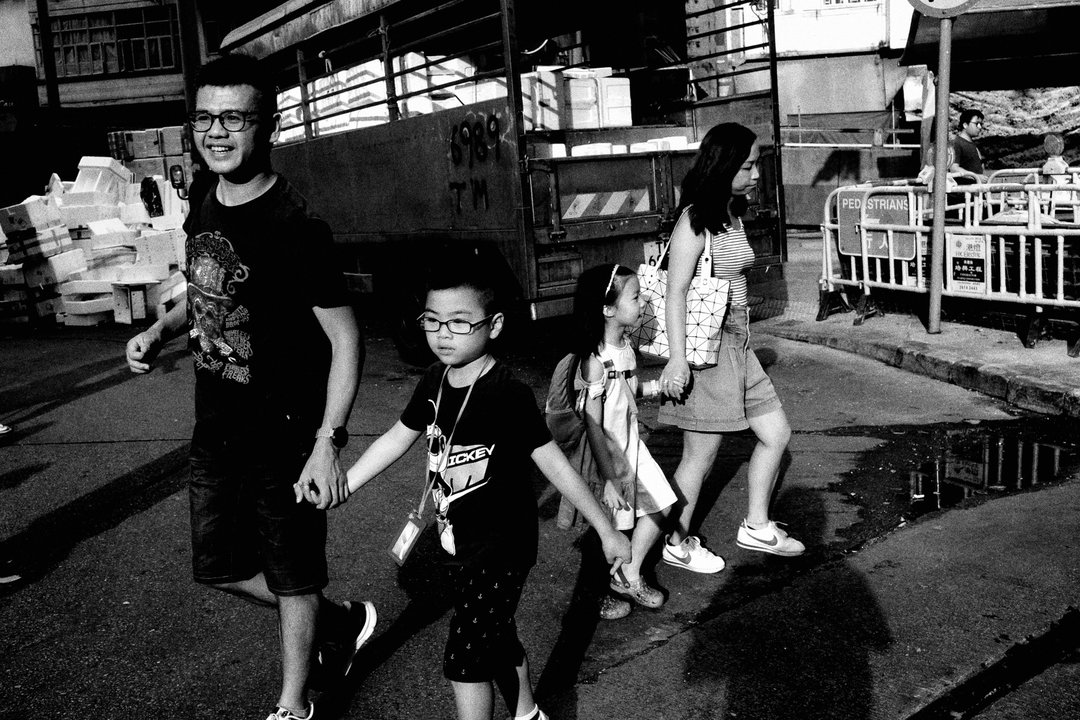
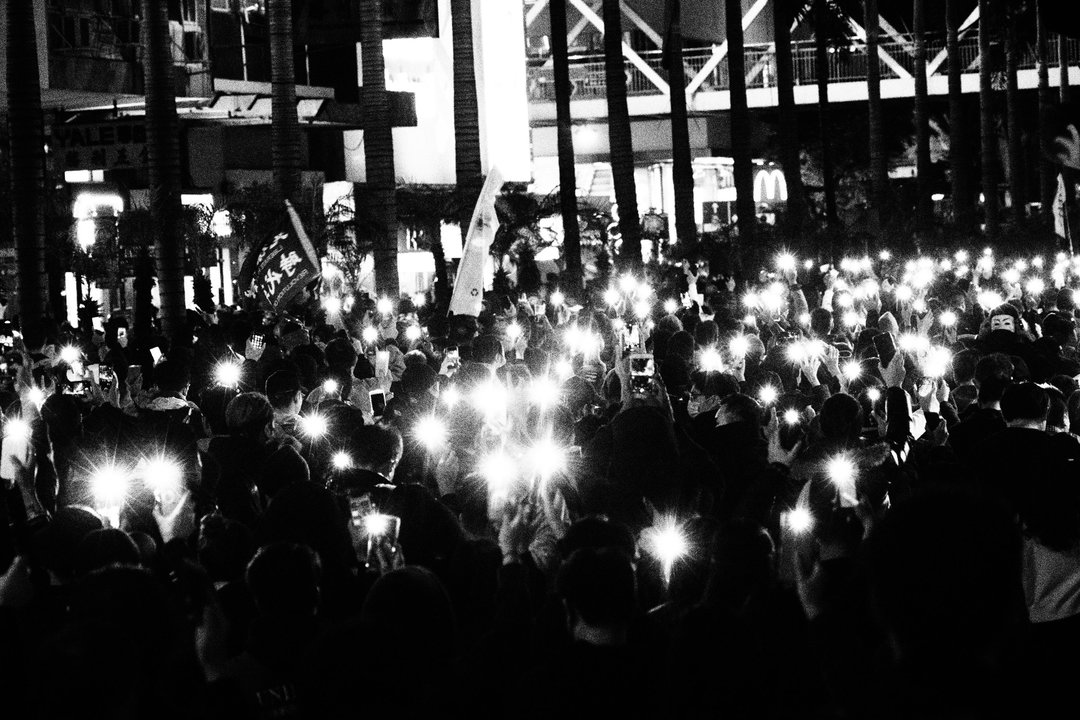
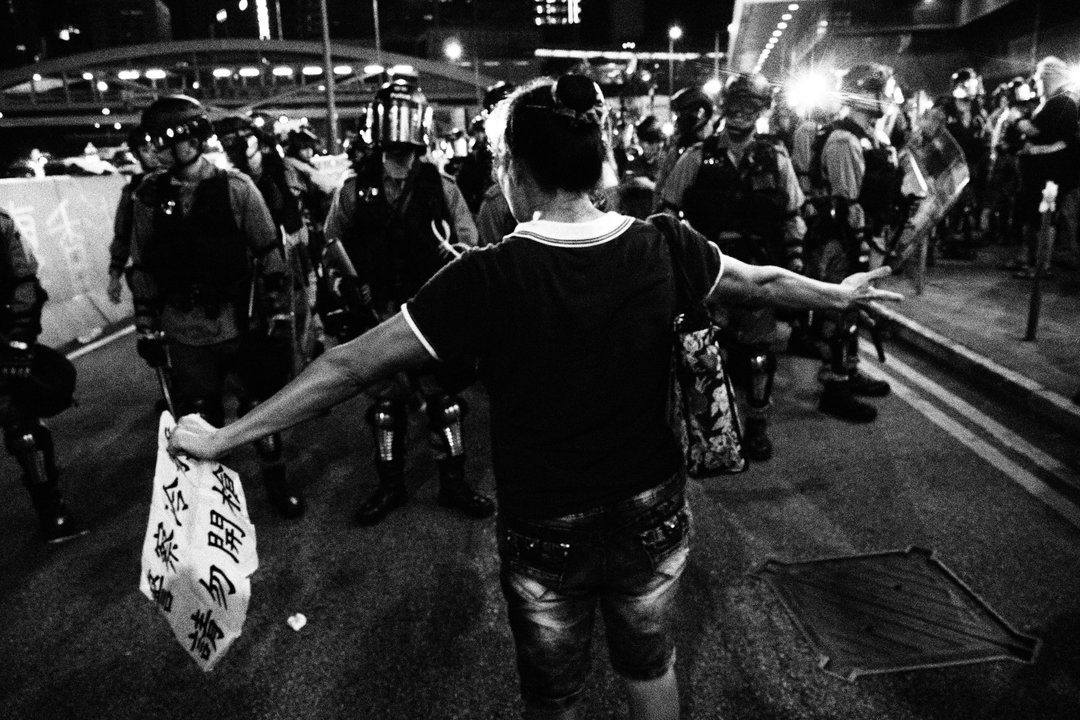
These photographs have now been formed into a new exhibition taking place at Zen Foto Gallery, whereby a selection of 30 photographs taken in a characteristic tone of high contrast black and white are on show until 26 December 2020. A blend of protest and daily life depicting the people in Hong Kong, Takehiko’s works are a sincere documentation of a tremulous time that shook a nation. “Basically, there were two types of protests,” says Takehiko, signalling first to the peaceful protests approved by the government, where large numbers of people of all ages and genders participated. “During these cases,” he adds, “there were usually no conflicts with the police and there is no problem with taking photos.” The other type, however, were abound with clashes between radical, younger protesters called yuhng mouh (which translates to ‘the valiant’) and the police. Takehiko describes the scenes as “fierce battles”, filled with violence and chaos. “Shooting at these scenes could be quite dangerous at times, and there’s a lot of tear gas sprayed by the police. I was quite shocked to see all the violence but I wasn’t scared. I am not a press photographer, but for my own safety, I wore a gas mask, yellow vest and arm badge to show that I am part of the press.”
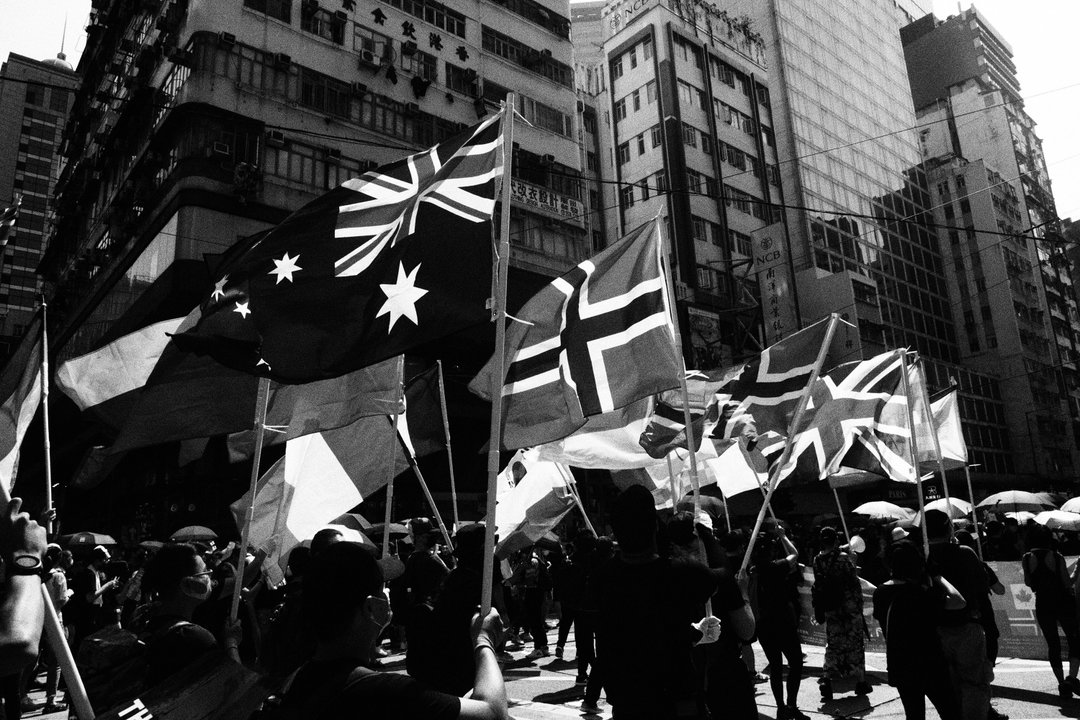
The result of which is a touching documentation of a region in revolt, where – chaos aside – Takehiko strove to portray a sense of enthusiasm for the democratisation movement that Hong Kong first experienced in 2019, as well as the daily life that continued alongside it. Takehiko pulls out a favourite image from this series – one where protestors were marching with the flags of many democratic countries, which is also the cover image of his new photo book [pictured below]. “This is a call for the countries of the world to understand and stand in solidarity with this movement,” he says, “and the appearance of various flags fluttering in the background of the city of Hong Kong was a very powerful and impressive sight.”
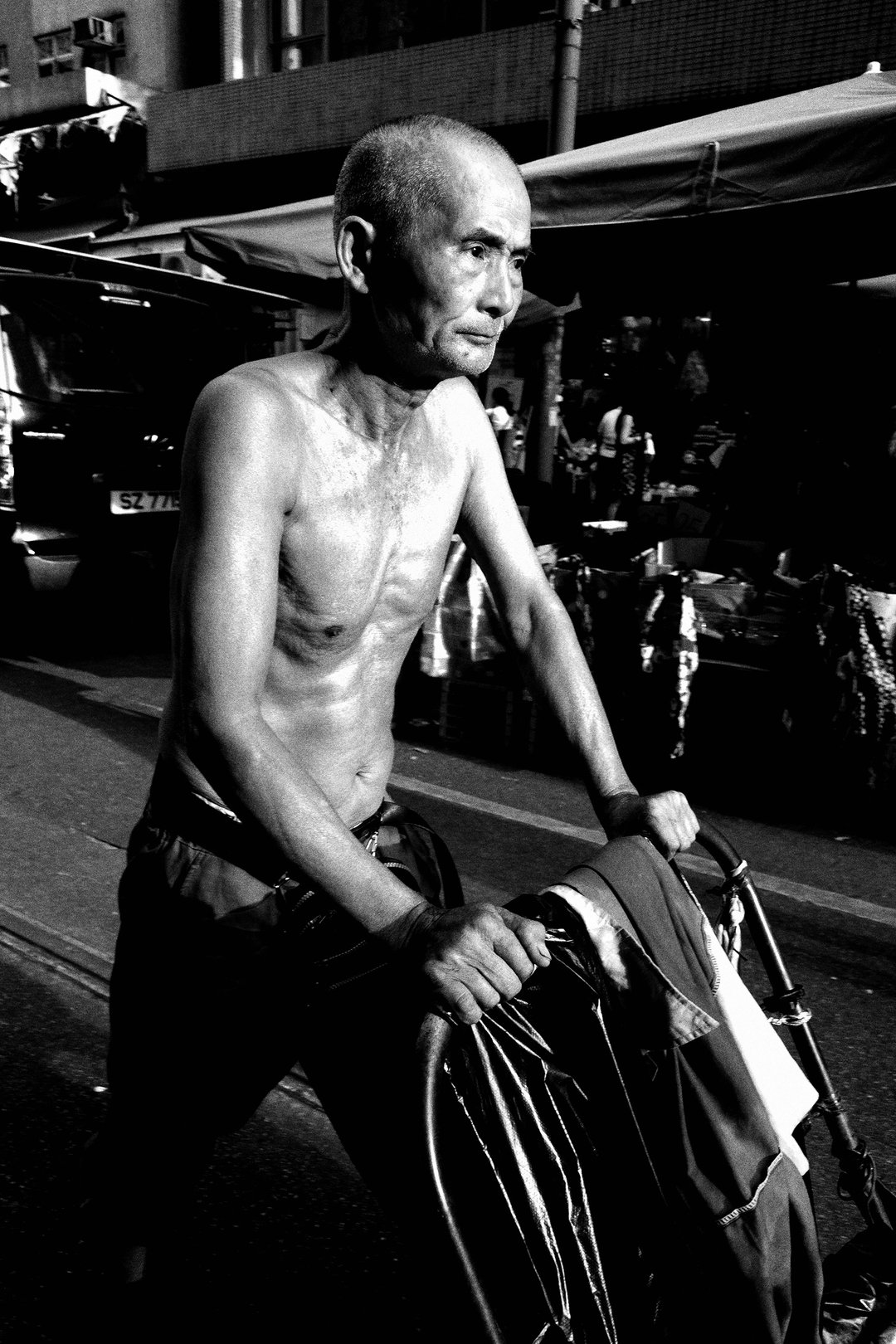
While the situation in Hong Kong has greatly changed due to the enforcement of strict laws, Takehiko’s personal record of this point in history leaves a positive reminder to us all. “What’s important is that, even in the chaotic situation of demonstrations – which can be said to be extremely different from ordinary daily life – ordinary daily life continues side-by-side,” he says. ”I think this is a reality that cannot be understood by the news, as the news only shows us the scenes of intense protests.” Concluding on the fact that the city’s people still managed to live “energetically and strongly”, despite the circumstances, it gives a sense of hope and strength to those currently in protest, and those experiencing the devastating police brutality that continues to sweep the world.
GalleryTakehiko Nakafuji: Hong Kong 2019 (Copyright © Takehiko Nakafuji, 2020)
Share Article
Further Info
www.takehikonakafuji.com/index
www.zen-foto.jp/en/exhibition/hong-kong-2019
Hong Kong 2019 is currently on show at Zen Foto Gallery until 26 December.
About the Author
—
Ayla is a London-based freelance writer, editor and consultant specialising in art, photography, design and culture. After joining It’s Nice That in 2017 as editorial assistant, she was interim online editor in 2022/2023 and continues to work with us on a freelance basis. She has written for i-D, Dazed, AnOther, WePresent, Port, Elephant and more, and she is also the managing editor of design magazine Anima.