
Most creative work is made to a brief – so is fake art in film actually ‘fake’?
The Christophers, a new Ian McKellan-starring film includes 16 ‘fake’ artworks by painter Barnaby Gorton. Our culture columnist Gary Grimes argues that this body of work isn’t so different from the pieces that hang in our galleries.
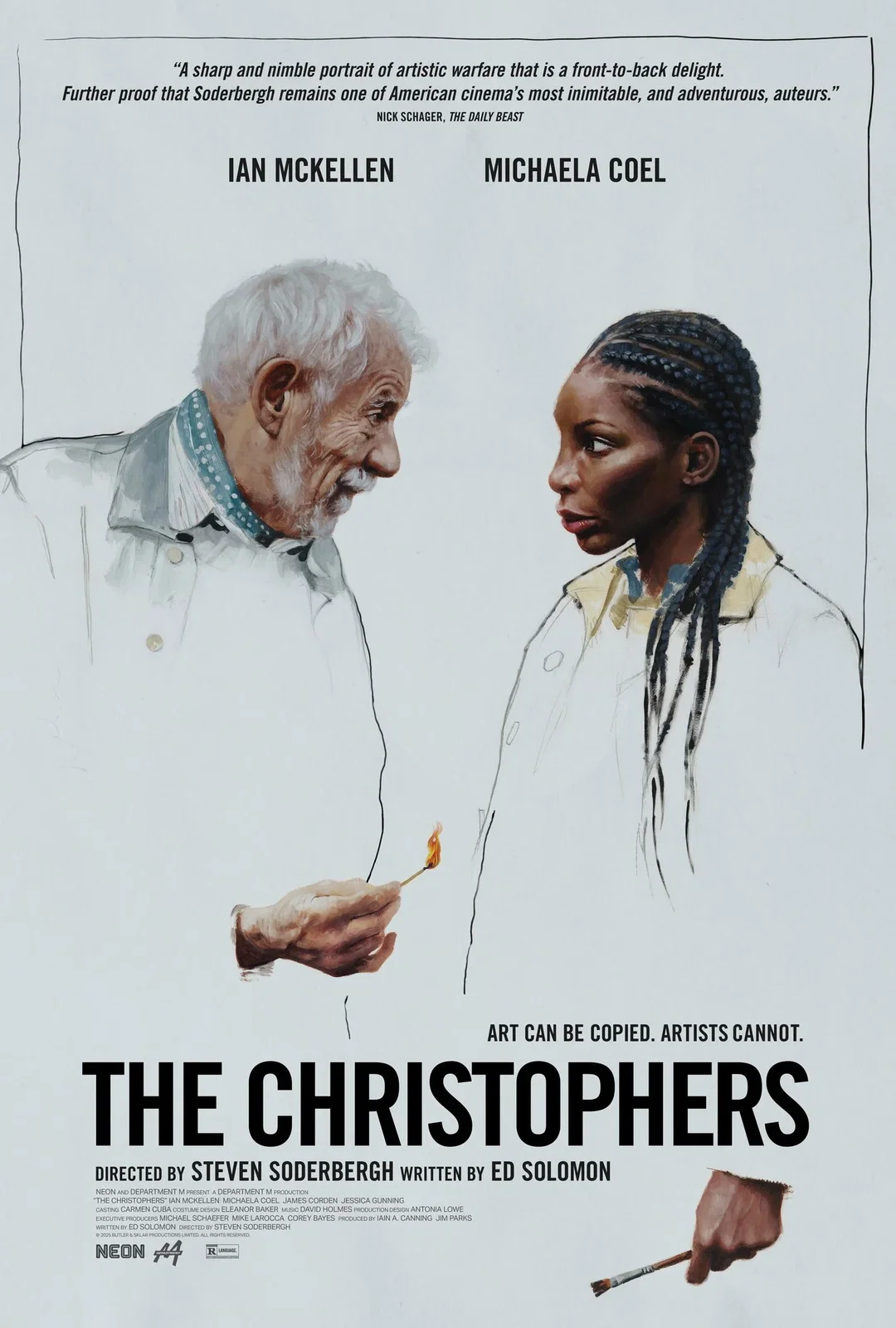
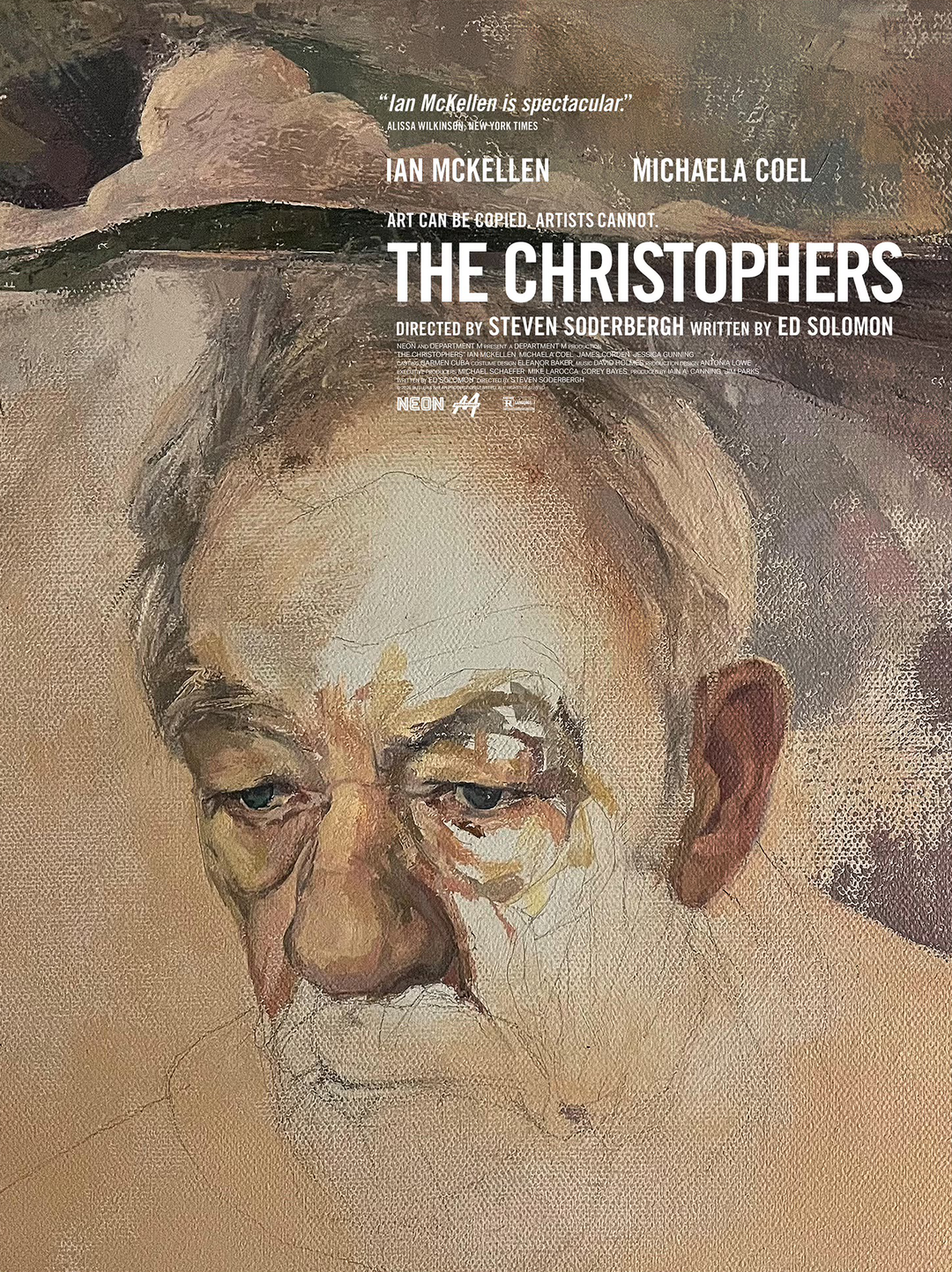
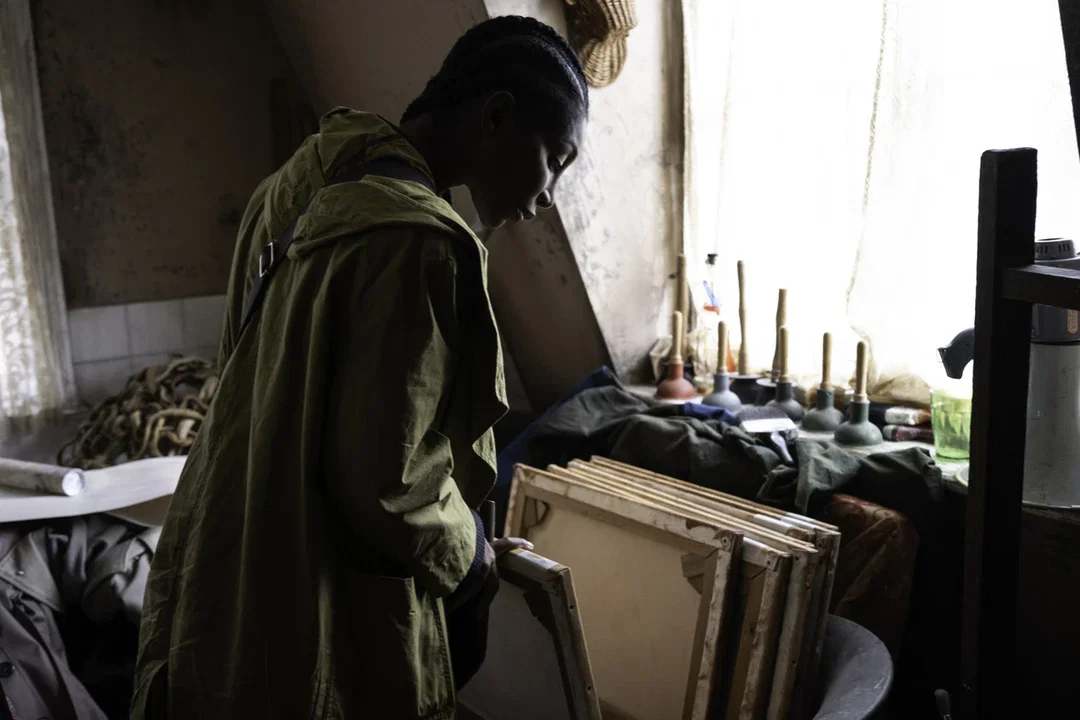
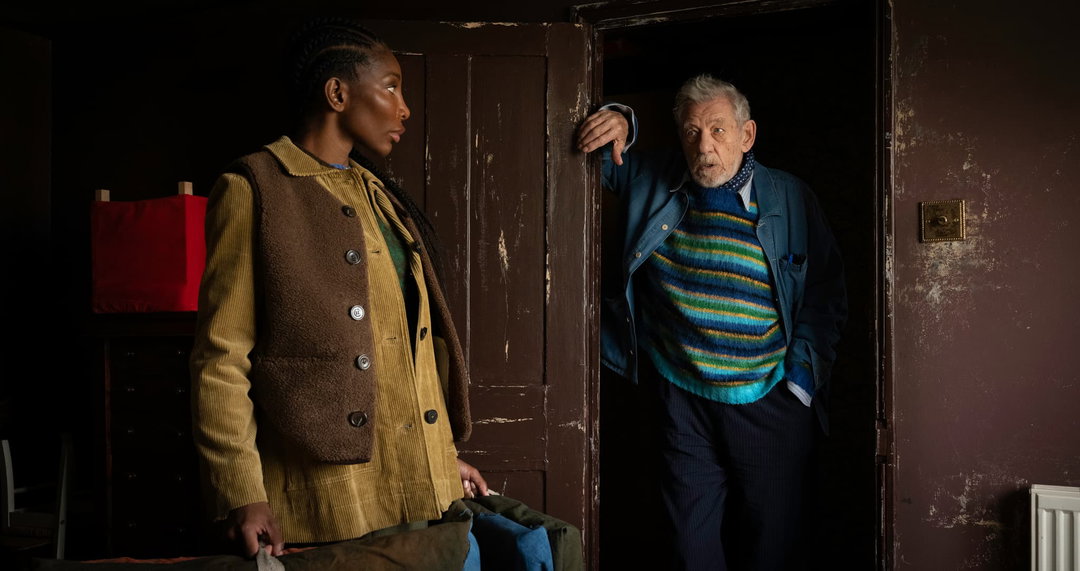
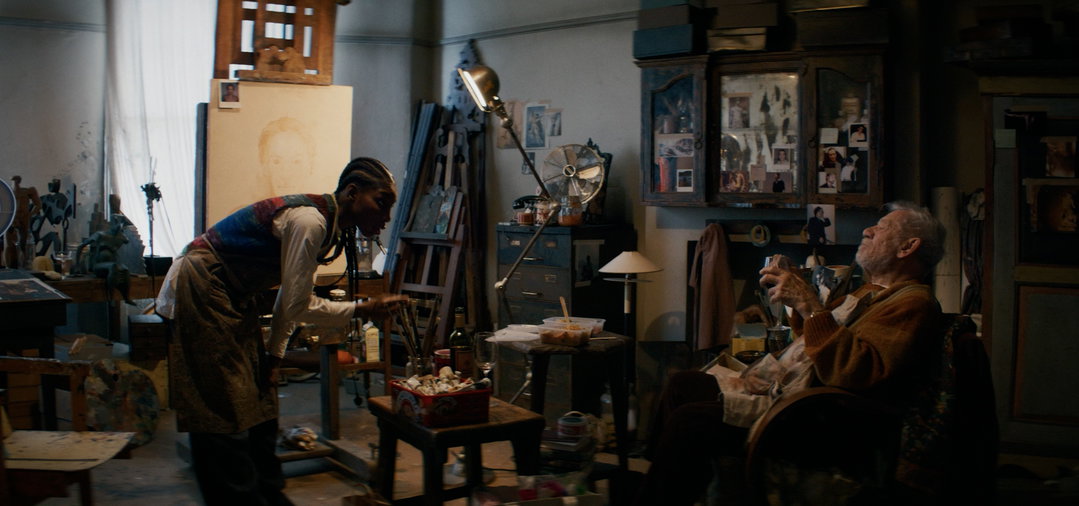
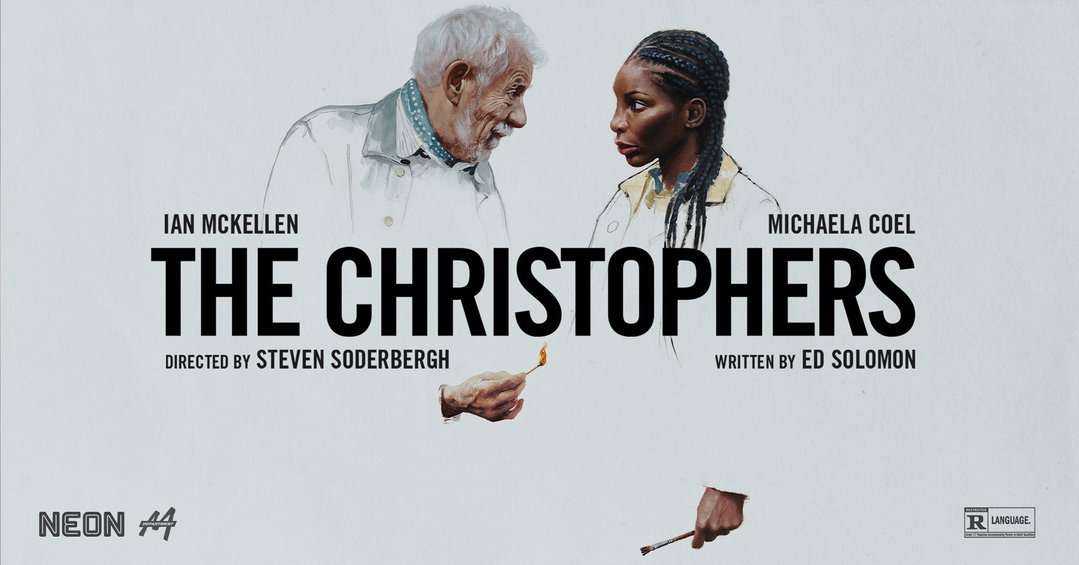
This week sees the UK release of The Christophers, a new Steven Soderbergh-directed film starring Sir Ian McKellen. McKellen plays a washed up artist named Julian Sklar, whose attic holds a series of paintings of a former lover named Christopher, which could fetch millions at auction – if he would only finish them. Sklar’s money hungry adult children (James Cordon and Jessica Gunning) employ a young artist (Michaela Coel) to covertly complete the paintings so that they can be sold for a fortune after his death.
When pondering the film’s plot and production, I began to consider the merits and demerits of what we might call ‘fake art’, and if there even is such a thing? Be it Coel’s character’s forgeries, or the real life prop paintings made for the film, what actually distinguishes these creations from their supposedly more praiseworthy counterparts? The art we find hanging on the walls of the Louvre or resting beneath a plastic sheet in the storage unit of a name collector. What goes into creating art that is functional or counterfeit, can it bring artistic fulfilment to the maker, and what constitutes ‘real’ art anyway?
The Christophers (Copyright © Neon Rated, 2026)
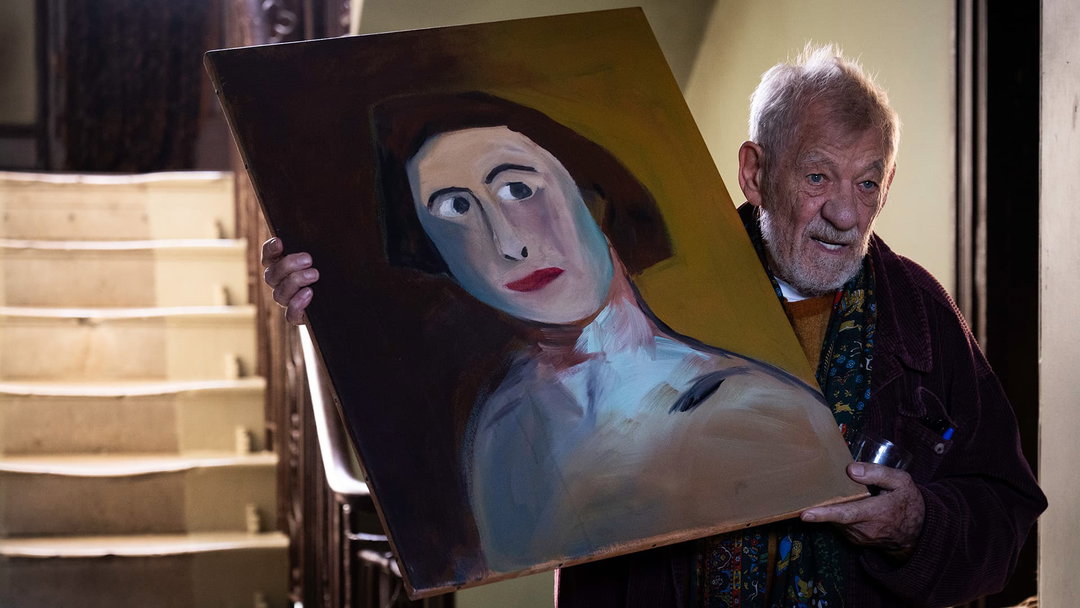
The prop paintings used to depict ‘The Christophers’ were created by the real-life British artist Barnaby Gorton. Under the guidance of the film’s production designer Antonia Lowe, Barnaby, who has previously created artwork for films like the Harry Potter series, Gambit, and Assassin’s Creed, painted a total of 16 original paintings for the film – eight of the ‘unfinished’ works, and eight versions of the paintings ‘complete’ for the latter half of the film. To better understand the work of the real artist behind this ‘unreal’ art, I caught up with Barnaby to understand how he feels about the art he makes under these conditions.
When creating art for film, Barnaby explains “you’re servicing the director. There’s no point in making something you like if he doesn’t.” The painter used polaroids shot with a model by Antonia Lowe and director Soderbergh as his references for the series of paintings. And although he was tasked with embodying the style of the fictional Sklar, he was also heavily influenced by a number of iconic real life artists.
“Michelangelo didn’t paint the Sistine Chapel because he wanted to, he did it because the Pope wanted him to.”
Barnaby Gorton
The work of Lucien Freud (who himself will soon be depicted on the big screen in the upcoming film Moss & Freud, played by Derek Jacobi) informed the style of unfinished Christopher paintings which, in the film’s world, were begun by Sklar in the 1990s. For that reason, Freud and “figurative painters from the end of the last century” served as important references, Barnaby reveals. Barnaby also admits that at this stage in the process he was able to infuse more of his personal style of painting: “In this particular situation, they do follow my own figurative work,” he says. Conversely, the completed ‘Christophers’, were influenced by Francis Bacon, “because he’s much more wild,” and Andy Warhol. “We really went quite mad,” Barnaby laughs.
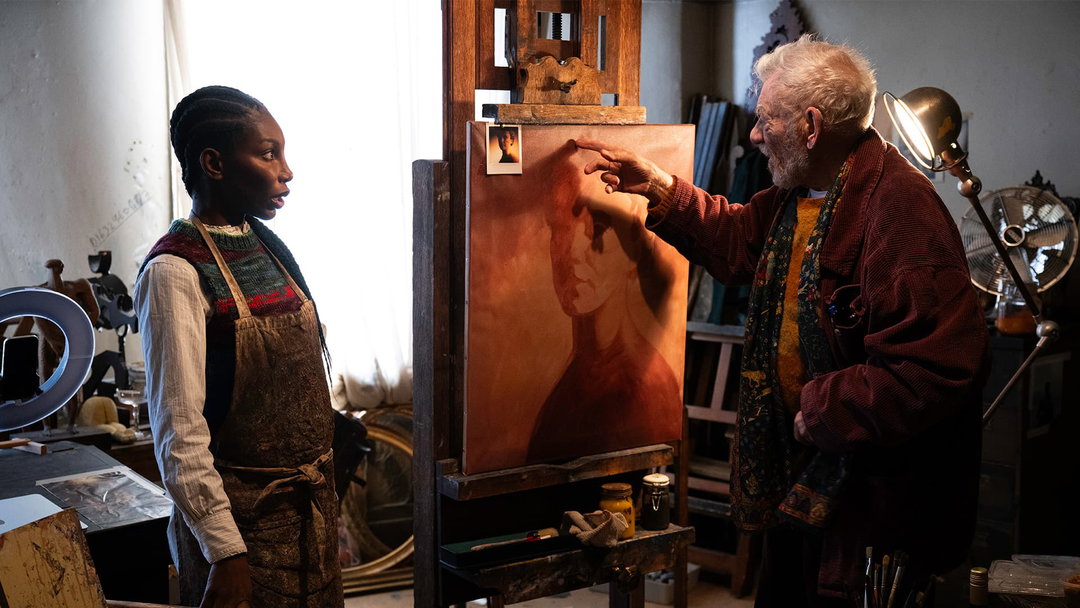
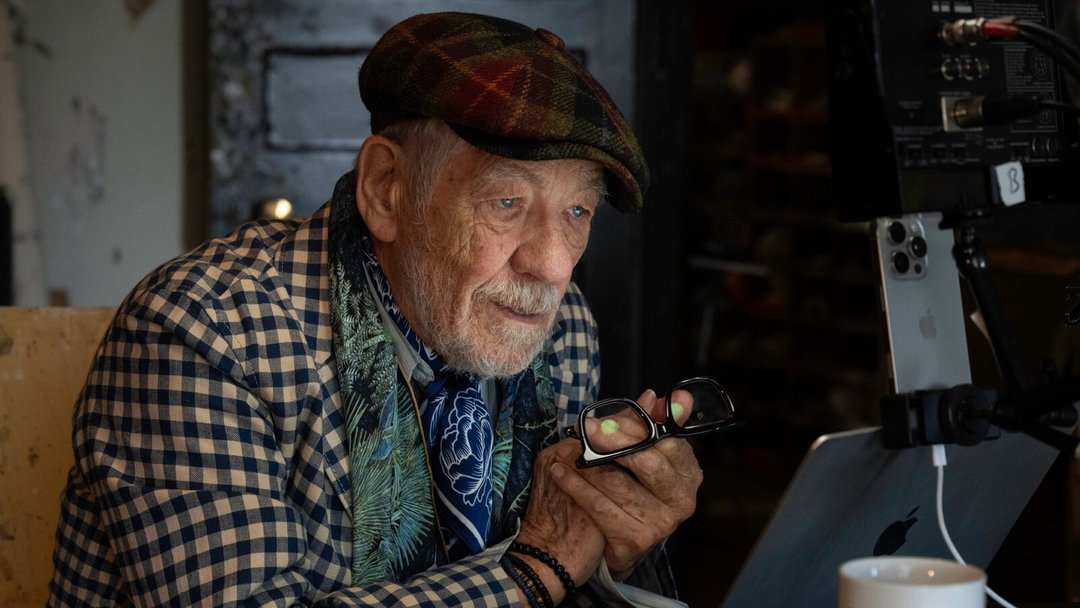
Barnaby also notes that his role on productions like this often extends beyond merely making the props, but also teaching the actors like Coel and McKellen how to move and work like a true painter. “When I worked on Gambit, where I was doing some huge Pollocks, I had to learn just how he [painted], and then teach the actors how to make those physical movements.”
The Christophers (Copyright © Neon Rated, 2026)
“We fail to consider how often those we hail as creative geniuses were in fact working to a brief.”
Gary Grimes
Nailing the choreography of a painter is crucial to achieving authenticity, Barnaby believes. “You often see when painters [in films] pick up a brush, the actors, who don’t know how to paint, they’ll put the colour on the brush, meaning they’re going to leave a blob on the canvas because they haven't pushed the paint onto the end of the brush, right?” says the painter. “It’s a subtle little thing, but any artist will go, ‘They don’t know how to paint’. The directors want that authenticity.”
The artist speaks about the process of creating these works with such enthusiasm and vigour that I’d argue creating so-called ‘fake art’ is quite the artform in its own right. To Barnaby, in fact, there’s no separation between how he works and that of many of the most important figures in art history. “It’s only a 20th century thing that art is created for itself,” he points out. “I mean, Michelangelo didn’t paint the Sistine Chapel because he wanted to, he did it because the Pope wanted him to. He wanted to be sculpting his lovers. Leonardo didn’t want to paint, he wanted to be inventing.”
The Christophers (Copyright © Neon Rated, 2026)
“Art for art’s sake is actually a much rarer commodity than we think.”
Gary Grimes
Barnaby raises a valid point about how we fail to consider how often those we hail as creative geniuses are or were in fact working to a brief. Perhaps, as Barnaby posits, films are simply “the new churches”. Art and commerce have always gone hand in hand, and a majority of the world’s most revered artwork was crafted under the patronage of a wealthy client, or an altogether more corporate entity. Even the most high-flying contemporary artists of the 20th century and beyond are often making work to match a signature style for which they are known and, more importantly, for which their blue-chip gallery dealers know will sell for the highest price.
Art for art’s sake is actually a much rarer commodity than we think, and in many ways, the sort of art that painters like Barnaby create for film and television is not so much a deviation from the noble pursuits of a ‘real’ artist, but a continuation of a practice pioneered by the Renaissance greats. Which means, by that logic, the paintings in films like The Christophers are as ‘real’ as the art which adorns the ceiling of the Sistine Chapel.
GalleryThe Christophers (Copyright © Neon Rated, 2026)
Hero Header
The Christophers (Copyright © Neon Rated, 2026)
Share Article
Further Info
About the Author
—
Gary Grimes is a writer and publicist based in London. He typically writes about visual art and pop culture, and his work has appeared in titles including British Vogue, Rolling Stone, W, Interview, The Economist, TimeOut, The Fence, Wallpaper* and more.