Toby Glanville on his career so far, and photographing Raymond Briggs
Fate dealt us a good hand a few weeks back, while we were searching for a portrait of Raymond Briggs to accompany an interview we did with him in the latest Printed Pages. The best one we found, one that summed up the temperament of Raymond effortlessly, was by a photographer called Toby Glanville. A quick look at his site confirmed that Toby was a very, very good photographer, with a strong body of work that seems to hold a style, a smell, and a vibe. Toby kindly allowed us to use his portrait of Raymond for the magazine, and to find out a little bit more about his exquisite photography, we asked him a few questions. Here he is on the art a good portrait, his top three photographers and that day he spent with Raymond…
You can buy the brand new issue of Printed Pages containing the full interview with Raymond Briggs over here.
Do you know when you’ve just taken a really great photo?
If shooting film you never know until you get the film back which is half the joy of working with film. The magic, the suspense; the terror!

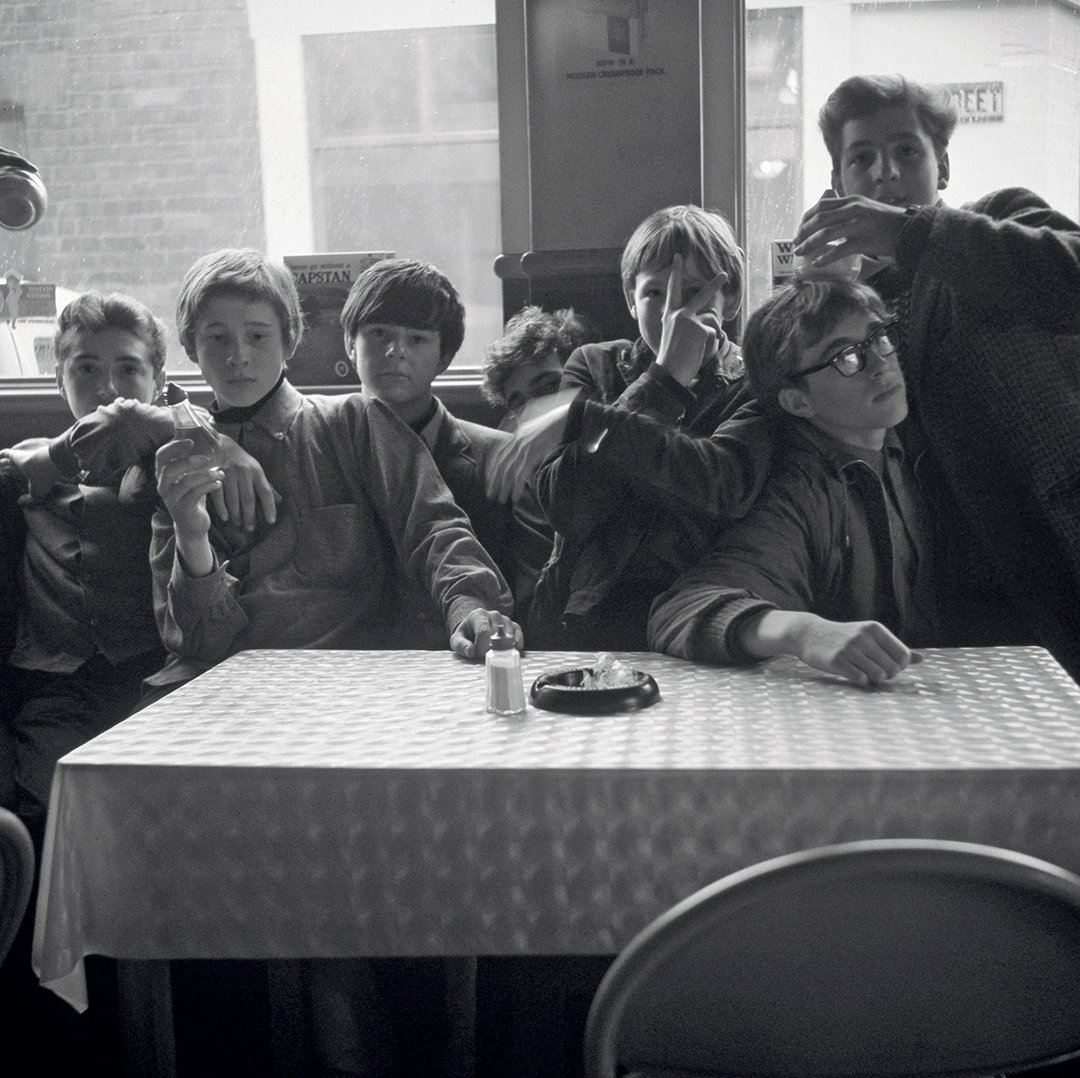
Toby Glanville: Untitled
In your eyes, what makes a “real portrait”?
This is such an interesting question. I think perhaps that a real portrait is one that suggests to the viewer that the subject portrayed is alive, be it a person or even, let’s say, an apple. I don’t really differentiate between animate and inanimate subjects. Is a Zubaran rose any less alive than a Velasquez portrait of King Philip IV?
I think in photography the line is so fine between a portrait which convincingly conveys a human being and her complexity, and what might essentially be a photographer’s exercise in self portraiture. In other words for a photographic portrait to work, I think the author’s ego must be held in abeyance in order to allow the subject to hold the stage. And I think that this happens very rarely.
"I spent the morning with him taking pictures and liked him enormously. It was a winter’s day and there were bird feeders in his garden. This was my favourite photograph, Raymond in his garden. He looks so like his boy in The Snowman, I think.
Toby Glanville
Tell us about your career so far
I left school early, skipped college then worked as an assistant, first in a black and white lab processing film, then in a photography studio in north London. It was a kind of apprenticeship which led to finding magazine work which in turn led to books and various other freelance commissions. I have always thought of myself as a portrait photographer working mostly with people, but then a lot of food work came through which changed whatever idea of myself as a photographer I had.
I do less food work right now. The industry has become a kind of pornographic sub-plot. We live in a country where nearly one million people are using food banks in order to survive, and another sector of society is agonising over the correct way to boil an egg.

Toby Glanville: Untitled
Tell us about the day you photographed Raymond Briggs, and how it came about?
I was shooting a commission for the British Council as part of a touring show on childrens’ book illustrators. Raymond Briggs was a hero of mine and so it was a great thrill to meet him at his house on the South Downs. The first thing I remember him saying to me was ‘Do you have sugar in your coffee? Well, I don’t have any sugar but I do have some honey’. He produced a jar of honey and said, “I don’t think this is real honey, there aren’t that many bees left in the world!”
I spent the morning with him taking pictures and liked him enormously. It was a winter’s day and there were bird feeders in his garden. This was my favourite photograph, Raymond in his garden. He looks so like his boy in The Snowman, I think.

Toby Glanville: Raymond Briggs

Toby Glanville: Raymond Briggs
How does it feel to have one of your portraits in the NPG?
It feels flattering.
Do you primarily use film or digital? Tell us about your relationship with both
My first love is film: for many reasons. I love the suspense involved in never knowing if you have actually succeeded in making the image you were after. All of that is killed dead by digital. Rather like reading the name of the killer on the first page of a whodunnit. That said, it (digital) is also a wonderful way of working precisely for that reason.
Tell us about your piece on NOWNESS recently
Was this the Still Lives piece? I was asked to choose some recent work. I had been working on a series of pictures based on T.S. Eliot’s Four Quartets, poems which are already almost photographic in the sense of evoking emotionally moving and ‘real’ images. Mine was a very literal take: portraits of hawthorne and fires and roses.
Can you name your top three photographers?
Only three? That’s very tough! Nadar, Walker Evans & Julia Margaret-Cameron. If I could choose three more they would be August Sander, JH Lartigue & John Deakin.
Plans for 2015?
To publish my new portrait book

Toby Glanville: Untitled

Toby Glanville: Untitled

Toby Glanville: Untitled

Toby Glanville: Untitled

Toby Glanville: Untitled

Toby Glanville: Untitled

Toby Glanville: Untitled
Share Article
Further Info
About the Author
—
Liv joined It’s Nice That as an intern in 2011 and worked across online, print and events, and was latterly Features Editor before leaving in May 2015.