- Words
- Charlie Sheppard
- Photography
- Rosanna Webster
- —
- Date
- 21 June 2022
- Tags
One man’s rubbish… discover the wonderful creative world of Glastonbury’s painted bins
Glastonbury Festival Of Performing Arts and Culture has always been about more than just the music. Ahead of the event this week, we delve into just one of the many reasons why Glasto is unlike any event of its size in the world, starting with its 17,000 hand-painted rubbish bins.
Share
Share
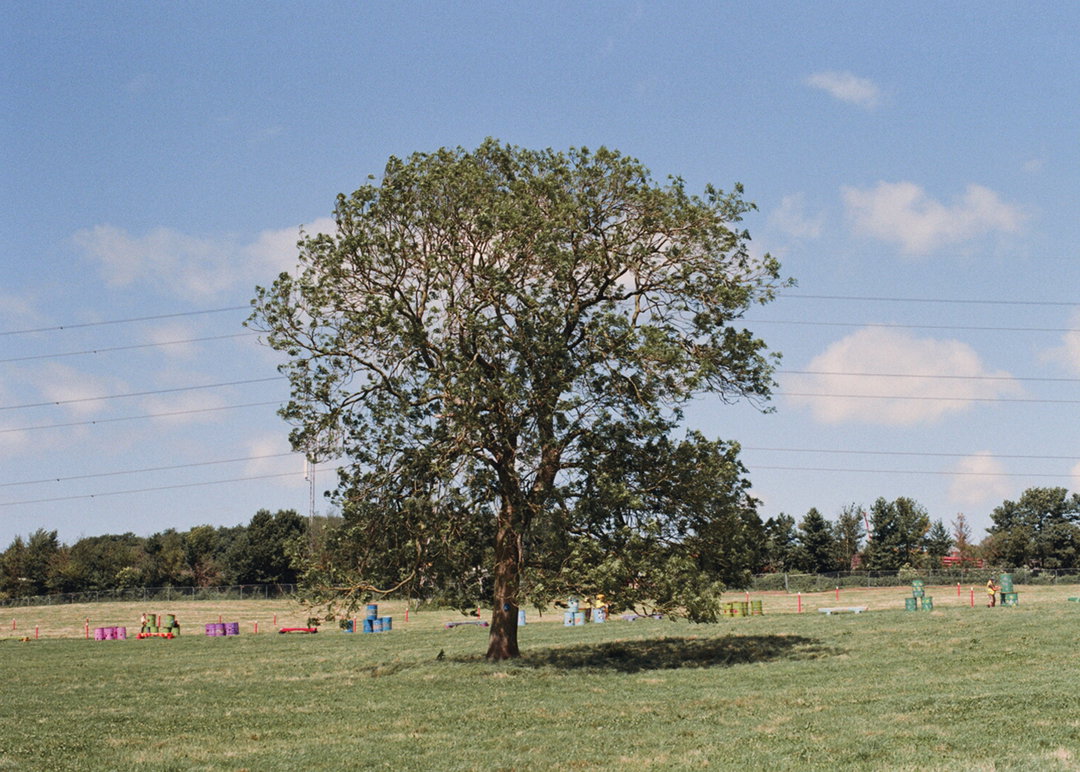
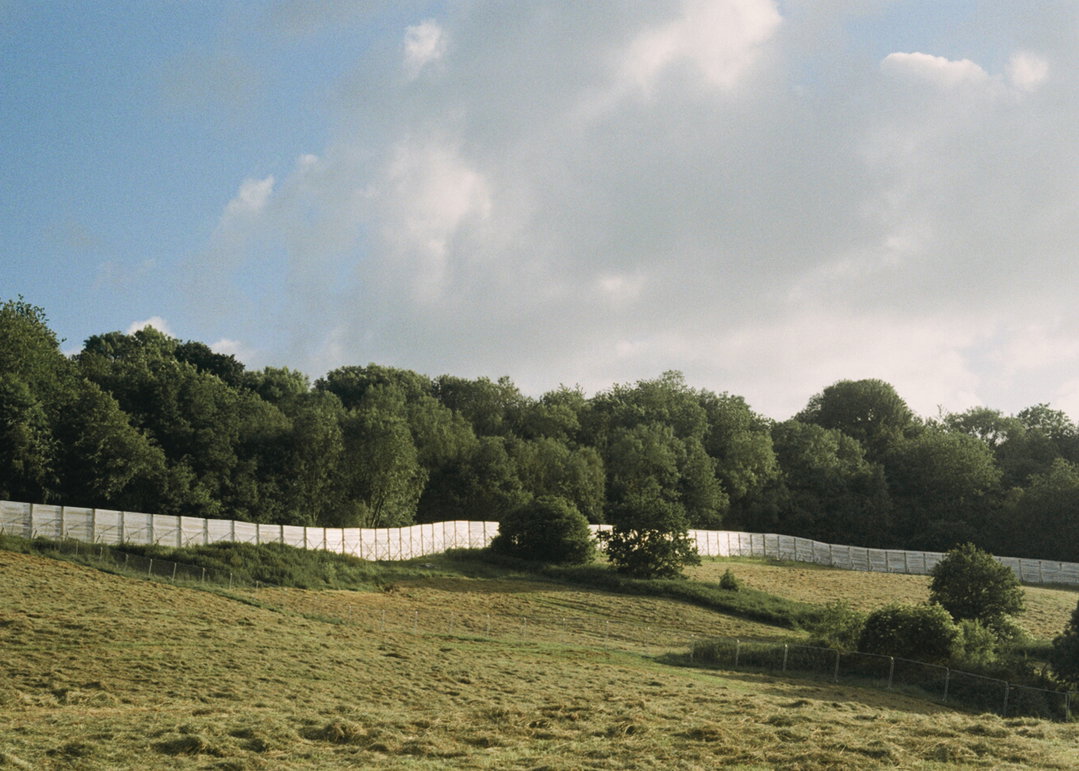
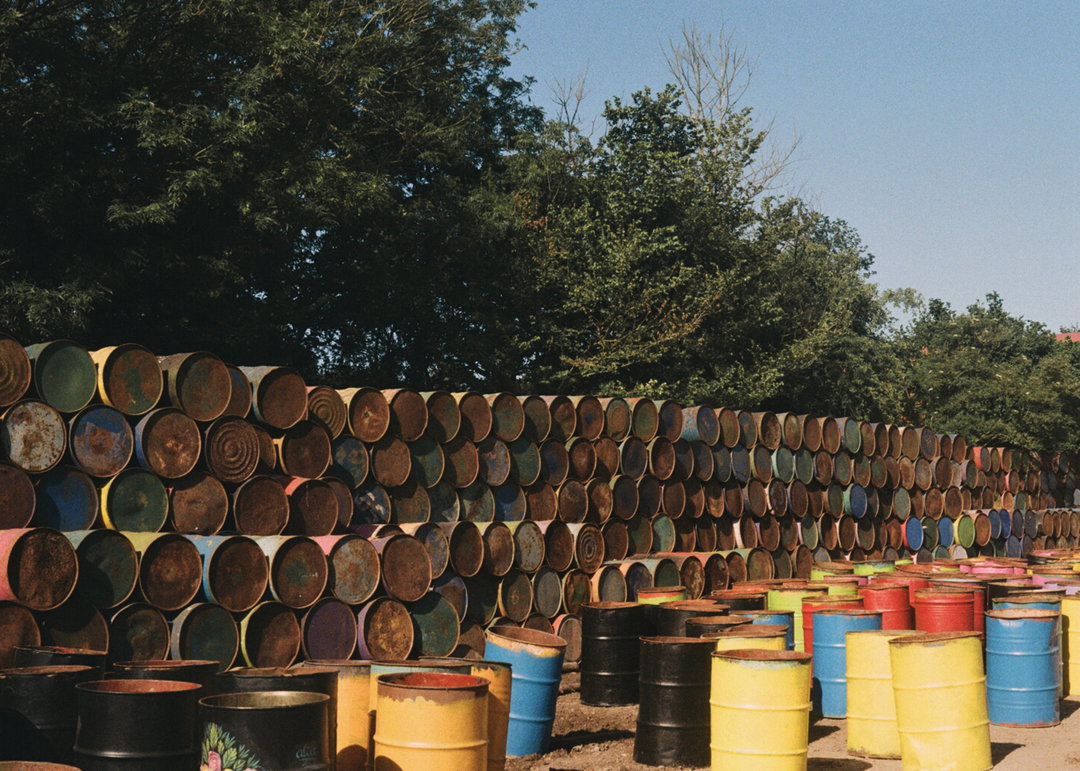
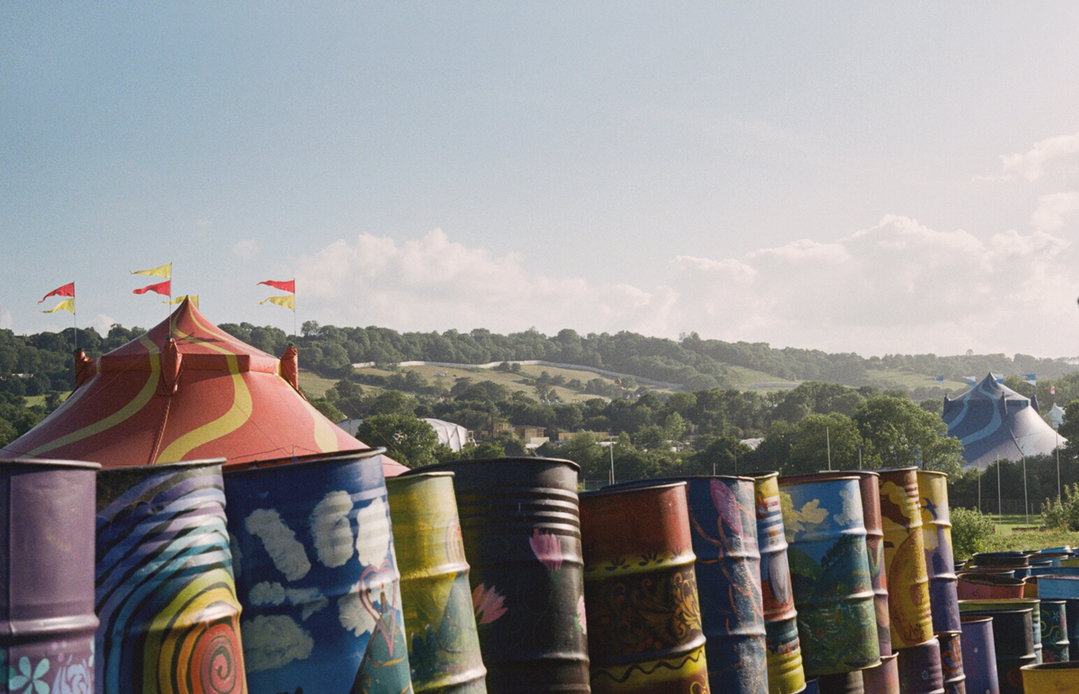
This year, for the first time since 2019, the gates of Glastonbury’s infamous 8km fence will open again. The 900-acre site will host over 210,000 people (including 60,000 staff) onto the fields of Worthy Farm, Somerset. Audiences come for a chance to see a Beatle headline the Pyramid stage, or to lose a welly in a muddy mosh pit, or just about anything really. But whatever they come for, one thing is guaranteed; many people produce a lot of rubbish, which means you’ll need a lot of bins... 17,000 bins to be precise.
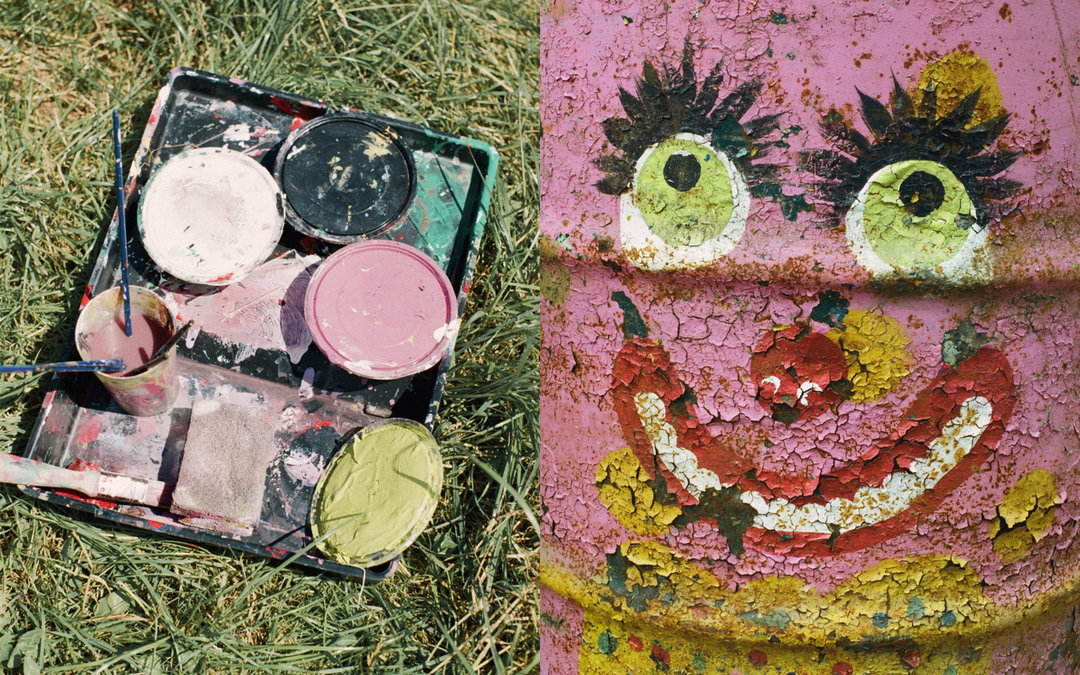
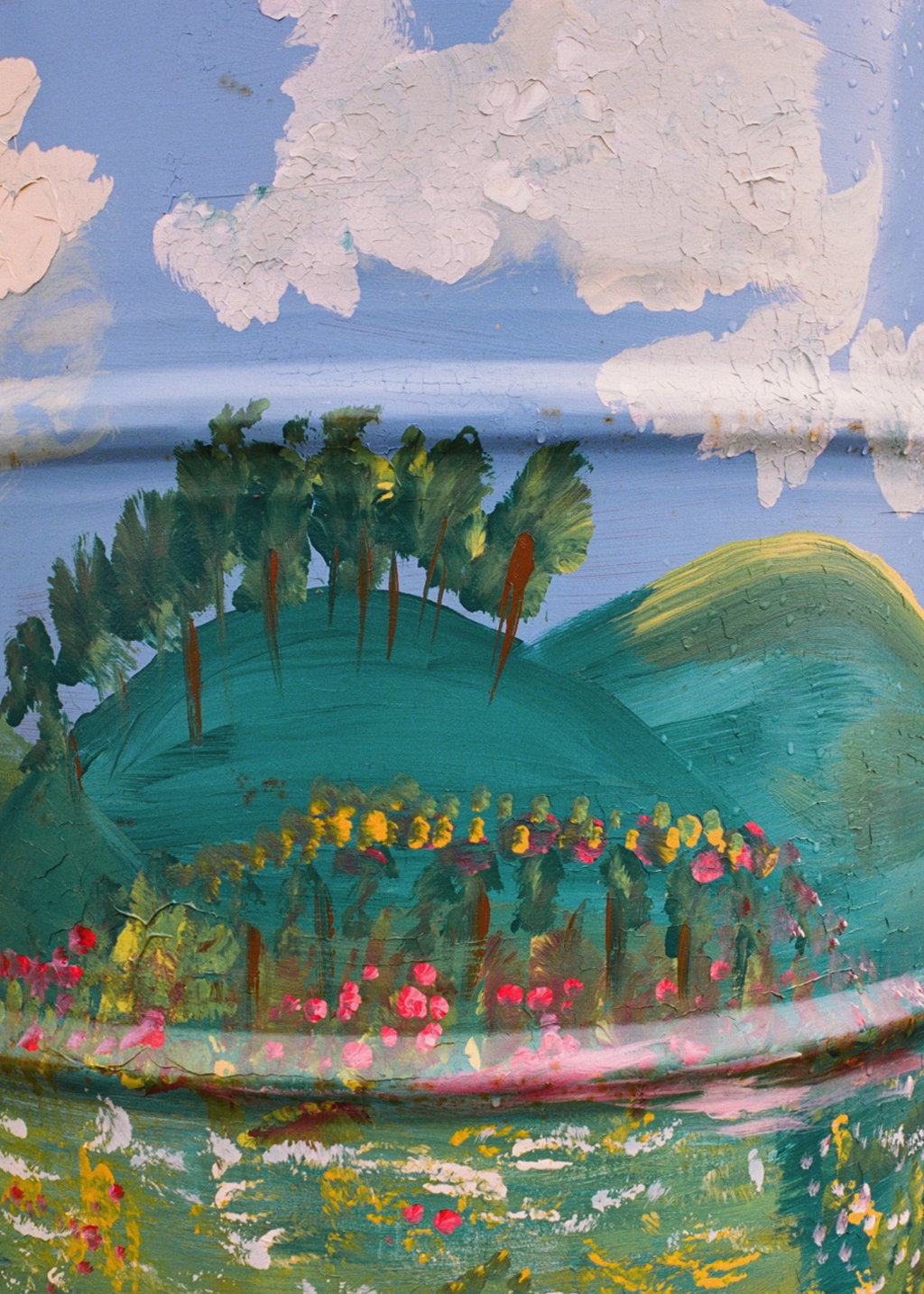
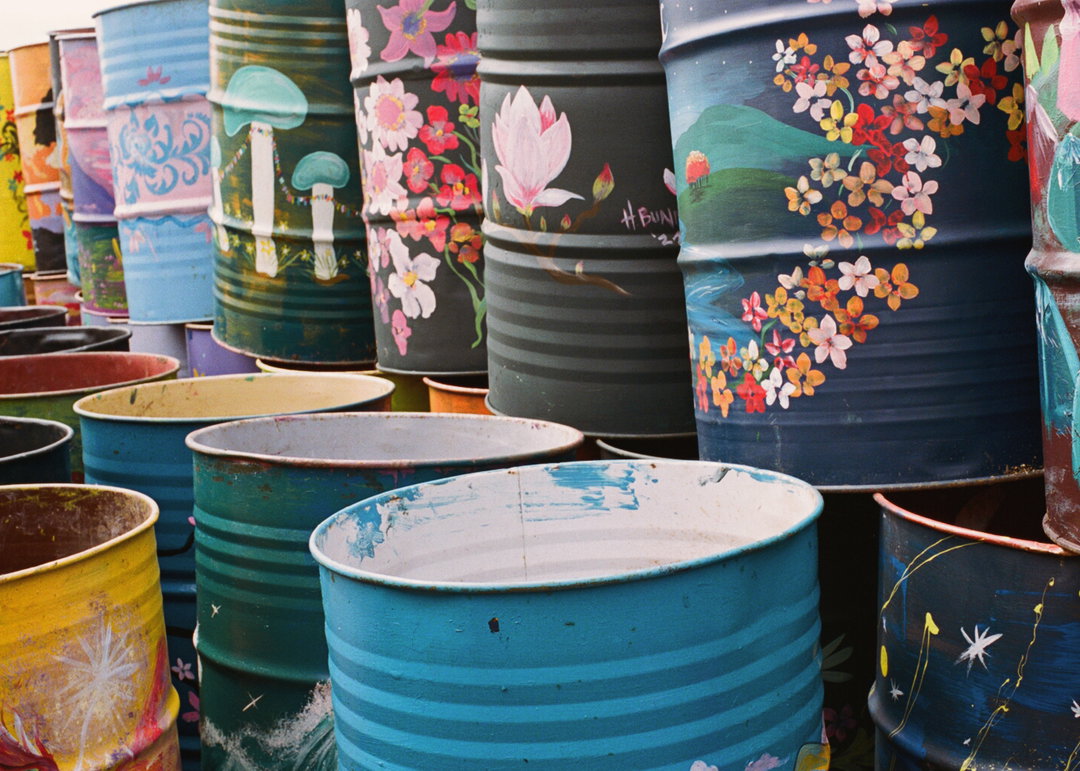
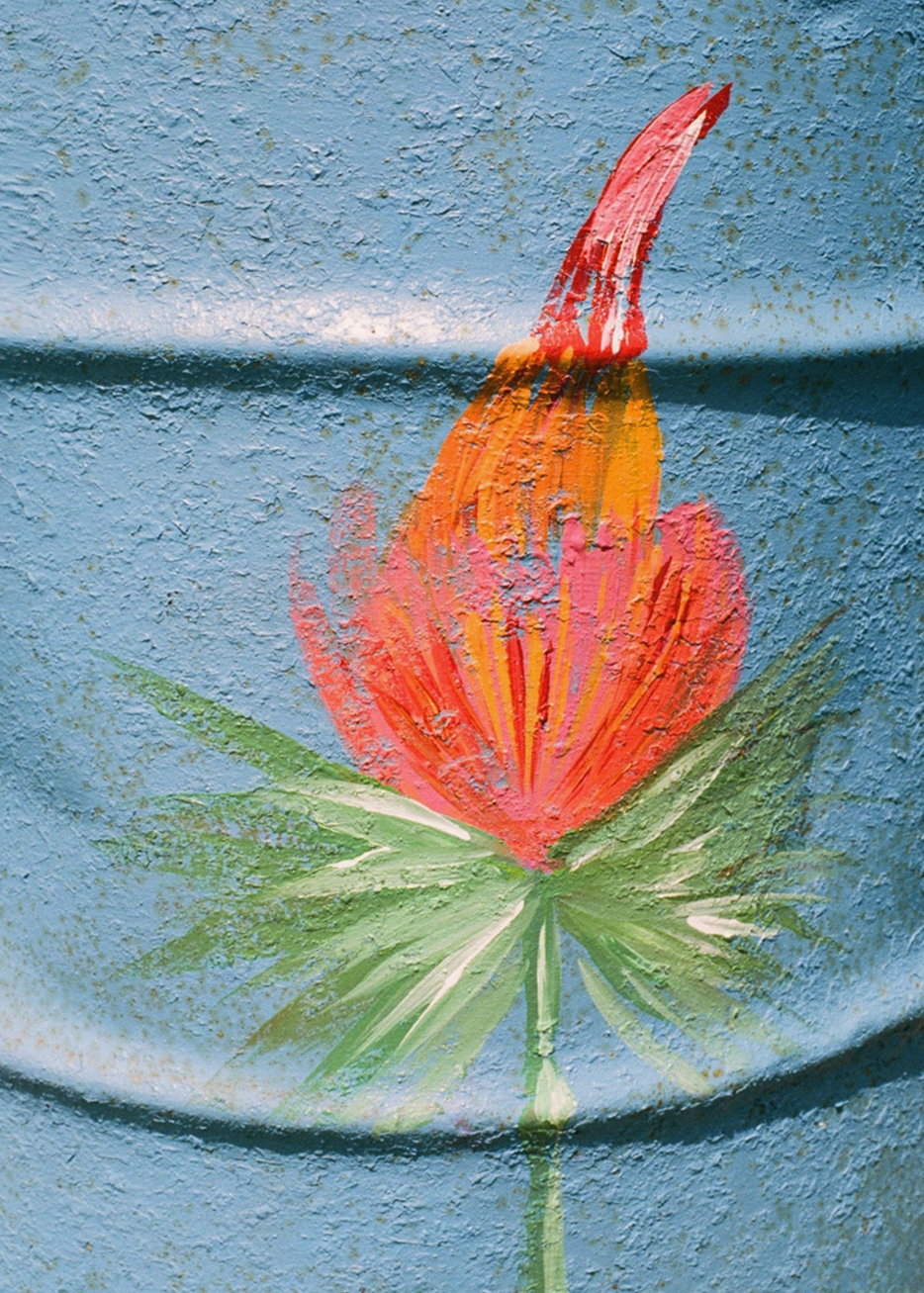
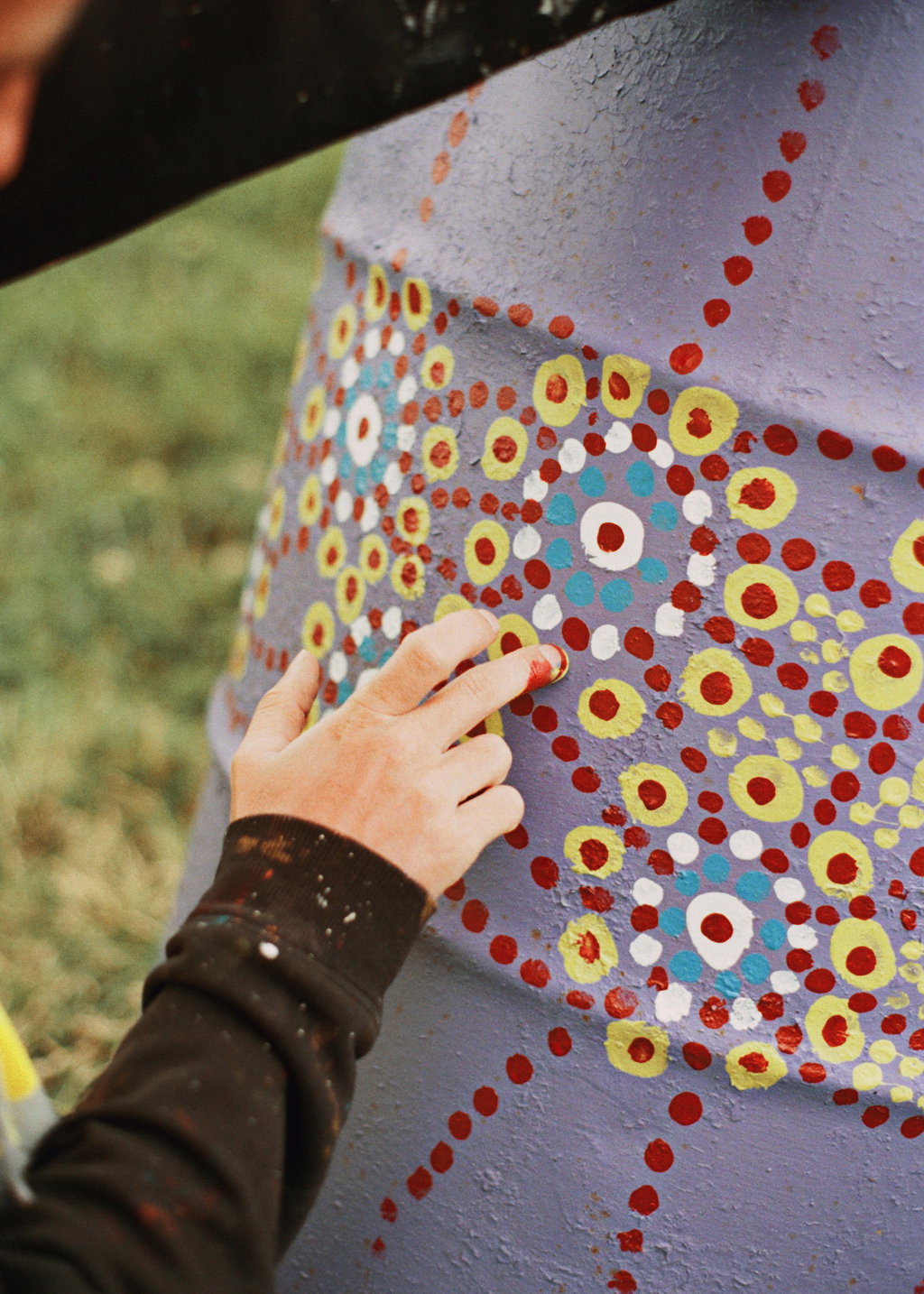
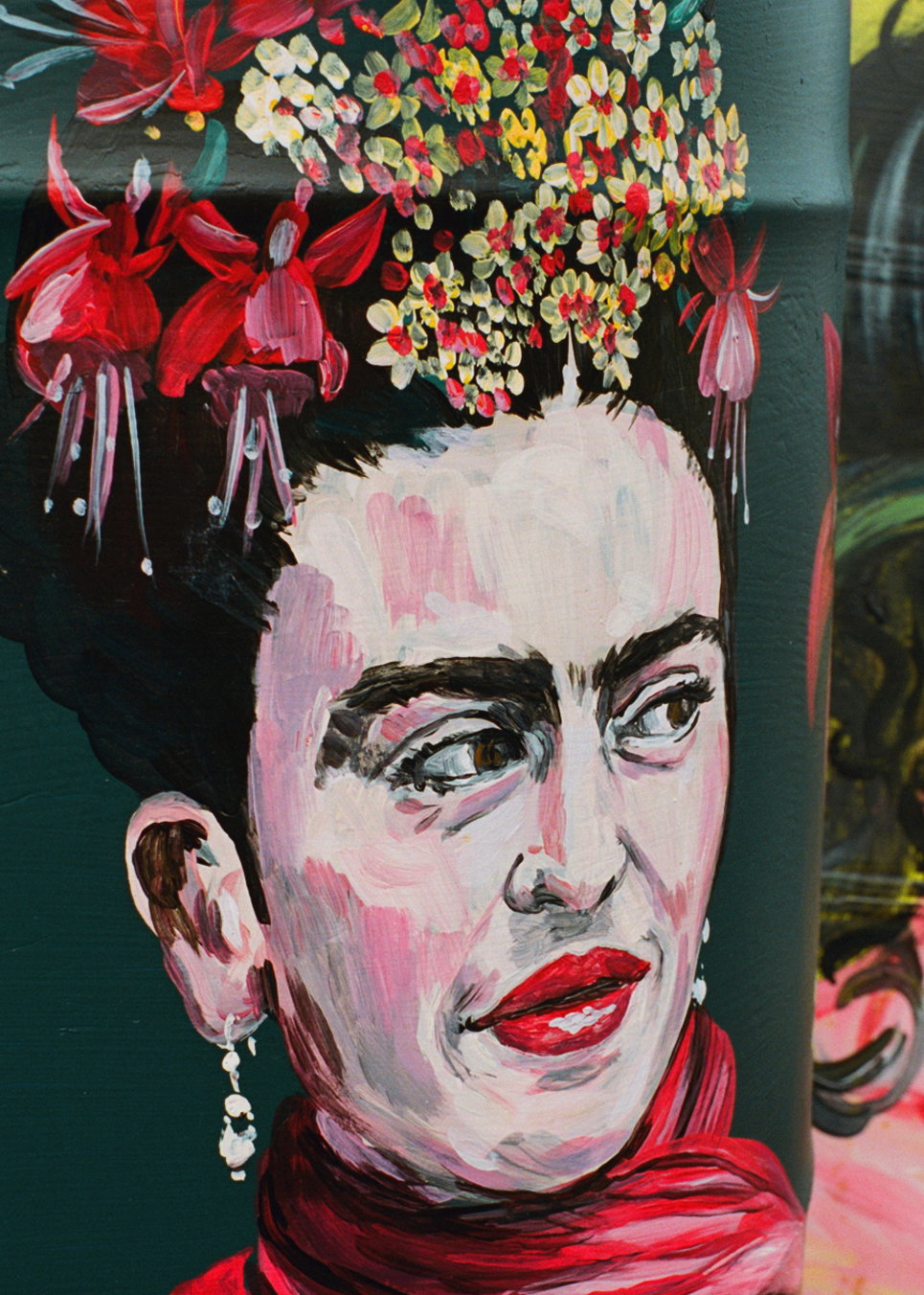
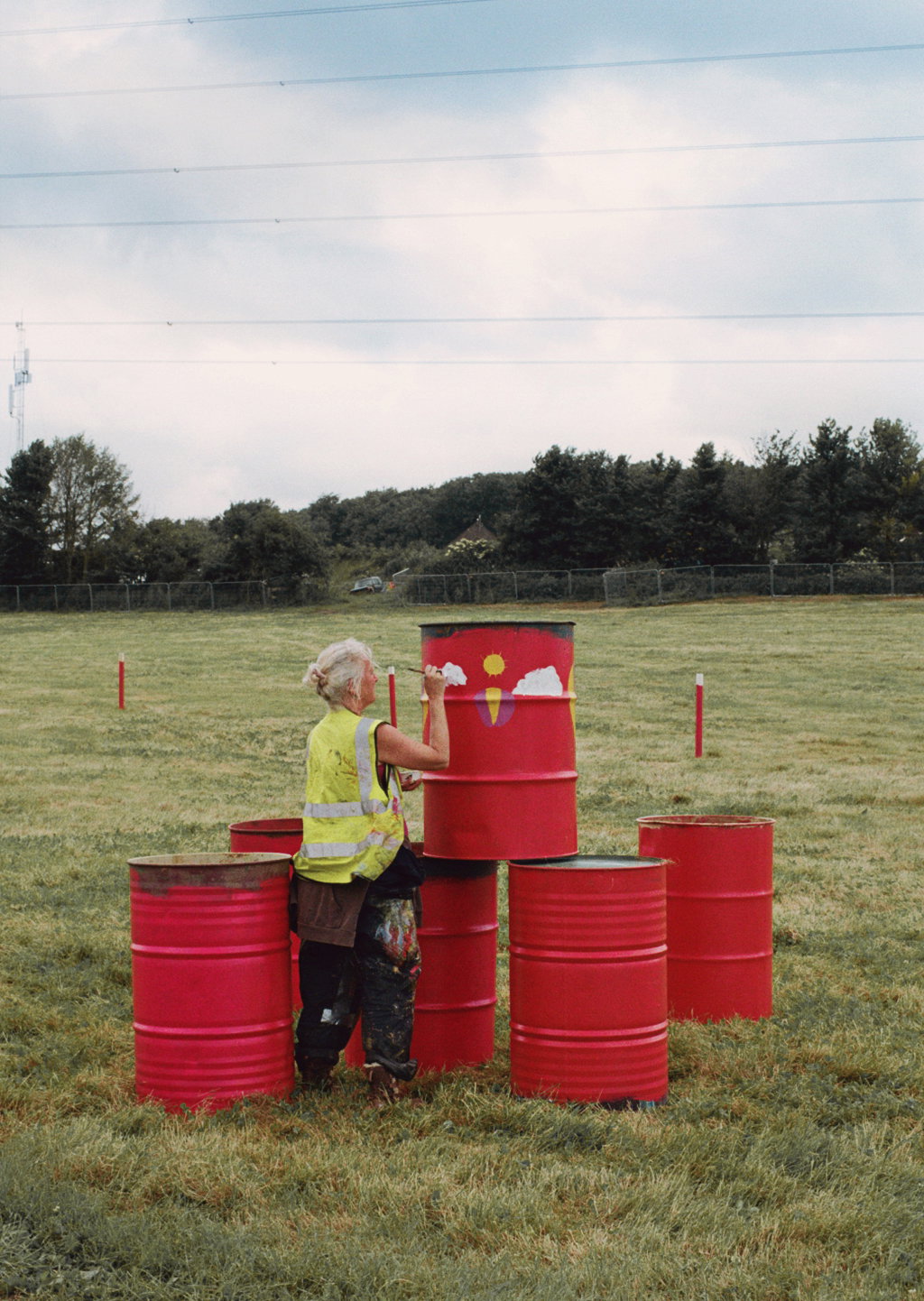
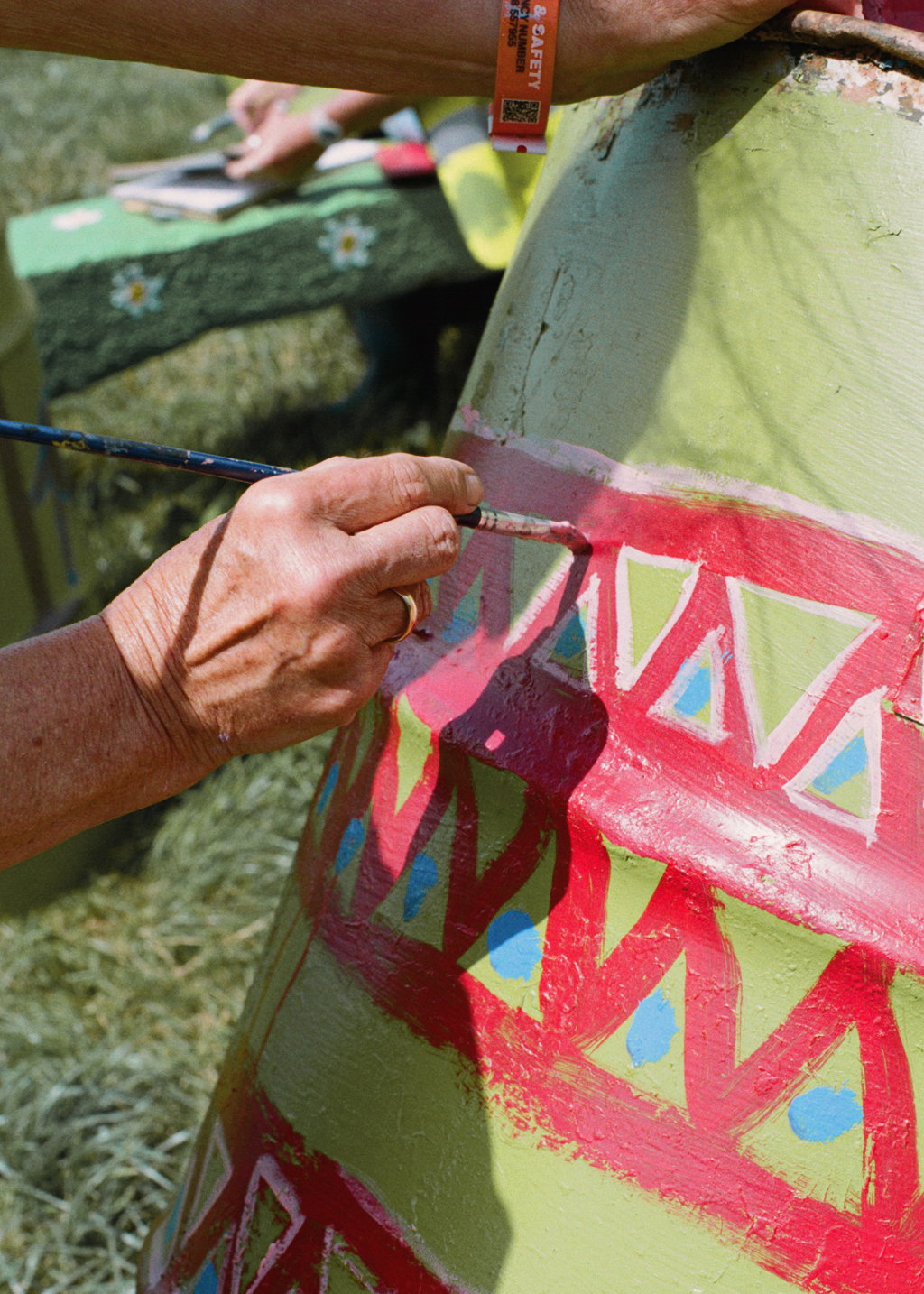
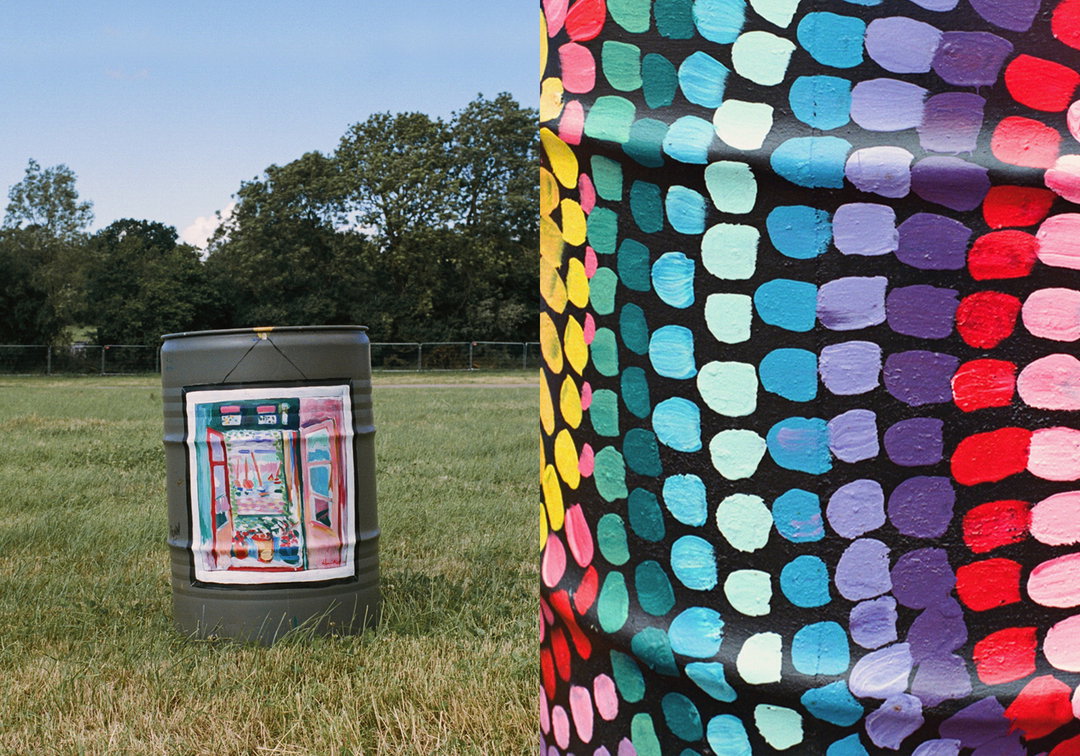
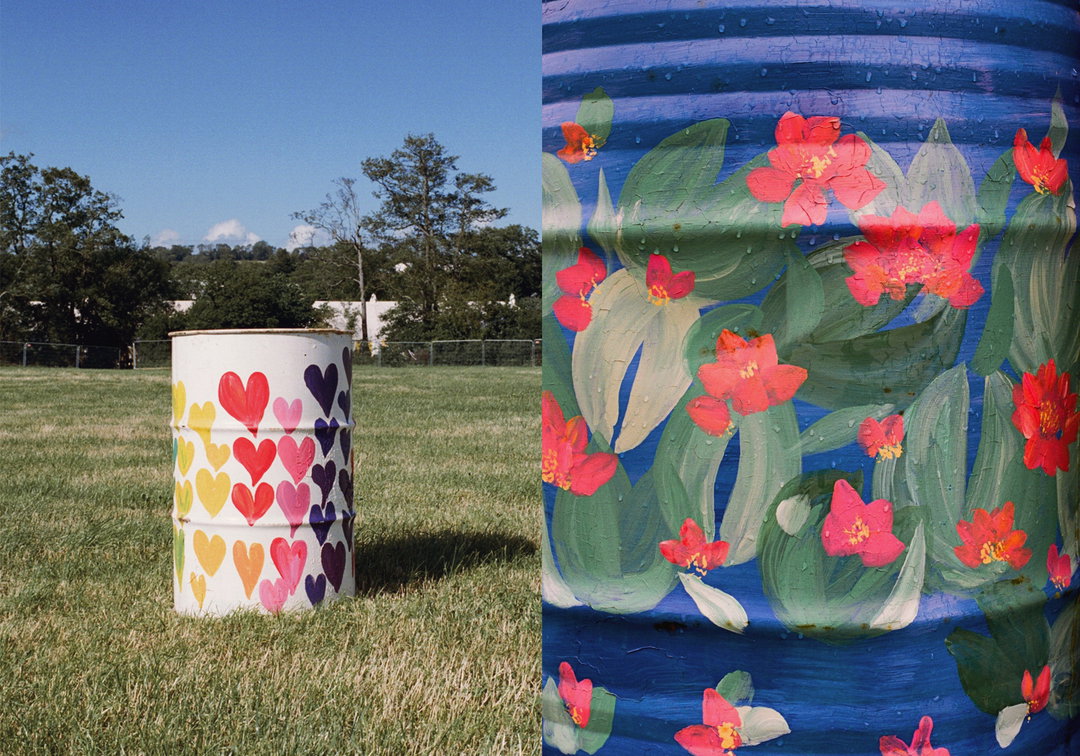
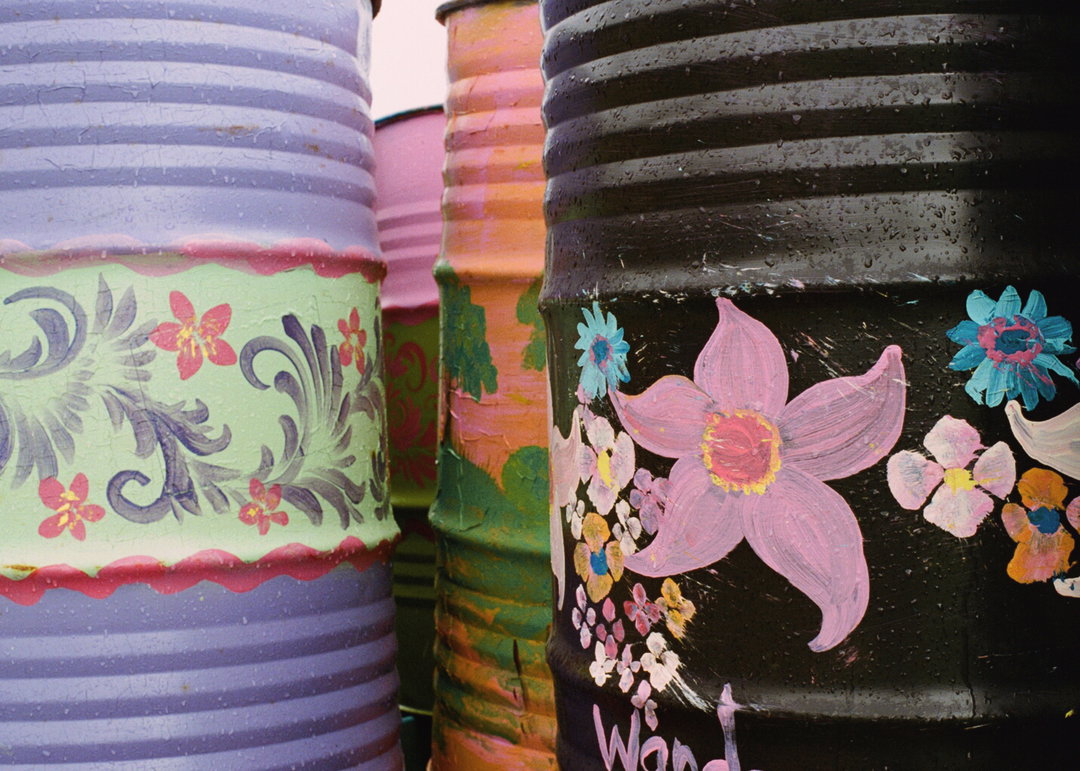
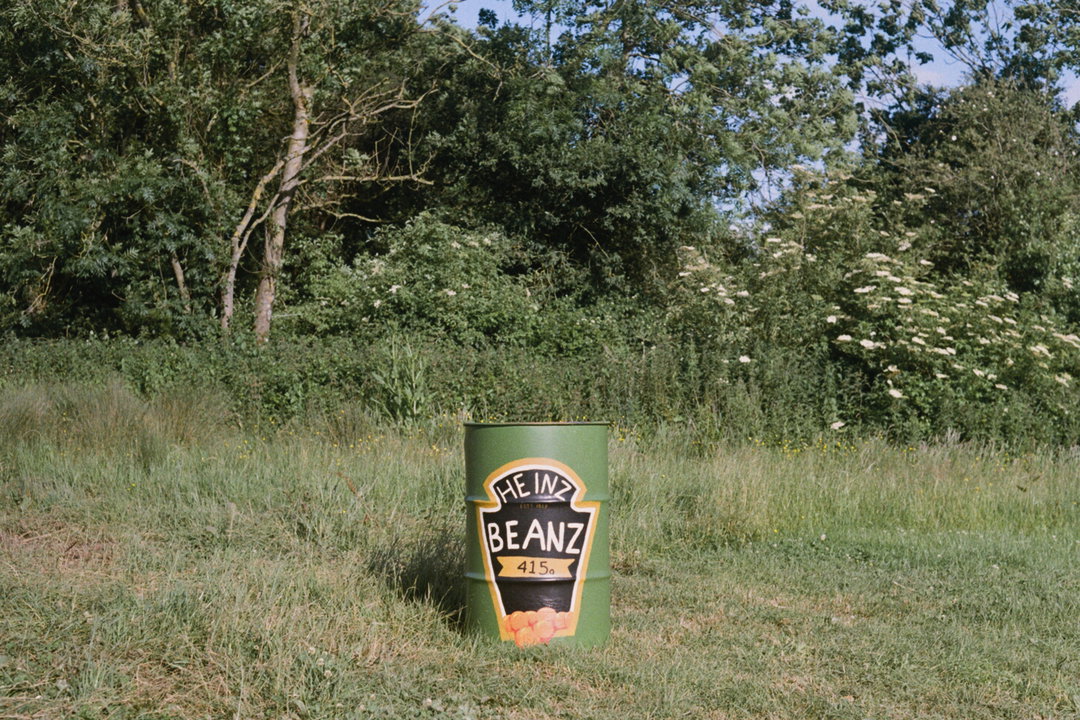
But standard plastic wheelie bins, these are not. Each year, every single 45-gallon oil drum bin is individually hand painted with a beautiful bespoke design. That’s many thousands of individual pieces of art.
Rosanna Webster: Glastonbury Bins, One Man’s Rubbish…
Rosanna Webster: Glastonbury Bins, One Man’s Rubbish…
Rosanna Webster: Glastonbury Bins, One Man’s Rubbish…
Now these artworks may not have the draw of a headline act, but they are an absolute icon of the festival design. You might be queuing for a pint, or strolling the campsite, but you indirectly absorb them at all points during the event; you are immersed in artwork.
Whilst primarily encouraging punters to keep the site clean, Glastonbury’s choice to celebrate their rubbish receptacles also plays a big role in the escapism of the Glasto experience. If the everyday consists of white walls and grey office buildings, the sheer volume of visual decoration within the festival is staggering. Every surface becomes a canvas, an opportunity for creativity.
When you stop to think, it’s a truly remarkable thing. In today’s day and age, where efficiency and budget rule, a commercial event commissioning 17,000 hand painted bespoke artworks, on bins. Now that’s pretty wild! But why do they do it? And who paints them? How does it all happen?
Rosanna Webster: Glastonbury Bins, One Man’s Rubbish…
1 of 9
Rosanna Webster: Glastonbury Bins, One Man’s Rubbish…
1 of 9
Rosanna Webster: Glastonbury Bins, One Man’s Rubbish…
“It’s hard to pinpoint exactly what makes the festival special, but I think it’s the heart and soul, and attention to detail that goes into every conceivable element, from the bins upwards.”
Joe, painting supervisor
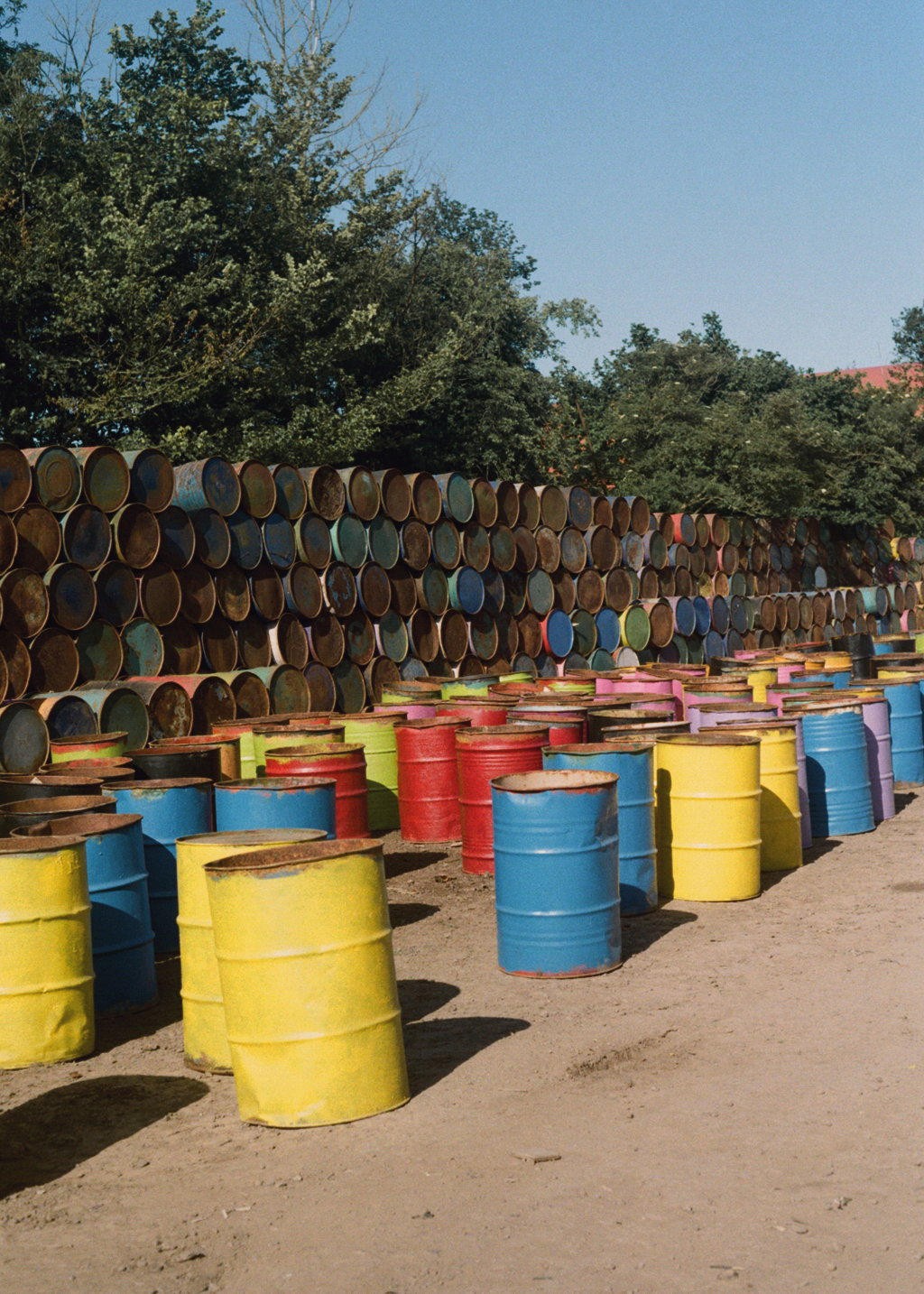
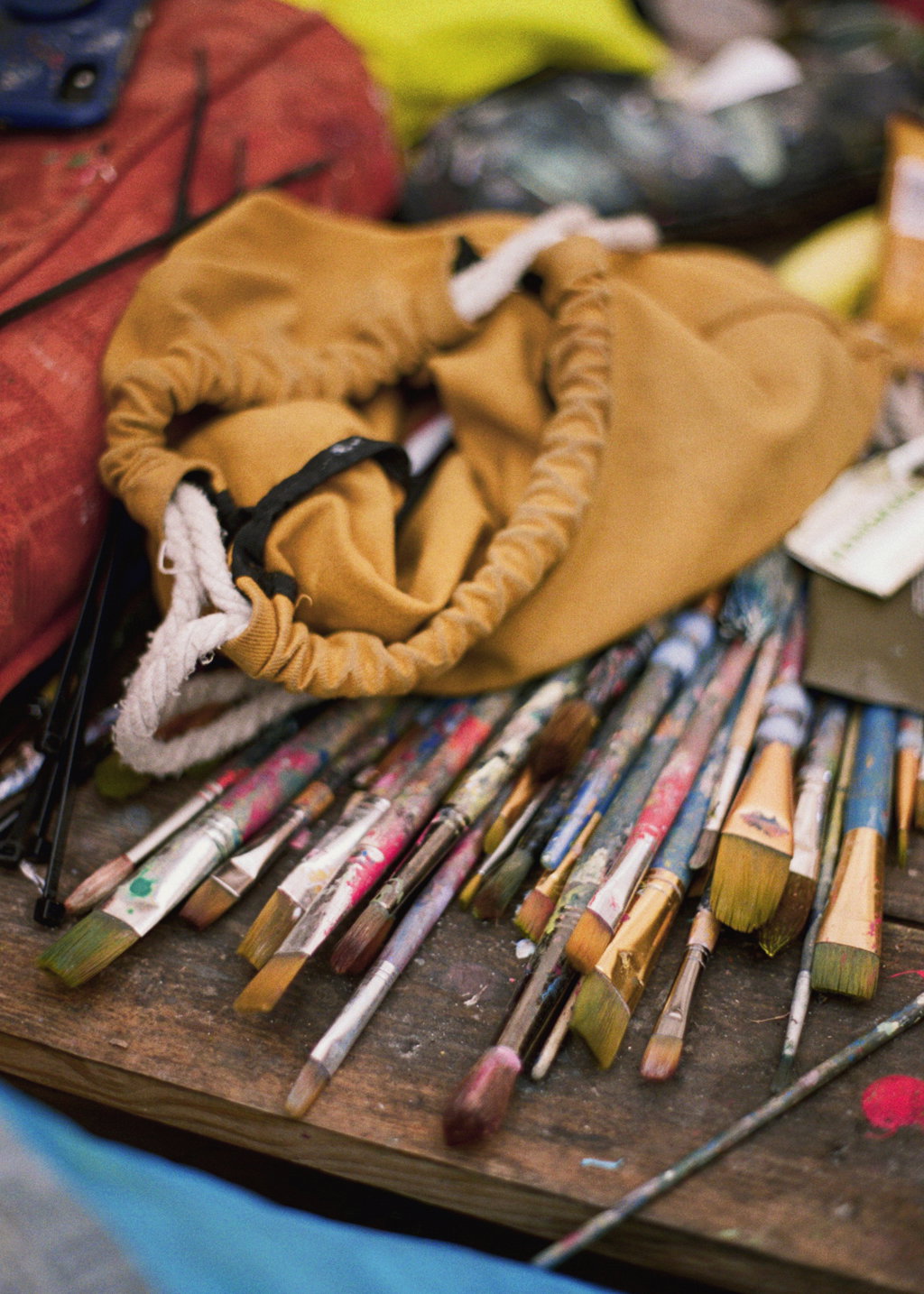
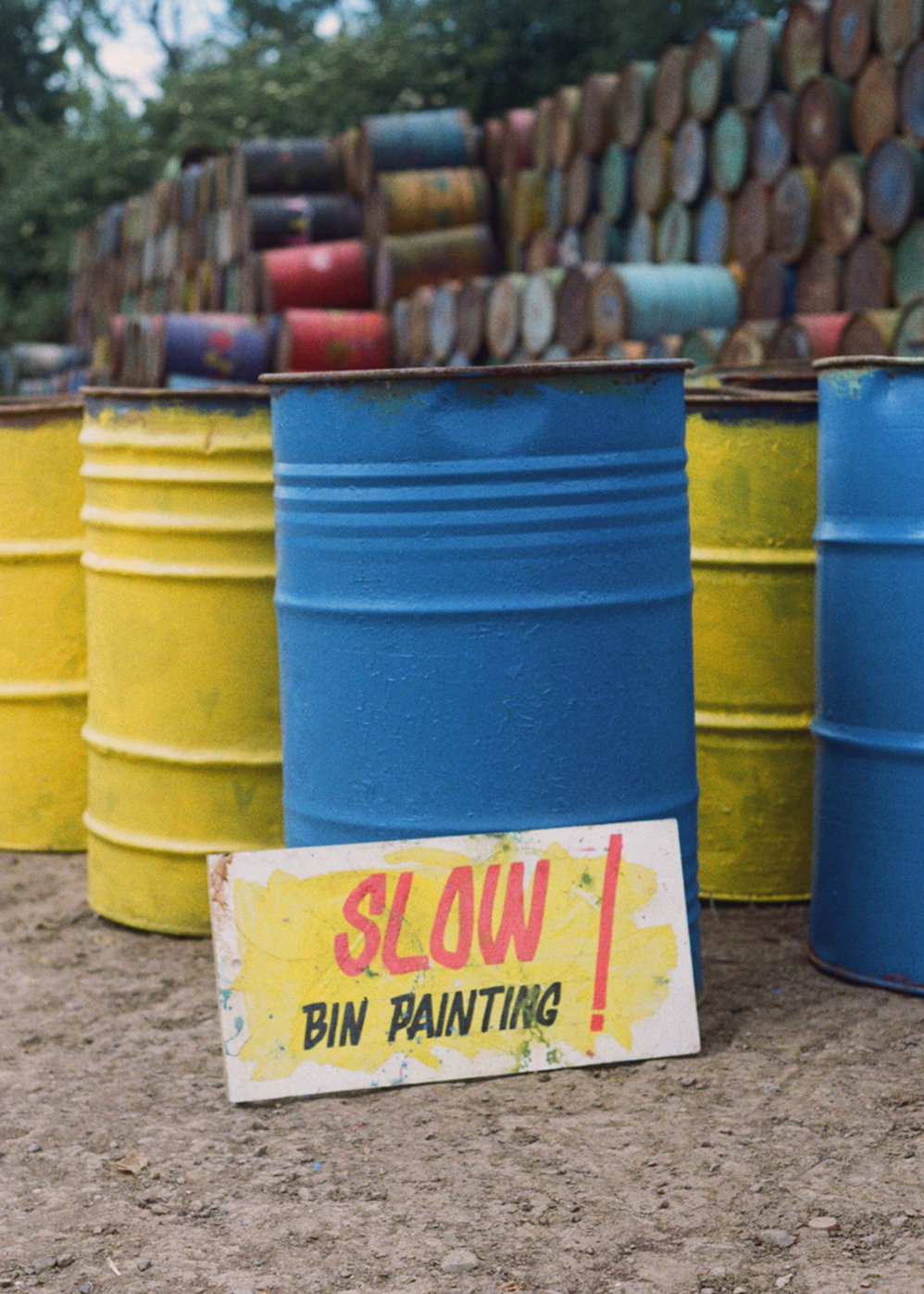
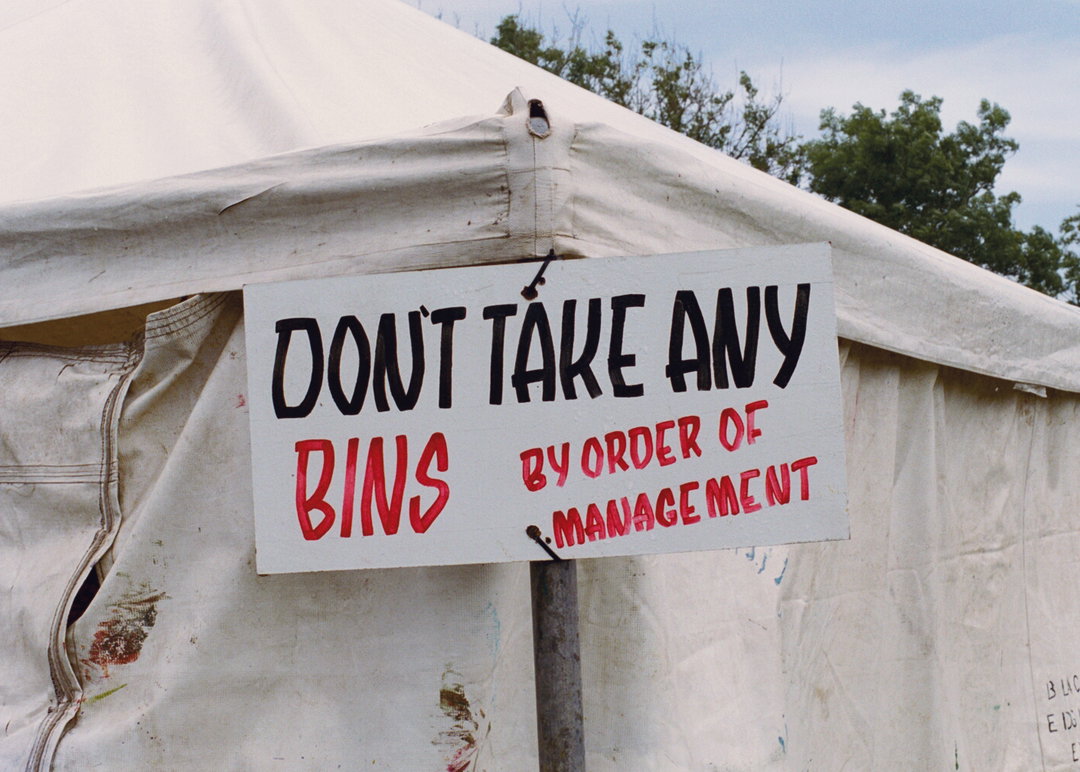
Festival founder Michael Eavis came up with the idea to decorate the bins back in the 80s. The event has scaled up significantly since then, but the process today isn’t all that dissimilar. The oil drums are neatly stacked and stored through winter on the farm. In the weeks leading up to the event, the oil drums are scraped down with wire brushes to remove decay, then a base paint layer is added, followed by the decoration artwork layer. And finally, they are distributed to different parts of the site via tractor (this takes place on a working farm after all).
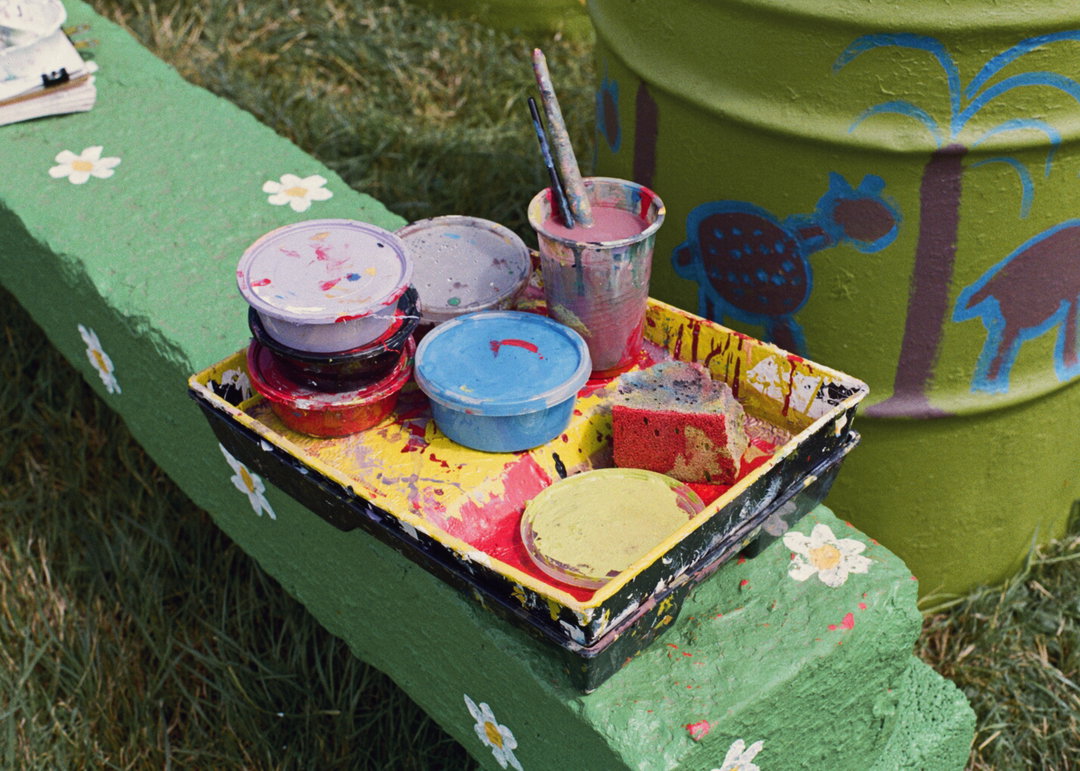
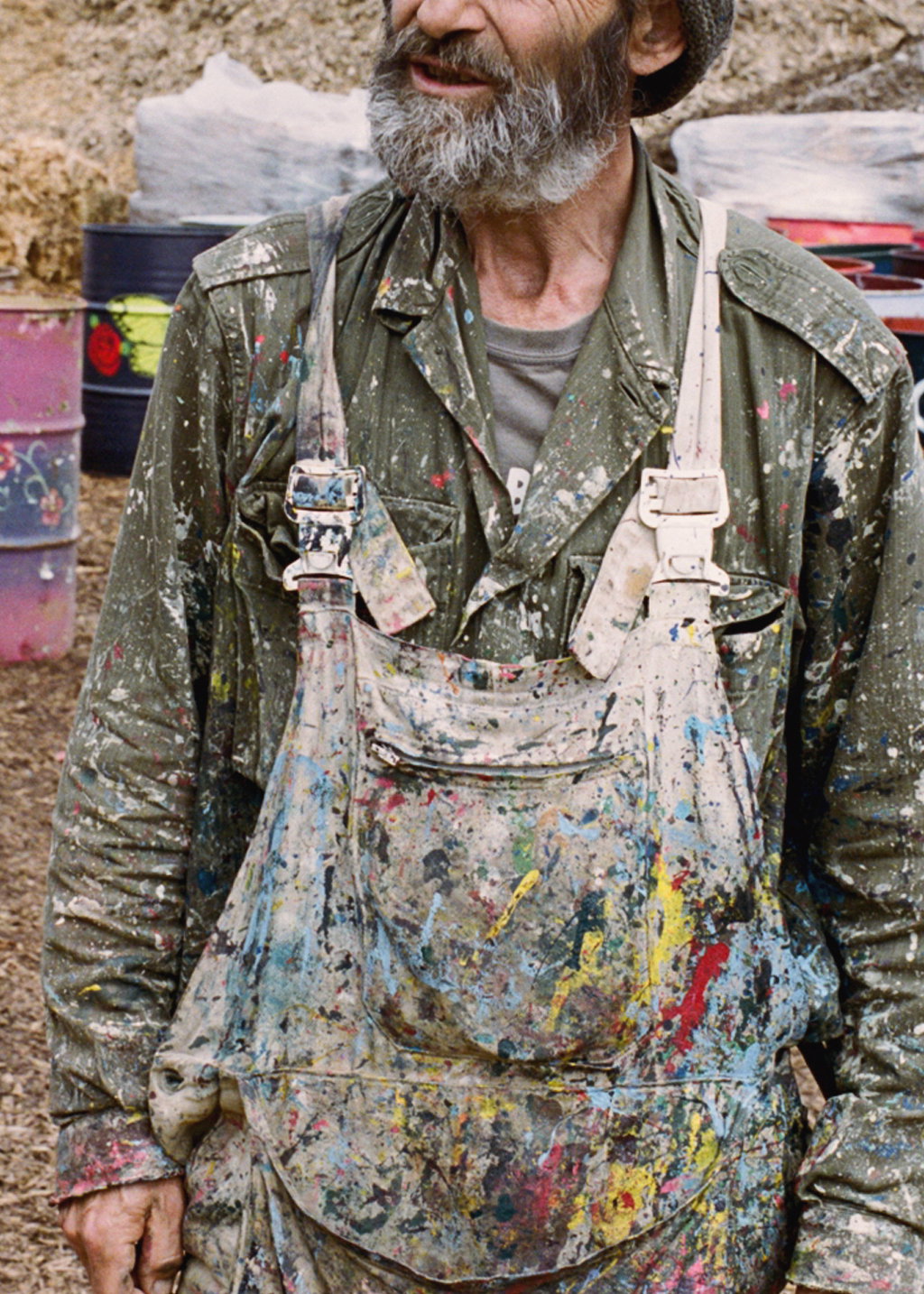
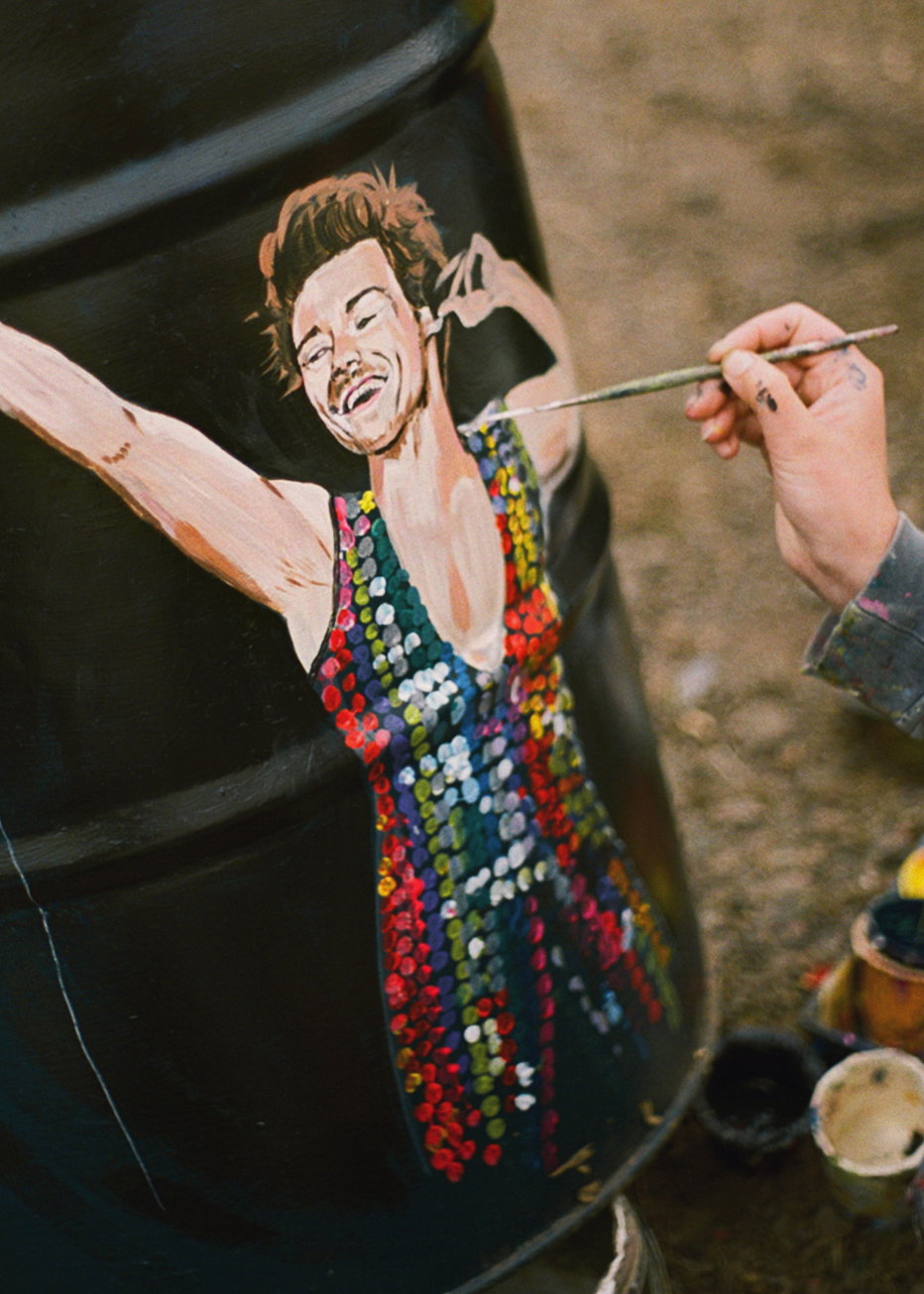
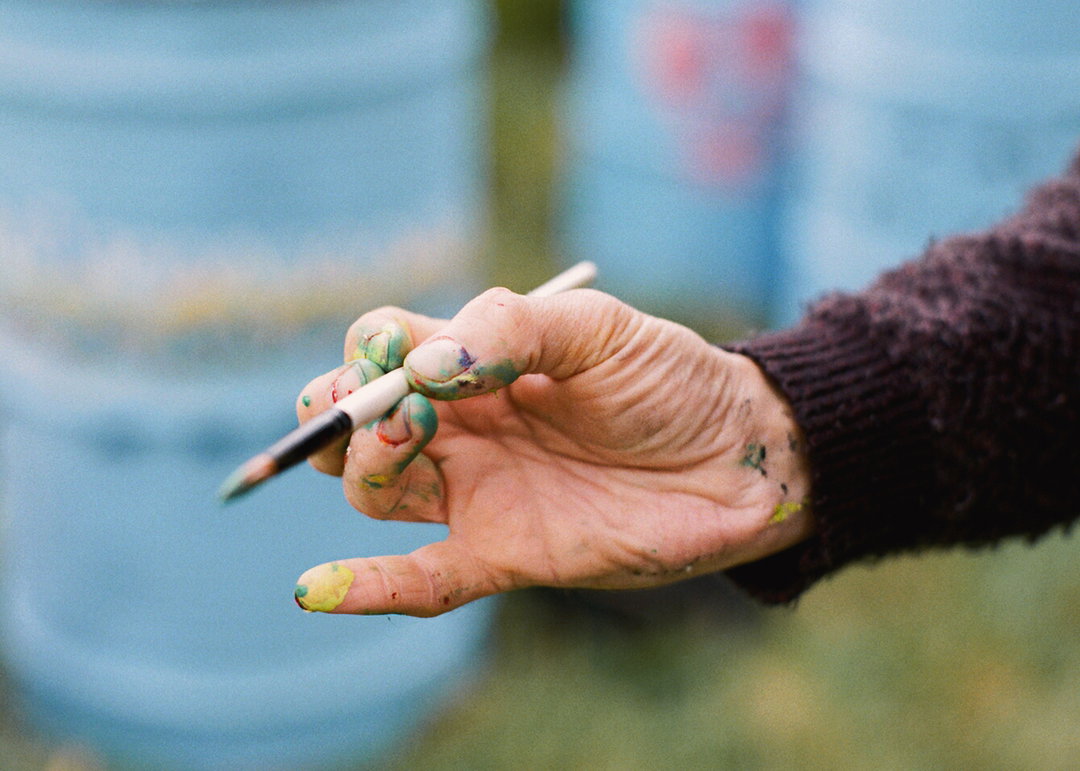
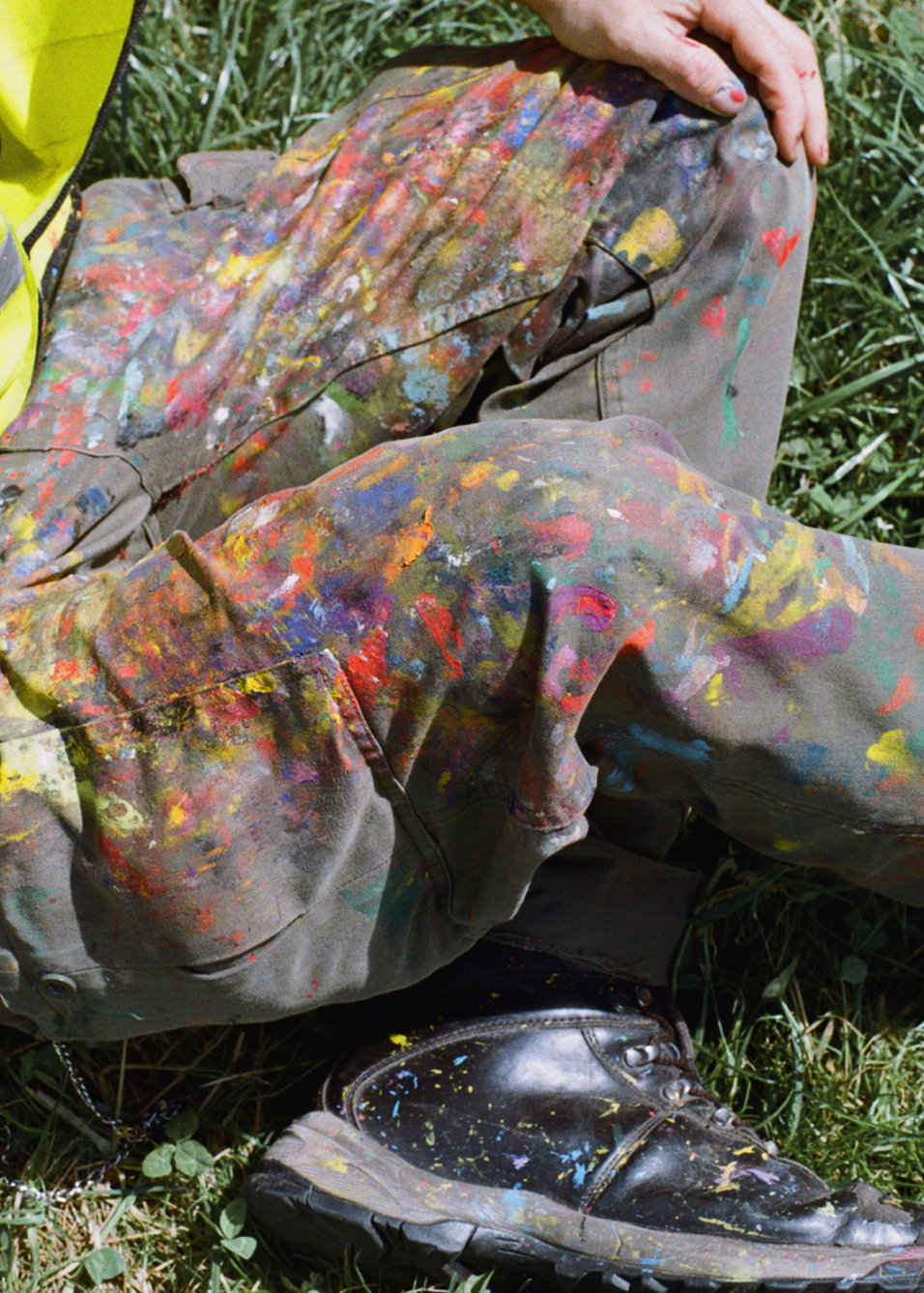
This process is carried out by two groups of painters. One team is made up of approximately ten professional paid artists living on the site, painting for ten long weeks. The other team of 80 volunteers live on site for three weeks in exchange for their ticket, and one heck of a life experience.
“We paint together for eight hours a day everyday, but all you hear from this group is harmony and occasional explosive laughter,” Muhammed, a long-time base painter, tells me. “We celebrate and constructively critique each other's work. We all inspire each other, it’s a truly unique and equal environment.”
Rosanna Webster: Glastonbury Bins, One Man’s Rubbish…
Rosanna Webster: Glastonbury Bins, One Man’s Rubbish…
Rosanna Webster: Glastonbury Bins, One Man’s Rubbish…
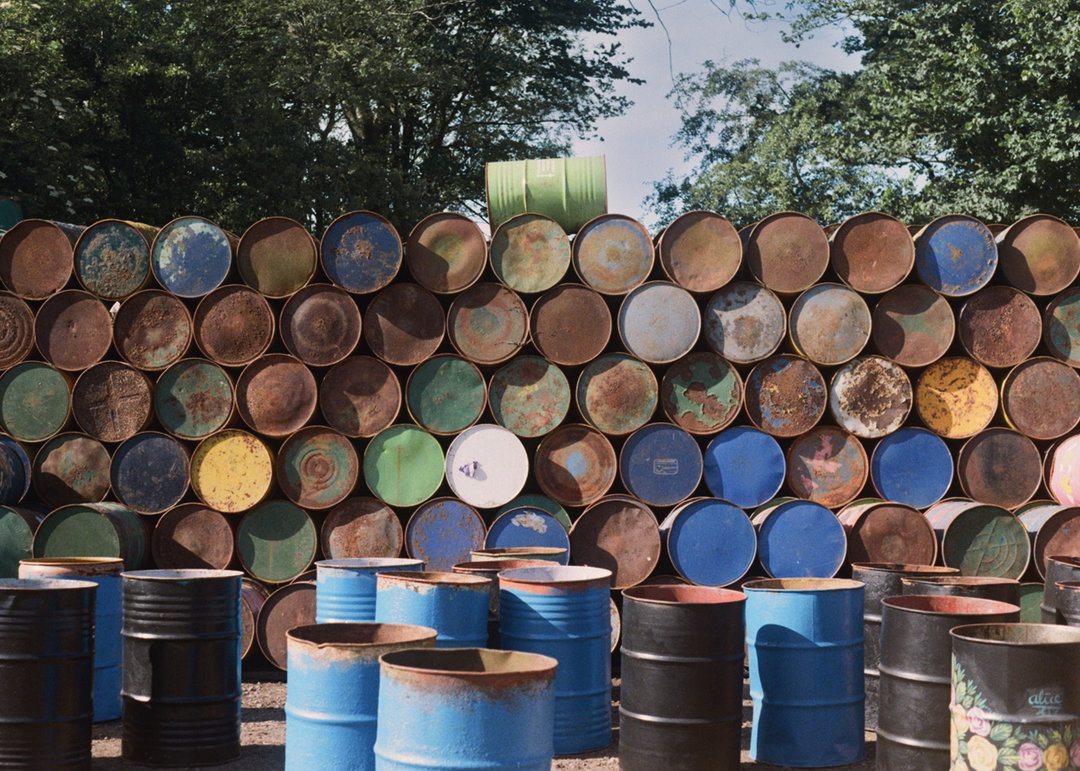
Rosanna Webster: Glastonbury Bins, One Man’s Rubbish…
Both teams work tireless 40-hour weeks, painting together, eating together and living together on site; as a result the sense of community and joy here is palpable.
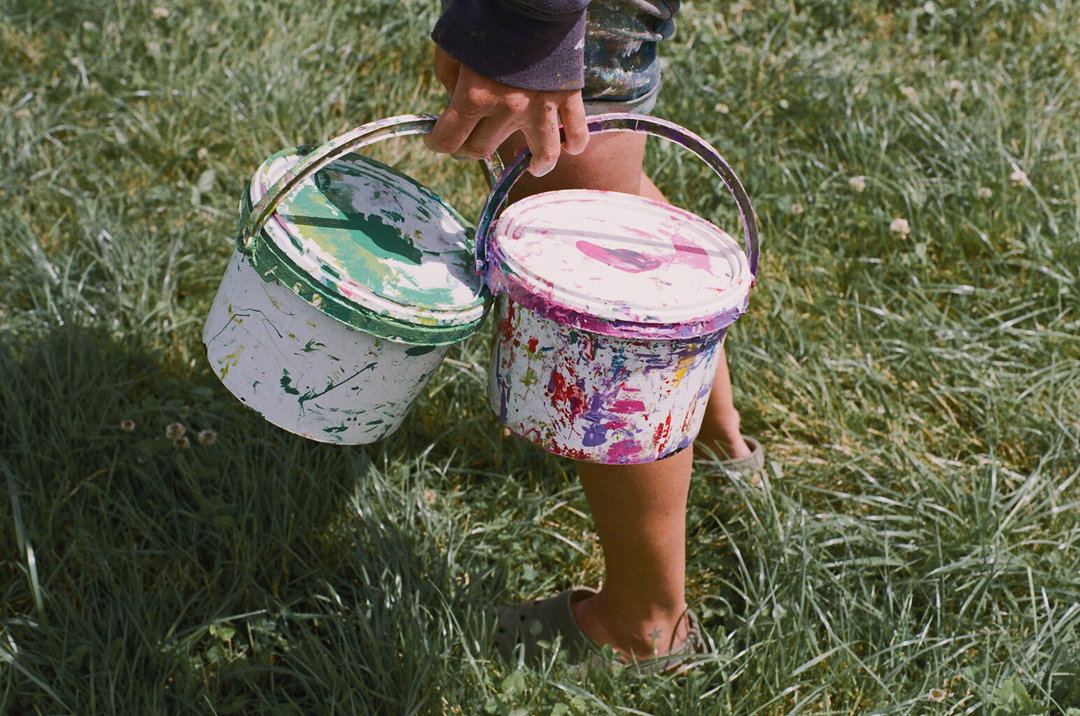
After a day of painting, brushes are put down and cleaned, and teams return from the many corners of the farm to their camp. From hosting quiz nights and talent contests to sharing the results of the day's work, the evenings are where the spirit and bond of the group grows even tighter.
Another thing that becomes apparent from spending time within this community and chatting to many painters is the overwhelming sense of escapism from the everyday. This feels more akin to an artist residency than conventional work.
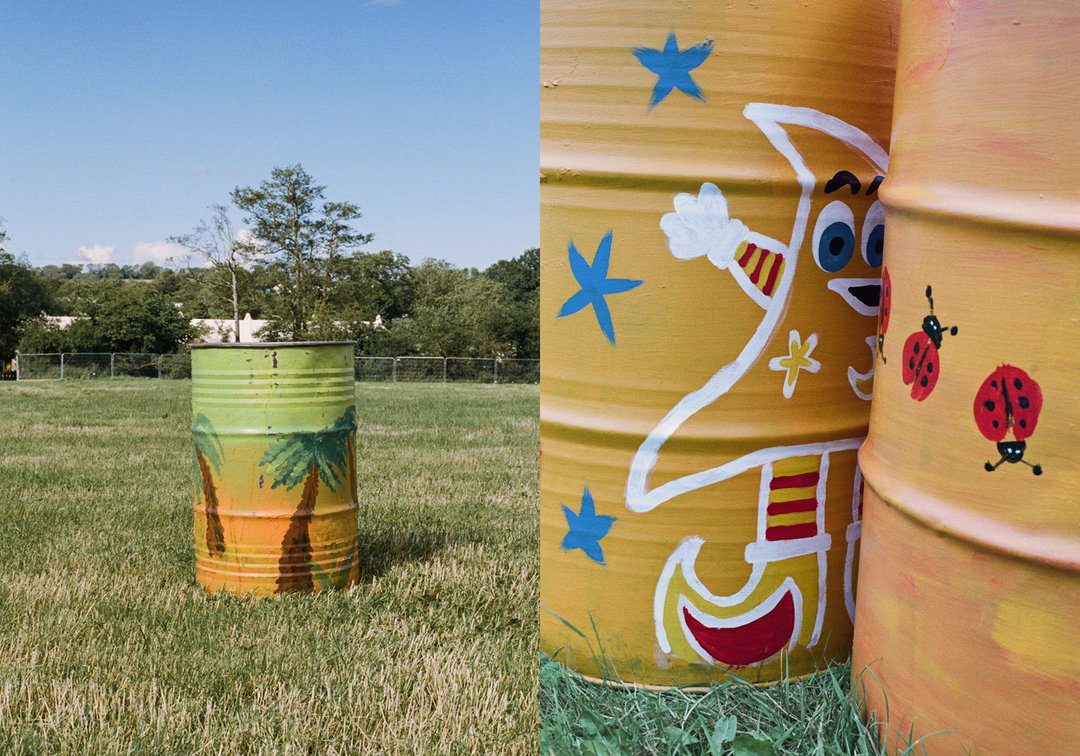
Rosanna Webster: Glastonbury Bins, One Man’s Rubbish…
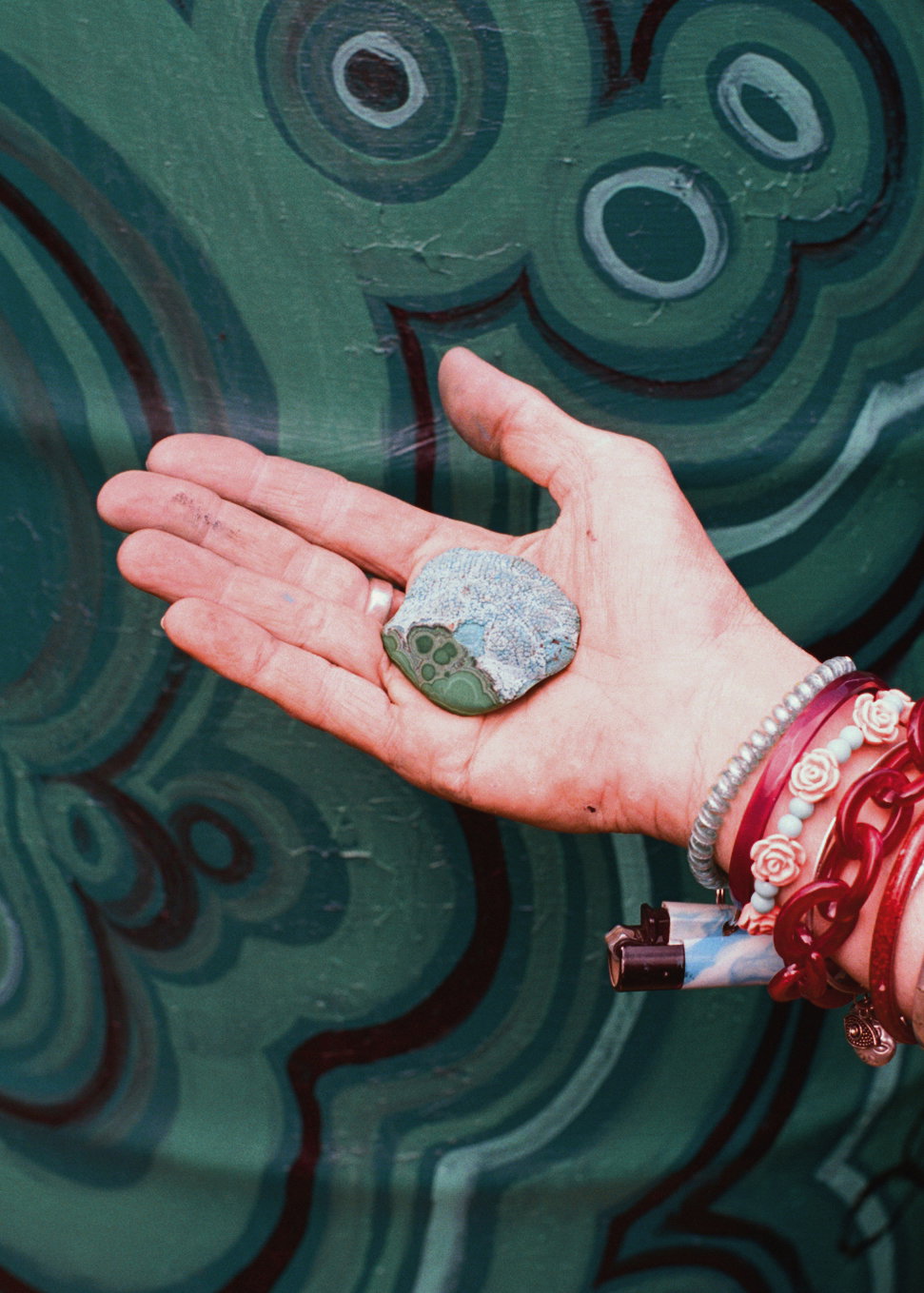
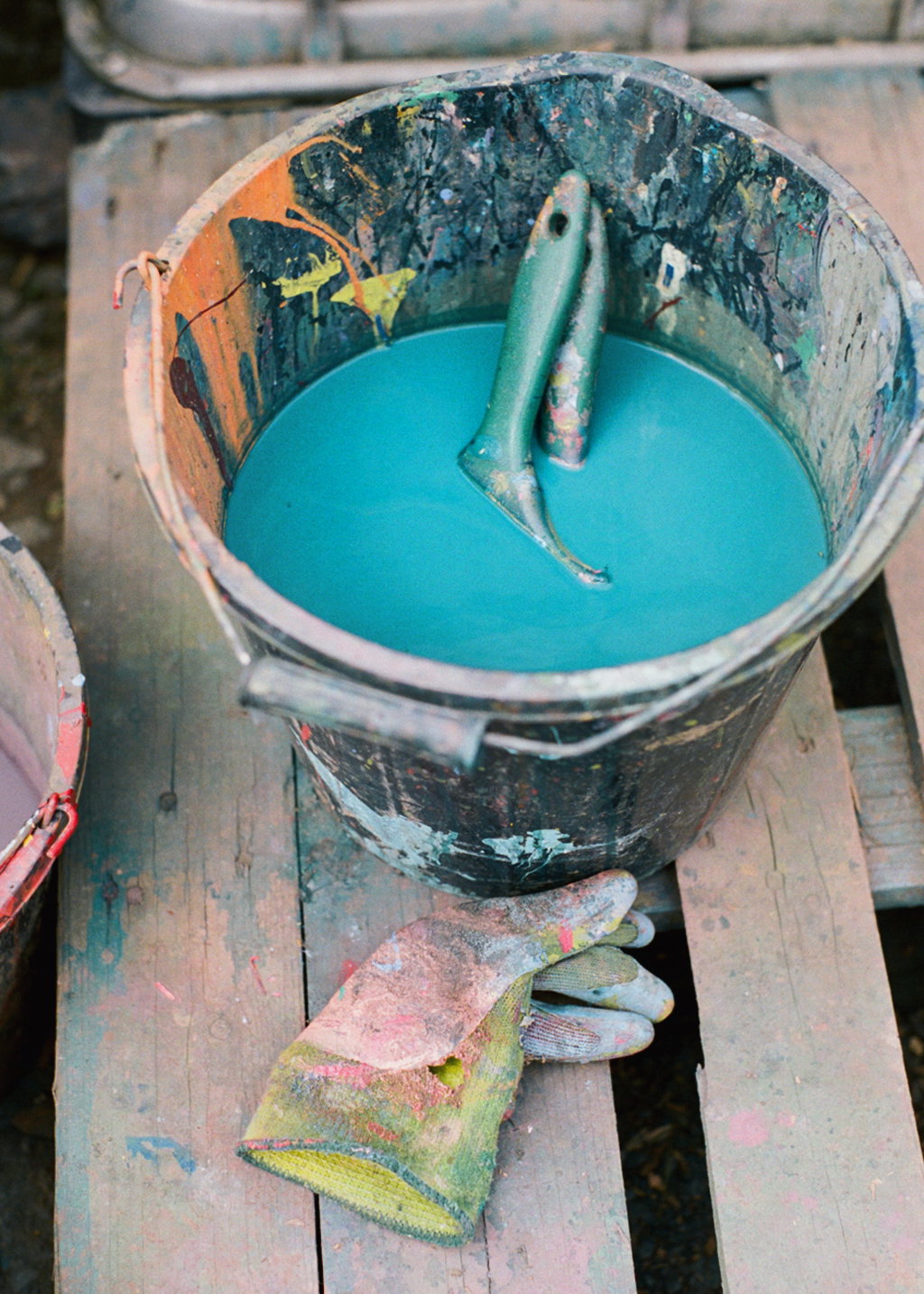
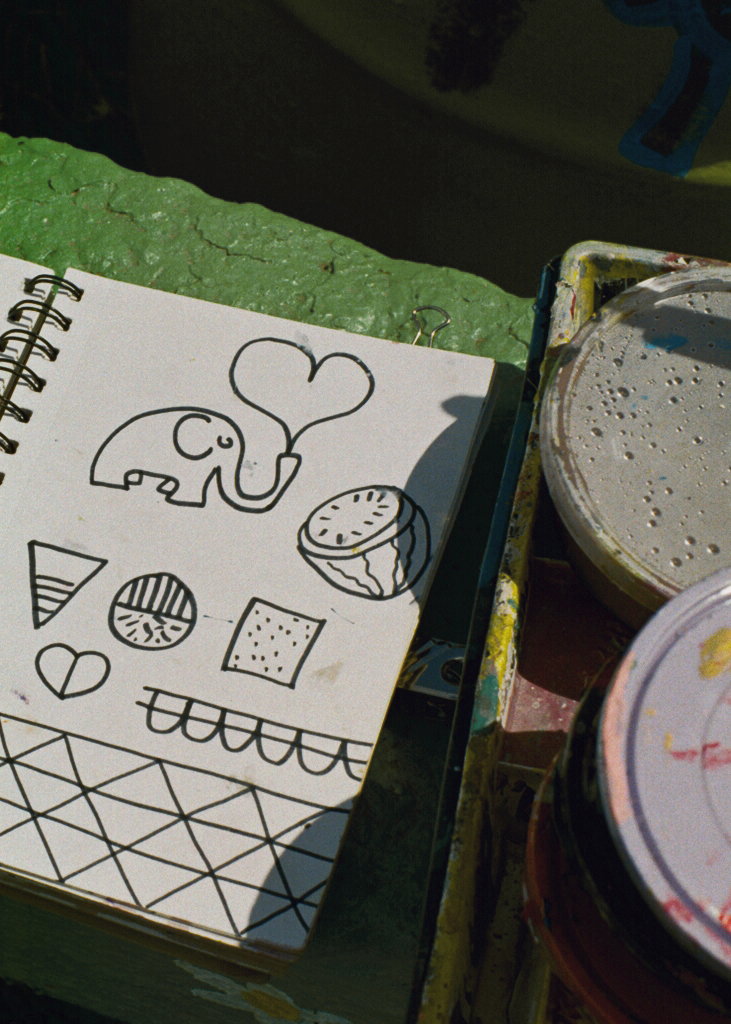
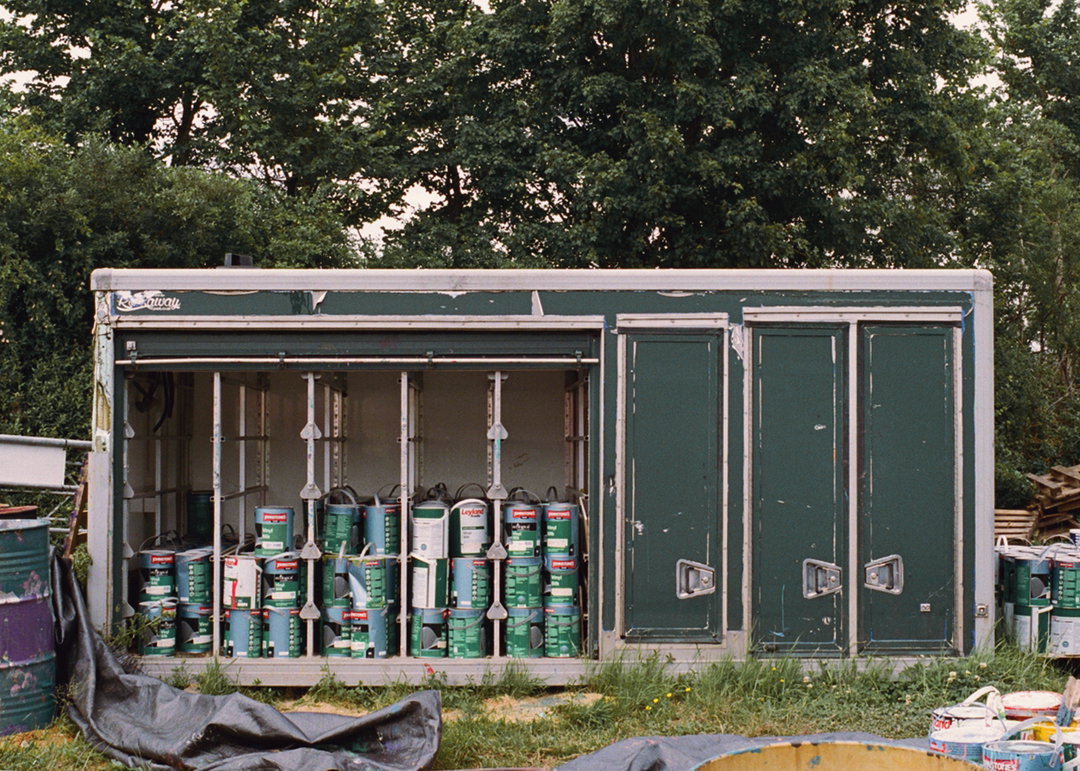
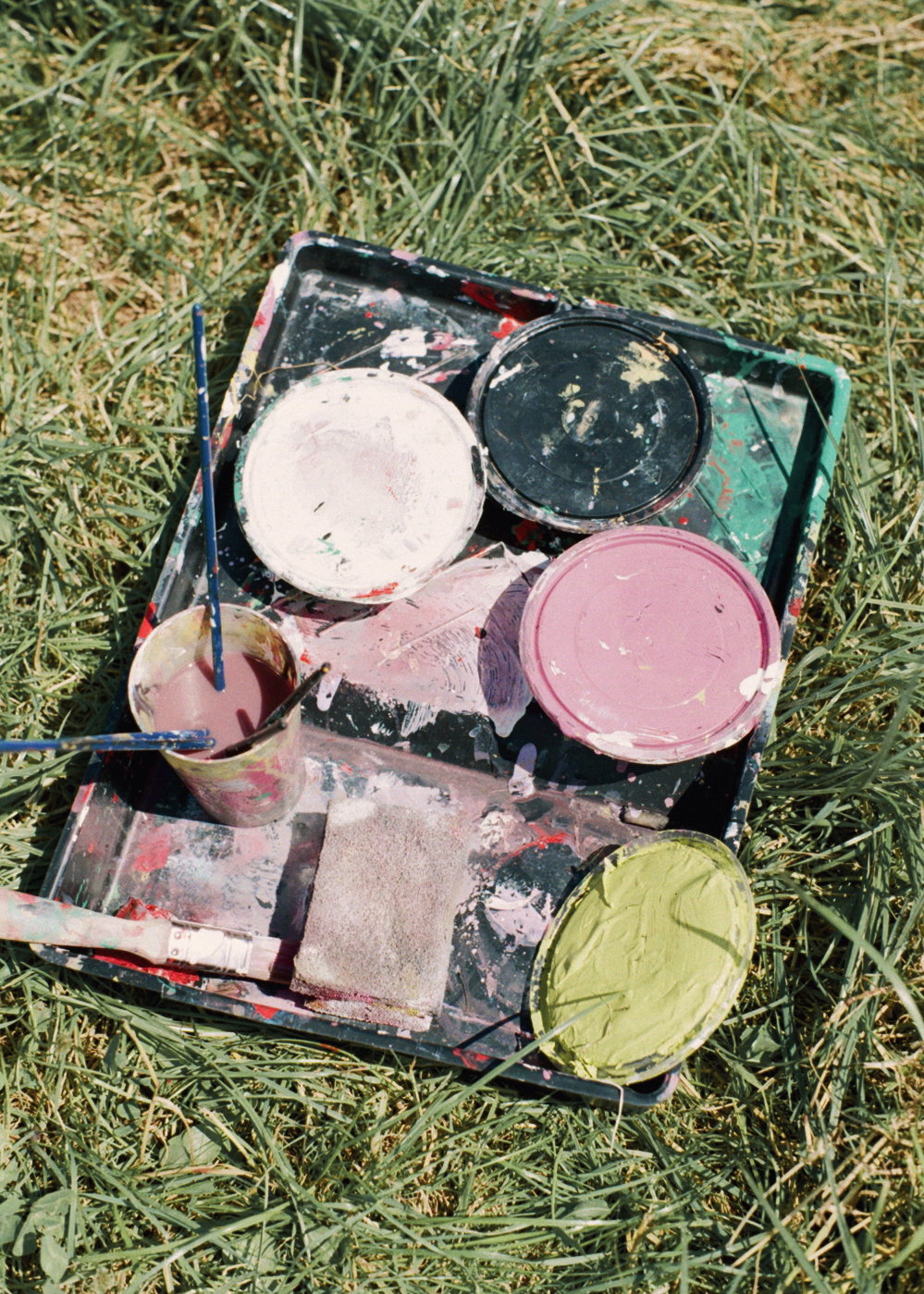
1 of 9
Rosanna Webster: Glastonbury Bins, One Man’s Rubbish…
1 of 9
Rosanna Webster: Glastonbury Bins, One Man’s Rubbish…
“In my day job I work to tight, regimented briefs. Here, I get to flex a different creative muscle and can really play.”
Nathan, volunteer painter
Nathan, an agency-based graphic designer, discusses his motivation for returning for his fourth year as a volunteer. “In my day job I work to tight, regimented briefs. Here, I’m just responding to a different theme each day; I get to flex a different creative muscle and can really play. I’ve even taken three weeks of annual leave to do this. Yes it’s work, but it's such a departure from my day-to-day. I feel proud to contribute to something bigger, something on the scale of Glastonbury.”
For illustrator Hannah Bunn, her annual ten-week stint on site as a professional artist is a refreshing change from her commercial work. “As an illustrator, I colour my visuals in Photoshop and I probably spend too much time staring at a screen. Painting endless oil drums is a freeing, low-stakes approach for me, and by the time I leave I feel even more inspired to get back into my illustration work again.”
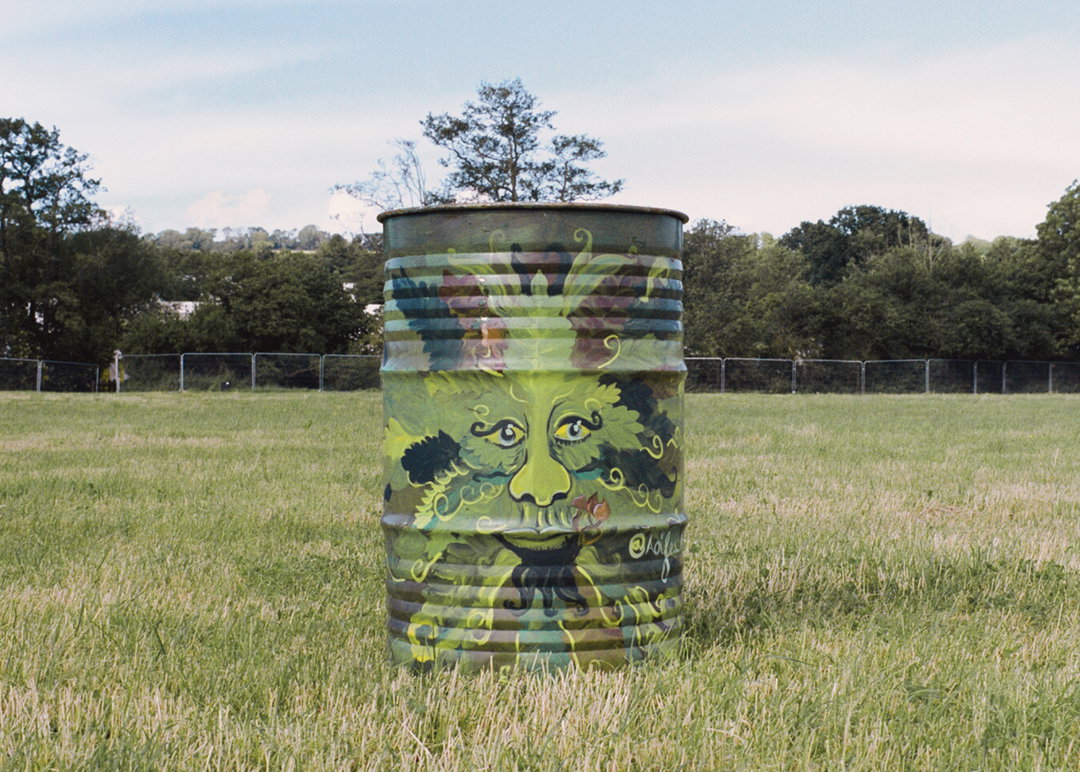
Rosanna Webster: Glastonbury Bins, One Man’s Rubbish…
Rosanna Webster: Glastonbury Bins, One Man’s Rubbish…
As one of the professional artist team, Hannah will decorate ten oil drums a day, but not all bins are created equal. A popular approach is to have “quick-bins” and “longer-bins”, with the plan to prioritise at least two or three more detailed, impressive pieces a day, while still hitting that overall target.
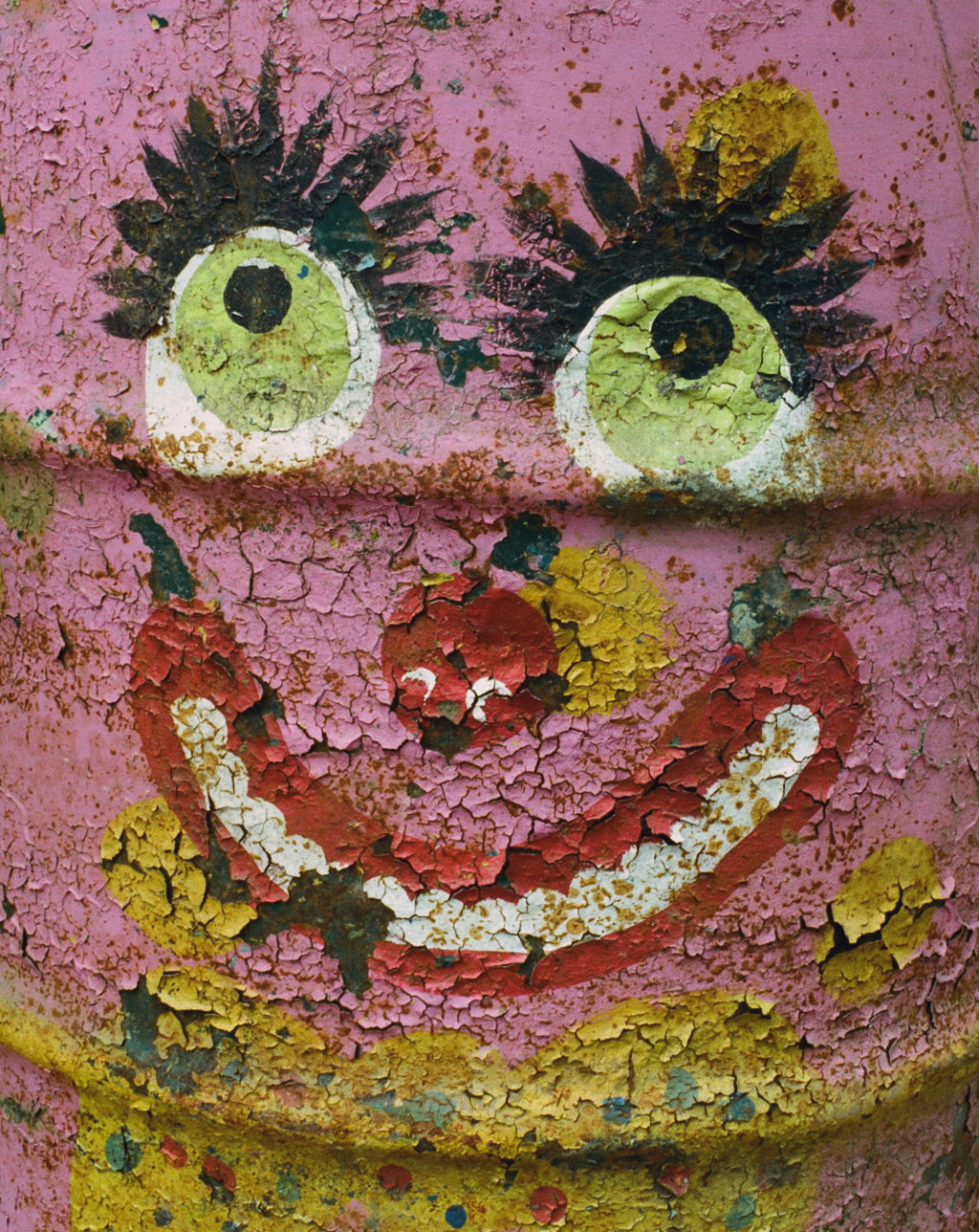
“There is a disposable nature to this art – it’ll be gone and painted over next year. This creates a freedom of expression; as artists we are completely in the moment, before we move on to the next bin,” recalls Jewelz, who has been a key figure in the painting community for many years. One of her bins even lives in the V&A Museum’s Glastonbury archive.
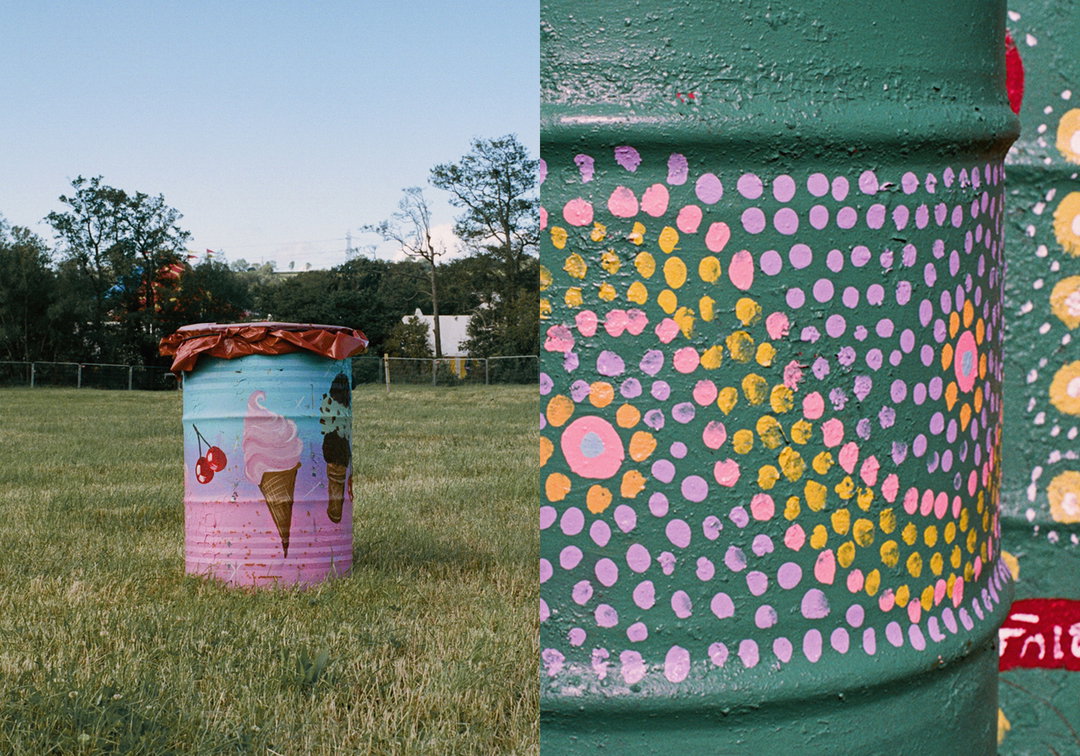
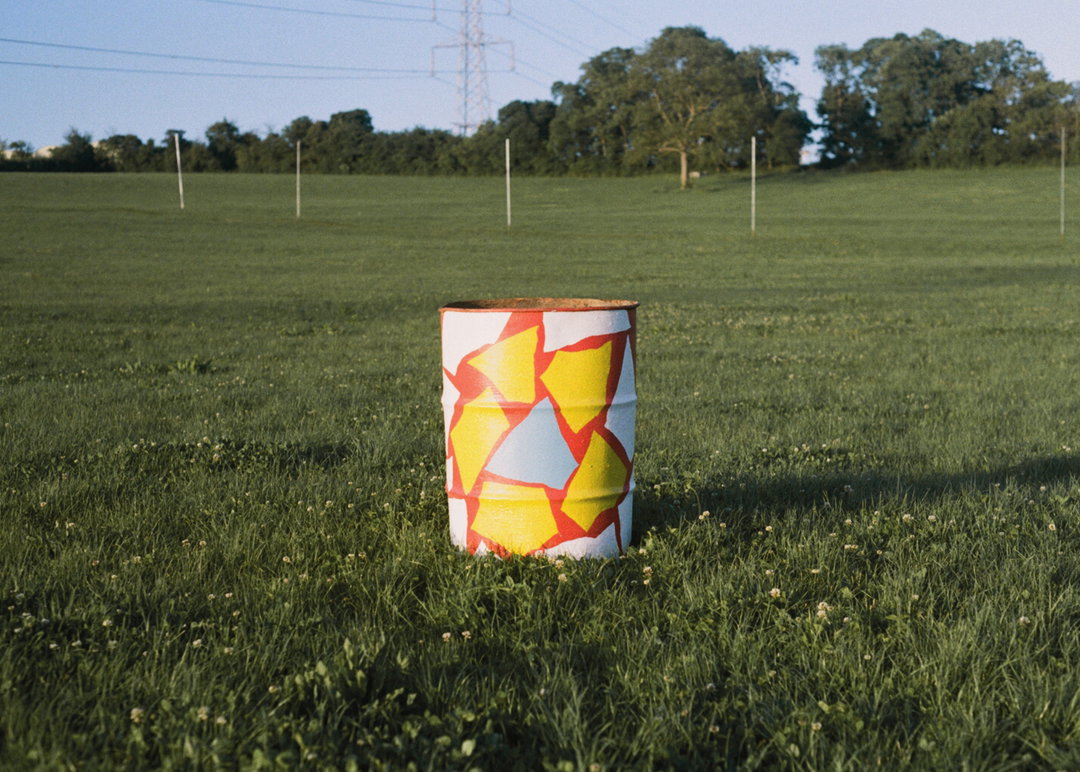
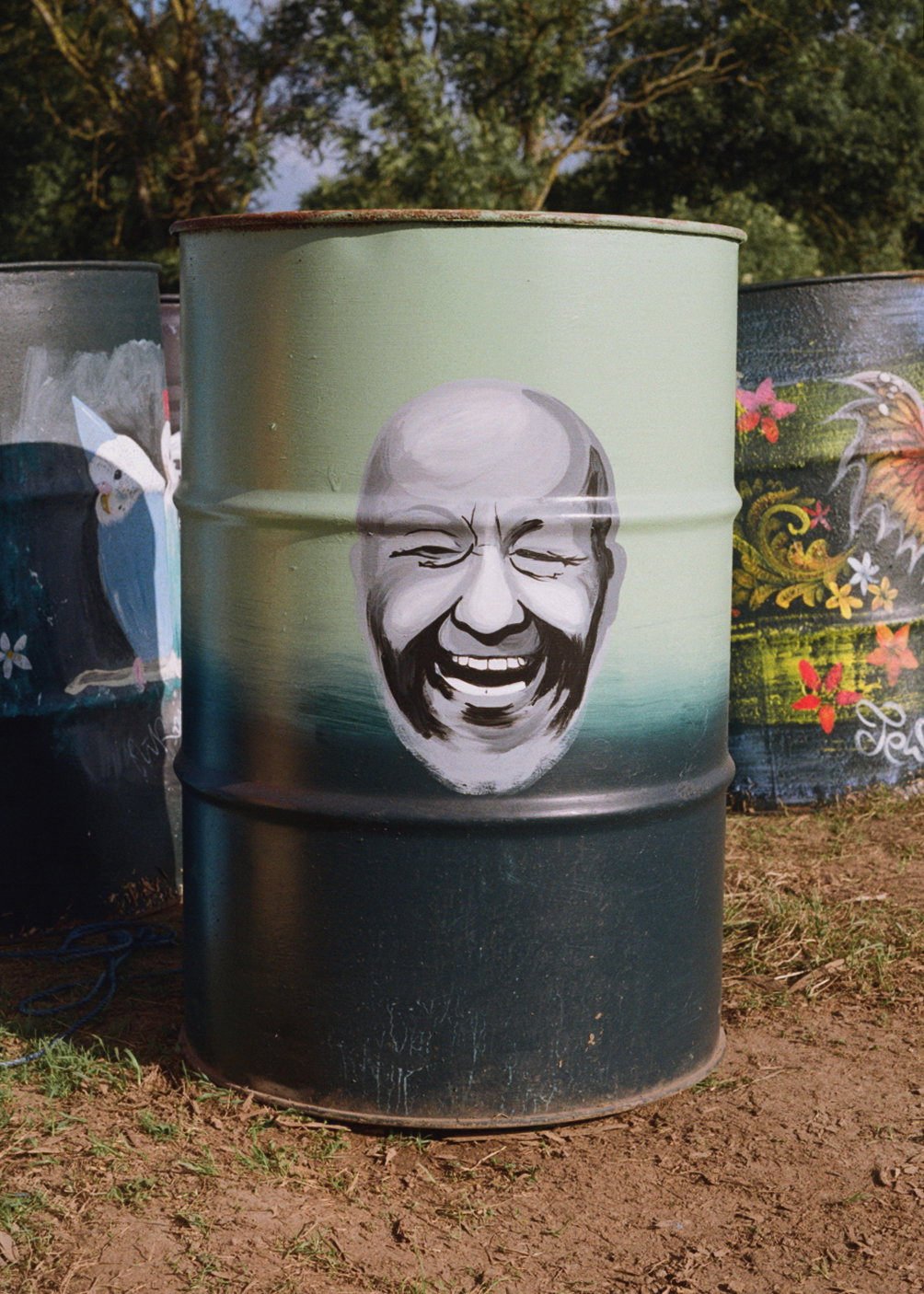
A motif that appears in many conversations is the pride in the accessibility of the art; it’s for everyone. It’s seen as the antithesis of the often gatekept art world. Bins feature everything from the solar system to Harry Styles, zebras at a birthday party, wellington boots, Dali’s melting clocks, a Campbell’s soup can, Diana Ross, Mr Blobby, Stonehenge, sound waves, the Pyramid Stage, peacocks, palaces in the sky, Prince, Edvard Munch’s The Scream, Michael Eavis’s face as a Teletubby-esque sun, Viking longships, mushrooms, Frida Kahlo and flowers... many, many flowers.
Rosanna Webster: Glastonbury Bins, One Man’s Rubbish…
1 of 6
Rosanna Webster: Glastonbury Bins, One Man’s Rubbish…
1 of 6
Rosanna Webster: Glastonbury Bins, One Man’s Rubbish…
It’s an eclectic collective of artists, from 18-year-olds to supervisors on their 16th year, through to first time painters in their mid-60s ticking bin painting off their bucket list. While many here are creatives in their non-Glastonbury lives, I also meet engineers, hardware developers, trainee nurses, all making space for this experience to become Glastonbury artists.
“The ethos is that anybody can come in, bringing their own style and influences with them. It builds a supportive community as artists where we feel comfortable, engaged and confident to create. That’s a real fertile ground to make great work in,” says Dan, a volunteer painter.
The 80-strong volunteer team is headed up by the warm, efficacious powerhouse, Holly. Her role now is more to facilitate: distributing drums, paint and artists across the site. Alongside that she helps shape the creative safe space for the team to thrive within. “You do hear occasional feedback from the public on the art, but the main feedback is from the painters themselves about the positive impacts the process has on their lives throughout the years. The work has positive impact on many levels. There is an overwhelming sense of pride from the team as a whole.”
Rosanna Webster: Glastonbury Bins, One Man’s Rubbish…
Rosanna Webster: Glastonbury Bins, One Man’s Rubbish…
Rosanna Webster: Glastonbury Bins, One Man’s Rubbish…
“The ethos is that anybody can come in, bringing their own style and influences with them. It builds a supportive community as artists where we feel comfortable, engaged and confident to create. That’s a real fertile ground to make great work in."
Dan, volunteer painter
In the truest form, this event is the sum of its parts. Individually the bins can be charming, beautiful and whimsical, but together they become this riot of colour – they become more, they become impactful. The very same is true for the artists – professional and volunteer – that bring this to life. Rather than any individual or a certain style, the magic is the collective artist, the thriving creative community. I am reminded of the quote: “A grapefruit is just a lemon that saw an opportunity and took advantage of it.” Here, a bin is a bin… until it’s not a bin, it’s actually a canvas, one piece from a 17,000 strong art collection, a key part of the set design, a contribution to something larger. Just like the community of creatives behind the work, they are part of something bigger, something more.
Rosanna Webster: Glastonbury Bins, One Man’s Rubbish…
“It’s hard to pinpoint exactly what makes the festival special, but I think it’s the heart and soul and attention to detail that goes into every conceivable element, from the bins upwards,” says painting supervisor Joe.
The question is often asked: why is Glastonbury so special? And the bins are a great example of why exactly it stands apart from the rest. The very fact that still, in 2022 and at this vast scale, the event still goes to the effort of hand-painting all its thousands of bins – it exemplifies an attitude towards its own culture and history, and typifies the heart and tradition of the festival. It just goes to show you can’t make every decision on efficiency and practicality.
Hero Header
Rosanna Webster: Glastonbury Bins, One Man’s Rubbish…
Share Article
About the Author
—
Charlie Sheppard is a Creative with a capital ‘C’ and a passion for the playful. From building Rube Goldberg Machine workshops, to ceramic tile mosaics, to his work at Anyways, the sister agency to It’s Nice That, creative playfulness is the constant.