

- Words
- Rob Alderson
- —
- Date
- 5 August 2026
- Tags
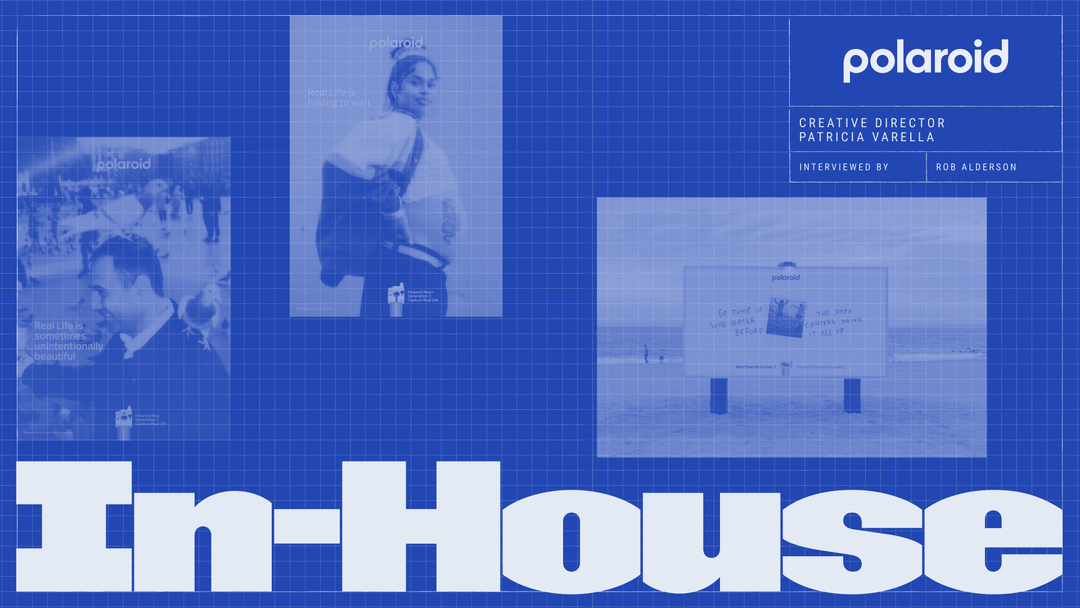
Polaroid’s Patricia Varella chats long-game strategies, imperfection and that anti-AI viral campaign
The creative director of the iconic, analogue photography brand moved from agencies to in-house with a shared vision for how Polaroid should evolve in the AI era. Here, she shares the realities of having a bold brand campaign that swims against the tide.
Share
Share
In House is a new column from It’s Nice That where we go inside the workings of major brands, agencies and companies shaping the future of the creative industry.
Sometimes, a creative campaign perfectly captures the moment. When Polaroid launched the Flip camera last summer, its ads paired lo-fi imagery with lines like, “AI can’t generate sand between your toes” and “How much of your camera roll do you really remember?”
Amid feverish AI noise, the campaign’s celebration of IRL went viral. This summer, Polaroid doubled down.
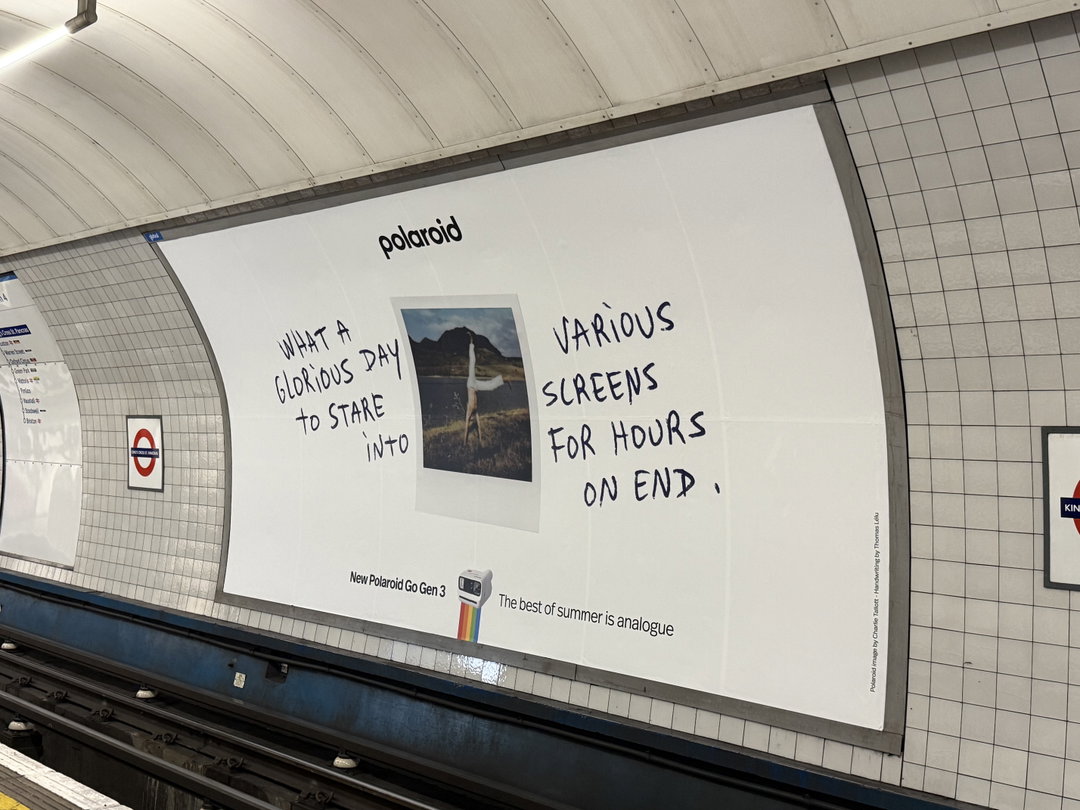
New lines include “Dance like nobody is recording” and “Go jump in some water before the data centers drink it all up,” which was emblazoned across a billboard installed on a Coney Island beach.
Again, it went viral. When Polaroid creative director Patricia Varella returned from a digital detox holiday, her phone blew up with hundreds of messages. “It was a bit scary,” she admits, “but also very exciting.”
Patricia joined Polaroid in 2022 after a career with ad agencies like Ogilvy and Sid Lee, and brands like G-Star Raw and Bugaboo. We sat down to discuss the success of these campaigns, knowing when to take a risk, and why in-house creativity is a marathon, not a sprint.
Polaroid: Capturing Real Life (Copyright © Polaroid, 2023)
Rob Alderson:
What was the creative opportunity that attracted you to Polaroid initially?
Patricia Varella:
When I was approached, I was not necessarily looking for a job, but I was a fan of Polaroid and I’m really passionate about photography.
The first day I was researching them, I didn’t think it was interesting enough. But the second day I found something that made me really excited – maybe if they rely on the thing that makes them unique, the imperfections of the chemistry, that could be a great story.
I went to the interview with that idea, and they said, “Well, that’s the foundation of our new strategy. If you join us, we can tell this story together.”
RA:
So they were already thinking in those terms?
PV:
Yes, it was the same strategy. And to be honest, after 20 years working in advertising, and putting these glossy, picture-perfect realities out there, it was a bit of a redemption for me. It was the perfect match at the perfect moment.
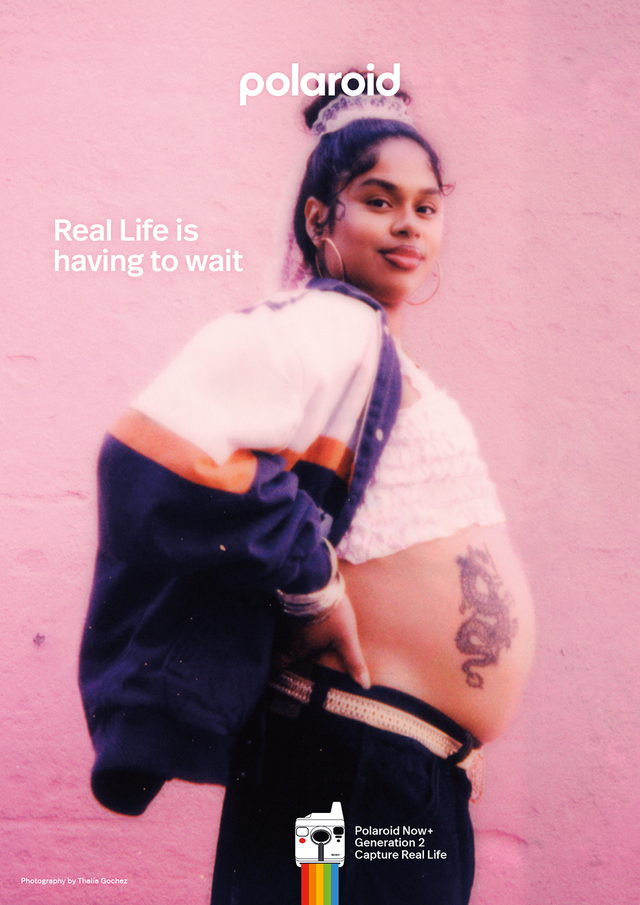
Polaroid: Capturing Real Life (Copyright © Polaroid, 2023)
“After 20 years working in advertising, and putting these glossy, picture-perfect realities out there, it was a bit of a redemption for me.”
Patricia Varella
RA:
Was it exciting to come into a team where everyone was already aligned around such a clear strategy?
PV:
As a creative, when you jump onto the client side, you need to have allies that share your vision. That’s the only way you can succeed, and I had really good allies.
But I cannot claim everybody was aligned. You can put a vision in a PowerPoint, or a Keynote, but you have to translate that vision into something tangible, day by day. As an in-house creative you spend 50 per cent of your time as a priest, saying, “This is it, this is it, this is it.”
Then you put it out there and the numbers come in. If it performs, everything’s fine; if it doesn’t perform, then the questions start. You keep on saying, this is a brand-building exercise. It’s the long term that we have to pay attention to.
RA:
How do you get other people in the business to buy into what you’re doing?
PV:
It's important to really understand their challenges. What is the problem they need to solve? Sometimes the problem is not necessarily in the brief they come up with.
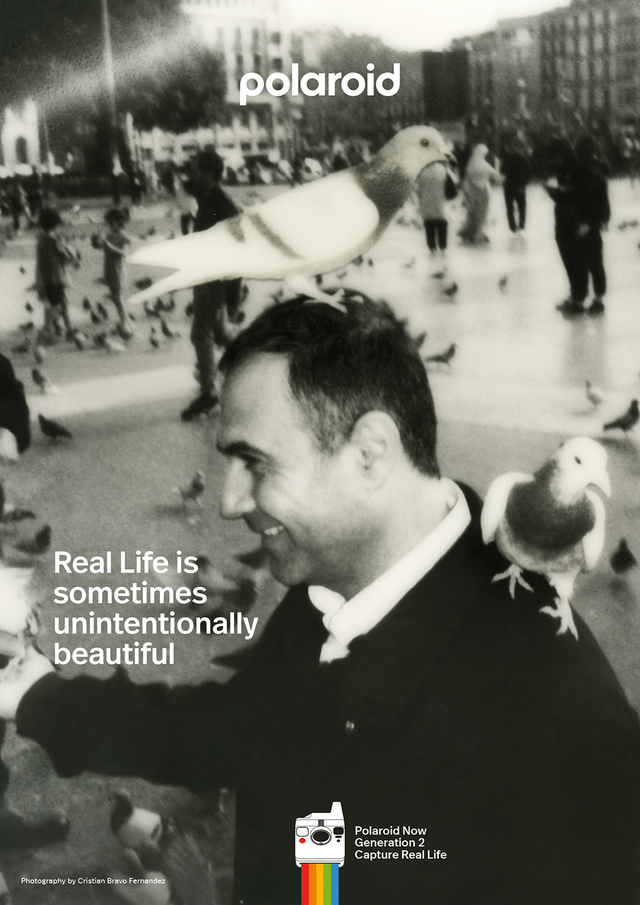
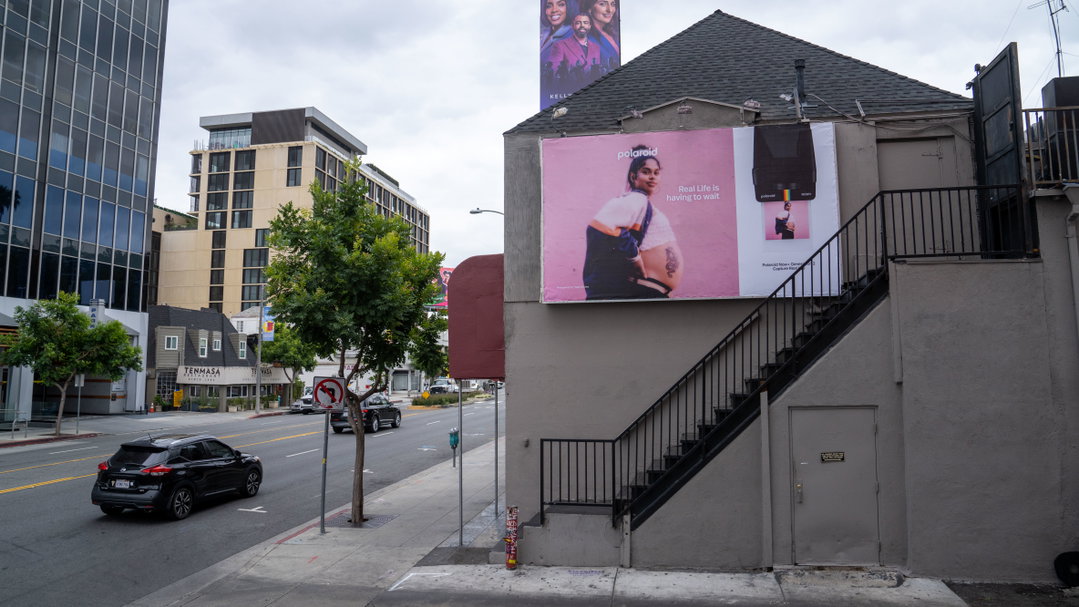
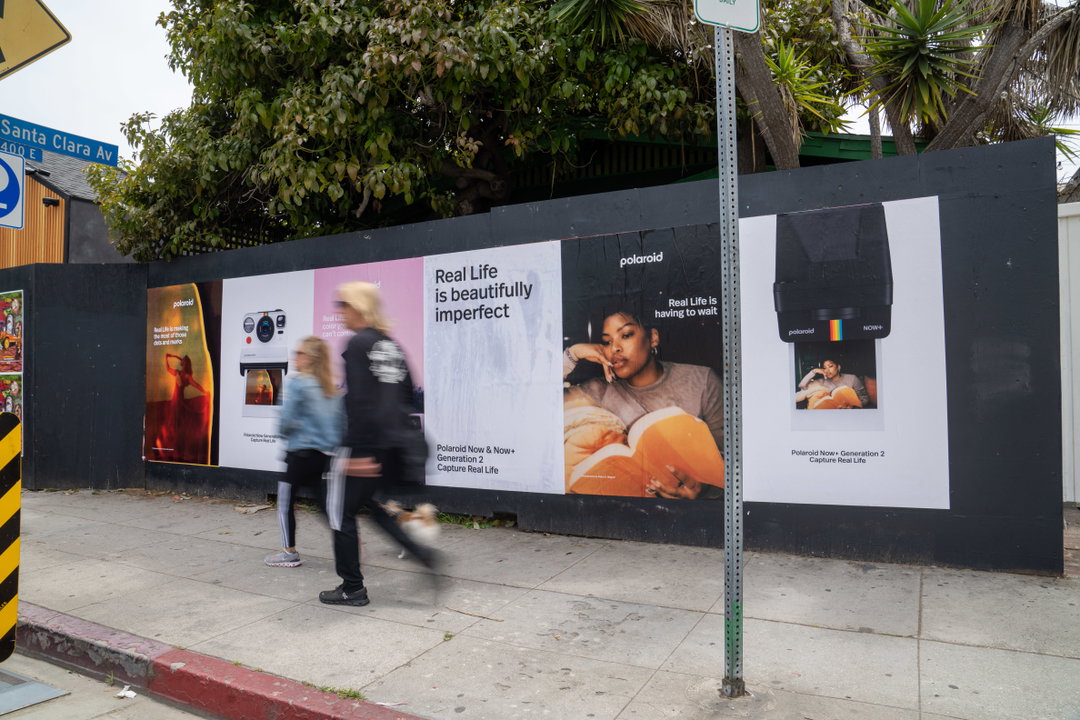
Polaroid: Capturing Real Life (Copyright © Polaroid, 2023)
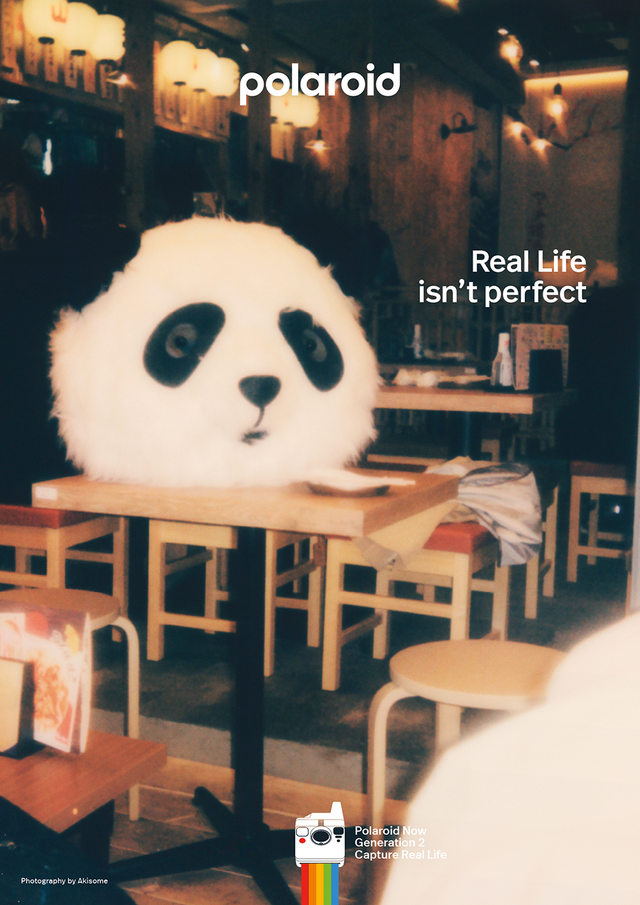
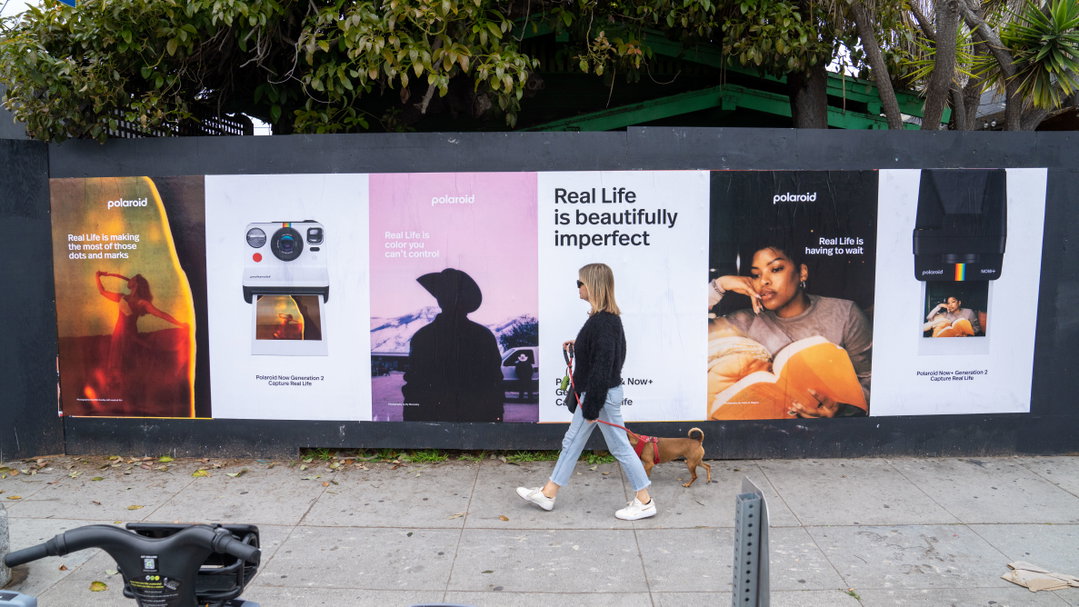

1 of 5
Polaroid: Capturing Real Life (Copyright © Polaroid, 2023)
1 of 5
Polaroid: Capturing Real Life (Copyright © Polaroid, 2023)
RA:
So you need to push back on the brief?
PV:
Yes, you need to ask why? Why exactly are you asking for this? That’s how you gain trust from your internal stakeholders, making them understand that you are fighting the same battle.
As creatives, we are problem solvers. When you understand the problem, it’s easy to come up with a solution.
RA:
What was your vision for the in-house agency at Polaroid?
PV:
When you’re working in agencies, you’re more like a sprinter, and you have to act really fast. I see working in-house more like being a marathon runner. You still have to move fast, but you are connecting the dots and building things which you’ll see the results of in the long term.
I convince my team to focus on the long-term, to know that everything they do is building towards something greater.
“Innovation... requires you to be brave because you’re not repeating a formula. You are risking something.”
Patricia Varella
RA:
Does that mean hiring people with a specific profile, or personality, to work in that way?
PV:
You need people who are good at working in teams, who understand the purpose is greater than yourself.
In an agency, your role is really defined. Here, you have to enjoy jumping between things and recreating your job. And I tend to hire people that are better than myself. That’s the best formula. My art director is the designer I wanted to be. My writer is the writer that I wanted to become.
RA:
What do you look for in the agencies you work with?
PV:
A deep understanding of the brand’s potential future challenges. It’s easy now the brand narrative is in place – everybody wants to build on that. We get all these emails saying, “We have an idea based on your brand narrative!”
I’m like, we’ve got ideas. The most interesting thing is what comes next.
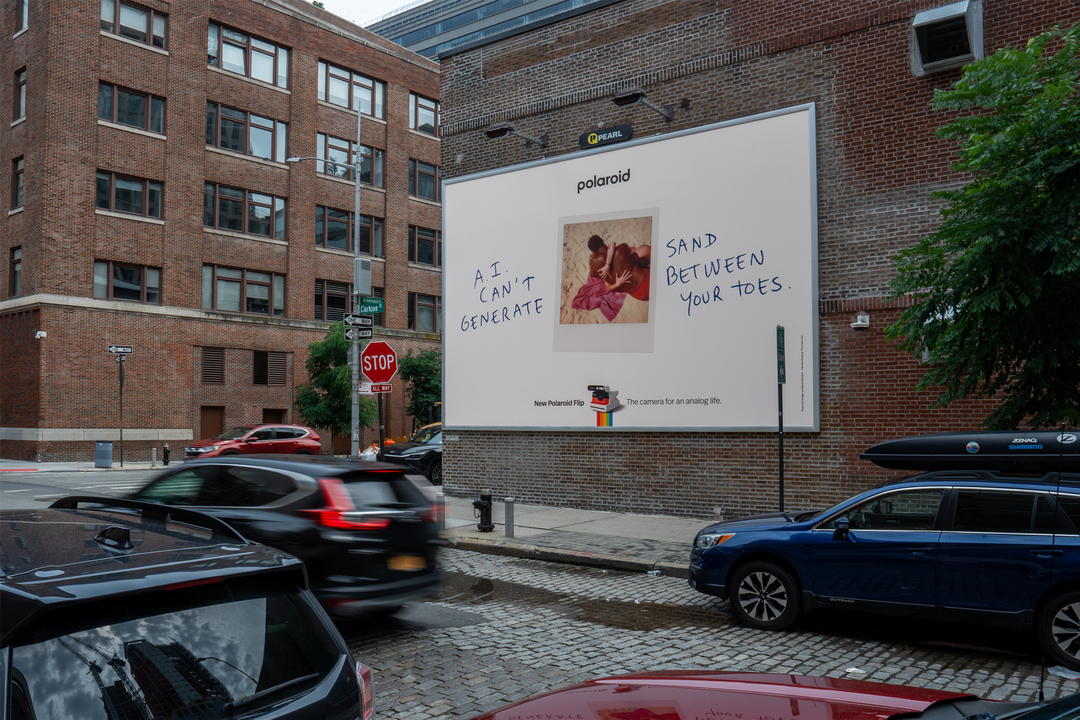
Polaroid: Flip (Copyright © Polaroid, 2025)
RA:
Do you think great creative work always involves an element of risk?
PV:
I think good creative work is any creative work that solves a problem. Sometimes it’s not the most brilliant work, but it does the job.
But when you talk about excellence, about work that stands out and becomes truly memorable, I think that involves some level of innovation, of doing things for the first time.
That requires you to be brave because you’re not repeating a formula. You are risking something.
RA:
When you launched the Flip campaign last year, you reframed the core question. Rather than asking, “How do you make instant cameras appealing to Gen Z?” you asked, “Why should Polaroid exist at all in an AI era?” Why was that?
PV:
With Polaroid Flip, the original strategy was to talk about it being the most innovative camera we’d ever made. Which is true, it’s an amazing point-and-shoot camera.
But when you choose to shoot with Polaroid, it’s an emotional choice. It’s slower than shooting on your phone, it’s more expensive, and you rarely get what you expect. So it didn’t feel right to focus on the product innovation story.
There was a lot of back and forth internally, until we made the question bigger. What is the point of this product, in our over-digitised, pixel-perfect world? That was the key – that Polaroid is the opposite of that. So, could we come up with an emotional story that celebrates analogue life?
We’re an analogue brand. That’s our heritage – our founder, Edwin Land, was one of the pioneers of using technology to enhance human experiences.
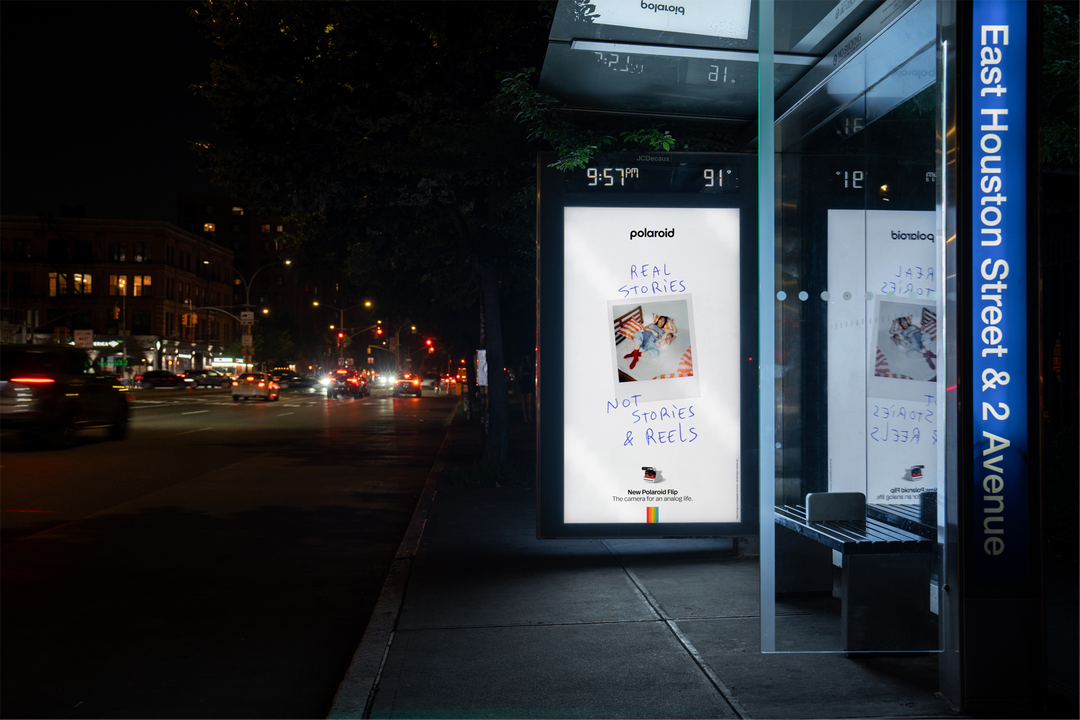
Polaroid: Flip (Copyright © Polaroid, 2025)
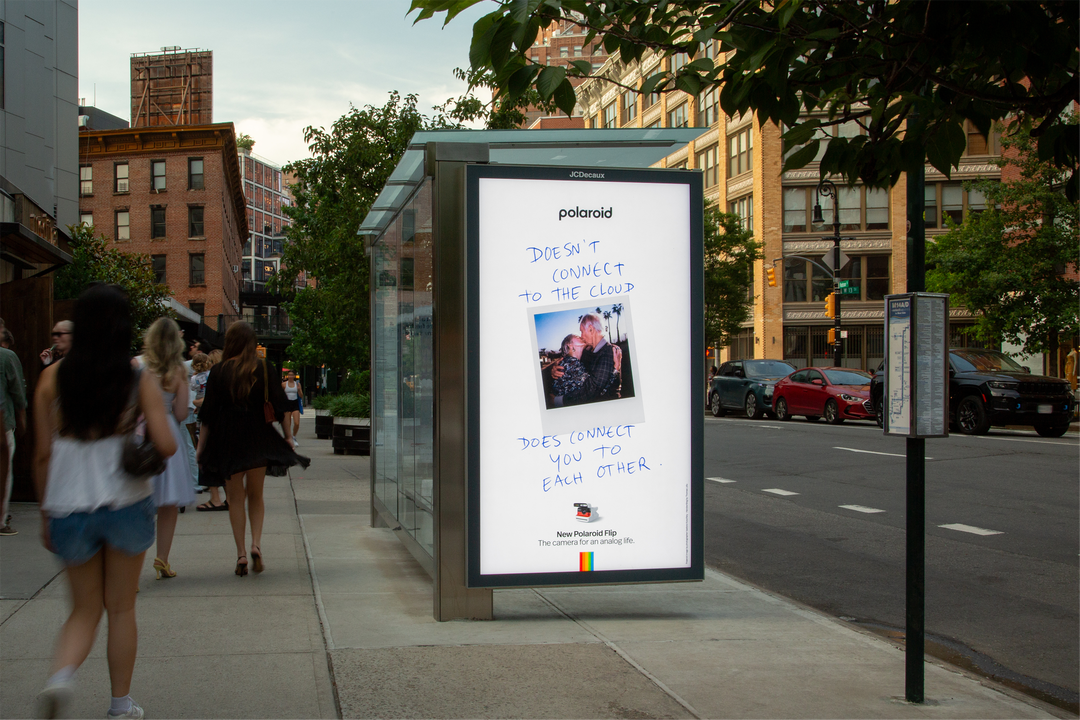
Polaroid: Flip (Copyright © Polaroid, 2025)
“As the world becomes more digital, human experiences become more and more valuable.”
Patricia Varella
RA:
Do you think it resonated so much because you made the question bigger?
PV:
Definitely. The contrast was so heavy, between what was happening in the world, the conversations people were having, and what we were launching. It was impossible to deny that tension.
This narrative started three-and-a-half years ago, when we launched the Capturing Real Life campaign. That celebrated the imperfections of the photographs, and the idea that good things come to those who wait.
So we were playing with the same tension, but being even bolder.
RA:
Do you think there was a hunger from people to hear this message too – a celebration of IRL experiences?
PV:
I think it supports culture, that was its success. As the world becomes more digital, human experiences become more and more valuable. And it made sense that Polaroid was sharing this message. Our product is an analogue camera, so us saying that the best of life is analogue had credibility.
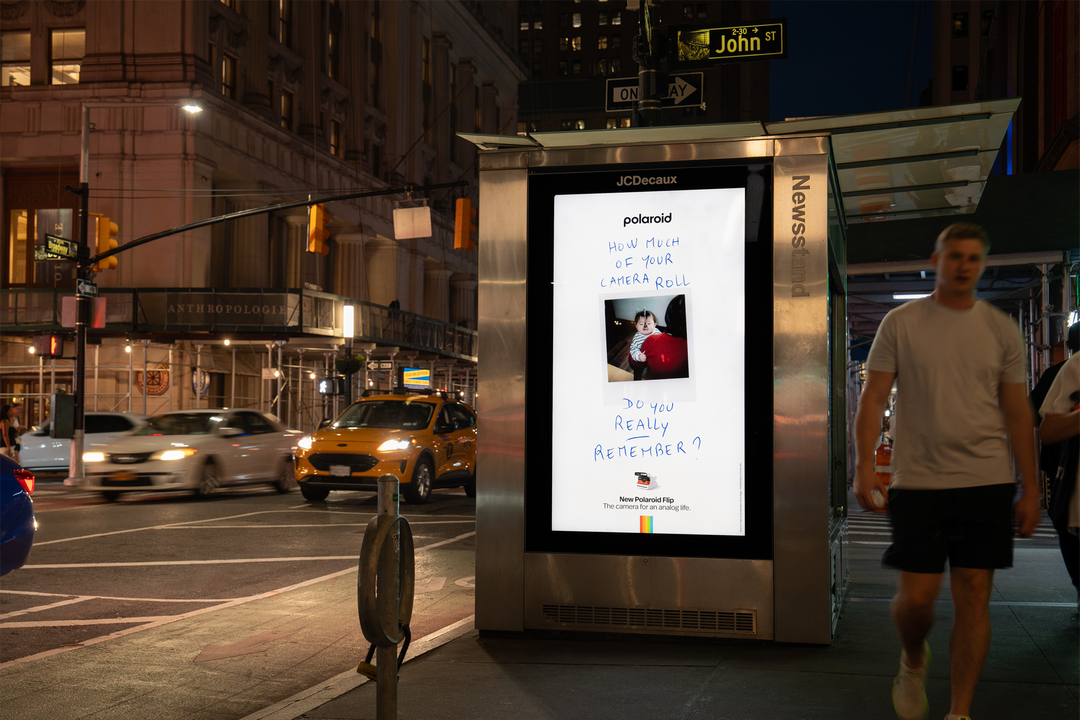
Polaroid: Flip (Copyright © Polaroid, 2025)
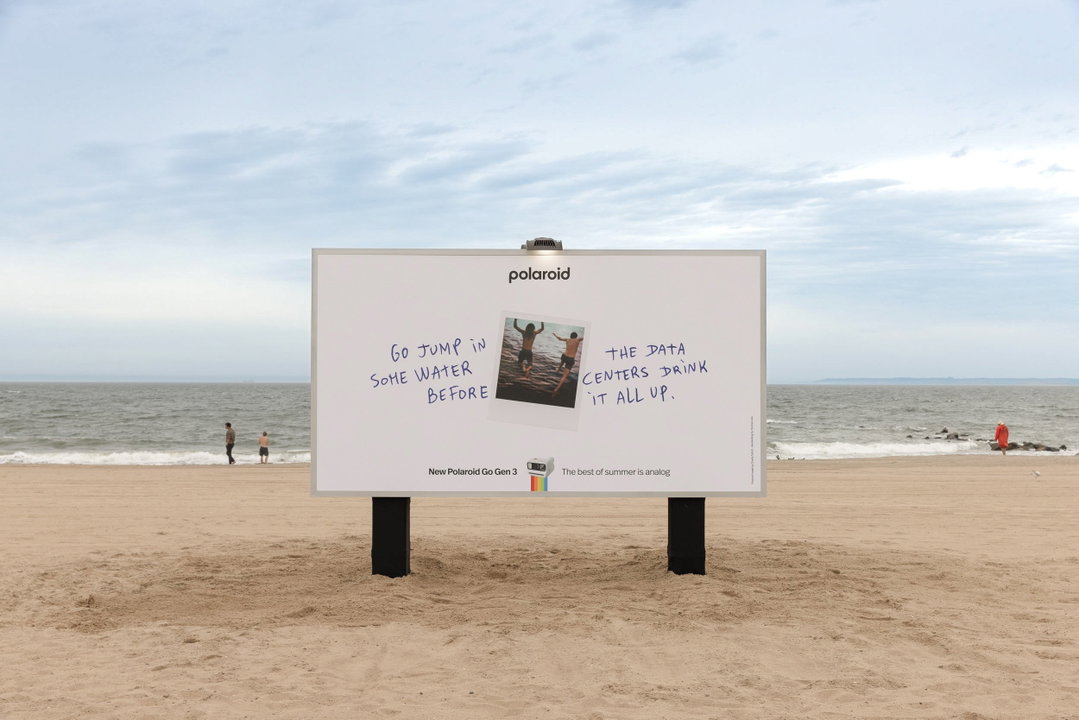
Polaroid: The best of summer is analogue (Copyright © Polaroid, 2026)
RA:
Copy plays a big part in this campaign – what’s the process for coming up with lines, and how do you decide which ones make the cut?
PV:
This year we had a formula. They had to contain the enemy – call out the consequences of over-digitisation. They had to have some irony, and they had to have a smart point of view.
We wrote about 50 lines, and then we ended up using six. But the lines that made the cut didn’t necessarily fit our formula. The ones we chose were the ones that created a physical reaction – that gave us goosebumps, or made us smile, or made us laugh. We felt if a line provoked those reactions in us, it would resonate with other people too.
RA:
You also installed a billboard on a beach. That feels like one of those ideas that someone suggests in a meeting, everyone laughs, and then it gets forgotten…
PV:
Exactly – you just think about all the reasons why it’s not going to happen. But somehow our amazing teams and the agency made it work.
The media strategy was a smart component of the last campaign. We put those messages where the conversation was happening, close to the Google offices and Apple stores. I think that was part of its success.
This year the concept was there, but our CEO and CMO asked us if we could push it even further, and make it even bolder. This campaign is claiming the best of summer is analogue. So what if we put the message actually on the beach, where we want to inspire people to put down their phones?
“We’re asking people to drop their phones, so would we then ask influencers to generate digital content for us? What if we asked the exact opposite?”
Patricia Varella
RA:
And for this campaign you also paid creators to go offline?
PV:
We had to tick all the boxes, right? We’re asking people to drop their phones, so would we then ask influencers to generate digital content for us? What if we asked the exact opposite? What if we paid them not to post for a while and connect with their analogue life?
RA:
It feels like with this and the billboard on the beach, the team is willing to keep following where the core ideas take them?
PV:
Yes, I think you're right. We actually had this idea – asking influencers not to post – during the Polaroid Flip campaign last year. It felt a bit too much then. But the advantage of having a small team is that we keep on recycling ideas.
This year, we felt like we had permission to keep building on it, and make it a bit more disruptive. If we are going to be bold, how do we do it in the right way?
Share Article
Further Info
About the Author
—
Rob Alderson is a freelance writer, editor and strategist. He was previously editor-in-chief of It’s Nice That and WePresent, and editor of Design Week. He publishes the newsletter Undo, which tries to make sense of how AI is changing design work, the design process and the design industry.