Launch Recite Me assistive technology

Henry Dreyfuss’ Humanscale design manuals from 1974-81 to be reissued
—
Date
25 July 2017
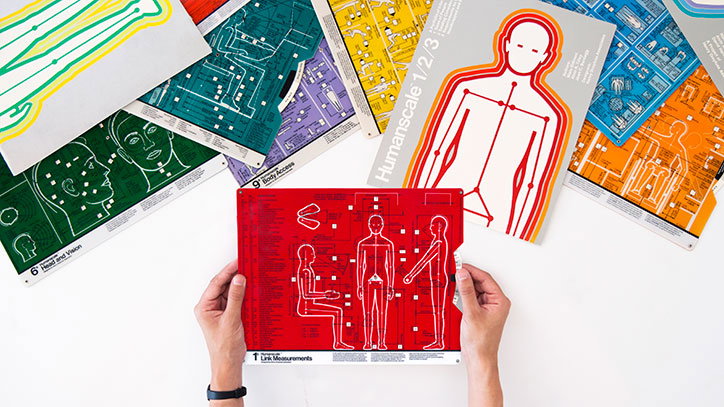
Two hands hold a red technical diagram showing human figures in various poses. Around it, several other similar diagrams in green, blue, yellow and orange are scattered across a white surface.

Design agency IA Collaborative has launched a campaign to reissue the original Humanscale design manuals, originally created by Henry Dreyfuss Associates designers Niels Diffrient and Alvin R. Tilley and published from 1974-81. The three books and nine measurement guides aimed to provide designers, engineers, architects and inventors with the ergonomic information to design products for people.

The books pre-empted the furniture and product design company Humanscale, now known around the world for its human-centred approach to design. Using the manuals, designers had access to a huge amount of human data to apply to their work in a reference guide coined by IA as “a portfolio of information”. While out of print, editions of Humanscale would reach high sums through online resale.

IA Collaborative’s Luke Westra, Nathan Ritter and Dan Kraemer have worked with some of Humanscale’s original creators and printers to republish the books and guides via a Kickstarter campaign, launched today 25 July 2017.

“All products – from office chairs to medical devices – require designs that ‘fit’ 
the end user,” says Luke. “Finding the human factors data one needs to achieve these ‘fits’ can be extremely challenging as it is often scattered across countless sources. That is, unless you’ve been lucky enough to get your hands on the Humanscale manuals.”

Nathan comments: “After finding so much value in using the Humanscale manuals in our work, we want to make them available at a reasonable cost. We want as many people to learn from these tools as possible.”
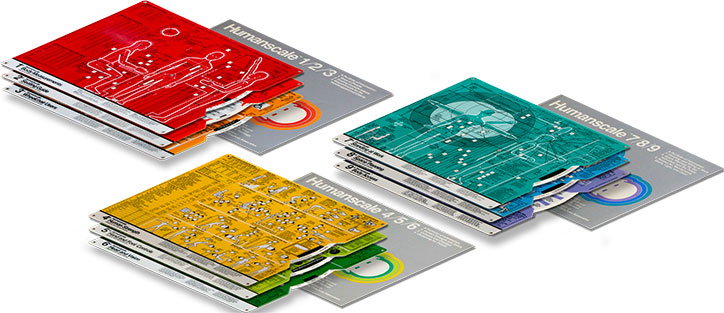
Four stacks of technical diagrams in red, yellow, green and blue. Each set is paired with a grey cover sheet titled “Humanscale” followed by a series of numbers.
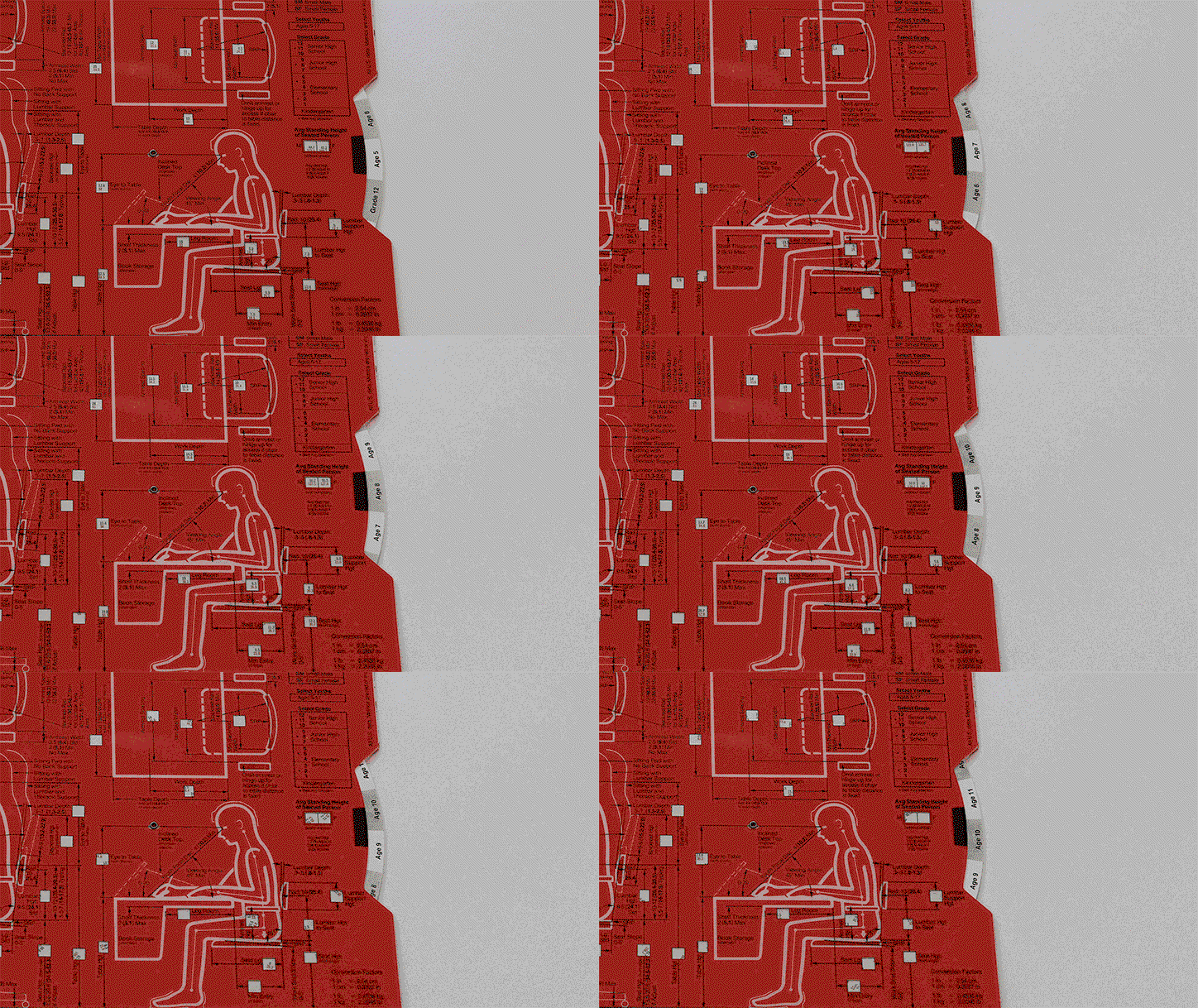
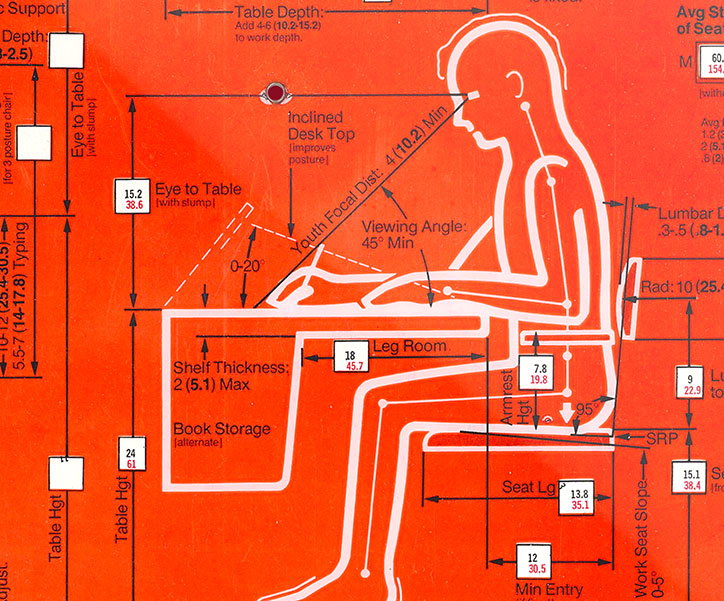
A technical diagram on a red background shows a white outline of a person sitting at a desk. The image is filled with precise measurements, labels and architectural annotations.
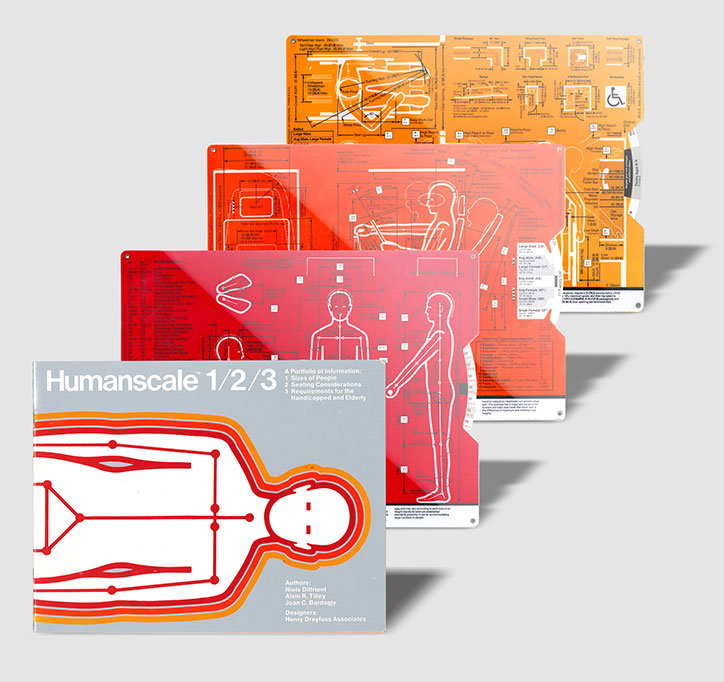
A set of translucent red and orange plastic guides and a white book. The book cover reads “Humanscale 1/2/3” and features a red line drawing of a person lying down.
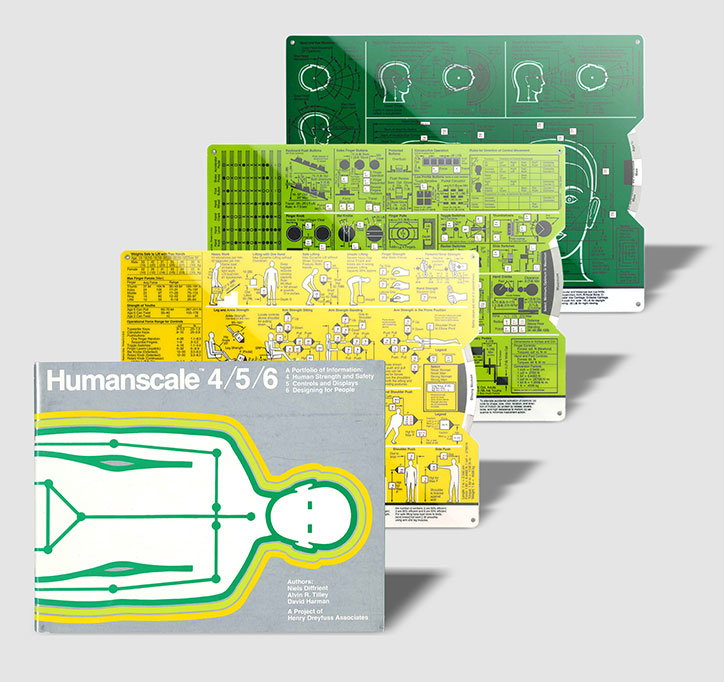
A book titled “Humanscale 4/5/6” sits in front of three translucent green and yellow plastic sheets. The book cover features a simplified green and yellow outline of a human figure. The sheets are filled with technical diagrams, measurements and anatomical sketches.
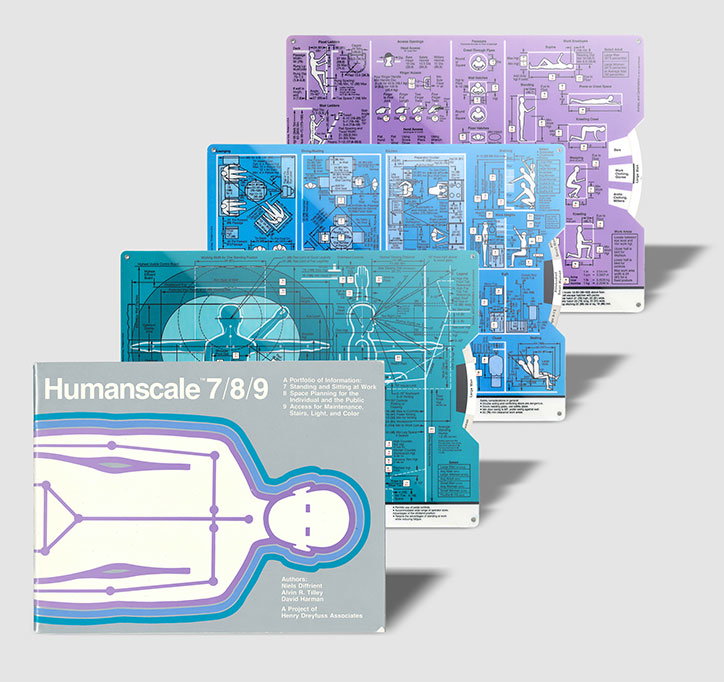
A set of technical diagrams and a book titled “Humanscale 7/8/9”. The book and accompanying blue and purple sheets feature anatomical outlines and measurements of people in various poses.
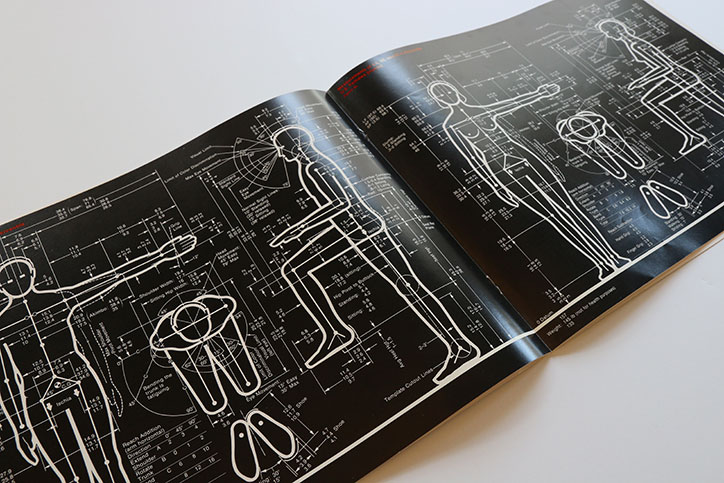
An open book with black pages featuring white technical diagrams of human figures. The pages are filled with precise measurements, lines and labels detailing body proportions and movement.
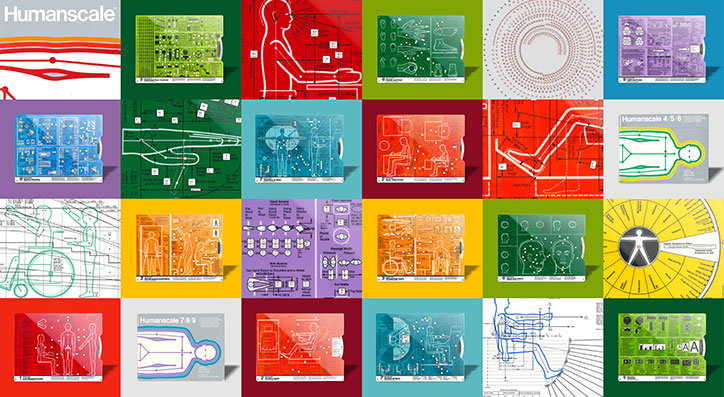
A grid of 24 colourful technical diagrams and instructional guides from the “Humanscale” series. The images feature white line drawings of human figures and measurements set against bold red, green, blue, yellow and purple backgrounds.
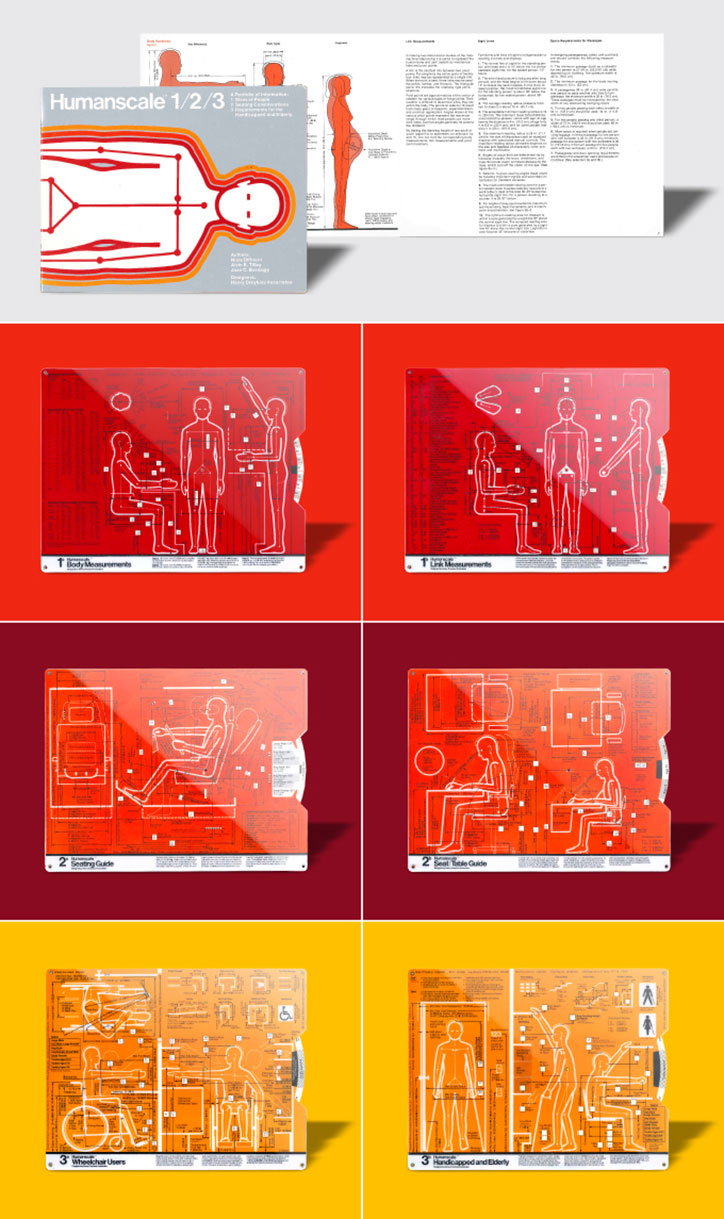
A layout of the “Humanscale 1/2/3” design guide, featuring a grey cover with a red anatomical diagram. Below the cover are six red and yellow translucent plastic sheets showing white line drawings of human figures and measurements.
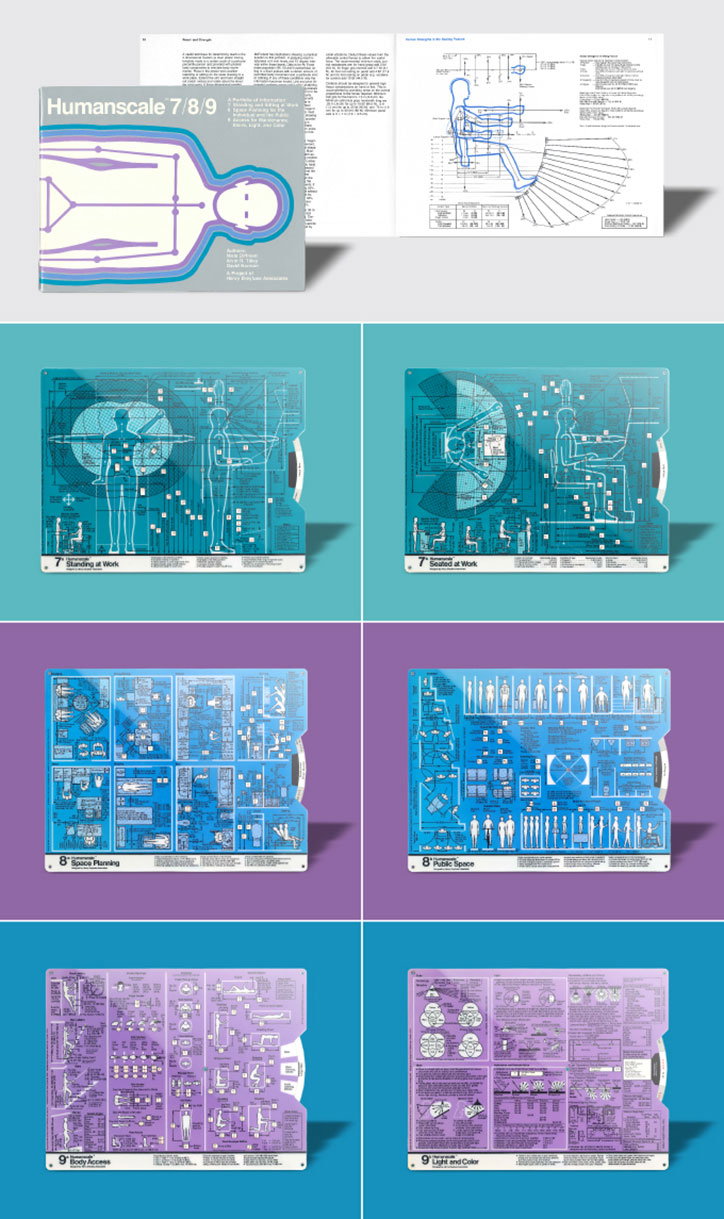
A series of pages from the book Humanscale 7/8/9. The layout features technical diagrams of human proportions and ergonomics in blue and purple tones. The pages include detailed schematics of people standing and sitting, alongside grids for “Space Planning” and “Public Space”. One page focuses on “Body Access” and another on “Light and Color”.
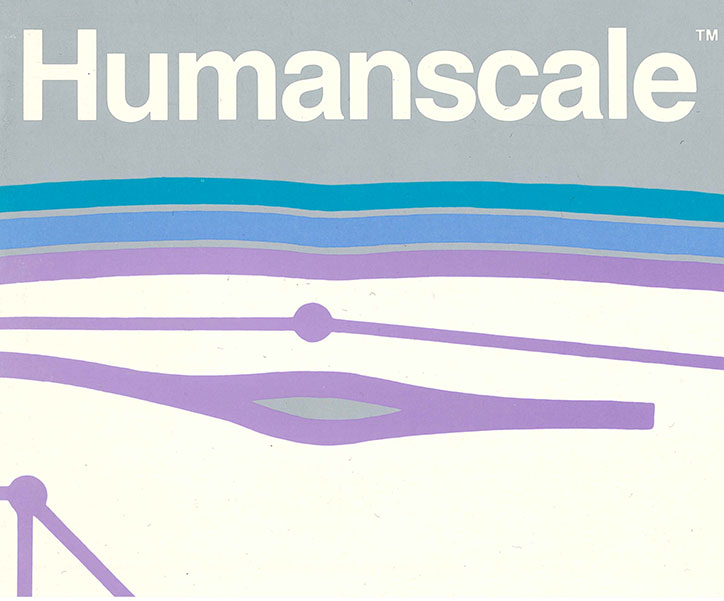
An illustration featuring the word “Humanscale” in bold white type against a grey background. Below the text, flowing horizontal bands of blue and purple wave across a pale cream field.
Above

IA Collaborative: Humanscale manuals reissue
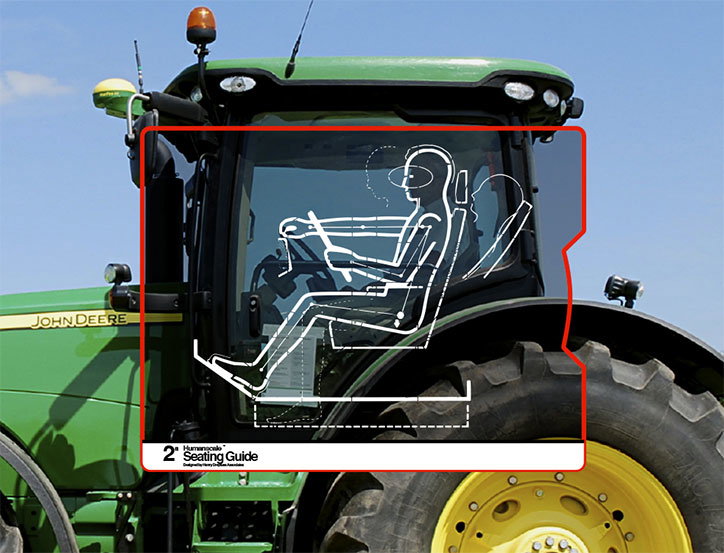
A green John Deere tractor with a white line drawing of a person sitting in the driver's seat laid over the cab. A white banner at the bottom reads “Seating Guide”.
Above

IA Collaborative: Humanscale manuals reissue
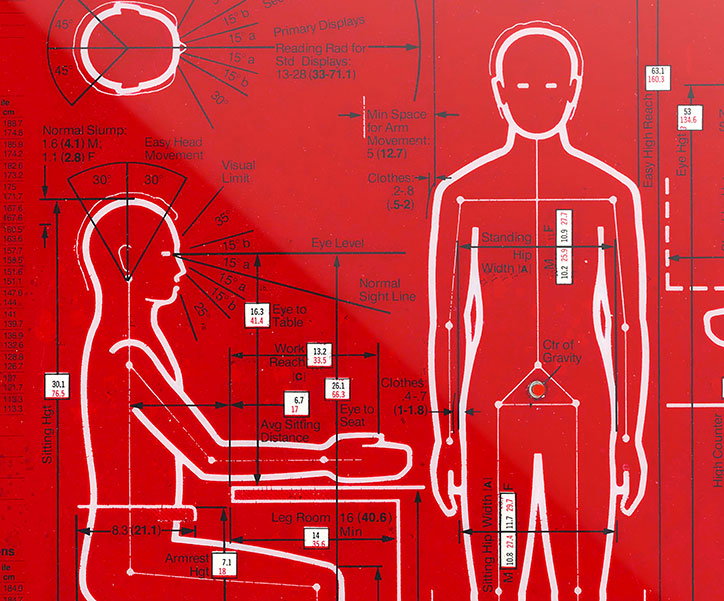
A technical diagram in white on a red background shows the ergonomic measurements of a person. One figure is shown in profile sitting at a desk, while another is shown from the front.
An infographic on a bright red background shows a white outline of a person sitting at a desk. Technical measurements and labels, such as “Table Depth” and “Viewing Angle”, are marked with thin lines and arrows.
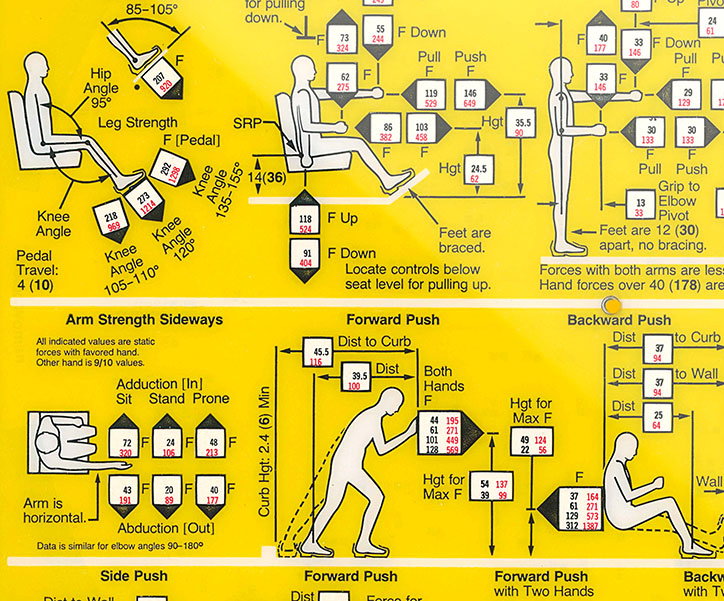
A technical diagram on a yellow background showing human figures in various seated and standing positions. The charts use lines and labels to measure body angles and force, including sections for “Arm Strength Sideways”, “Forward Push” and “Backward Push”.
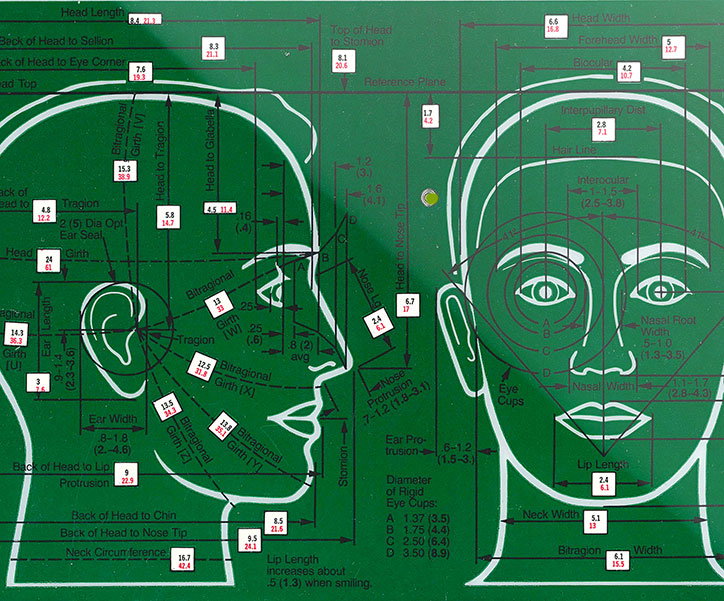
A technical diagram on a green background shows a person’s head from the side and front. White lines and red labels mark various anatomical measurements, such as “Head Length” and “Nasal Root Width”.
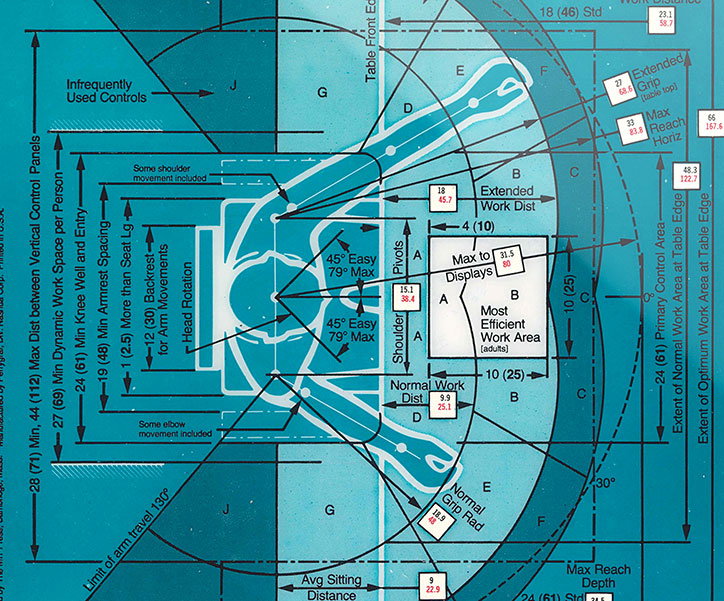
An ergonomic diagram of a person sitting at a desk, showing reach zones and movement arcs in blue and white. Labels and measurements mark areas such as the “Most Efficient Work Area” and “Extended Work Dist”.
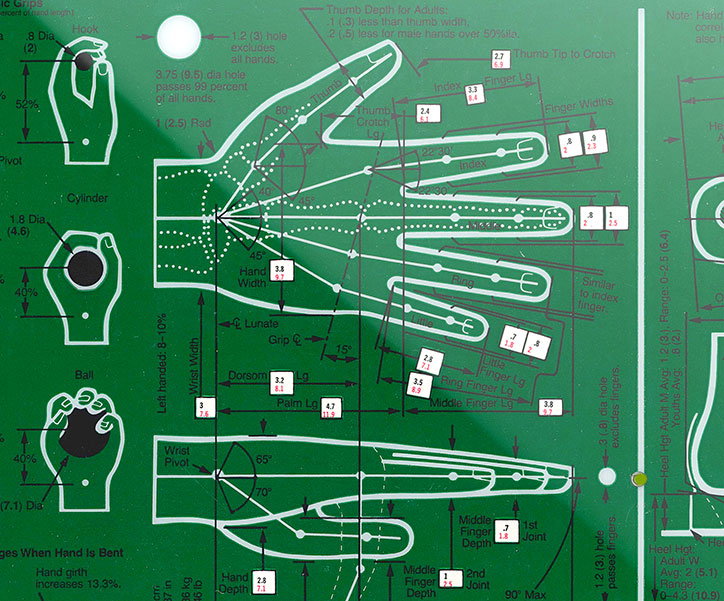
A technical diagram of a human hand on a green background, showing various anatomical measurements and pivot points. White dotted lines and numerical labels in small boxes detail dimensions such as “Hand Width” and “Palm Lg”.
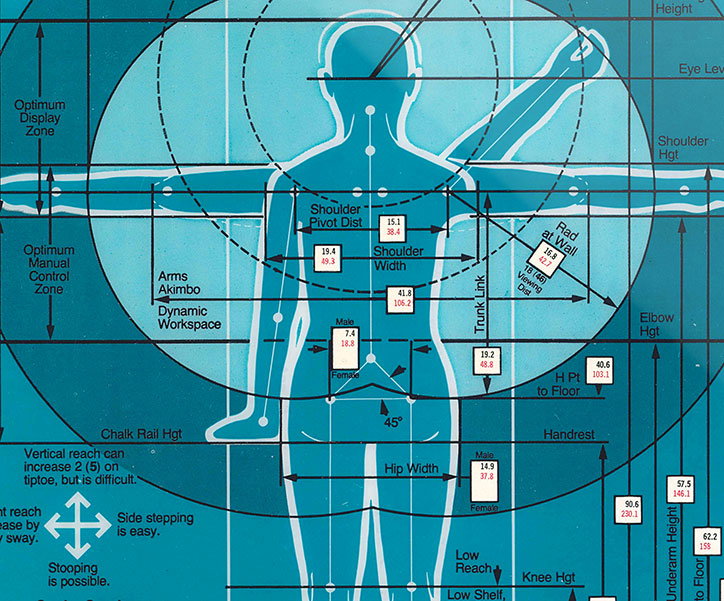
A technical diagram of a human figure in a blue and white colour palette, used to map ergonomic measurements. Various lines and labels mark zones such as the “Optimum Display Zone” and “Dynamic Workspace”.
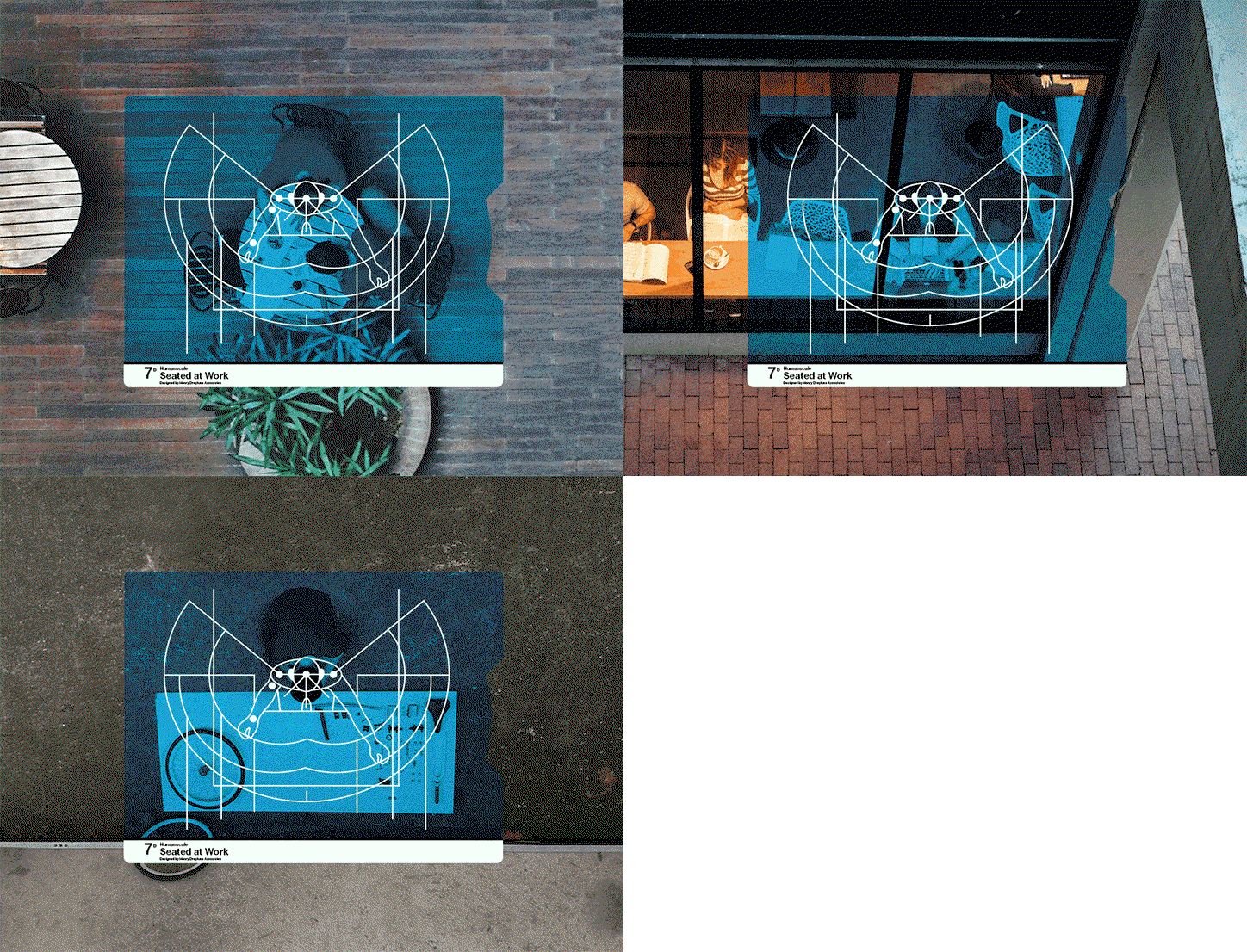
An animation in which a blue graphic overlay of white geometric lines and a person’s silhouette shifts across different backgrounds. A white label at the bottom reads “7 Seated at Work”.
Above

IA Collaborative: Humanscale manuals reissue
Share Article

About the Author

Jenny Brewer

—

Jenny oversees editorial output across It’s Nice That. Get in touch with writing pitches for features or opinion pieces, big creative story tips, or questions about all things editorial. jb@itsnicethat.com

To submit your work to be featured on the site, please see our Submissions Guide.
It's Nice That Newsletters

Fancy a bit of It's Nice That in your inbox? Sign up to our newsletters and we'll keep you in the loop with everything good going on in the creative world.